
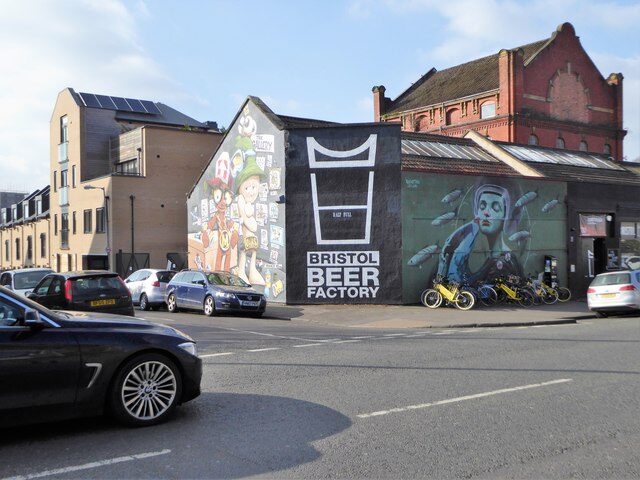
In May 2026 a 4.6% pale ale called Independence was named CAMRA’s Champion Beer of Britain, and the freshest pint of it is poured at the far end of North Street in Southville. Bristol Beer Factory brewed it on that street until April 2025, then moved production a kilometre down the road to Ashton Vale. The Tap Room stayed where it was. That is south Bristol in one glass: very good beer, a long history behind it, and nobody making much fuss about either.

Most of the famous names among Bristol’s pubs are in the old city and round the harbour. South of the river is where the city drinks at home: Bedminster, Southville, Windmill Hill and Totterdown, districts built for the tobacco factories, the coal pits and the railway, where the pubs are named after miners and football clubs and half the regulars bring a dog. The shape is easy to learn. Two long shopping streets, North Street and East Street, run across the flat, and steep terraced hills rise behind them with views back over the whole city.

North Street has the best run of pubs, eight good ones in little more than a kilometre. East Street and West Street, in old Bedminster, are where the plainer boozers hold on. Windmill Hill and Totterdown, on the hills to the east, have the back-street locals worth climbing for. Do the hills first and finish on the flat.

On this page
- North Street: Southville's long bar
- Southville's back streets and the Dean Lane pit
- East Street, West Street and old Bedminster
- Windmill Hill: the climb to the Rising Sun
- Totterdown: painted houses and five pubs on one hill
- Ashton Gate, Ashton Court and the Balloon Fiesta
- A walk from Totterdown down to North Street
- Getting there, opening hours, match days, dogs and children
North Street: Southville’s long bar
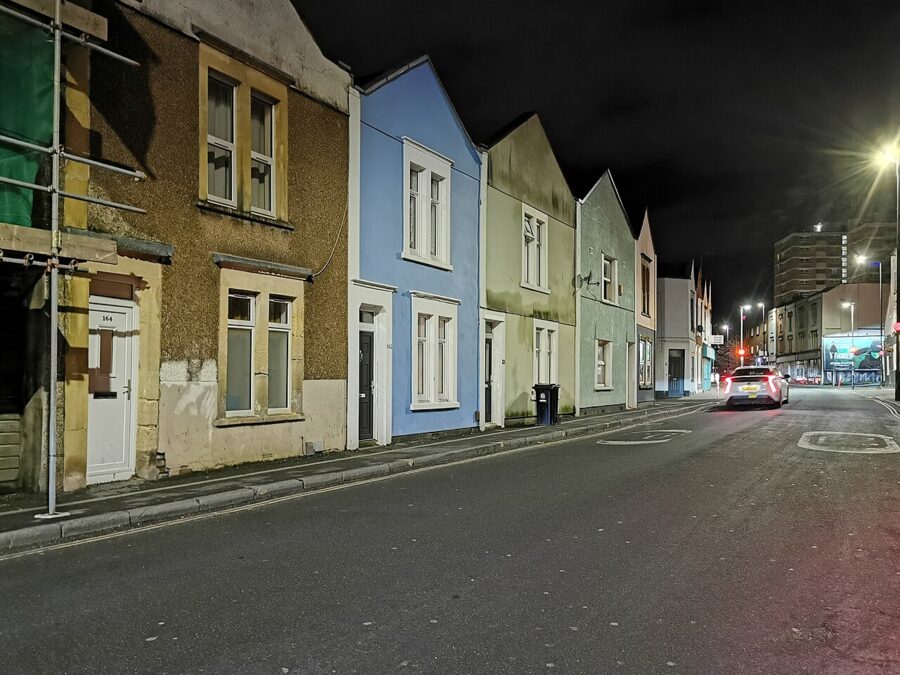
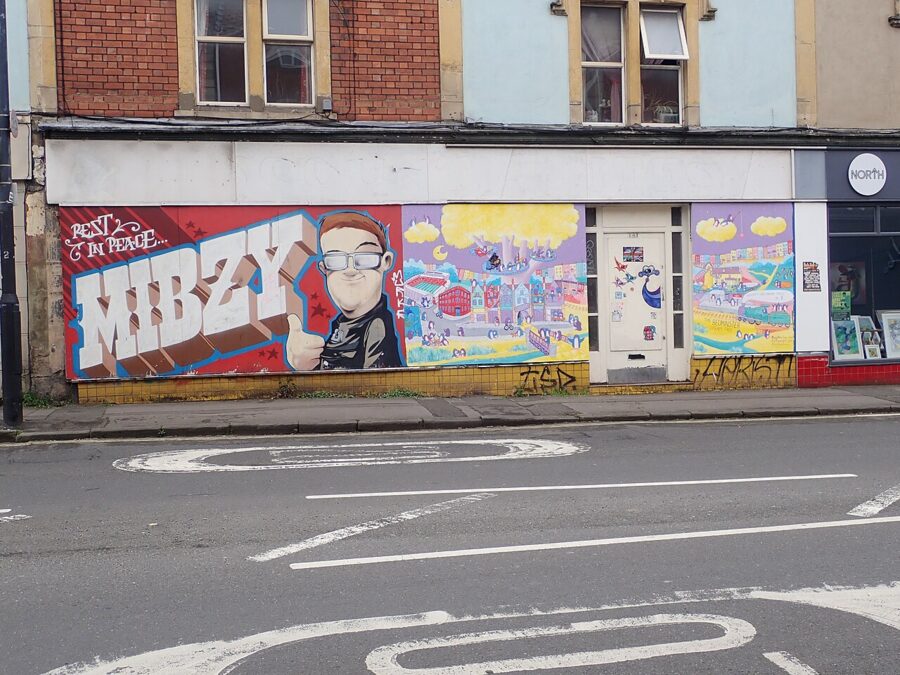
North Street runs west from the junction with East Street and Cannon Street to the edge of Ashton Gate, a walk of about 15 minutes if you stop at nothing, which nobody does. It grew up as the high street for the workers of the Wills and Imperial tobacco factories, lost the factories, and came back in the late 1990s with cafés, delis and a theatre. Upfest, the street art festival that has painted Bedminster and Southville since 2008, last ran in May 2026, and its murals are on walls all the way to the stadium.
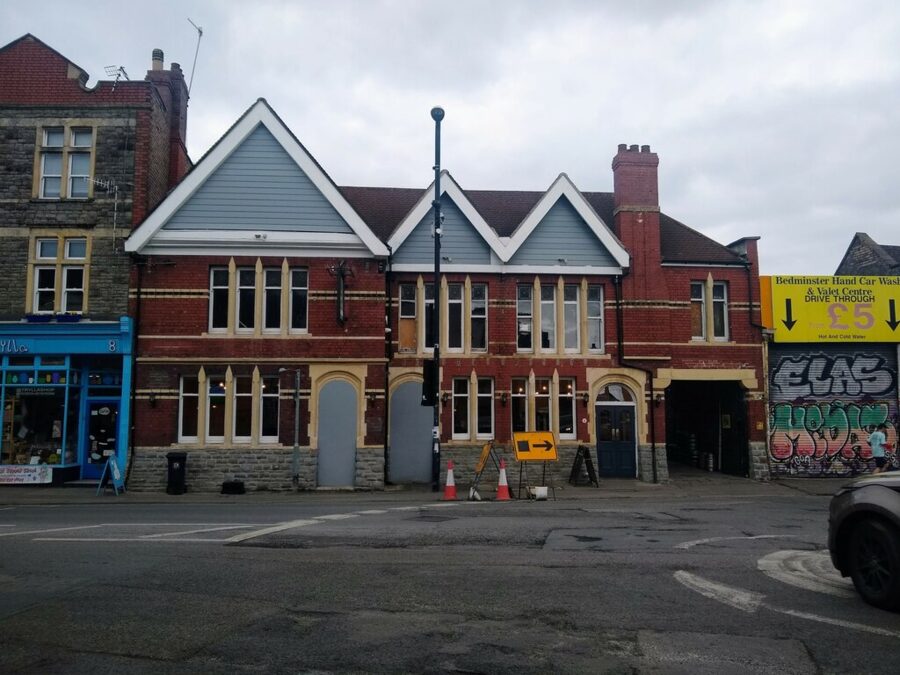
The Steam Crane
The big Victorian building where North Street begins has had more names than most people have had jobs: the Star, the Florikan & Firkin, Aurora, Bar Salt, the Bay, and now the Steam Crane. The current version is roomy and retro, with mismatched furniture, sofas, local art and a long list of local craft keg beer. There is no cask ale, which here is a choice rather than an oversight. It opens at 13:00 every day and stays open until midnight.
Out the back is a large yard and a covered barn where, so the local story goes, a lion mauled someone in the 18th century. Nobody has produced the paperwork, so enjoy it the way you would a pub ghost. Board game nights and big fixtures fill it; there is no food.

Lupe
Lupe opened in October 2024 in the rooms that were the Old Bookshop, run by the team behind Alpha Bottle Shop & Tap on East Street. Three cask ales that change all the time, up to eight keg lines and a fridge strong on Belgian and German bottles make it the most interesting beer list south of the river. The name plays on lupulus, the hop’s Latin name, and lupus, the wolf.
Food comes from Eatchu, a Bristol gyoza outfit, with karaage chicken and loaded waffle fries alongside. The kitchen runs 17:30–21:00 Tuesday to Friday, from noon at weekends (until 16:45 on Sunday) and not at all on Monday, when the bar opens at 16:00. Families and dogs are welcome, but the bar is on several levels with steps up to the toilets.
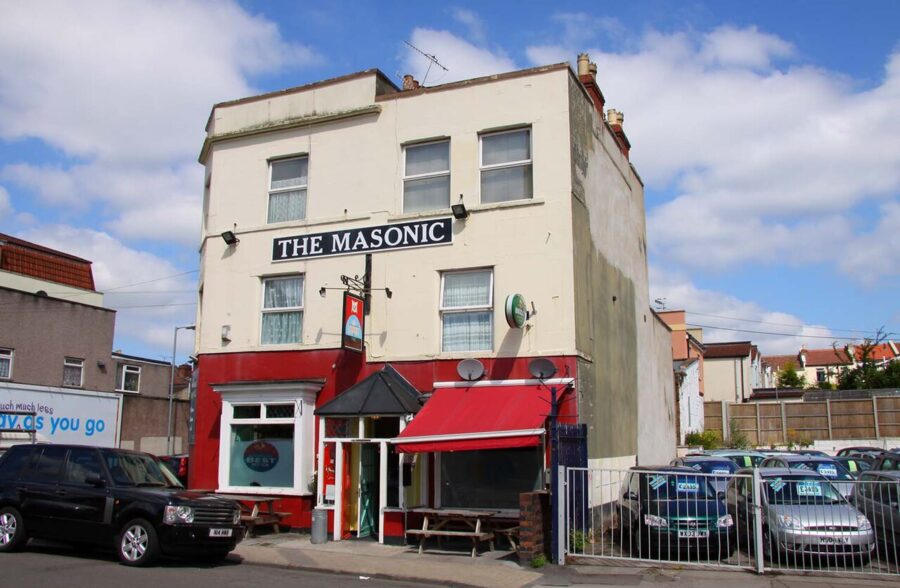
The Masonic
The Masonic is the reason to walk this street even if you never touch a craft beer. It is a Victorian street-corner local with an L-shaped bar, carpet, part-panelled walls and a skittle alley at the back, the West Country’s own pub game. Draught Bass is the cask regular, the doors open at 10:00, and sport is on the screens, though conversation is the main entertainment.

The Spotted Cow
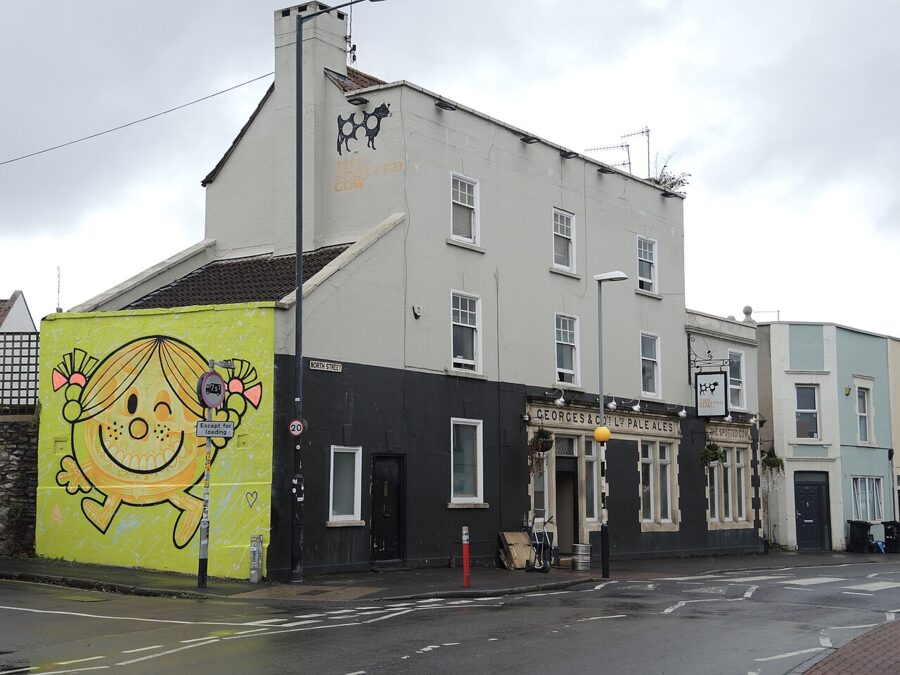
Halfway along the street, the Spotted Cow has been a pub for more than 200 years and goes back to Bedminster’s farming days. A refurbishment uncovered raised lettering from George’s, the Bristol brewery whose tied houses filled this part of town, and it now runs along the dark front. Inside it is spacious and low-lit. Outside is the best garden on the street, a big walled suntrap with a canopy and heaters for winter.
Five changing beers come from local independents, with real cider beside them, and the kitchen is the most serious on North Street, with some produce from the pub’s own rooftop garden. Food runs 12:00–15:00 and 17:00–21:00 Tuesday to Saturday, evenings only on Monday (when the pub opens at 17:00) and 12:00–18:00 on Sunday. Book the Sunday roast, because everyone else has. It is card only, and Tuesday is quiz night.

The Hen & Chicken
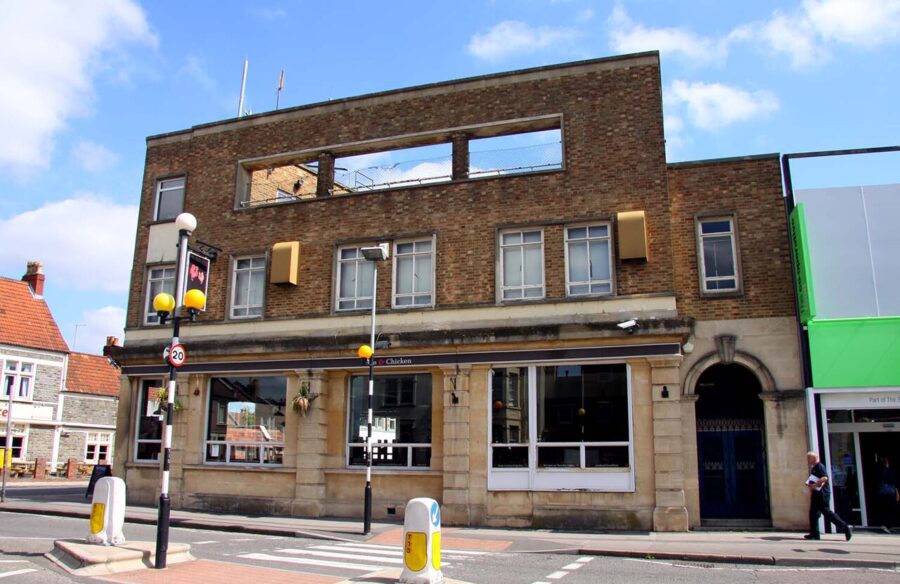
There has been a Hen & Chicken on this corner since at least 1775, and for most of the 19th century it was kept by the Clarks, timber merchants and farmers who ran it alongside their other trades. It was rebuilt around 1905 on the corner of Greville Road and rebuilt again in the 1950s after bomb damage, which is why it looks like a branch bank with ambitions. Today it is one big open-plan bar with books on the shelves and a large theatre-style room upstairs that often hosts comedy.
It is a Greene King house with no cask ale, so come for the night out rather than the pint. Food starts at 17:00 on Monday and Tuesday and at lunchtime from Wednesday, and the doors open at 10:00 at weekends. Before an Ashton Gate kick-off it fills with fans heading west.

The Tobacco Factory
The Tobacco Factory on Raleigh Road was built in 1912 as part of the Imperial Tobacco estate that spread across Bedminster, Southville and Ashton, and it is one of the last pieces of that estate still standing. The architect George Ferguson, later the city’s mayor, saved it from demolition in 1993, and the cafe bar opened in 2001 with a theatre in the same building. The ground floor is a big industrial room with six handpumps that always include Bristol Beer Factory, often a real cider or perry, and vegetarian and vegan food from 10:00.
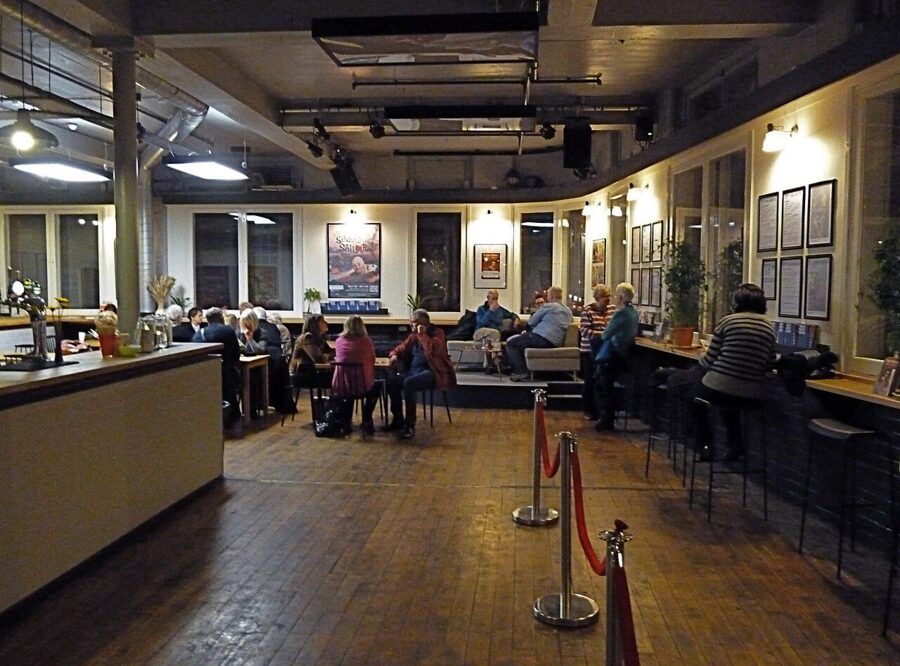

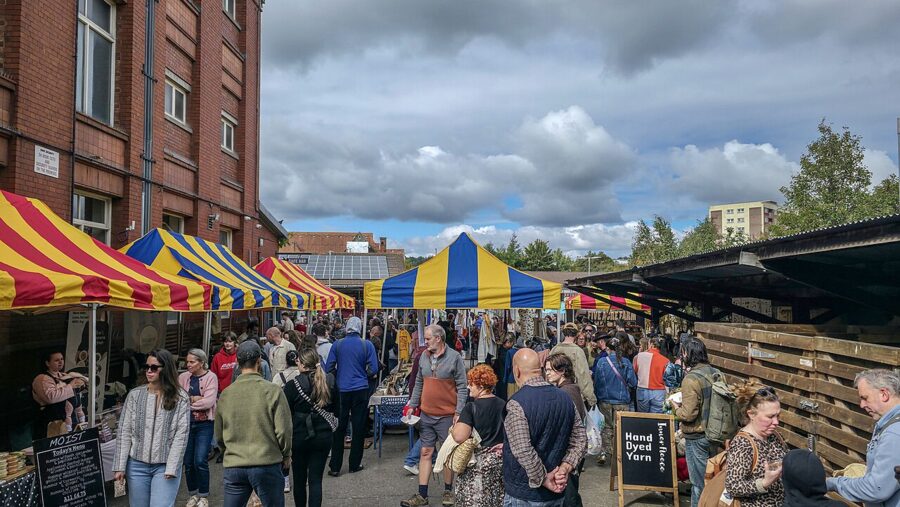
On Sunday mornings the yard fills with a market, which makes this the best brunch-and-a-pint stop in the area. It is card only, with a covered yard for wet days. I’d take a window seat and watch North Street go past.

The BBF Tap Room
At the western end of the street, under 20 minutes’ walk from Ashton Gate, the Bristol Beer Factory Tap Room has five handpumps of cask ale and eight keg lines, all from the brewery. Independence is the one to order now that it is officially the best beer in Britain; Fortitude and Everytime turn up in other pubs on this walk. The back room, the Studio, is a sports bar with big screens, darts and table football, showing football and rugby on TNT and terrestrial channels.
It opens 12:00–21:00 on Monday, until 22:00 on Tuesday and Wednesday, until 23:00 Thursday to Saturday (from 10:30 on Saturday) and 12:00–19:00 on Sunday. It is card only and step-free. Before and after a match it is rammed; on a Tuesday evening it is one of the most civilised rooms in the city. The Thursday quiz costs £5 a team.
Southville’s back streets and the Dean Lane pit
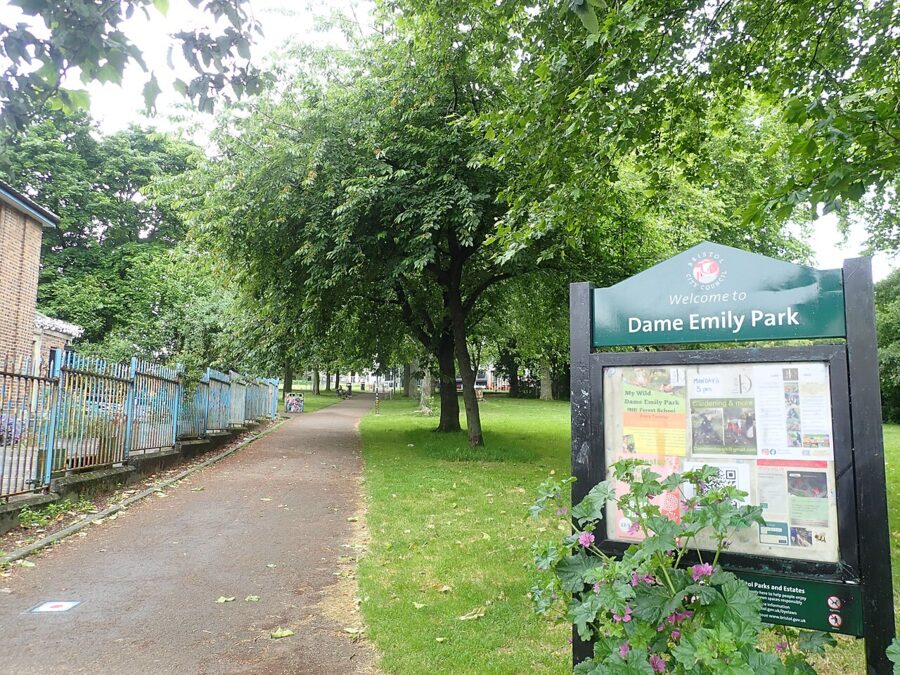
Between North Street and the river, Southville is a grid of red-brick terraces built from the 1880s to the First World War for workers in the tobacco factories and the pits. Two pubs here are worth leaving the main road for, and both face the same piece of history. Dame Emily Park, with its skatepark and constantly repainted walls, covers the old Dean Lane pit head.
By the 1820s more than a dozen coal pits were working around Bedminster. On 10 September 1886 ten workers were killed at Dean Lane, one of the worst disasters the Bedminster coalfield ever had, and a memorial to them was unveiled in September 2026. The Jolly Colliers on West Street takes its name from the trade.

The Coronation
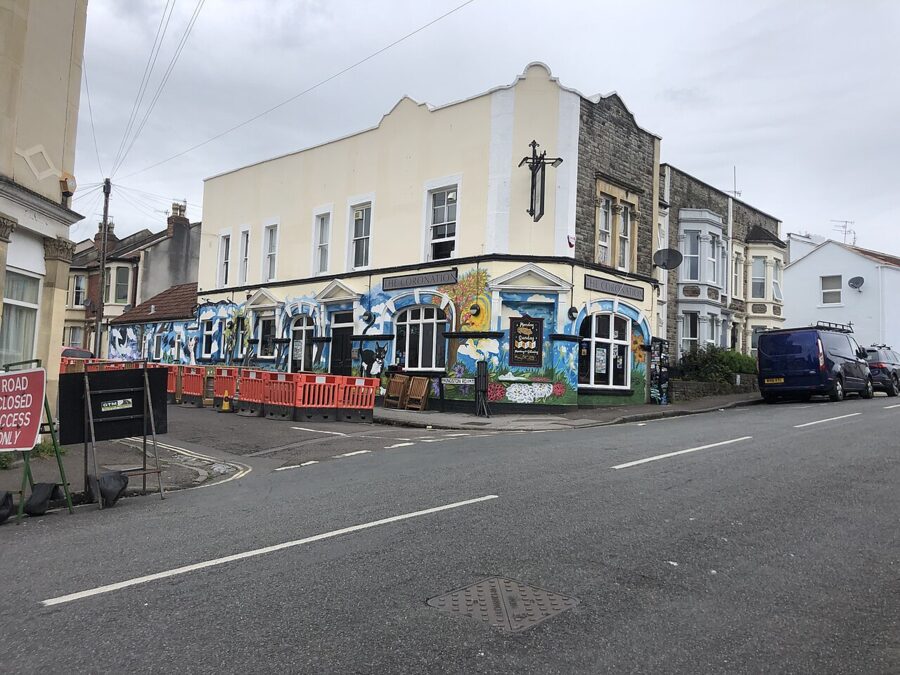
The Coronation, on the corner of Dean Lane and Kingston Road, is the Southville local everyone wishes they lived next to. There are up to five good-value cask ales (Bristol Beer Factory’s Everytime and St Austell’s Proper Job turn up often), real cider and perry from Broadoak, and a wide range of cans and bottles. The licensee painted the artwork inside and out, and a small raised area behind and to the left of the bar is the place to get away from the noise.
The food is straightforward pub cooking with a long vegan list, served on Tuesday to Saturday evenings, with a Sunday roast from noon to 16:00 that has become a local institution. Monday is quiz night, with no food. The pub opens at 16:00 on weekdays, 13:00 on Saturday and noon on Sunday; children are welcome until 18:00, dogs on leads all day, and the pub cat treats both with disdain.

The Dame
Two minutes up Dean Lane, opposite the park, the Dame reopened under its new name in August 2023, having closed as the Tap & Barrel that spring. The theme is the skatepark: skate films on a loop, street art on the walls, a big central bar, pool, darts and table football. The beer is mostly local craft keg, and the two handpumps pour Harry’s cider rather than ale.
It opens at 16:00 on weekdays and 13:00 from Friday, and stays open until 01:00 from Thursday to Saturday. There is level access throughout, a garden, and dogs are welcome.
East Street, West Street and old Bedminster
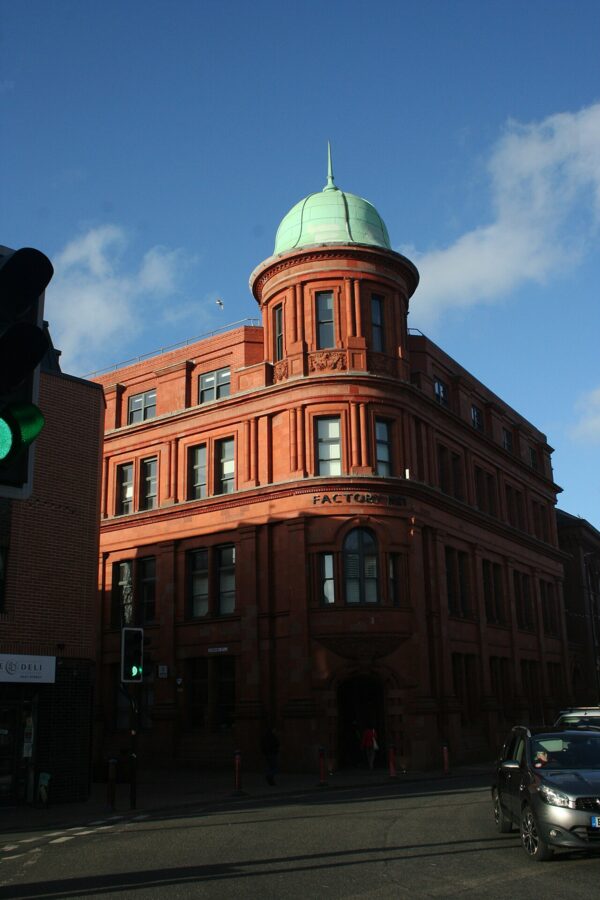
East Street was Bedminster’s high street long before North Street had a deli, and the Wills tobacco factories stood along it. Factory No.1, with its copper dome, still anchors the eastern end while new blocks go up around it. West from there to the Cannon Street junction is where Bedminster drinks without garnish.

The London Inn
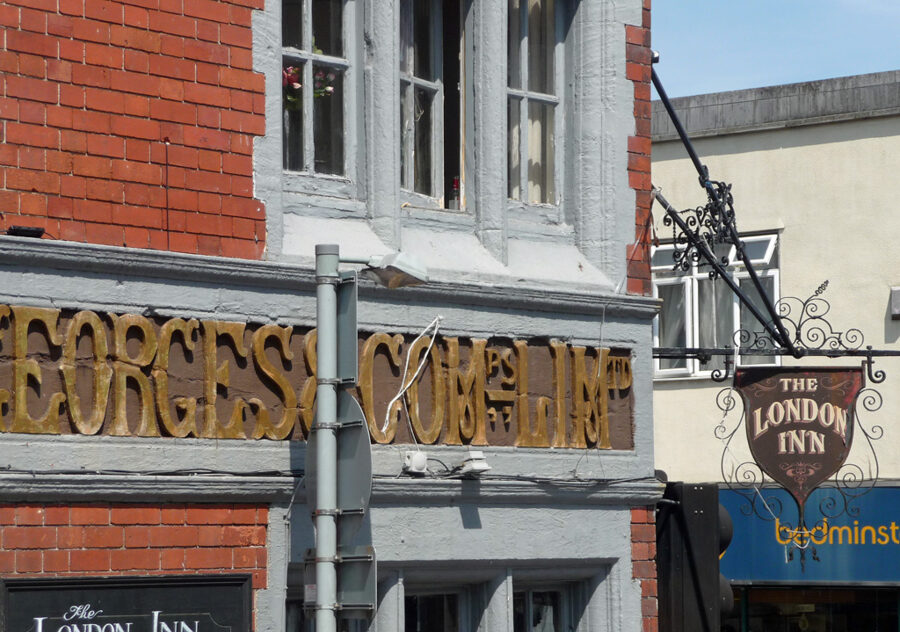
The London Inn stands at the top of East Street where it meets Cannon Street, and it has been the landmark of the junction for many years. A single bar serves two separate drinking areas, there is a small garden at the back, and Courage Best is the cask regular. Look up at the front: the raised George’s Brewery lettering was uncovered during a restoration in the late 1990s.
It shut in March 2023, one of four Bedminster pubs that closed on the same day when energy bills bit, and reopened that April. It opens at noon, closes at 18:30 on Sunday, and has pool and sport on the television. It is a community local rather than a destination, which is exactly why it is in here.

The Robert Fitzharding
Across Cannon Street, the Robert Fitzharding is a big Wetherspoon conversion with dark wood, high-backed furniture and a long L-shaped bar. It takes its name from the Norman-era lord of the manor who founded the abbey of St Augustine around 1140, whose chapter house survives in Bristol Cathedral. Expect two regular cask ales and a long list of changing guests. It opens at 08:00, welcomes children until 21:00 and is step-free from the Cannon Street door, with an accessible toilet.
The Old Globe
There has been a Globe on East Street since at least 1792, when Richard Biggs held the licence. The Old Globe reopened in January 2026 under the team that runs Old Castle Green in Old Market, as an LGBTQ+-friendly community pub with pool, darts, events and a beer garden. Inside it is plain: an L-shaped bar with settles round the edge of the room.
It opens 10:00–22:00 daily. In November 2026 the pub company that owns the building was advertising the lease with a refurbishment planned, so check its social media before a special trip.
West Street: the Departure Lounge, the Black Cat and the Jolly Colliers
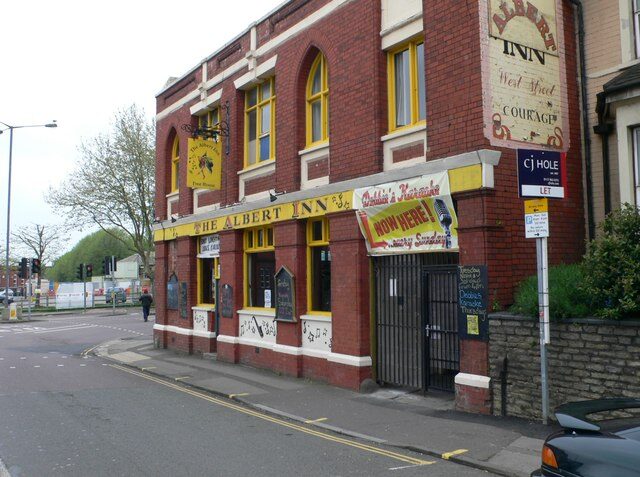
West Street runs south from the Cannon Street junction, and its pubs are the least polished in this guide. The Departure Lounge, on the corner at the top, was the Albert for most of its life and known for live jazz; it closed in 2023 and reopened under its new name in March 2026, still built around live bands, DJ sets and jam sessions in blues, jazz, soul and Motown. There is local cider on the bar and no kitchen, but you can bring in a takeaway from the shops outside. It opens at 19:00 on Wednesday and Thursday, 17:00 on Friday and Saturday (until 02:00) and 15:00 on Sunday, and is closed on Monday and Tuesday.

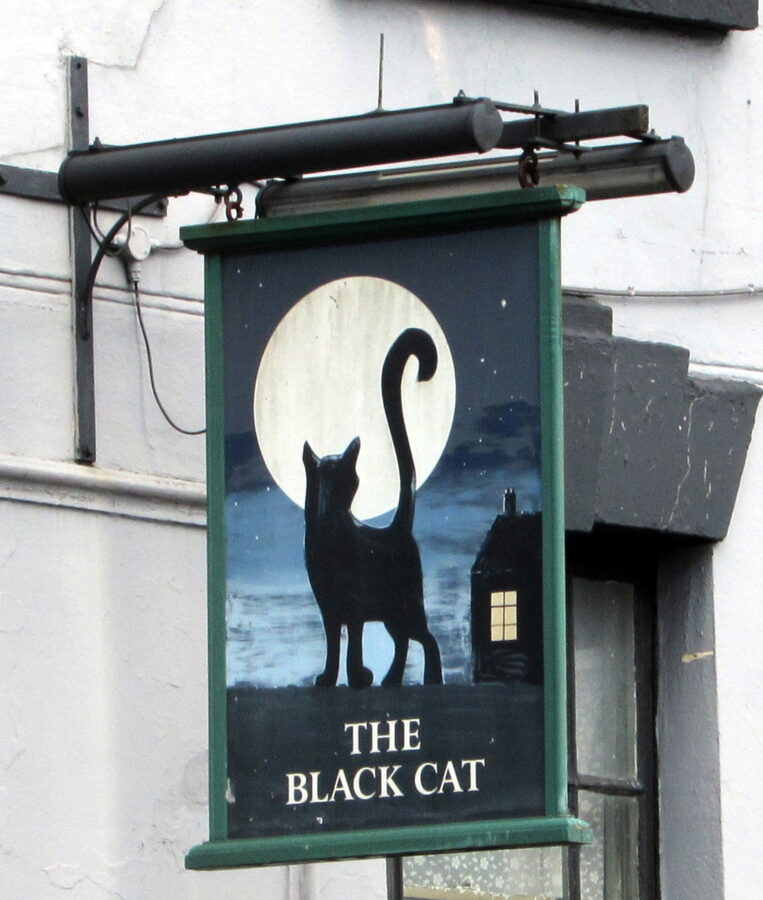
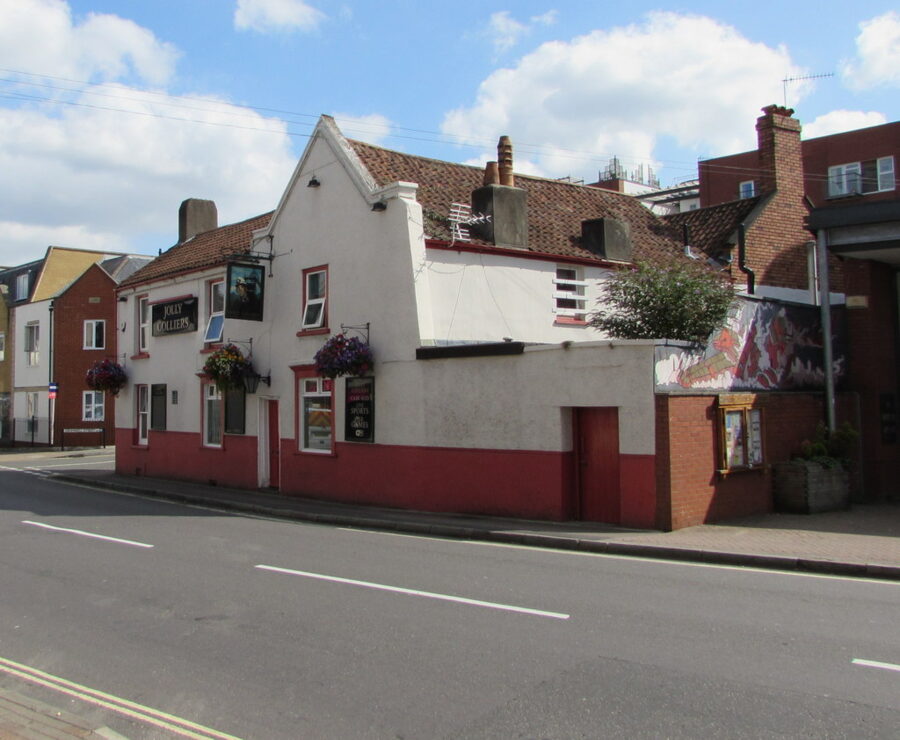
A few doors along, the Black Cat is one long narrow room with two cask ales at keen prices (Dartmoor Jail Ale and Draught Bass have both been on) and live music at weekends. It reopened at Easter 2023 after the same closures that took the London Inn. Further down, the Jolly Colliers is deceptively large, with an L-shaped bar, pool, darts, sport, a Thursday quiz and an impressive walled beer garden; there is no cask, but a sculpture on the side wall remembers a pit disaster nearby. Both open at noon.


Round the edges: the Dark Horse, On Point and Alpha
At the Redcliffe end of Bedminster, on Nelson Parade, the Dark Horse was the Ropewalk and before that the Black Horse, a beerhouse since at least 1858. It is a big community pub with wood panelling, pool, darts, a real fire and an upstairs room for music and comedy, open from 11:00 daily, with no cask ale.
Tucked behind East Street on Herbert Street, On Point Brew Co has brewed since 2022 and opened its tap room in 2023. The beer is mostly keg, and it usually opens only on Friday from 16:00 and Saturday from 14:00, so check its social media first. The team behind Lupe also runs Alpha Bottle Shop & Tap on East Street, a bottle shop with taps where you can drink one can and carry four more home.
The Man in Space, a name that still turns up in old lists of Bedminster pubs, has closed. So, for now, has the Apple Tree on Philip Street, a one-bar cider house that has been shut for repairs since its long-serving licensee retired; until it reopens, Bristol’s cider pubs elsewhere in the city will have to do.
Windmill Hill: the climb to the Rising Sun
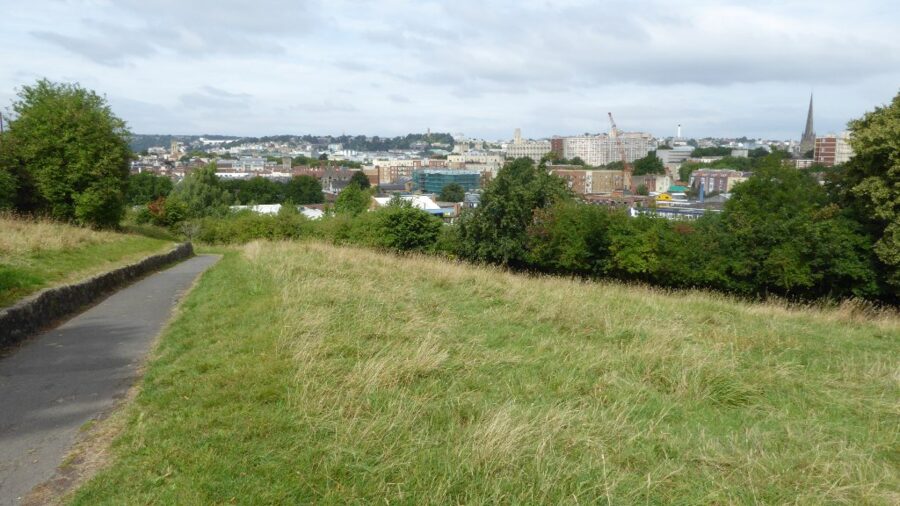
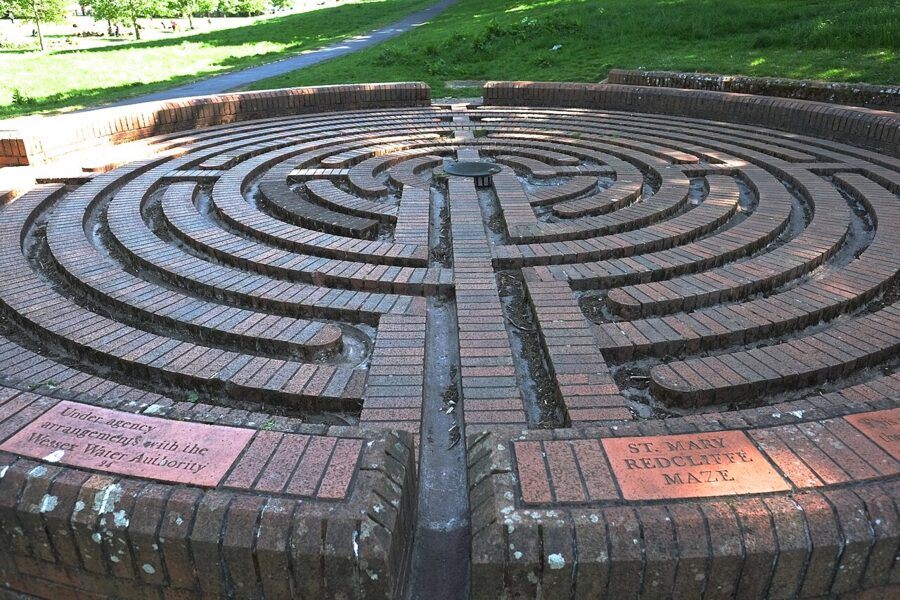
Windmill Hill rises sharply behind Bedminster station, cut off from the rest of Bedminster by the railway, the city farm and a strip of industrial units. Victoria Park takes up the eastern half of the hill: about 51 acres bought by the council in the 1880s, with a water maze laid out in 1984 over the line of a 12th-century pipe that carried spring water from Knowle to Redcliffe. The view north over the city from the top is the reason to come up before you drink.


The Rising Sun
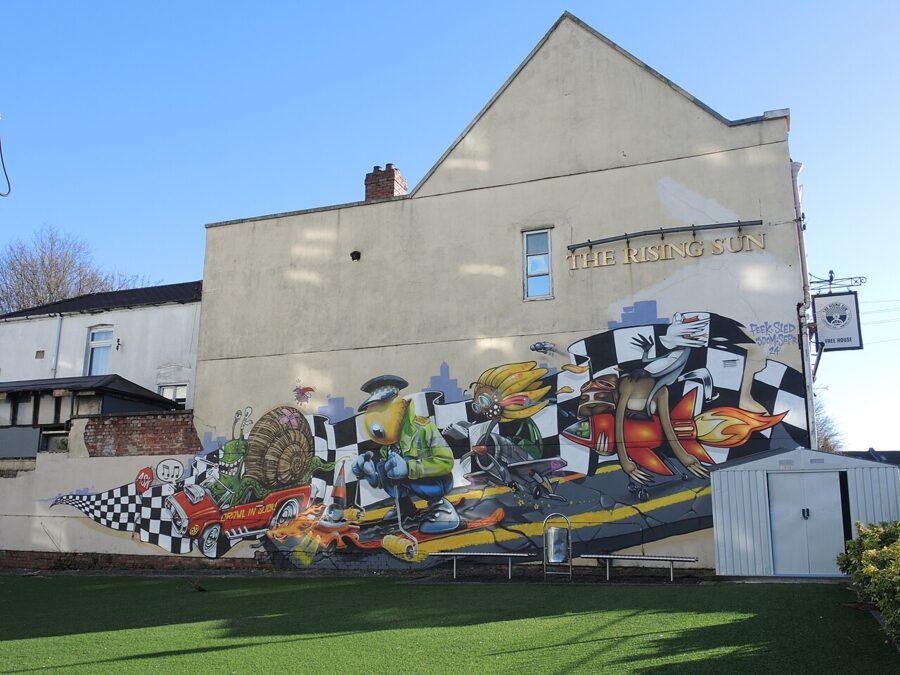
The Rising Sun on Alfred Road is about 150 metres from Bedminster station and a good 15 metres higher, which is all the warning you get. A mural covers the whole gable, and it changes every few years; the current one, a chequered-flag race of snails, was new at the start of 2025. Inside there is one changing cask ale, usually from Bristol Beer Factory or St Austell, plus real cider and a decent choice of local craft keg, and the sheltered courtyard at the side was recently refurbished.
It is a community pub in the full sense, with open mic nights and bandaoke, which is karaoke with a live band and exactly as alarming as it sounds. Hours are 16:00–23:00 Monday to Thursday and from 13:00 Friday to Sunday (until 22:00 on Sunday). Dogs and families are welcome, the inside is all on one level, and the toilets are not adapted.

The Victoria Park
Down the far side of the hill on Raymend Road, the Victoria Park (once called the Raymend) feels like a country pub that took a wrong turn into a red-brick terrace. The big south-facing garden looks out towards Dundry Hill and has a wood-fired pizza oven of its own. Three handpumps carry quality beers, sometimes including something dark, and food runs from noon to 21:00 (20:00 on Sunday).
Families and dogs come in roughly equal numbers, and the Sunday roast is the thing to book. There are film nights, a book club and a quiz, step-free access but no accessible toilet, and Bedminster station is 400 metres away.
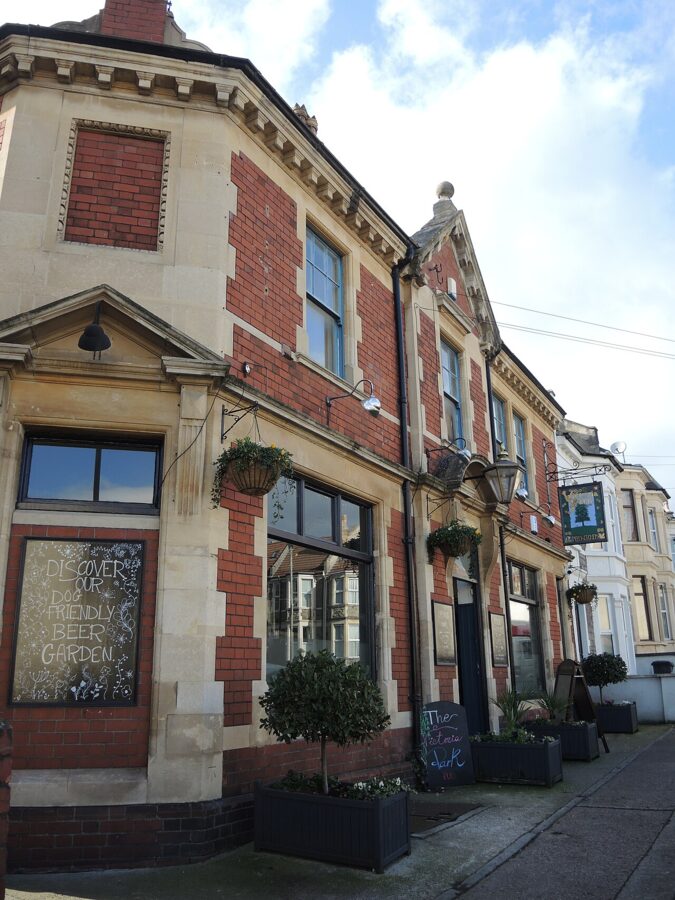

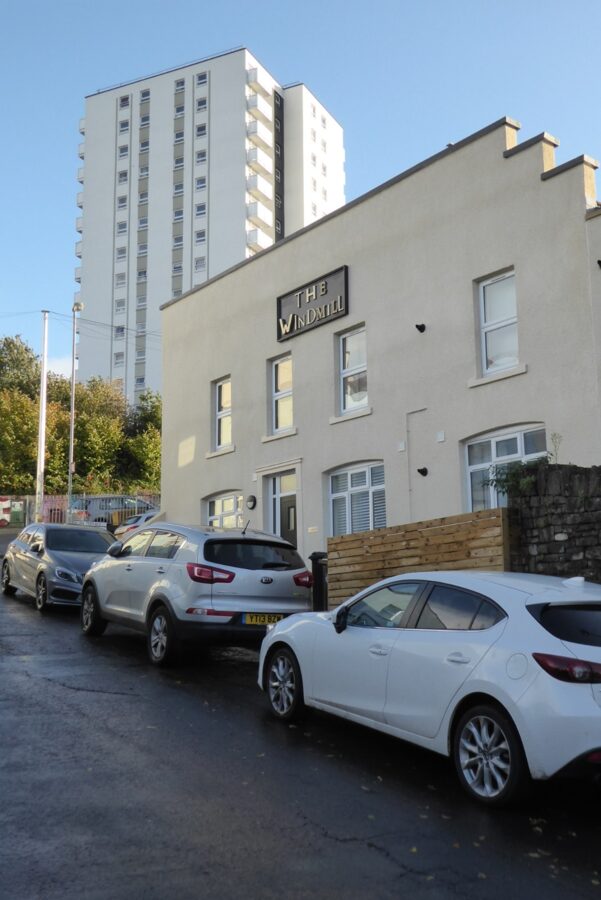
The Windmill, which stood on Windmill Hill itself just above the station, is closed. It shut in 2020 and planning permission to convert it to housing followed in 2022, so the purple pub with the 1970s jukebox is now history.

Totterdown: painted houses and five pubs on one hill
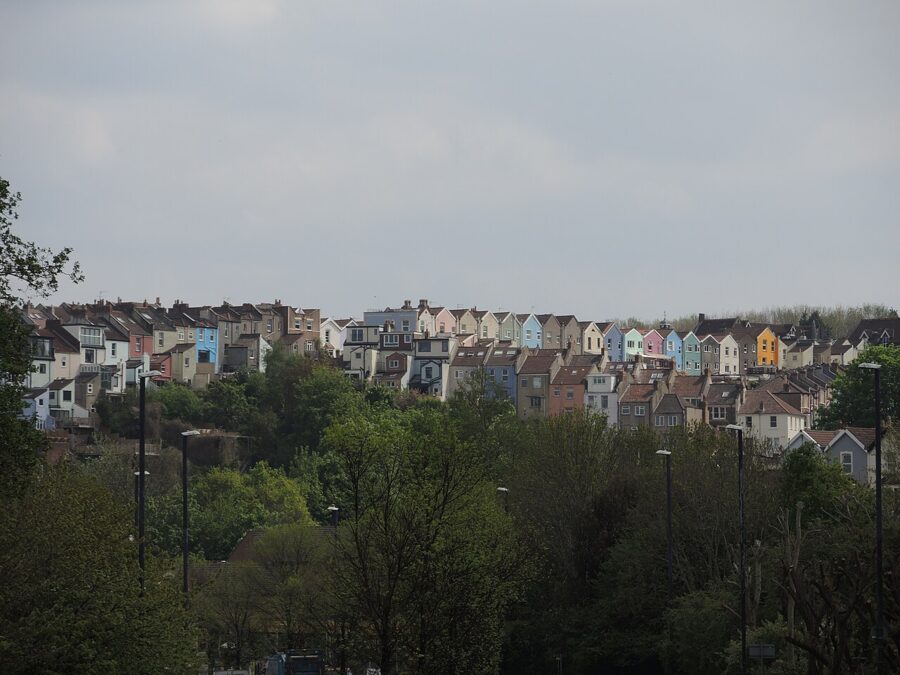
Totterdown climbs steeply from Bath Road and Temple Meads to a grid of Victorian terraces built for railway workers, and its houses are painted in every colour a hardware shop sells, which is why you can pick the place out from across the city. In the 1970s many of its Victorian houses were demolished to make way for a big junction on the planned Outer Circuit Road, which was never built. Vale Street is often put forward as the steepest residential street in England, steep enough that the pavement at the bottom turns into steps. In November the artists’ houses open for the Totterdown Arts Trail, which has run since 2001.

The Shakespeare
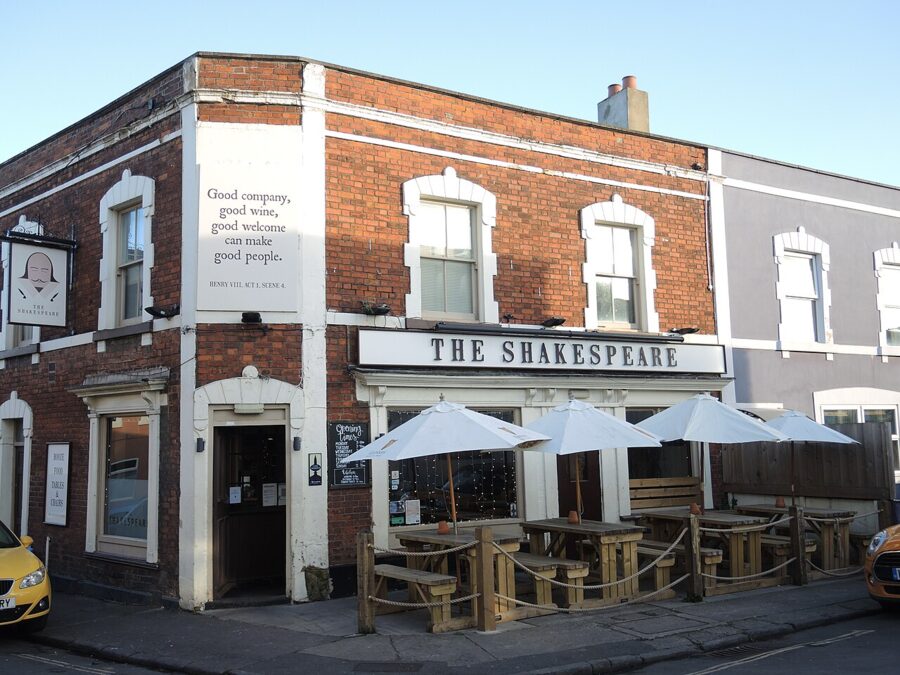
The Shakespeare on Henry Street has been a pub since at least 1868 and is the liveliest of the three at the top of the hill. Three cask ales (Bristol Beer Factory’s Fortitude and Butcombe Original are regulars), eclectic art on the walls, a heated garden at the back and tables on the pavement at the front. Music and DJ nights fill the weekends and Tuesday is quiz night, and depending on the night it feels hippy or grungy, both of which are fine.
The food is Uncle Kelv’s Taste of Montego Bay, Jamaican cooking served on Thursday evenings and from noon on Friday to Sunday. The pub opens at 15:00 on weekdays and noon at weekends.
The New Found Out
Round the corner on Green Street, the New Found Out started life as the Builders’ Arms around 1871 and has carried its odd name since 1875. It reopened in October 2021 after an extensive refurbishment and is a boisterous one-bar street-corner local: Doom Bar on the handpump, pool, darts, sport on the screens, karaoke on Friday and a meat raffle on Sunday. It is small, cheaper than its neighbours, and open from noon to 23:00 every day.
The Oxford
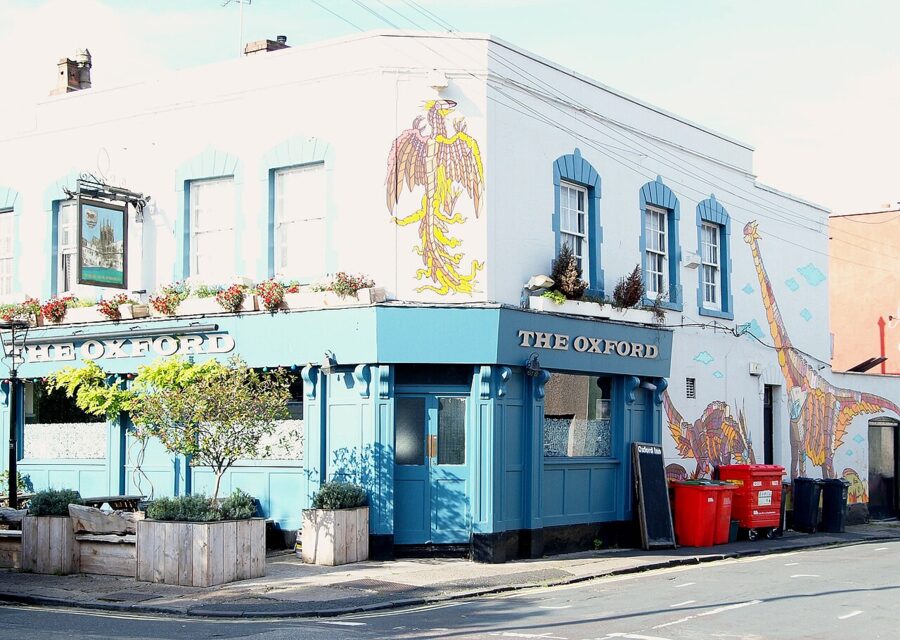
A minute away on Oxford Street, the Oxford is the hub of upper Totterdown: a U-shaped room round a central bar, a small stage, a pair of legs dangling from the ceiling and art everywhere. Three or four Bristol Beer Factory beers are always on, often seasonals and one-offs, with Bristol cider beside them. On summer evenings the patio at the front fills with people catching the last of the sun.
Thursday is open mic from 19:00 and Sunday brings a blues jam from 16:00 to 19:00. It is card only, children are welcome until 21:00 and dogs at any time. The doors open at 16:00 Monday to Thursday, 15:00 on Friday, 13:00 on Saturday and noon on Sunday.

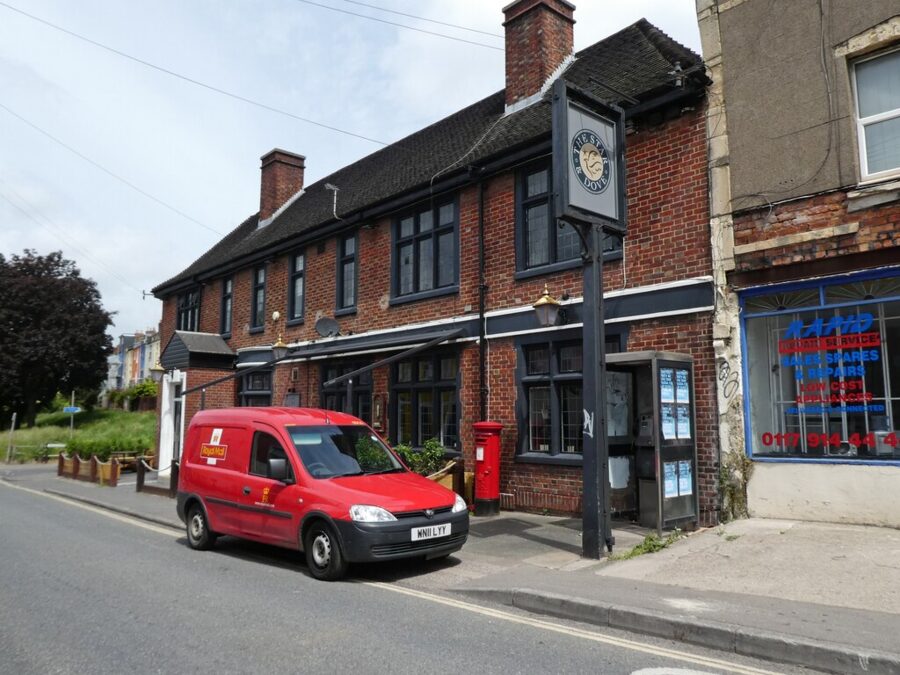
The Star & Dove
Down St Luke’s Road towards Victoria Park, the Star & Dove was the Cumberland Hotel from the 1870s and a Simonds’ house by the 1950s. Stanley Brown, landlord from 1966 to 1980, ran ten skittles teams and four darts teams from it, including a super league side that played upstairs in complete silence. Since then it has been a Dickensian dining room, a sports pub and a gastropub, and it is now a relaxed neighbourhood pub again: two or three cask ales, a real cider, a log burner, pool in the public bar on the left, sport on the screens and a garden at the back.
Food (burgers, loaded fries and Sunday roasts) is served from noon on Friday to Sunday only. The pub opens at 16:00 Monday to Thursday and at noon from Friday, with one step at the door and an accessible toilet inside.

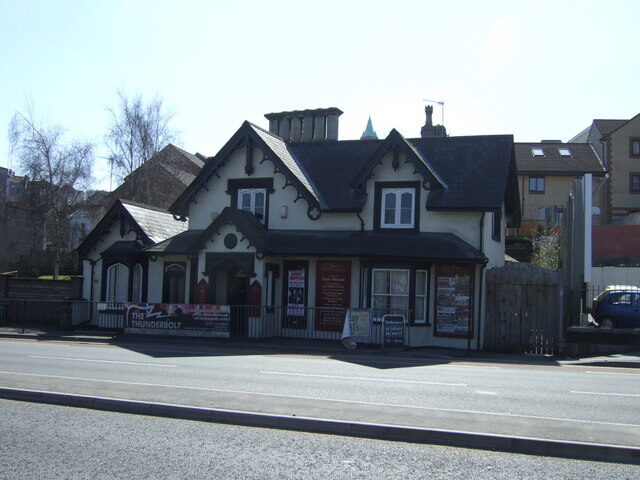
The Thunderbolt
At the foot of the hill on Bath Road, the Thunderbolt was the Turnpike until it became a music pub, and the pub describes its building as a listed tollhouse from the 1830s. It holds about 150 people, has a stage at one end, a large garden and local ales, and books bands on most of the nights it opens. That is only Wednesday to Saturday evenings, and it closes for private functions, so check the listings first; gig tickets are often around £6 in advance and £7 on the door, cash only.

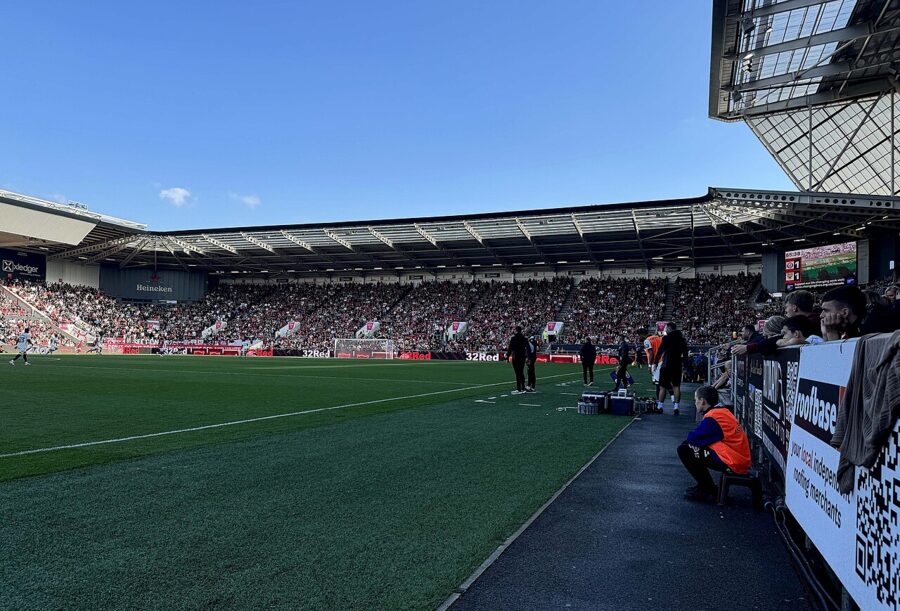
Ashton Gate, Ashton Court and the Balloon Fiesta
West of North Street the terraces give way to Ashton Gate, home of Bristol City and the Bristol Bears rugby team, and beyond the stadium the ground rises into the Ashton Court estate. The stadium holds about 27,000, and on a home match day the whole of North Street fills with red shirts. The pubs nearest the ground get busiest first; if you want a quiet pint, head for Totterdown instead.

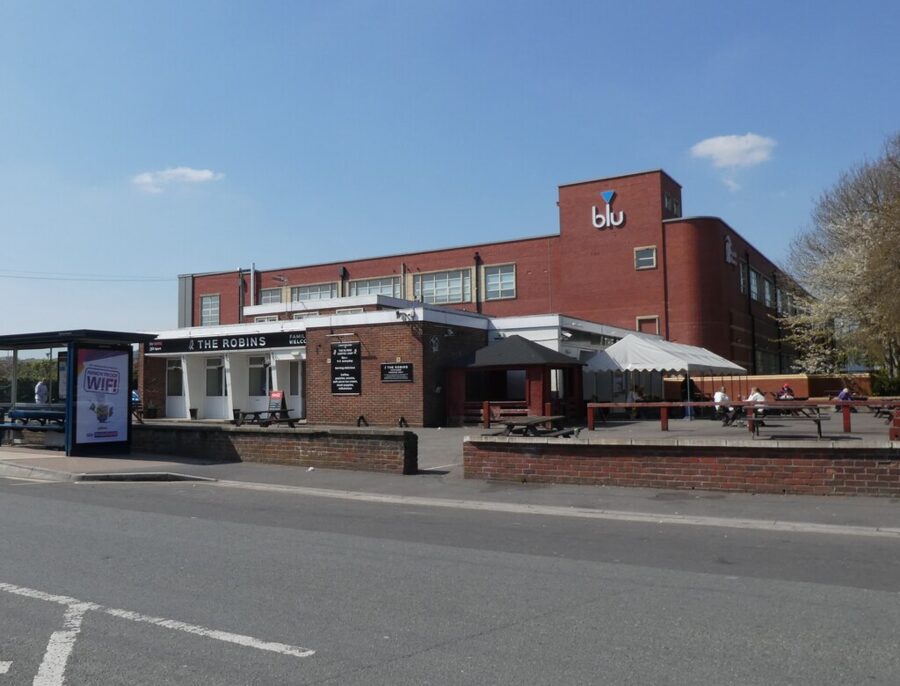
The Robins
The Robins on Ashton Drive takes its name from Bristol City’s nickname and sits about 12 minutes’ walk south of the ground. It is a two-bar community pub with Sky Sports on big screens in both, a pool table in the back bar and a front patio where the barbecue goes on in summer. There is no cask ale, and on match days the beer comes in plastic glasses.
It opens from noon to midnight (01:00 on Saturday, 22:30 on Sunday). Before a home game it is the home supporters’ pub, and after one it is loud either way. Parson Street station is about 900 metres away.

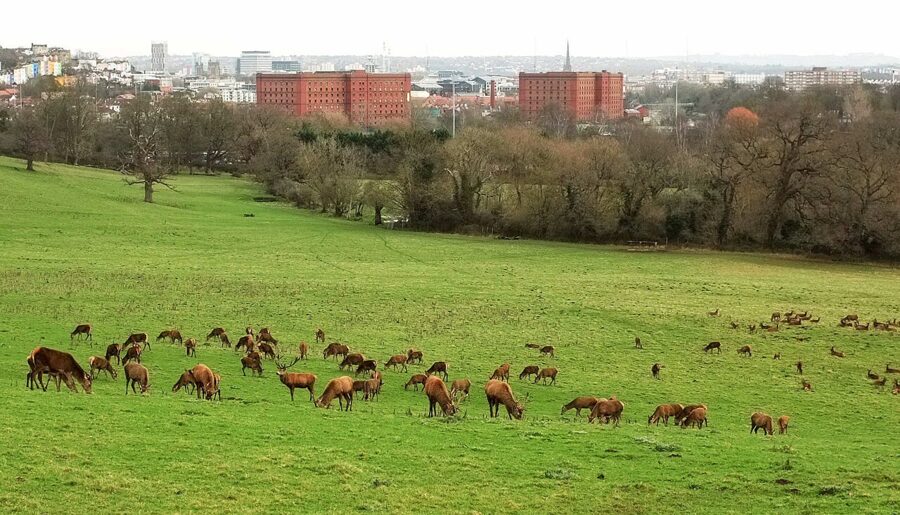
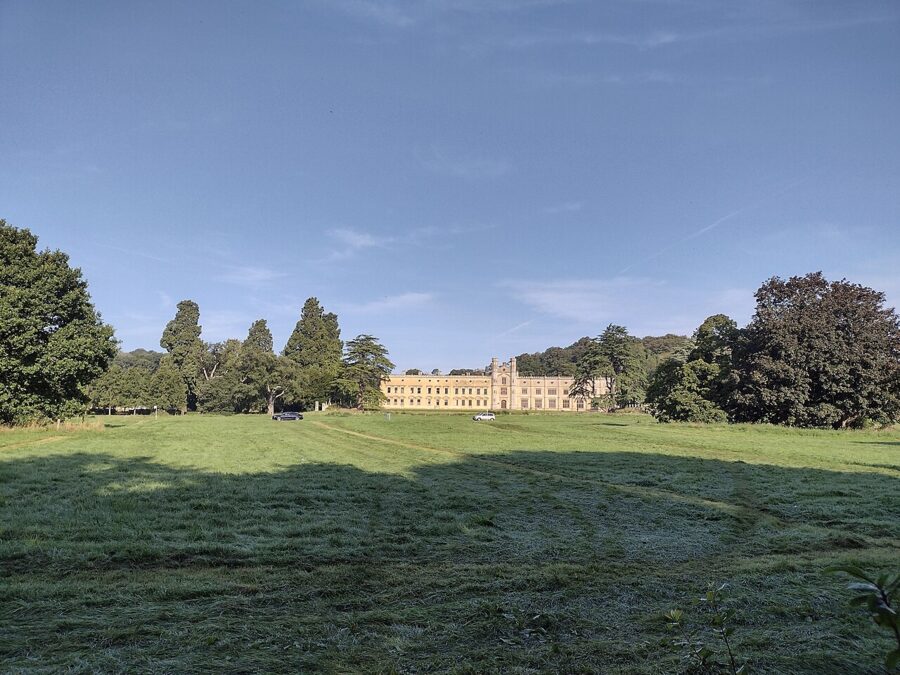
Ashton Court is the estate west of the stadium, about half an hour on foot from the Tap Room: a former deer park with woods, open grass and a mansion that is mostly 17th century behind a long early 19th-century front. The mansion and stables are listed Grade I, much of the house is in poor repair, and the council has backed a 125-year lease to bring it back into use. The estate lies mostly in North Somerset, and if the day calls for a country pub afterwards, Somerset’s pubs start just beyond it.


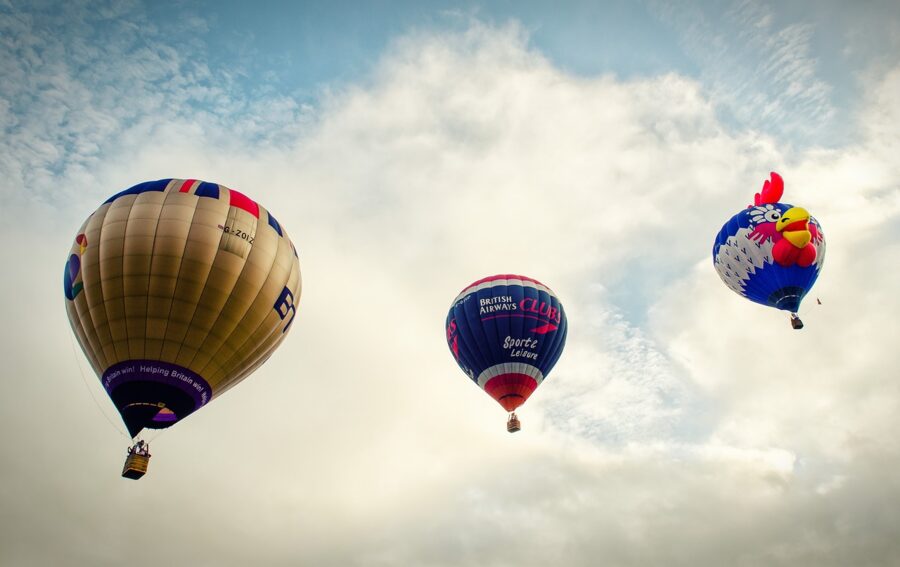
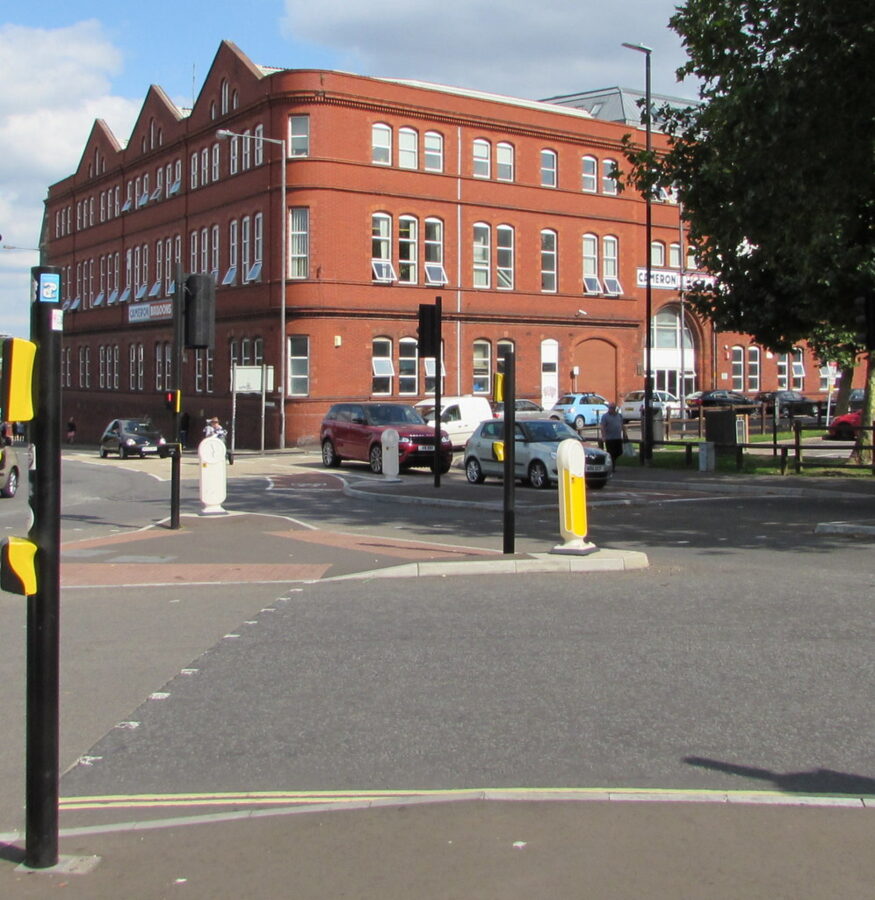
In August the estate hosts the Bristol International Balloon Fiesta, held since 1979 and free to attend; the 2026 event ran from 7 to 9 August. The mass ascents go up at about 06:00 and 18:00 when the wind allows, and many of the special-shape balloons are made by Cameron Balloons, whose works are in Bedminster round the corner from West Street. You do not need to be on the field to see them: Perrett’s Park, at the top of Totterdown, is a good spot to watch them drift over.

A walk from Totterdown down to North Street
This route crosses the whole area in about five kilometres and a little over an hour of walking, with the climbing done early and the flat for the end. Start on a Saturday, when the Totterdown pubs open at noon or 13:00 and the Rising Sun at 13:00. Pick six or seven stops rather than all of them; nobody needs fifteen pints.
| Leg | Distance | Walking time | Gradient |
|---|---|---|---|
| Temple Meads to the Shakespeare | 950 m | 13 min | Steady climb of about 25 m up from Bath Road |
| Shakespeare to New Found Out to the Oxford | 320 m | 4 min | Level, on top of the hill |
| Oxford to the Star & Dove | 290 m | 4 min | Downhill, about 15 m |
| Star & Dove to the Victoria Park, through the park | 810 m | 11 min | Gentle rise over the hill |
| Victoria Park to the Rising Sun | 380 m | 5 min | Level |
| Rising Sun to the Old Globe, past Bedminster station | 560 m | 7 min | Steep drop of about 17 m to the station, then flat |
| Old Globe to the London Inn to the Black Cat | 380 m | 5 min | Flat |
| Black Cat to Lupe to the Masonic to the Spotted Cow | 570 m | 8 min | Flat, slight rise at the Masonic |
| Spotted Cow to the Hen & Chicken to the Tobacco Factory to the Tap Room | 670 m | 9 min | Gently downhill |
The hills are short but steep, and the drop from the Rising Sun to the station is easier going down than up, which is why the route runs this way. To keep it flat, start at the Coronation and walk the length of North Street westwards.
Getting there, opening hours, match days, dogs and children
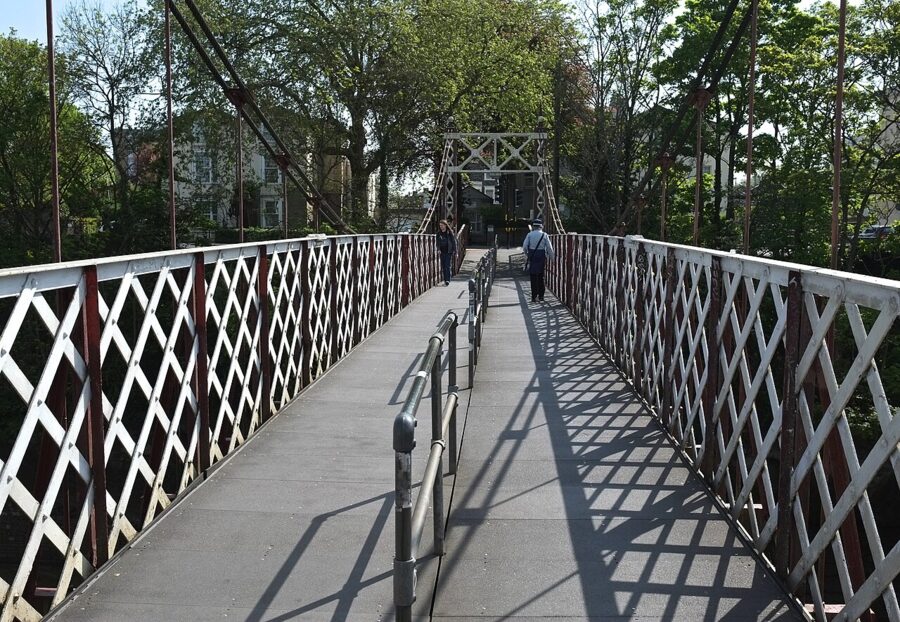
On foot from the centre. The pleasant way in is from Wapping Wharf over Gaol Ferry Bridge, which brings you to the Coronation in about ten minutes. From Bristol Bridge and the old city’s pubs it is about 20 minutes to the Coronation and half an hour to Lupe. Temple Meads to the Star & Dove or the Thunderbolt is about 16 minutes on foot.

By train and bus. Bedminster and Parson Street are the first two stops out of Temple Meads on the line towards Weston-super-Mare. Bedminster is right for Windmill Hill and East Street, Parson Street for the Robins. Buses run along North Street (the 24 among them), several routes including the M1 and the A1 airport bus pass within a minute of the top of East Street, and the 2, 2A and 376 climb the Wells Road through Totterdown.

Opening quirks. Early in the week many of these pubs do not open until 15:00 or 16:00, and the Spotted Cow not until 17:00 on Mondays. The Thunderbolt opens only on Wednesday to Saturday evenings, the Departure Lounge is shut on Monday and Tuesday, and On Point usually opens only at the end of the week. Take a card: the Tap Room, the Tobacco Factory, the Spotted Cow and the Oxford are card only.
Match days. When Bristol City or the Bears are at home, North Street west of the Tobacco Factory, the Tap Room, the Hen & Chicken and the Robins are busy for hours either side of the game. Totterdown and Windmill Hill are the escape.
Dogs and children. Dogs are welcome at most of the pubs named here, from the Spotted Cow and Lupe to the Oxford and the Rising Sun; the Coronation asks for leads, and the Wetherspoon is the usual exception. Families are welcome at the Tobacco Factory, the Tap Room, the Spotted Cow, Lupe, the Victoria Park and the Rising Sun; the Coronation takes children until 18:00, the Oxford and the Robert Fitzharding until 21:00. The hill pubs, by definition, involve a hill.
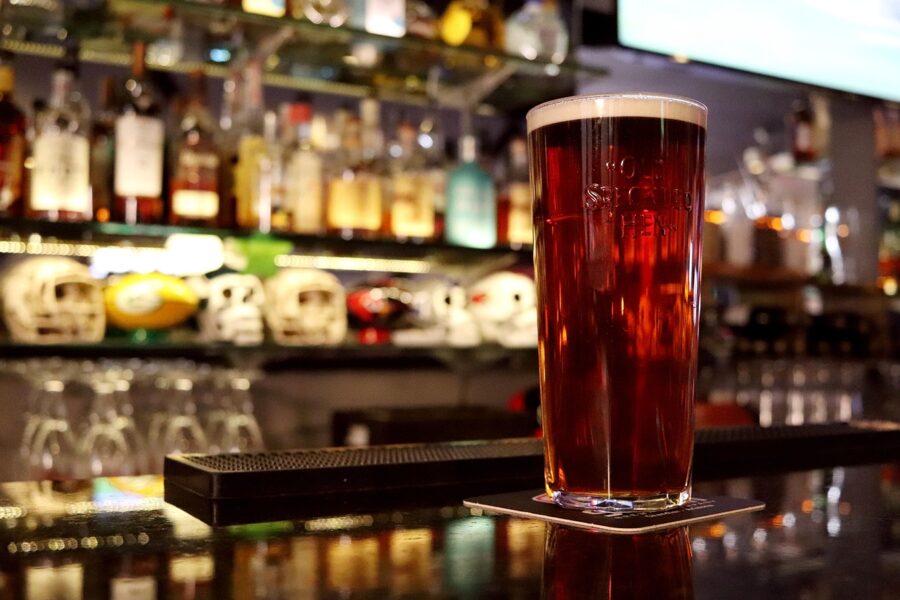
Finish where this started. Walk the length of North Street, past the cow on the gable and the Tobacco Factory’s windows, and order a pint of Independence at the Tap Room, a kilometre from the brewery that made it. Then it is a half-hour walk back to the harbour, or a bus from the stop outside.