
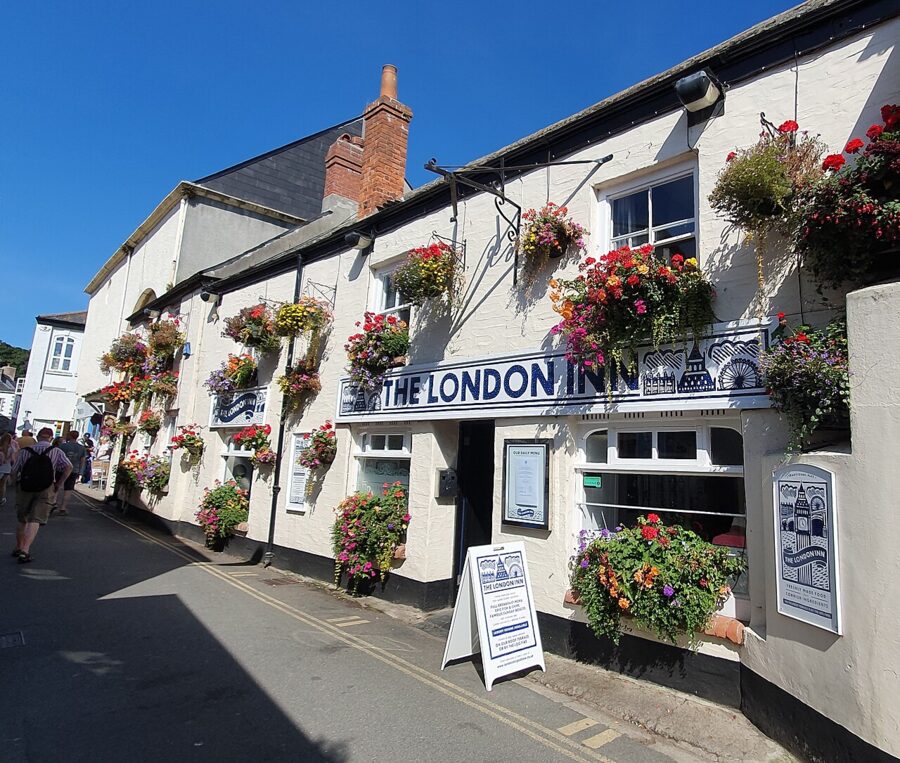
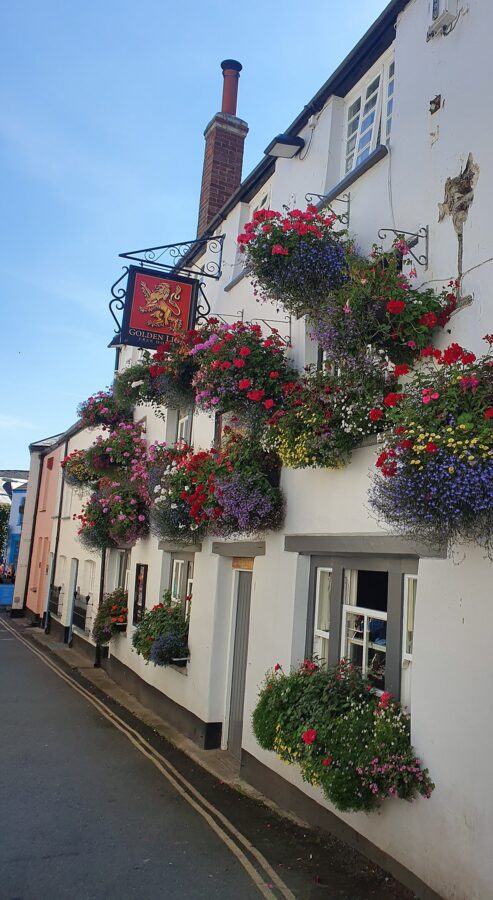
Lanadwell Street in Padstow is barely wide enough for a delivery van, and it holds two of the town’s best pubs about forty metres apart. The London Inn began as three fishermen’s cottages and still keeps the bar fittings St Austell Brewery put in after it bought the place in 1907. A few doors up, the Golden Lion is where the red ‘Obby ‘Oss lives, and on the first of May the whole street finds out.
Neither of them is on the harbour, which is half the point. The quay belongs to the crowds and the ice-cream queue; the back street belongs to people who live here, plus anyone who has worked out that the beer pours just as well fifty yards inland. I’d start any trip to the north coast on this street, with a pint of Tribute and the folk session if it’s a Sunday night.

From Padstow this guide crosses the Camel to Rock and Polzeath, follows the cliffs to Port Isaac, Trebarwith and Boscastle, then turns inland to St Kew, Wadebridge, Bodmin Moor and the Crown at Lanlivery. The south coast and the far west get a shorter run at the end. Expect St Austell beer almost everywhere, a lot of slate underfoot, and a great many stories about smugglers.

On this page
- What Cornwall pours
- Padstow: the harbour and the back streets
- Across the water: Rock, Trebetherick and Polzeath
- Port Isaac, Trebarwith and the slate coast
- Inland: St Kew, Wadebridge and the moor
- Lanlivery and the Saints' Way
- Smugglers' tunnels and "the oldest"
- The south coast and Penwith, in brief
- Three days out: a walk, a ride and a bus
- Practical notes: hours, food, rooms and dogs
What Cornwall pours
Walk into almost any pub between Bude and Land’s End and you will see the same three St Austell pump clips: Tribute, Proper Job and Hicks. St Austell Brewery was founded in 1851 by Walter Hicks, a maltster and wine merchant, and the strong 5% bitter still carries his name. In 2026 the brewery marked its 175th year by reviving old recipes, including Trelawny, a 3.8% best bitter, and brewing a new anniversary ale called simply 1851.

Tribute is the beer you will drink most. It started in 1999 as Daylight Robbery, a one-off for the solar eclipse that summer, and sold so well that it came back for good as Tribute in 2001. It is a light, orangey pale ale at 4.2%, built for drinking two of. Proper Job, at 4.5%, is the hoppier IPA, and if a pub has both on, that is the one I’d try first.
St Austell owns more than 160 pubs across the South West, many of them in Cornwall. That makes most of the pubs in this guide tied houses, where the brewery supplies the beer and usually owns the building. The best tenants make a tied pub feel as personal as any free house; the dull ones make every bar in the county taste the same, which is why a free house with Cornish guest beers is worth seeking out.
The other big name is closing. Sharp’s Brewery started in Rock in 1994 and made Doom Bar, named after the sandbank at the mouth of the Camel, into one of the best-selling cask beers in Britain. Molson Coors, which bought Sharp’s in 2011, confirmed in autumn 2026 that the Rock brewery would shut and that cask Doom Bar would be brewed in Hartlepool, about 417 miles away. CAMRA’s Cornwall chairman called it a betrayal, and the campaign wants a rule stopping beer brewed up north from being sold as Cornish.
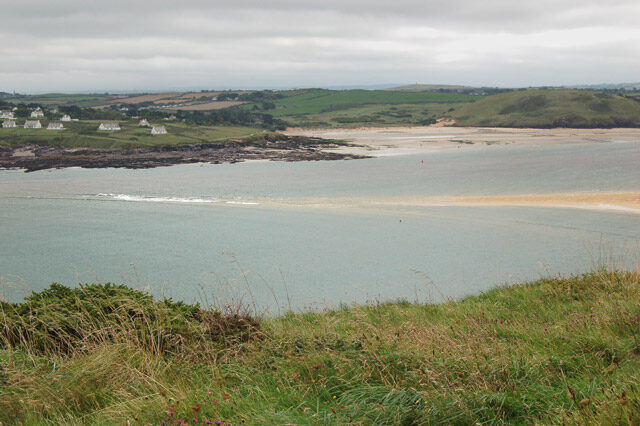

So drink Doom Bar here while it is still from Rock, if that matters to you, and then look past it. Skinner’s of Truro went into administration in 2022 and was bought by Goodh Brewing of Indian Queens; its Porthleven pale ale still turns up in Porthleven itself. Padstow Brewing runs two tap rooms in its home town, Tintagel Brewery supplies many free houses on the slate coast, Firebrand brews at Launceston, and Harbour Brewing, near Bodmin, became majority-owned by St Austell in 2026.
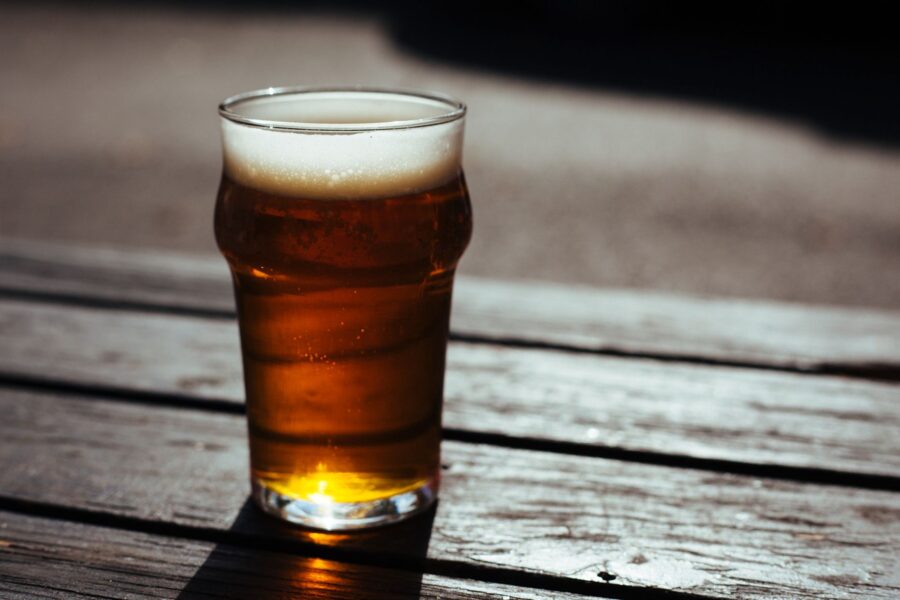
Then there is the Blue Anchor in Helston, which brews its own Spingo ales at the back of the pub and was one of only four pubs in Britain still brewing on the premises when CAMRA was founded in 1971. If you care about real ale at all, it is worth the drive.
Cornwall makes cider too, though less of the still, cloudy farmhouse kind than Somerset. Healey’s Cornish Cyder Farm at Penhallow, between Newquay and Truro, makes Rattler, the sparkling cider you will see on fonts and in fridges across the county. For proper farmhouse cider, look for a box behind the bar: the Gurnard’s Head near Zennor stocks one from Skreach Farm, near Lamorna.
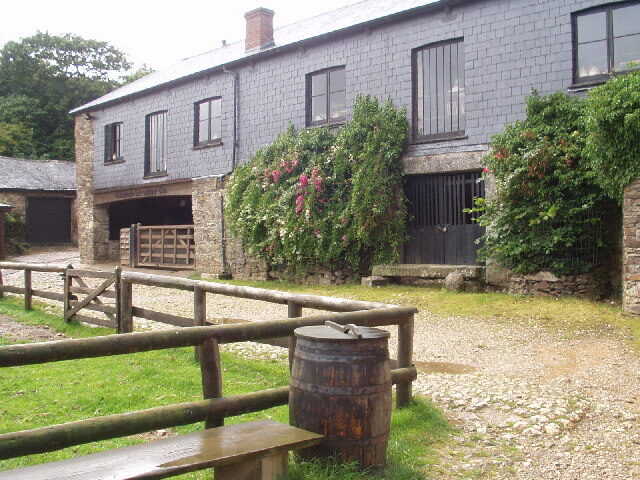

As for the pubs themselves, Cornwall does three kinds better than anywhere else. There are the harbour pubs, built for fishermen and pilots, with slate floors because slate is what the county had. There are the church-house inns, long stone buildings beside the village church, several of which claim to have been built for the masons working on it. And there are the moorland coaching inns, fewer in number and with more stories attached.
Padstow: the harbour and the back streets
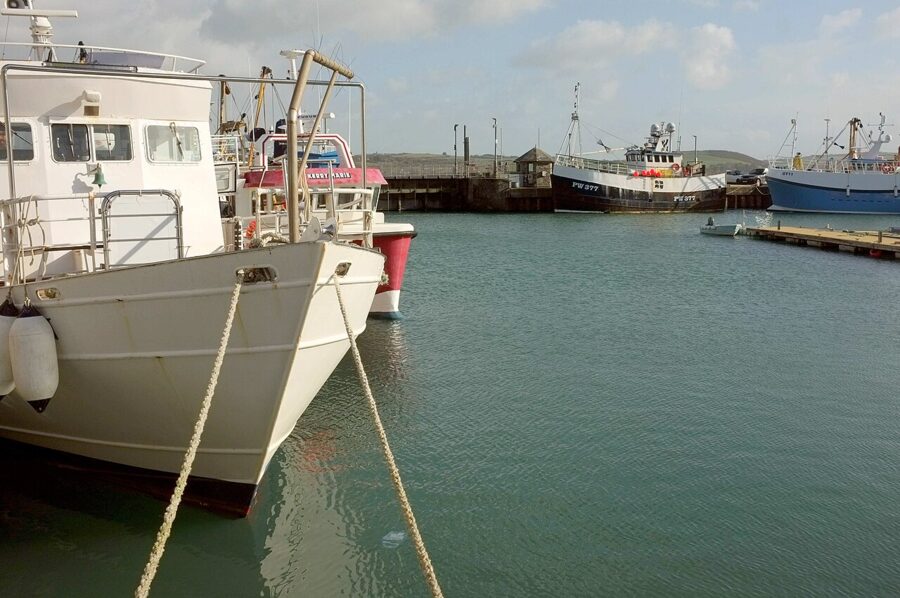
Padstow is a working fishing port on the west bank of the Camel that became the county’s food town after Rick Stein opened his Seafood Restaurant on the quay in 1975. In August the harbour pubs fill by noon; in February you can have the snug to yourself.

The London Inn
This is the one I would send you to first. The London Inn at 6–8 Lanadwell Street has a single main bar with a second room through a wide arch, and both still look like a small-town local rather than a seaside brasserie. The pub’s own history puts its opening at 1803 and takes the name from a local sloop; CAMRA’s heritage researchers date the conversion of the cottages to 1827. I would not argue with either over a pint.
What matters is inside. St Austell bought the pub in 1907 and appears to have refitted it soon afterwards, and much of that work survives: an Edwardian panelled counter painted a deep red, a fielded panelled ceiling, and a floor of Delabole slate. CAMRA lists the interior in its guide to historic pub interiors, and the pub is registered as an Asset of Community Value, which gives the town some say if it is ever sold.
The beer is St Austell: Tribute, Proper Job and Hicks, with a changing fourth. Folk musicians tend to turn up on Sunday evenings, the best time to be here. The bar opens 11:00–22:30 daily; food runs Tuesday to Saturday, 12:00–14:30 and 17:00–21:00, with no kitchen on Sundays or Mondays. Children and dogs are welcome, there are five en-suite rooms, and the roof terrace is a sun-trap.
The Golden Lion
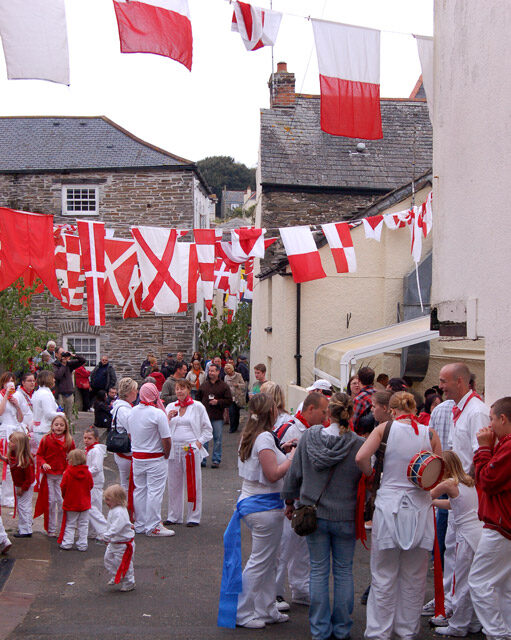
CAMRA’s local branch calls the Golden Lion Padstow’s oldest pub and puts it at well over 400 years, which nobody in town is going to dispute on May Day. On the first of May the red Old ‘Oss is led out from here to start the ‘Obby ‘Oss festival, a day of drums, accordions and singing that winds through every street. If you want to see it, arrive the night before. If you want a quiet pint, pick another day.
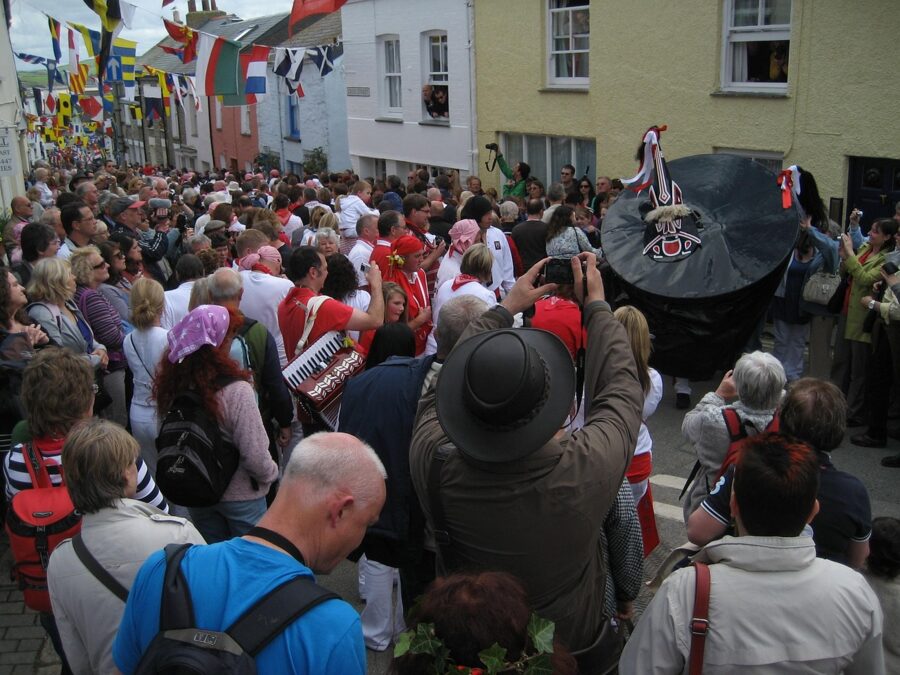
The rest of the year it is a locals’ pub with a low-beamed public bar, partitioned at one end for families and diners, and a roomier, quieter lounge. It stands back from the harbour, so it fills later than the quayside pubs. Food is served 12:00–14:00 and 17:00–20:00 Monday to Saturday, and Sunday is roast dinner only, 12:00–18:00. There are three letting rooms, dogs are allowed, and the cask beer is usually Doom Bar.
On the quay
The Shipwrights on North Quay is the harbour pub to choose if you only have time for one. It was a boat-building shed before it was a pub, and the long, wood-panelled bar still has the proportions of a workshop. The pub backs the local gig-rowing club, and outside stands an old railway mileage post, a reminder that trains ran to Padstow until 1967 along what is now the Camel Trail.
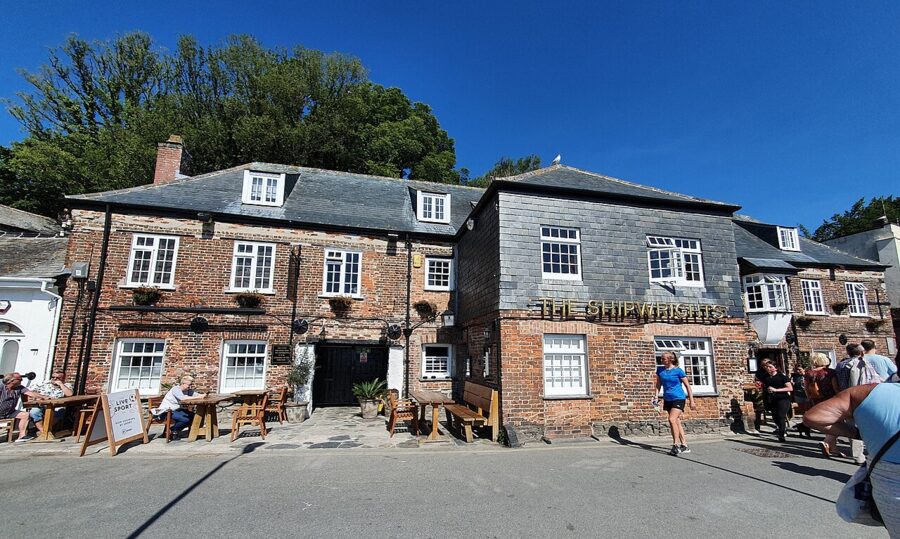

It gets packed in summer, with tables pushed close together, and dogs on leads are welcome throughout. Food runs from noon to 21:00 every day.
Across the inner harbour on South Quay, the Old Custom House was exactly that: the building where the Customs and Excise men worked. It is now a St Austell pub with rooms and a separate restaurant, and the feel is more bistro than boozer. Go for the beamed bar and the view of the boats, not for atmosphere.
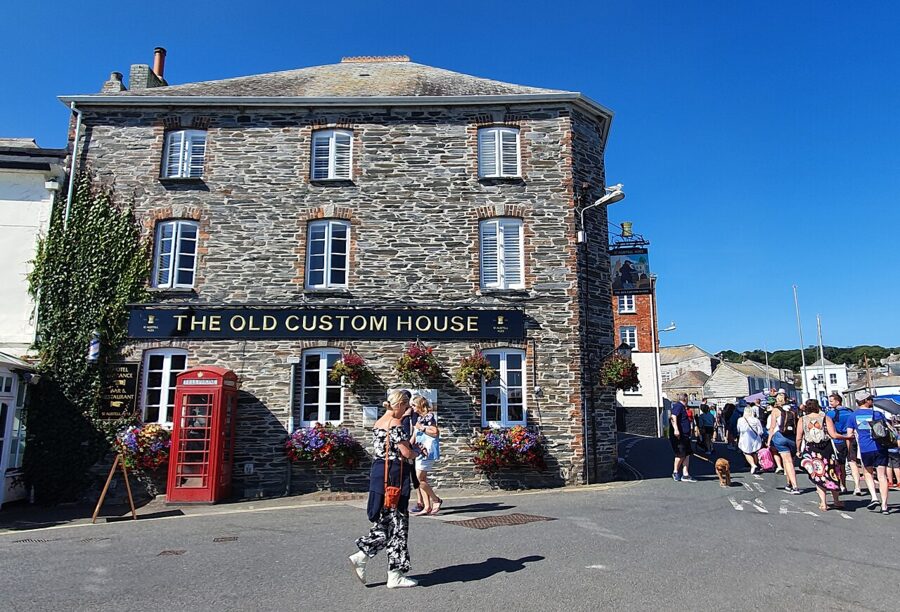

Tucked up Strand Street, the Harbour Inn is a small, family-run St Austell pub with seafaring odds and ends on the walls and a timbered bar much used by fishermen. It is the home of the Blue Ribbon ‘Oss, the rival to the Golden Lion’s red one. The slate floor is newer than it looks: the old one had to come up after hailstones flooded the bar.
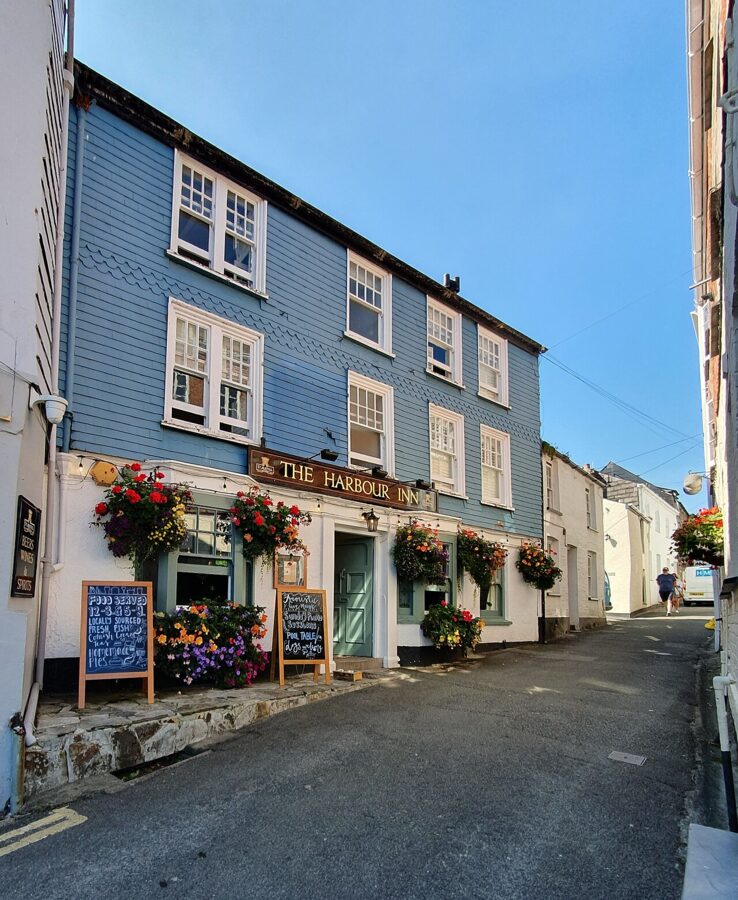

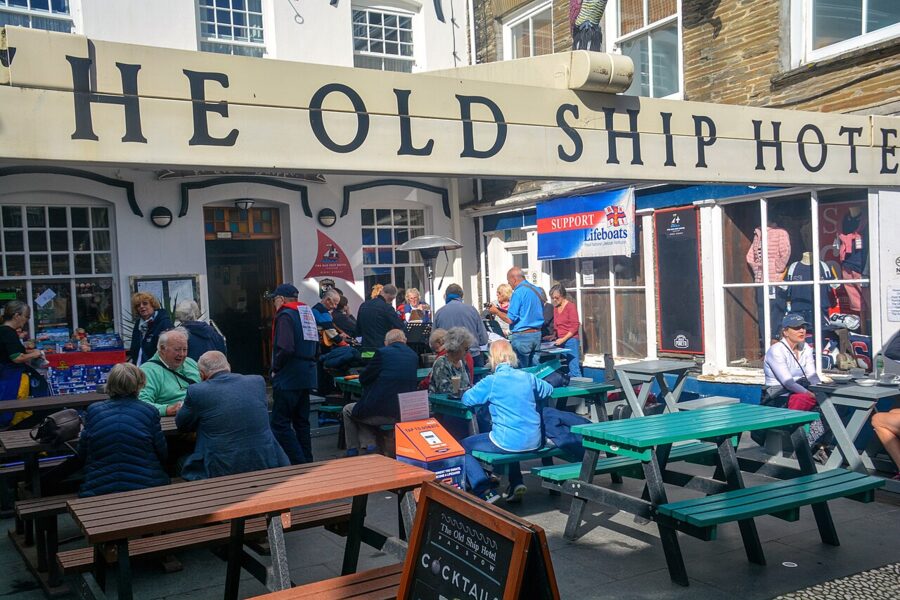
Two more are worth knowing. The Old Ship Hotel on Mill Square has two high-ceilinged bars, a covered patio out front, regular live music and a small beer festival of up to twelve casks over Christmas and New Year. Padstow Brewing’s tap room in the old post office on Duke Street pours its own cask and keg beers, dark ones included, in flights of thirds; it shuts at 20:00, so treat it as a first stop rather than a last.

Across the water: Rock, Trebetherick and Polzeath
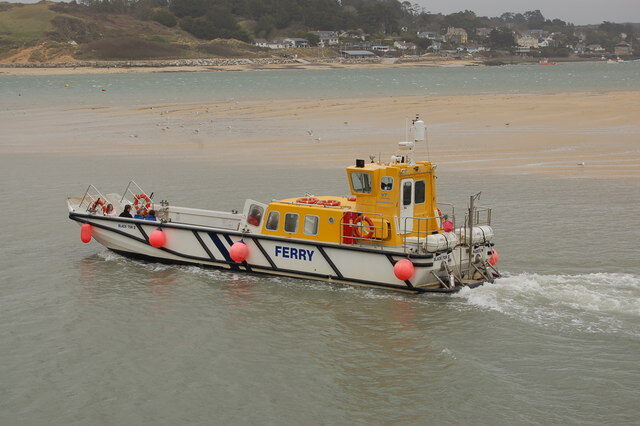
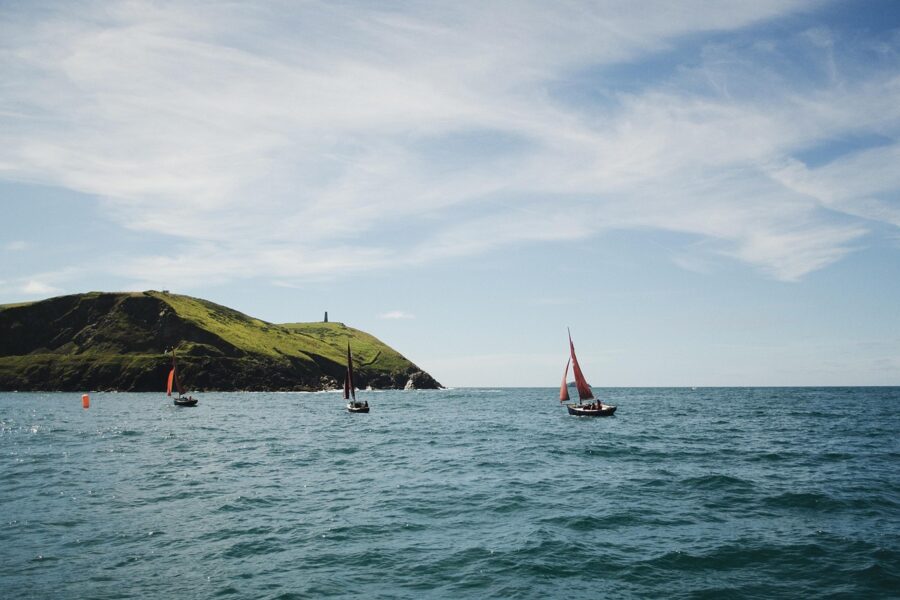
The Padstow to Rock ferry is the best four minutes in north Cornwall. It runs from the pontoon by the harbour mouth to the slipway at Rock, first boat at 08:00 from each side, and the last leaves Padstow at 17:00 in winter and 19:45 from late July to the end of August. An adult single costs £3, card only, and you buy a ticket each way. Dogs and bikes travel too.

The Mariners, Rock
The Mariners sits at the top of the Rock slipway, so it is the first thing you reach off the ferry. It has been part of the village since the mid-1990s: a two-storey quayside building with the bar downstairs, a restaurant upstairs, and a veranda on both floors looking across the estuary to Padstow. Since 2019 it has been run by the chef Paul Ainsworth and his wife Emma, of Paul Ainsworth at No6 in Padstow, in partnership with Sharp’s, whose brewery is about a mile up the road.
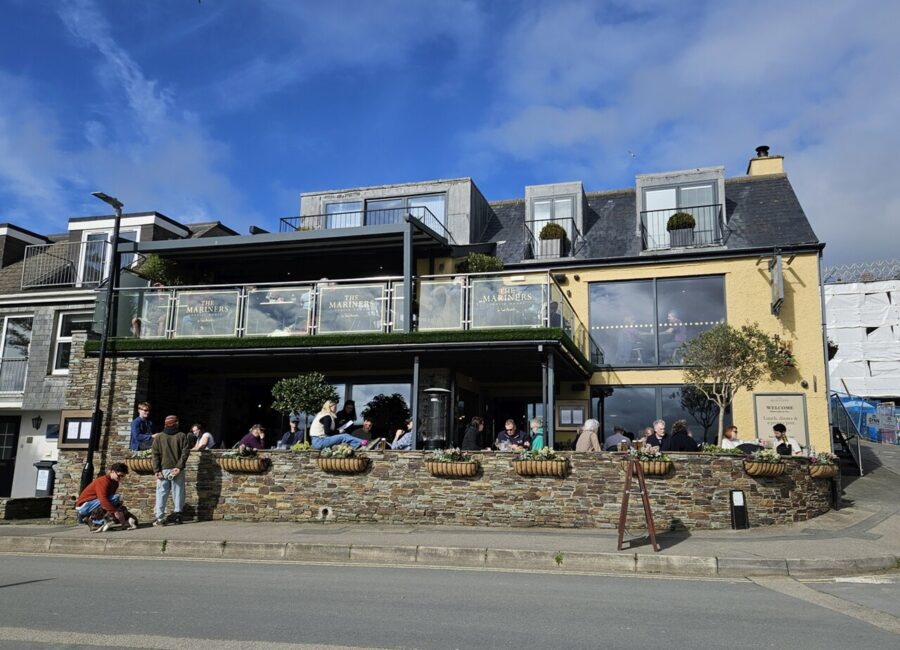

Don’t let the chef’s name put you off. Downstairs it is still a pub, with Sharp’s Sea Fury, Doom Bar and Solar Wave on the bar, a pub-classics menu that includes a burger and a ploughman’s, and a children’s menu. Drinks are served from 11:30 and food from 12:00 to 21:30, every day; book for the upstairs restaurant and for a window table in summer.
There is no parking at the pub, and the nearest car park, Rock Quarry, fills on sunny days. The pub’s own advice is to park in Padstow and take the ferry, and for once the easy option is also the pleasant one.
Carter’s, and what happened to it
The old directory filed a pub called Carter’s under Trebetherick, the scatter of houses between Rock and Polzeath. CAMRA’s records show Carter’s, Polzeath, closed for good on 1 September 2013, and the building has gone to other uses. There is nothing to visit.
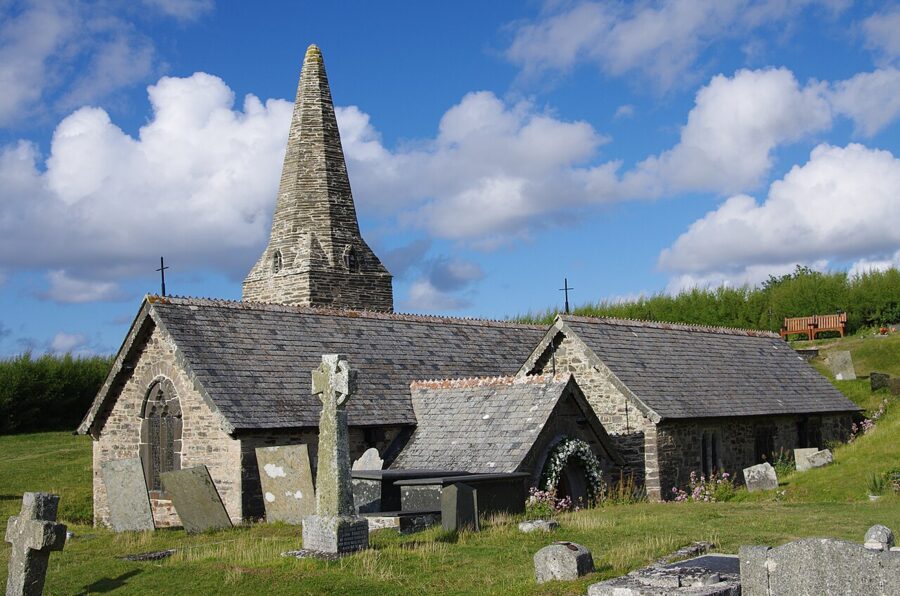
Trebetherick is worth the walk for a different reason. Its church, St Enodoc, sits half sunk in the dunes on the edge of the golf course, and the poet John Betjeman, who spent his childhood holidays here, is buried in the churchyard. The coast path from Rock passes close by on its way round Daymer Bay to Polzeath.

Polzeath and Pityme
Polzeath is a surf beach with a village attached, and its pub is the Oystercatcher, a St Austell house up the hill with a view straight down onto the sand. The bar is decorated for surfers, with pool, sport on the television and live entertainment on Saturdays, and a big room with decking was added on the sea side in 2019. It gets very busy in the school holidays, and dogs are welcome.
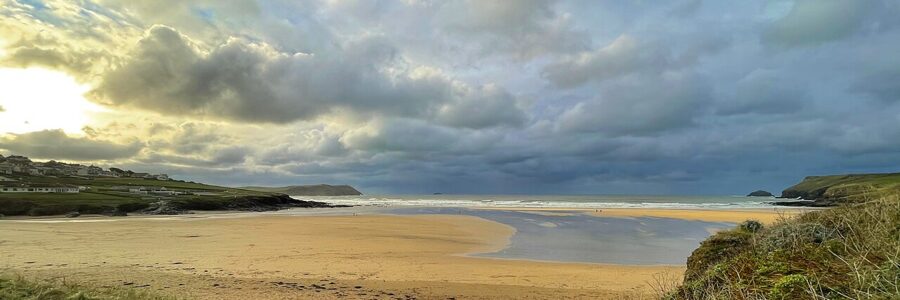

On the road back to Wadebridge, the Pityme Inn at St Minver is a one-time farmhouse with a slate-flagged public bar. One story behind the name has a farmer’s wife walking into the nearby marsh, her last words being “pity me”. These days it has heated dining pods in the garden, a takeaway, a small village shop and en-suite rooms, and the 96 bus stops outside.
Port Isaac, Trebarwith and the slate coast
North of Polzeath the cliffs get higher, the villages fewer and the coast path harder work. Port Isaac is the prettiest place on this stretch and the busiest, a fishing village squeezed into a cleft in the cliffs with whitewashed cottages stacked up both sides. Leave the car at the top; the lanes down to the harbour are not built for it.
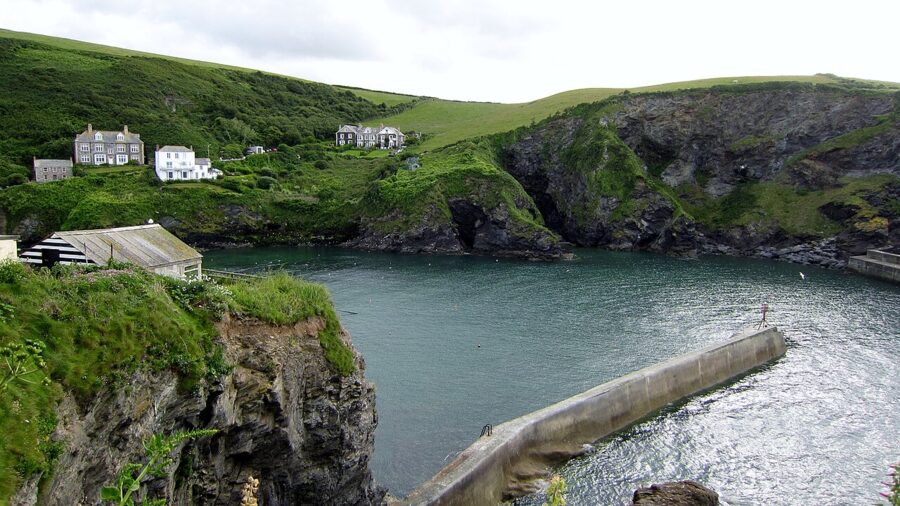

The Golden Lion, Port Isaac
The Golden Lion on Fore Street is an eighteenth-century St Austell pub, and its interior is one of the few on this coast that CAMRA rates as historically important. There are three small rooms off a drinking corridor, old fittings, uneven bare boards and a small balcony over the harbour. Downstairs, the games room was once the locals’ bar, called the Bloody Bones, and the story goes that a smugglers’ tunnel ran from it to a causeway on the beach.
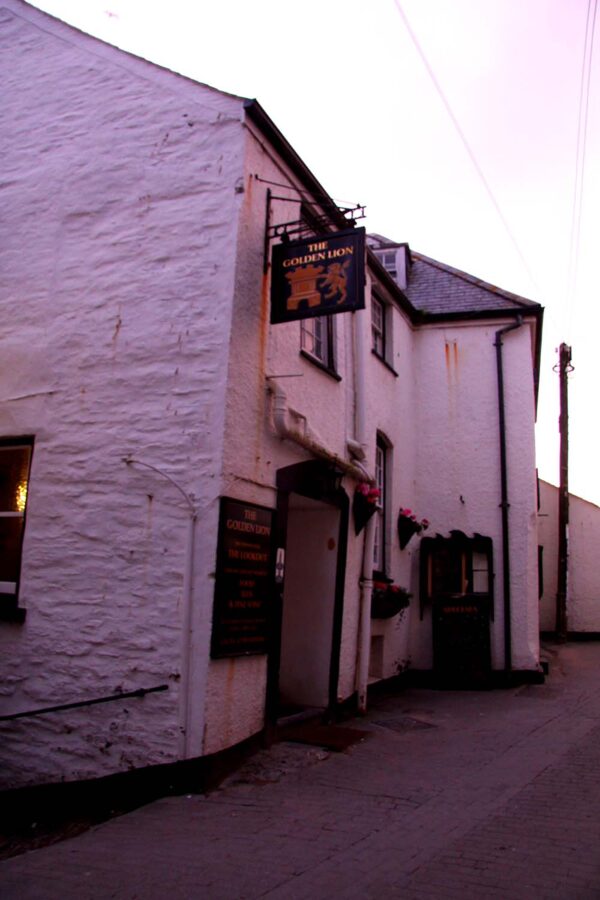

I’d believe the tunnel when I see it, and I’d go anyway. A pint of Proper Job on that balcony at high tide is as good as this coast gets. The pub opens 11:00–22:00 Sunday to Thursday, with the kitchen closing at 20:00, and 11:00–23:00 on Friday and Saturday, kitchen until 21:00. Families and dogs are welcome.
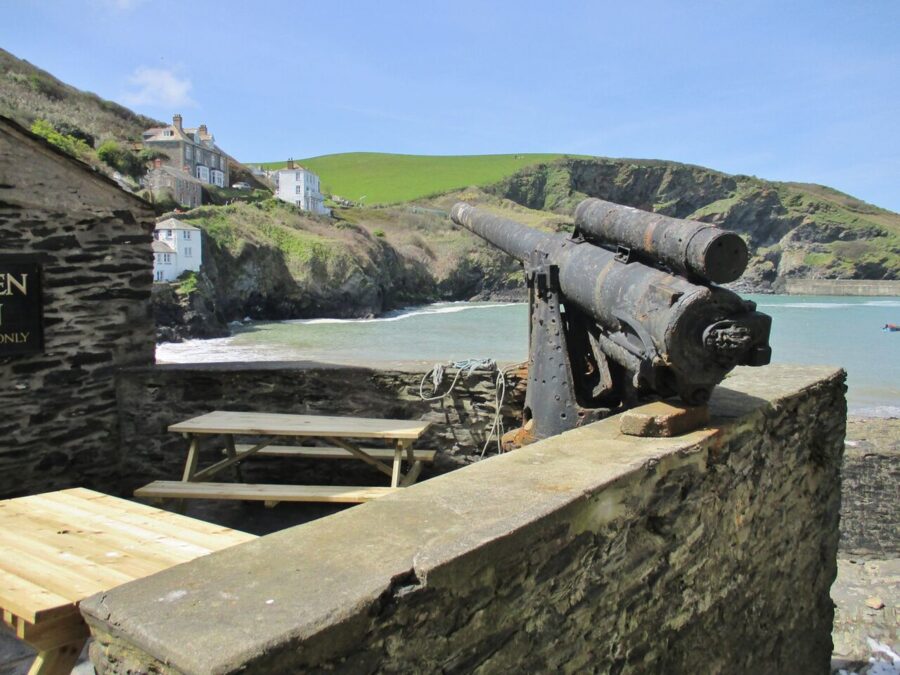

A short walk east over the headland, the Port Gaverne Hotel sits in its own small cove, an old inn with nooks to get lost in and a reputation as a smugglers’ haunt. It closes for about two months from January to early March, so check before a winter trip. Parking is up a side road across the stream.

The Port William, Trebarwith Strand
The Port William is the pub people photograph. It sits partway up the cliff above Trebarwith Strand, south of Tintagel, made from two old cottages and a modern extension, with conservatories and a terrace looking straight out to Gull Rock. Slate was once shipped from a little harbour in the cove below, which is hard to picture now and explains the name.
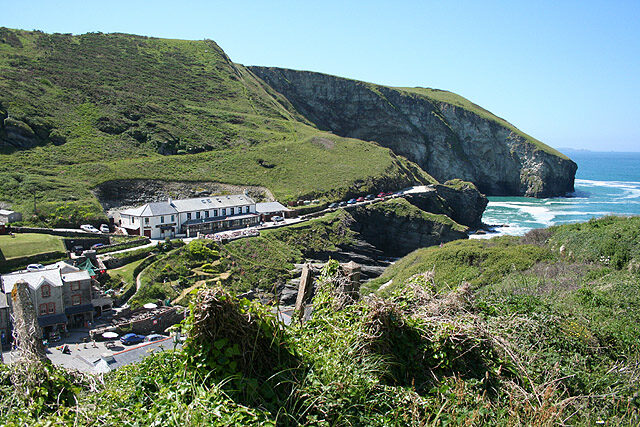

Inside, the long bar room has wooden beams, timber baulks and bare stone walls. It is a St Austell house with rooms, and the beer comes through a sparkler unless you ask for it without, which the staff will happily do. Parking is very limited, up a potholed track, so the best approach is on foot along the coast path from Tintagel.
Tintagel, St Teath and Boscastle
Tintagel village is mostly a car park for the castle, but the Olde Malt House on Fore Street is a proper free house with three drinking areas, a sunny front courtyard and beers from the local Tintagel Brewery. It claims fourteenth-century origins and has eight en-suite rooms. Food runs Wednesday to Sunday, and hours shorten in January and February.
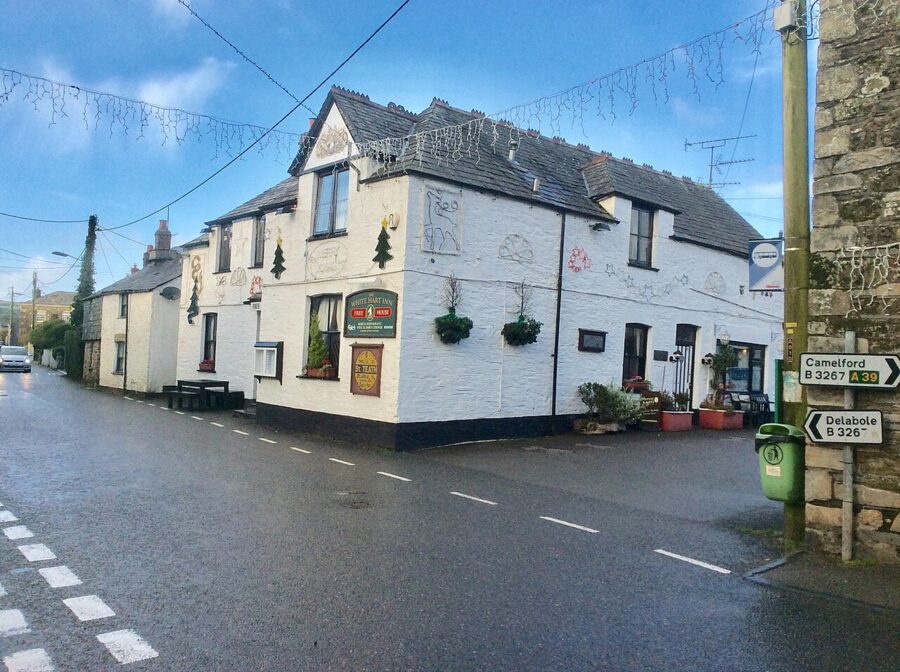
Inland at St Teath, the White Hart on the square has been run by the same family for more than 65 years. It has a quiet snug, a louder public bar with pool, darts and sport, and a third bar in the old cellar, and CAMRA counts its layout among the county’s historic interiors. Families are welcome throughout, and dogs on leads.

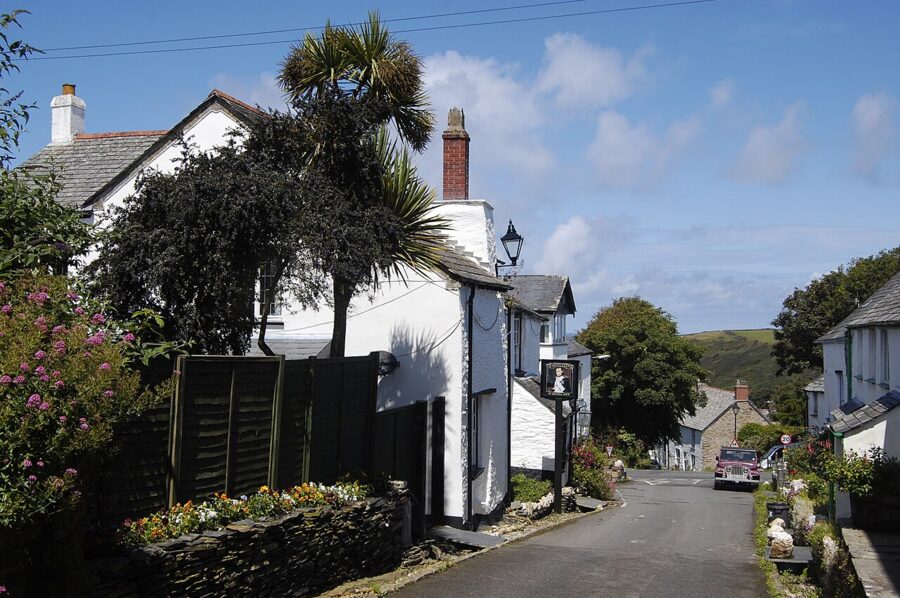
Boscastle’s harbour pubs are on the tourist trail; the Napoleon Inn at the top of the village is the one locals walk up the hill for. It is a sixteenth-century St Austell inn with two bars set at right angles, beer poured straight from the cask, a garden in a former orchard, singers on alternate Wednesdays and live music on Friday and Sunday nights. The story goes that it was a recruiting post for press gangs in the Napoleonic wars. Dogs are welcome everywhere except the restaurant.

Inland: St Kew, Wadebridge and the moor
Away from the coast the pubs get quieter, older and better value. The country between the Camel and Bodmin Moor is all deep lanes, church towers and hamlets called Churchtown.
The St Kew Inn
If I had one lunch to spend in north Cornwall, it would be here. The St Kew Inn stands beside the church about a mile north of the A39 at St Kew Highway, a long stone building dated by its owners to about 1460. Local tradition says it was built to house the masons working on the church, which is what every church-house inn in Cornwall says, but here the dates at least fit.
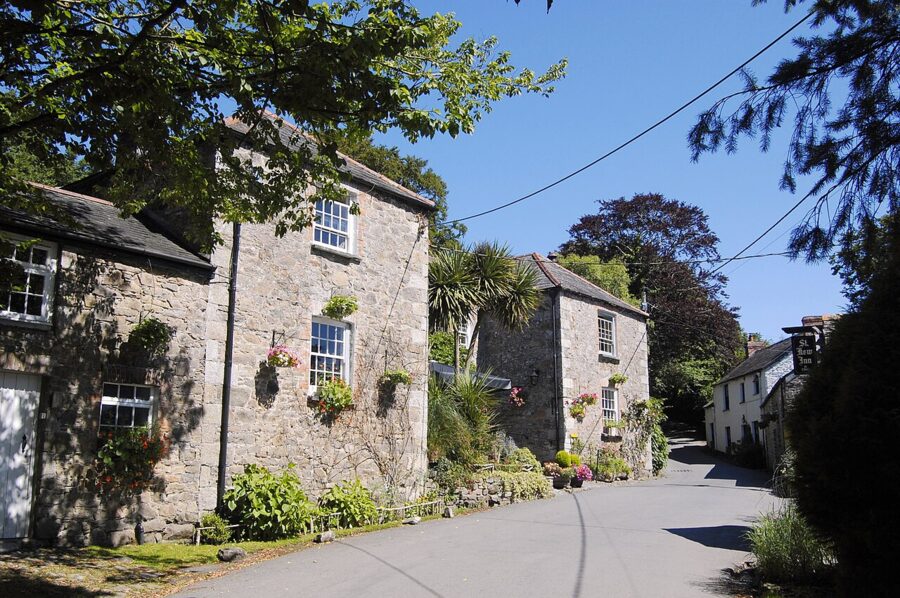

Inside there are stone-flagged floors, a big open fireplace with a range, four dining areas, and a stillage behind the bar from which St Austell beer is often served straight from the wooden cask. In summer the garden has its own little kitchen in an outbuilding called the Goat’s House. Dogs are welcome everywhere. Book for Sunday lunch and any summer evening.
Wadebridge and Egloshayle
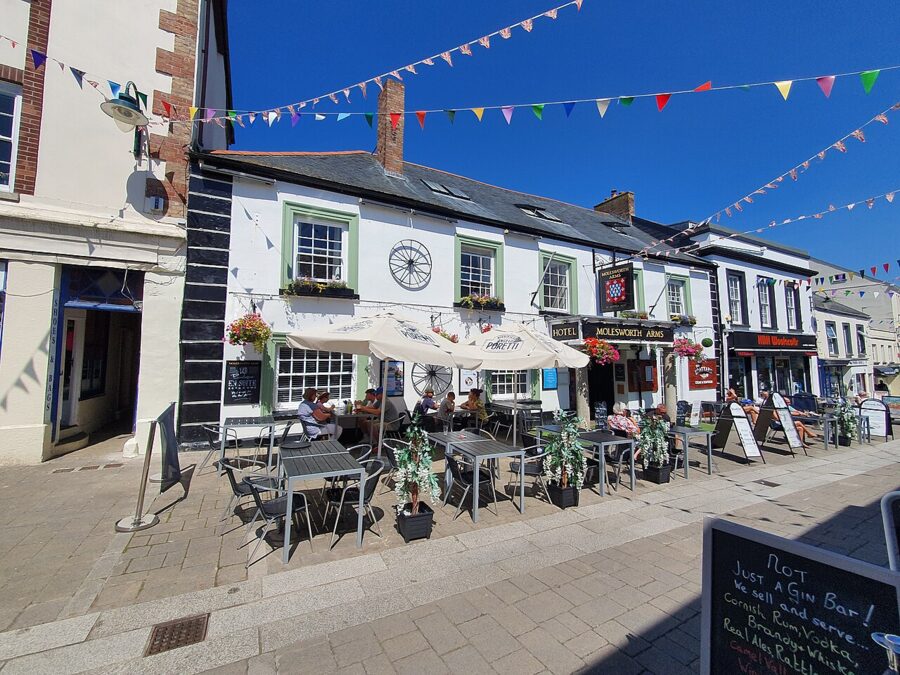
Wadebridge is the market town at the head of the estuary and the halfway point of the Camel Trail. The Molesworth Arms on Molesworth Street is a sixteenth-century coaching inn named after the family who served as auditors to the Duchy of Cornwall under Elizabeth I. It has two stone-flagged bars, seventeen bedrooms and food from noon to 21:00.

Over the river at Egloshayle, the Earl of St Vincent is a rambling black-and-white stone building off the bypass, with beams, an open fire and a garden full of flowers in summer. It is a St Austell pub that reopened after ten months shut while the brewery found new tenants. It is a dining pub first, so book: food is served Wednesday to Saturday evenings and at Sunday lunch, and it shuts on Mondays.
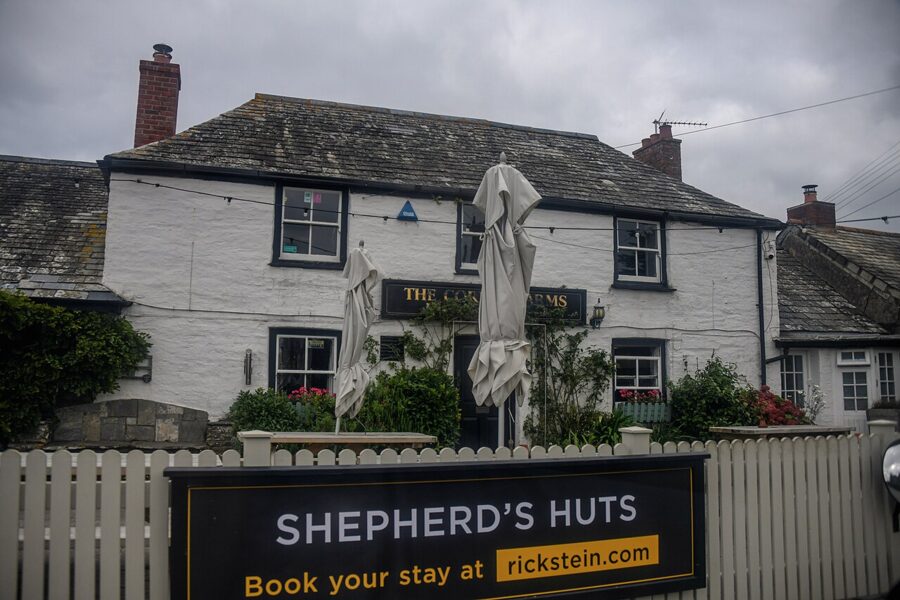
West of Padstow at St Merryn, the Cornish Arms is a St Austell country pub next to the church, run by Rick Stein’s company, with a sunny beer garden, shepherd’s huts to sleep in and a menu of fish and chips, steak pie and wood-fired pizza. It is the Stein experience for the price of a pub meal.

St Breward and Jamaica Inn
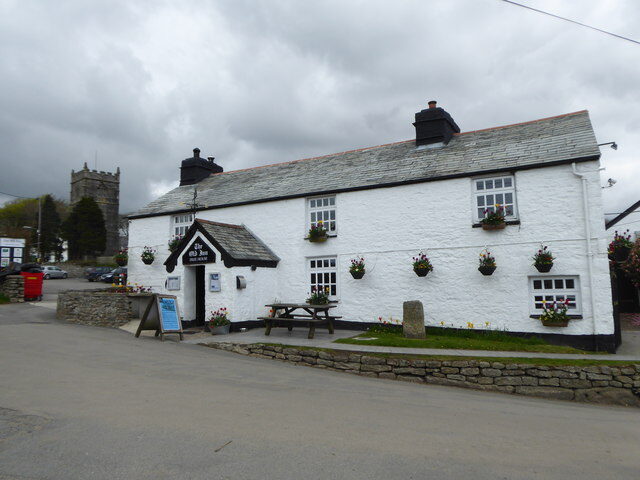
On the western edge of Bodmin Moor, the Old Inn at St Breward is a whitewashed cob building by a twelfth-century church, the last of four pubs that once served the village’s quarrymen. It has two small bar rooms, each with its own fire, slate floor and granite bar front. It claims to be the highest pub in Cornwall; CAMRA’s Cornwall branch, which has measured, says it is the ninth highest, at 210 metres. Draught Bass and Timothy Taylor’s Landlord sit alongside Tribute.

Jamaica Inn at Bolventor, just off the A30 in the middle of the moor, is the most famous pub in Cornwall and the least like a village local. It is a Grade II listed coaching inn from the 1750s, made famous by Daphne du Maurier’s 1936 novel, and it now comes with a smugglers’ museum, a du Maurier museum, a gift shop, a hotel and murder-mystery nights.
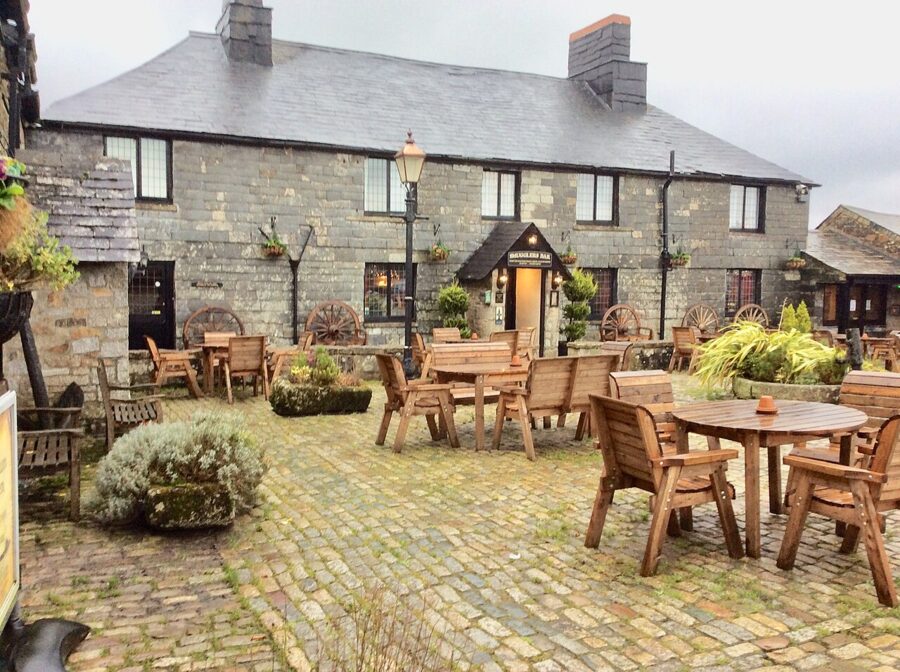

It is a tourist trap, and I’d still stop. The front bar is the real thing, with oak settles and a huge granite fireplace burning whole logs in winter. Food runs from 07:30 to 21:00, so it is also the easiest hot meal on the A30 across the moor.
Lanlivery and the Saints’ Way
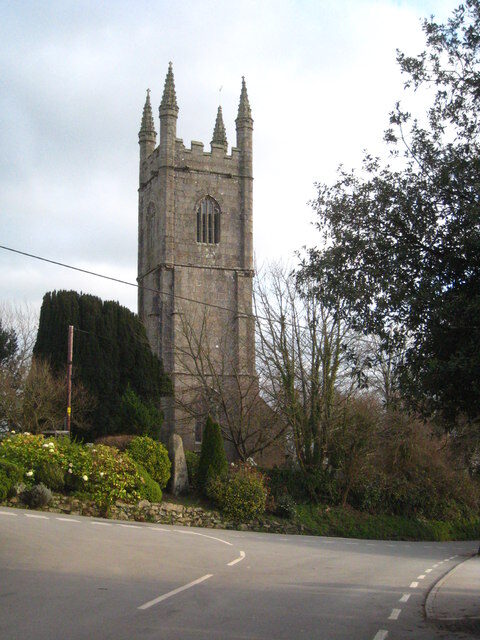
South of Bodmin, the Saints’ Way footpath crosses Cornwall from Padstow to Fowey, about 27 to 30 miles depending on the branch, on a route that pilgrims and traders are said to have used to avoid sailing round Land’s End. The eastern branch runs through Lanlivery, a ridge-top village two miles west of Lostwithiel, and past the door of the Crown Inn.

The Crown Inn
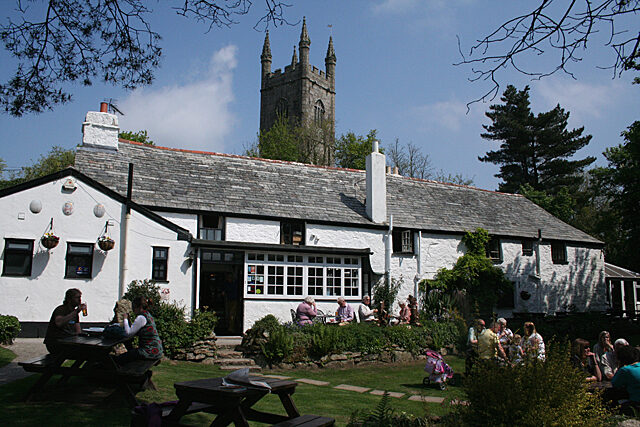
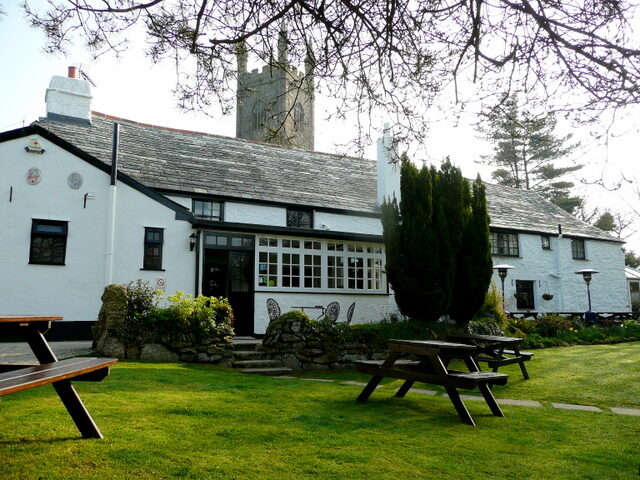
The Crown says there has been an inn on this site since the twelfth century, built for the masons who raised the church. Historic England’s listing is more cautious. It dates the present building to the early seventeenth century, with additions later that century and in the early eighteenth, and the inn was listed at Grade II in 1987.
The listing does pick out the thing to look at: a very wide fireplace at the gable end with a stepped granite arch and an unusually deep, granite-lined oven. A refurbishment in 2008 also turned up an old well in the porch, now under a glass cover you can look down through. The long farmhouse layout puts the bar and snug at one end and a lounge with an inglenook at the other.

Jos and Tim Nash, who have lived in Lanlivery since 2019, decided during lockdown to take on the village pub, and a new head chef arrived in autumn 2026. Cask beers come from Cornish brewers, with Doom Bar and Tintagel’s Arthur’s Ale among the regulars. There are nine en-suite rooms in a converted piggery, some of them dog-friendly, and dogs are welcome in the pub.
The bar is open 12:00–22:00 Monday to Saturday and 12:00–21:00 on Sunday. Lunch is 12:00–14:30 Monday to Saturday, with roasts on Sunday from 12:00 to 18:00, and dinner is 18:00–20:00, Monday to Saturday; book ahead. Lostwithiel station, on the main line, is the nearest, and the pub keeps a list of local taxi firms.

In Lostwithiel itself, the Globe Inn near the station and the medieval bridge is a rambling, food-led pub that welcomes drinkers too. It claims thirteenth-century origins and is named after a ship lost in a sea battle of 1813, in which a member of the family who once owned the pub was killed.
Smugglers’ tunnels and “the oldest”
Cornish pubs make two claims more confidently than any others: that they are older than they look, and that a tunnel runs from the cellar to the sea. The habit is national, as anyone who has read up on the oldest pubs in England will know, but Cornwall has it badly.
Take the dates first. The Crown at Lanlivery says twelfth century; Historic England says early seventeenth. The Blue Anchor in Helston is said to have been a rest house for monks in the fifteenth century, while its listing describes an eighteenth-century building, and a local historian has pointed out that there is no firm evidence of unbroken brewing there either. The Sloop in St Ives is reputed to date from 1312, the Tinners Arms at Zennor says 1271, and the Bush Inn at Morwenstow is said to date in parts from 950.
Some of that may be true of the site, and none of it is proven for the building. A pub can stand where a medieval church house stood, with old stones in its walls, and still be a seventeenth-century building. When a pub gives a precise year centuries before any record, enjoy the story and look at the fireplace instead.
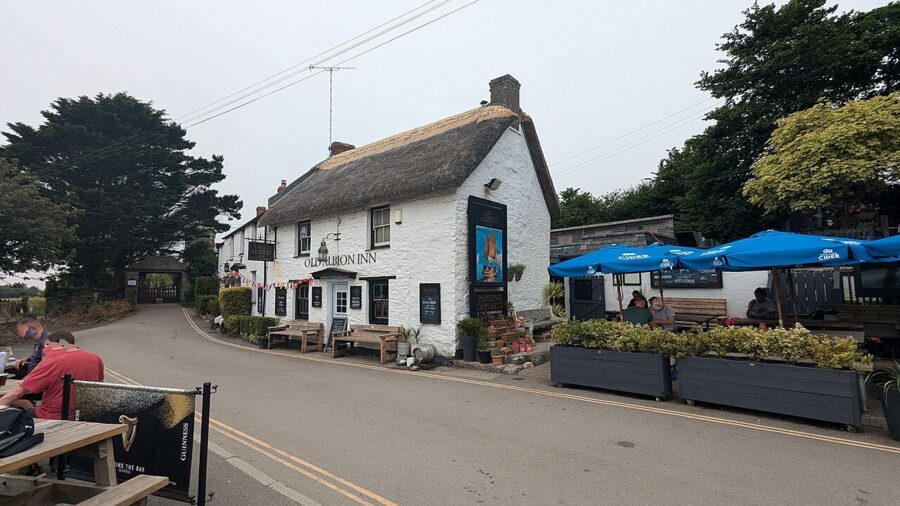
The tunnels are harder to check, which is why there are so many. The Golden Lion in Port Isaac has one to the beach, and the Old Albion at Crantock, a partly thatched pub by the church lychgate, claims a long history of smuggling through secret tunnels. It was also a tearoom for years after a Methodist campaign closed every licensed house in the village. Smuggling here was real enough; most of it went up the beach at night, not through a cellar.

The south coast and Penwith, in brief
A few pubs further south are worth the drive, and some are better than anything on the north coast.
Helston and Falmouth
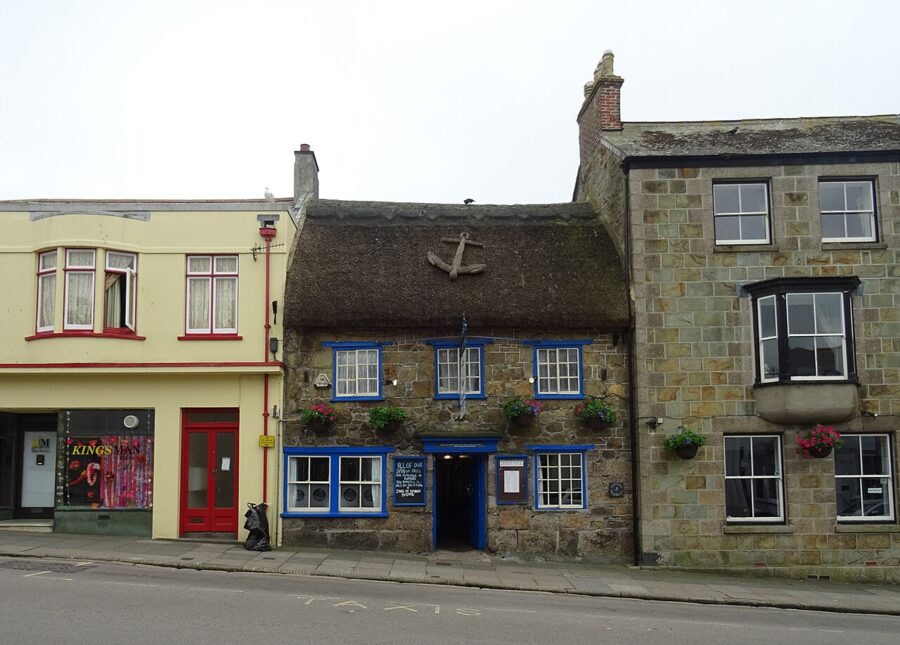
The Blue Anchor on Coinagehall Street in Helston is the one I’d cross the county for. It is a thatched granite building with slate floors, two small bars where conversation is the entertainment, a skittle alley with its own bar, and the brewery behind producing Spingo Middle, Spingo Special and seasonal beers. Both the pub and the brewhouse are Grade II listed. The Spingos are strong, and the Special goes down more easily than it should; dogs on leads are welcome throughout.

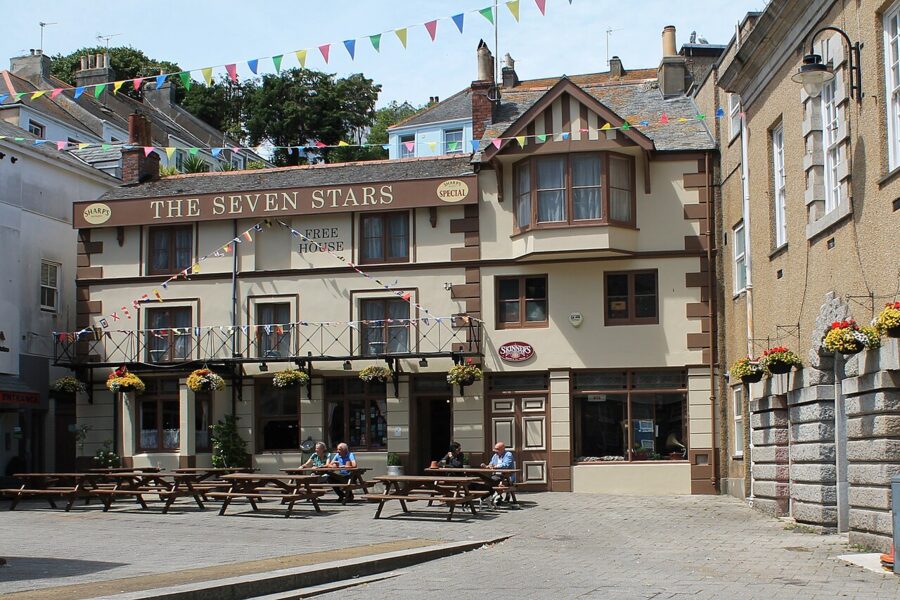
In Falmouth, the Seven Stars on the Moor has been in the same family for more than 170 years and is on CAMRA’s National Inventory of Historic Pub Interiors, the short list of pubs whose insides matter nationally. It is a building of around 1800 with a narrow taproom where the beer, Draught Bass included, is served straight from the cask. Down on the quay, the ‘front is a cellar bar with nine handpumps and no food, so bring your own.
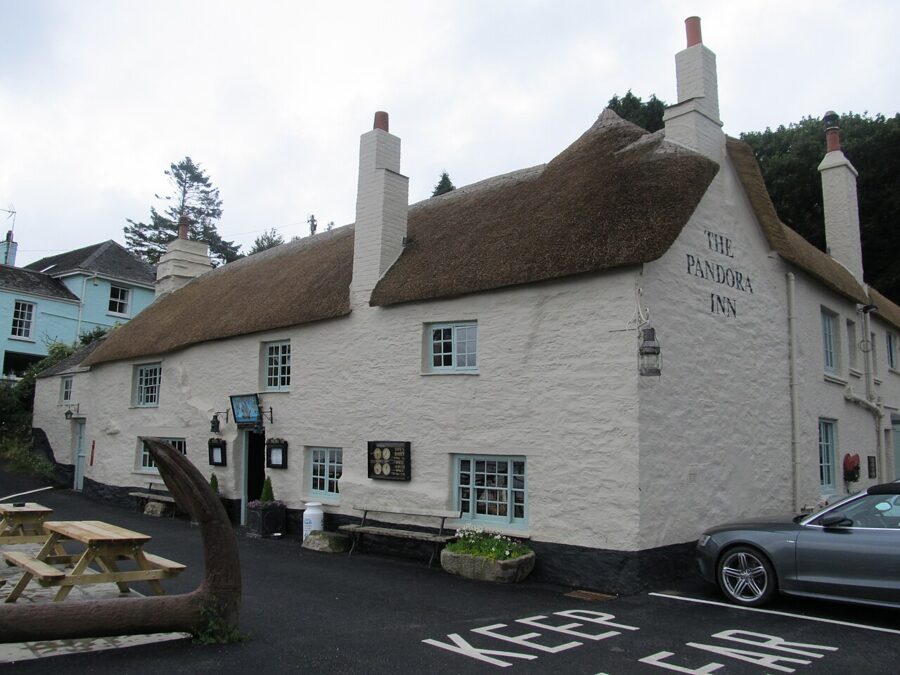
Up Restronguet Creek, the Pandora Inn is a thatched St Austell pub with a long pontoon out over the water, where people moor boats and everyone else sits with a pint. Further west, the Ship at Porthleven is an old fishermen’s pub up steep stone steps above the harbour, with fires at both ends of the bar and Skinner’s Porthleven on the pumps.

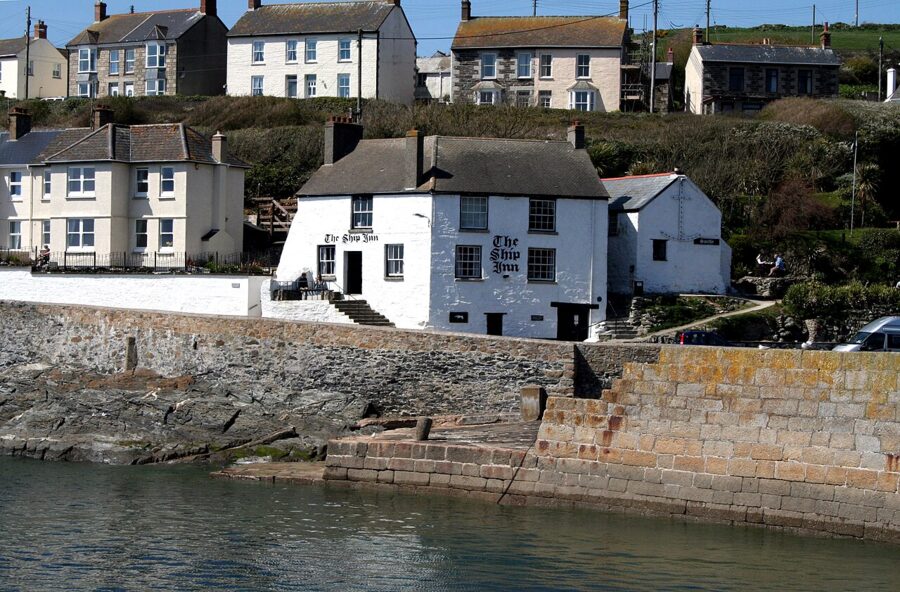

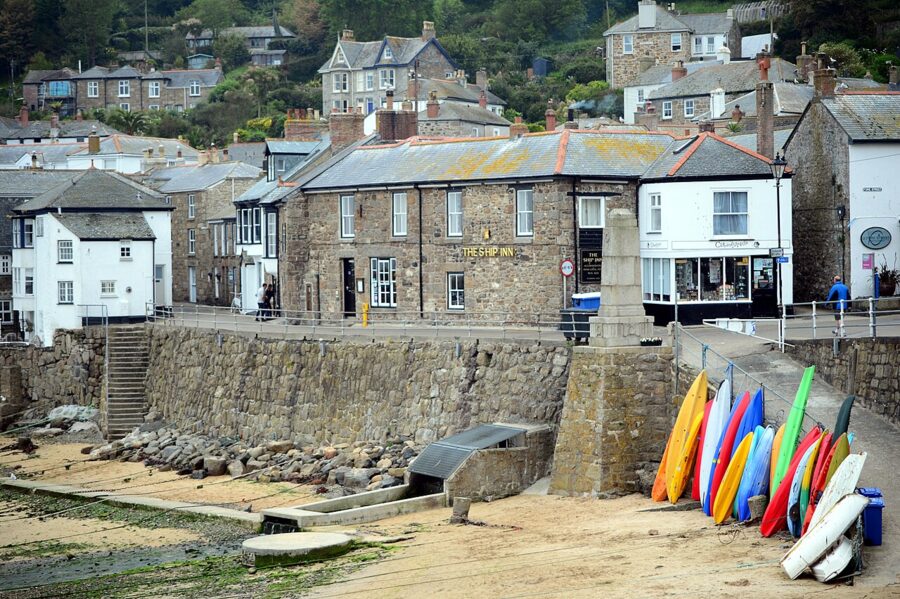
Mousehole, Penzance and the far west
The Ship Inn at Mousehole is a St Austell pub on the harbour with granite flagstones, scrubbed boards and low beams. Many of the crew of the Penlee lifeboat, lost with all hands in December 1981, drank here, and the walls remember them; Dylan Thomas was a regular when he lived in the village. In December the harbour lights are the reason to go, and the pub is packed for them.

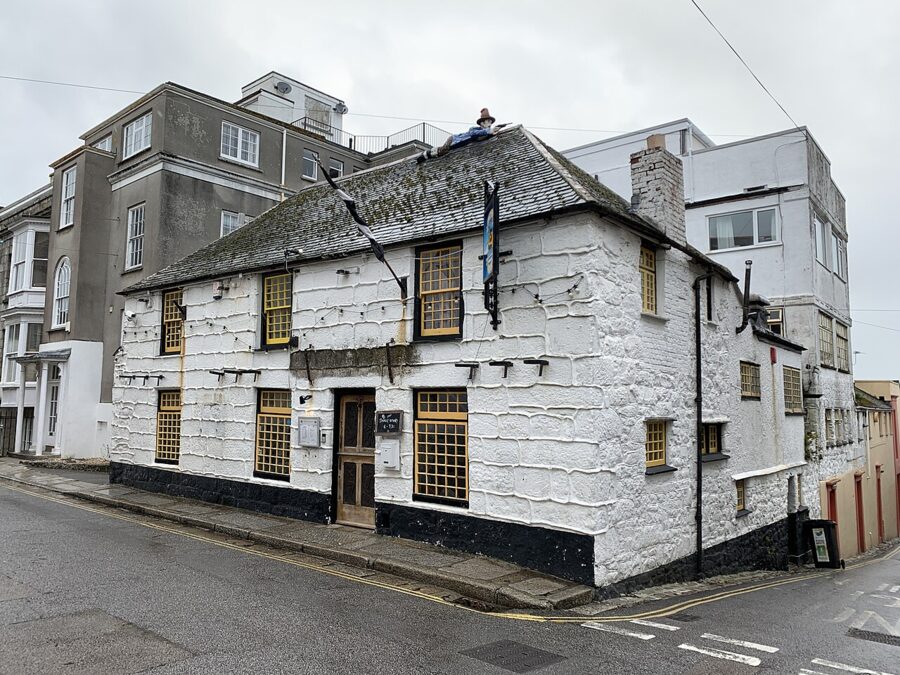
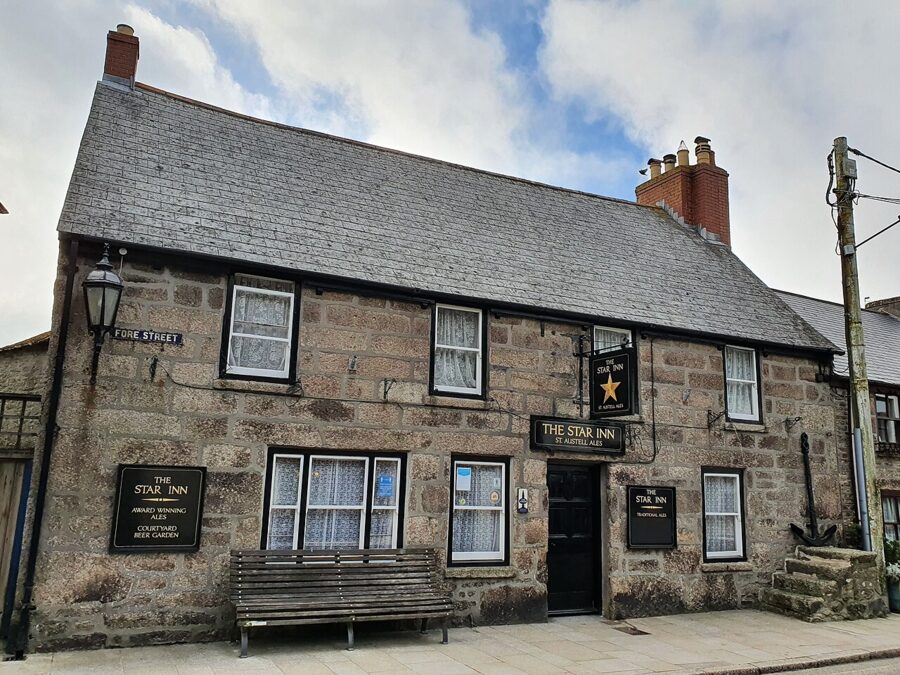
In Penzance, the Admiral Benbow on Chapel Street is built inside like a ship and filled with salvage from local wrecks, with a Wreck Bar upstairs. At St Just, the Star Inn is the town’s oldest pub, granite and slate, where John Wesley is said to have lodged and traditional pub games are still played. Round the coast, the Logan Rock Inn at Treen is the pub for the Minack Theatre and Porthcurno.


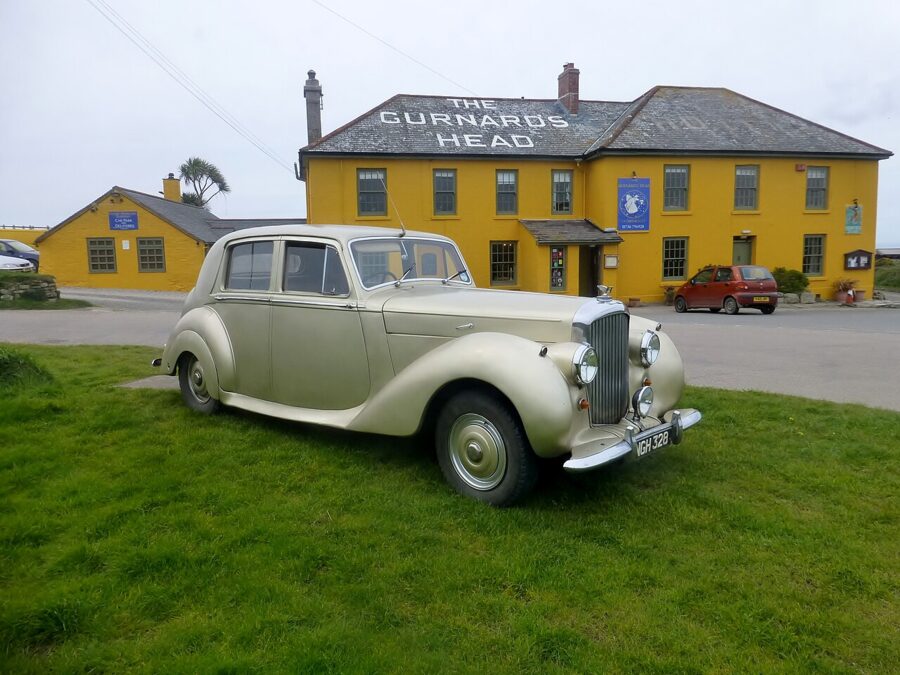
On the coast road between St Just and St Ives, the Gurnard’s Head is a mustard-yellow dining pub with rooms, named after the headland below it. It keeps a still cider from Skreach Farm, and on Wednesday evenings from November to late March it sells its wine at shop prices to anyone eating. Most people come for the food; the bar, with its log fire and changing Cornish beers, is reason enough.

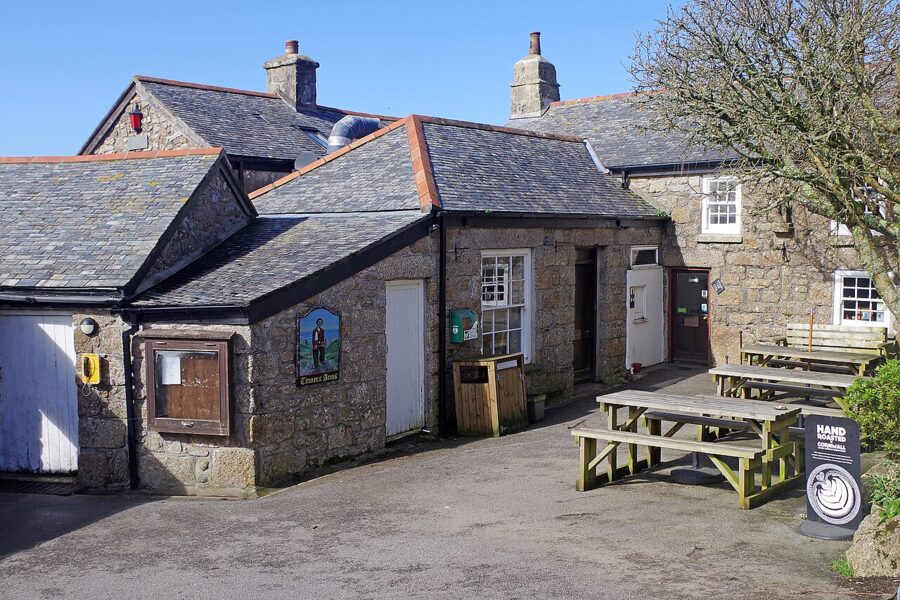
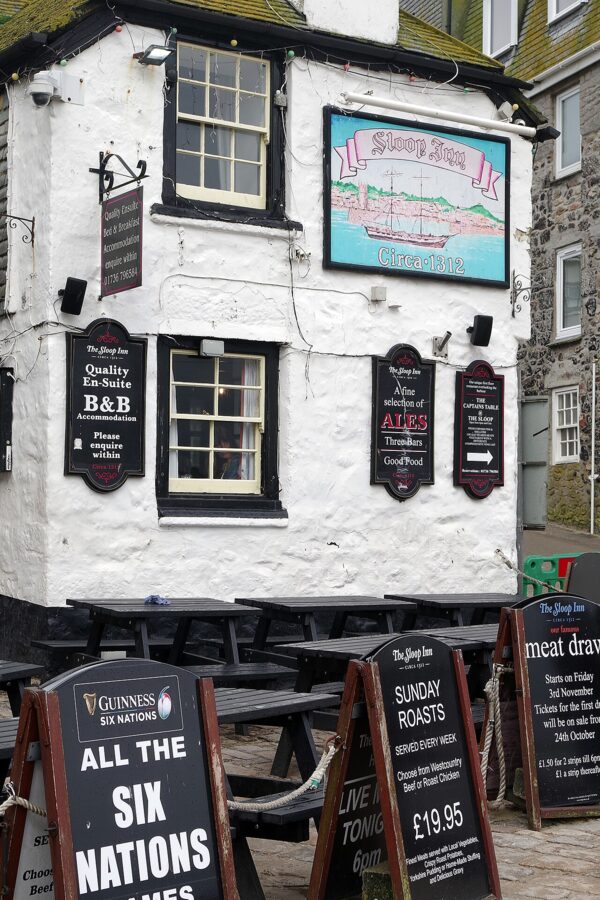
A few miles on, the Tinners Arms at Zennor is a granite pub by the church of St Senara, where D.H. Lawrence stayed in 1916. Its house beers, Tinners Ale and Zennor Mermaid, are brewed by Sharp’s, and it takes no table bookings. In St Ives, the Sloop is right on the harbour front, with slate floors, low beams and some of the dearest pints in the far west.


Fowey, Polperro and the Devon border
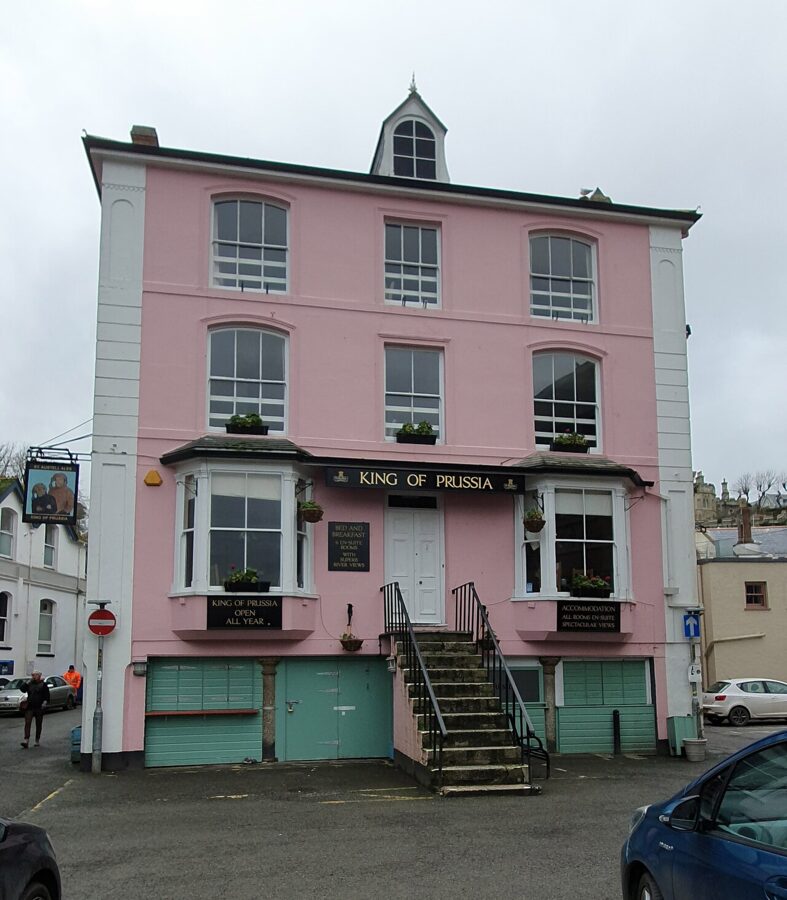
At the end of the Saints’ Way, the King of Prussia on Fowey’s town quay is a first-floor St Austell pub, pink-painted and rebuilt in 1856 on an older site, looking across the harbour to Polruan. In Polperro, the Blue Peter is a family-run free house by the harbour, up a short flight of steps, which serves Cornish and Devon beers and sells tasting paddles of four quarter pints.
In the far north-east, the Bush Inn at Morwenstow has slate floors, granite walls and a garden looking down the Tidna valley to the sea. Inland, the Rising Sun at Altarnun, a sixteenth-century farmhouse that has been a pub for 150 years, pours beers from Firebrand and is the stop on the A30 for anyone who finds Jamaica Inn too much.
Three days out: a walk, a ride and a bus
None of these needs a car, which is the point: Cornish lanes are narrow, and pub car parks are small.
Padstow and Rock on foot
Start at the Shipwrights at noon, cross to the Old Custom House, then step up Strand Street to the Harbour Inn. Take the ferry to Rock for lunch at the Mariners. If the weather holds, walk the coast path past St Enodoc and round Daymer Bay to the Oystercatcher at Polzeath, allowing a good hour each way. Come back for the ferry and end on Lanadwell Street, at the London Inn and the Golden Lion.
The Camel Trail
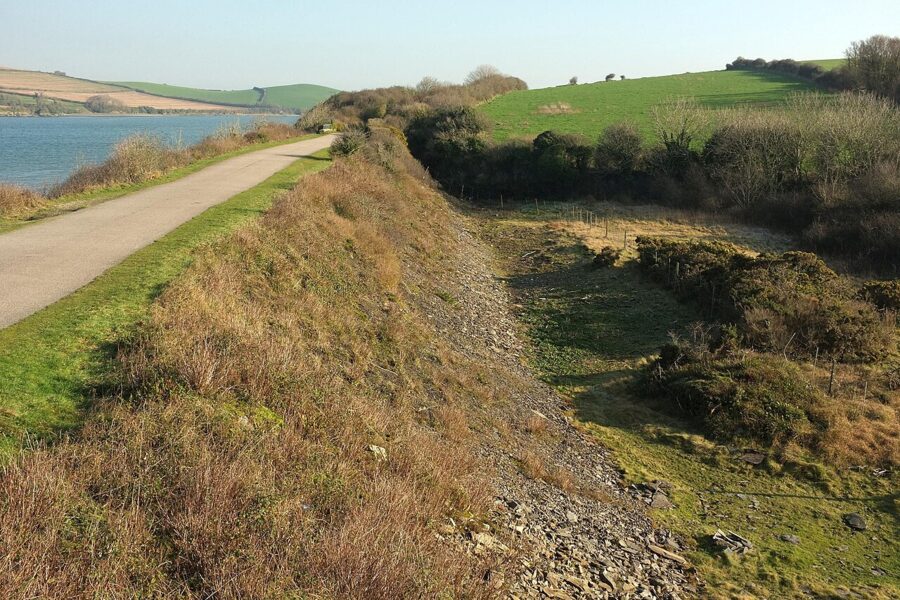
The Camel Trail follows the old railway line from Padstow to Wadebridge, 5.5 miles of flat, traffic-free path along the estuary, then another 5.75 miles to Bodmin and 6.25 more to Wenfordbridge on the edge of the moor. Bikes can be hired at both ends of the first stretch. Ride or walk to Wadebridge for the Molesworth Arms, and come back on the 57 bus, which runs between Padstow, Wadebridge, Bodmin and Bodmin Parkway station.

The 96 bus to Port Isaac
From Wadebridge bus station, the 96 runs past St Minver and the Pityme Inn to Rock, Trebetherick, Polzeath, Port Isaac, St Teath and Camelford, roughly every two hours through the day. Have lunch at the Golden Lion in Port Isaac, walk over to Port Gaverne, stop for a pint at the White Hart in St Teath, and ride back to Wadebridge for the evening.
Lanlivery and Lostwithiel
Take the train to Lostwithiel, on the main line between Plymouth and Penzance, and walk or taxi to Lanlivery for lunch at the Crown. Walkers can follow the Saints’ Way to Fowey, about eight miles via Golant, and finish at the King of Prussia; otherwise have the last pint at the Globe in Lostwithiel before the train. For the north coast, aim for Bodmin Parkway, where the 57 leaves for Padstow, or Newquay, at the end of the branch line, where the 56 does.

Practical notes: hours, food, rooms and dogs
Food stops early. Many Cornish kitchens close at 20:00 or 21:00, including the Golden Lion in Padstow and the Crown at Lanlivery at 20:00, and the London Inn does no food on Sundays or Mondays. If you want to eat after a long walk, ring ahead.
Sunday is for roasts. Several of these pubs switch to a roast-only menu on Sunday, and the good ones fill up. Book the Crown, the St Kew Inn and the Golden Lion, and read the Sunday roast guide for what to expect on the plate.
Winter changes things. The Port Gaverne Hotel closes from January to early March, the Olde Malt House shortens its hours in January and February, and the last ferry to Rock leaves Padstow at 17:00 from the end of British Summer Time to the end of March. On the other hand, winter is when you get a seat by the fire.
Rooms. Five at the London Inn, three at the Golden Lion in Padstow, nine in the old piggery at the Crown, seventeen at the Molesworth Arms, eight at the Olde Malt House, and more at the Port William, Port Gaverne and Pityme. In summer they book out months ahead.
Dogs and children. Most of the pubs here take dogs in the bar; the St Kew Inn welcomes them everywhere, the Napoleon everywhere but the restaurant. Most welcome children too, at least while food is being served.
Parking. In Padstow and Port Isaac, use the car parks at the top of town and walk down. The Mariners has no parking and the Port William very little.
At the bar. In most of these pubs you order at the bar, even if the menu is grand, and the usual rules of pub etiquette apply. Look along the handpumps before you order: the first clip is usually Tribute, but the exceptions are often the pints worth having.
Finish where you started. Catch the last ferry back from Rock, walk up from the harbour to Lanadwell Street and go into the London Inn. On a Sunday night there may well be a fiddle out, and the red Edwardian counter will be lined with pints of Proper Job.