
Chester drinks on two floors. You climb fifteen stone steps off Lower Bridge Street to reach the Brewery Tap, walk along a covered medieval gallery above the shops to find the Boot, and go down into a sandstone undercroft for a pint at Watergates. Street level is mostly for buying shoes.

That second floor is the Rows, the galleried walkways that run along the four main streets inside the walls, and it is why a night out here feels unlike one anywhere else in England. The other reason is the beer. For a city you can cross on foot in twenty minutes, Chester collects an unreasonable number of awards: the local CAMRA branch’s pub of the year has gone to a pub in the city almost every year for more than a decade.

Start inside the walls, where the old buildings are, then follow the canal and the river out to the locals where Chester actually lives. Nothing here is more than half an hour’s walk from the Cross, which is lucky, because the best of it is spread across every point of the compass.


On this page
- How Chester drinks
- Lower Bridge Street: the best street for a pint
- The Rows and the Cross
- Northgate Street: the Pied Bull and the Bull and Stirrup
- Towards the station: Foregate Street, Brook Street and City Road
- Along the canal
- The river, Handbridge and the Carlton Tavern
- Boughton and Hoole
- Historic interiors and the famous names
- Race days on the Roodee
- One evening, start to finish
- Practical notes
How Chester drinks
The plan is Roman and simple. Four main streets, Eastgate, Watergate, Northgate and Bridge Street, run out from the Cross to the gates in the walls, and almost everything worth drinking in sits on one of them or just beyond a gate. Lower Bridge Street, running downhill to the river, has the best run of pubs in the city. The Rows are thickest around the Cross, and the station end, past the Eastgate along Foregate Street and City Road, is where the locals and the late bars are.
The house brewery, in effect, is Spitting Feathers. It has brewed at Waverton, just south-east of the city, since 2005, and it runs the Brewery Tap on Lower Bridge Street and the Station Tap at the railway station. The Pied Bull brews in its own cellar, the only brewery inside the walls, and Weetwood from deeper in Cheshire turns up on more handpumps than anyone else’s, its Cheshire Cat especially.
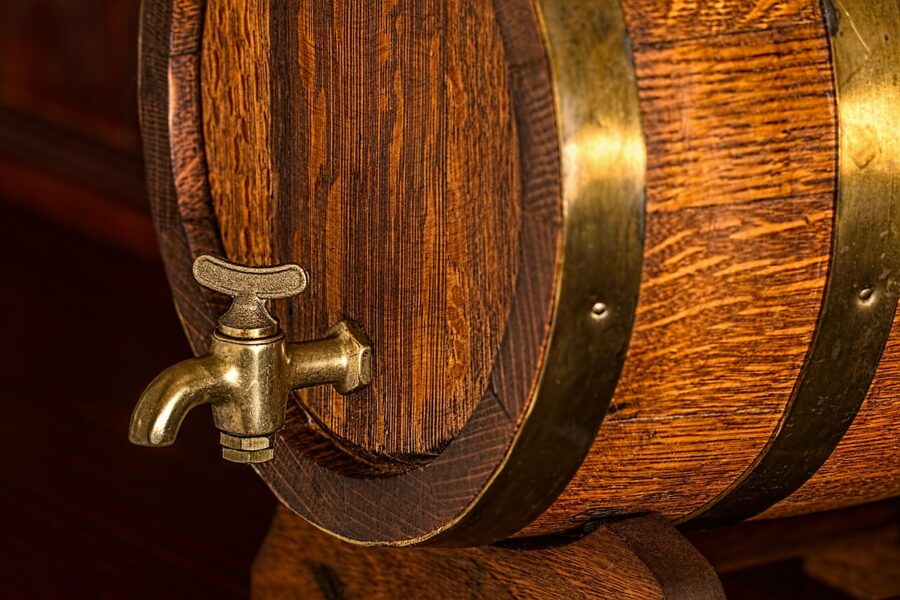
Then there are the brewers who own the buildings. Samuel Smith’s has the Boot, which means no phones and no swearing. Joule’s has the Cross Keys, Hydes the Mount Inn and JW Lees the Boathouse. And Brunning & Price, the dining-pub group now found all over the north-west and beyond, started here, at the Old Harkers Arms by the canal.
What Chester does best is good cask beer in old buildings. If you are new to real ale, this is a kind city to learn in. It also has one of the country’s great cider bars, and a pub game, bagatelle, that most of England has forgotten.
Lower Bridge Street: the best street for a pint
If you only have an hour, spend it here. Lower Bridge Street runs downhill from the Cross to the Bridgegate, with the Brewery Tap, the Old King’s Head and the Cross Keys within a couple of minutes of each other.
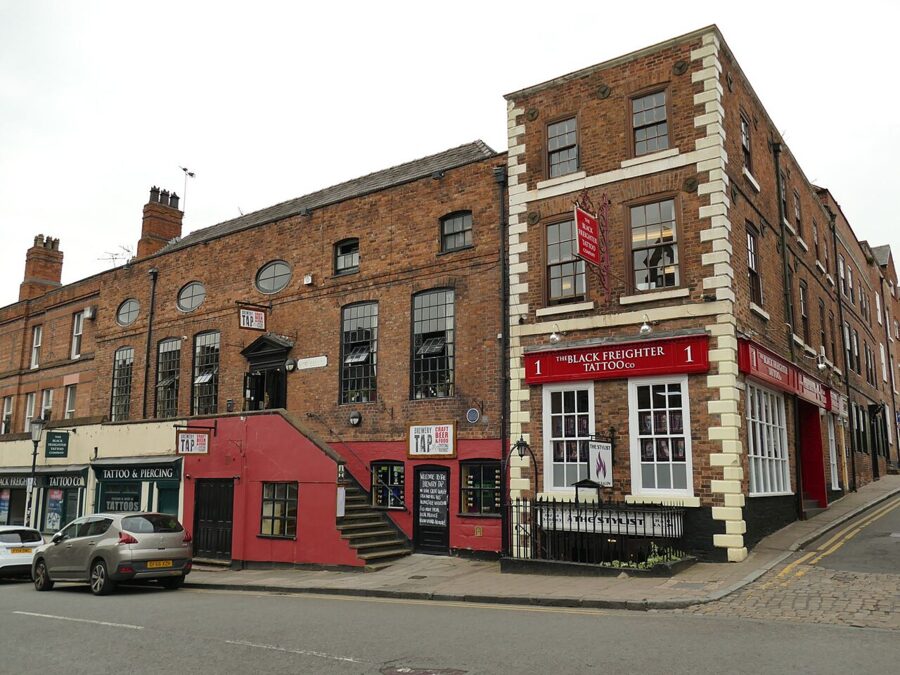

The Brewery Tap
Gamul House is a great hall raised above the street, medieval in origin behind a Jacobean front, and Charles I stayed in it in 1645, during the siege that ended Royalist Chester. By the 2000s it was empty. Spitting Feathers opened it as a pub in 2008 and won a CAMRA and English Heritage award for the conversion the following year.
You go up the steps into one tall room with stone floors, a huge sandstone fireplace behind the bar and a perspex panel showing a scrap of the original wall. It is the best room in the city to drink in, and the beer matches it: the brewery’s own Thirstquencher and Dark Velvet beside a changing list of guests, mostly from small brewers in the region. The food is proper cooking rather than freezer-to-fryer, and the pub was the local branch’s pub of the year in 2025.
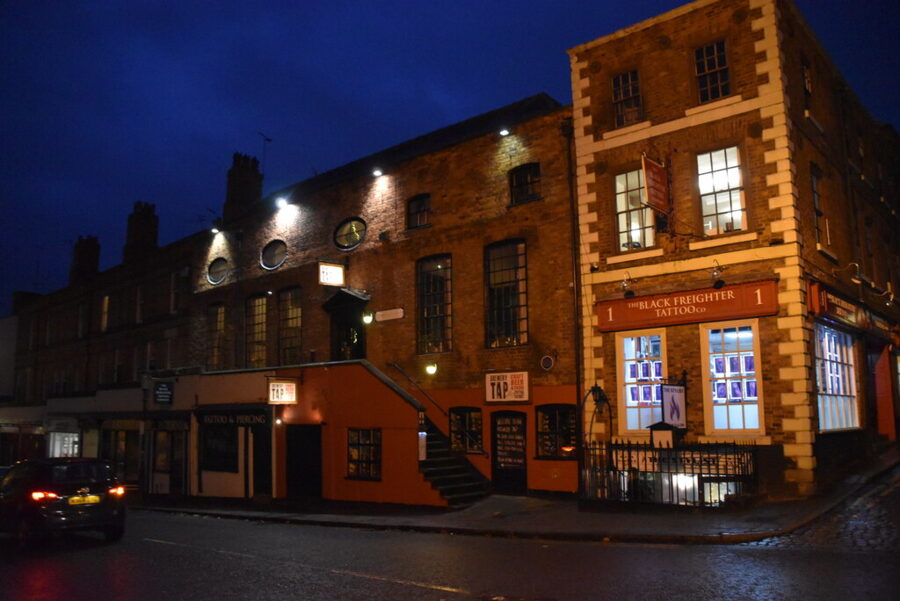

It is full on Friday and Saturday nights and at race meetings. Go at lunchtime or early evening on a weekday, sit by the fireplace, and do not be surprised if this turns into the whole night.
The Old King’s Head
A few doors up is the Old King’s Head, a black-and-white front that Historic England lists at Grade II*. Its listing traces the site to a house built around 1208 and the front to a rebuilding of the fifteenth to early seventeenth centuries for Randle Holme, the first of four generations of Chester heralds of that name. Inside it is low and dark, with beams, alcoves and a big fire in winter.
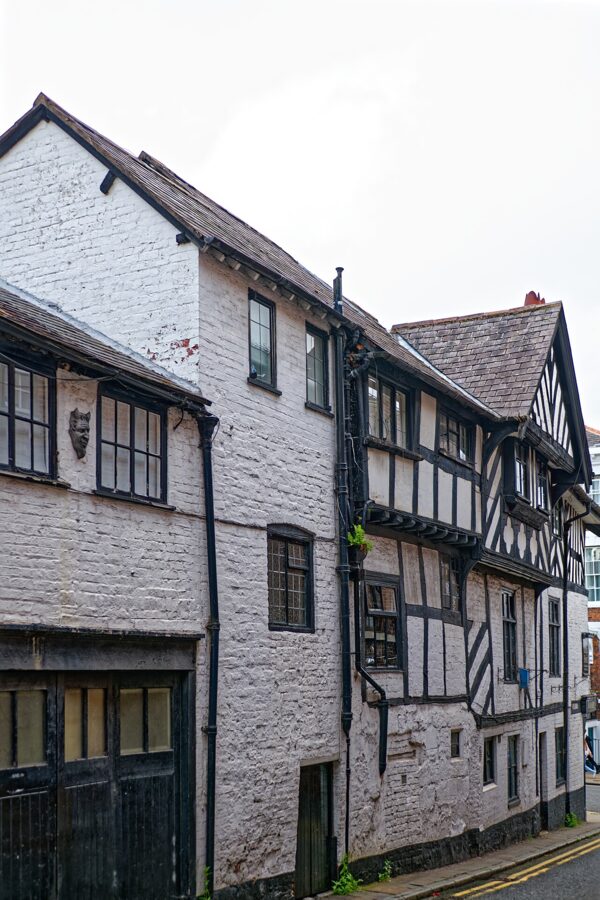

I would come for the building rather than the beer, which is mainstream.
The Cross Keys
Across the road, on the corner of Duke Street, the Cross Keys is a red-brick Victorian pub, built as one in 1894 and bought by Joule’s of Market Drayton in 2012. It is one handsome room with dark panelling, etched mirrors and stained glass showing other Joule’s pubs, and a little raised terrace out front that catches the late sun.
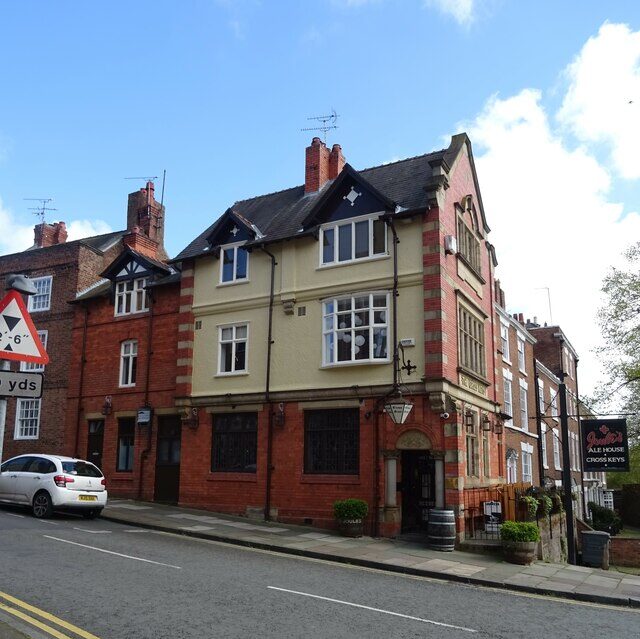

The beers are Joule’s own: Pale Ale, Pure Blonde and Slumbering Monk. There are pies, and a Sunday roast. It is shut on Mondays and Tuesdays; otherwise it opens at 16:00 on Wednesday and Thursday and 13:00 from Friday to Sunday.
The Bear and Billet, and the Falcon
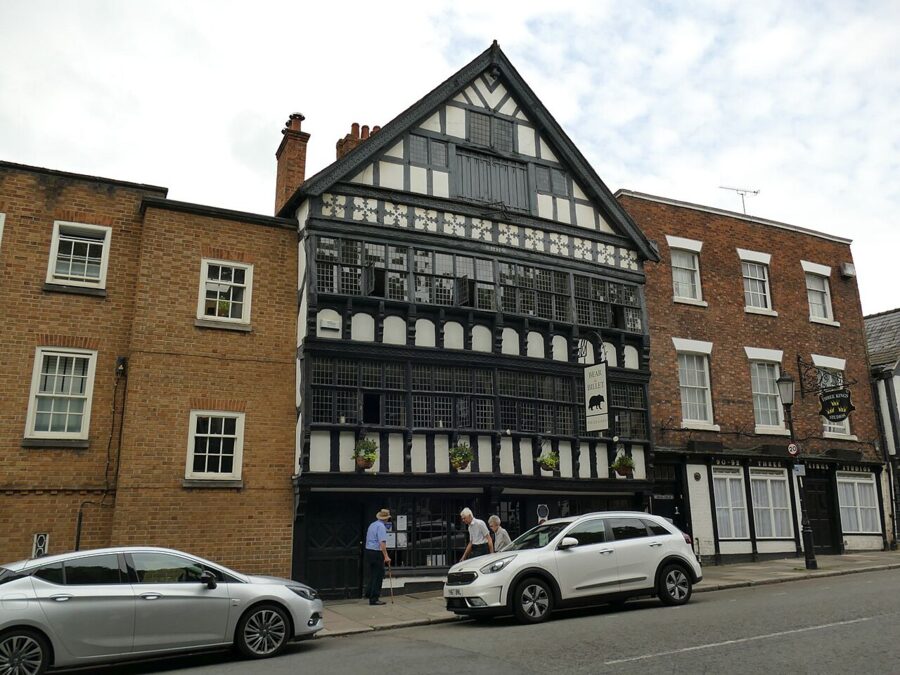
At the bottom of the street, by the Bridgegate, the Bear and Billet has the most extravagant front in Chester: three jettied storeys of timber and over 1,500 leaded panes, built in 1664 as a town house for the Earls of Shrewsbury. It is Grade I listed. As a pub it is in a bad way: in November 2026 it was open at weekends only, with no cask beer or food. Look at it from across the road and keep walking.

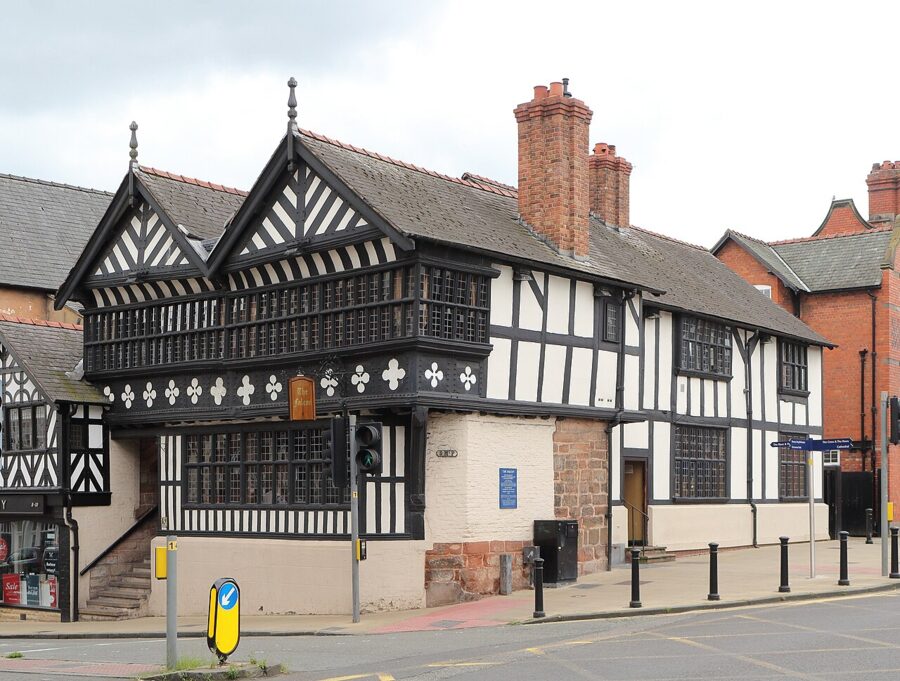
At the top of the street stands the Falcon, the other famous name, and it is closed. A Grade I house built over a thirteenth-century stone undercroft, it was restored in the early 1980s, kept a fragment of the Rows inside and became a Samuel Smith’s house. It reopened in November 2023 after several dark years, the new tenants left in June 2024, and in November 2026 CAMRA listed it as closed long term, its future uncertain.

The Rows and the Cross
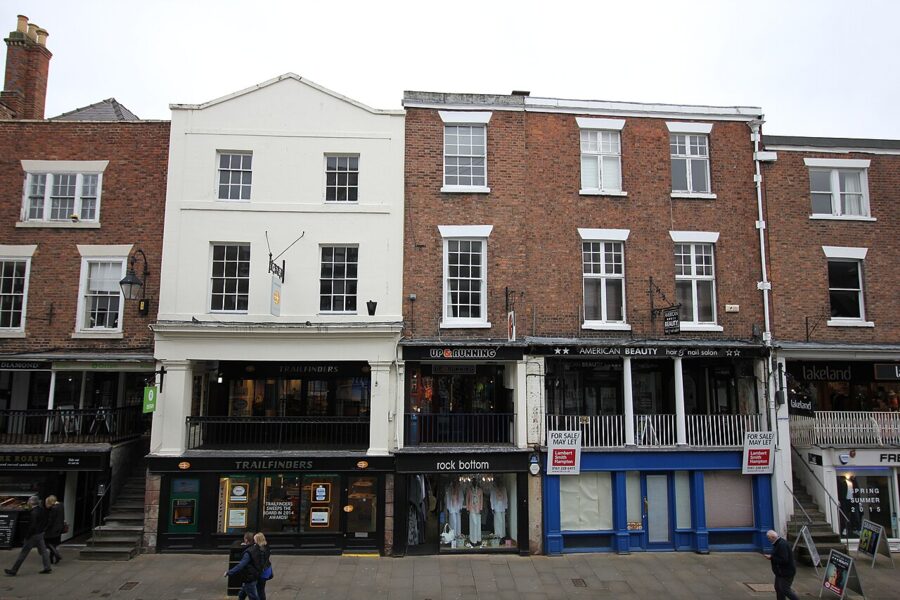
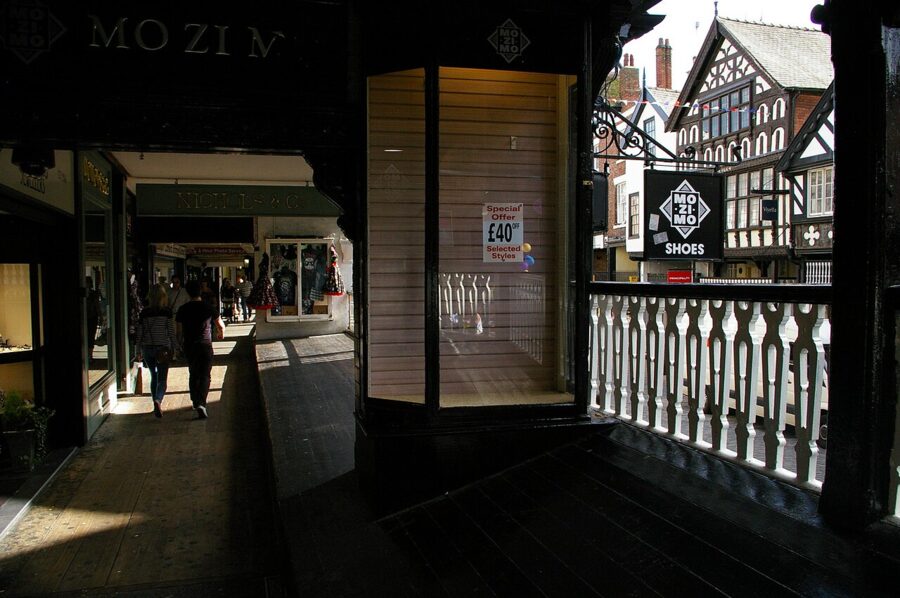
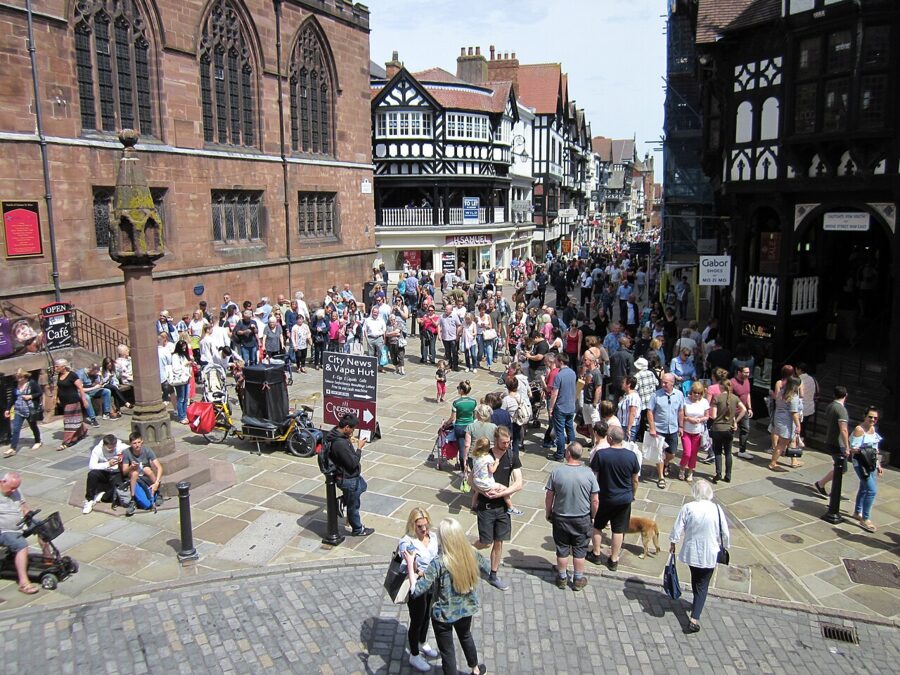
The Rows are medieval: two-level streets with shops at road level, a covered public walkway above them, and the upper storeys over that. Nobody is quite sure why Chester built them and nowhere else did. For drinking they mean pubs a floor up with a view down onto the street, and undercrofts below, some of which hold bars.
The Boot Inn
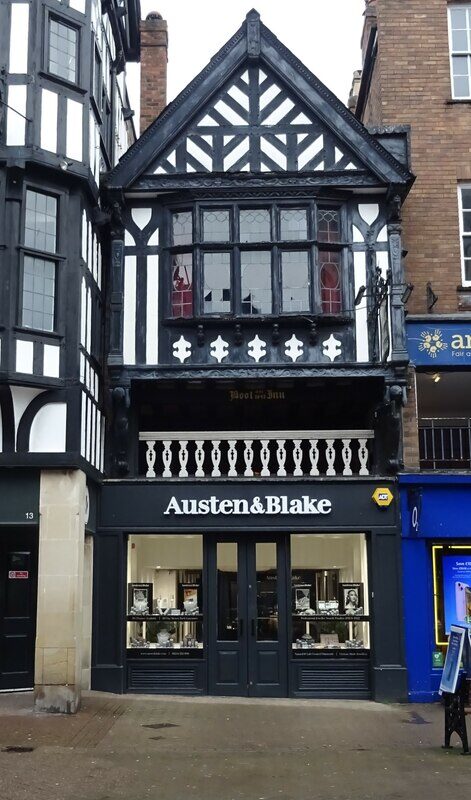
The Boot is on Eastgate Row, up the steps from Eastgate Street, and it is the one pub in the centre I would not miss. The building dates from 1643 and it has been the Boot since 1750, according to CAMRA’s local branch, and Historic England lists it at Grade II*. Inside are beams, a patch of wattle-and-daub wall left on show, and at the back a parlour with an old cooking range and a screened settle.
It is a Samuel Smith’s house, so the only cask beer is Old Brewery Bitter and the rules are the brewery’s: no phones, no laptops, no swearing, and the staff will tell you. That suits the room. Opening is 11:00–23:00 Monday to Saturday and 12:00–22:30 on Sunday, and the mullioned Eastgate Room upstairs is no longer open to drinkers.

The tales of Civil War spies and resident ghosts have no source I would stake a pint on. The wattle and daub is real, and the rear parlour is one of the best small rooms in the city.
The Cavern of the Curious Gnome
On Bridge Street Row East, a minute from the Cross, a wine and cheese bar called Paysan fills the ground floor. Go up the stairs and you are in a Belgian beer bar with toadstool stools, church pews and a large papier-mâché gnome looking down at you. It sounds like a theme bar. It is in fact the local CAMRA branch’s pub of the year for 2026, and for 2024 before that.
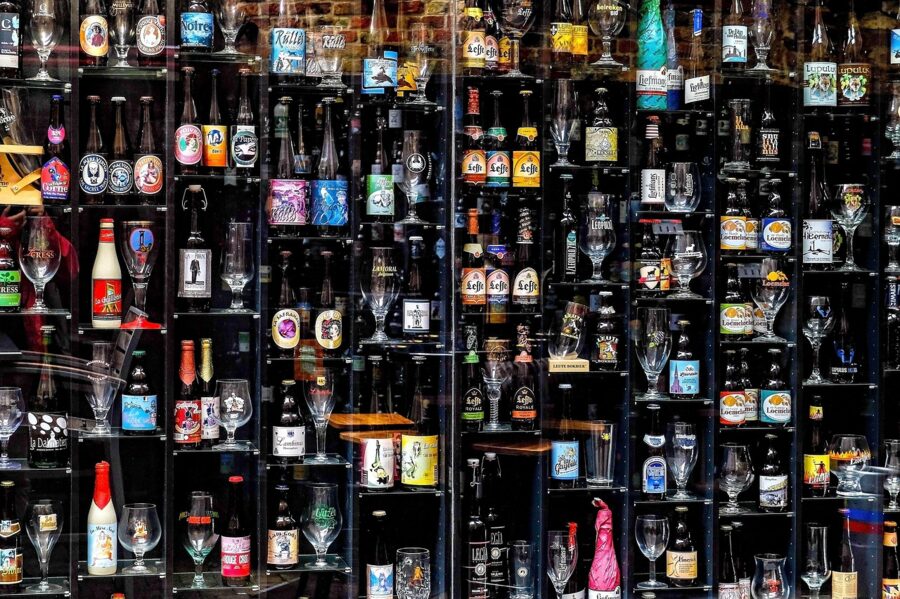
Five handpumps carry changing cask, and CAMRA members get 20% off cask from Monday to Thursday. The lease conditions on the Rows mean no dogs. Order a strong Belgian to see what the place is for, and make it a half if you want to see the rest of Chester.
Watergate Street and the Victoria
Watergate Street runs west from the Cross towards the racecourse, and its Rows hold most of the city’s cocktail bars. For a pub, go down rather than up. Watergates, a Greene King house at 11–13 Watergate Street, fills a medieval sandstone undercroft with vaulted ceilings, pillars and arched side chambers; the beer is ordinary but the cellar is not.
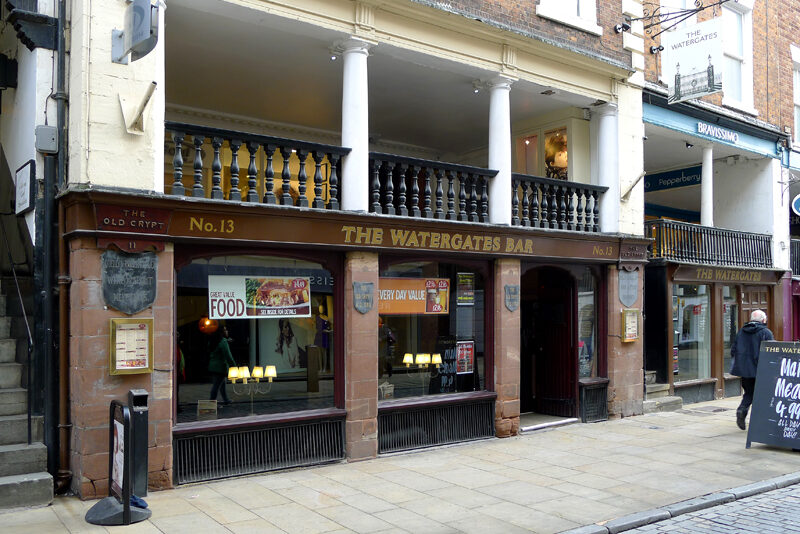

Further down, the Olde Custom House is a seventeenth-century pub of three rooms, once used by Customs and Excise, with food all day. Back at the Cross, the Victoria sits on Watergate Row looking down on the Cross itself, with an Edwardian-feeling room round a central bar and a raised back area that leads out to a few tables behind. It stays open until 02:00 on Friday and Saturday, which is the main reason most people end up there.

Northgate Street: the Pied Bull and the Bull and Stirrup
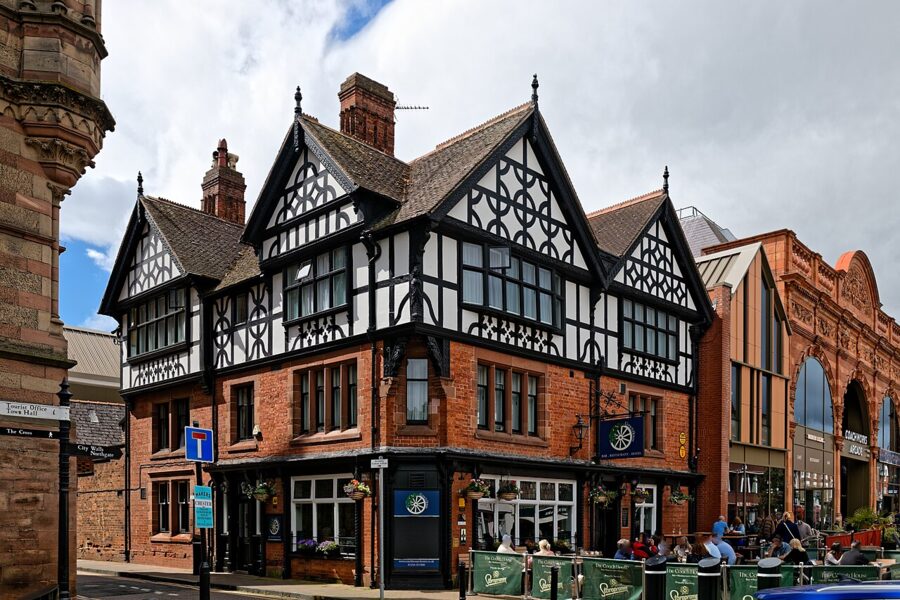
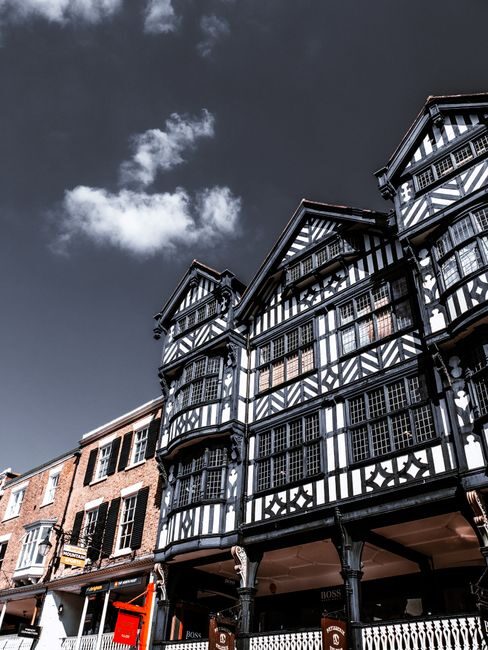
Walk north from the Cross past the Town Hall and you reach the Pied Bull, which calls itself Chester’s oldest coaching inn and claims the city’s longest continuous licence. Historic England lists it at Grade II* and thinks it may be the inn George Borrow describes in Wild Wales. It is a pub and a hotel, heavily beamed, with a staircase that CAMRA’s branch dates to 1535.
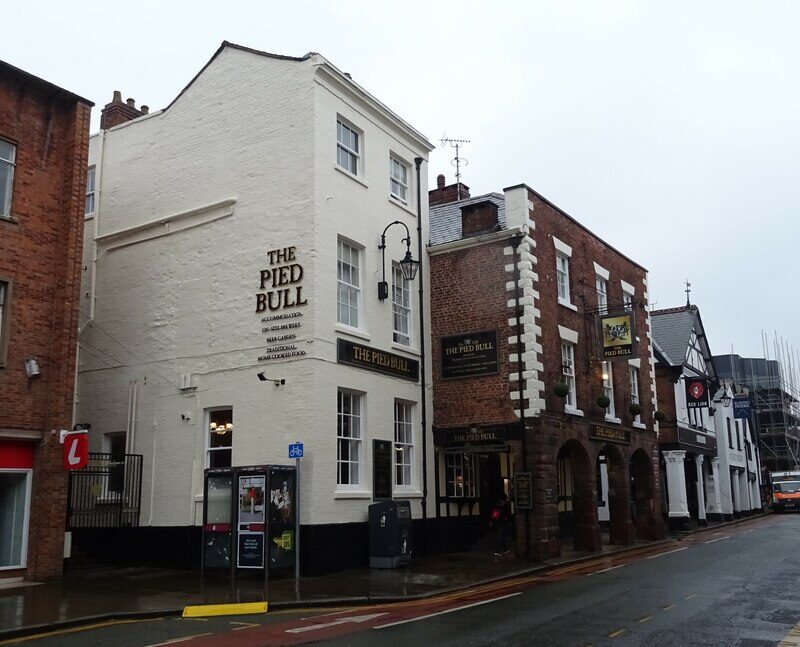

The cellar brewery supplies the handpumps at the side of the bar, including a seasonal mint chocolate mild for anyone who likes that sort of thing. They are not cheap for beer brewed downstairs. Food runs all day, dogs are welcome in the pub, and there is a quiz on Thursdays.
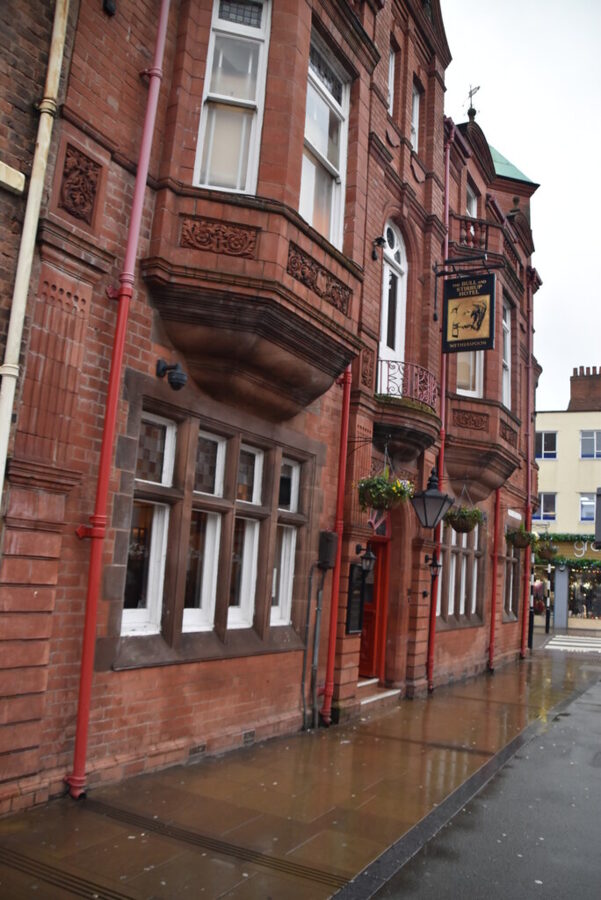
Opposite the Town Hall, the Coach House is a smart pub with rooms, good for a morning coffee as much as an evening pint. At the top of the street, outside the Northgate, the Bull and Stirrup is a Wetherspoon in an 1889 red-brick hotel. Use the George Street door for the tiled mural of King Edgar being rowed on the Dee, which survived the conversion.


Towards the station: Foregate Street, Brook Street and City Road
Go out through the Eastgate and the city turns Victorian and ordinary, which is where the locals drink. It is also the way to the station, fifteen minutes from the Cross on foot.
The Olde Cottage
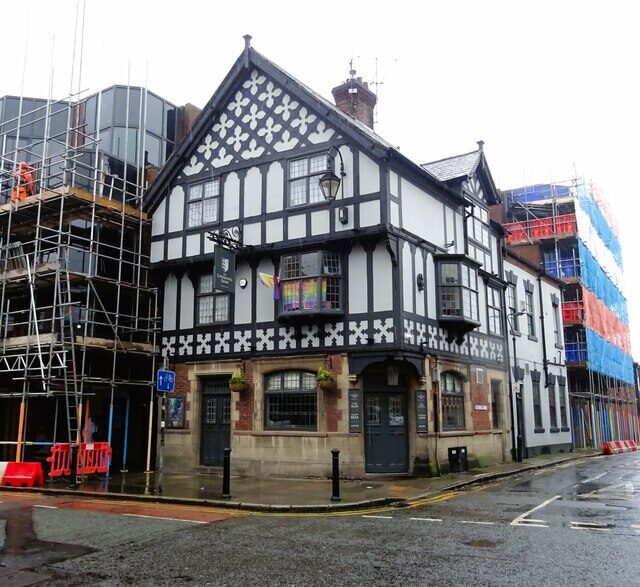
On Brook Street, between the bus station and the railway, the Olde Cottage is a mock-Tudor street-corner local and the most consistent cask pub in Chester: branch pub of the year in 2016, 2018, 2019 and 2022, and second in 2026. Four handpumps carry Otter Bitter, Wye Valley HPA and changing guests, there is a real fire in winter, and a quiz on Wednesday nights.
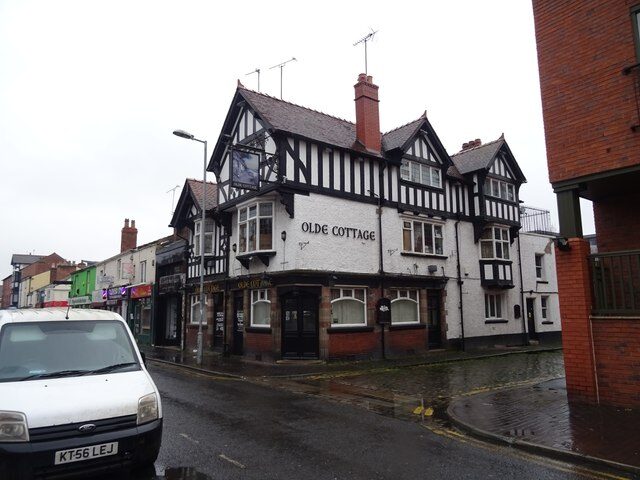

It also keeps a dartboard and a bagatelle table. Bagatelle is a long table game of balls and pins that survives here in a local league, which its players reckon is the last of its kind, and the Olde Cottage is one of its homes. Watch a game before you ask to join one.
The Union Vaults
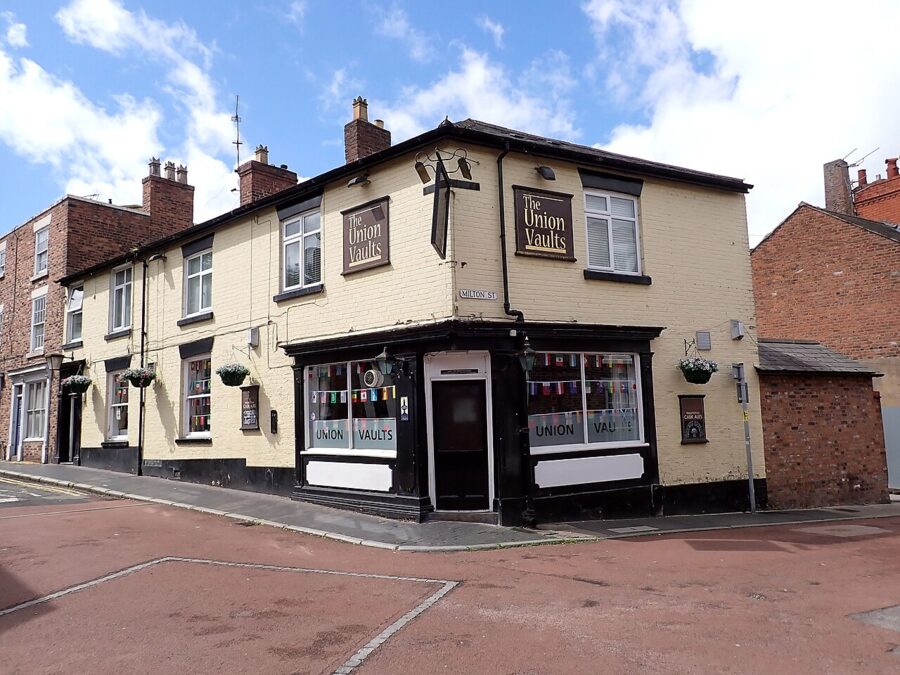
Five minutes away on Egerton Street, the Union Vaults is the other bagatelle pub: a Victorian corner house on three levels, with pool at the back, darts in the middle and what CAMRA’s branch calls a superb bagatelle table by the corner door. Timothy Taylor’s Boltmaker and Landlord are the usual beers, and the regulars are friendly to anyone who does not stand in front of the table.

The Cellar and the Cornerhouse
On City Road, which runs straight to the station, the Cellar keeps six handpumps of beer from small brewers far and wide, two real ciders and a long list of cans, with Timothy Taylor Landlord the only fixture. It was the branch pub of the year in 2014, 2015 and 2023. It has sport on screens and stays open late, to 01:30 on Friday and Saturday.
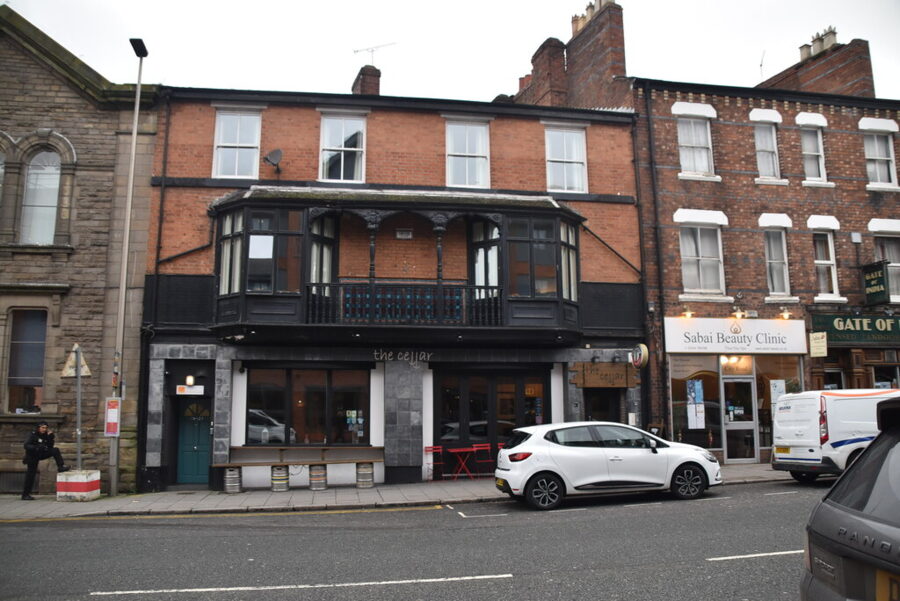

Its sister across the road, the Cornerhouse, is a candle-lit mock-Tudor building with live music in the main bar and four cask beers, usually including Salopian Oracle and one dark and one pale guest. If the Cellar is for the football, the Cornerhouse is for the band.
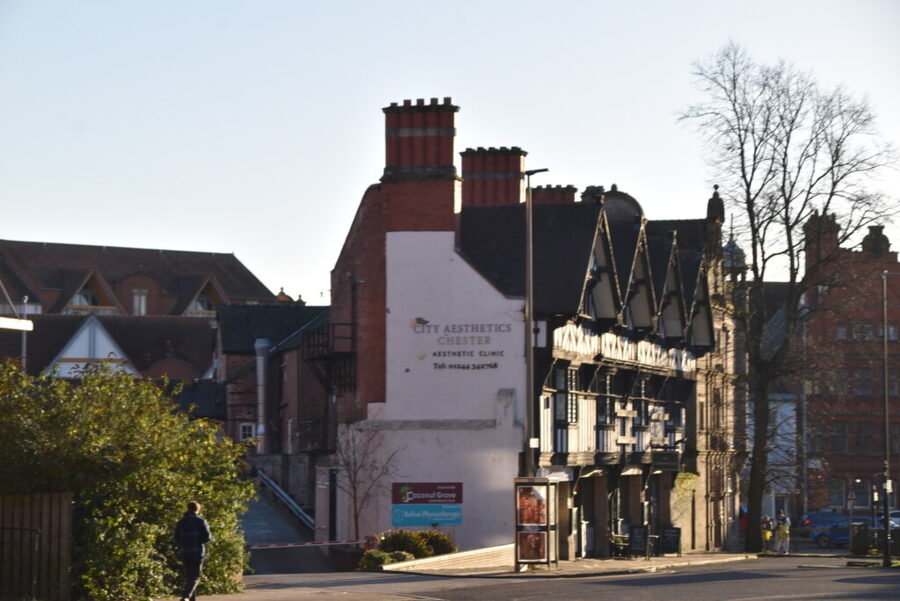

That Beer Place
Back on Foregate Street, That Beer Place is a plain one-room bar with a room upstairs and the best cider list in the north-west: over a hundred real ciders and perries at any one time, at least three on draught. CAMRA named it the national cider pub of the year for 2024, and the local branch has made it cider pub of the year three years running.
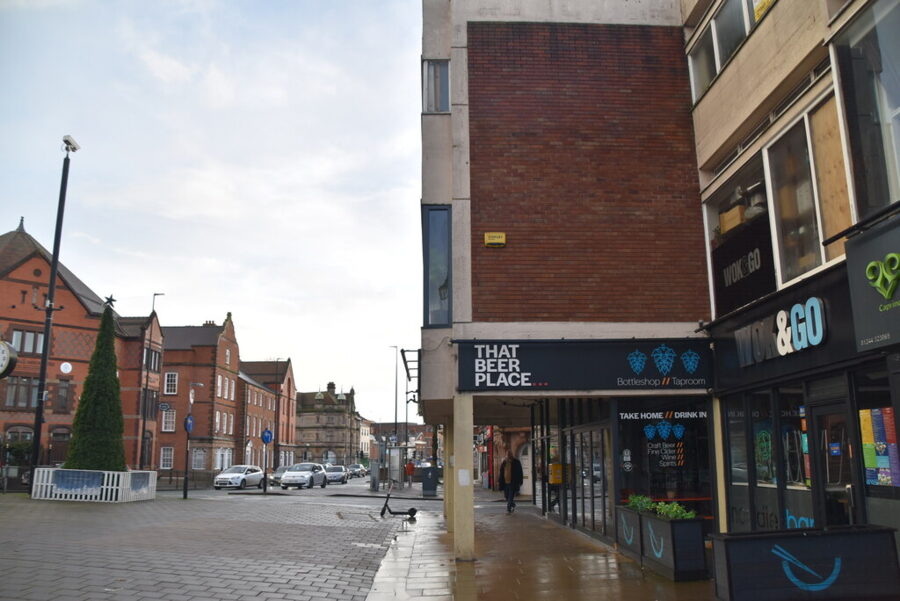

It added cask beer in 2024, and there are Belgian sours on keg. Cask is 10% off from Monday to Thursday. If you think cider means a pint of something sweet and fizzy over ice, an hour here will change that.
The Station Tap and the Town Crier
Spitting Feathers opened the Chester Station Tap in spring 2025, in a long-disused waiting room in the west wing of the station, and it is the best station pub I know of in the north. The ceiling is moulded with flowers, there is a big original fireplace, and the arched windows look across at the Town Crier. Four Spitting Feathers beers and four guests are on, from 11:00 every day.
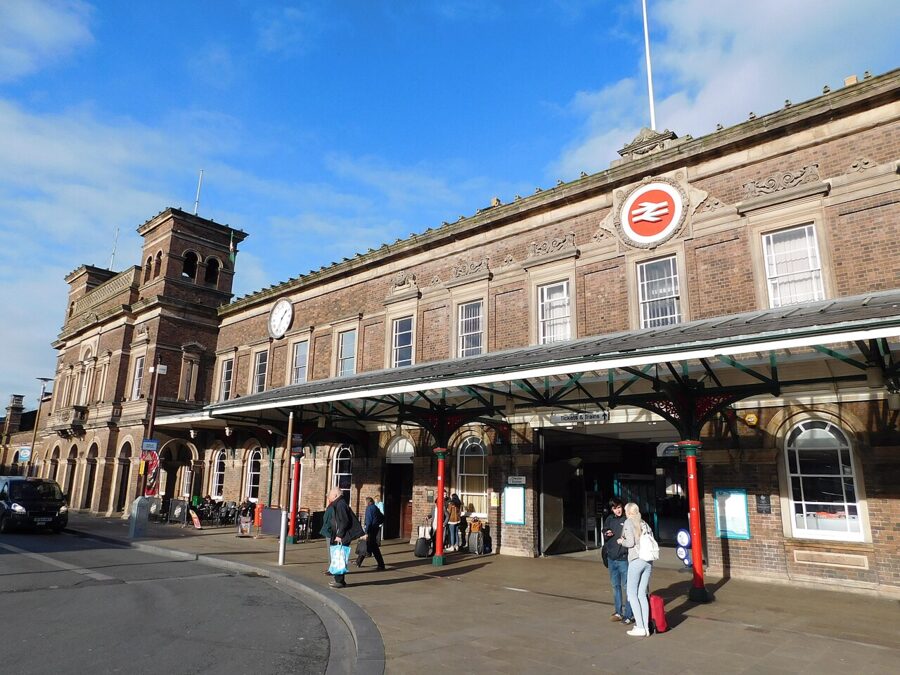

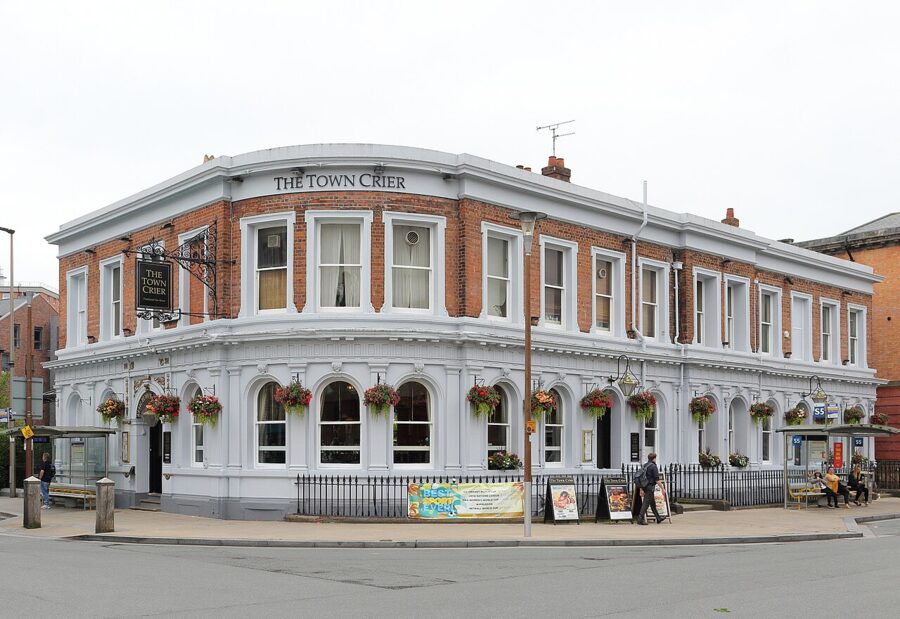
The Town Crier, directly opposite, is a Grade II Italianate building of 1865, built as an offshoot of the Queen Hotel next door. Inside it is a sports pub with booths, each with its own small screen. Come for the front, the handsomest on City Road, and for a pint while a late train gets later.

Along the canal
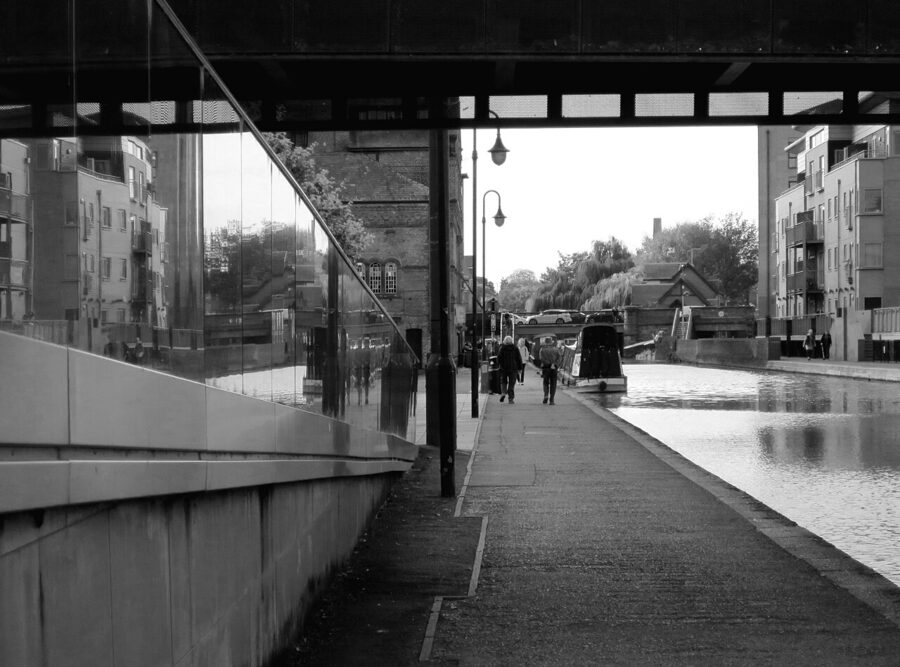
The Shropshire Union Canal cuts along the north side of the city, right under the walls in places, and the towpath links three very different pubs.

The Old Harkers Arms
The Old Harkers Arms fills the ground floor of a Victorian canalside warehouse off City Road, down the steps by the bridge, and it was the first Brunning & Price pub. It looks old, with dark wood, cast-iron pillars and bookshelves; much of that is careful work by the company rather than the warehouse, but it is very good careful work.
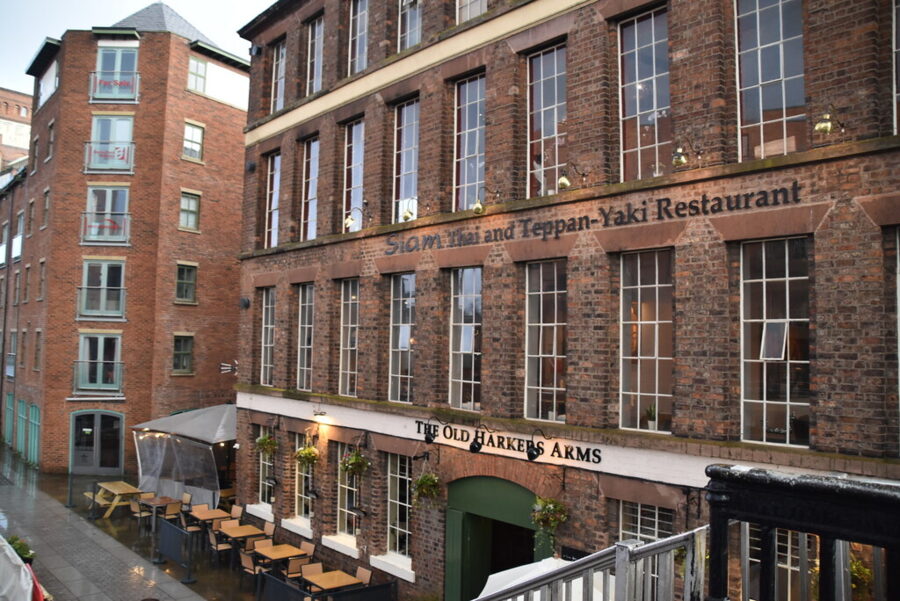

Up to nine cask beers are chalked on boards with tasting notes, among them Weetwood Cheshire Cat and Eastgate, Phoenix Boss Man’s Brew and Facer’s Plum Porter, and ciders come up from the cellar. The food is the best of the canal pubs. It is adults only, with no children at any time, and it opens at 10:30 for brunch and coffee, though not for beer that early.
Telford’s Warehouse
At the far end, past the staircase locks, Telford’s Warehouse sits on the canal basin at Tower Wharf. It is a Grade II Georgian warehouse with its beams, a glass wall over the water, and live music most weeks; some gigs charge on the door. Salopian Oracle and Weetwood Cheshire Cat are the house cask beers, and it was the branch pub of the year in 2012 and 2017.

The Duck and Dagger
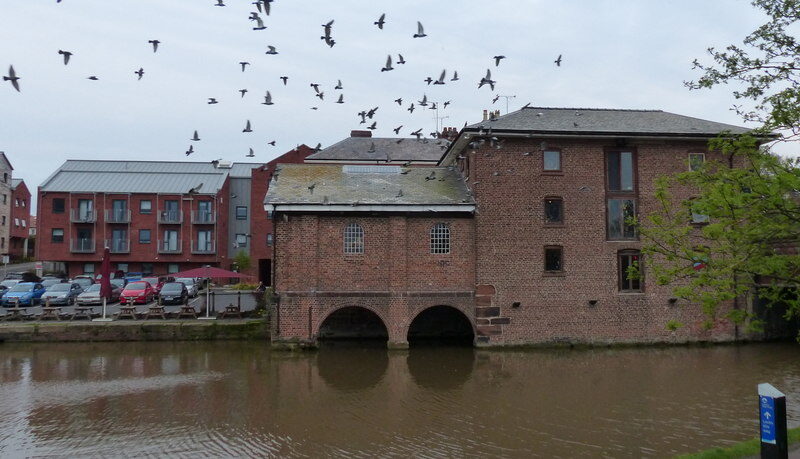
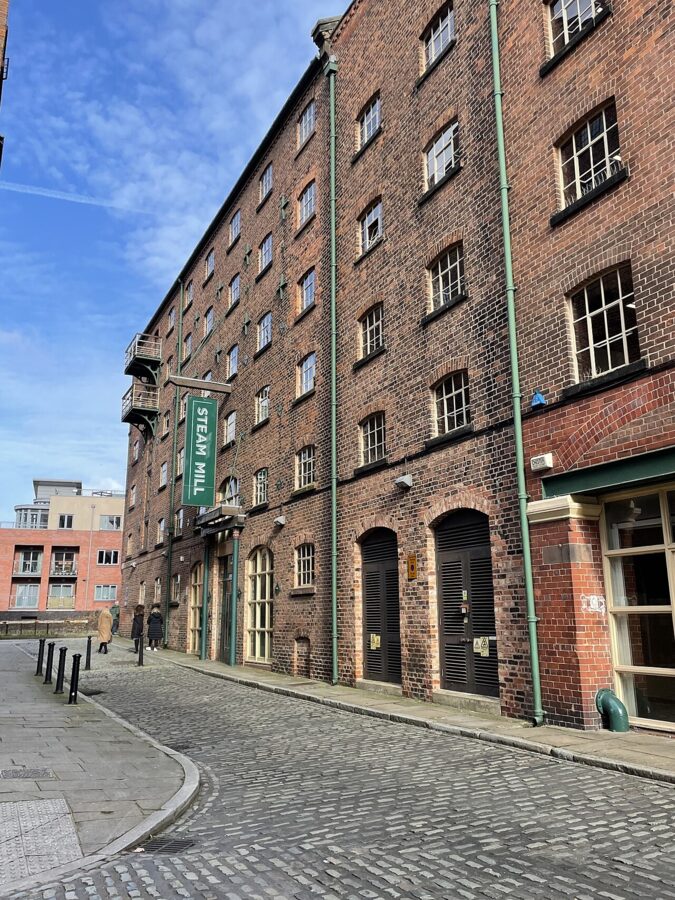
East of the Old Harkers, the Duck and Dagger opened in summer 2025 on the ground floor of the Steam Mill, a red-brick mill beside the towpath, in the space that was the Artichoke. It is a bar and restaurant more than a pub, from the owner of the Coach House, with Ossett’s White Rat on cask.

The river, Handbridge and the Carlton Tavern
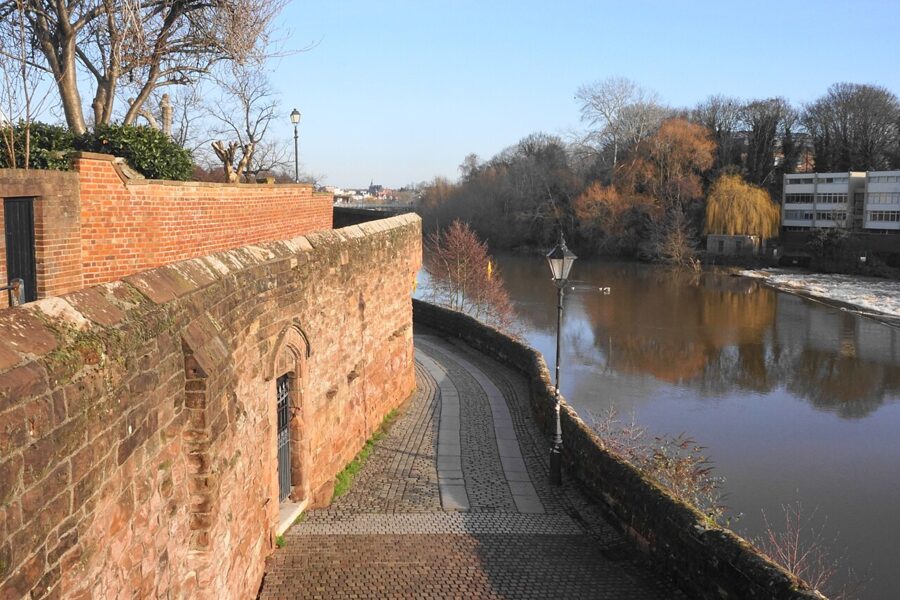
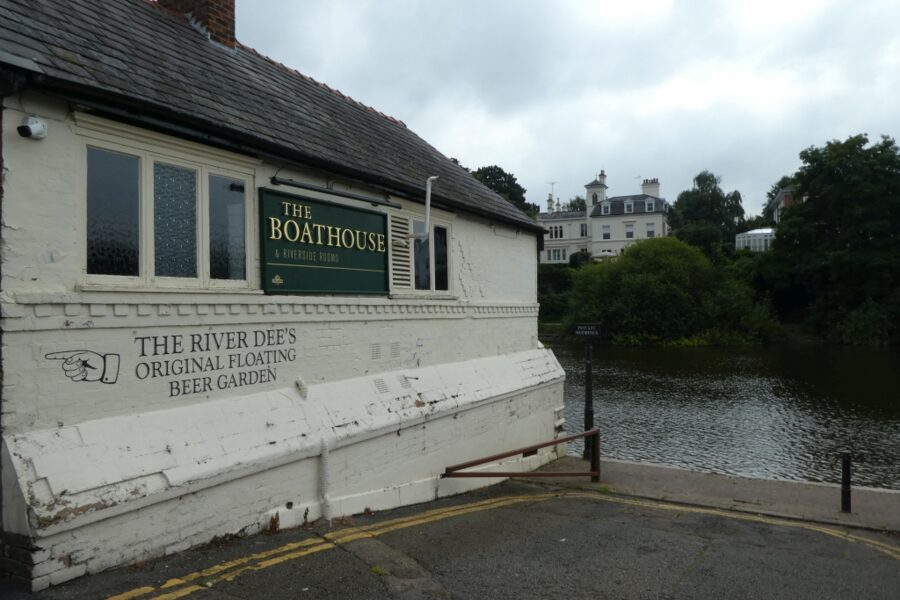
The Dee runs round the south side of the city, and the Groves, the riverside promenade below the walls, is where Chester goes on a summer evening. The Boathouse, a JW Lees pub among the rowing clubs, is mostly a place to eat, but drinkers are welcome in the bar, the big windows look out over the boats and there is a moored barge by the patio. JW Lees Bitter is the beer.

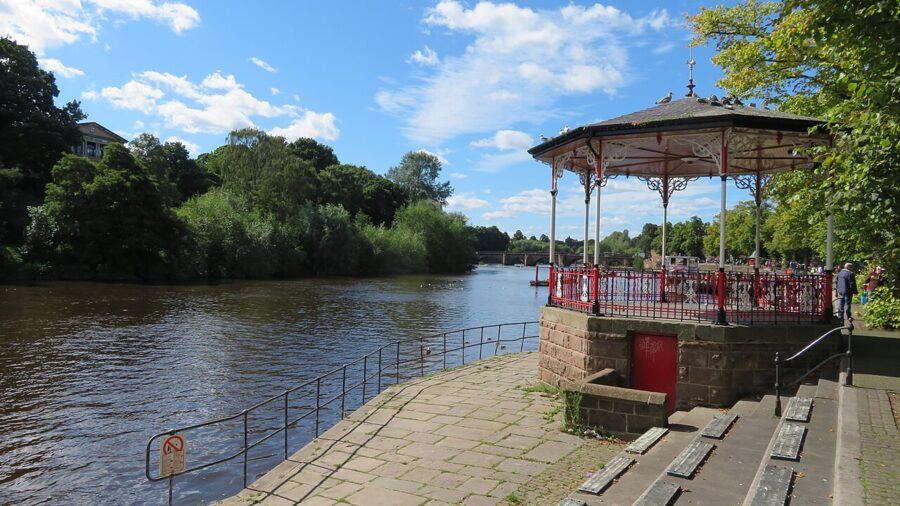

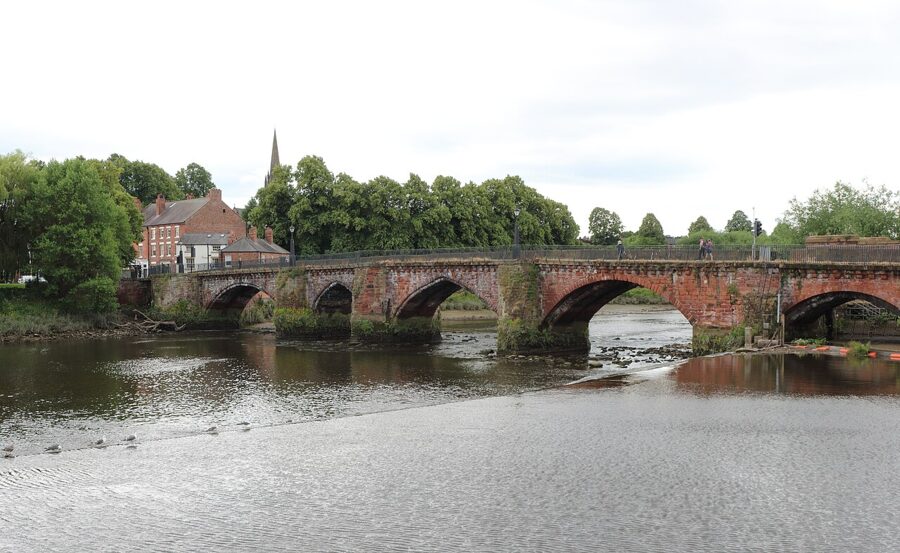
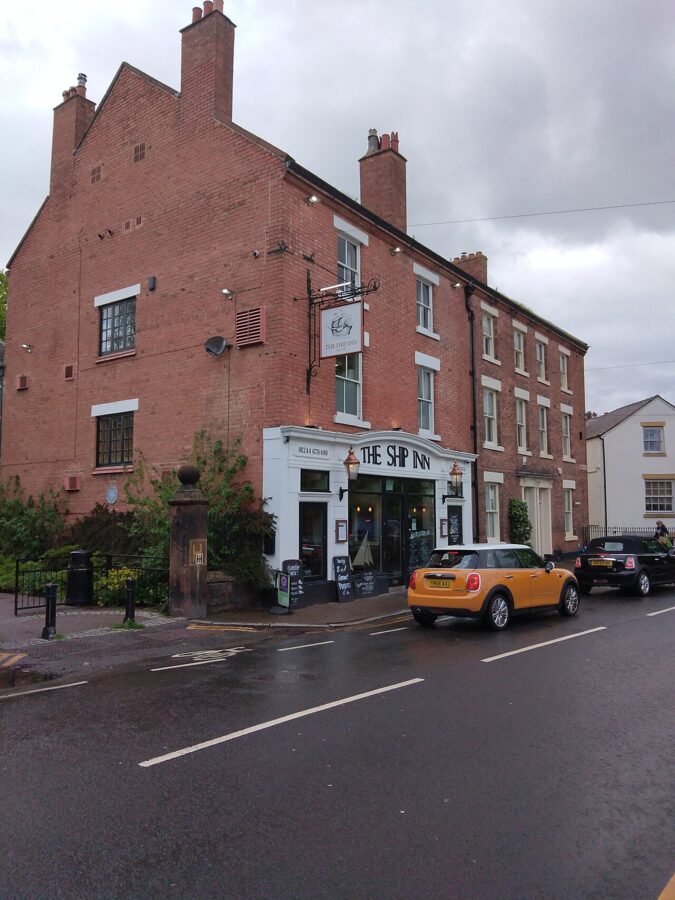
Cross the Old Dee Bridge, the medieval sandstone bridge by the weir, and you are in Handbridge, the village on the far bank. The Ship Inn is the first thing you meet: a large red-brick pub, heavily modernised, with a big fire downstairs and a restaurant upstairs looking over Edgar’s Field. In that small park a worn Roman figure of Minerva is still carved into the sandstone outcrop. The Ship pours Thwaites Gold and is a useful halfway house on a riverside walk.



The Carlton Tavern
Walk up into Handbridge’s terraced streets and, on Hartington Street, you find the best interwar pub in Chester. The Carlton Tavern was built in 1923 for Walker’s of Warrington, part of the brewers’ drive after the First World War to replace cramped beerhouses with bigger, brighter “improved” pubs. It has bow windows and a semicircular porch, in Neo-Georgian with a touch of Art Deco, and Historic England lists it at Grade II as a good and complete example of an interwar pub.
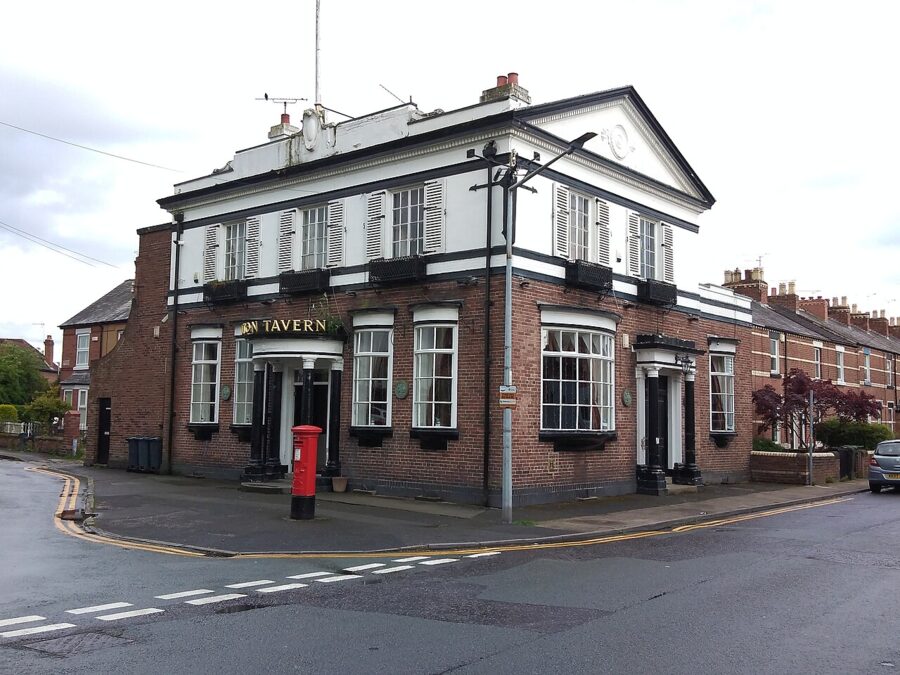

Inside, the two-bar plan survives around a central servery. The quieter side keeps its 1920s dado panelling, fixed bench seating with bell pushes for table service, a stone fireplace and an Art Deco ceiling rose; the other side has pool, darts and the occasional band. It is a community local with sport on the television, it welcomes dogs, and the cask beer is usually Weetwood Cheshire Cat.
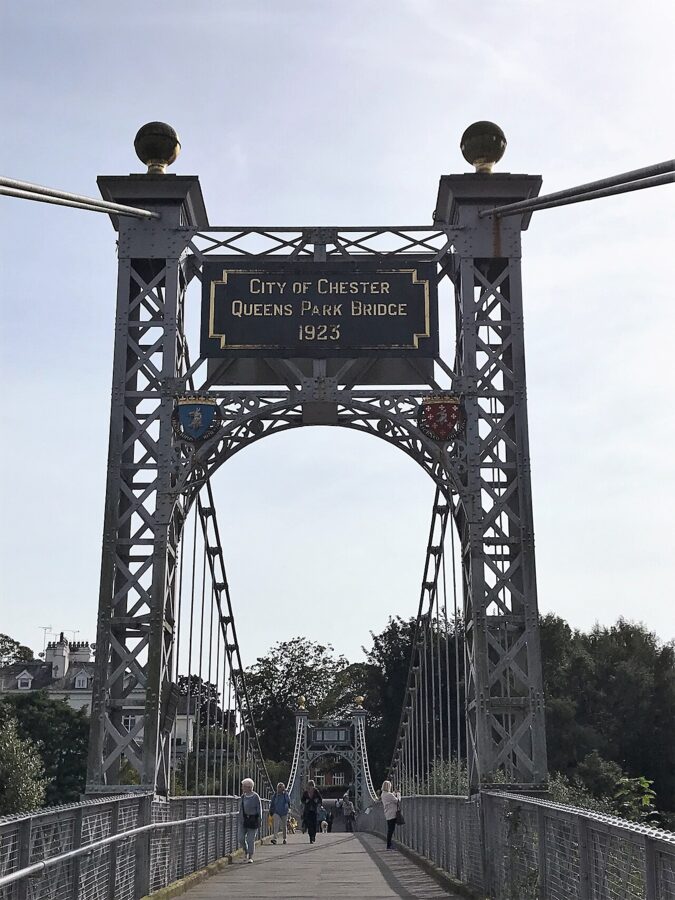
It opens at 16:00 on weekdays and 13:00 at weekends, until midnight on Tuesday and Friday. It is about ten minutes’ walk from the Old Dee Bridge, or come over the Queens Park suspension bridge from the Groves. Older listings sometimes file it under Hoole, but it is in Handbridge, south of the river.

Boughton and Hoole
East of the city, along the main road that becomes Boughton, the Jolly Gardeners on Christleton Road is the Chester pub for food. It is a Tudor-revival Grade II building with oak panelling of 1907, and the brothers behind the Porta tapas bars restored it slowly, taking the leaded windows and panelling out, repairing them and putting them back; the work finished in August 2025. The Michelin Guide listed it in 2026.
Downstairs is still a pub, with a fire and Weetwood Best Bitter, and the upstairs rooms are for booked meals. It is a twenty-minute walk from the Eastgate.
Further along, the Mount Inn is a Hydes pub on the slope above the river, with views across the Dee to the meadows and a three-tier garden. Dogs are allowed inside and out, and three Hydes beers are on handpump.
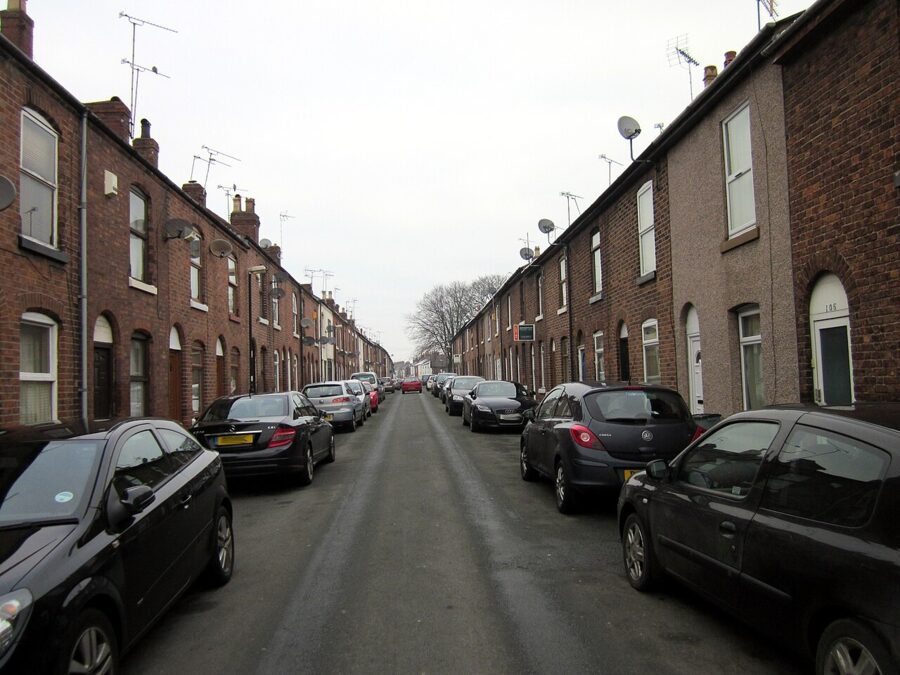

Hoole, the Victorian suburb across the railway from the station, keeps its shops on Faulkner Street. The Royal Oak there is a small Marston’s local with two little rooms off a corridor, and the Bromfield Arms is a big mock-Tudor house with four handpumps. Neither is worth a special trip, but if you are staying in one of Hoole’s guest houses, they are your locals.
Historic interiors and the famous names
Chester has a great many old pub buildings and very few old pub interiors. CAMRA’s National Inventory of Historic Pub Interiors, the list of the bars that have survived essentially unaltered for fifty years or more, includes exactly one pub in the city, and it is not one of the famous black-and-white ones.
The Albion
The Albion stands on a corner of Albion Street and Park Street, just inside the walls near the Newgate, among terraced streets of Victorian houses. It is a Victorian street-corner local with three rooms. CAMRA gives it one star, meaning an interior of special national historic interest, for its small corner bar with what look like 1950s fittings, the front-right room with an early twentieth-century fireplace and a tiny post-war counter, and the double doors between them.
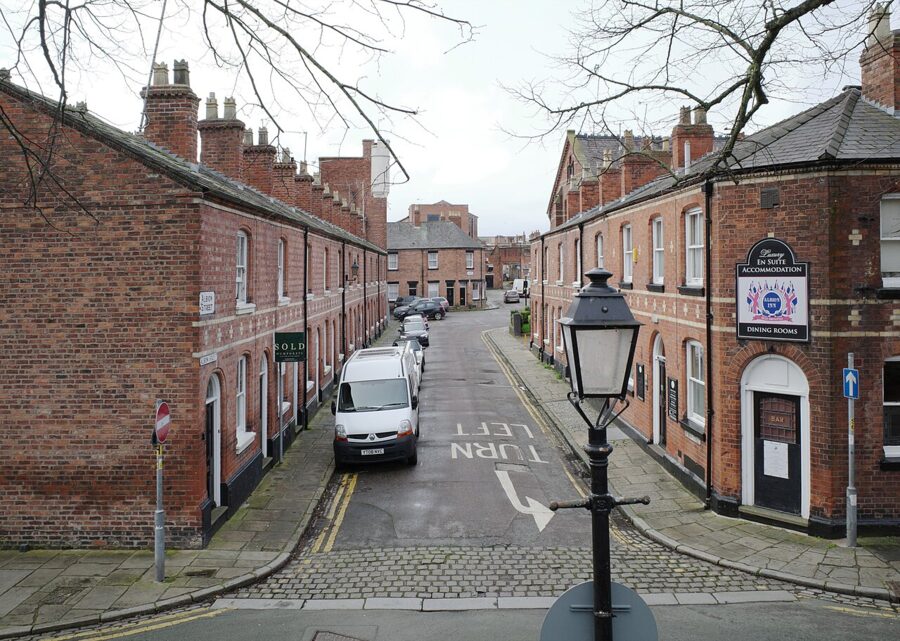

It is also a museum of the First World War: flags, enamel signs, patriotic posters, part of a wooden propeller, petrol-pump globes over the bar and a big enamel advert for Fry’s chocolate. Mike Mercer ran it for almost fifty years until his death in 2021, and his family has carried on in the same style. It is quiet and conversational, candle-lit at night, and some of the tables are old treadle sewing machines.
The food is home cooking, the curries especially, and Timothy Taylor’s Boltmaker is the regular beer. The hours are its own: lunchtimes from 12:00 to 15:00 and evenings from 17:00 (18:00 on Saturday), closed all day on Wednesday and Sunday. Check before you walk over.
What is really old
Plenty of Chester’s black-and-white is Victorian. The city rebuilt a great deal of its centre in timber-framed style in the nineteenth century, so a beam on the front is not proof of anything. The listing grades and the interiors tell you more.
| Pub | Building | What is genuinely old |
|---|---|---|
| Boot Inn | Grade II*, dated 1643 | Timber frame, wattle-and-daub panel, rear parlour with range and settle |
| Brewery Tap | Grade II*, medieval hall | The hall itself and the sandstone fireplace; the pub fittings date from 2008 |
| Old King’s Head | Grade II* | Medieval site, front refashioned for the Holme family by the early 1600s |
| Pied Bull | Grade II* | Seventeenth-century building on two medieval plots; the staircase |
| Bear and Billet | Grade I, 1664 | The timber front; much of the glass is a nineteenth-century repair |
| Watergates | Medieval undercroft | The vaulted sandstone cellar the bar sits in |
| Albion | Not listed | Three-room layout and 1950s fittings (CAMRA one star) |
| Carlton Tavern | Grade II, 1923 | Interwar layout, panelling, bell pushes, fireplace |
The oldest pub in Chester
The claim belongs to the Pied Bull. Its website heading says it dates back to 1155, its plaque says the building was the house of the city’s Recorder in 1533, and its own text says it has held a continuous licence since 1535. Historic England’s listing describes a seventeenth-century building, refronted later that century and extended in the nineteenth, probably standing on the site of two medieval houses.
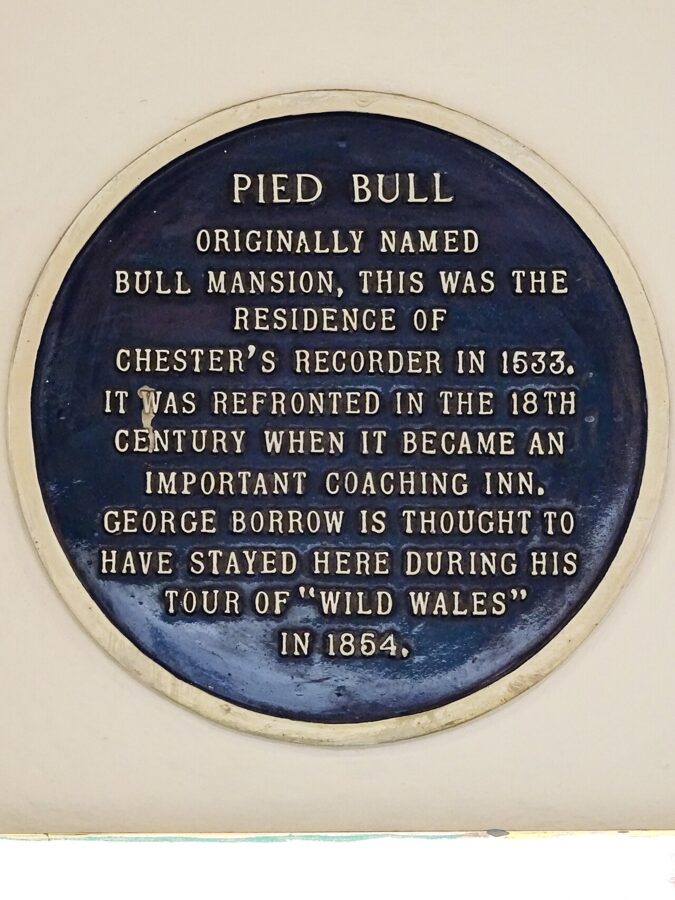

So: a medieval site, a seventeenth-century building and a long licence that nobody has documented as unbroken. I would call it the oldest inn in Chester with a straight face, and leave the 1155 to the website. Claims like it are everywhere, and the oldest pubs in England are a contest with no referee.
The two Spitting Feathers pubs earn a different kind of heritage credit. CAMRA files both the Brewery Tap and the Station Tap under outstanding conversions and restorations: old buildings brought back into use as pubs, rather than old pubs kept as they were.
Race days on the Roodee
Chester Racecourse lies on the Roodee, the flat ground between the city walls and the river, just outside the Watergate. Racing here goes back to the sixteenth century, and the course calls itself the oldest still in use. The track is tight and left-handed, and you can see most of it from the walls above, which have always been the cheapest seats.
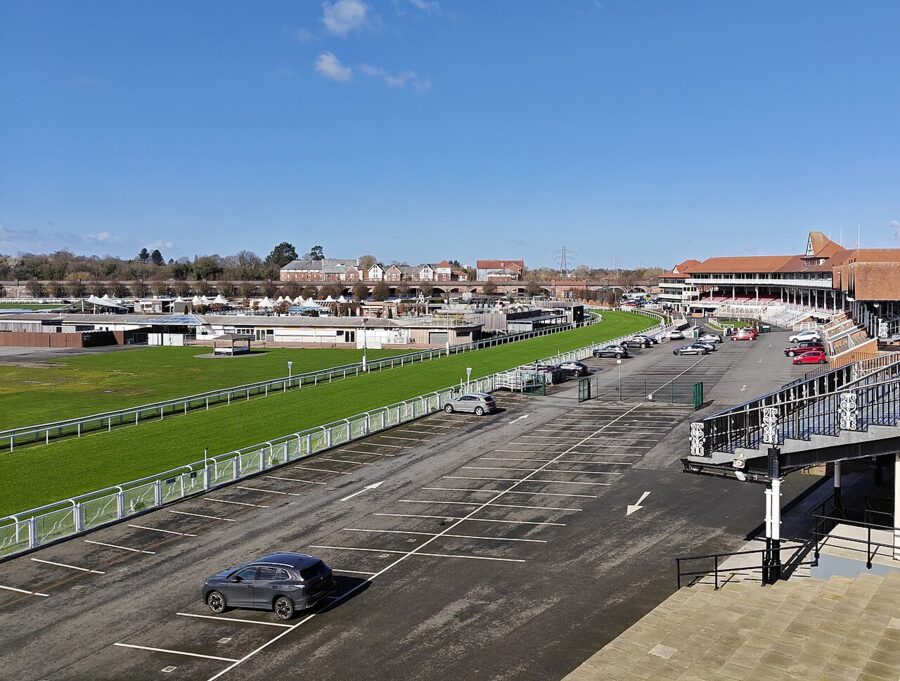

The big meeting is the May Festival, which in 2027 is scheduled for Wednesday 5 to Friday 7 May, with the Chester Cup on the Friday; there are fixtures on Saturdays through the summer as well. On those days the pubs between the Cross and the course fill from lunchtime and Watergate Street becomes one long queue.
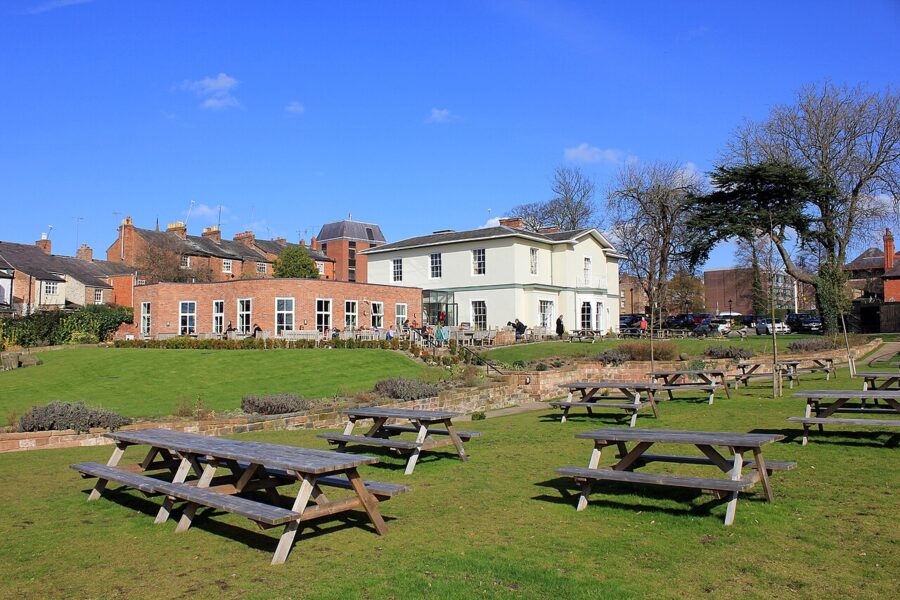
The Architect, on Nicholas Street by the course, is the pub that suits a race day best. It is Brunning & Price again, in St Martin’s Lodge, the Regency house Thomas Harrison, architect of the Grosvenor Bridge, built for himself, with a newer bar wing and a sloping lawn. Expect the company’s own Original, brewed by Brightside, and Weetwood Cheshire Cat.

One evening, start to finish
This route starts at the station and ends close to the river: six pubs and about a mile and a half of walking, with one choice at the end depending on the day.
- Chester Station Tap. One to start, before you have left the station building.
- The Olde Cottage, Brook Street. Five minutes. Cask beer, a fire and a look at the bagatelle table; opens at 16:00 on weekdays.
- The Boot Inn, Eastgate Row. Ten minutes, in through the Eastgate and up the steps on the right-hand side. Phone away, back parlour.
- The Cavern of the Curious Gnome, Bridge Street Row East. Three minutes along the Rows past the Cross. A Belgian beer, or the best cask in the city.
- The Brewery Tap, Lower Bridge Street. Five minutes downhill. Eat here.
- The Albion or the Cross Keys. The Albion, five minutes east, is shut on Wednesdays and Sundays; the Cross Keys, across the road, is shut on Mondays and Tuesdays. One of them is always open.
From Lower Bridge Street the walk back to the station is about twenty-five minutes, or ten in a taxi.
Practical notes
Getting there. Chester station is east of the walls, about fifteen minutes’ walk to the Cross along City Road and Foregate Street. Merseyrail runs to Liverpool, and there are direct trains to Manchester, North Wales and London Euston; if you are carrying on, the best pubs in Manchester are a short train ride away.
Late licences. Most pubs in the centre close at 23:00, with the Brewery Tap shutting earlier on Sunday. For later, the Victoria at the Cross and the Liverpool Arms by the Northgate run to 02:00 at weekends, the Cellar to 01:30, and the cocktail bars on Watergate Street later still.

Race days and match days. On race days book any table you want and expect queues everywhere near the Watergate. Football matters less: Chester FC play at the Deva Stadium, out on the edge of the city where the pitch sits across the border in Wales, and match days barely touch the centre.
Children and dogs. The Old Harkers Arms is adults only. The Gnome’s lease on the Rows bars dogs, but they are welcome at the Pied Bull, the Mount Inn and the Carlton Tavern. Most of the old pubs have steps somewhere; the Brewery Tap and the Boot are both up a flight from the street.
Booking. Book for food at the Jolly Gardeners, the Architect and the Brewery Tap at weekends, and for anything during the May Festival.
And if you only have time for two, make them the Brewery Tap, up its fifteen steps from Lower Bridge Street, and the Boot, a floor above Eastgate Street, where Chester has always done its best drinking. At the first, ask what is on cask before you look at anything else. At the second, put your phone away.