
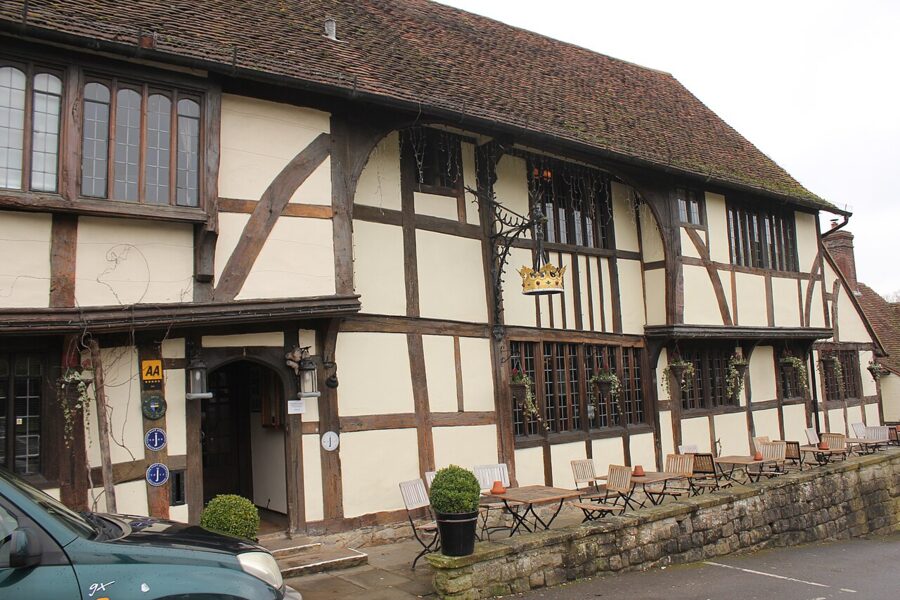
The Crown at Chiddingfold was let as an inn in 1383, and some of the woodwork in its front bar is modern timber, distressed to look almost as old. The people who list England’s historic pub interiors say both things cheerfully, and put the Crown on their national list anyway. That is Surrey in one building: genuinely ancient, carefully restored, a little dressed up for company, and worth the drive.
People who only know Surrey from the train think of it as commuter country, and the bits round the stations are. Beyond them it is chalk downs, sandy heaths, the wooded greensand hills and the slow River Wey, and the pubs follow the ground. You get coaching inns on the old roads to Portsmouth and Brighton, watermills turned into dining rooms, walkers’ pubs at the foot of Box Hill, and a hop town in the far west with a pub named after the crop.

This guide runs west to east and ends with three walks and some practical notes. Every pub named was trading in the autumn of 2026, but Surrey’s country pubs shut on Mondays and Tuesdays more often than you would think, so check before a long drive.
On this page
- What Surrey drinks
- Farnham and the western Wey
- Godalming, Chiddingfold and the Sussex border
- Guildford
- The Tillingbourne valley: Shere, Gomshall and Abinger
- Box Hill, Dorking and the Mole
- Ripley, the Clandons and Redhill
- Three walks with a pint at the end
- Practical notes: hours, food, rooms and dogs
What Surrey drinks
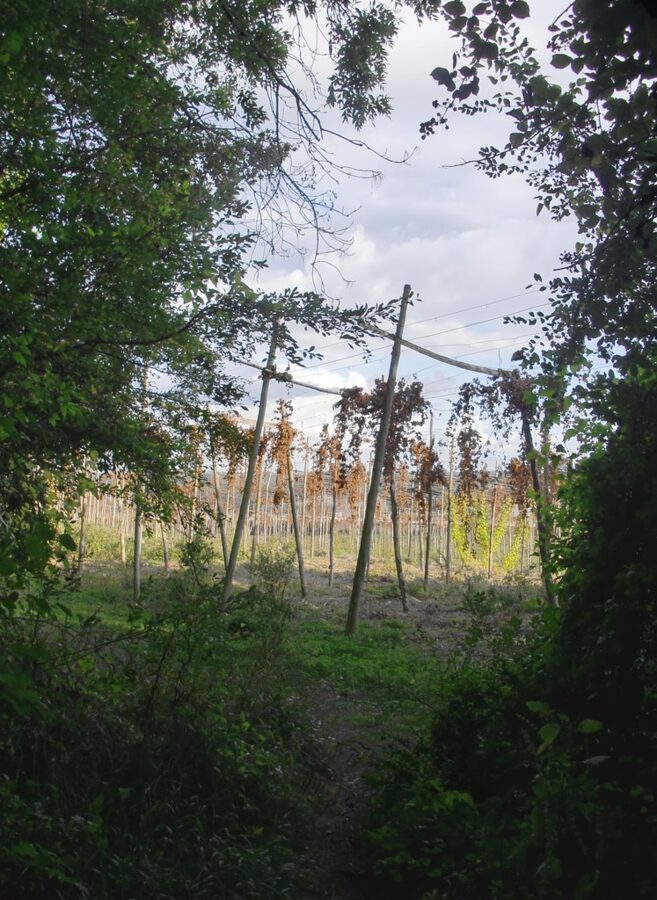
Start in Farnham, because Farnham was a hop town for the best part of four centuries. Hops were grown and beer brewed there from about 1600 into the 1970s, and the town’s own brewery, Farnham United Breweries, malted its barley in the buildings by the bridge. Courage took the business over and brewing stopped, though malting went on into the 1960s. The Maltings is an arts centre now, and it has hosted Beerex, the town’s beer festival, since 1977.
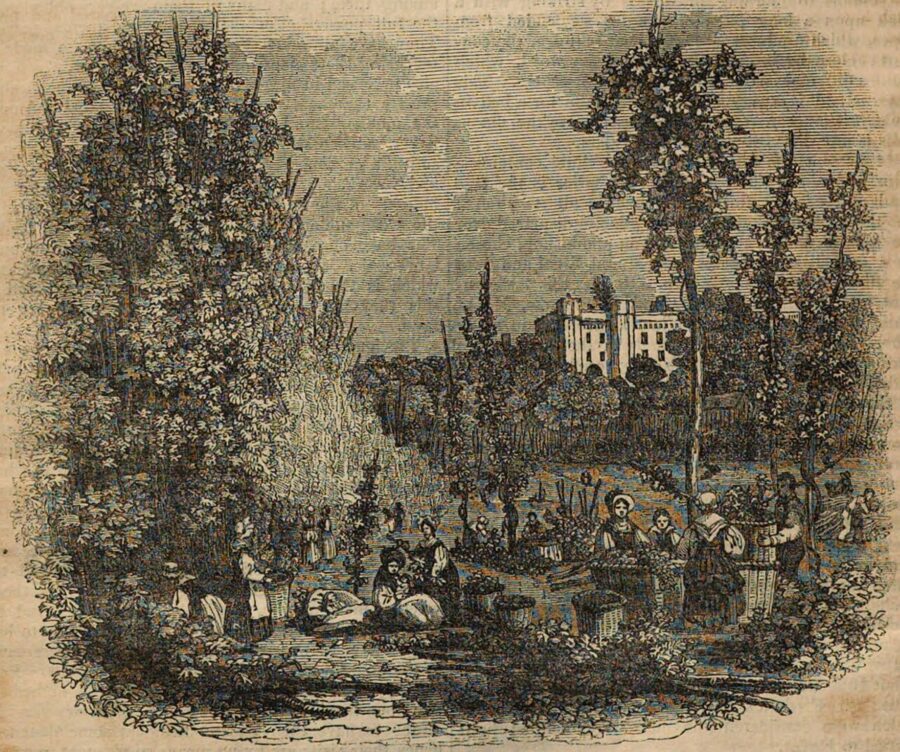
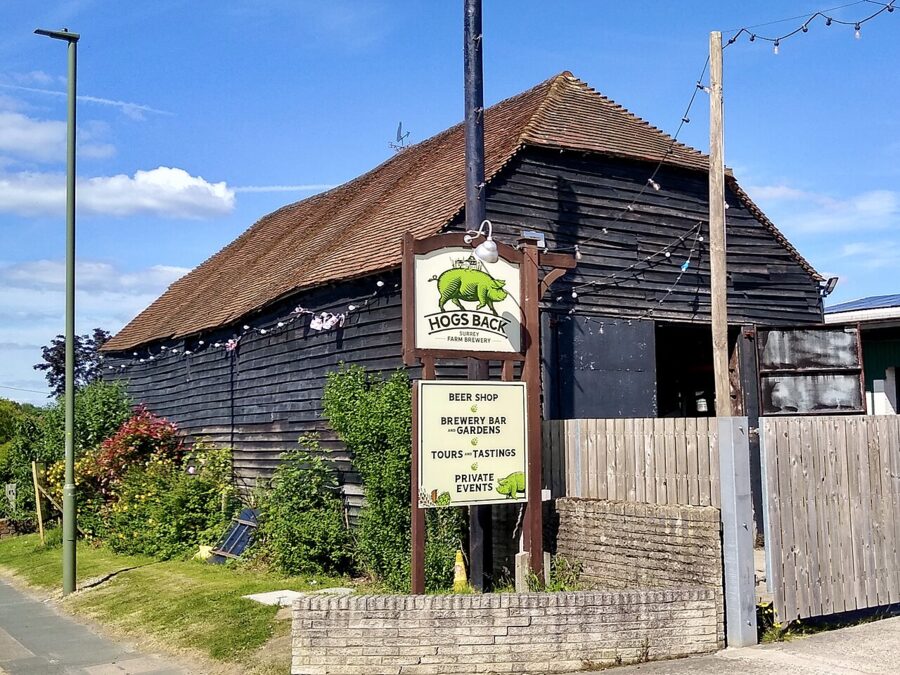
The hops came back with Hogs Back Brewery, founded in the early 1990s in farm buildings at Tongham, just east of Farnham, with a barn dating from 1788. Its best-known beer, TEA, short for Traditional English Ale, is a 4.2% amber bitter you will see on bars all over the west of the county. The brewery grows its own hops too: in 2018 it took its hop garden to 8.5 acres of Fuggle, Cascade and Goldings, and in September the harvest is brought into the Hop Hangar on site.
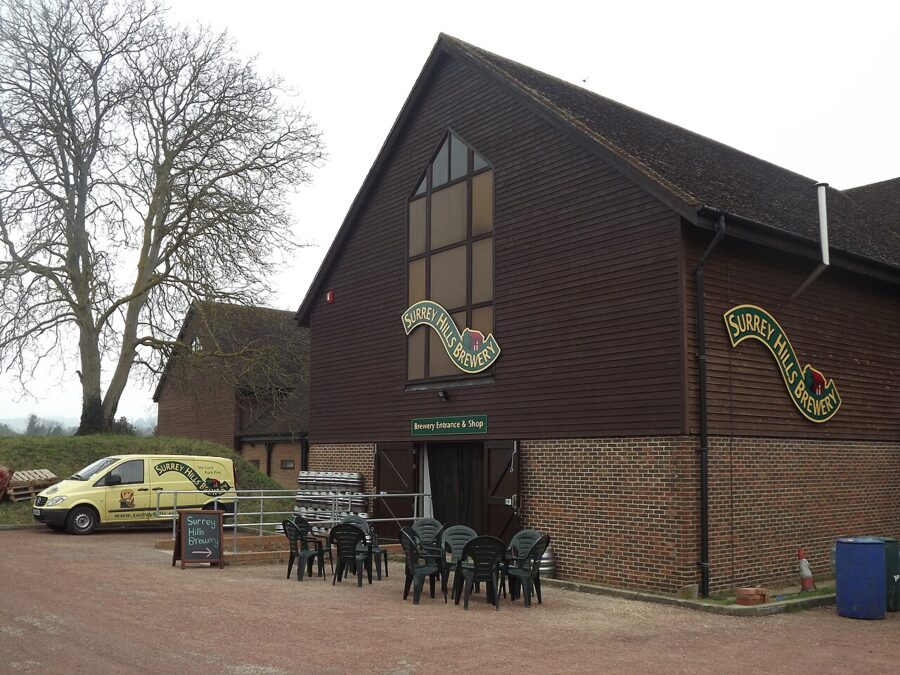
East of Guildford the beer to look for is Shere Drop. Surrey Hills Brewery started in a farmyard above Shere and moved in June 2011 to a purpose-built 30-barrel brewery behind the visitor centre at Denbies, outside Dorking. Shere Drop is its pale, hoppy bitter and Ranmore its lighter session ale. You can buy a pint at the brewery under a covered shelter from 10:00, until 15:00 early in the week and 17:00 Thursday to Saturday; it shuts on Sundays.
The breweries to look for
- Hogs Back, Tongham. TEA, plus a tap room, shop and hop garden near Farnham.
- Surrey Hills, Denbies, Dorking. Shere Drop, Ranmore, Greensand IPA and Three Peaks; the commonest local beer in the Hills.
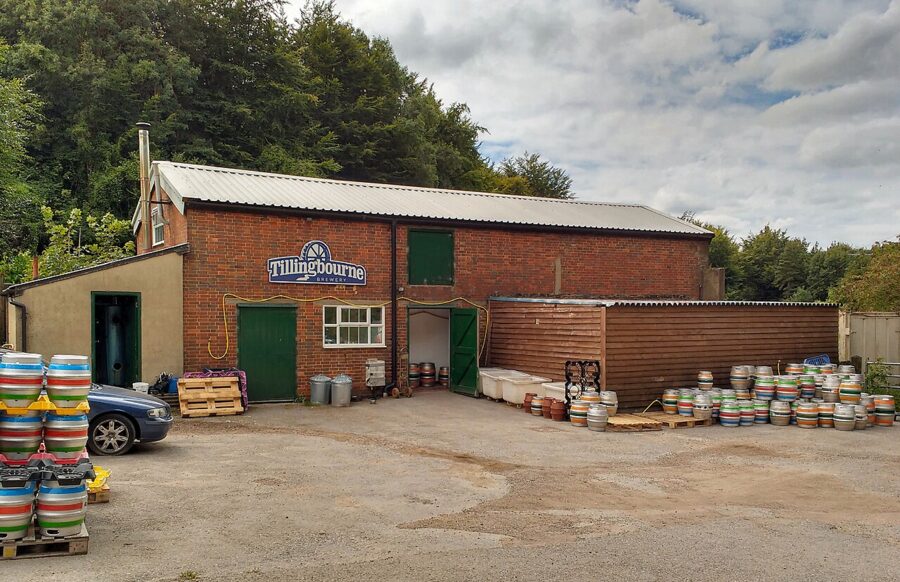
- Tillingbourne, Old Scotland Farm above Shere, in the yard where Surrey Hills began. The Source, Falls Gold and Hop Troll, sold over a small counter, usually on Friday afternoons and Saturdays; check before you go.
- Dorking Brewery, Capel, south of Dorking, since 2017. DB One and Pilcrow Pale, a small tap room called the Tap & Gun in a former gun shop, and since late 2024 a pub of its own, the Dolphin at Betchworth.
- Pilgrim, Reigate. Founded in 1982 at Woldingham and in Reigate since 1984, which makes it the county’s oldest working brewery. Its first pub, the Hatch in Redhill, opened in 2022.

Plenty of Surrey’s pubs belong to brewers from elsewhere, and the name over the door tells you what is on the bar. A Fuller’s house pours London Pride and Gale’s HSB, the strong bitter that used to be brewed at Horndean in Hampshire. A Shepherd Neame house means Spitfire and Master Brew from Faversham in Kent. Young’s, Brakspear and Harvey’s of Lewes turn up too, and most free houses keep at least one local beer on.
The real ale is the reason to come to most of these pubs, and in the Hills it is usually a local one.
Cider, perry and the vineyard next door
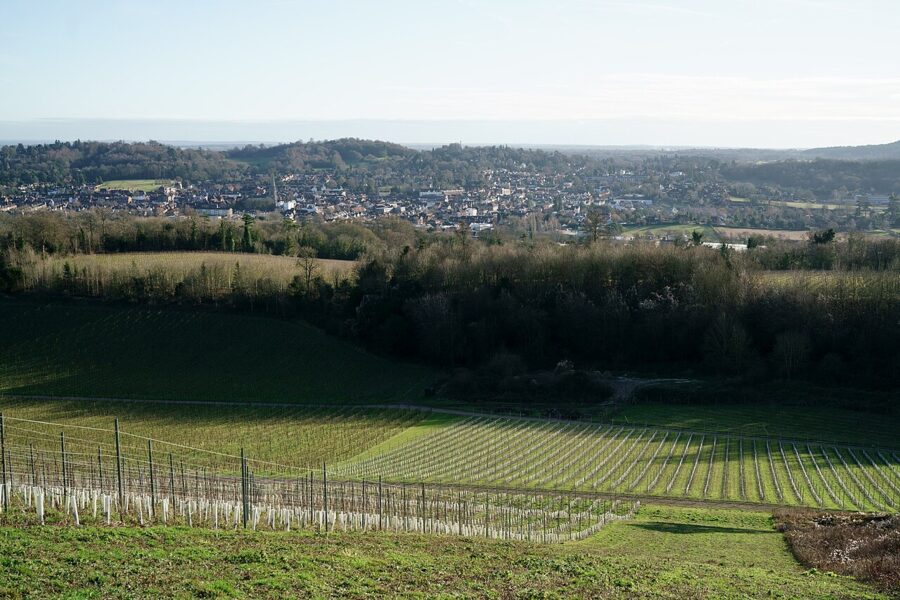
Surrey is not orchard country, and cider was never its drink. Two pubs make up for it. The Star at Godalming keeps around ten ciders and perries, three of them house ciders, and the Surrey Oaks near Newdigate has about six. The county’s other local drink is wine: Denbies, on the chalk slopes outside Dorking, is one of the largest vineyards in England, and English sparkling wine turns up on most dining-pub lists.

Farnham and the western Wey
Farnham is a Georgian market town on the Hampshire border, with a castle above it and the Wey running along its southern edge. The station is south of the river, and the two pubs worth walking in for are ten minutes from it.
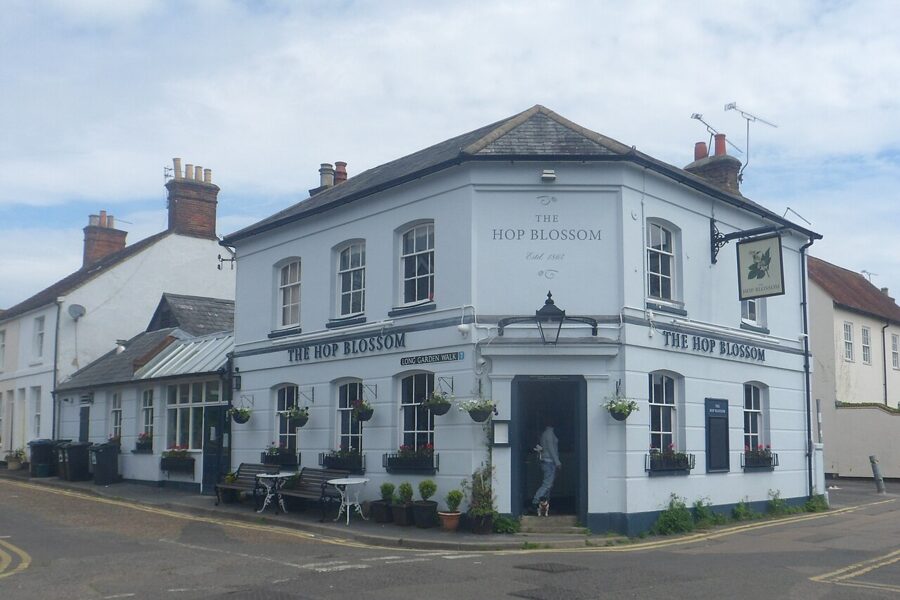
The Hop Blossom, on a narrow lane called Long Garden Walk, was built in 1864 and named after the hop fields that ran beside it well into the twentieth century. It is a Fuller’s pub with an open fire, old furniture and three or four cask beers, usually Gale’s Seafarers, London Pride and Dark Star Hophead. There is no food, which keeps it a pub, and it opens at 12:00 every day.
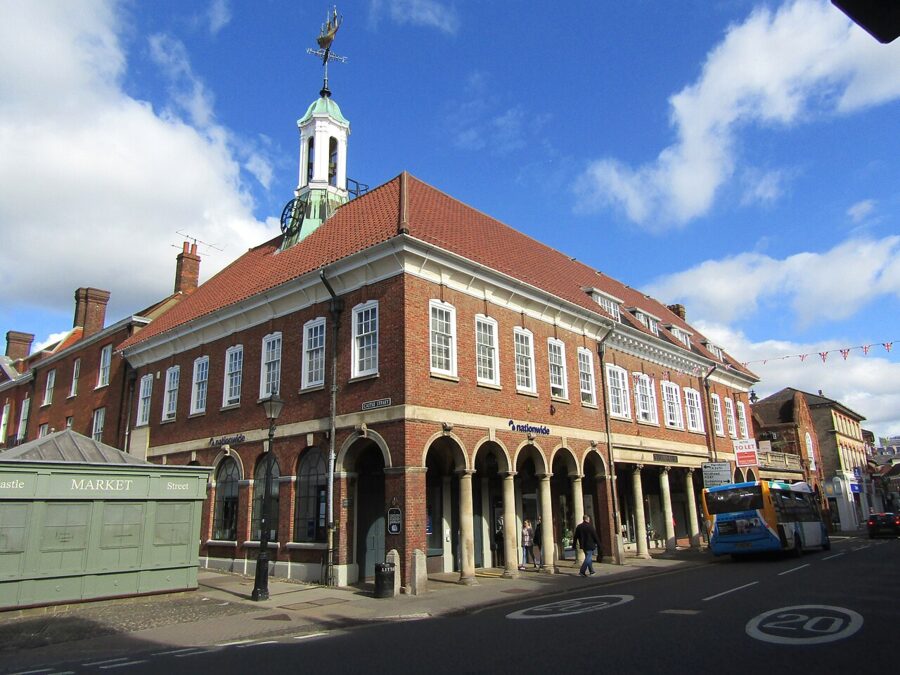
The Borough Beer House is a newer idea in an older building. It opened in December 2023 in the former Bailiff’s Hall of the Town Hall Buildings on The Borough, a listed building dating from 1674, and won CAMRA’s design award for conversions to pub use in 2025. Six handpumps serve cask beer from all over the country, usually including a dark one, with eighteen keg lines and a handful of ciders. It opens at 16:00 on weekdays and noon at weekends, and serves pizzas.

The Princess Royal, Runfold
The Princess Royal stands beside a stretch of the old A31 that the dual carriageway now bypasses, about a mile and a half east of Farnham station at Runfold. It is a roadhouse of 1926, designed by Guy Maxwell Aylwin, the local architect who also worked on the Bush Hotel in Farnham. It was built for the motor car rather than the horse, and it shows.
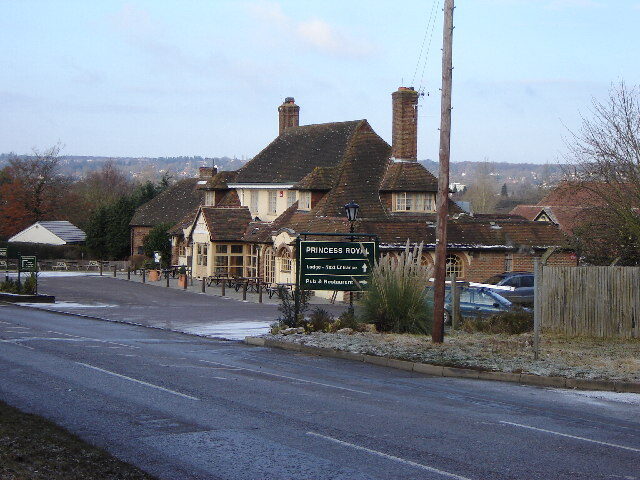

Inside it is a single bar split into areas, with a large dining room behind that opens to a sheltered garden. Look at the walls: there are photographs of old Farnham and of other pubs called the Princess Royal. The beer is Fuller’s, with HSB and London Pride the regulars and a changing third pump.
Because it is a hotel, anyone can have breakfast from 07:00 (08:00 at weekends), though the bar serves no alcohol before 11:00, or noon on Sunday. Lunch and dinner run from 12:00 to 21:00, to 18:00 on Sundays. It is a good base for walking the Hog’s Back.
Tongham, Tilford and Elstead
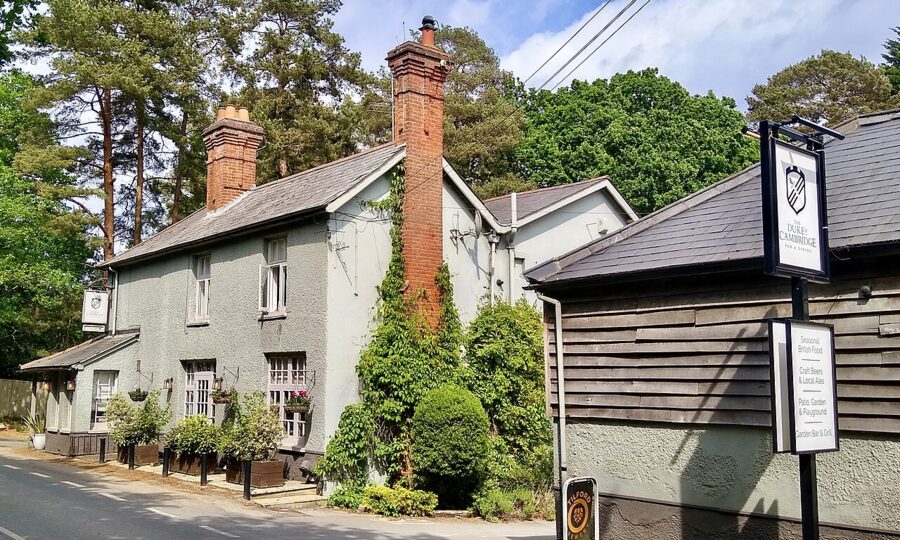
The Hogs Back tap room at Tongham is a converted kiln with about 45 tables, opening Wednesday evening to Sunday, and the brewery shop next door sells TEA to take away in anything up to a firkin. South of Farnham the Wey runs through heath and pine country. The Duke of Cambridge sits a mile south of Tilford, beside the golf course on Hankley Common, with a flagstoned bar, a big garden and a play area. Brakspear’s pub company bought it in March 2026, and the small brewery that used to work on site has moved away, so the beer may change.
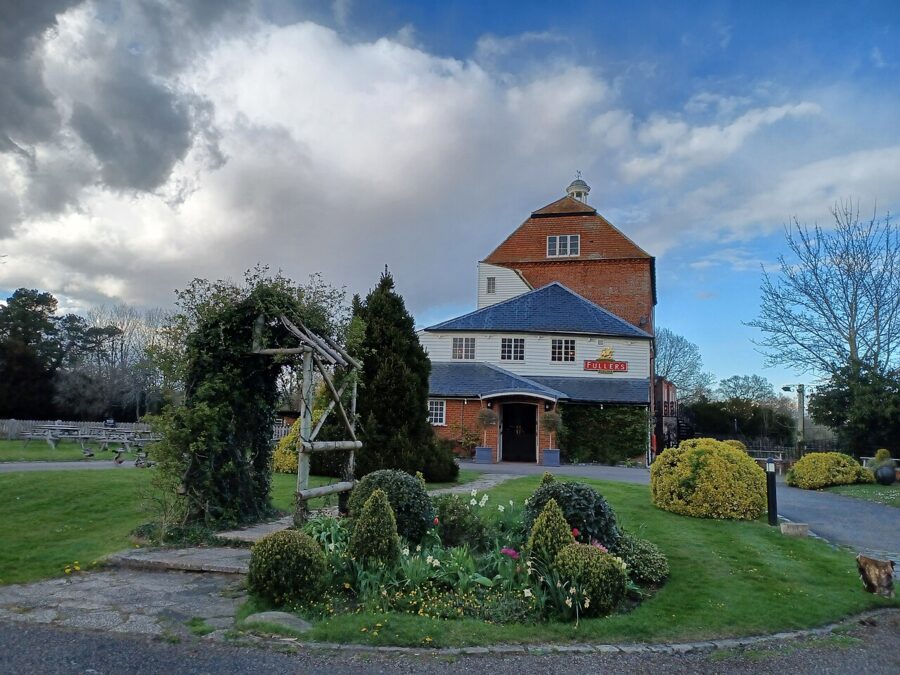
Elstead, two miles east, has two good reasons to stop. The Mill at Elstead is a Fuller’s pub inside a tall brick watermill on the Wey, listed Grade II* and topped by a cupola. The pub’s own history has Cromwell’s soldiers occupying the site in 1647, and in the nineteenth century the mill made braid for military uniforms and employed about a hundred people, which is said to be why the bell went up on the roof. Sit by the water: the garden on the river is the point, and the beer is London Pride, ESB and Dark Star Hophead.

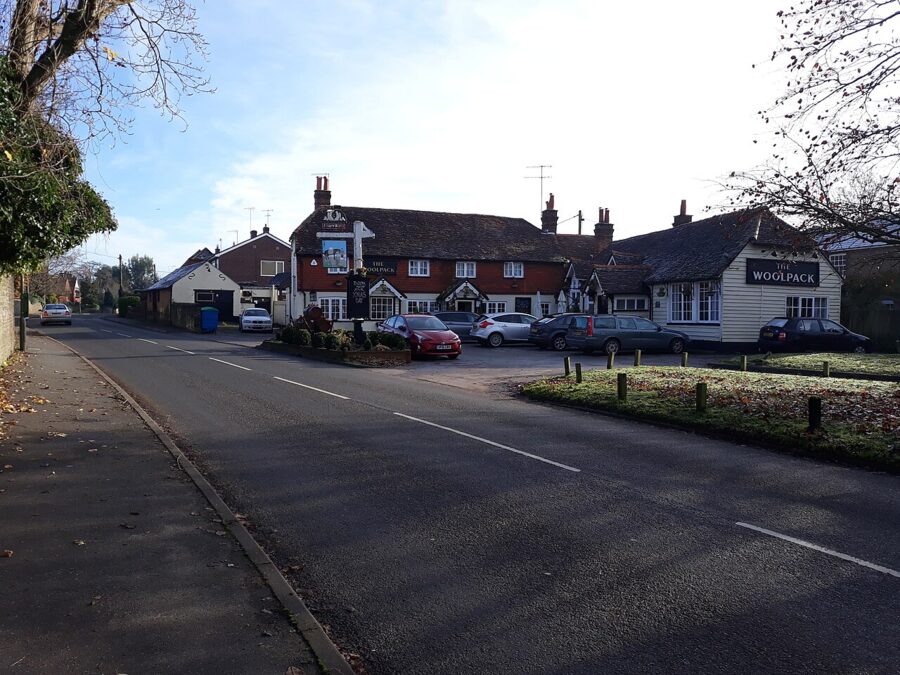
The Woolpack, by the village green, is older-looking and plainer: a seventeenth-century building said to have started as a wool exchange, with a low-key bar, Hogs Back TEA on cask and a dining room that was once the village band’s practice room. It still keeps proper country hours, closing from 15:00 to 17:30 on weekdays, so do not turn up at four.

Godalming, Chiddingfold and the Sussex border
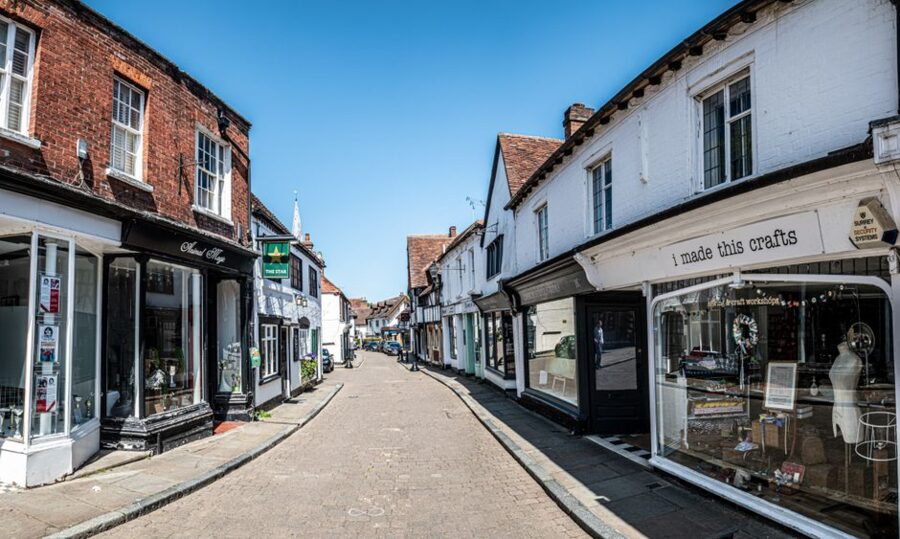
Godalming is the best drinking town in the county for its size, and the reason is one pub. The Star on Church Street became a beerhouse soon after 1830, though parts of the building are older. It has a small public bar at the front, the main rooms to one side, and hundreds of pump clips hanging between the dark oak beams. Up to ten cask beers run midweek and up to fourteen at weekends, with around ten ciders and perries, and it is the home of the small Godalming Beerworks.
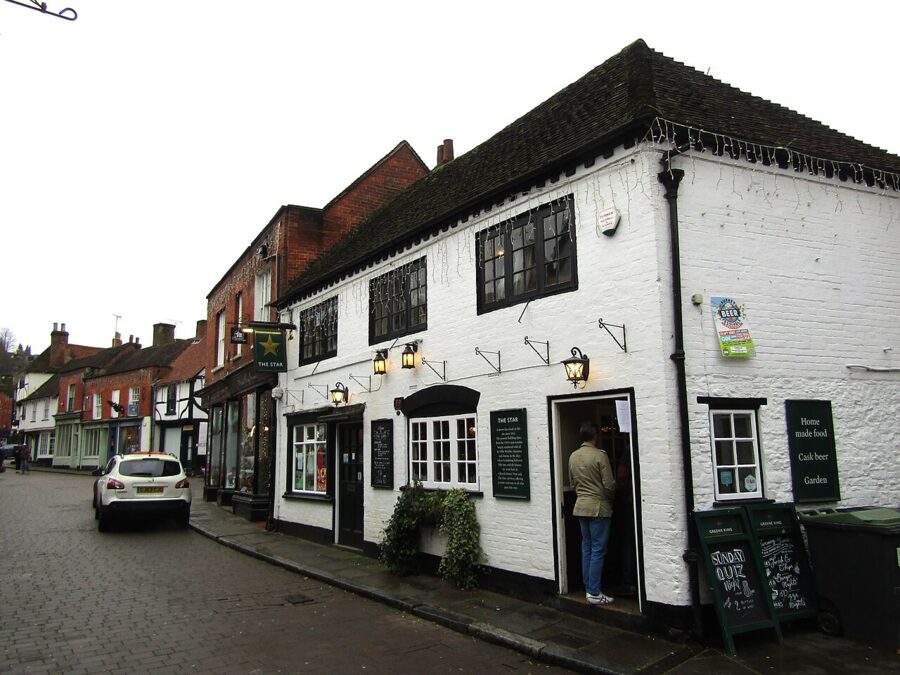

The Star was the local CAMRA branch’s pub of the year for 2024 and has a shelf of cider awards. Food is served at lunchtime and from 17:00 to 20:00 on weekdays.
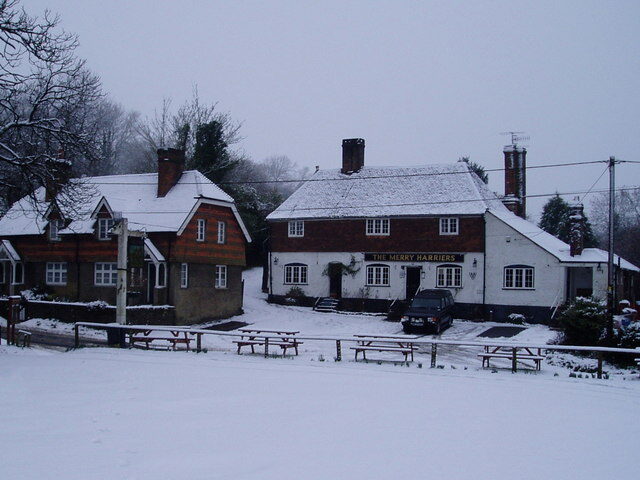
South of the town the land rises into the greensand hills and the lanes get narrow. The Merry Harriers at Hambledon is a sixteenth-century village inn with a big inglenook fire, four local cask beers, ten bedrooms and five shepherd’s huts in a field over the road. The kitchen buys everything except fish from within fifteen miles. It is shut at lunchtime on Tuesdays and serves no food that day.

Chiddingfold and Witley
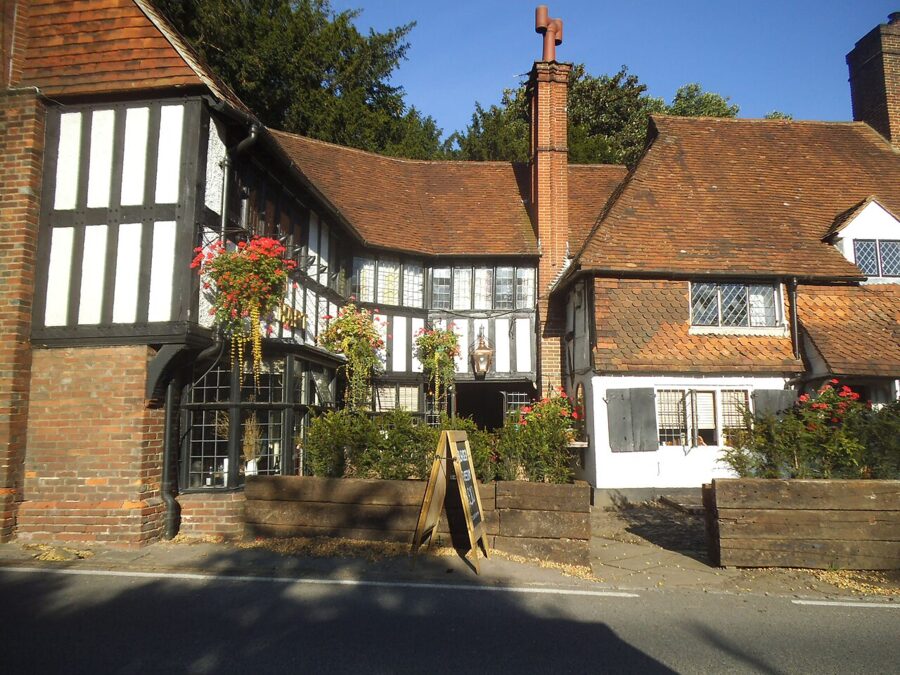
Chiddingfold is the last village before Sussex, built round a big green, and the Crown is the best old pub building in the county. The bar at the front sits in the fourteenth-century hall, with heavy timbers and an inglenook that looks to be a genuine late medieval or Tudor fireplace. The whole building was restored in the 1950s, and CAMRA’s own description admits that some of the bar woodwork is modern timber distressed to look old.
That does not spoil it. The panelled restaurant behind, fitted out in the same restoration with timber from elsewhere, is a fine room to eat in, and the Crown has eight bedrooms with sloping floors and old beams. Breakfast is served to non-residents from 08:00, Sunday lunch needs booking, and Monday opening varies, so check first. On the bar you will find London Pride and Hogs Back TEA.

The Crown’s claim to be Surrey’s oldest pub is a good one, but the Running Horse at Leatherhead has a rival claim, and most counties have three or four. I’d give the Crown the prize for the building; the guide to the oldest pubs in England explains how these claims usually work.
The White Hart at Witley, a couple of miles north, faces the parish church on the Petworth Road. It is a tile-hung inn with its timber frame exposed in the main bar and a big open fire in winter; the dating runs from the fourteenth century in one account to the sixteenth in another. The food leans to barbecued meat, and the beer is Shere Drop and Young’s.

Guildford
Guildford is a county town on a steep High Street, with a castle keep at the top and the Wey at the bottom. It has no single great old pub, but it has a handful of good ones within fifteen minutes of the station, which is what you want before a train.
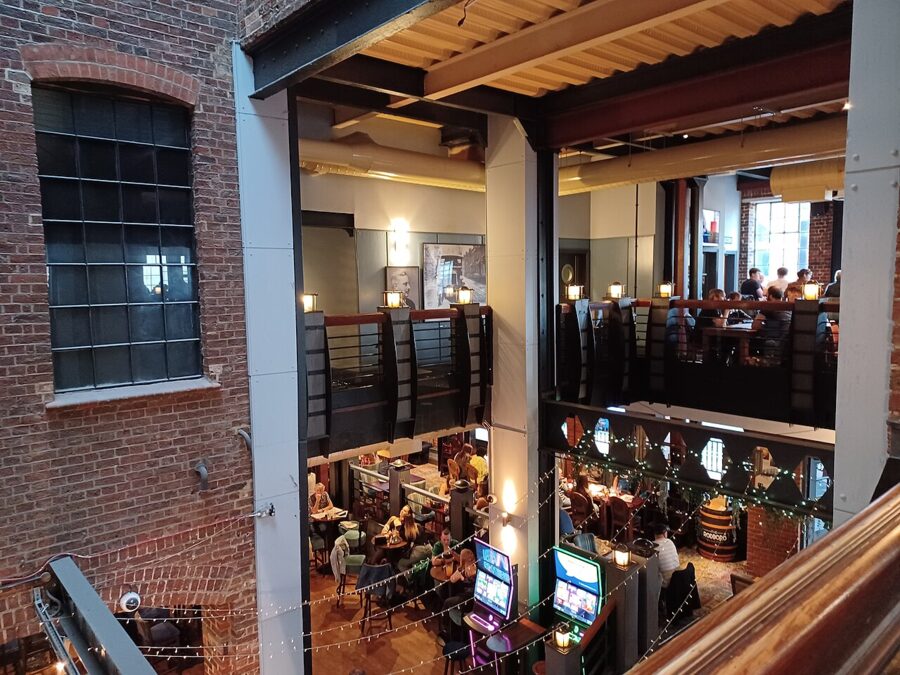

The Rodboro Buildings, five minutes from the station, is the Wetherspoon, and for once the building is the reason to go. Inside it is big and split-level, with snugs along one side and a quieter upstairs bar under exposed pipework. The guest beers often come from Surrey Hills, Hogs Back and Tillingbourne, and it opens at 08:00.
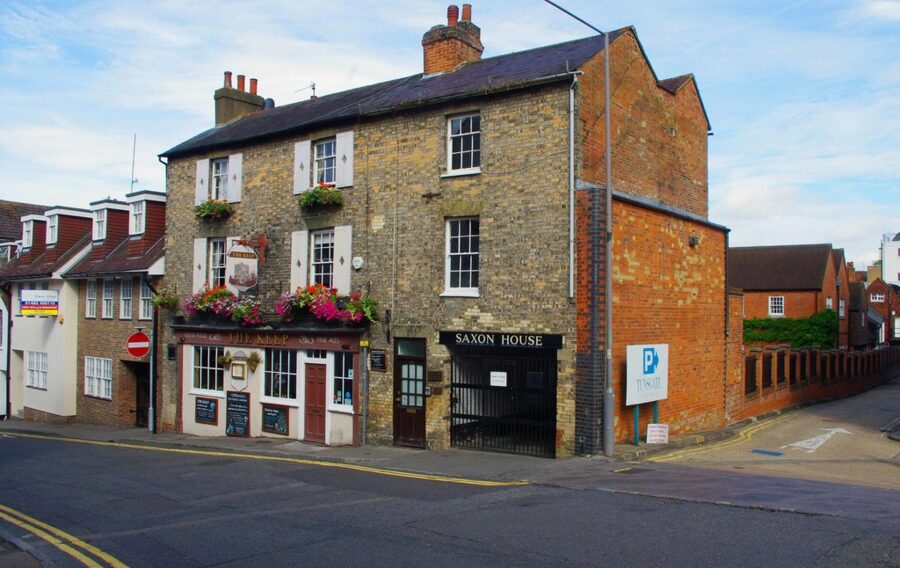
Up the hill, the Keep on Castle Street faces the castle. It was built in the 1740s and became a beerhouse around 1815, as the Two Brewers, before a run of other names. It is one of the few town pubs that pours Surrey Hills beer regularly, it has an upstairs lounge with its own bar, and you can bring in your own food. It is shut on Mondays and opens at 17:00 from Tuesday to Thursday.

Down by the river
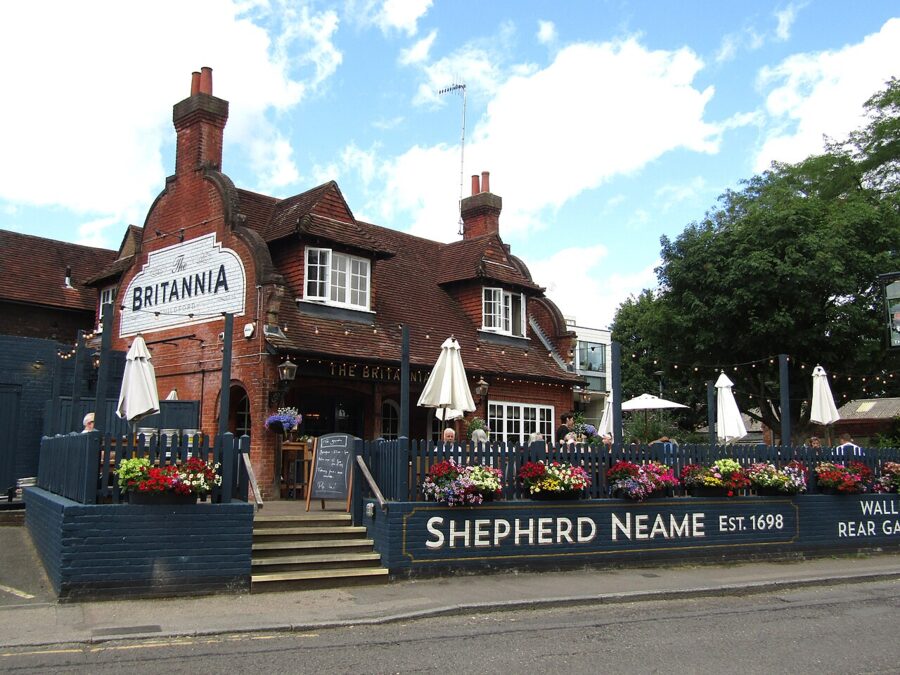
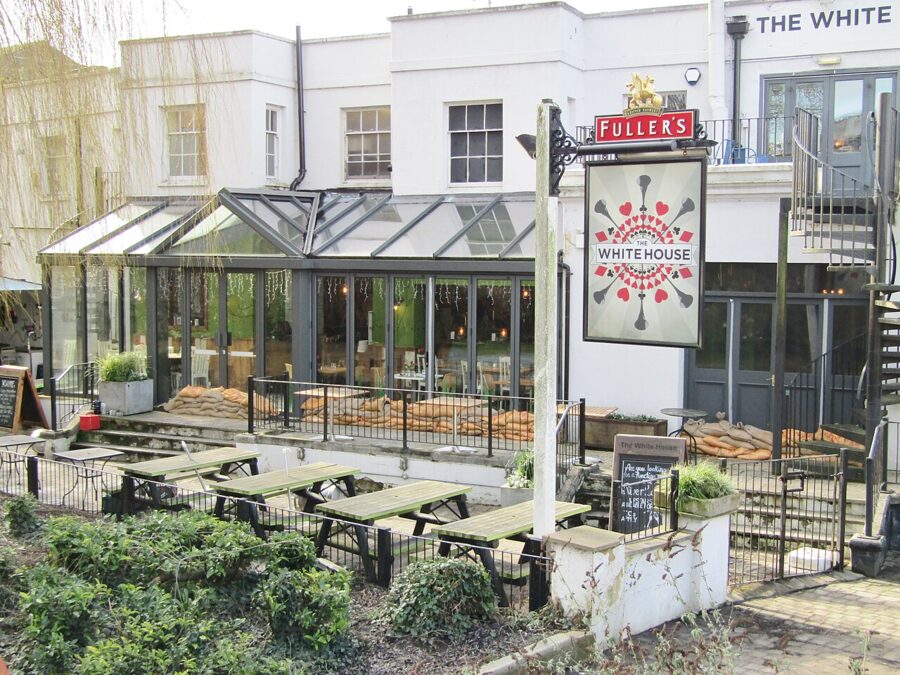
Three pubs sit on or near the Wey south of the town bridge. The Britannia on Millmead is a Shepherd Neame house with a decked terrace at the front where you can watch the boats, live music on Wednesdays and food all day until 21:00. The White House, a 1990s conversion of an office block by the old town bridge, is a Fuller’s pub with a big riverside garden, close to the station.

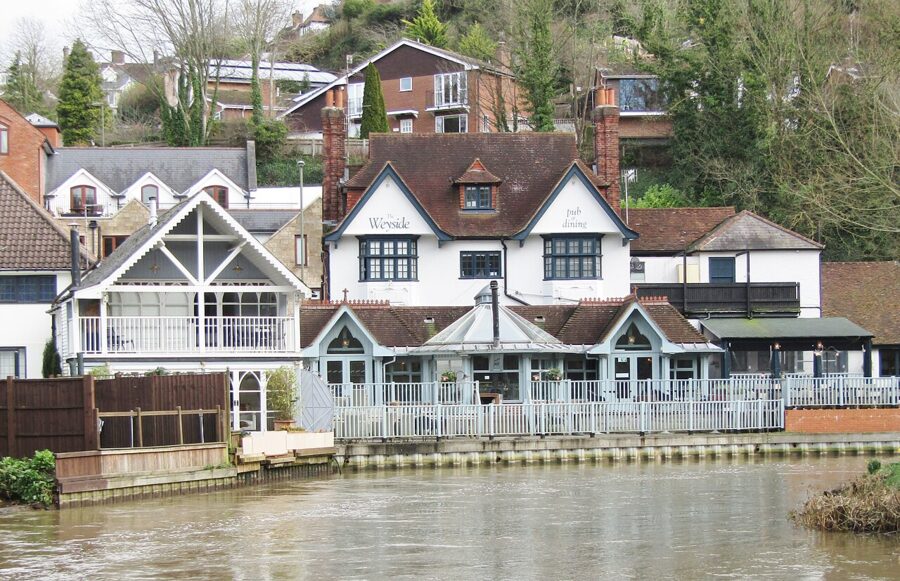
The Weyside is further south, a ten-minute walk along the bank, in what was once a boathouse for river barges. Its terraces step down to the water, and in winter you sit in the conservatory by a wood-burning stove. It belongs to Young’s and pours London Original and Special. On a summer evening the terraces are the best place in Guildford for a pint, and everyone else knows it.


The Tillingbourne valley: Shere, Gomshall and Abinger
The Tillingbourne is a small, quick stream that runs west under the North Downs past the prettiest villages in the county. Shere is the one on the postcards, with a ford, a church and timber-framed houses round a small square, and it is busy on any sunny weekend. Gomshall station is a mile to the east, which is why I’d come by train.
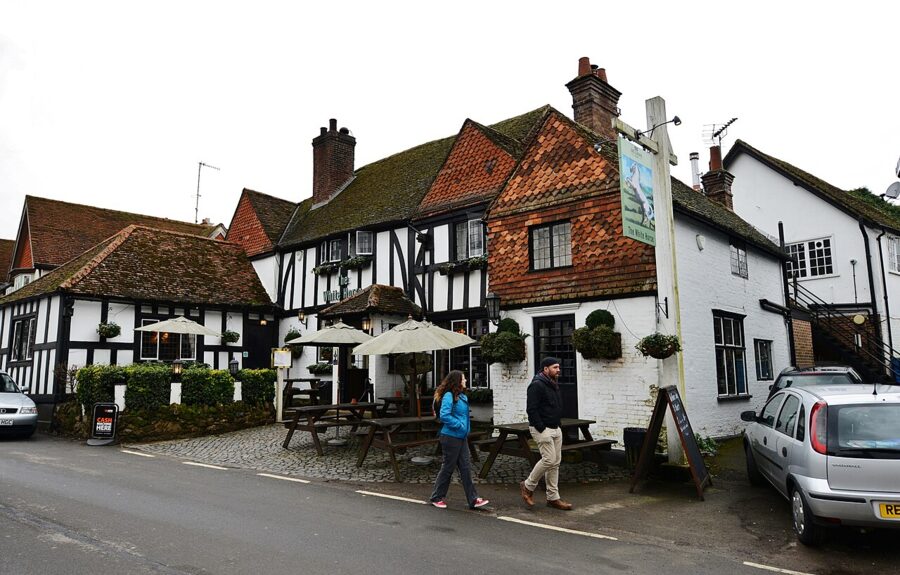

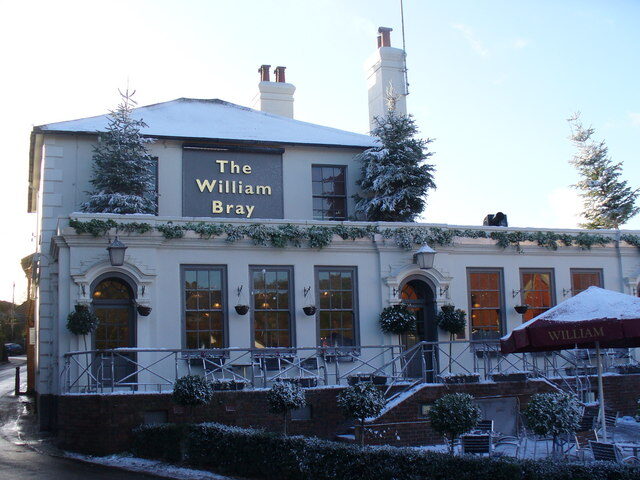
Shere has two pubs. The White Horse on the square is the old one, now a food-led Greene King pub with a few local guest beers. The William Bray, just above the centre, was the Prince of Wales until 2009, when it was renamed after a local historian; before that it had belonged to Reffell’s brewery of Gomshall and then to Young’s, which bought Reffell’s in 1926. It is now a Brakspear pub, with Shere Drop on the bar, a conservatory, and breakfast from 10:00.

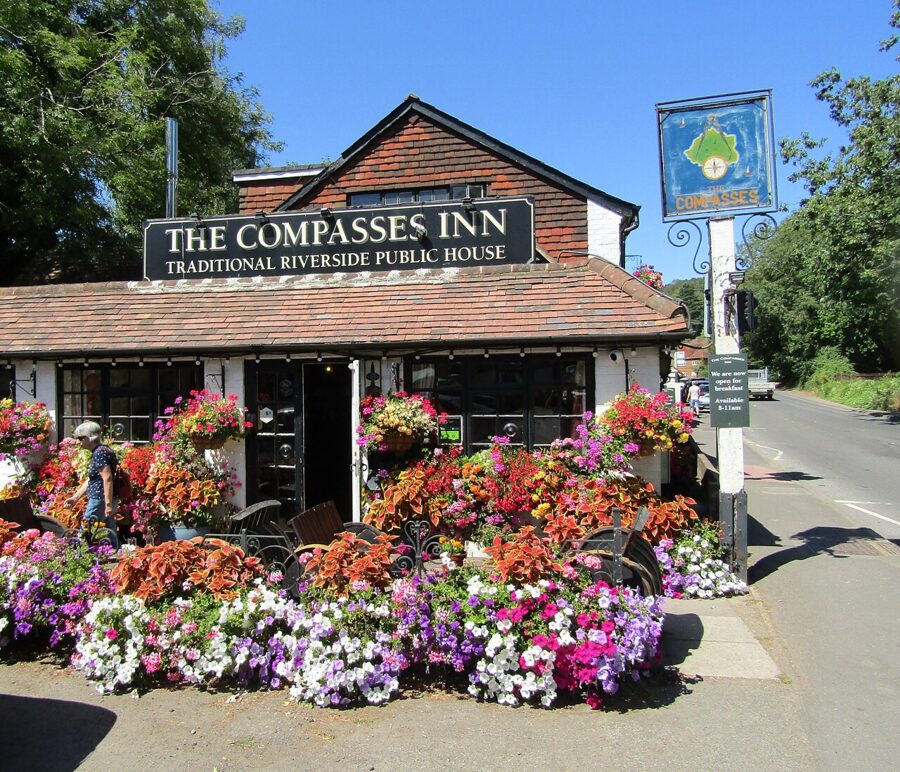
Gomshall, a mile east along the A25, has two pubs on the river. The Compasses dates from 1830 and was once called the God Encompasses, which wore down to its present name. Its garden is over a little bridge across the Tillingbourne, it serves breakfast from 09:00 to 11:00, and it does not sell alcohol until noon. There is a resident ghost, a young woman said to have drowned in the stream while escaping a fire, who turns the taps on.

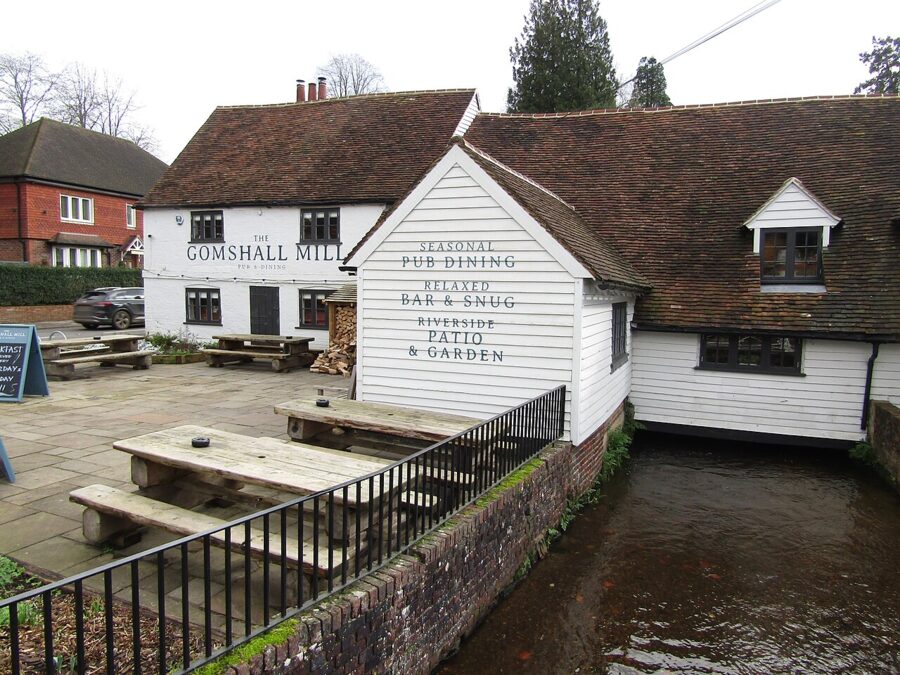
Gomshall Mill, across the road, is a seventeenth-century timber-framed watermill spanning the stream, on the site of a mill worth 3s 2d in the Domesday survey. Its waterwheel has been restored and turns in the middle of the restaurant, and in some rooms you can watch the water run under your feet. CAMRA lists it among its outstanding conversions, and the bar usually has three or four local beers.

Albury Heath, Abinger and Holmbury
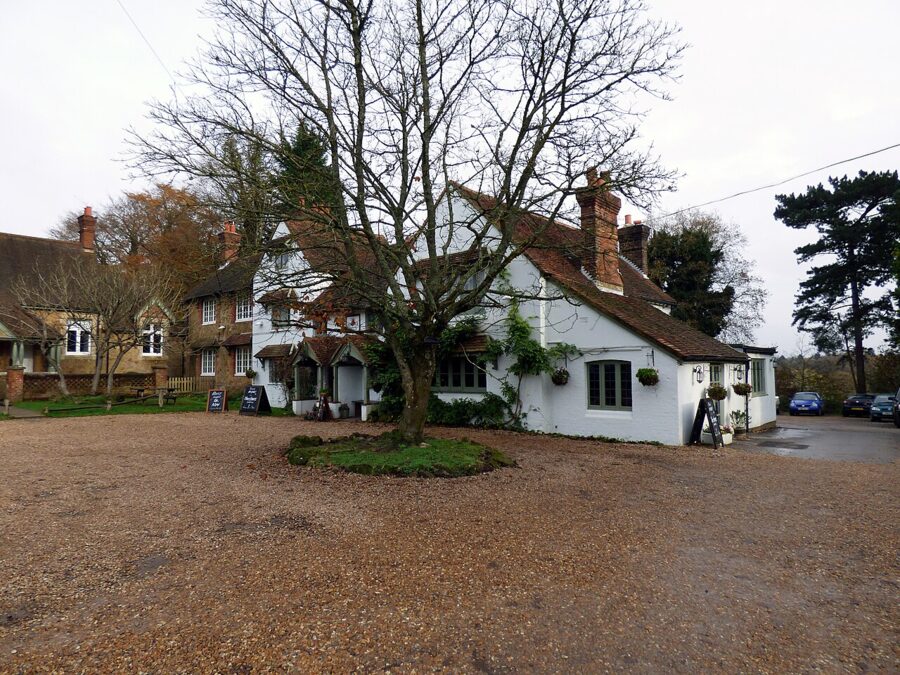
South of the valley the lanes climb into woods, and the pubs get smaller and better. The William IV at Albury Heath is a sixteenth-century building on a quiet lane beside the woods, with flagstones, beams, two small bars and a dining room up a few steps. It was refurbished in 2024 and fires a pizza oven from Thursday to Sunday. It is closed on Mondays and serves only evening food on Tuesdays.
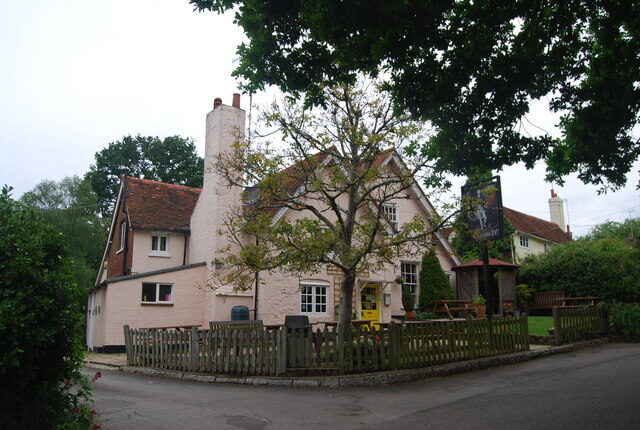

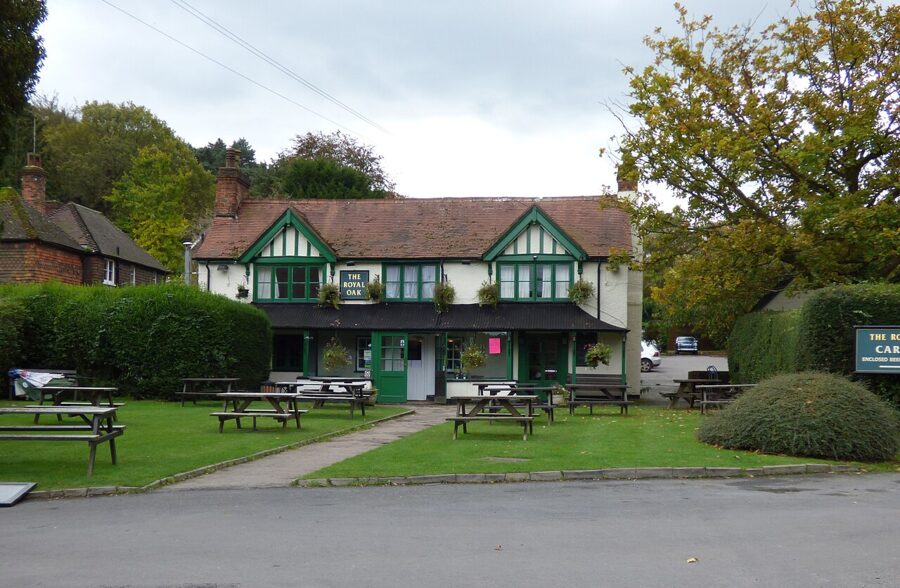
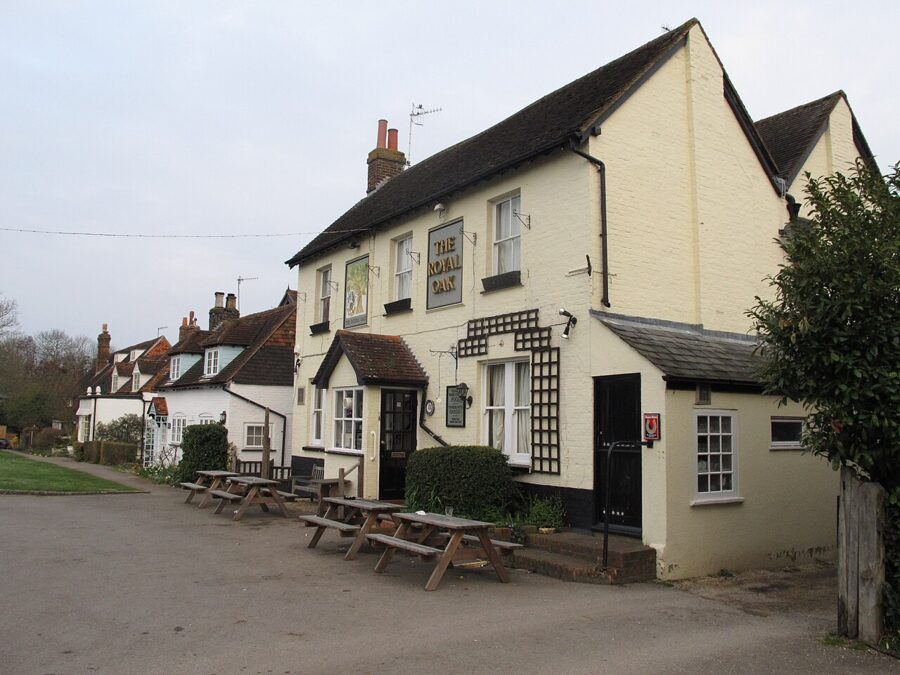
The Abinger Hatch at Abinger Common is a wisteria-covered seventeenth-century inn opposite the church, with a bar of English oak, flagstones at the lower end and bare boards above. It was once run by the Surrey Public House Trust Company, and the kitchen is open all day. The Royal Oak at Holmbury St Mary, by the church and green, is the walkers’ and cyclists’ pub, with a bike rack, a fire at the end of the bar, Harvey’s and Shere Drop on cask, and doors shut on Mondays and Tuesdays.


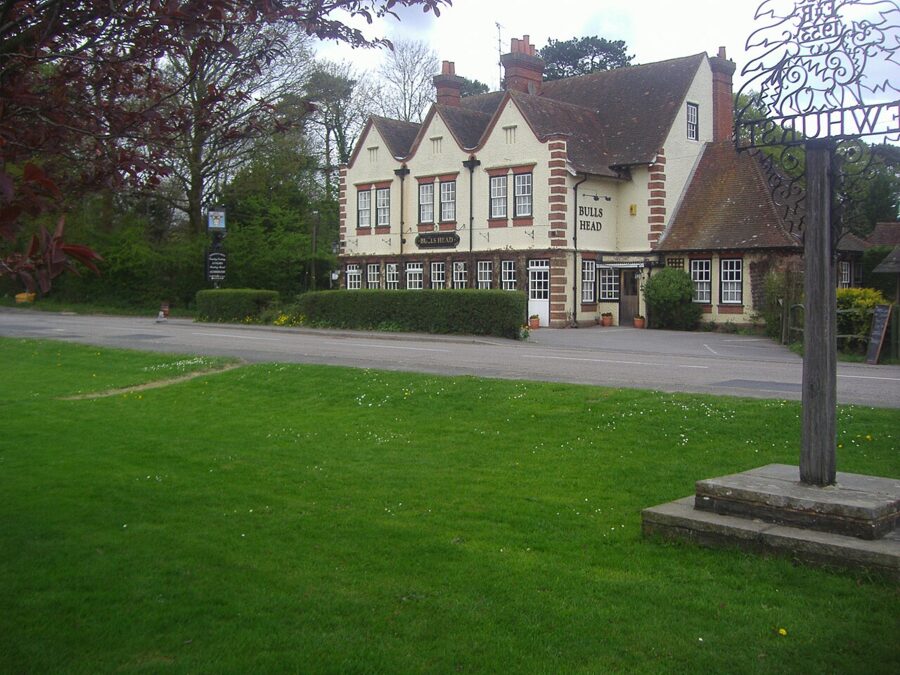
Further south, Ewhurst’s Bulls Head is a reminder that Surrey’s railway plans did not always come off: it was built in 1908 for a railway that never arrived. It is now a comfortable village pub with seven bedrooms and a barn for functions, and its guest beers come from local brewers.

Box Hill, Dorking and the Mole
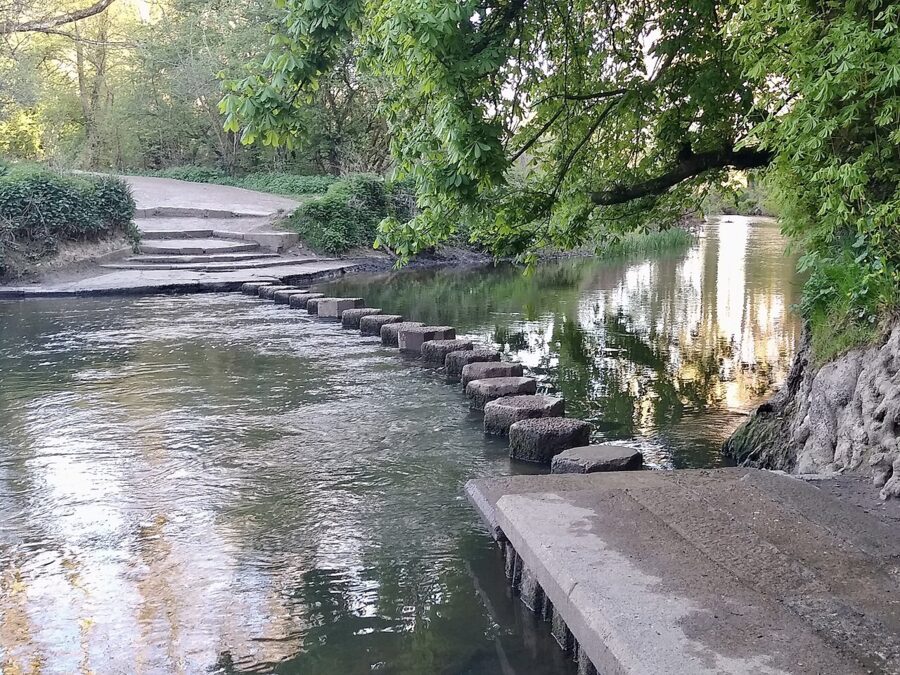
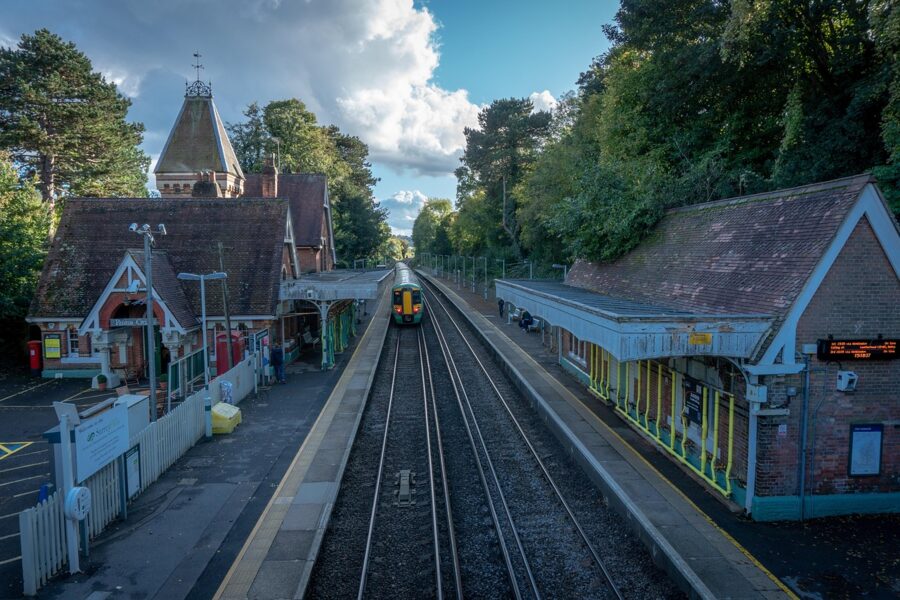
The River Mole cuts through the North Downs between Box Hill and Ranmore, and this gap is where London has come for a day in the hills since the railway arrived. Box Hill and Westhumble station sits at the bottom of it, with the stepping stones a short walk away and two very different pubs at Mickleham, a mile north.
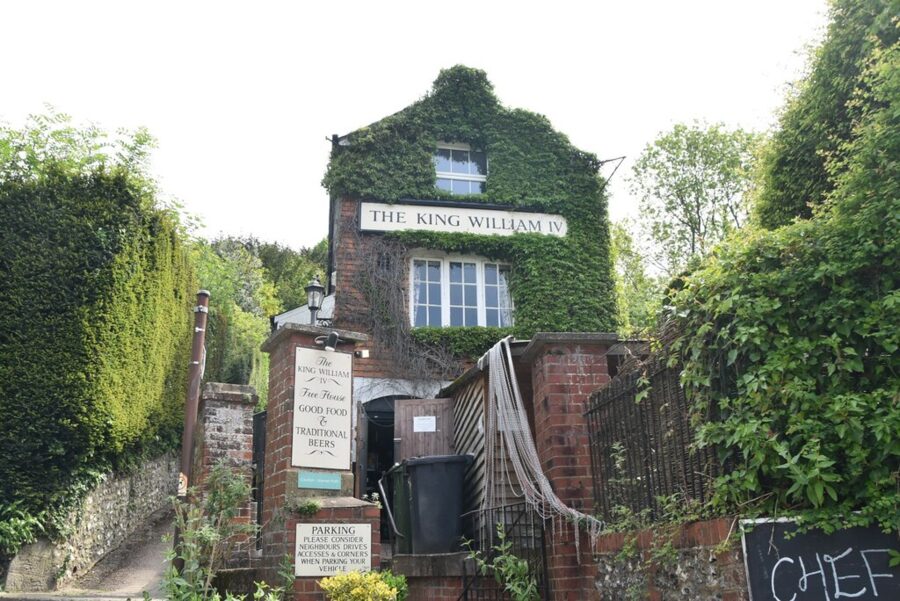
The King William IV clings to the side of Byttom Hill above the A24, up a flight of steep steps from the road, with a terraced garden looking over the Mole valley and Norbury Park. The main bar is old-fashioned in the right way, with a grandfather clock and an open fire, and the beers include Shere Drop and London Pride. It is shut on Mondays and Tuesdays and serves food from 12:00 to 21:00 the rest of the week. Park at the foot of the hill on the southbound side of the A24.

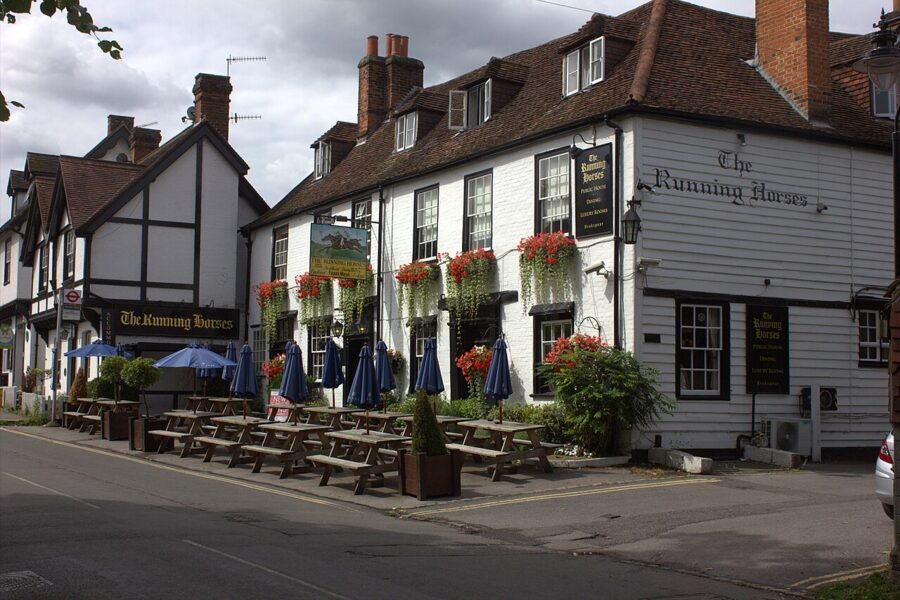
The Running Horses is down in the village, opposite the church, a Grade II listed coaching and posting inn of the eighteenth century. Its double-sided sign explains the name: the 1828 Derby was a dead heat, and the two horses ran it again. Racehorses were stabled here and trained on the downs, and the restaurant is in the old stables. It has seven bedrooms, takes small, well-behaved dogs and serves food until 21:00.

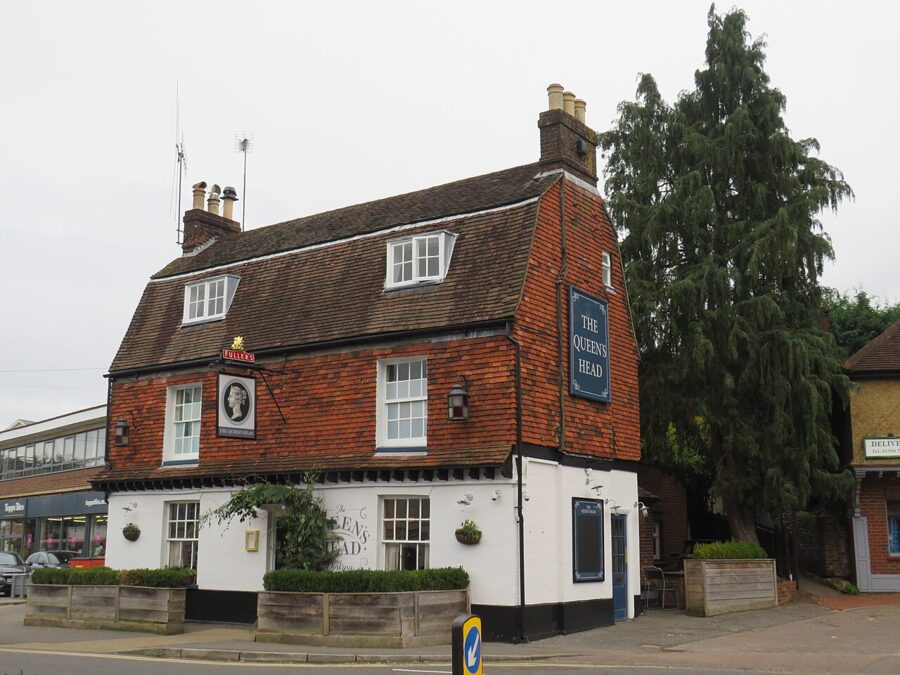
Dorking itself has plenty of pubs; the one I’d pick is the Queens Head, a Fuller’s house of the 1780s with a tile-hung mansard roof, a bar at the front, a terraced garden behind and good food. It is shut on Mondays and opens at 16:00 on Tuesdays.

Betchworth, Brockham and Buckland
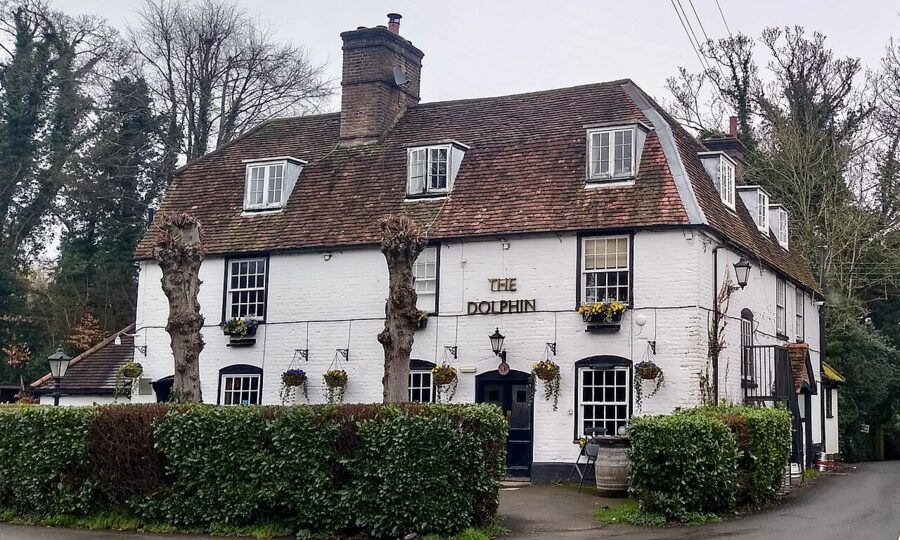
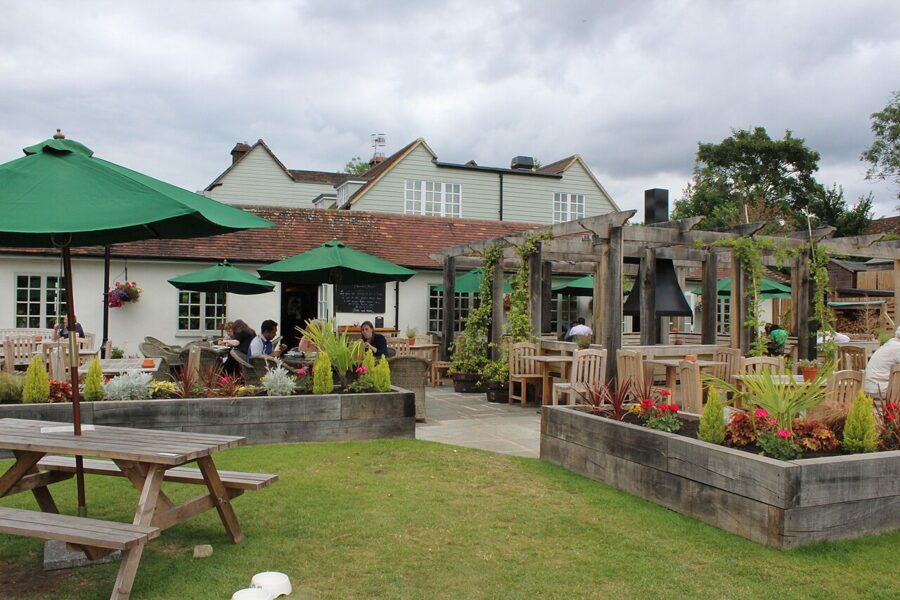
The Dolphin at Betchworth is the best old pub interior in the east of the county. CAMRA lists it as of special national historic interest: the corner bar has a flagstone floor, a big inglenook and dolphins etched in the door glass, and the Toby Room next to it has heavy floorboards and old fielded panelling. The building is eighteenth-century, the pub brewed its own beer and cider until 1926, and there is no music or noisy machine anywhere in it. Dorking Brewery bought it from Young’s in November 2024, so the cask is now DB One and Pilcrow Pale.
Brockham, a mile west, has the Royal Oak on its green with Box Hill behind it, on the Greensand Way, and a caged enclosure of meerkats in the garden, which I mention because children will not forgive you if you do not. Buckland, on the A25 towards Reigate, has the Pheasant, formerly the Jolly Farmers, reopened in 2015 by the Brunning & Price group as a big dining pub with Harvey’s and Shere Drop on the bar.


The Surrey Oaks and the Weald
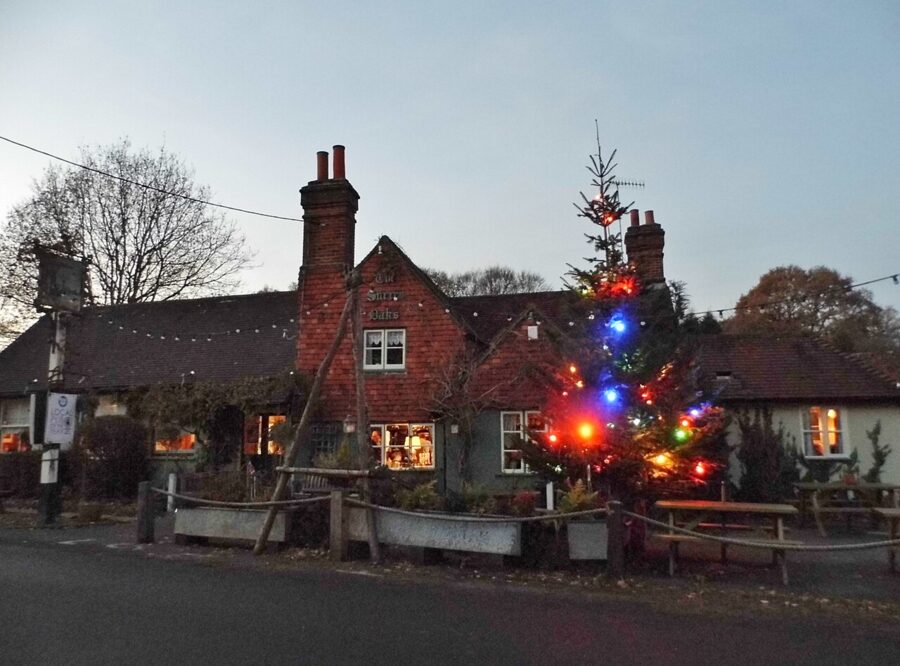
South of Dorking the downs give way to the flat, oak-wooded Weald, and the pub to drive for is the Surrey Oaks at Parkgate, between Newdigate and Leigh. Parts of it are sixteenth-century; it was a wheelwright’s cottage and became a pub in 1850. The main bar is low-beamed and flagstoned with an inglenook and a wood-burner, and there are three cask beers, about six ciders and a dozen keg beers. Outside there is a huge garden with three boules pistes, busy on sunny Sundays.

Leatherhead and the Running Horse
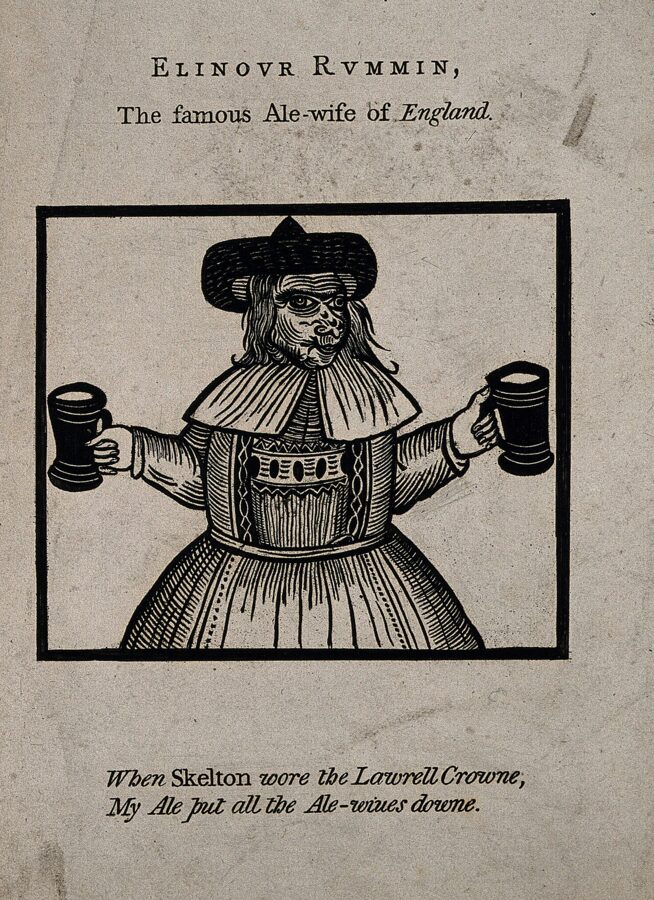
The Running Horse in Leatherhead stands by the bridge over the Mole, and it has the county’s other great claim to age. The pub says it can trace its roots to 1403; the listing describes a timber-framed building probably of the later fifteenth century, altered since and listed Grade II*. Its fame comes from a poem by John Skelton, tutor to the young Henry VIII, about Elynour Rummyng, an alewife who brewed her “noppy ale” beside Leatherhead and sold it to a crowd of thirsty, quarrelsome neighbours.
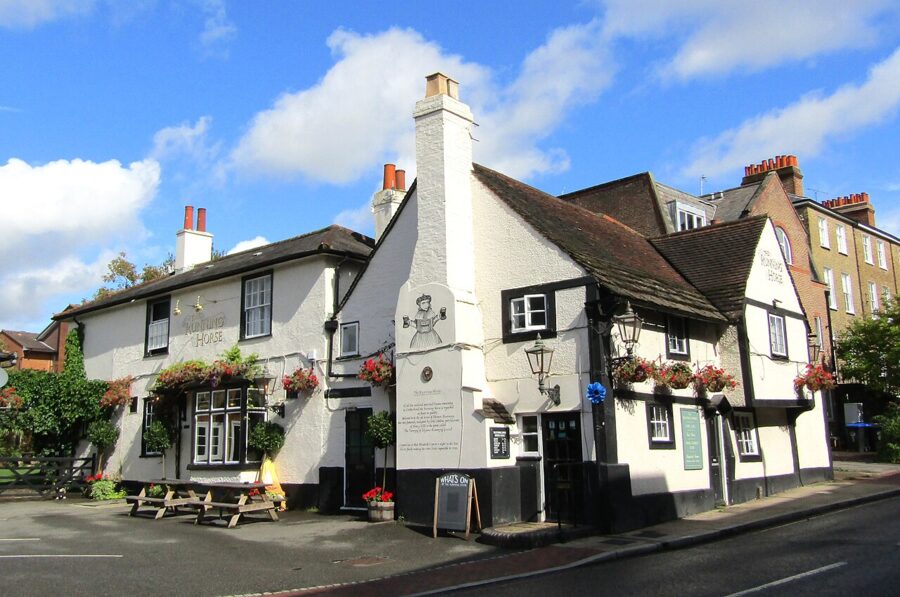

Skelton never names the house, so the claim that Elynour poured ale in this one rests on tradition. So does the story that Elizabeth I spent a night here. My view: the building is old enough, the poem is real, and the fit is plausible. It was the local CAMRA branch’s pub of the year from 2019 to 2022, it is a Shepherd Neame house with Surrey Hills Ranmore as a guest, and it opens only in the evening on Mondays and Tuesdays.

Ripley, the Clandons and Redhill
Ripley sits on the old London to Portsmouth road, and it was a coaching village before it was a cycling one: in the late nineteenth century the new bicycle clubs rode out from London for lunch.
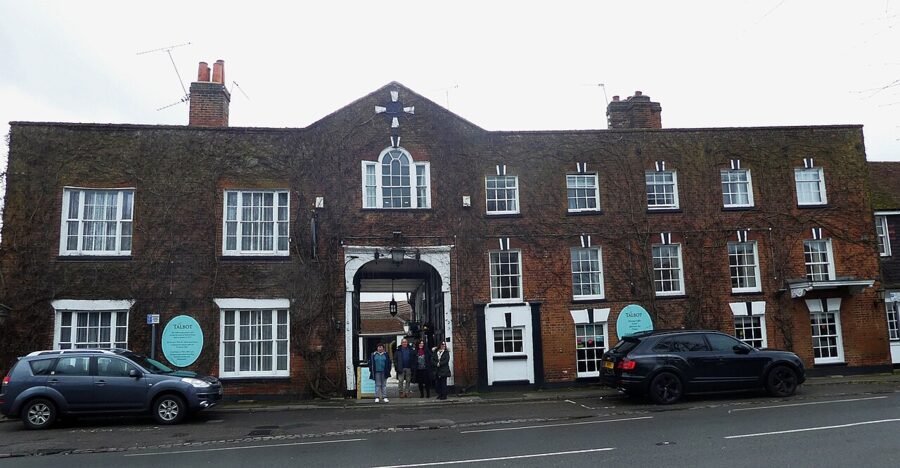

The Talbot on the High Street is the old coaching inn, with a panelled bar and a quiet side room, Emma’s Room, holding a bench Nelson is supposed to have sat on when he stopped on the way to his ship at Portsmouth. It has rooms, a modern dining area and a sun-trap patio, and Hogs Back TEA on the bar. The Anchor along the street is a sixteenth-century building that is mostly a restaurant now, and a good one; it opens Wednesday to Saturday.
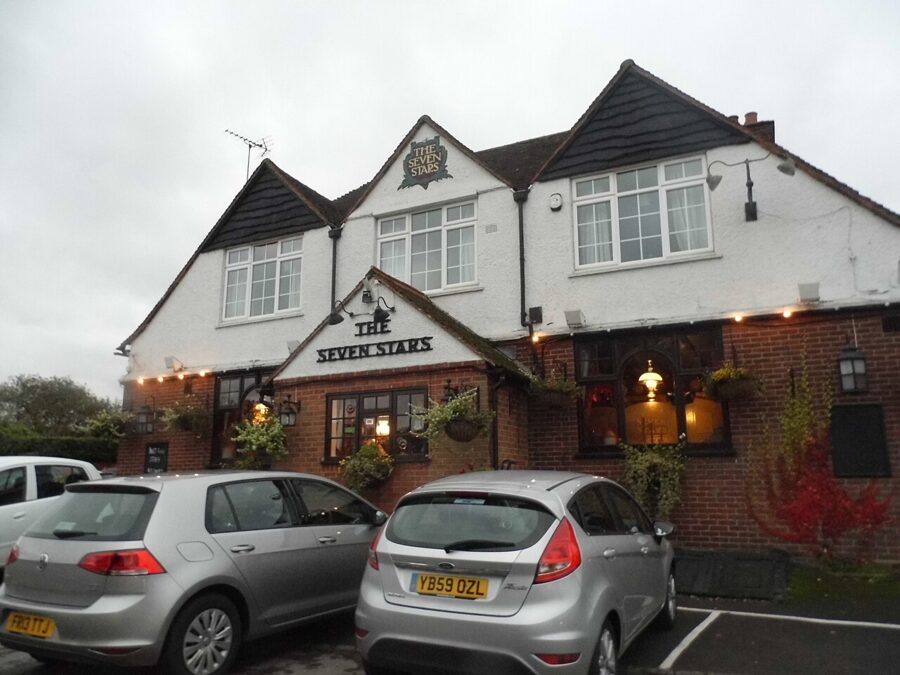
The Seven Stars, on the western edge of the village, is the drinker’s choice: a 1930s brick pub with a wood-panelled interior, three booths inside the door and a U-shaped bar with TEA and Ranmore on cask. A few miles south, the Queens Head at East Clandon is a seventeenth-century village pub of red brick and timber with a sunny terrace, close to the National Trust’s Hatchlands Park.

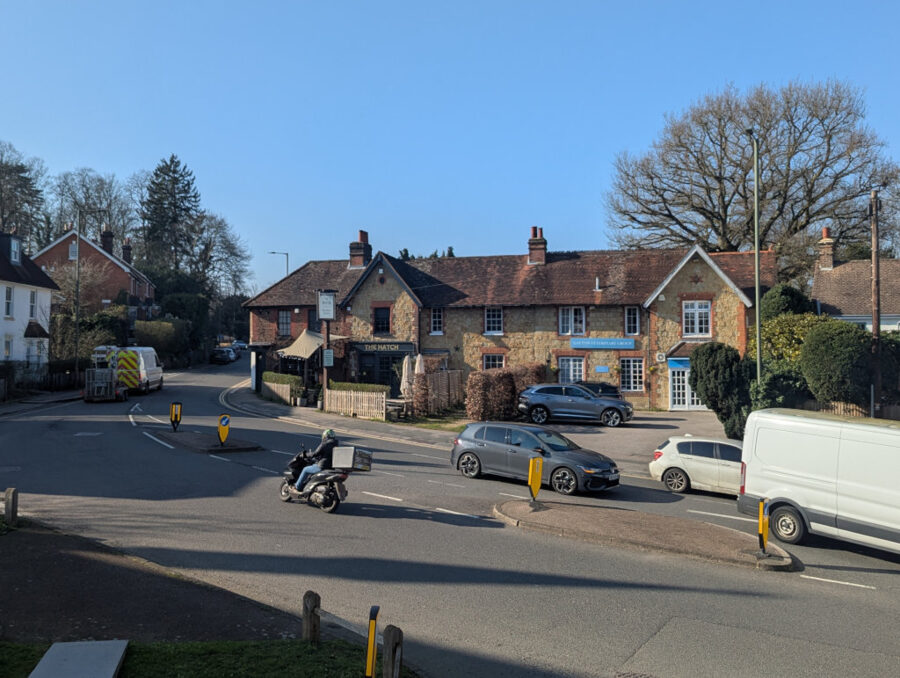
East of Reigate, the Hatch in Redhill is Pilgrim’s own pub, a seventeenth-century building that was called the Foresters Arms until 1991; the old name is still painted on a beam above the fire. It keeps up to five cask beers, mostly Pilgrim’s, and a local pizzeria runs the kitchen; it is shut on Mondays.

Three walks with a pint at the end
The railway makes it easy to finish somewhere other than where you started, and all three walks follow marked paths.
Box Hill and Mickleham
From Box Hill and Westhumble station, walk to the stepping stones, cross the Mole and climb Box Hill on the North Downs Way. Come back down for lunch at the Running Horses in Mickleham, about a mile north of the station, or the King William IV above it. For a shorter day, Surrey Hills Brewery at Denbies is under a kilometre the other way, but it shuts by 17:00 and all day Sunday.

The Tillingbourne: Gomshall to Albury Heath
Get off at Gomshall station and start at the Compasses. Walk west along the valley to Shere, about a mile, for the White Horse or the William Bray. From Shere it is under a mile and a half south-west through the woods to the William IV at Albury Heath, and Chilworth station is about two miles further west. Trains on this line are not frequent, so check the timetable before you sit down for a second pint.

The Wey towpath: Godalming to Guildford
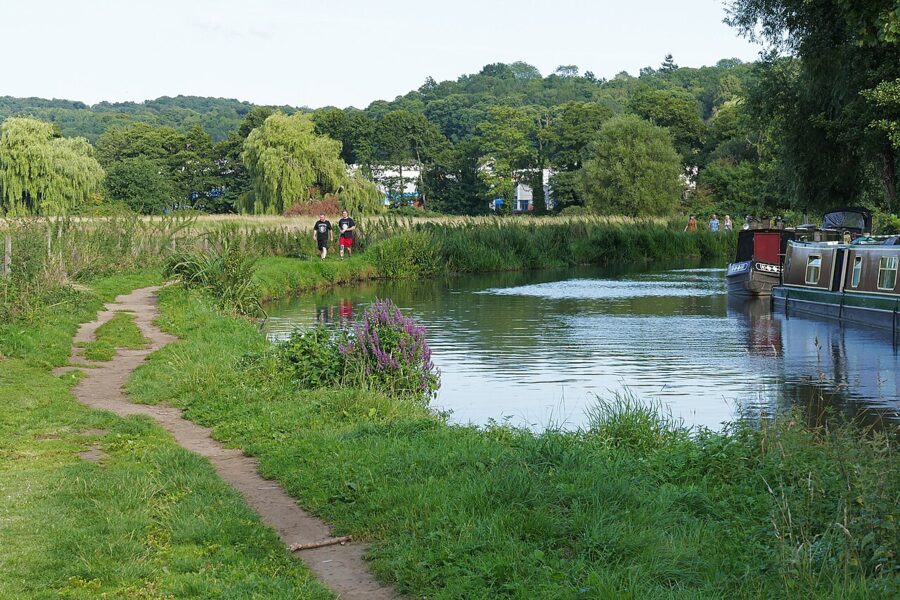
Start at the Star in Godalming, five minutes from the station, and walk north along the Wey towpath to Guildford, about four flat miles. You arrive at the Weyside first, then the Britannia and the White House by the town bridge, and the station is five minutes from the last of them. Done the other way round, you finish at the Star, which is the better ending.
Practical notes: hours, food, rooms and dogs
Hours. Many town pubs open from noon to 23:00, but the country is patchier. The King William IV and the Royal Oak at Holmbury St Mary shut on Mondays and Tuesdays, the William IV at Albury Heath and the Queens Head in Dorking on Mondays, and the Woolpack at Elstead still closes in the afternoon on weekdays.
Food. Kitchens usually stop at 21:00 and earlier on Sundays, often at 16:30–18:00. That catches people who walk all day and arrive at six. For a Sunday roast at the Crown, the Merry Harriers, the Queens Head at East Clandon or any dining pub near Box Hill, book.
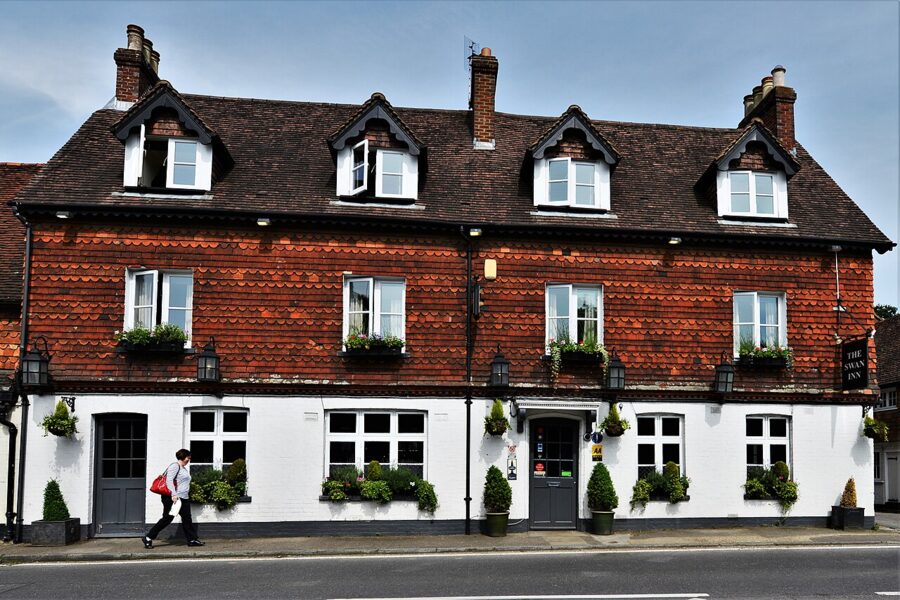
Rooms. The Princess Royal has 27 bedrooms, the Swan at Chiddingfold eleven, the Merry Harriers ten plus five shepherd’s huts, the Crown eight and both the Running Horses at Mickleham and the Bulls Head at Ewhurst seven. Early in 2026 the Merry Harriers quoted rooms from £160 a night.
Dogs and children. Nearly every country pub here takes dogs in the bar, though rarely in the dining room. Children are welcome in most until about 21:00; the Borough Beer House admits only over-eights.
Getting there. Godalming, Guildford, Farnham, Box Hill and Westhumble, Gomshall and Leatherhead stations all have a good pub within fifteen minutes’ walk. The rest need a car or a bike, and parking at Box Hill and in Shere fills early on fine weekends.
If you only do one thing, take the train to Godalming on a winter evening, sit in the front bar of the Star under the pump clips, and ask what is on cask before you look at anything else. The last train back to Guildford and London leaves late enough for a second pint.