
The law on the Sunday roast used to be very precise. A London baker could cook your joint on the Lord’s day between nine in the morning and one in the afternoon, so long as you carried it to the bakehouse and fetched it back yourself. Bake a loaf in the same oven and you were breaking the Sabbath.
That rule came from an Act of Parliament of 1794, and it tells you most of what you need to know about the meal. The Sunday roast was never only a recipe. It was a slot in the week, a timetable, and a job somebody else did while you were at church.
The pub is the bakehouse now. You book a time, you turn up at it, someone else watches the beef, and someone else washes the roasting tin. The arguments, on the other hand, you still bring from home.

On this page
What goes on the plate
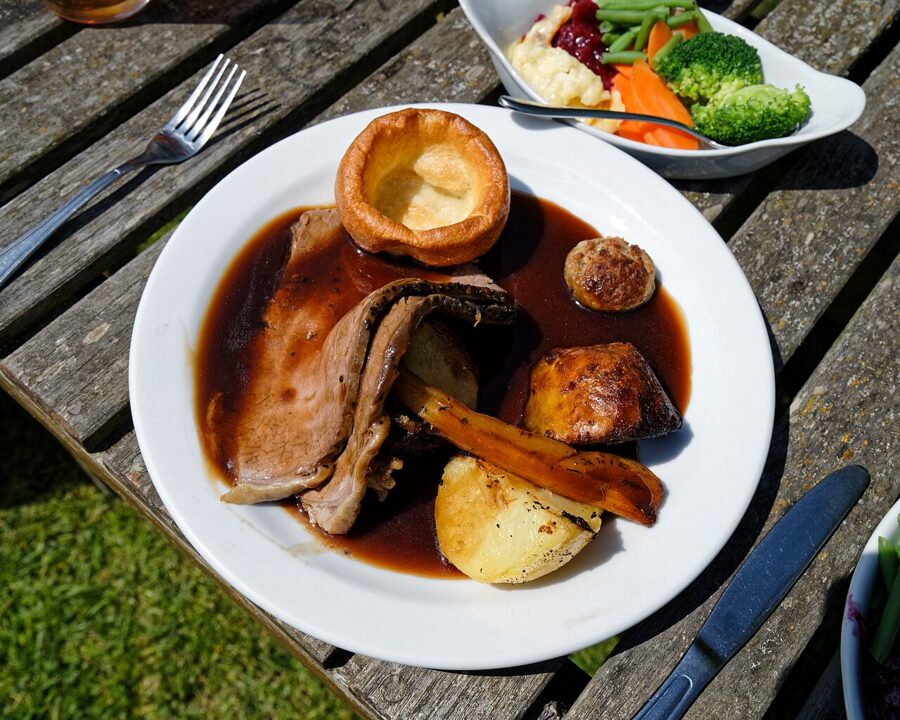
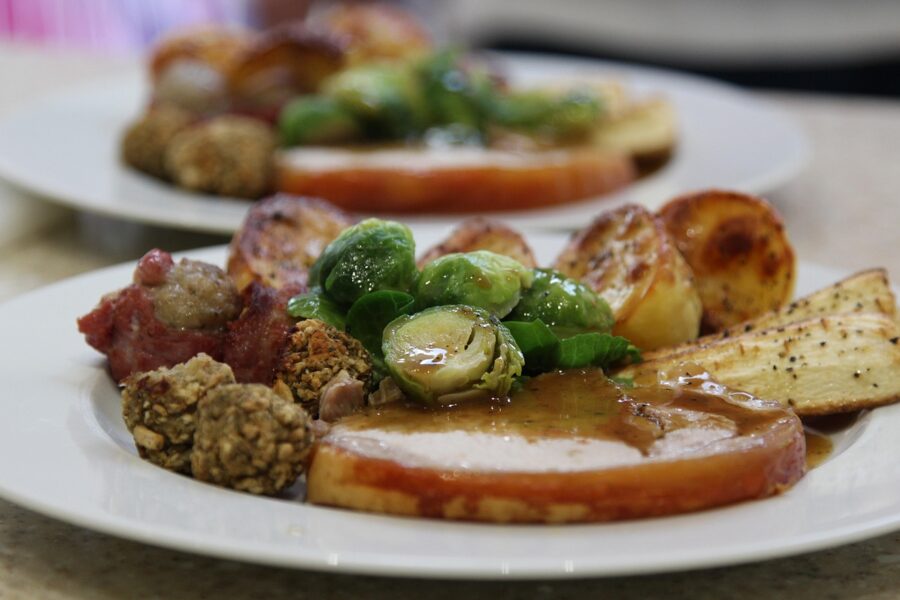
The settled version, the one nobody argues about, is short: a roasted joint of meat, roast potatoes, at least two vegetables, and gravy. Everything else is negotiable, and in most families the negotiations have been going on since before anyone at the table was born.
I’ll take the pieces one at a time, because a roast is only ever as good as its weakest component, and the weakest component is nearly always the one the kitchen thought nobody would notice.
The meat, and what goes with it
Beef is the senior roast. Topside is what most pubs serve because it carves neatly and doesn’t cost the earth; sirloin and rib are what the better ones serve, and rib on the bone is the cut people mean when they go misty about roast beef. It should be pink in the middle unless you ask otherwise, and if a pub cooks it grey all the way through without asking, it is cooking for the carvery tray rather than for you.
Lamb is the spring and Easter roast that has become an all-year one, usually leg or shoulder. Pork is loved for the crackling and forgiven for being dry. Chicken is the one most families actually cook at home, and the one pubs put on the menu for people who don’t trust the beef.
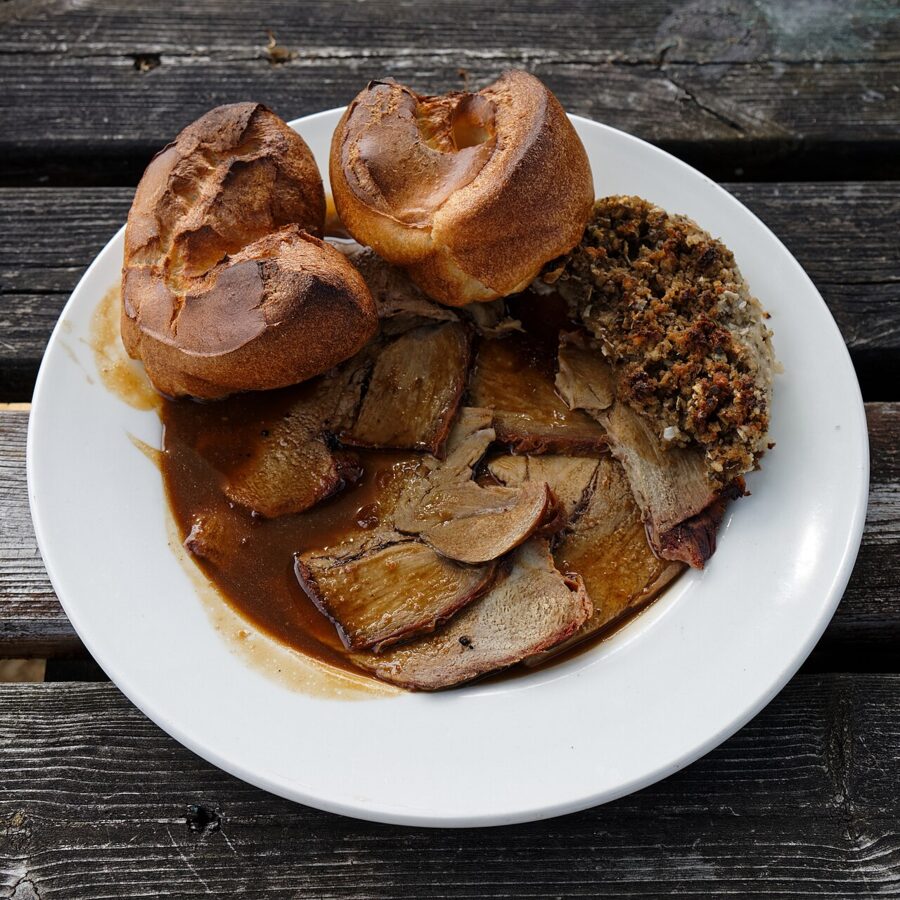

Each meat has its sauce, and the pairings are about as fixed as anything in English cooking. Horseradish with beef, and English mustard if you can stand it. Mint sauce with lamb, made with vinegar and sugar, which every French cook since the eighteenth century has regarded as a crime; redcurrant jelly if you’re feeling gentle. Apple sauce with pork, sage and onion stuffing with pork or chicken, and bread sauce with chicken, a white, clove-spiked thing that baffles visitors and delights everyone over sixty.
Pubs that make their own horseradish cream are worth remembering. The jarred stuff is fine. The fresh stuff, grated root folded into cream, will clear your sinuses for the afternoon, which is half the point.
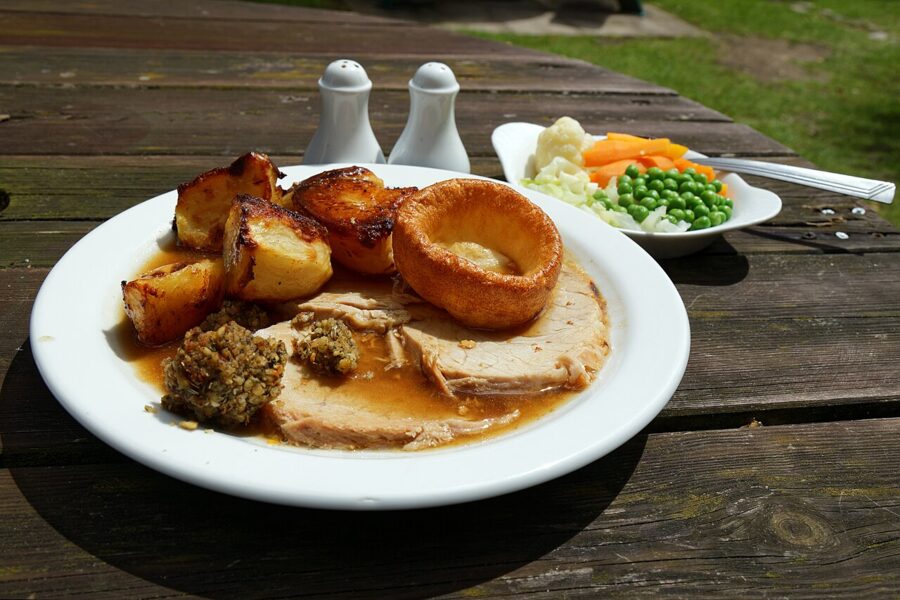

Potatoes
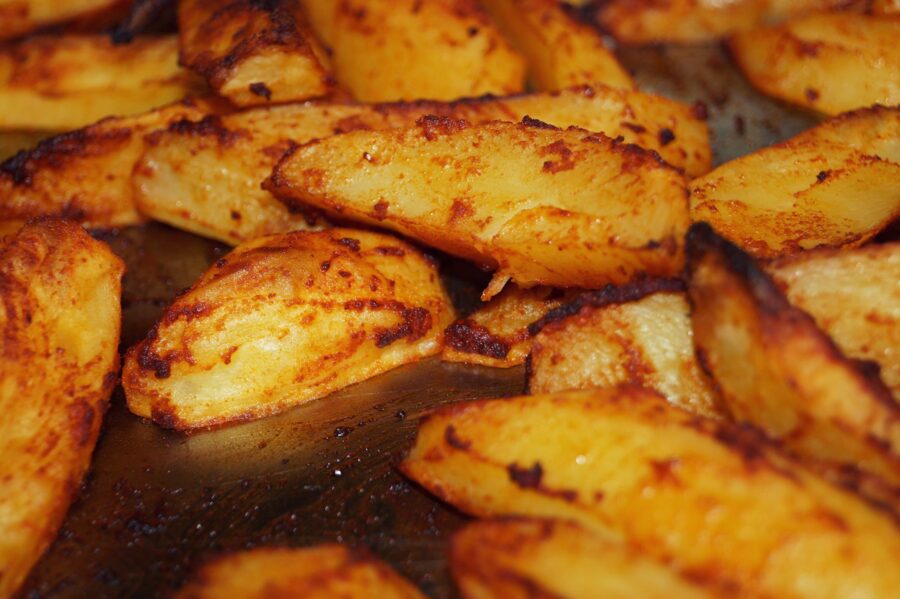
Roast potatoes are where a kitchen shows its hand. The method isn’t a secret: peel, cut big, parboil, drain, shake them in the pan so the edges rough up, then into very hot fat in a very hot oven. Beef dripping is the old fat, goose and duck fat the posh ones, and a decent vegetable oil gives you a vegetarian potato that’s nearly as good.
What you want is a shell that cracks and an inside like a cloud. What you often get is a potato that was roasted before noon, held under a lamp until mid-afternoon, and has the texture of a bath sponge. Some pubs now deep-fry them to fake the crunch. You can tell, because the outside is even and golden all over, like a chip, rather than craggy and brown at the corners.
The Yorkshire pudding question
Here is the row. One side holds that a Yorkshire pudding belongs with roast beef and with nothing else, because it was cooked under the beef to catch the dripping, and putting one next to a chicken breast is like serving custard with fish. The other side holds that a Yorkshire pudding is the best thing on the plate and should be served with every roast, and quite possibly with breakfast.
The second side has won, at least in pubs. Order roast chicken almost anywhere in England and a Yorkshire pudding will turn up whether you asked for one or not. I’m with the purists in principle and with the pubs in practice: I wouldn’t send one back.
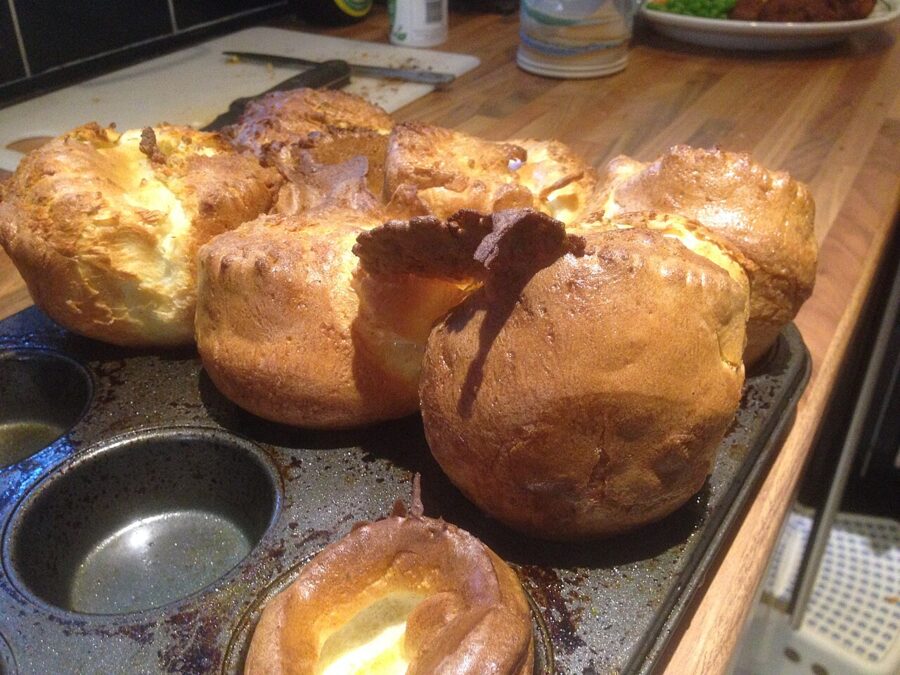
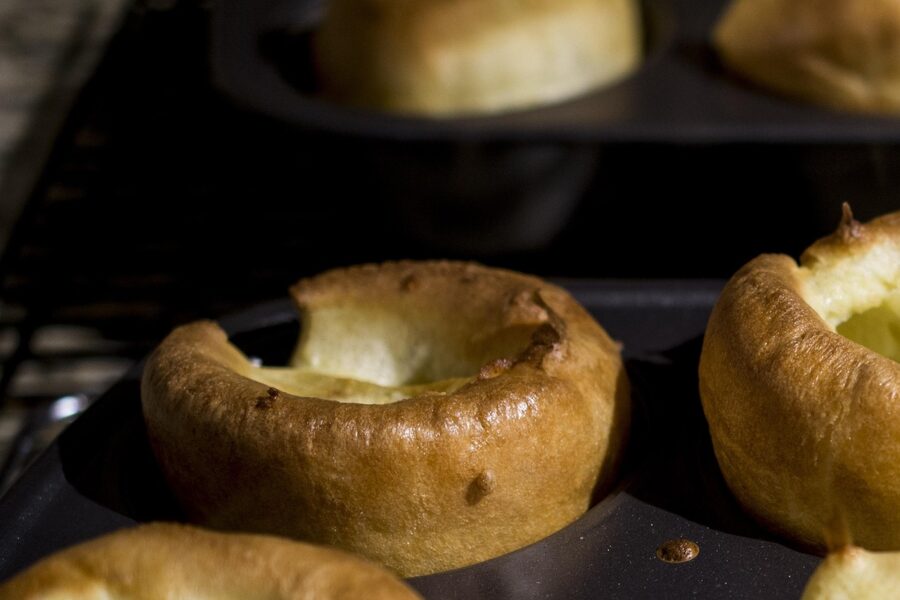
For the record, the Royal Society of Chemistry weighed in during 2008 and declared that a Yorkshire pudding under four inches tall isn’t a Yorkshire pudding at all. Nobody enforces this. But it’s useful at the table when someone’s pudding has come out the size of a bottle top.
The other test is the bottom. A good one is crisp at the rim, soft and slightly custardy at the base, and hollow enough to hold gravy. A bad one is uniformly dry, the same colour all over, and comes out of a catering bag, which is why it’s the same shape as every other one on the pass.
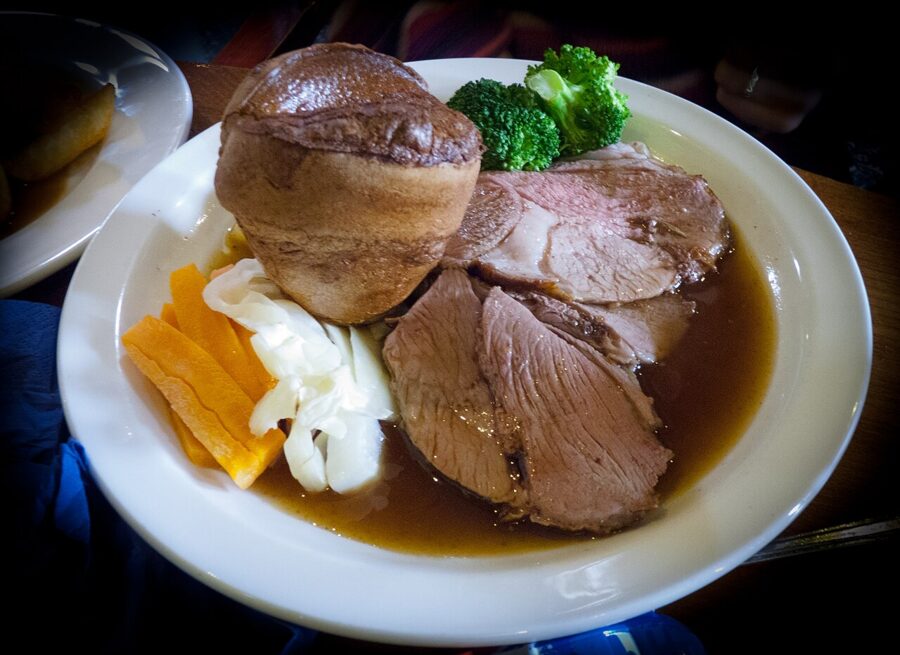

Vegetables, and the cauliflower cheese problem
Carrots and a green are the minimum: cabbage, greens, broccoli, peas, or sprouts once the weather turns. Roast parsnips are expected from autumn onwards and missed when they don’t appear. Red cabbage braised with apple turns up beside pork and game, and swede mashed with butter and pepper is the northern and Scottish favourite that southern pubs forget exists.
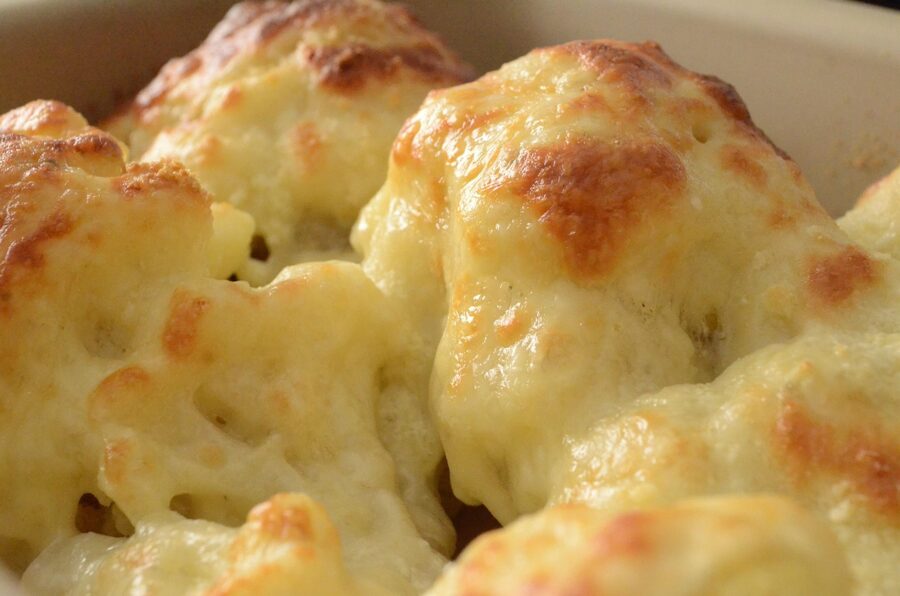
Then there’s cauliflower cheese. It’s a side, not a vegetable, and putting it on a roast plate is a fairly recent habit that has spread with remarkable speed. I’m in favour, provided it arrives in its own dish. Scooped onto the plate it melts into the gravy and the whole thing goes beige.
Pigs in blankets, small sausages wrapped in bacon, started as a Christmas thing and have crept onto Sunday menus everywhere. Fine by me. A pub charging extra for three of them is a different matter, and a pub that won’t tell you the price until the bill comes is one to remember for the wrong reasons.
Gravy
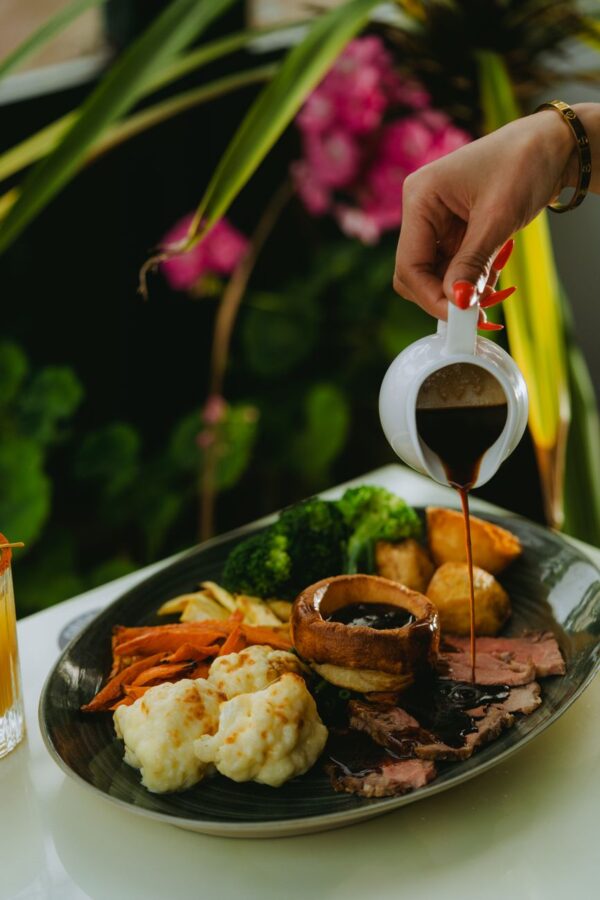
Gravy is the one thing on the plate that tells you whether anyone in the kitchen cared. Proper gravy starts with the roasting tin: the meat juices, the browned bits on the bottom, a little flour, stock, and something sharp, a splash of wine or ale. Made that way it tastes of the meat you’re eating.
The rival is granules. Bisto, which has been browning British gravy since 1908, is in a great many pub kitchens, and I’d rather have plain Bisto than a gloopy brown sauce of no known origin. But the gap between the two is the gap between a Sunday roast and a roast dinner, and you can taste it from the first forkful.
Two small tests. Is there a jug on the table, or a portion already on the plate? And is there more when you ask? A pub that charges for extra gravy has misunderstood the whole occasion.
Where the Sunday roast came from
The story you’ll hear in pubs is that it goes back to Henry VII’s Yeomen of the Guard eating roast beef after church every Sunday, which is how they came to be called Beefeaters. Food historians tend not to repeat that one, and it has the ring of a tour guide’s patter. The real history is better anyway, and it runs through open fires, fat little dogs in wheels, a Hogarth print and the local baker.
The roast beef of old England
Roasting, properly speaking, means cooking meat in front of a fire, on a turning spit, with the heat coming from the side. For centuries the English were famous for it. When the Swedish naturalist Pehr Kalm passed through London in 1748 he concluded that the English understood roasting a joint better than almost anyone, and very little else about cooking.
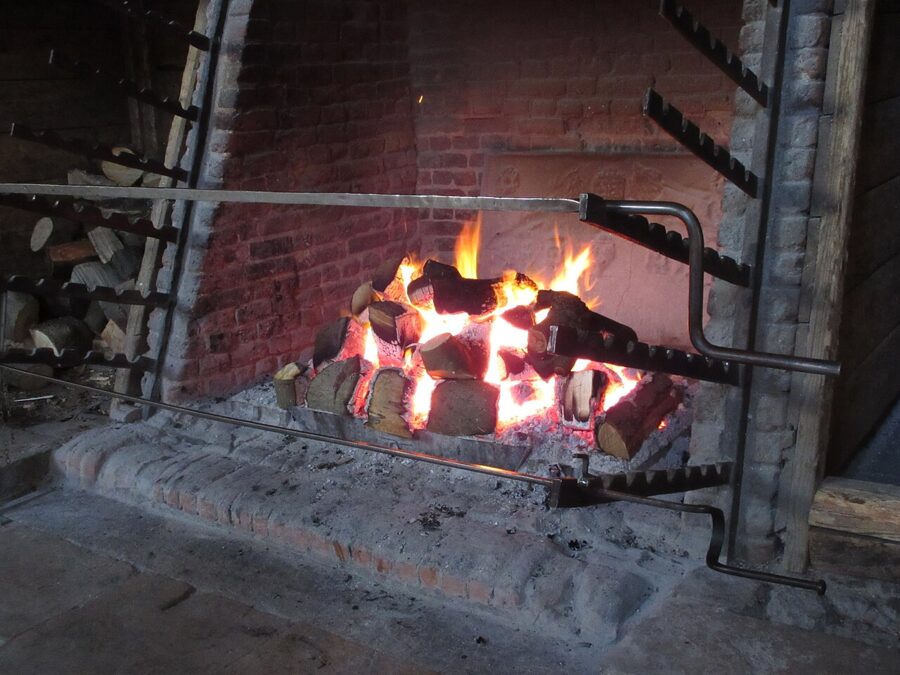

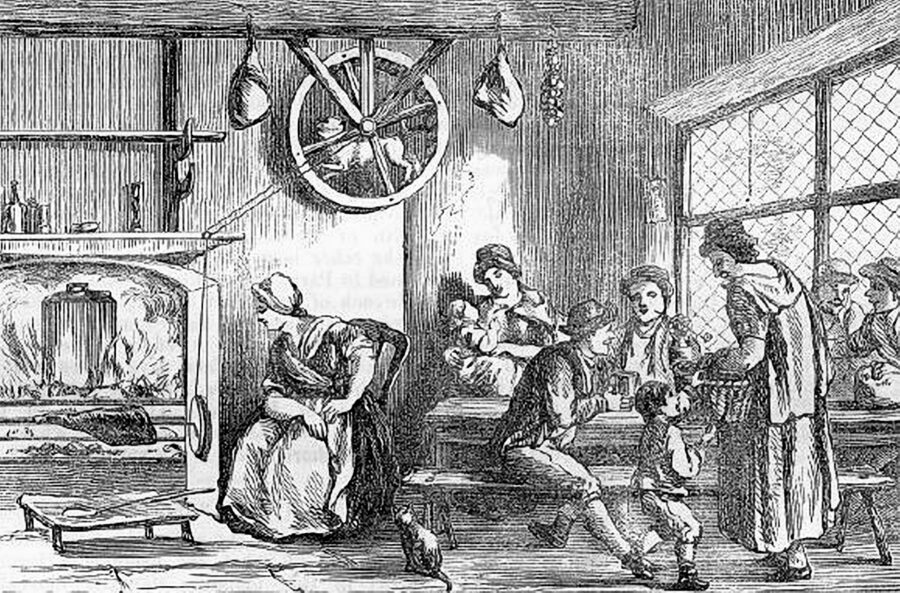
Someone, or something, had to turn the spit. In big houses it was a kitchen boy; in many inns and middling kitchens it was a dog. Turnspit dogs were short-legged, long-bodied animals bred to run in a wooden wheel fixed to the wall, which drove the spit by a chain. Cheap mechanical jacks put them out of work in the nineteenth century, and the type died out with the job.
By then roast beef had become a patriotic symbol. Henry Fielding wrote “The Roast Beef of Old England” for his Grub-Street Opera in 1731, a song about how the nation’s courage came from its dinner and how fashionable French food had made it soft. It was sung in theatres for the rest of the century, and the Royal Navy still plays it to call officers in to formal mess dinners.
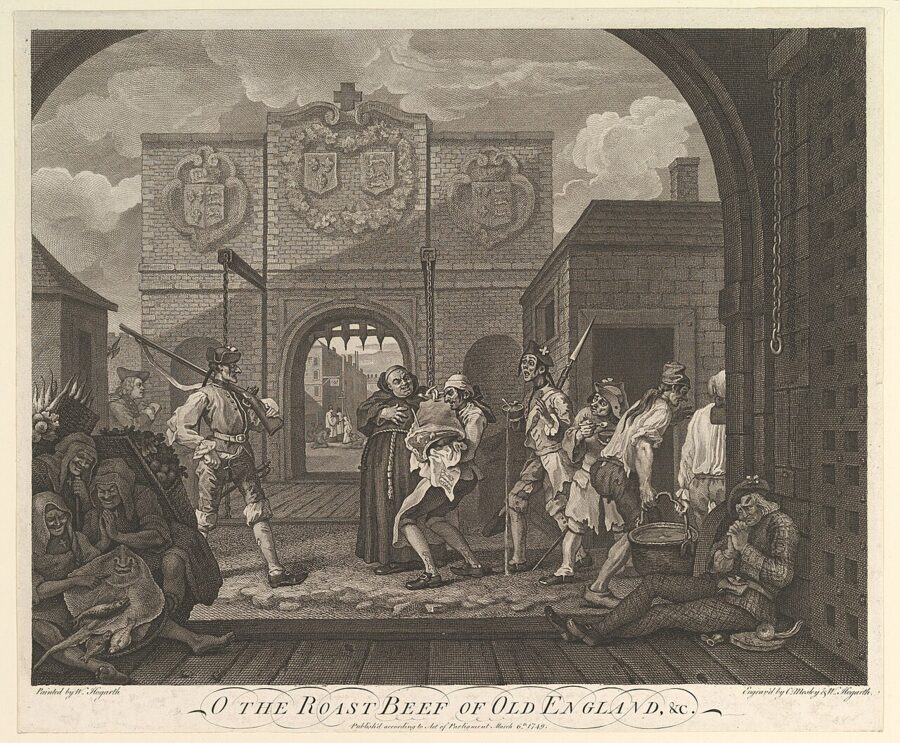
William Hogarth painted the idea in 1748, after being arrested as a spy in Calais for sketching the town gate. In his picture a sweating cook staggers through the gate under a vast sirloin bound for an English inn, while thin French soldiers stare at it over their bowls of watery soup and a fat friar prods the meat. The engraving sold widely. Its title was taken straight from Fielding.
The French noticed. “Les rosbifs” has been a French nickname for the English ever since, and it is not entirely a compliment.
From the spit to the bakehouse
Most English people, of course, never had a spit, a kitchen boy or a dog. The roast as a weekly event for ordinary families belongs to the eighteenth and nineteenth centuries, when wages in towns stretched to a joint once a week, and the joint came on the one day everyone was home.
Plenty of those homes had no oven. So the joint went to the baker. On Sunday mornings bakers, who were forbidden from baking bread that day, fired their ovens for the neighbourhood’s dinners instead, and families queued up with a joint sitting on a trivet in a tin, often with a batter pudding or potatoes underneath to catch the fat.
The 1794 Act covered bakers in the City of London and within twelve miles of it, and allowed them to bake meat, puddings and pies on Sundays between 09:00 and 13:00, provided the customer carried the dish there and back. An 1860 account of London bakers describes them standing by from about 10:00 until 14:00 on Sundays to see to the “dinner-bakings”. Master bakers were petitioning Parliament against the rules by 1830, and you can see why: it was their one morning off, spent minding other people’s mutton.
Dickens put it into A Christmas Carol in 1843. The Cratchit children come tearing in from outside the baker’s, where they’ve smelled their goose cooking and known it for their own. Earlier, watching the dinner-carriers in the street, Scrooge rounds on the Spirit over the campaign to shut the bakers on Sundays: “You would deprive them of their means of dining every seventh day, often the only day on which they can be said to dine at all.”
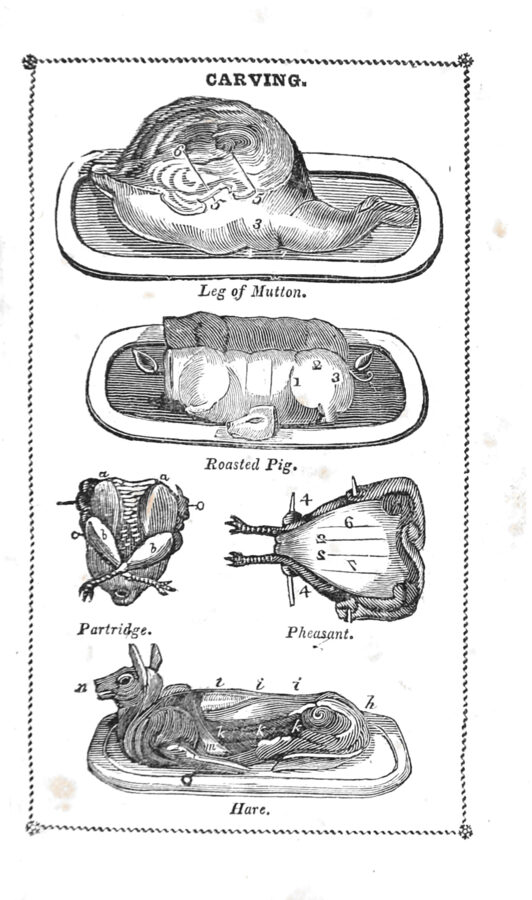
The custom lasted longer than you’d think. A diary kept by a woman in the Northamptonshire village of Geddington in 1928 calls Sunday dinner almost a sacred rite and records that most of the village still sent theirs to the bakehouse, usually in a batter pudding they called a “bake pudding”. It took the gas and electric cooker in every kitchen to bring the joint home for good.
The Yorkshire pudding’s paper trail
The batter pudding cooked under the meat is old, and it was never only a Yorkshire thing. The first printed recipe usually cited is for a “dripping pudding” in The Whole Duty of a Woman in 1737, set under a joint of mutton as it turned so the fat dripped into the batter.
Hannah Glasse gave it the name in The Art of Cookery Made Plain and Easy in 1747, the bestselling English cookery book of its century, and the name stuck. Her pudding would have been flat, set and crisp only at the edges. The tall, hollow, crackly pudding is a creature of the hot domestic oven and the metal bun tin, which is to say it is a good deal younger than most people defending it.
How the pub took over Sunday lunch
For most of the twentieth century the pub had very little to do with the Sunday roast. Men went for a pint while the joint was in the oven and came home when the pub shut, which in England and the wet parts of Wales was early afternoon: Sunday opening was split into a short lunchtime session and an evening one, with a forced closure in between. The roast was the reason to leave.
That afternoon closure lasted until August 1995, when the Licensing (Sunday Hours) Act let pubs in England and Wales stay open through Sunday afternoon. In Scotland public bars had been shut on Sundays altogether from 1853 until the 1970s, when the law was finally changed to allow Sunday opening. In Wales whole districts stayed dry on Sundays until local votes opened them up, and the last of them, Dwyfor on the Llŷn peninsula, only went wet in 1996.
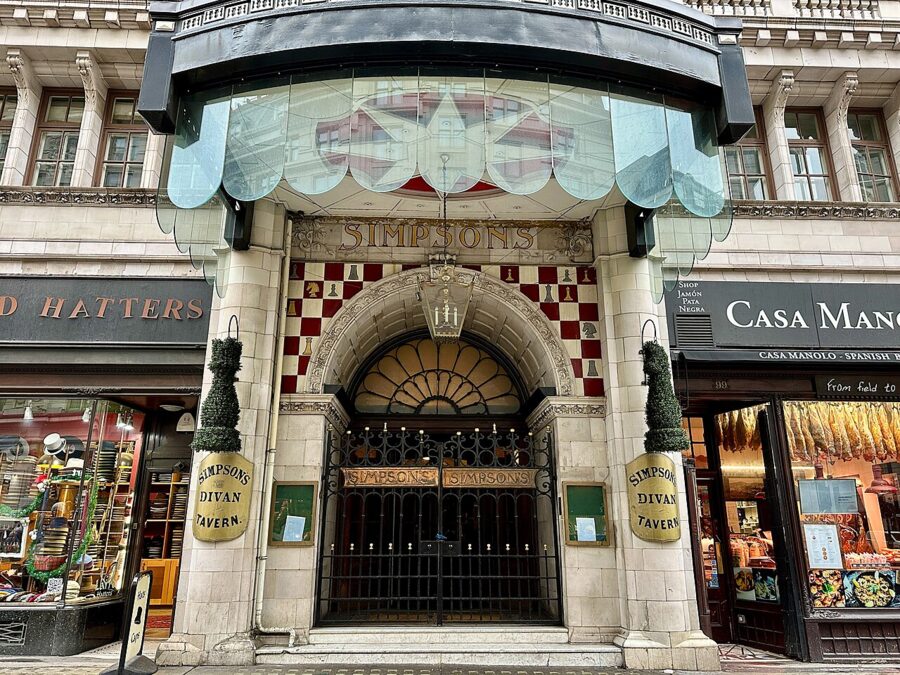

So the pub roast is younger than people assume. It grew with pub food generally from the 1970s onwards, as brewers worked out that a family eating lunch spends more than a man drinking a pint, and it took off with the gastropubs. The Eagle on Farringdon Road is usually credited with starting that movement in 1991, and within a decade the idea that you’d go to a pub specifically for a good Sunday lunch had gone from novelty to habit.
The other branch of the family is the carvery. Lyons, the catering company, was running carveries in London in the 1950s, including one at the Regent Palace Hotel by Piccadilly Circus, where you paid one price and helped yourself from the joints. The first Toby Carvery opened in 1985, and the chain has around 158 branches now, with a basic roast that was £10.99 at a south London branch in spring 2026.
Mostly, though, the pub roast won because people stopped wanting to cook it. A roast for six is four hours of work and a sink full of tins. A roast for six at the pub is a booking and a bill, and the bill has come to feel like good value against the cost of a whole joint at the butcher’s.
Booking, sittings and when the beef runs out
Book. That is the whole of the advice for a good pub on a Sunday, and the better the pub, the earlier you need to do it. The famous London roasts fill weeks ahead, some release their tables on a fixed day each week, and a village pub with a reputation for its lunch will be full by Friday in winter.
Many pubs run sittings: you might be offered 12:00, 14:30 or 17:00, with the table wanted back at the end of your two hours. Others take bookings at any time through the afternoon but only cook so much beef. If you book for 16:00, ask whether the beef will still be there, and don’t be surprised if the answer is “probably”.
Food on Sundays also stops earlier than you’d think. Plenty of pubs serve their roast from noon until 16:00 or 17:00 and then either switch to a normal menu or stop cooking altogether. The pub stays open until the evening, but the kitchen has gone home. Check the food times, not the opening hours.
What a fair price looks like
Prices are all over the place, and that’s partly because “Sunday roast” covers very different meals. At one end, a chain carvery plate costs about the same as a sandwich and a coffee at a station. At the other, a Michelin-starred pub will sell you two courses for the price of a decent pair of shoes.
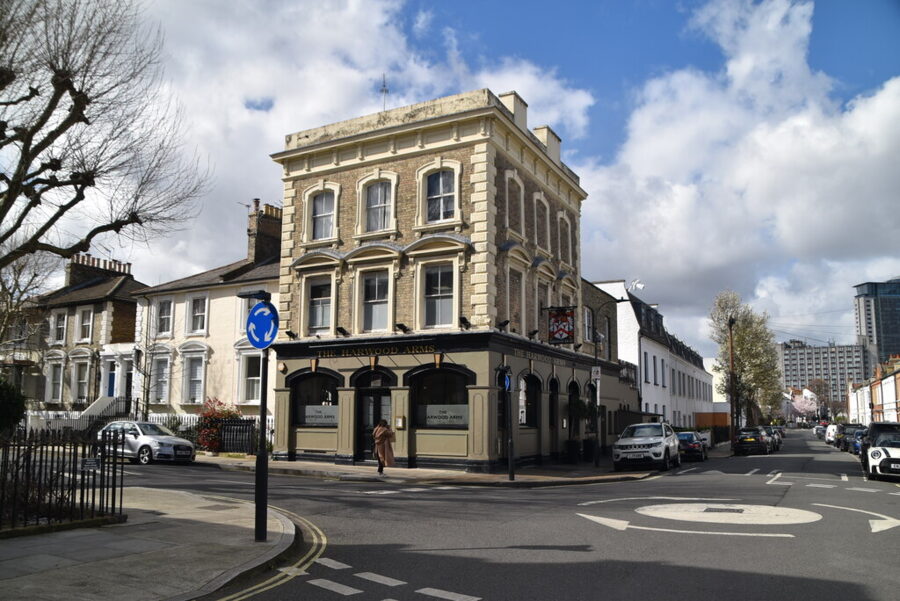
Some real numbers from menus in autumn 2026. The Devonshire in Soho serves one roast, rib of beef with all the trimmings, for £33. The Star Inn at Harome in North Yorkshire charges £34 for its sirloin and £30 for its pork and lamb roasts. The Harwood Arms in Fulham does two courses for £64 or three for £79, with a £7.50 supplement for the Jersey beef.
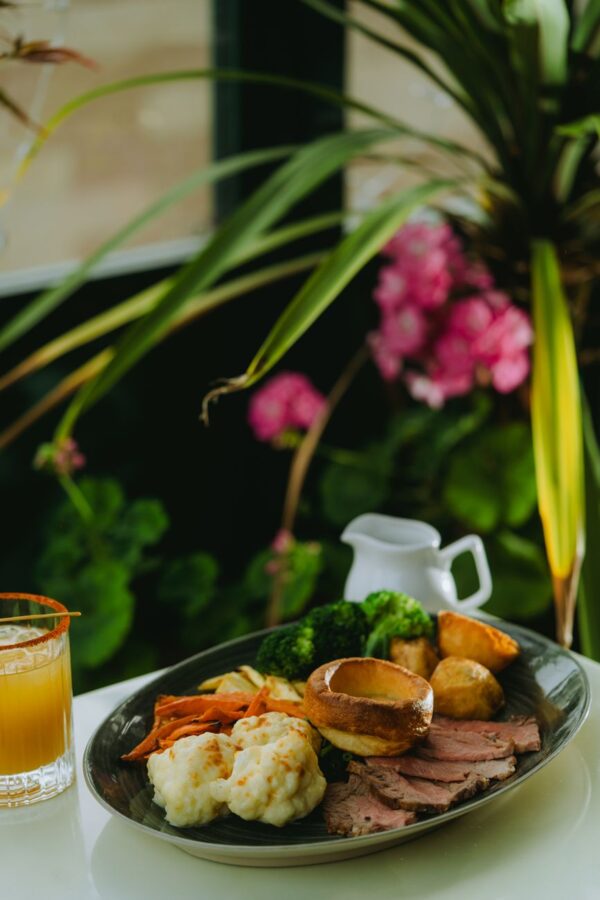
Most good ordinary pubs land in between, somewhere in the high teens to mid-twenties of pounds for a plate, a few pounds more in central London. What you’re looking for at that level is the meat cooked to order or carved from a joint that is still warm, potatoes roasted that day, real gravy and enough of it. If all of that is there, you’re paying a fair price whatever the figure says.
Regional differences: England, Scotland and Wales
The Sunday roast is mostly an English institution exported to the rest of Britain, and it carries the accents of wherever it’s served. Some of the differences are in the food, and some are in what people call the meal.
Northern England and Yorkshire
In much of the north, and in plenty of working-class homes everywhere, the midday meal is dinner and the evening one is tea, so the meal is Sunday dinner rather than Sunday lunch. The name tells you where someone grew up faster than their accent does.
In Yorkshire the pudding used to be served first, on its own, with gravy, before the meat and vegetables came out. The usual explanation is thrift: fill everyone up on batter and they’ll eat less of the expensive meat. Some older Yorkshire families still do it, and some will serve the leftover puddings afterwards with jam or golden syrup for pudding.
The north also likes its swede mashed with carrot, its red cabbage, and its mint sauce on lamb poured with a heavy hand. In the north-east you’ll sometimes meet pease pudding alongside pork. Anywhere in Lancashire or Yorkshire, if a menu says “proper gravy”, hold it to the promise.
Scotland
Scotland came to the pub roast late, and the licensing law is the reason. From the Forbes Mackenzie Act of 1853 until the 1970s, Scottish public bars were shut on Sundays. Hotels could serve residents and bona fide travellers, so for generations a Scottish Sunday drink meant a walk or a bus ride far enough to count as a traveller.
At home, a Scottish Sunday dinner was as likely to be broth followed by boiled beef, or a steak pie from the butcher, as an English-style roast. Now the roast is everywhere in the cities, built on Scotch beef and with Scottish touches on the side: neeps, a slice of haggis, and lately vegetarian haggis tucked into a Yorkshire pudding in at least one Edinburgh dining room.
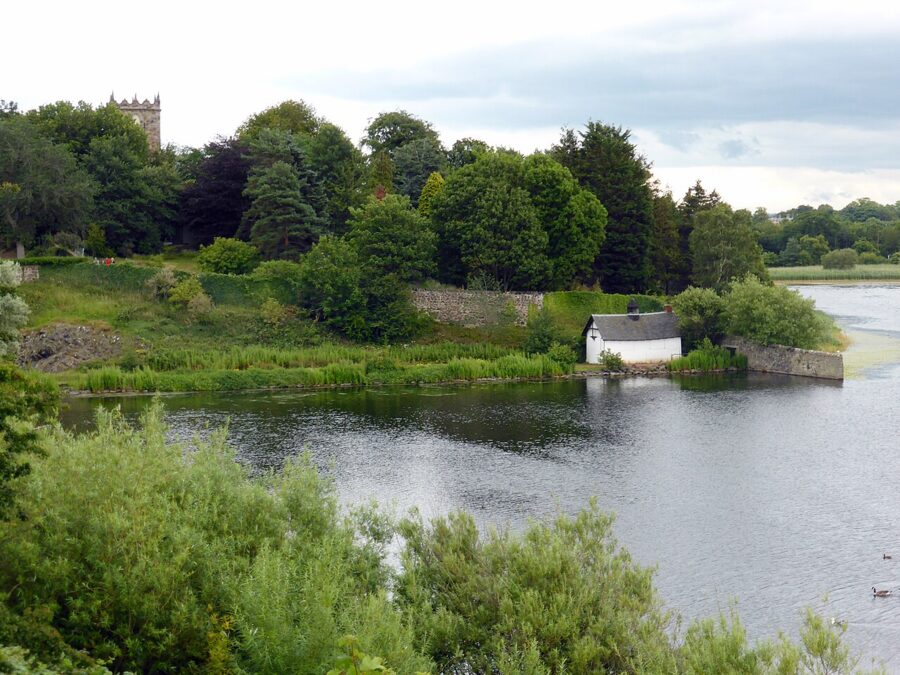

Wales
Wales means lamb. Welsh lamb has protected status, and on a Welsh Sunday menu it usually leads, roast leg or slow-cooked shoulder with mint sauce and often leeks somewhere on the plate. Beef and pork are there too, but lamb is the one a Welsh pub is proudest of.
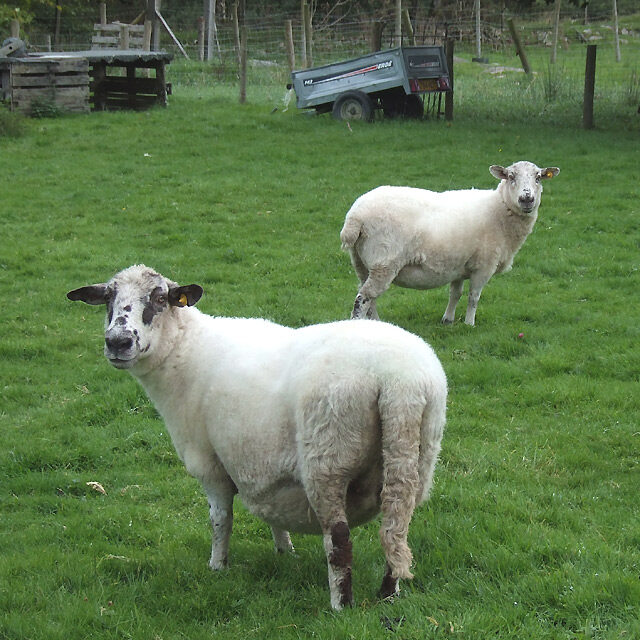

The Welsh pub Sunday has a short history for a reason the chapels would have approved of. The Sunday Closing (Wales) Act of 1881 shut Welsh pubs on Sundays outright, and after 1961 each district voted every seven years on whether to stay dry. Cardiff and the south-east went wet early, much of the west and north stayed dry for decades, and so for a lot of rural Wales the Sunday pub lunch is, in effect, a habit of the last thirty years.
The rest of England
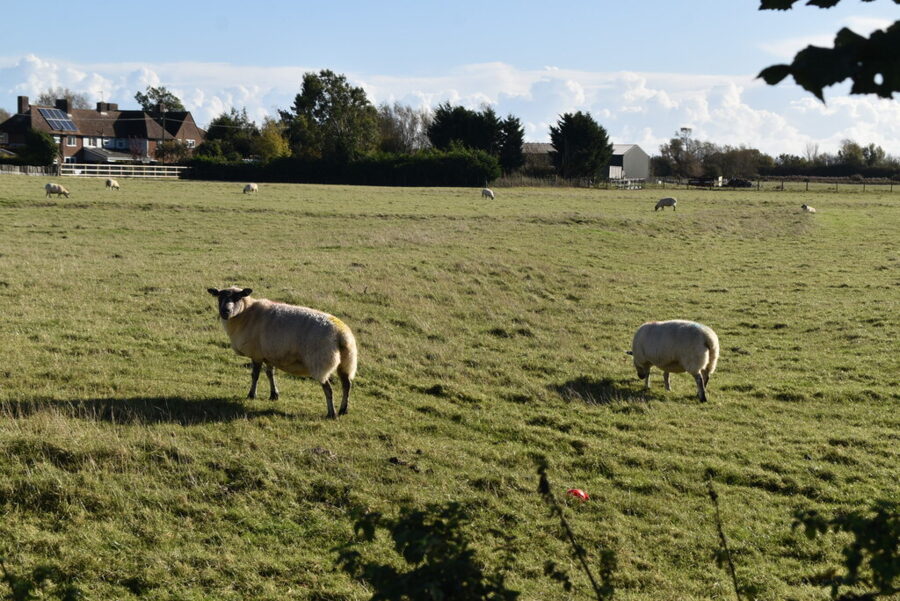
Elsewhere the differences are mostly about what grows and grazes nearby. Salt-marsh lamb from Romney Marsh turns up on Kent menus, the West Country pours its cider alongside the pork, and all over England the best pub menus now name the farm or the butcher, which is a good sign anywhere.

London, as usual, has absorbed everything: Michelin roasts, wood-fired roasts, and sharing roasts for four carved at the table. Most of it is good. Some of it is a roast in name only, and I come back to those below.
Pubs I’d book for a roast
Eight pubs, five in London and three beyond it, each with a roast worth planning a Sunday around. Pubs change hands and chefs move on, so check the Sunday menu before you go, and book.
London
The Harwood Arms, Fulham. On Walham Grove, about five minutes’ walk from Fulham Broadway, this is London’s longest-standing Michelin-starred pub, with a star held since 2010 and kept again in the 2026 guide. It’s game-led British cooking: a recent Sunday menu ran to Jersey beef sirloin with horseradish cream, Cumbrian pork belly, and slow-cooked deer shoulder wrapped in bacon, all with Yorkshire puddings, roast potatoes, greens, cauliflower cheese and celeriac.
Roasts are served all day on Sunday, from noon until 20:15. The set menu is £64 for two courses or £79 for three, and you leave card details to book, with a charge for no-shows and late cancellations. It’s expensive. It’s also the best version of the meal I know of in a building that still looks and feels like a pub.

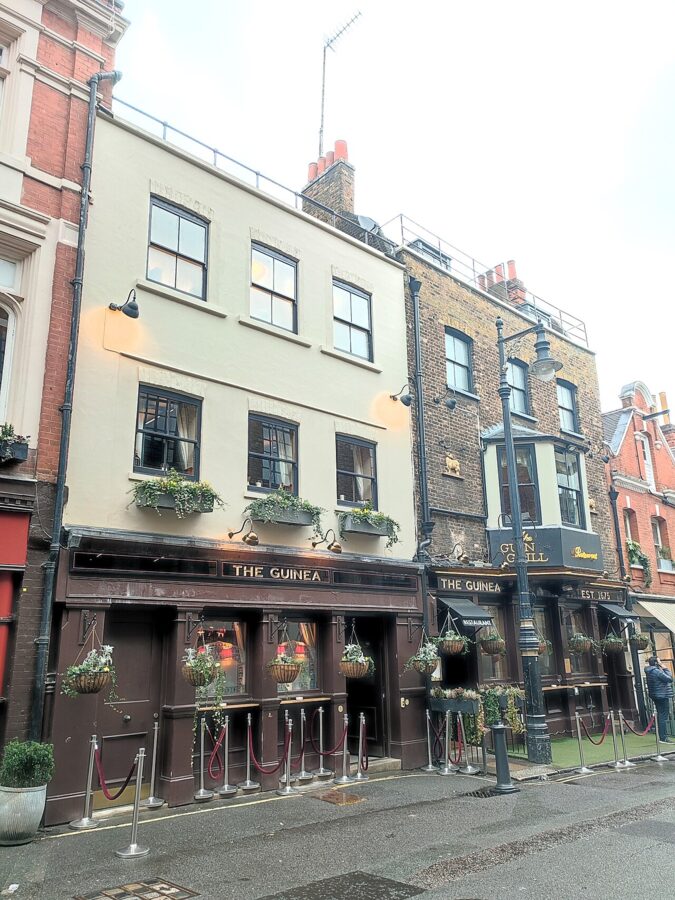
The Guinea Grill, Mayfair. A Young’s pub in Bruton Place, a mews off Berkeley Square, under ten minutes’ walk from Green Park or Bond Street. The Guinea says there has been an inn on the site since 1423, which, like most dates in the business of the oldest pubs in London, is a claim about the plot rather than the building you’re drinking in. The restaurant at the back opened in 1952 and has been grilling beef ever since.
On Sundays it roasts and slices dry-aged beef from Godfreys of Finsbury Park, its butcher of nearly sixty years, with slow-cooked pork belly and a vegetarian gratin for anyone not having the beef. Roasts run from noon until 17:00. The front bar is small and good for a pint of Young’s while you wait; the dining room is old-fashioned silver service, which on a Sunday is half the fun.

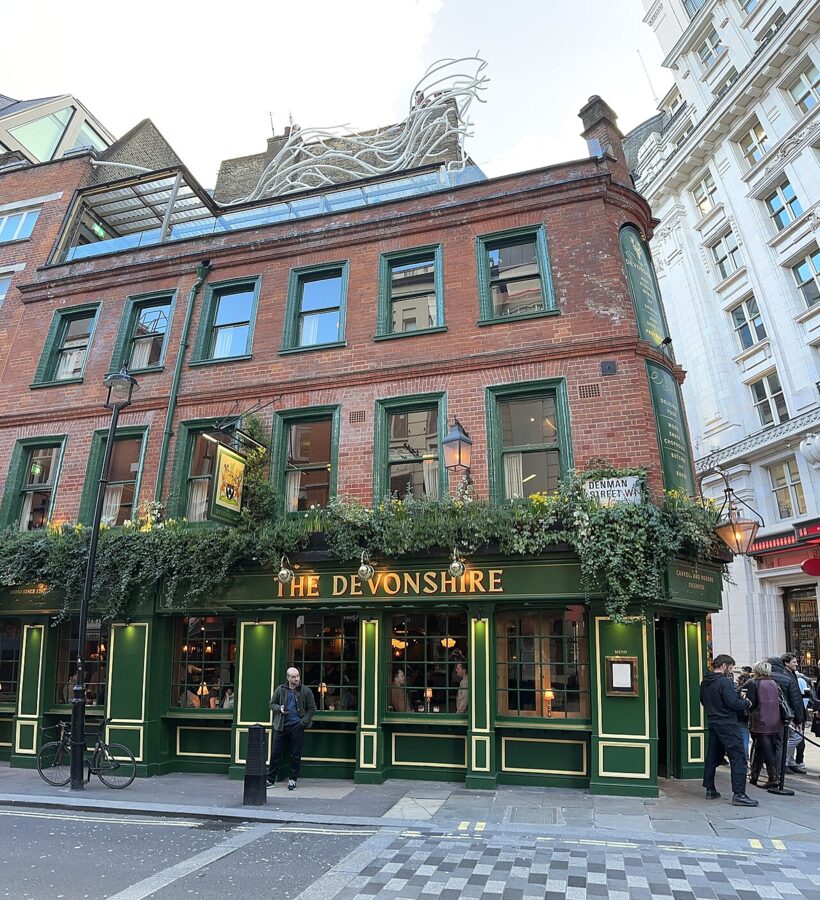
The Devonshire, Soho. On Denman Street, a minute from Piccadilly Circus, and one of the most talked-about pubs in London. Its Sunday lunch is a single main course: roast rib of beef with roast potatoes, carrots, creamed leeks, peas with onion and bacon, Yorkshire pudding and gravy, for £33.
No choice of meat, no vegetarian main on that menu, and no apology either, which I rather admire. Starters run from pea and ham soup to scallops with bacon and malt vinegar. The roast is served from noon until 16:00, after which the kitchen goes back to its usual menu, and tables go fast.

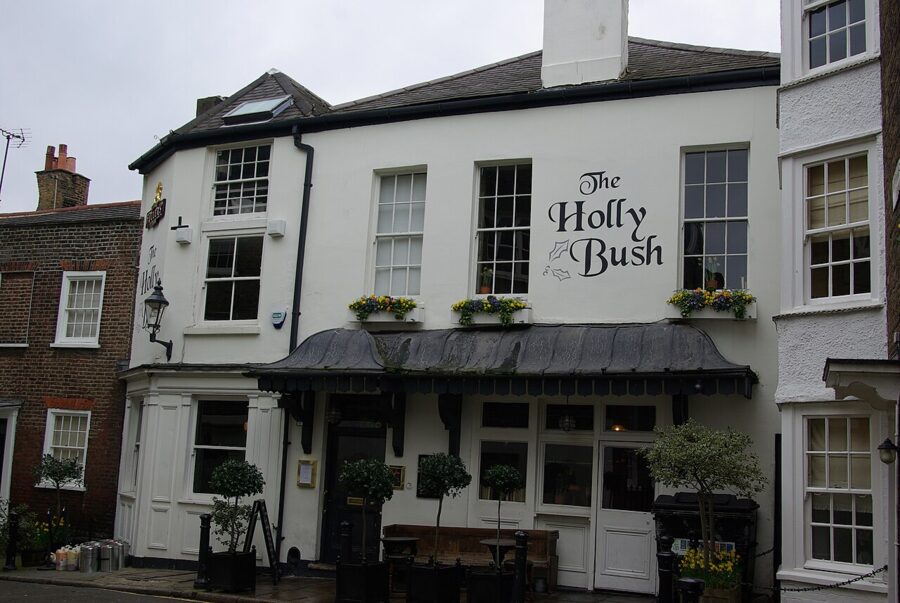
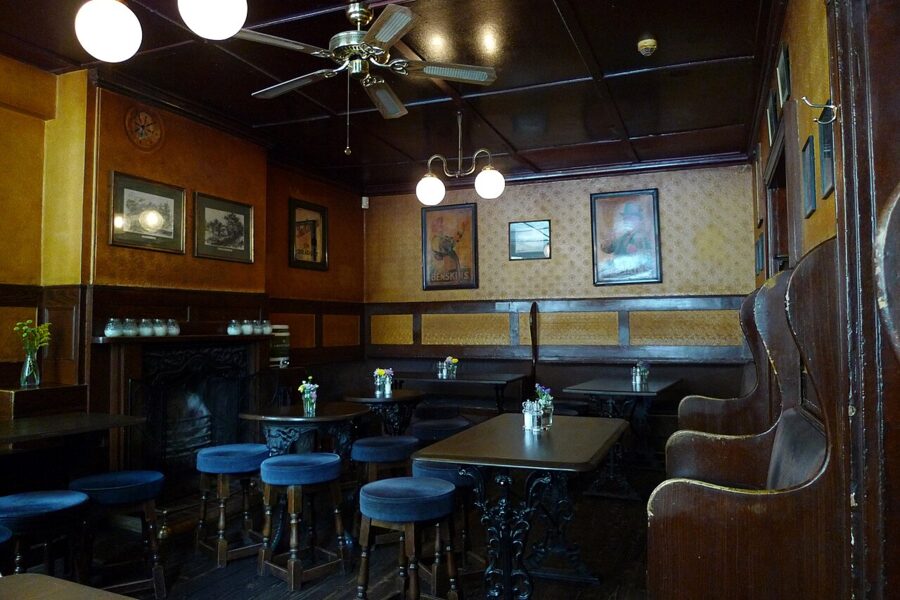
The Holly Bush, Hampstead. A Fuller’s pub on Holly Mount, up the steps from Heath Street, about three minutes from Hampstead tube. The building started life as the stables of the painter George Romney’s house and was turned into the catering wing of the Hampstead Assembly Rooms around 1807. CAMRA rates its interior as of very special national historic interest, which is to say the little panelled rooms are the real thing.
The Sunday roast is a straightforward pub roast with all the trimmings, served from noon until 20:00, and the joy here is the rooms rather than any culinary fireworks. Go after a walk on the Heath, ask for the front room, and don’t be in a hurry.

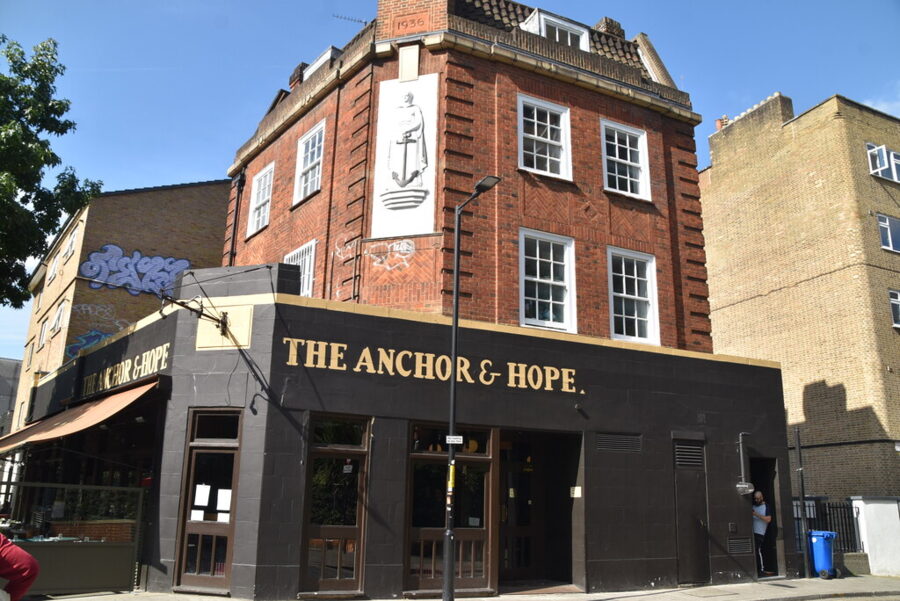
The Anchor and Hope, Southwark. On The Cut, three or four minutes from Southwark tube and handy for the Old Vic and the Young Vic, this has been one of the best food pubs in London for more than twenty years. One bar, a part-curtain between the drinkers and the diners, St Austell Tribute on the handpumps, and a short, hearty menu that changes daily.
On Sundays the kitchen serves lunch only, from noon until 15:15, and the pub closes at 17:00. Ring ahead, arrive on time, and if there’s a big dish for the table on the menu, order it.

Outside London
The Star Inn at Harome, North Yorkshire. A thatched, cruck-framed pub a couple of miles south-east of Helmsley, listed Grade II and probably seventeenth-century with older origins. Andrew Pern bought it in 1996, when it had actually closed, and turned it into one of the first serious food pubs in the north; it holds a Michelin star and was named the AA’s Restaurant of the Year for England for 2026/27.
A fire in November 2021 gutted the thatched dining rooms, and the place was shut for a year while it was rebuilt around the surviving oak beams. The Sunday menu in autumn 2026 had a roast sirloin of village-reared beef with Yorkshire pudding, forcemeat and Lightfoot ale gravy at £34, and rare-breed pork loin and rump of Ryedale lamb at £30 each, all with duck-fat roast potatoes. There’s a Yorkshire pudding with foie gras and truffle as an £18 “upgrade”, which is either the most Yorkshire thing I’ve ever heard of or the least.
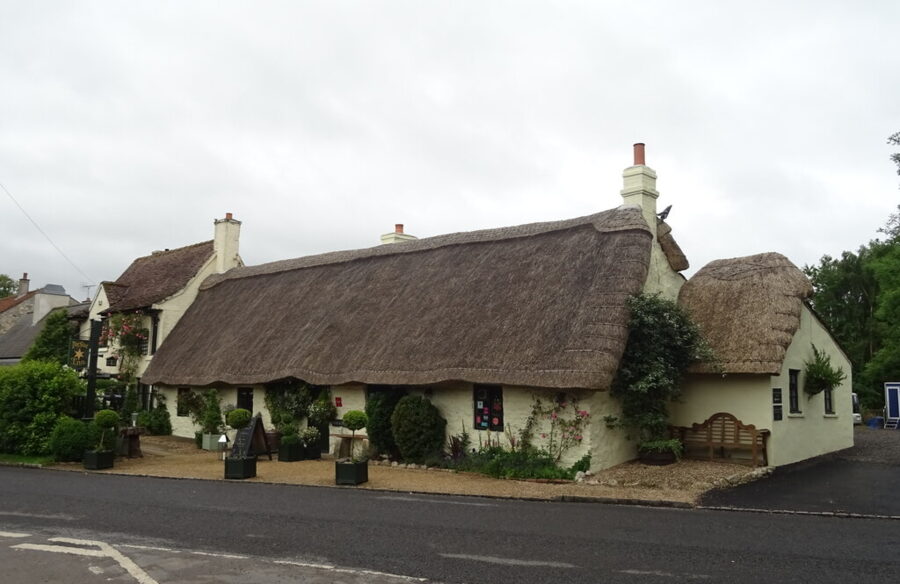

Sunday bookings run from noon until 18:00. Drink the Theakston’s Lightfoot that goes into the gravy, at £3 a half; it’s brewed at Masham, about twenty-five miles west.
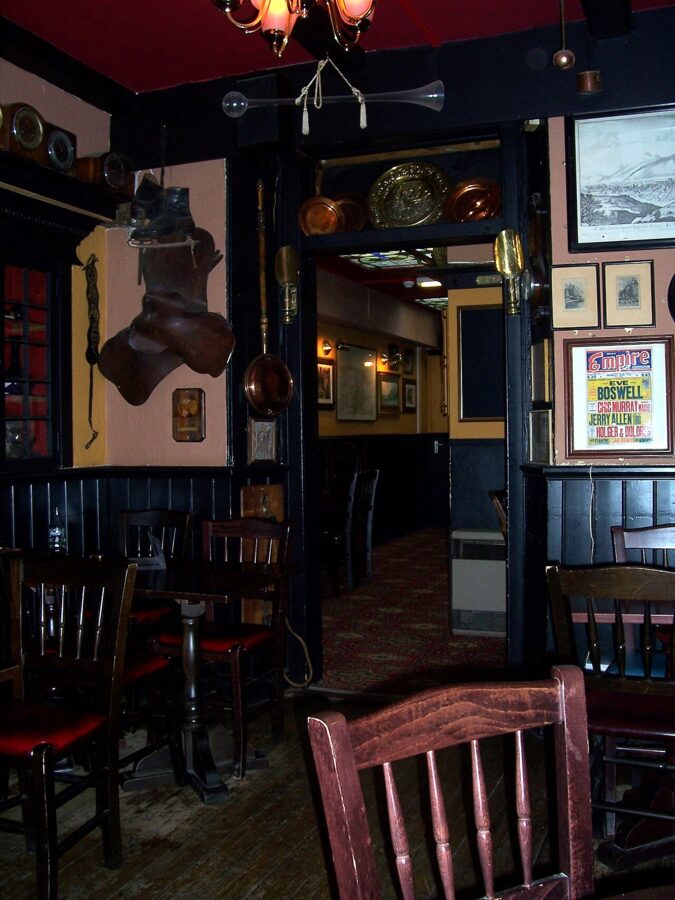
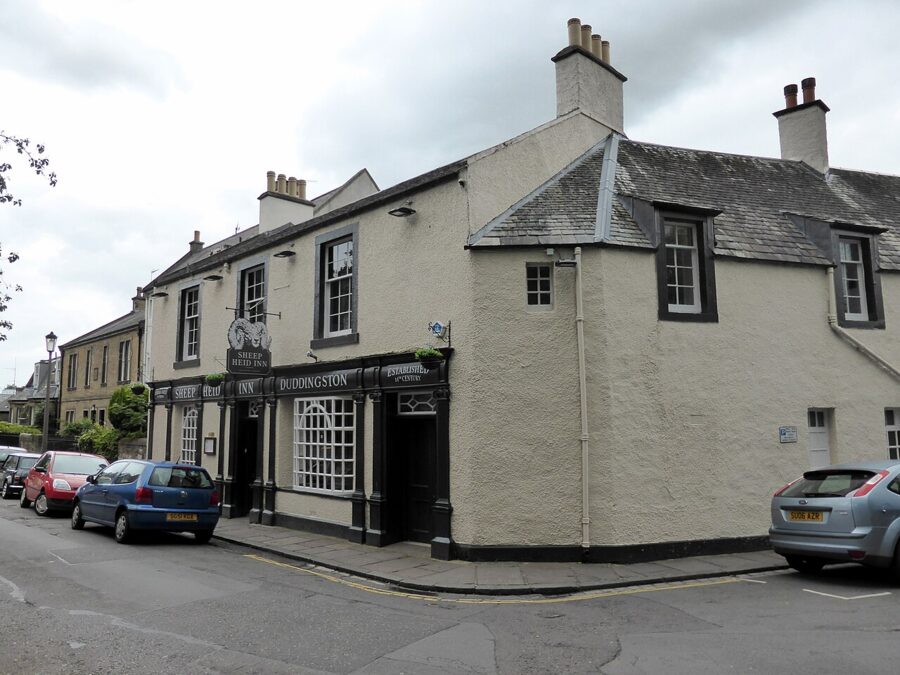
The Sheep Heid Inn, Duddingston, Edinburgh. On The Causeway in Duddingston village, at the foot of Arthur’s Seat, and the obvious place to end a Sunday walk over the hill from Holyrood. The Sunday roast here is a fixture, food runs from noon until 21:00, and there’s Stewart’s 80/- on cask.
The pub is usually called the oldest in Scotland and dated to 1360. The claim belongs to the same family as the ones made for the oldest pubs in England: there may well have been an inn here for centuries, but nothing in the present building proves the date. What is genuinely old is lovely in its own right: CAMRA lists a 1930s refurbished interior of special national interest, and a skittle alley from the 1880s that you can still hire.


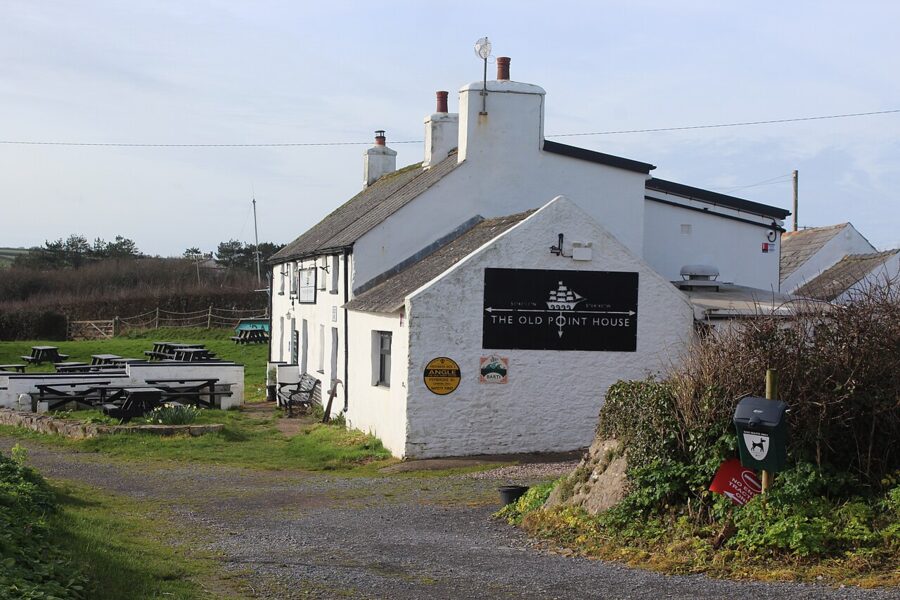
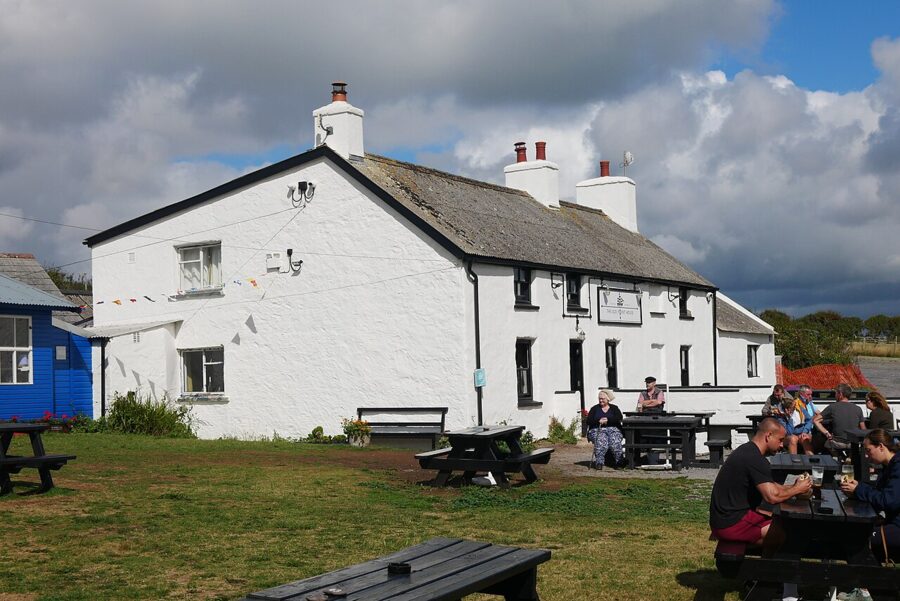
The Old Point House, Angle, Pembrokeshire. At the end of the Angle peninsula, right on the Pembrokeshire Coast Path above East Angle Bay. It was closed for six months before the chef Michelle Evans reopened it in spring 2026, and by November it was in the Good Food Guide’s list of Britain’s hundred best pubs.
It opens Friday to Sunday, with open fires and a Sunday lunch built on meat from the family farm, potatoes from cousins across the bay, and very large Yorkshire puddings. One warning: high tides cut road access a couple of times a month, so check the tide table before you drive out.


Vegetarian roasts, carveries and what to avoid
The vegetarian roast
For years the vegetarian at a Sunday roast got a nut roast, which was a loaf of chopped nuts and breadcrumbs with the texture of a builder’s sponge, or a plate of the same vegetables without the meat. Things are better now. Pub kitchens do mushroom and lentil wellingtons, squash and chestnut pies, whole roast cauliflowers, and a good nut roast is a fine thing when someone has bothered with it.
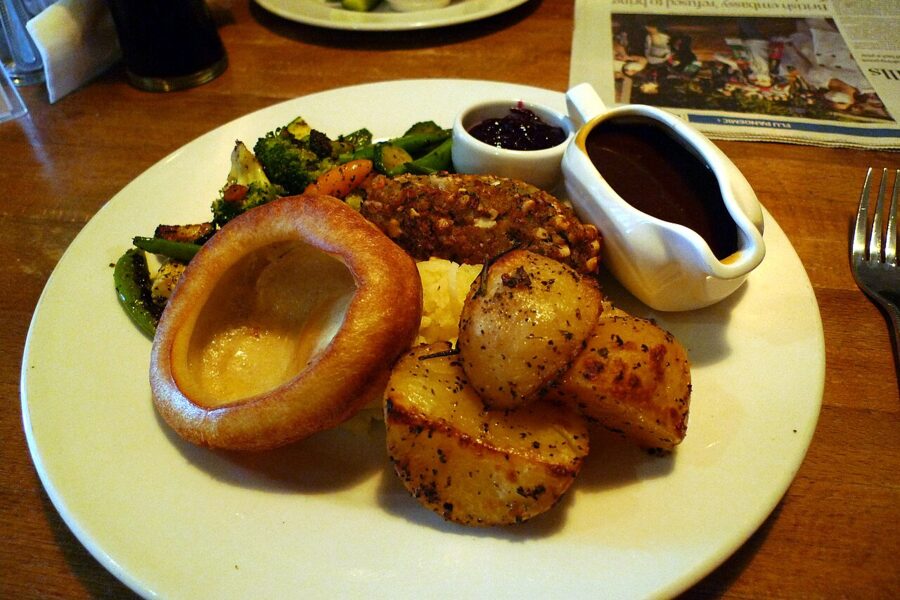

Two things to ask. First, the gravy: many pubs make one gravy from the meat juices and pour it over everything, so ask whether there’s a vegetarian one. Second, the potatoes: if they’re roasted in beef dripping or goose fat, they’re not vegetarian, however lovely they are. A good pub will tell you without fuss, and the best ones roast a separate tray.
The carvery
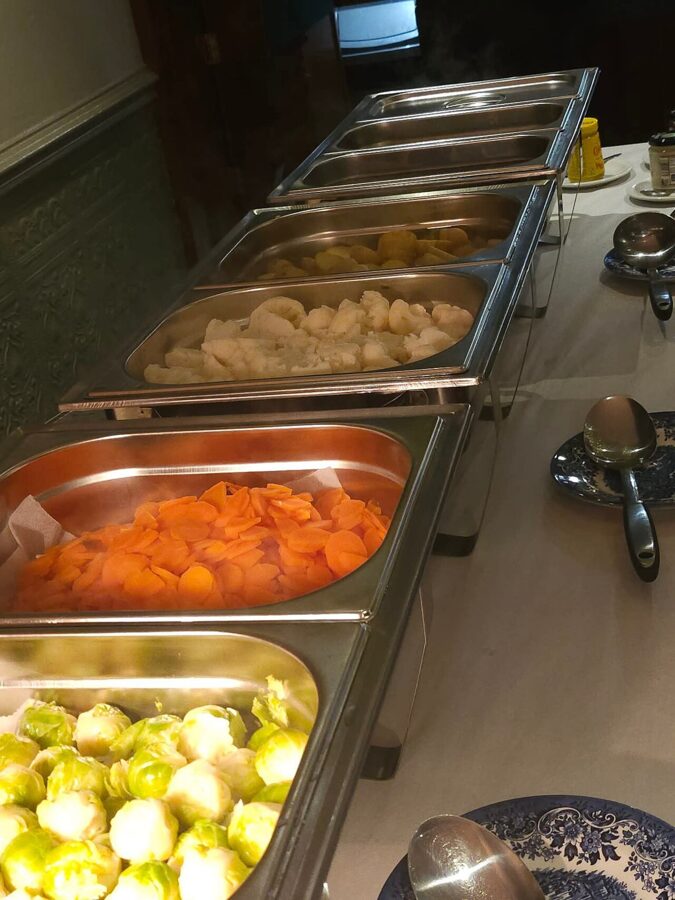
A carvery is a different meal, and it’s not to be sneered at. You queue, someone carves, you load your own plate from trays of vegetables, potatoes and puddings, and you pour your own gravy. For a family on a budget, or someone who wants three Yorkshire puddings and nobody watching, it’s hard to beat.
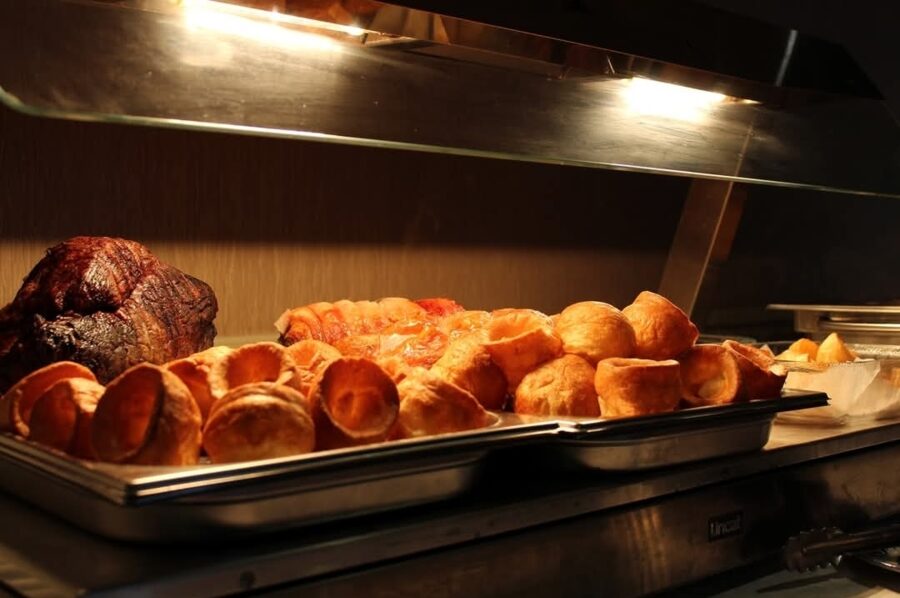

The trick is timing. Go at the start of service, when the joints are fresh from the oven and the potatoes haven’t been sitting under a lamp. By mid-afternoon the beef has been carved down to the dry end, the vegetables have been in the hot cupboard for hours, and the gravy has a skin you could skate on.

What to avoid
Every bad roast is bad in its own way, but the warning signs repeat: meat pre-sliced hours ago and kept in gravy to stop it drying out, and Yorkshire puddings all the same shape and size because they came frozen in a bag. Potatoes that are pale and soft, or deep-fried to fake a crust. Vegetables boiled to the colour of an old army blanket.
Then there are the pubs that charge for gravy, the ones that won’t take a booking but make you wait an hour at the bar, and the menu that lists a “roast” which turns out to be a slice of meat on mash with a pudding stuck on top. And the “Sunday roast” served on Wednesday from the same tray as Sunday’s, which is a theory I can’t prove and won’t name names on.
The single best test is to look at what’s coming out of the kitchen before you order. If the plates going past are steaming and the beef is pink, sit down. If everything is the same shade of brown and nobody near you is smiling, have a pint and a packet of crisps and eat somewhere else.
How to order, and what to drink
Book, and book for the start of service if you want the best of the beef. Say when you ring if you’ve got children or a dog, because a lot of pubs welcome both but will put you in a particular room. Ask about allergies before you go, not at the table on a busy Sunday.
At the table, say how you want the beef. Pink is the default in most good pubs, and they’ll cook it more if you ask. Ask for extra gravy on the side rather than more on the plate, ask for the horseradish if it isn’t there, and if your lamb has come with a Yorkshire pudding and you’re a purist, eat it anyway and keep quiet about it.
What to drink
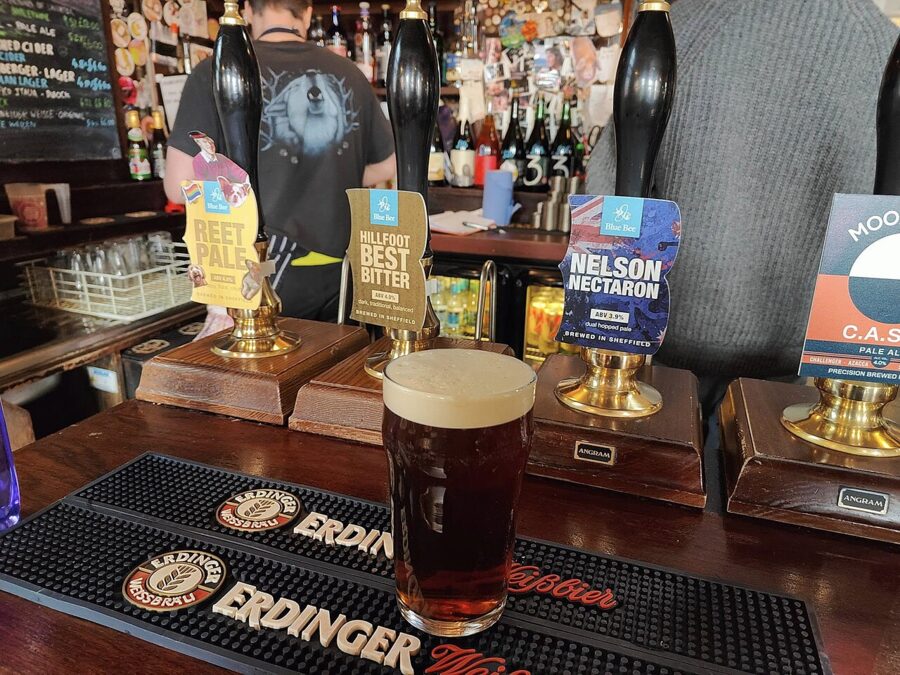
Beer was made for this. A best bitter, malty and not too hoppy, is the classic match for roast beef, cutting through the fat without fighting the gravy, and a dark mild or a porter does the same job with more weight. If you’re new to cask, my guide to real ale explains why the pint from the handpump tastes different from the one from the font.
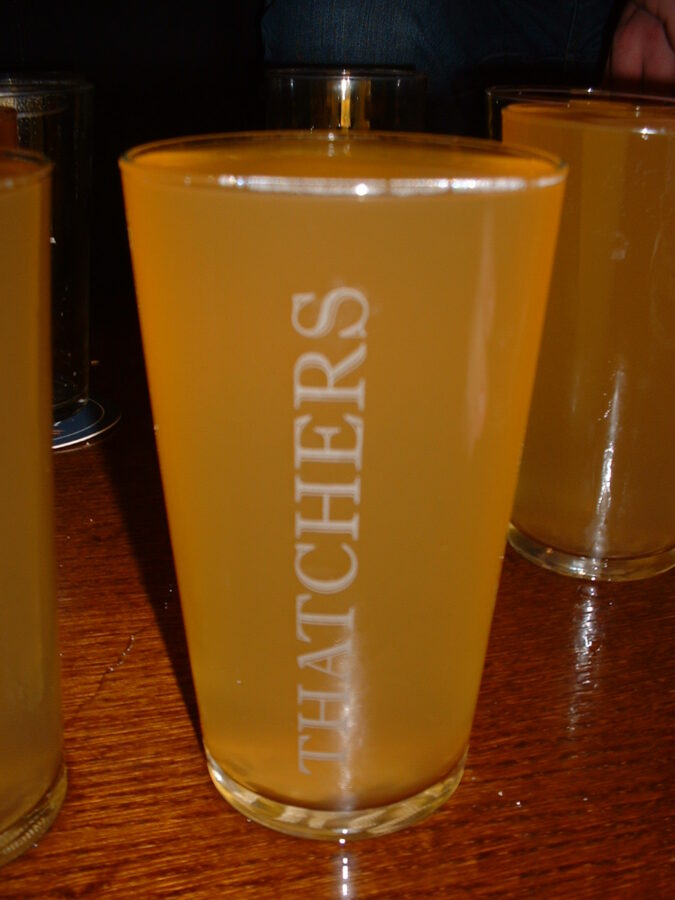
Cider goes with pork the way apple sauce does, and a dry West Country cider is a revelation next to crackling. With lamb, a red wine with some grip, a Rioja or something from the Rhône, is the safest bet. And with the starter, a Bloody Mary, which is the official drink of a Sunday lunchtime in Britain for reasons no one has ever explained.
Pace yourself, though. The roast is a two-hour meal in a warm room, and the pub that served it will still be open at 17:00 when you’re wondering where the afternoon went. Have a half with the meal and the second pint afterwards, by the fire, while someone else does the washing up.
The baker in 1794 had to have your dinner out of the oven by 13:00, and if you were late you went without. The pub is more forgiving, but not by much. Book for 12:30, ask for the beef pink and the gravy in a jug, and have a pint of whatever bitter is on the handpump while the kitchen does the rest.