
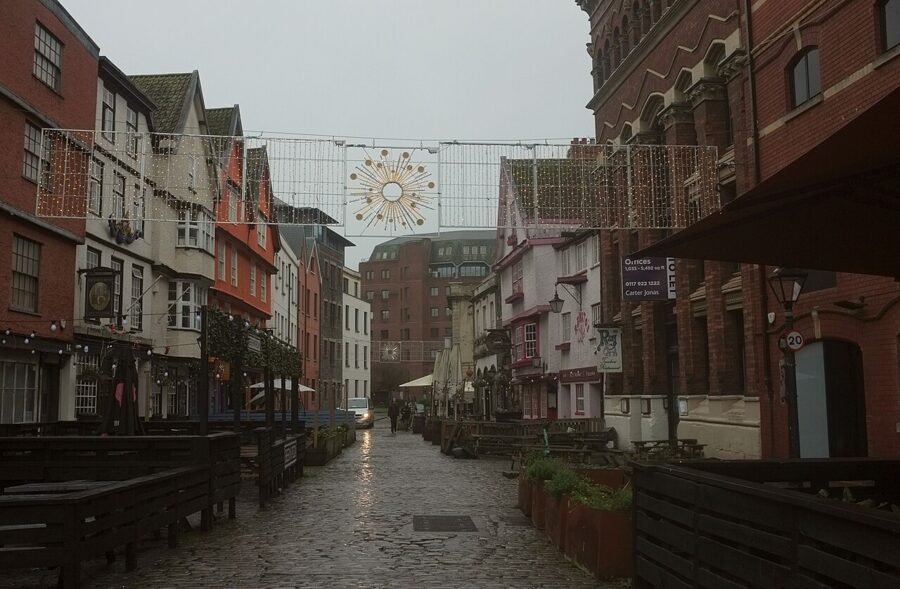
Stand in the middle of Bristol Bridge and nearly every old-city pub worth your evening is within ten minutes’ walk of your shoes. Behind you are the market lanes where merchants once settled their debts on bronze tables in the street. Ahead are the timber gables of King Street, a cider bar moored on a 1920s barge, and the spire of St Mary Redcliffe rising over the warehouses. No other part of the city packs so much good drinking into so small a space, and nowhere else comes close for age.
It is also the part of Bristol most people see first and understand least. The famous pubs are famous for stories, some true and some not, and the best pint is often poured down a side lane that the stag parties walk straight past.

The beer has a West Country accent. This is real ale country, with Bristol Beer Factory, Moor, Good Chemistry, Twisted Oak and Wiper & True on handpumps all over the old city, and at least half the pubs below keep a real cider too. Ask what’s on cask before you look at the fonts.
On this page
- The old city and how it fits Bristol
- King Street: the old city's drinking street
- Welsh Back and Baldwin Street
- Corn Street and St Nicholas Market
- Christmas Steps and the Centre
- Queen Square and Prince Street
- Redcliffe and Victoria Street
- Across Castle Park: the Stag and Hounds
- A walk through the old city
- Practical notes
- Where to end up
The old city and how it fits Bristol
The old city is the medieval core of Bristol, the knot of streets inside the line of the vanished town wall, plus the quays and reclaimed marsh just outside it where King Street was laid out after 1660. Drinking here is about history, live music and beer range rather than gardens, and it gets loud on Friday and Saturday nights. South across the water, Redcliffe holds the best run of serious beer pubs in the city. For everywhere else, from Clifton to Bedminster, start with the Bristol pubs overview.
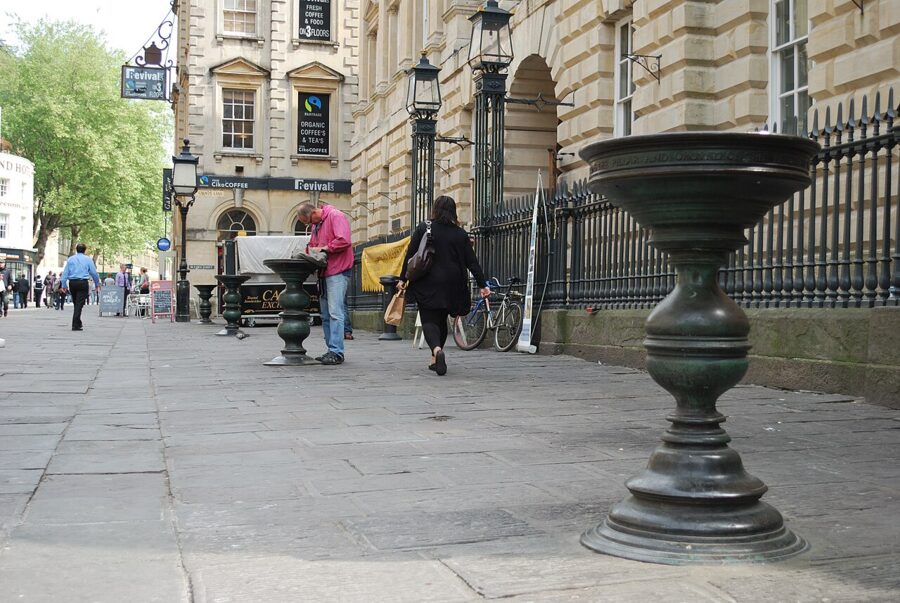

A port, a market and a lost wall
Bristol began as Brigstowe, the settlement by the bridge, on a ridge of rock between the Frome and the Avon. For most of the next eight centuries the money came off the water: wine, wool, tobacco, sugar and, from the late seventeenth century, the trade in enslaved Africans that paid for much of the Georgian city you will be drinking in. One pub below, the Seven Stars, played a part in the campaign that ended it.
In 1809 the river was locked off to make the Floating Harbour, and the quays filled with dockers and warehousemen who needed somewhere to drink. The big ships left for Avonmouth long ago, and the air raids of 1940 and 1941 flattened the streets east of the old city, which is why Castle Park is a park.
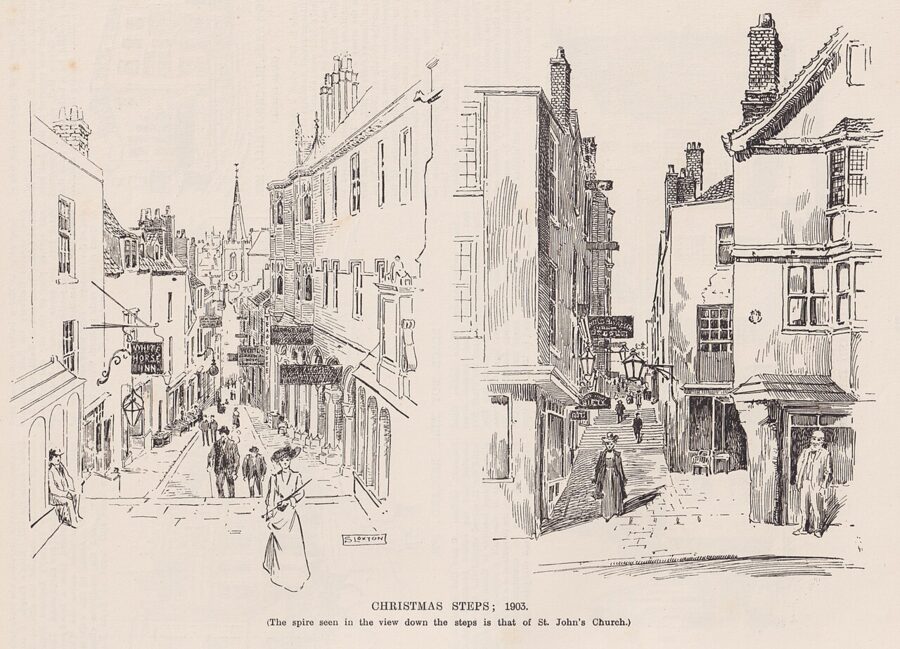
What survived is a lovely jumble: Georgian banks turned into bars, a market of 1743 that still trades, timber-framed houses older than the harbour, and several pubs that were pouring pints before it was dug. Most of the buildings below are listed by Historic England.
King Street: the old city’s drinking street
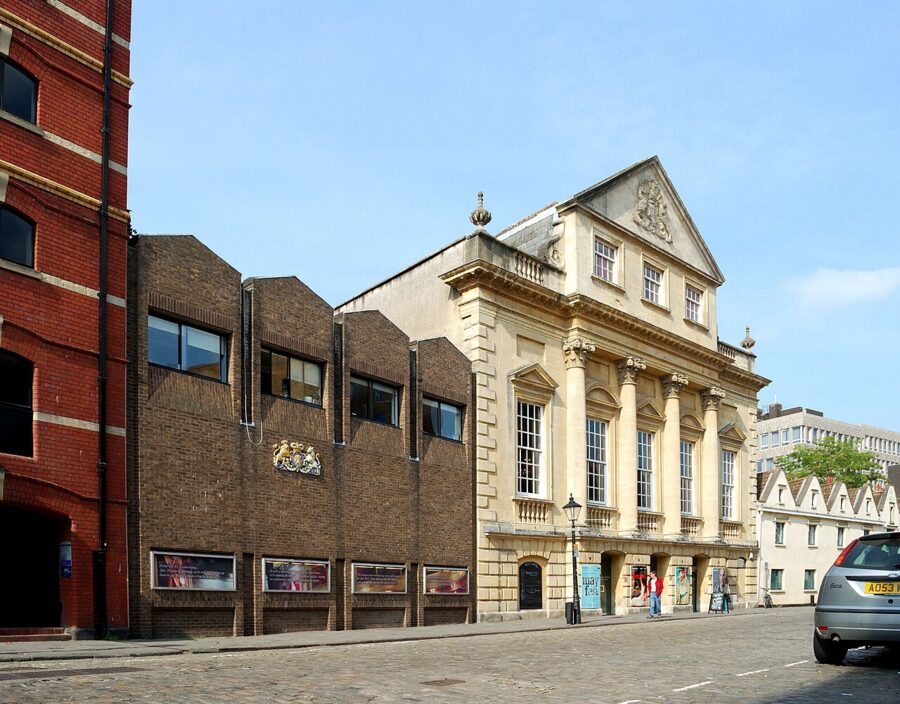
King Street runs from Queen Charlotte Street down to Welsh Back, cobbled and mostly traffic-free, with the Bristol Old Vic halfway along. On summer evenings the crowds outside the pubs merge into one. Come early in the week, or early in the evening, and you can still get served in under five minutes.

The Llandoger Trow
The Llandoger Trow is the building on the postcards: three timber-framed gabled houses of about 1665, listed Grade II* by Historic England. The name comes from the trows, flat-bottomed barges that sailed down the Wye from Llandogo and unloaded on the quay round the corner.
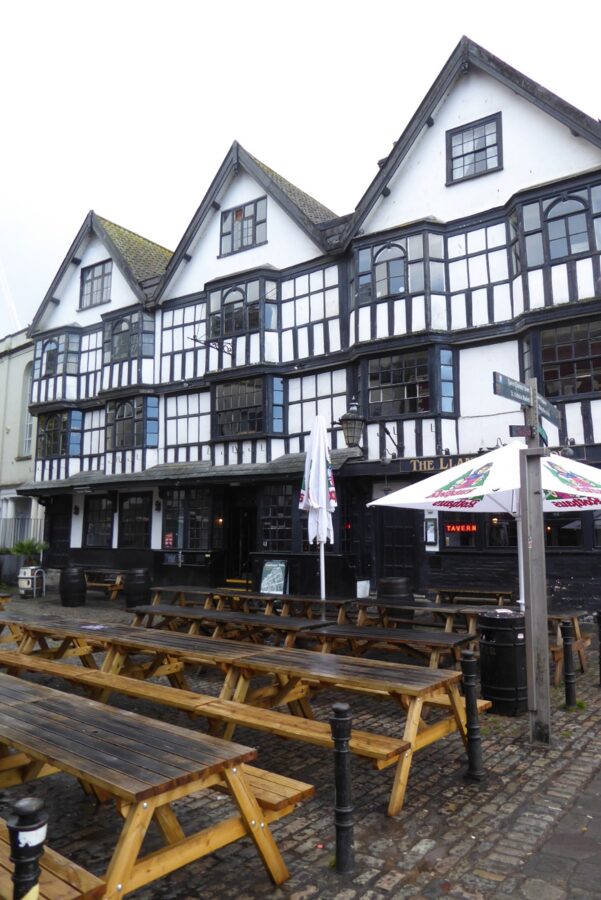

The stories come as standard: that Daniel Defoe met Alexander Selkirk here and went home to write Robinson Crusoe, and that Stevenson modelled the Admiral Benbow in Treasure Island on it. Nobody has produced evidence for either, so enjoy them as you would the ghost. Its age is weighed against the rest of the country in my guide to the oldest pubs in England.
Whitbread closed the pub in 2019, and it reopened in 2021 under new owners as a serious beer house: four or five cask beers from breweries such as Brass Castle, Cheddar Ales and Attic, about twenty-five keg lines and a good run of ciders. It takes cards only and opens at 14:00 on Mondays and Tuesdays, noon otherwise.
The Old Duke
Directly opposite, the Old Duke has been Bristol’s jazz pub since the revival of the 1960s. There is live music every night and on weekend afternoons, and entry is always free. The Severn Jazzmen have had the Monday slot since 1967, Tuesday is open mic, and the Old Duke Jazz Festival runs over the August bank holiday weekend.
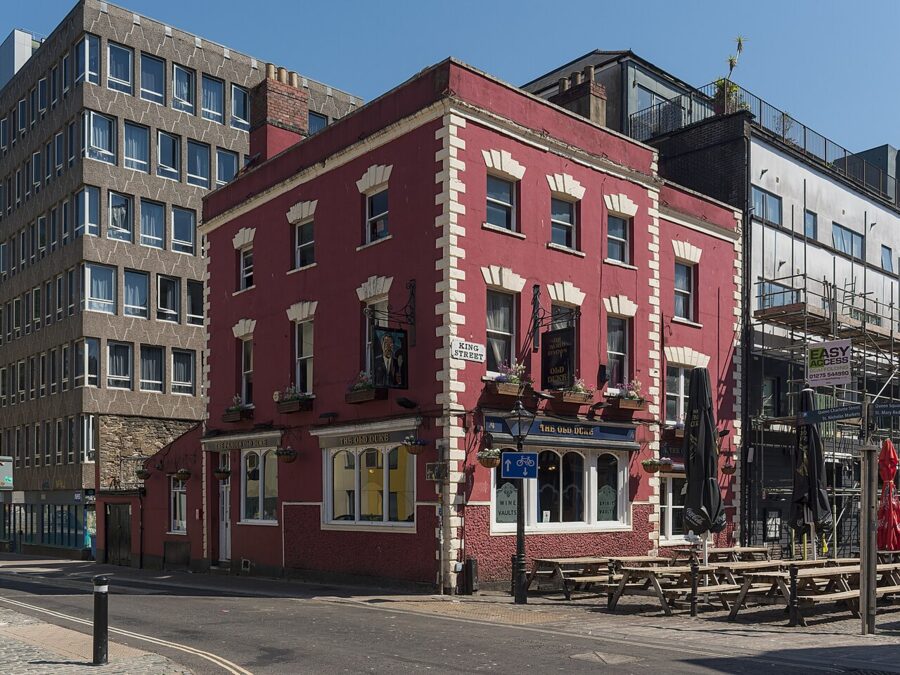

Go for the music, not the beer: Otter Ale, Doom Bar and Boltmaker are the regulars, with a couple of changing casks. When a good band is on the L-shaped room fills to the doors, so take your pint outside and listen through the window.
The Famous Royal Navy Volunteer
A few doors west, the Famous Royal Navy Volunteer, the Volley to its regulars, is the beer lover’s choice on King Street. It pours around thirty-five beers and ciders, up to seven on cask, in thirds, halves, two-thirds or pints. The pump clips are not on display, so read the board beside the bar; Bristol Beer Factory, Good Chemistry and Tiley’s are regulars.
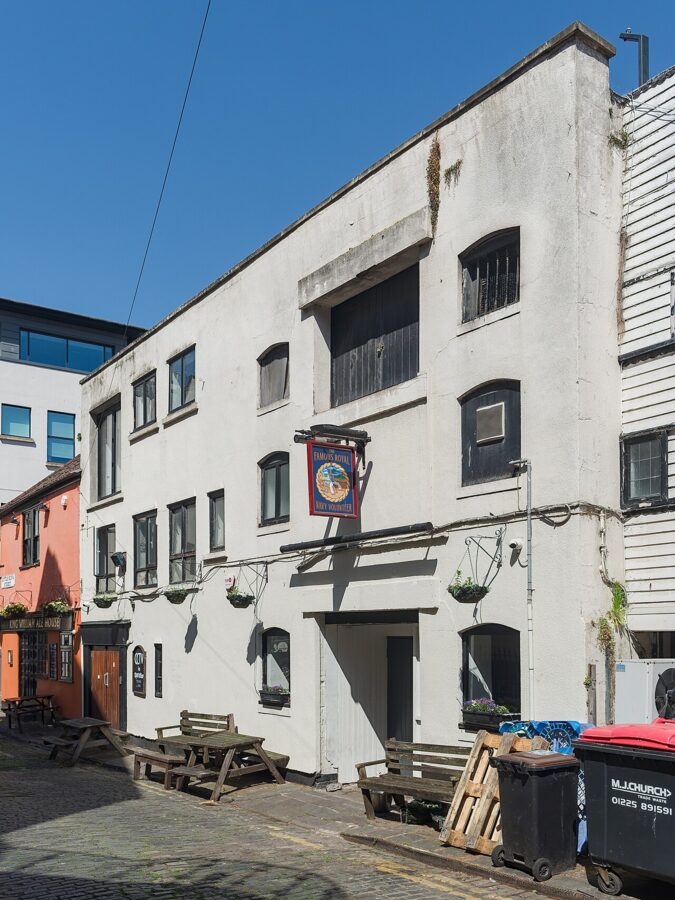

Inside is a run of seventeenth-century rooms with a real fire and a roof terrace. Food runs Wednesday to Saturday from 12:00 to 15:00 and 18:00 to 21:30, with a Sunday roast from 12:00 to 17:00 and nothing on Mondays or Tuesdays. Big rugby goes on the screens, and one old story has a landlady making dockers leave their cargo hooks behind the bar before she would serve them.
Small Bar, the Beer Emporium and the King Street Brew House
Small Bar, at number 31, is the craft beer bar the rest of Bristol measures itself against: two cask beers, about twenty-five other lines and a bottle list strong on Belgian and British sours. Everything comes in thirds, the kitchen does Asian fried chicken and tacos, and it takes cards only.
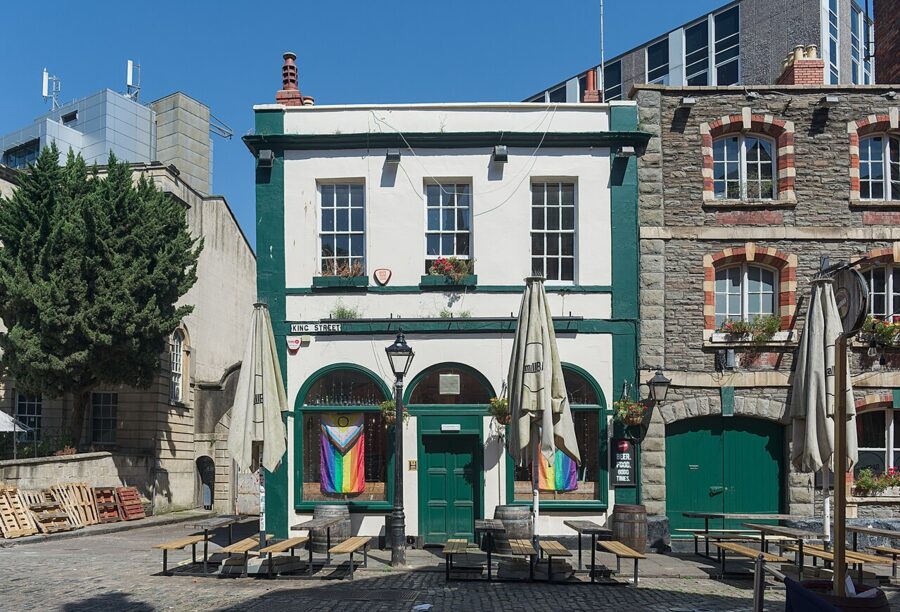

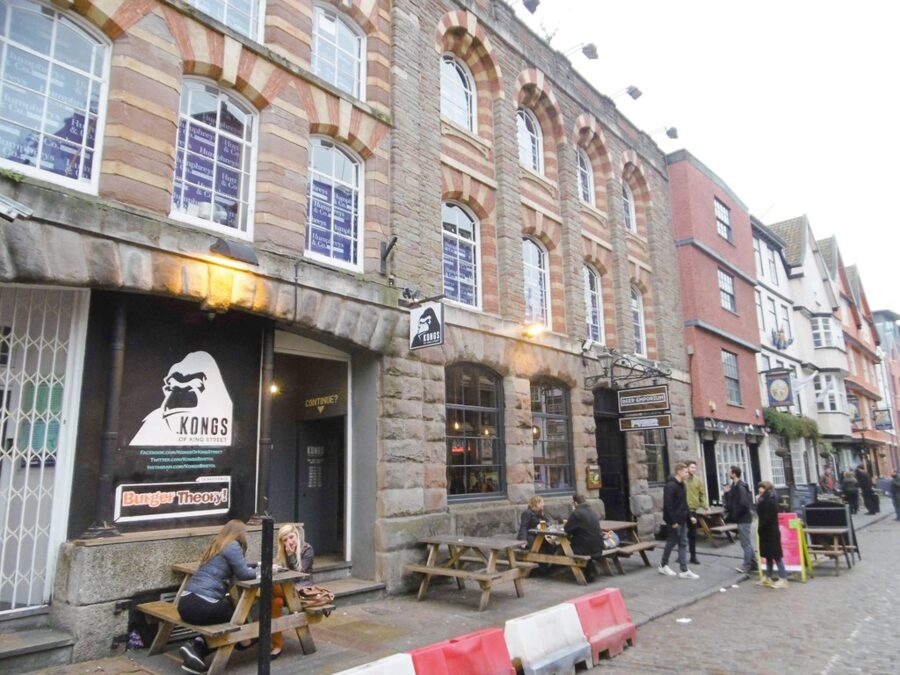
Further along, the Beer Emporium is a cellar bar in three brick tunnels under the street, with craft keg, pizza and pasta; the handpumps have gone. It shuts on Mondays and opens until 02:00 Tuesday to Saturday. At the Welsh Back end, the King Street Brew House brews its own cask beer, keeps up to six on and feeds people until 21:30; children and dogs are welcome, and cards only.

Welsh Back and Baldwin Street
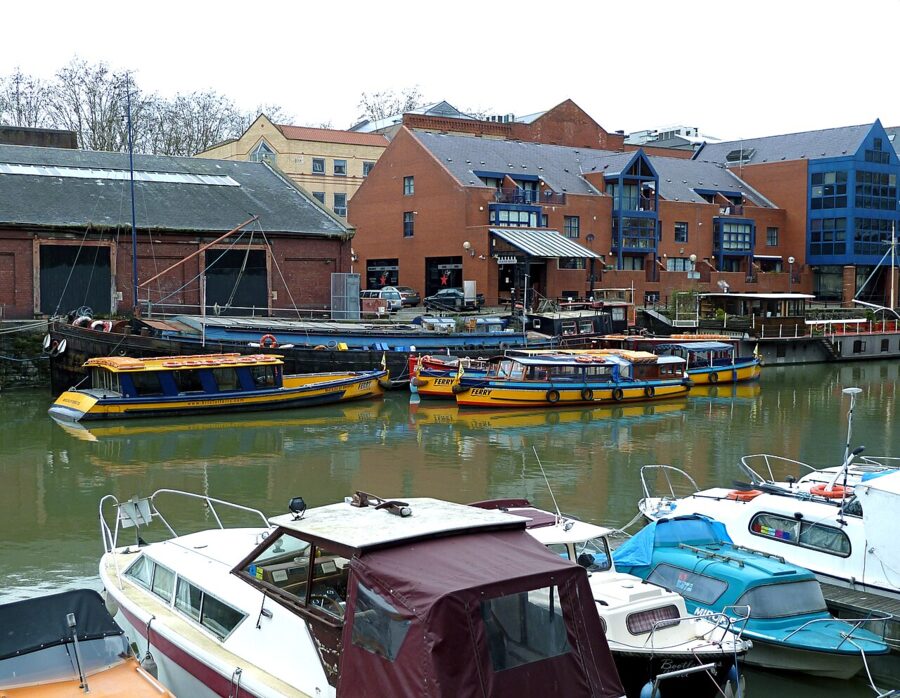
King Street ends at Welsh Back, the old quay where the trows from Wales tied up. The buildings open up, the water appears, and in summer everybody wants to be outside.

The Apple
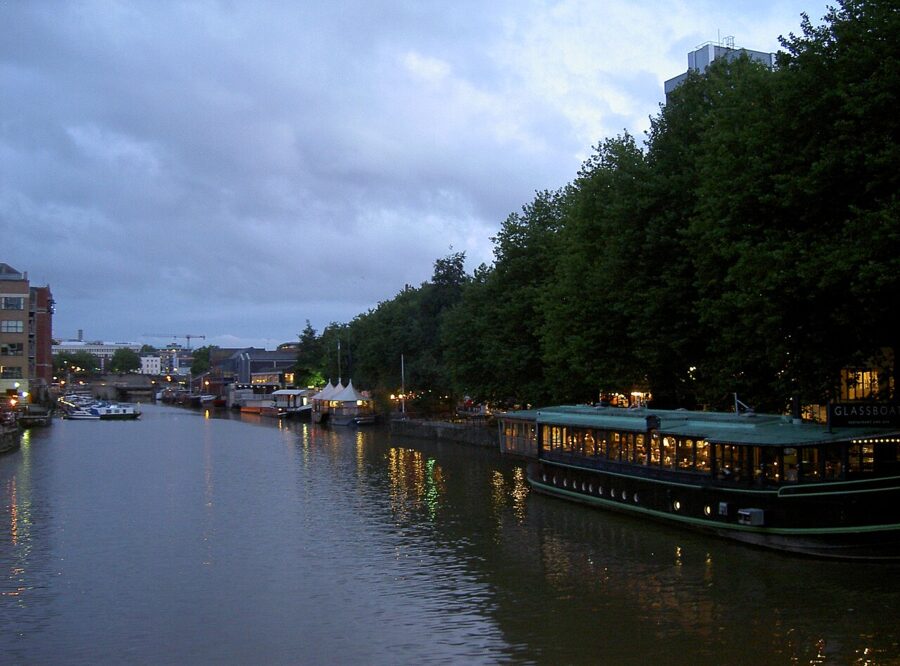
The Apple is a converted 1920s Dutch barge and Bristol’s cider bar, as the Old Duke is its jazz pub. It keeps around thirty ciders and perries in bottle, can and on draught, some poured straight from the barrel or the box, plus local beer in keg and can. Most of the drinking happens on the quayside terrace, which has its own bar, part cover and screens for big matches.
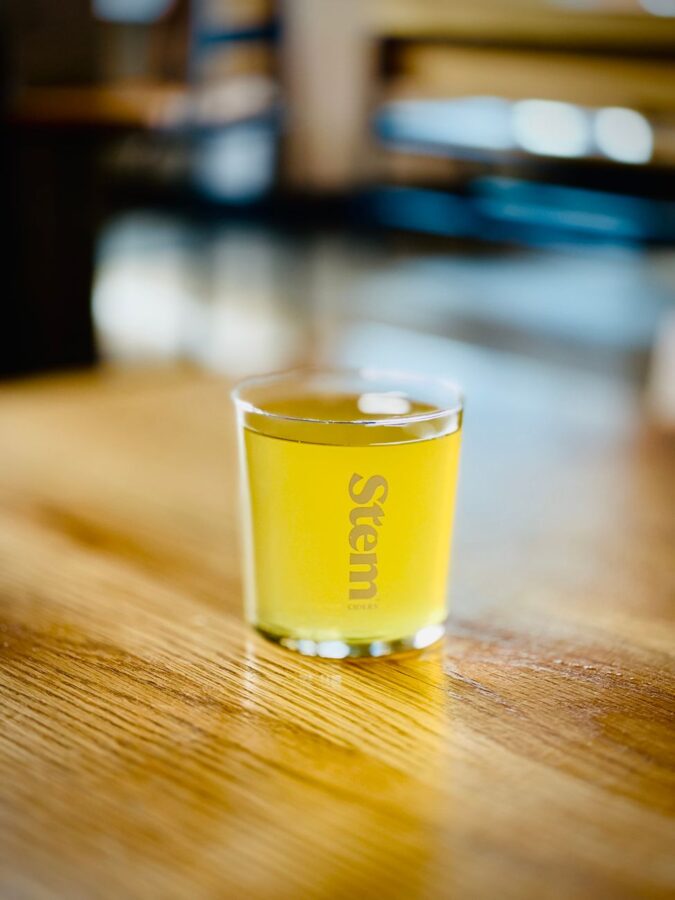
There is no food, but you can bring your own to eat outside, and it opens from noon until midnight (22:30 on Sundays). For more of the same, see my guide to Bristol’s cider pubs, and for the drink itself, the basics of cider.
The Old Fish Market
Up Baldwin Street, the Old Fish Market is Fuller’s pub in a Grade II-listed building that really was the fish market. It is a sport and food pub, with several screens, stone-baked pizzas and live jazz on Sundays at 19:00. The beer is ESB, London Pride and Oliver’s Island with two guests from the likes of Arbor and Moor.
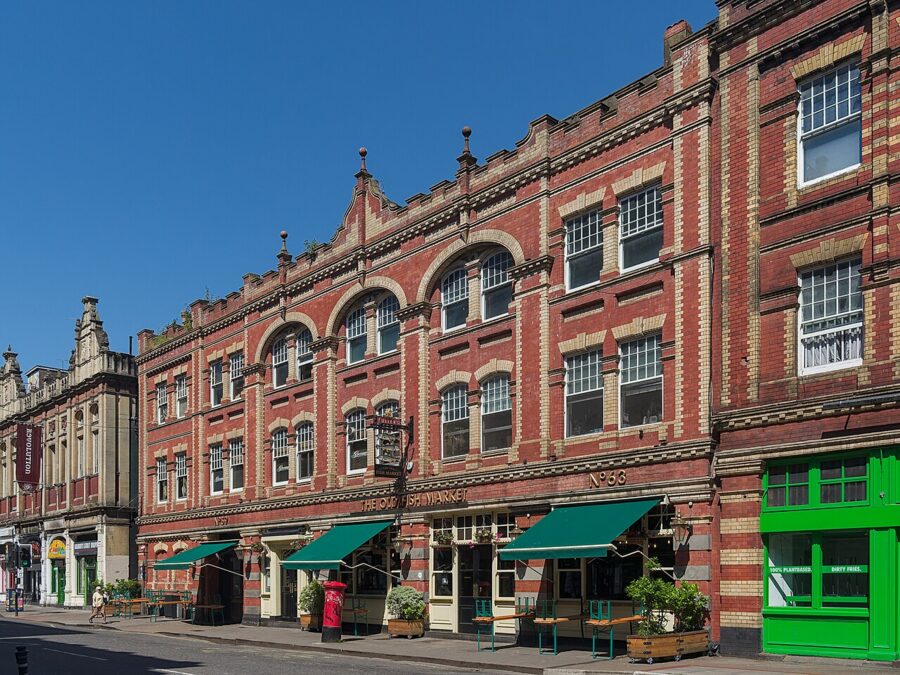

Useful rather than special: I’d use it when King Street is full and a match is on, or with children in tow. It is family friendly, dogs get a water bowl, and food runs until 21:30 most nights.
Corn Street and St Nicholas Market
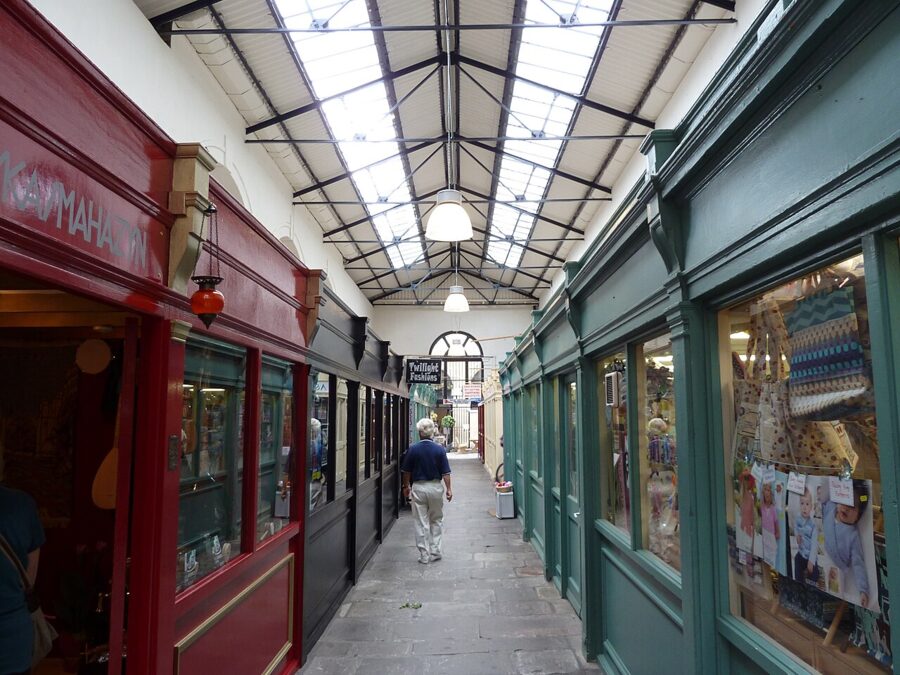
North of Baldwin Street the old city closes in. Corn Street was Bristol’s financial district, and many of its banking halls are now bars. Behind it, St Nicholas Market has traded since 1743, and its lanes lead out to All Saints Lane, Broad Street and John Street.

The Commercial Rooms
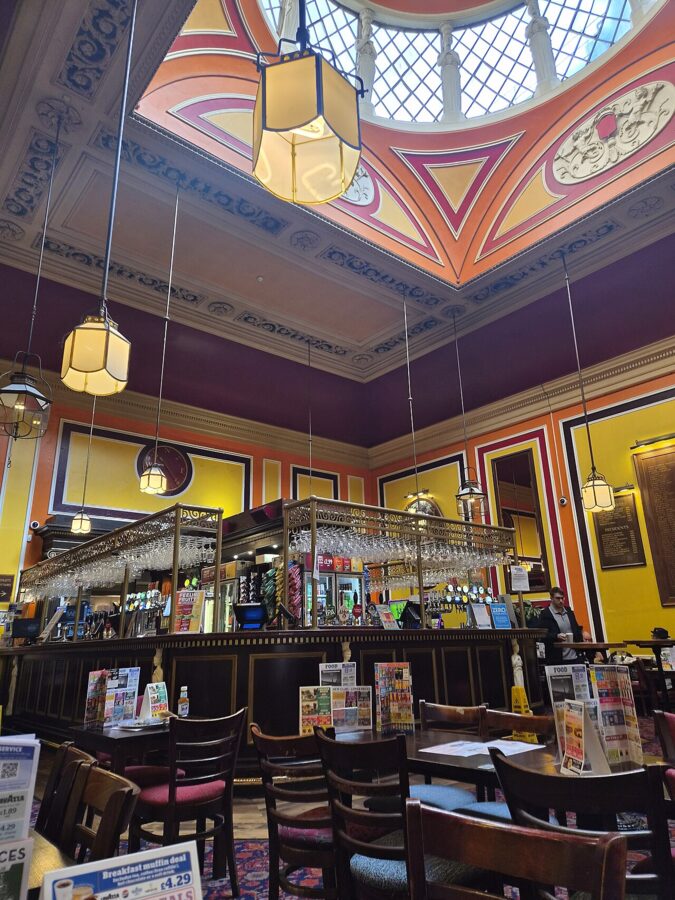
The Commercial Rooms was built in 1810 by Charles Busby as a club for the city’s merchants and is listed Grade II*. It became Bristol’s first Wetherspoon in 1995 and is one of the chain’s best conversions: a domed Great Room, a quieter galleried room at the back, and a dial on the wall linked to a weather vane, so members could see when the wind would bring ships up the Avon.
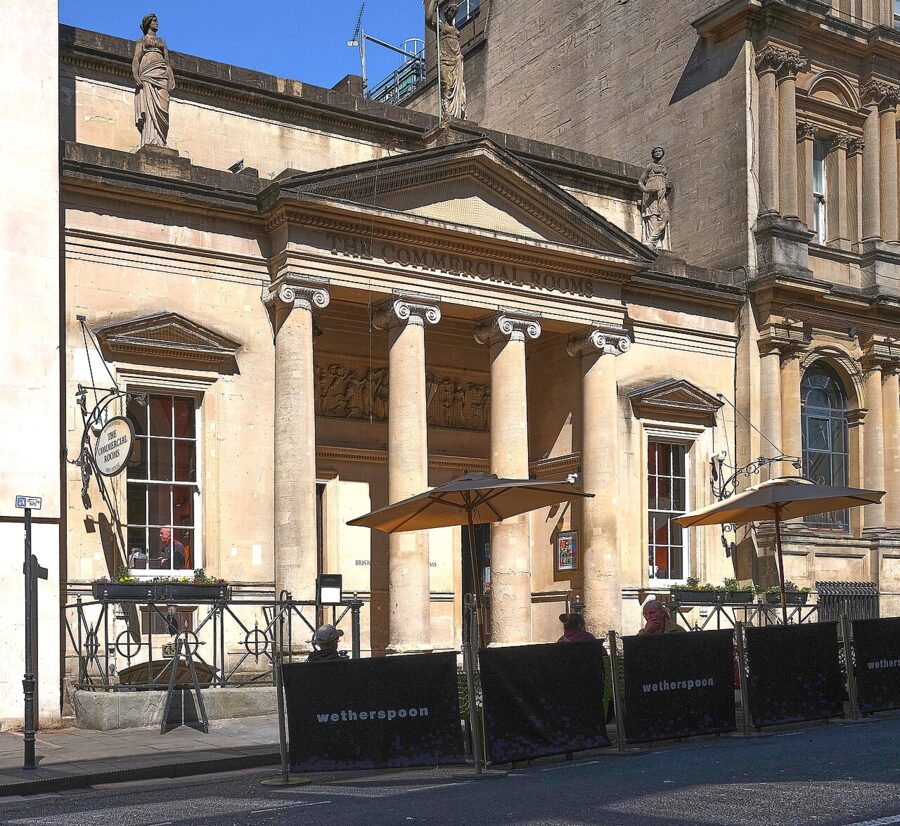

It opens at 08:00 daily with food until 23:00, three regular cask beers and three changing ones, often including a porter or stout. Head for the back room at busy times. Step-free access is by the side door on Small Street; ring the bell.

The Crown
The Crown in All Saints Lane has doors straight into St Nicholas Market and a vaulted cellar; its own history board says a pub has stood here since 1741. Mitchells & Butlers gave it up in 2021, and the team behind the Mother’s Ruin reopened it that November as a bar and music venue, with gigs and club nights downstairs.
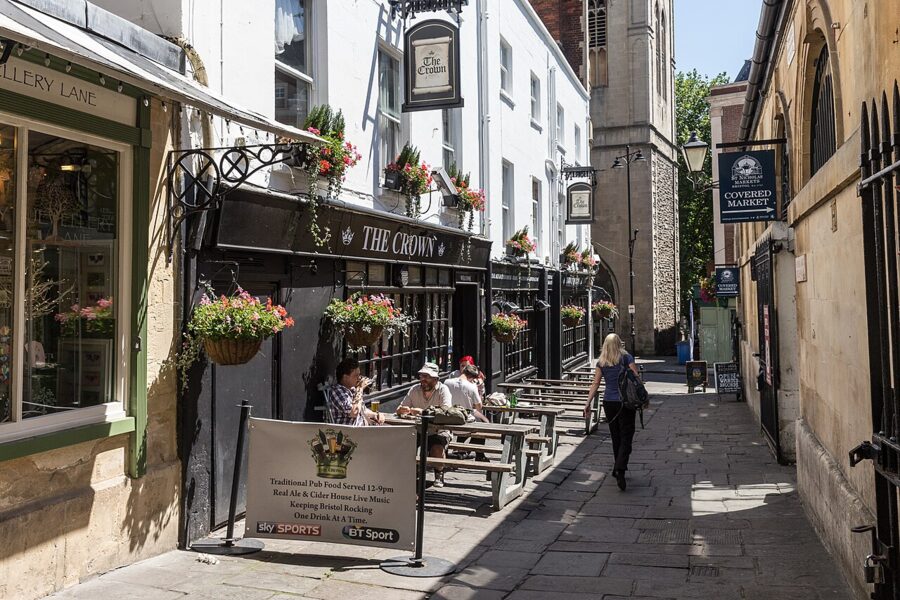

It is a late-night place, not a pint-of-bitter place. There is no cask ale, the screens show Sky and TNT sport, food runs from 12:00 to 22:00, dogs are welcome, and it is licensed until 03:00. If you are still going at midnight, this is where the old city ends up.
The Bank Tavern
The Bank Tavern on John Street is the best small pub in the old city, and you will walk past it twice before you find it. The mid-eighteenth-century building is probably named after Bristol’s first bank, which opened on the corner of Broad Street in 1750. Inside is one traditional room with bare boards and green settles, Draught Bass as the regular, three changing guests and a real cider.
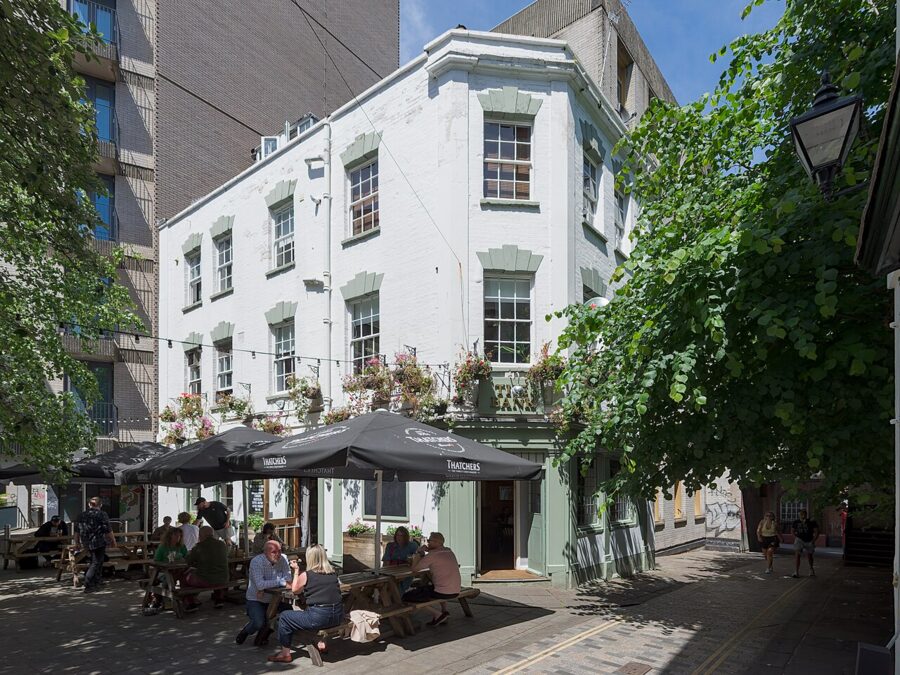

Food runs 12:00 to 16:00 daily, and the Sunday lunch is booked months ahead, so plan that one or forget it. Tuesday is quiz night, children are welcome until 21:00 and dogs any time.
Christmas Steps and the Centre
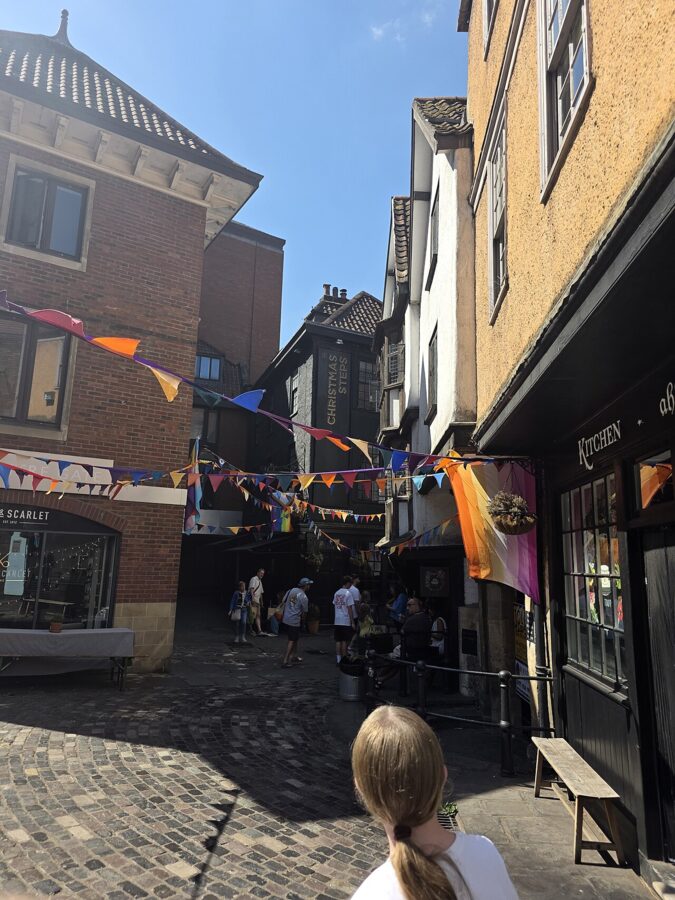
The north edge of the old city drops to the Centre, built over the River Frome, then climbs again. Christmas Steps is the climb: a stepped lane of small shops finished in 1669 and paid for by a wine merchant, Jonathan Blackwell. A plaque at the top says the street was “steppered done” that September.

The Christmas Steps
The pub at the foot of the steps traded for years as the Three Sugar Loaves, after an eighteenth-century sugar house nearby. The owners also publish Crack magazine, hence the free jukebox, and Twisted Oak brews their house beers. Expect at least four cask ales, recently including Bristol Beer Factory Milk Stout and Moor’s BristolBest, plus real cider and craft keg.
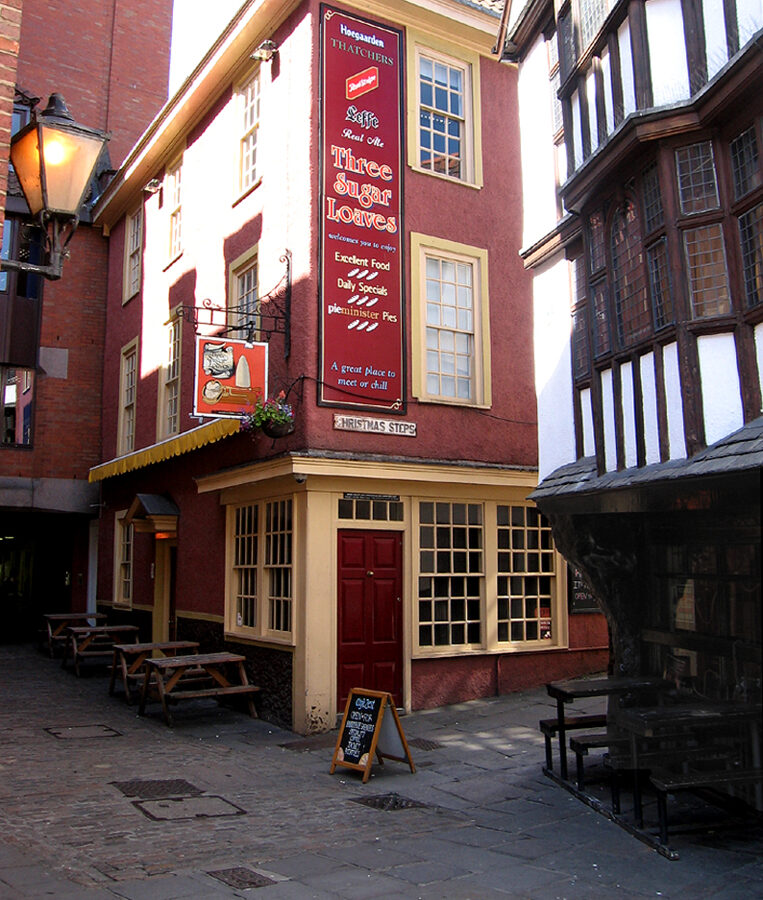

Now the age. The pub’s sign says c1600, but Historic England, which listed it in 1973, dates the building to about 1710. CAMRA’s local branch settles for “about 300 years old”. I’d go with Historic England; the low-beamed split-level rooms are old enough without the extra century.
It is a pub to eat in, with food until 21:00 Tuesday to Saturday, 17:00 to 21:00 on Mondays (when it opens at 17:00) and until 18:00 on Sundays. Cards only, children welcome in the daytime, dogs welcome, and the steep stairs are best tackled before the third pint. The top of the steps is the edge of Kingsdown, which has good pubs of its own.
The Gryphon
Two minutes up Colston Street, the Gryphon is a small triangular corner pub that the Good Beer Guide calls a shrine to dark beer and heavy metal, and it is both. Expect two to six fast-changing cask beers, many dark and strong, and the MetAle beer festival every March and September.
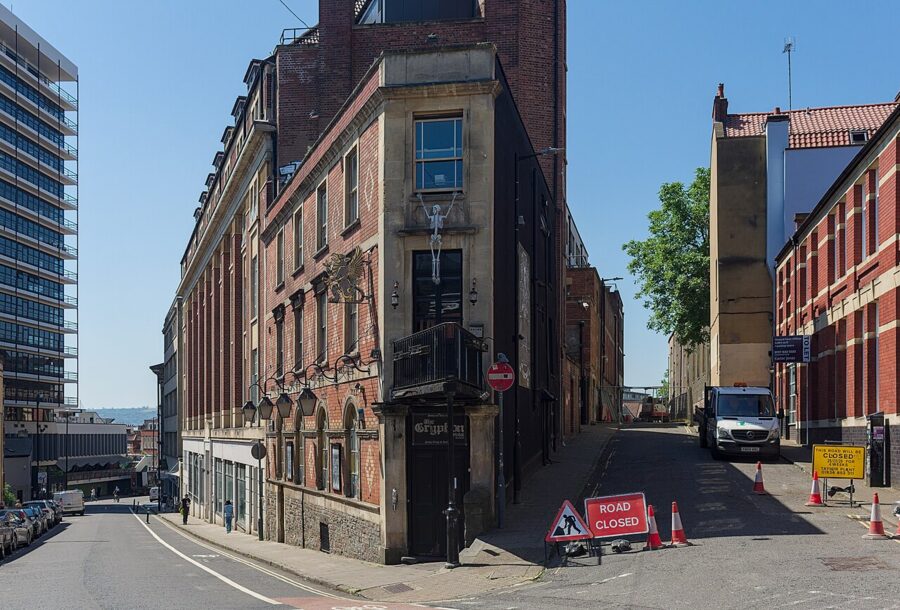

It is closed on Mondays, opens at 16:00 Tuesday to Friday, 15:00 on Saturday and 18:00 on Sunday, and serves no food.
The White Lion
Down at Quay Head, the White Lion is a one-room pub that claims to be the smallest in Bristol, and I won’t argue. It has been a pub since at least 1806. A section of the medieval town wall shows through a panel behind the bar, and the spiral stairs down to the gents are said to have come from the city gaol.
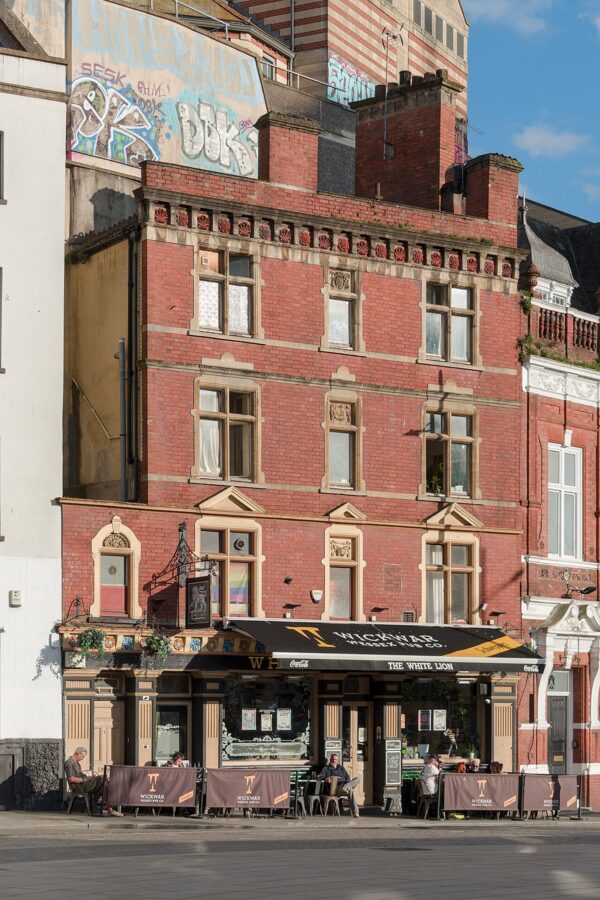

It is the Wickwar brewery’s flagship, so Wickwar’s BOB and Falling Star are always on with guests alongside. It opens 12:00 to 23:00 Monday to Thursday, until 23:30 on Friday and Saturday and 22:00 on Sunday. Old regulars still call it the cheese pub, after a display that once filled the back bar.
The Bunch of Grapes, now Smoke & Mirrors
On Denmark Street, opposite the Hippodrome’s side door, the old Bunch of Grapes now trades as Smoke & Mirrors, with close-up magic, weekend live music and comedy. It opens only on Thursday, Friday and Saturday evenings from 18:00 and serves no real ale. If you knew the Grapes, the long, narrow bow-windowed room is still there.
Queen Square and Prince Street
West of King Street, Queen Square was laid out in the early 1700s with the harbour beyond it on two sides. Two pubs at its southern corners make a good pair.

The Hole in the Wall
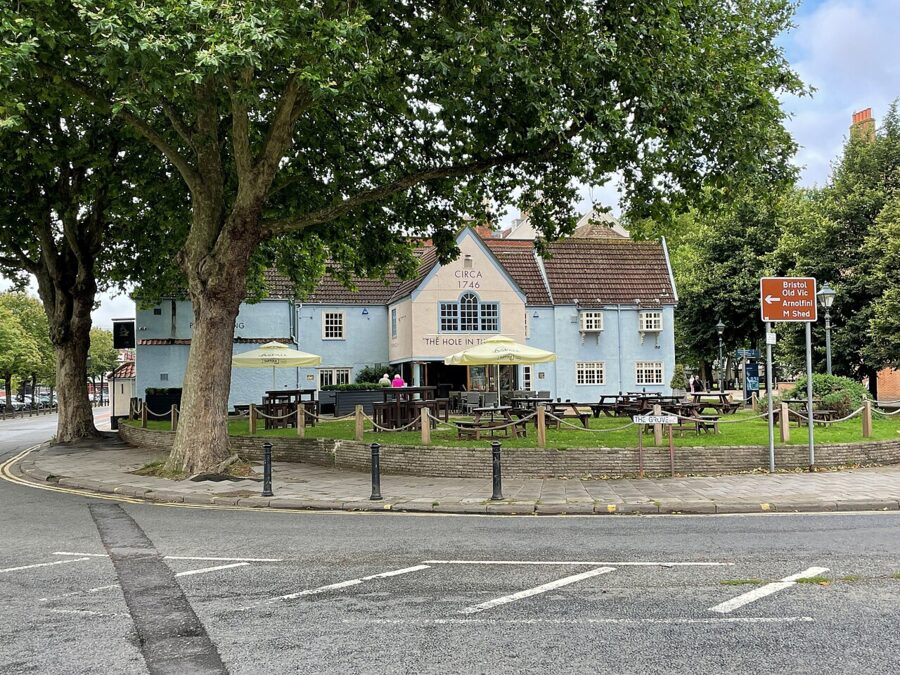
The Hole in the Wall takes its name from a spy-window through which drinkers watched for the press gang and the excise men. It is one of several Bristol pubs said to be the model for the Spyglass in Treasure Island, a claim on the same footing as the Llandoger Trow’s. Today it is a pub-restaurant with oak beams and a fire, St Austell’s Tribute and two changing beers, and food until 22:00 (21:30 on Sundays).
With that garden it is one of the few properly family-friendly pubs in the centre, and dogs are welcome. At lunchtime it is more restaurant than pub, so come after 21:00 if you only want a drink by the fire.
The Shakespeare Tavern
On Prince Street, the Shakespeare Tavern fills one of a pair of merchants’ houses of 1725 by John Strahan, listed Grade II*. The terrace was built for Bristol merchants, plantation owners and slave traders among them, and CAMRA credits the pub with the longest continuous ale licence in Bristol.
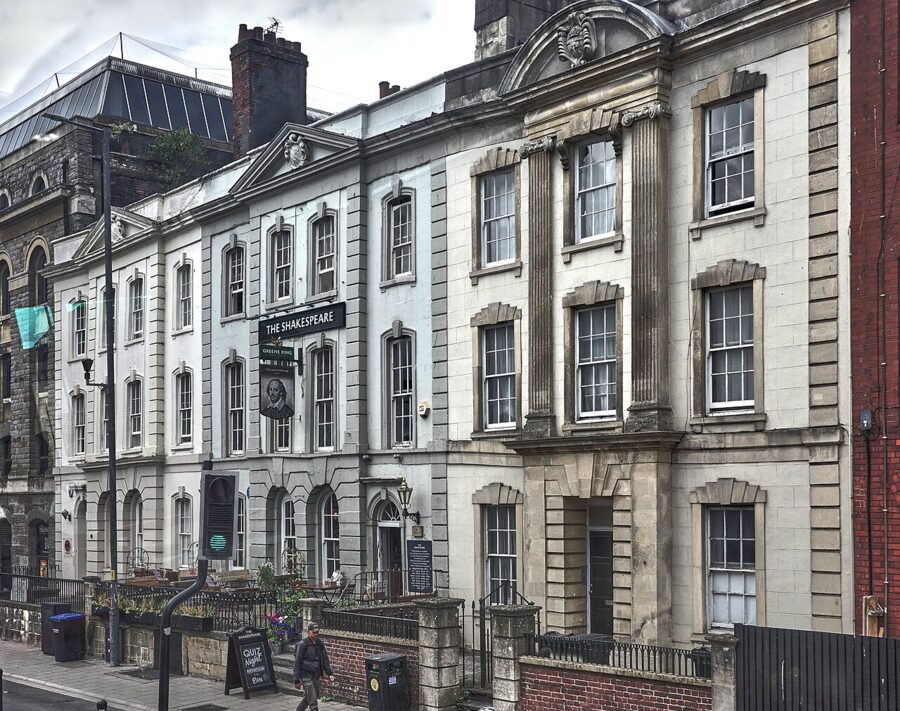

Greene King closed it for a refurbishment in November 2026, with reopening set for the end of that month. Before the work it had up to seven handpumps, food from 12:00 to 21:00 and a Wednesday quiz, so check what the new version offers before making a special trip.
Redcliffe and Victoria Street
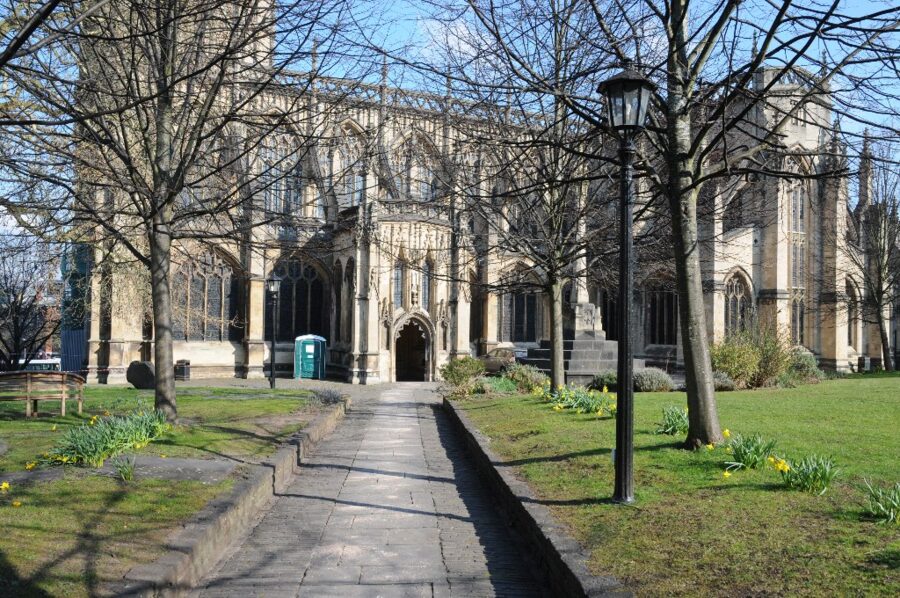
Cross the harbour at Bristol Bridge or Redcliffe Bridge and you are in Redcliffe, the old suburb south of the river, ruled over by St Mary Redcliffe. The pubs here are fewer and further apart than on King Street, and better. If you have one evening and care about beer, spend most of it on this side.

The Kings Head
Halfway down Victoria Street, the Kings Head has the most important pub interior in the city. CAMRA’s National Inventory of Historic Pub Interiors gives it three stars, its top grade, for a long narrow bar with a bar back of about 1865, one of the oldest known, and the Tramcar Bar snug at the rear, probably added around 1900. The building itself is a mid-seventeenth-century house.
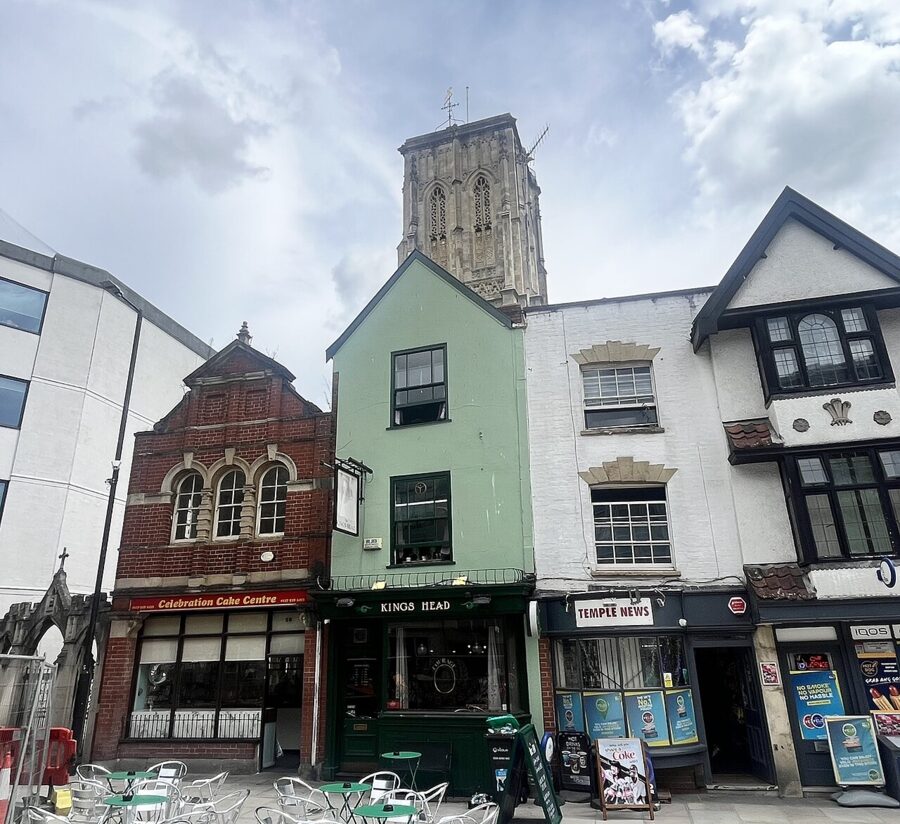

It is a first-rate beer pub too. Five changing cask ales come from small breweries such as Burnt Mill and Tiley’s, always including a dark one, and on Mondays every cask pint is £4. Food is cheese rolls and pickled eggs, or bring your own. It opens at 16:00 on Mondays and 14:00 on Sundays, is card only, and welcomes children until 19:00.
Ye Shakespeare
A few doors along, Ye Shakespeare has 1636 on its gable. The date is disputed, though the building is old enough to be listed Grade II. The front bar has had a pale modern refit that will split opinion; the more traditional back bar is reached by walking between the ladies’ and the gents’.
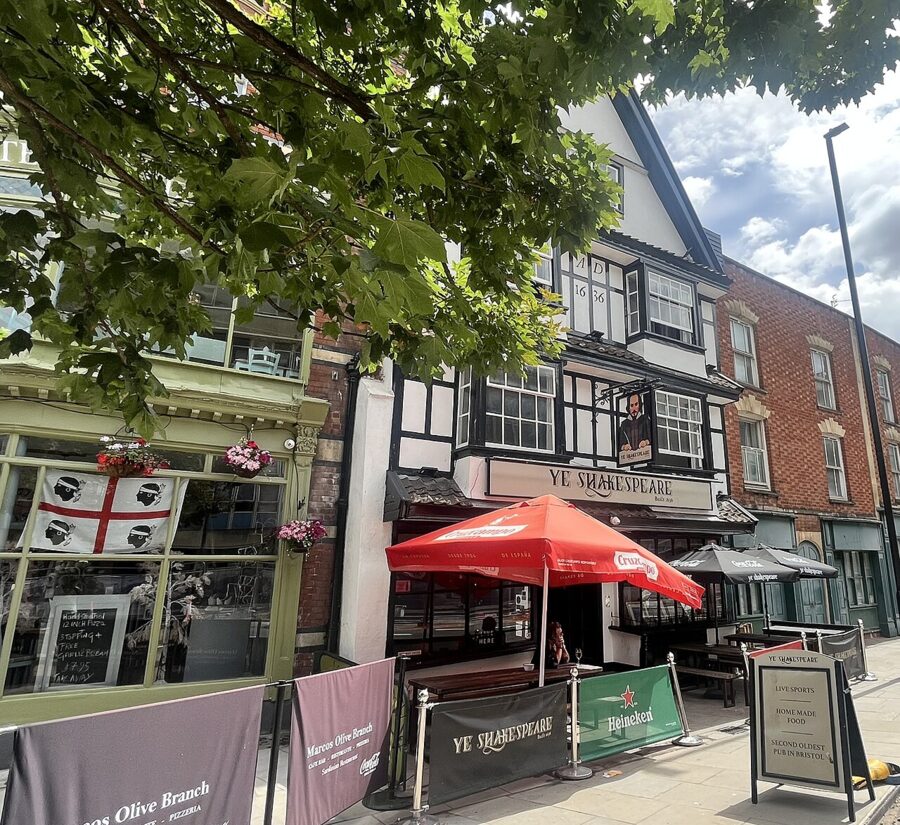

It is the street’s sport pub, with Sky and TNT, and serves food from 12:00 to 21:00 Monday to Saturday. Cask is limited to Bath Ales’ Gem, so I’d drink one here and spend the rest of the beer budget at the Kings Head.
The Seven Stars
Down Thomas Lane, beside the Fleece music venue, the Seven Stars has the most important history of any pub in Bristol. In 1787 the abolitionist Thomas Clarkson used it as a base while he gathered evidence about the slave trade from the sailors who drank here, and a plaque outside tells the story. Historic England dates the building to the eighteenth century; the pub’s own claim of the late 1500s is better treated as a toast than a fact.
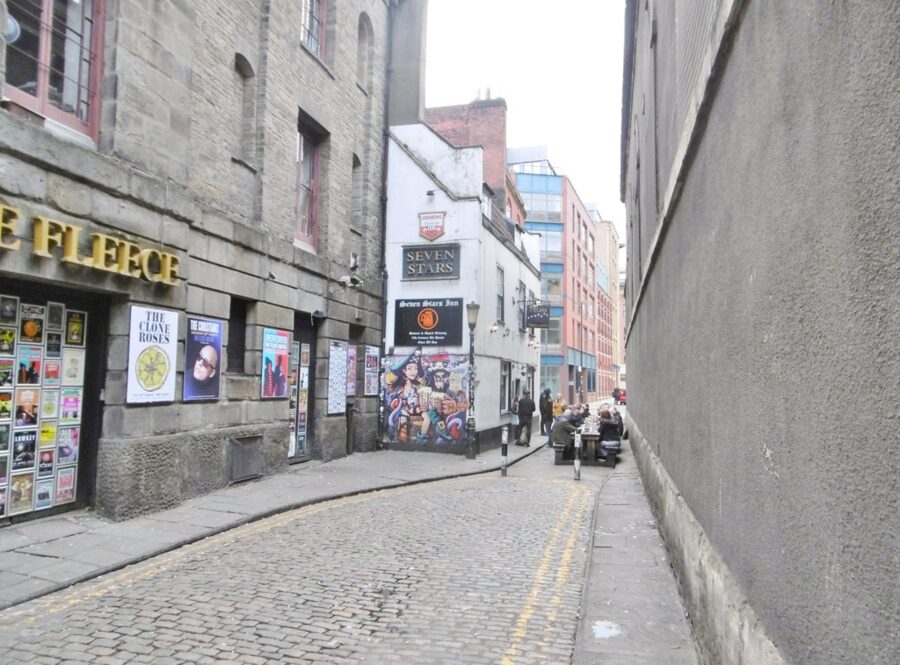

Today it is a one-room free house that lives for beer: five changing guest ales, two real ciders on handpump, a log burner, a jukebox and a ten-ale festival every other month. There is no food, but you may bring your own, and dogs are welcome.
The Cornubia
Round the corner on Temple Street, the Cornubia is a pair of late eighteenth-century houses, listed Grade II, marooned among office blocks with a garden wrapped round the front and side. It is named after a nineteenth-century paddle steamer and was once the tap for George’s brewery nearby. Many Bristol drinkers would put it first.
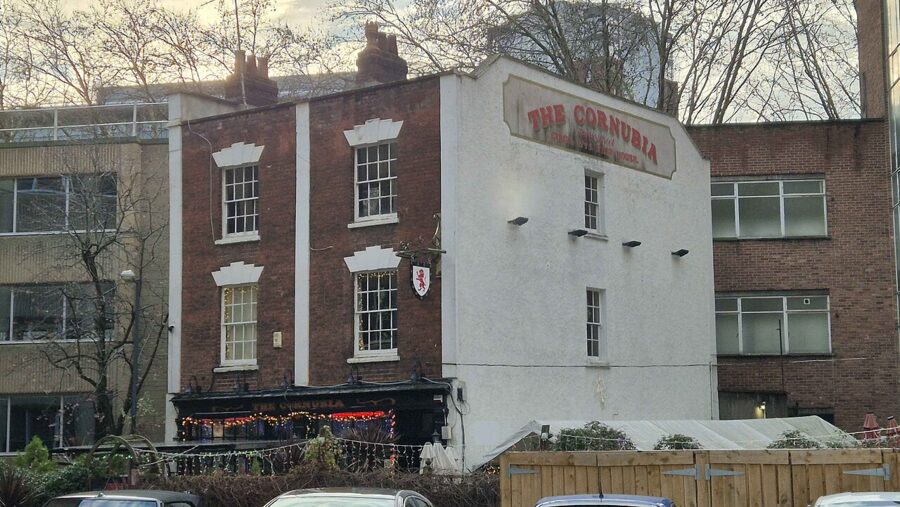

Six changing ales, usually more than one dark, sit beside a house beer from Twisted Oak and two real ciders on handpump. Food is pies, sausage rolls and scotch eggs. It opens 12:00 to 23:00 Monday to Saturday and is shut on Sundays, which catches people out every week.
The Bridge Inn
East across the water on Passage Street, the Bridge Inn is one of the smallest pubs in Bristol and the last on its street, easy to spot by the giant portrait of Jimi Hendrix on its wall. Inside are gig posters, board games, Belgian bottled beers, around thirty malt whiskies, and a regular Quantock pale ale with three changing beers.
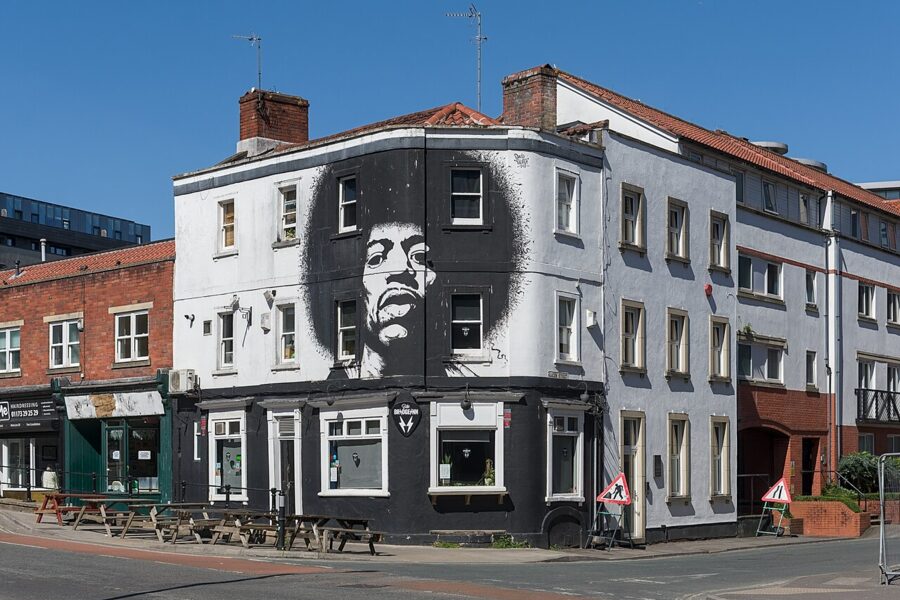

Lunches from Tuesday to Friday, 12:00 to 14:30, are popular with office workers, and on Sunday evenings there is a cheese board. It opens at 16:00 on Mondays and Sundays, and dogs are welcome.
The Portwall Tavern
Opposite St Mary Redcliffe, the Portwall Tavern is a one-bar Victorian pub of 1847 on the line of the Portwall, the medieval wall that once enclosed Redcliffe. A 2018 refurbishment brought tall seating, padded booths and ornate mirrors, and it is on the city council’s local heritage list.
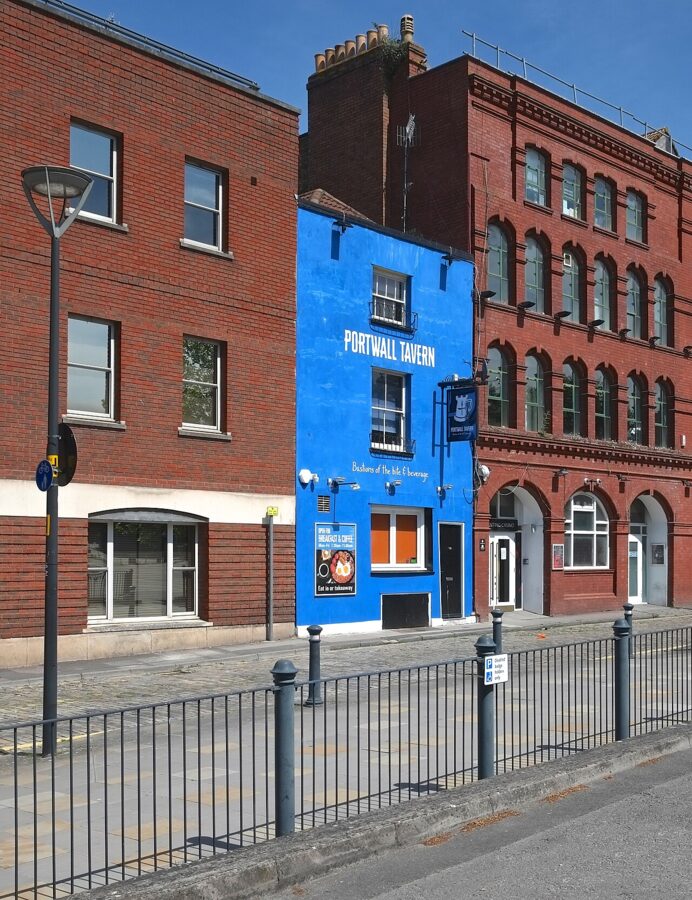

The three changing casks are usually brewed within fifteen miles, by the likes of On Point and Wiper & True, and a mild turns up more often than in most Bristol pubs. Lunch runs 12:00 to 14:30 on weekdays, pizza 17:00 to 21:30. It is closed on Sundays.
The Golden Guinea
Guinea Street once held at least four pubs, and the Golden Guinea is the survivor: an early eighteenth-century building on a street with connections to the Royal African Company, the chartered company at the centre of the English slave trade. Inside it is the backstreet local everyone wishes they had, with wooden floors, flock wallpaper and mismatched furniture.
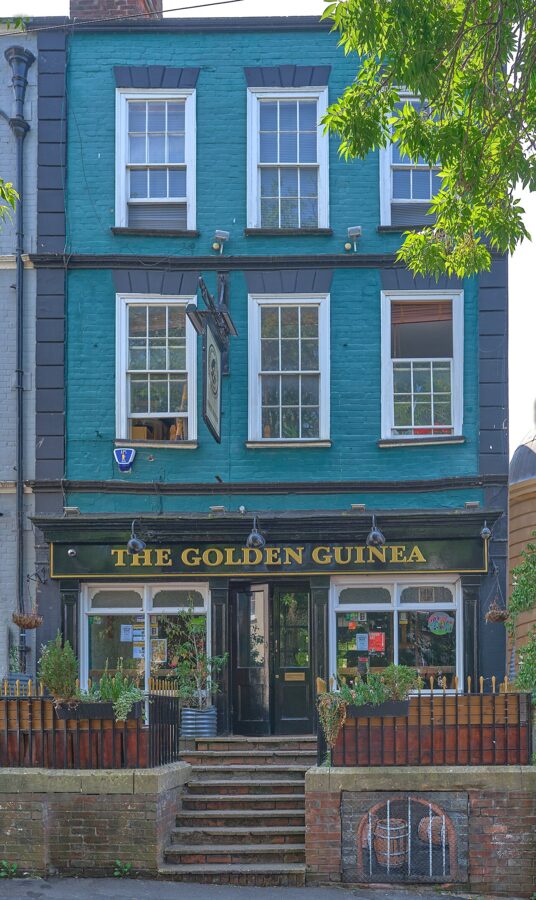

Four changing cask beers come from breweries like Arbor, New Bristol and Wiper & True, with a house Guinea Best brewed by St Austell and Branch cider on tap. It opens at 16:00 Monday to Thursday and 13:00 from Friday, dogs on leads are welcome, and Sunday is open mic night.
The Ostrich
At the bottom of the hill, the Ostrich sits on Bathurst Basin, an eighteenth-century dockside pub that has kept its name since before 1775. It is Butcombe’s now, with Butcombe Original and Rare Breed on cask, and behind it in the sandstone are the Redcliffe Caves, dug for glassworks sand and ships’ ballast.
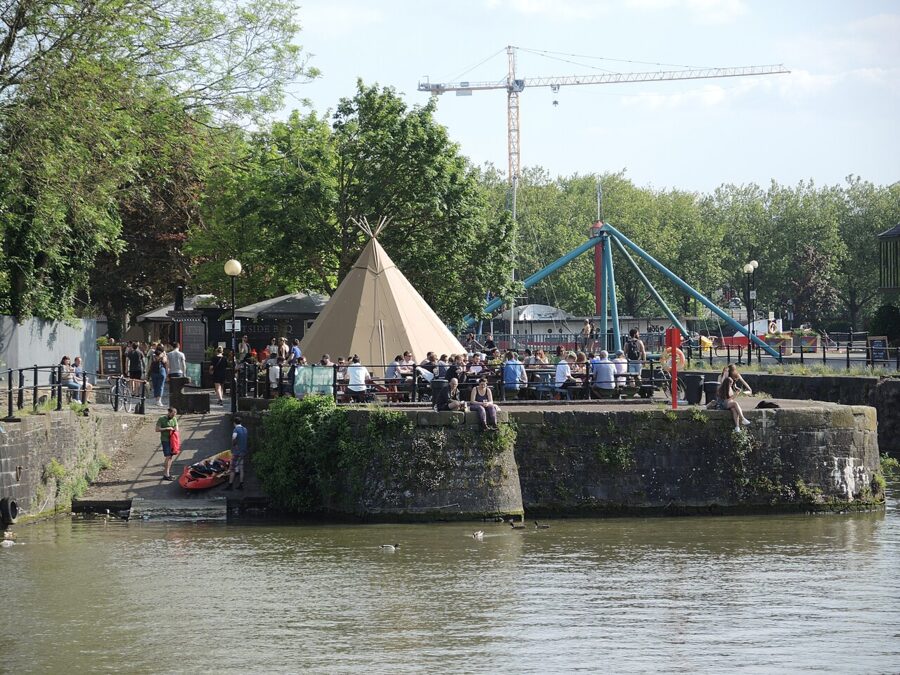

The quayside terrace with its outside bar is the draw, and there is a restaurant upstairs. Food runs 12:00 to 21:00 daily, and children and dogs are welcome. It is the one pub on this side where the view matters more than the beer.

Across Castle Park: the Stag and Hounds
One pub east of the old city earns the detour. The Stag and Hounds on Old Market Street is a Grade II-listed former merchant’s house with an oak staircase, a stone-vaulted cellar and a Victorian pump in the yard. The last Pie Poudre court in the country sat here, settling disputes between traders at the city’s fairs and markets.
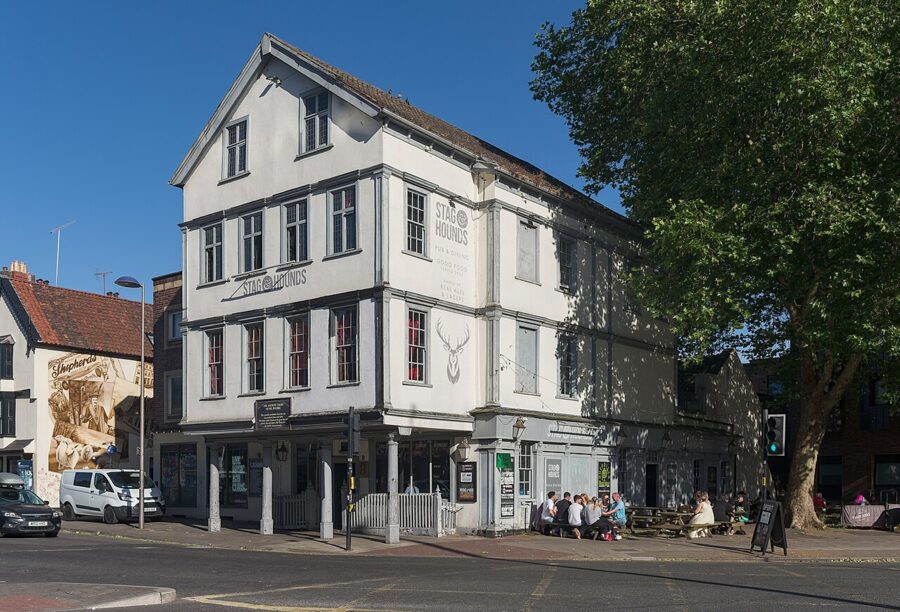

Bristol Beer Factory’s Fortitude is the regular, the kitchen does smashed burgers (not on Mondays), and there is jazz every Sunday from 17:00. Old Market runs on east towards Easton, but that is another walk.
A walk through the old city
This route takes about three hours with one drink at each stop. It is flat apart from one optional climb and one gentle rise. Start at noon on a weekday; on Sunday, swap the Cornubia for the Seven Stars and skip the Portwall.
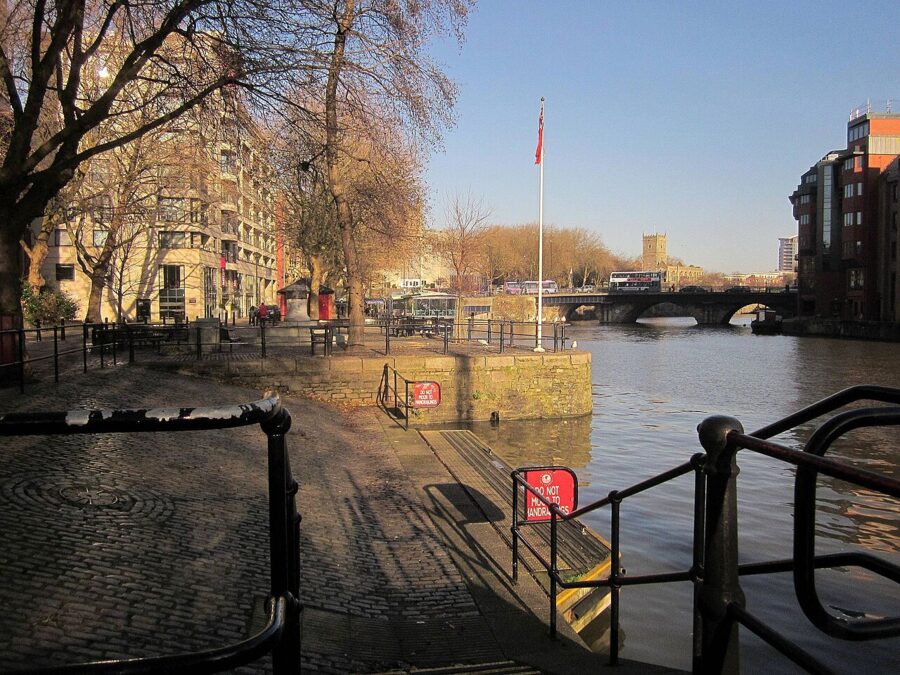

- The Bank Tavern, John Street. A Bass, and lunch if you booked months ago.
- The Christmas Steps. Seven minutes via Broad Street and the Centre. Climb the steps after for the view; two steep minutes.
- The Commercial Rooms or the Crown. Eight minutes back through the market: the dome by day, the Crown after dark.
- King Street. Five minutes via Baldwin Street. The Volley for beer, the Llandoger Trow for the building, the Old Duke if there is a band.
- The Kings Head. Eight minutes over Bristol Bridge to Victoria Street.
- The Seven Stars and the Cornubia. Two and four minutes on. Read Clarkson’s plaque, then pick the darkest thing on the bar.
- The Portwall Tavern and the Golden Guinea. Ten minutes south with a gentle rise to St Mary Redcliffe, then five minutes to Guinea Street.
- The Ostrich. Two minutes downhill to finish on the quay.
From the Ostrich, Temple Meads is fifteen minutes east along Redcliffe Way. Or cross the Bathurst Basin footbridge and follow the harbour west towards Hotwells, where the pubs sit by the water.
Practical notes
Getting there
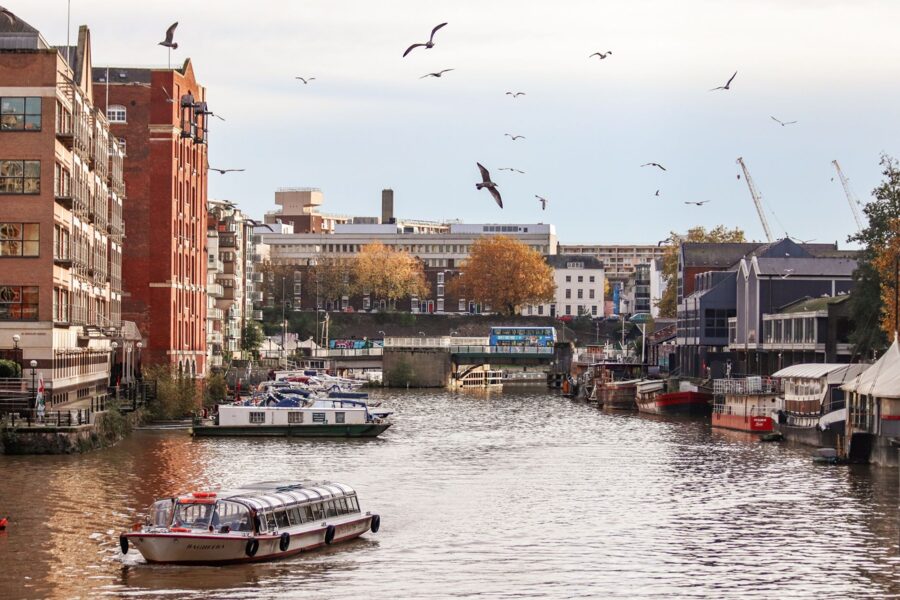
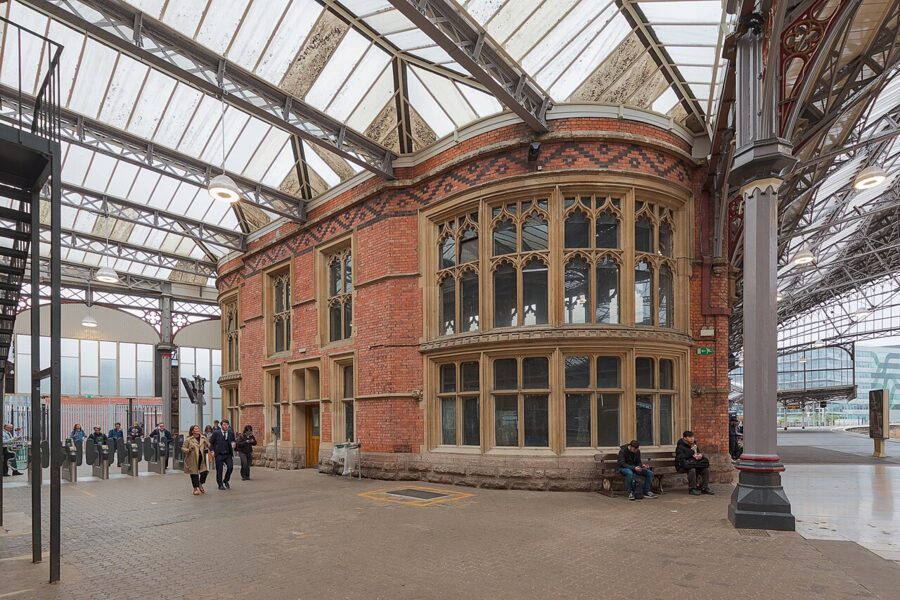
Bristol Temple Meads is the main station, about fifteen minutes’ walk from King Street and closer still to the Kings Head and the Cornubia. Nearly every city bus stops at the Centre, a few minutes from Christmas Steps and Corn Street.

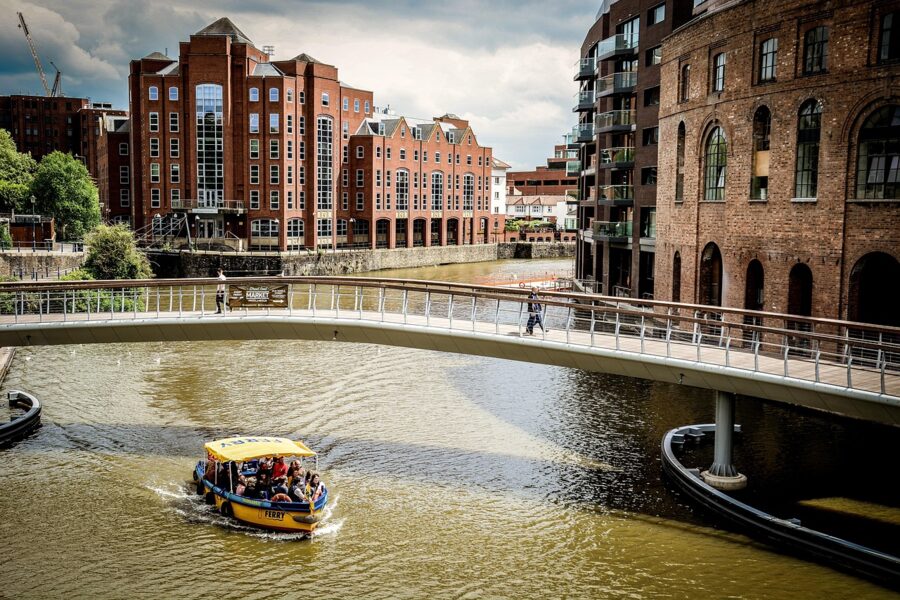
From Clifton or Hotwells the harbour ferries are the pleasant way in, calling at Welsh Back, but check the time of the last boat. If you drive, the Grove car park by Queen Square is three minutes from the Old Duke, and the centre is inside Bristol’s Clean Air Zone.
Opening quirks
- Closed on Sundays: the Cornubia and the Portwall Tavern. Closed on Mondays: the Beer Emporium and the Gryphon.
- Late starts: the Kings Head and the Christmas Steps on Mondays, the Llandoger Trow on Mondays and Tuesdays, Small Bar Monday to Wednesday, the Golden Guinea Monday to Thursday.
- The Shakespeare Tavern was refurbished in late 2026; check its current hours.
- Card only: the Llandoger Trow, Small Bar, the Christmas Steps, the King Street Brew House and the Kings Head.
- Late licences: the Crown until 03:00, the Beer Emporium until 02:00, most of King Street until 01:00 at weekends.
Match days and big nights
Bristol City and Bristol Bears both play at Ashton Gate, south-west across the river, and big games fill the pubs with screens: the Old Fish Market, the Volley, Ye Shakespeare and the Crown. During the Six Nations the Cornubia and the Seven Stars fill well before kick-off. Friday and Saturday nights on King Street are crowded whatever is on, so if you want a seat, cross to Redcliffe.
Dogs and children
Dogs are welcome in most of these pubs, including the Cornubia, the Seven Stars, the Kings Head, the Bank Tavern, the Christmas Steps, the Volley and the Ostrich; at the Gryphon it is the landlord’s call. For children, the Ostrich, the Hole in the Wall, the Portwall Tavern and the Old Fish Market are easiest, and the Bank Tavern takes them until 21:00.
Where to end up
The old city’s great trick is that the famous pubs and the good pubs are a few minutes apart, so you never have to choose for long. See the Llandoger Trow, hear a band at the Old Duke, then walk back over Bristol Bridge to where the beer gets serious. Finish at the Cornubia on a weekday or the Seven Stars on a Sunday, order whatever is darkest on the bar, and Temple Meads is ten minutes away when you want the train.