
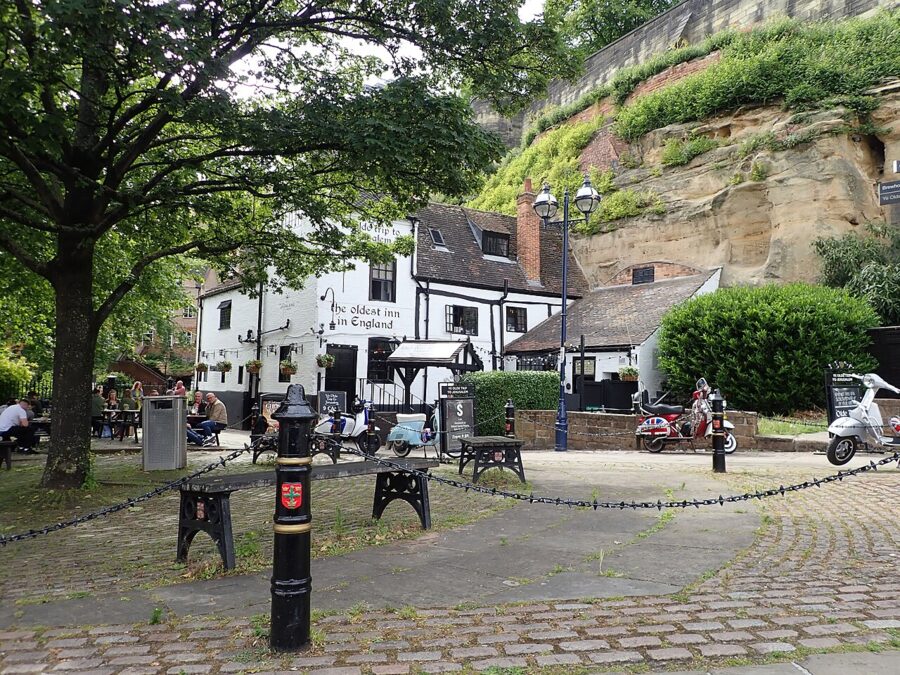
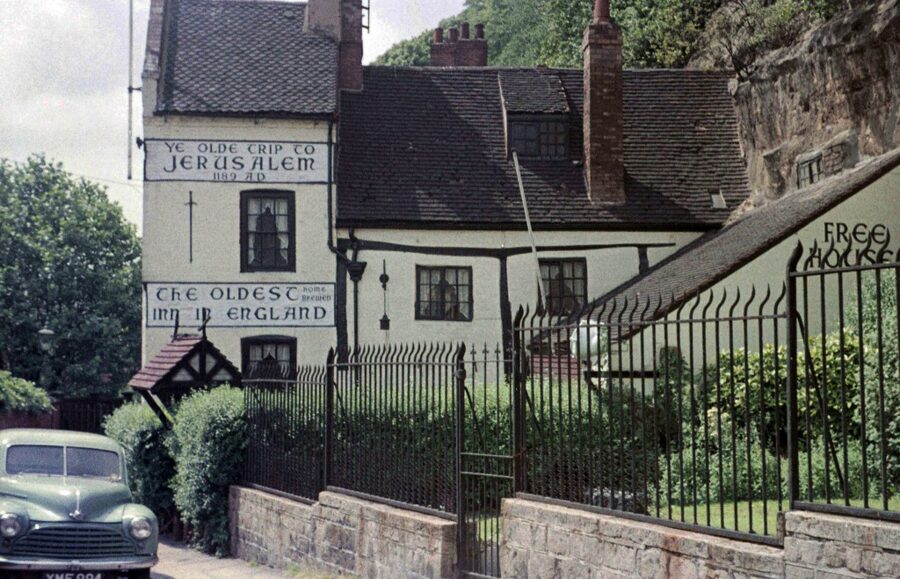
Painted in black capitals on the corner of a pub at the foot of Nottingham’s Castle Rock is a promise: “ye olde trip to Jerusalem, 1189 AD, the oldest inn in England”. Historic England’s listing for the building, revised in 2023, says the date has been on that wall since at least the nineteenth century and that no record supports it. The timber frame behind the paint went up around 1680. The pub is still well worth the walk from the station, but not for the reason on the sign.

That gap between the sign and the building is the whole subject. More than two dozen English pubs claim to be the oldest in the country, and in October 2026 the argument finally got something close to a referee. Dr James Wright, a buildings archaeologist who has worked with Historic England, put the George Inn at Norton St Philip in Somerset at the front of the queue, on the strength of its stonework, its documents and tree-ring dates from its timbers. Guinness World Records, which several of these pubs still quote on their walls, quietly retired the category back in 2000.

What follows is each of the famous claims in turn: what it rests on, what the evidence says, and whether I would go anyway. The answer to the last question is nearly always yes. Every pub here is still open and pulling pints, which matters rather more than the date painted on the gable.


On this page
- The short version, for anyone settling a bet
- Why "oldest pub" is such a slippery title
- The George Inn, Norton St Philip: the one with evidence
- The famous claims, one by one
- Medieval inns that never needed a painted date
- What listings and tree rings have settled, and what they haven't
- London, in one paragraph
- If you meant Britain: Wales and Scotland
- Visiting them: the practical table
- Where I'd start
The short version, for anyone settling a bet
If you only need the verdicts, here they are. The detail, and the case for visiting each one regardless, comes after.
- The George Inn, Norton St Philip: the best case in England for the oldest purpose-built inn still trading. Late-fourteenth-century stone, a front dated by tree rings to 1430–1432, and documents to match.
- The New Inn, Gloucester, and the King’s Head, Aylesbury: genuinely fifteenth-century inns that rarely make the “oldest” lists because they never painted a silly date on the wall.
- Ye Olde Trip to Jerusalem, Nottingham (claims 1189): a late-seventeenth-century building on caves that may be medieval, first recorded as a pub in 1760.
- Ye Olde Fighting Cocks, St Albans (claims 793): a monastic dovecote of about 1400, moved and rebuilt as a house around 1600, selling beer by 1807.
- The Bingley Arms, Bardsey (claims 953): a mid-eighteenth-century building with a 1738 datestone.
- The Old Ferry Boat Inn, Holywell (claims 560): seventeenth century with an earlier wing, much of it rebuilt after a fire.
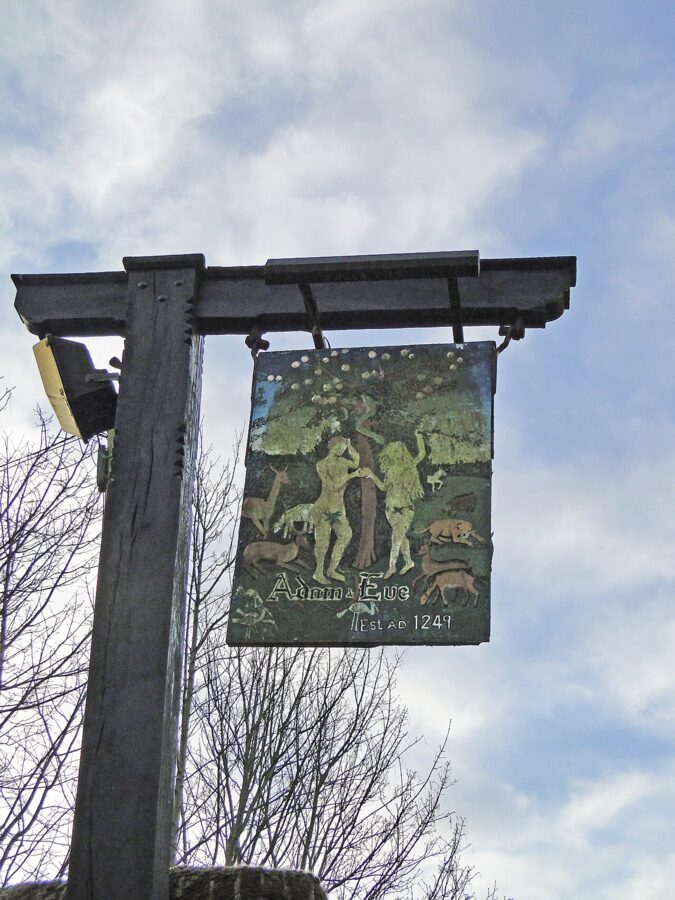
- The Adam and Eve, Norwich (claims 1249): a seventeenth-century building whose first hard evidence as an alehouse is a trade token of 1667.
- The Skirrid Inn, Wales (claims more than 900 years): mostly mid to late seventeenth century, and its own listing doubts the medieval story.
Why “oldest pub” is such a slippery title
Most of the confusion comes from three different questions being asked as if they were one: which pub stands in the oldest building, which has sold drink the longest without a break, and which stands on the spot where drink was first sold. A pub can win one of those and lose the other two, and the marketing usually blends all three into a single date.
Building, licence or site
The building question is the one evidence can actually answer, because timber and stone can be dated. The catch is that an old building is not the same thing as an old pub. The Fighting Cocks has a frame of around 1400, but for most of its life it was a dovecote and then a house; it seems to have become a pub only around 1800.
The licence question is the hardest. Justices began licensing alehouse keepers under an Act of 1552, and the records that survive tend to name people, not buildings. Proving that one house has traded without a break for five centuries needs a run of documents that almost nobody has, which is why the George’s supporters talk about “continuous service” with more care than its rivals do.
The site question is the easiest to claim and the hardest to test. “There has been an inn here since” is a sentence that can survive any number of rebuildings, fires and changes of use, because it never commits to anything you can see. When a pub’s date is older than anything in the building, it is almost always a site claim dressed up as a building claim.
Alehouse, tavern and inn are not the same thing
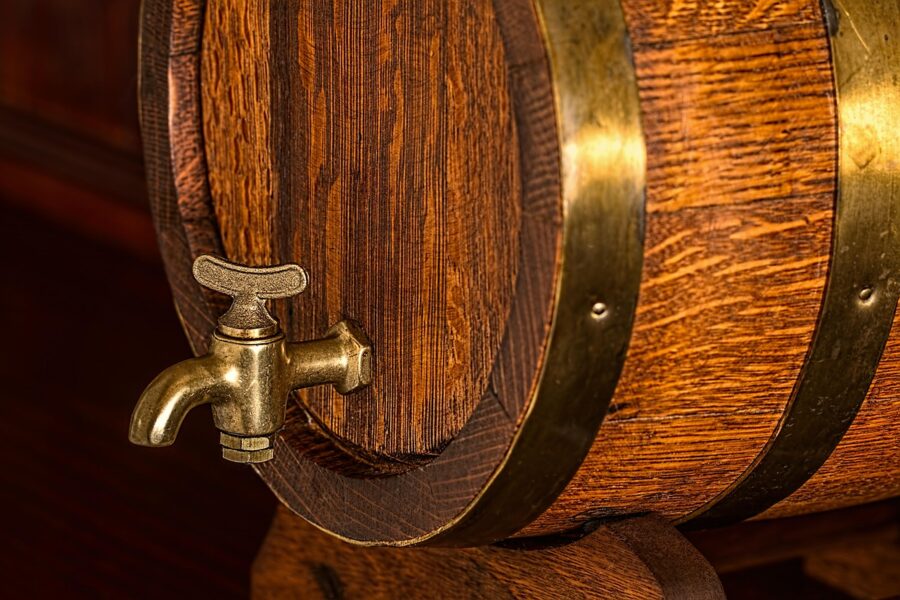
Medieval England had three kinds of drinking place, and the distinction matters for this argument. Alehouses were ordinary homes selling ale, and Historic England knows of none that survive. Taverns sold wine to a better-off town crowd, and none is still trading. Inns were the big commercial operations, offering beds, food, drink and stabling, often founded by monasteries or colleges to look after pilgrims, merchants and travelling households.
Inns appear from the late twelfth century, and because they were large, well-built and valuable, some survived. Historic England counts around a dozen purpose-built medieval inns still in business, the oldest of them from the late fourteenth and fifteenth centuries. The pub as most people picture it, with a public bar and a brewery’s name over the door, is largely a nineteenth-century creation.
What the records can and can’t tell you
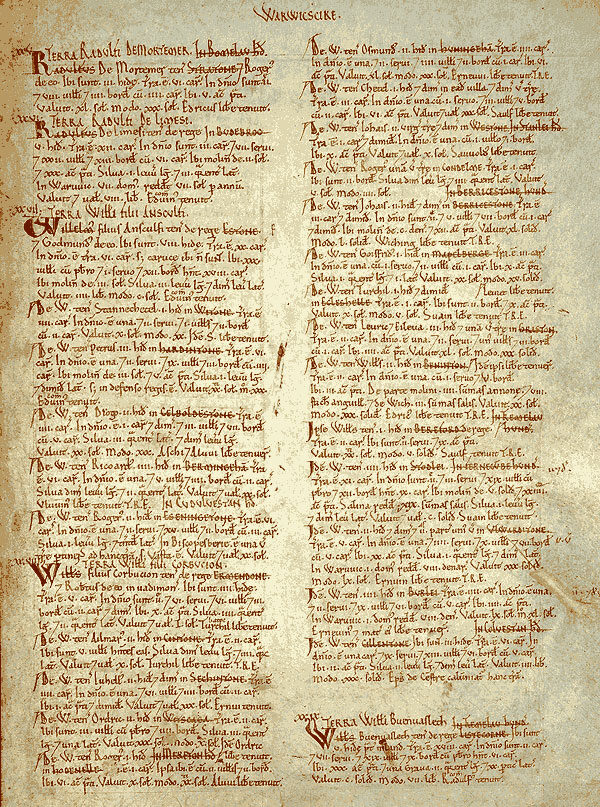
Start with the Domesday Book, because three or four of these pubs have claimed to be in it. The survey of 1086 records land, its value and who held it, and the English Heritage history of the pub, Licensed to Sell (Brandwood, Davison and Slaughter, 2004), points out that it does not mention a single alehouse or drinking place. Dr Wright put it more bluntly: any pub claiming to be in it “is having you on”.
After 1552 the trail gets better but stays patchy. Alehouse recognizances, when they survive, sit among the quarter sessions papers in county record offices. Trade tokens, trade directories, the census from 1841, estate maps and deeds all help, and local history societies have done much of the legwork. Painted dates and datestones are a mixed bag: the Bingley Arms’ 1738 stone is probably right about the building, and the Trip’s 1189 is decoration.

The George Inn, Norton St Philip: the one with evidence
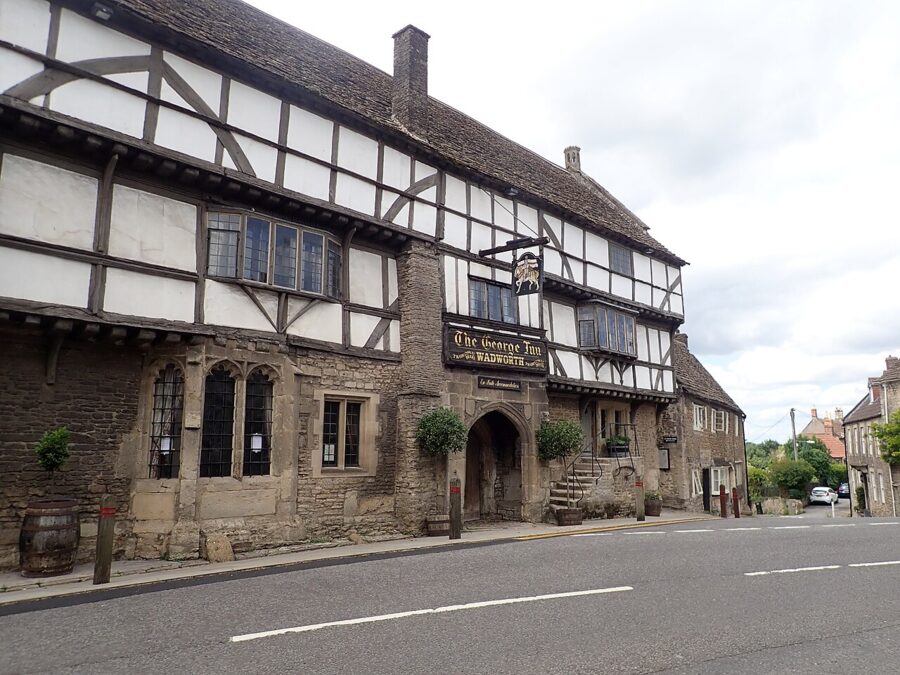
The George was built in the late fourteenth century for the Carthusian monks of Hinton Charterhouse, a couple of miles away, as a place to put up the merchants who came to the priory’s markets and wool fairs. The monks charged for beds, for storing goods and for tolls on sales, so the inn was a business from the start. That is exactly the kind of building Historic England says has the best chance of surviving from the Middle Ages, and it has survived remarkably intact.
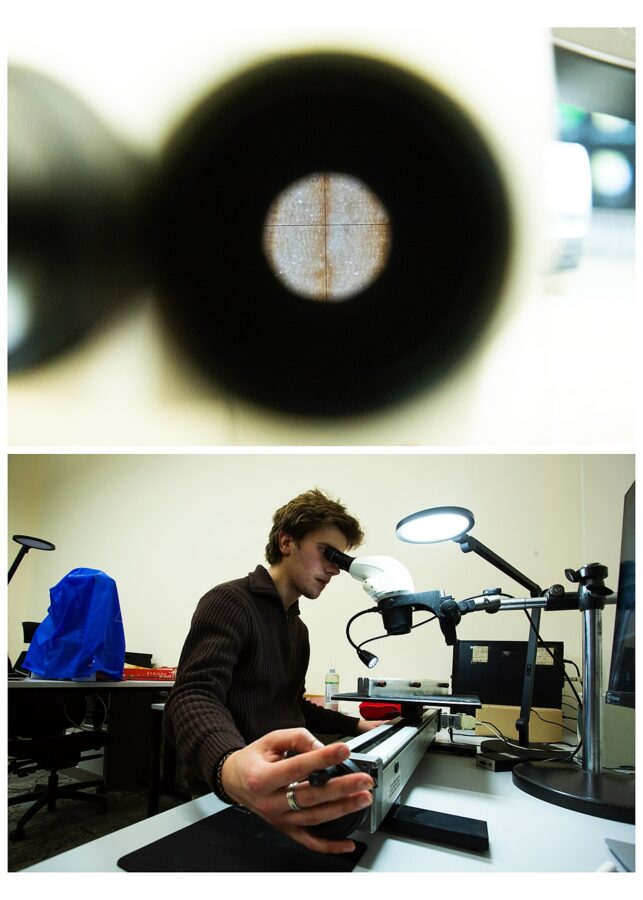
The ground floor and rear are rough coursed Doulting stone, with cusped mullioned windows and an octagonal stone stair. The upper floors jut out over the street in timber framing, and that front is where the tree rings come in. Timber for the front frame and roof was felled between 1430 and 1432, and because medieval carpenters worked oak green, the felling date is close to the building date.
Here is a small lesson in how listings age. The official list entry, written in 1968, calls the timber front sixteenth century and says it was added after a fire. Tree-ring dating has since pushed it back about a hundred years, which is the sort of correction that only physical evidence can make.
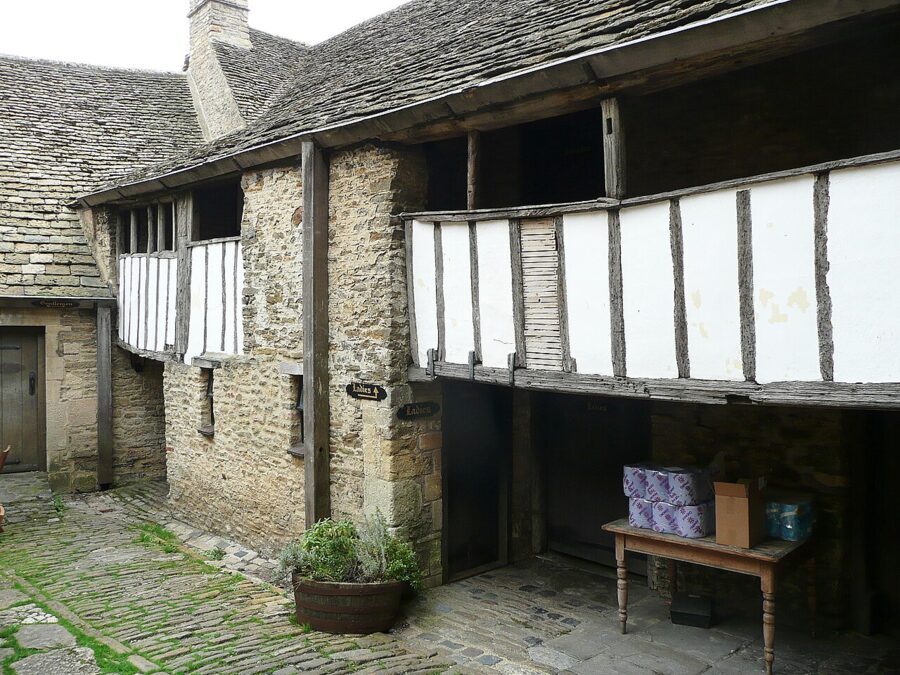

The later history reads like a tour of the seventeenth century. Samuel Pepys stopped in 1668 and thought it “a very old house” even then. The Duke of Monmouth used it as his headquarters in 1685, and after his rebellion collapsed Judge Jeffreys sat in judgement on local rebels there during the Bloody Assizes. The films Tom Jones and The Remains of the Day both used it.
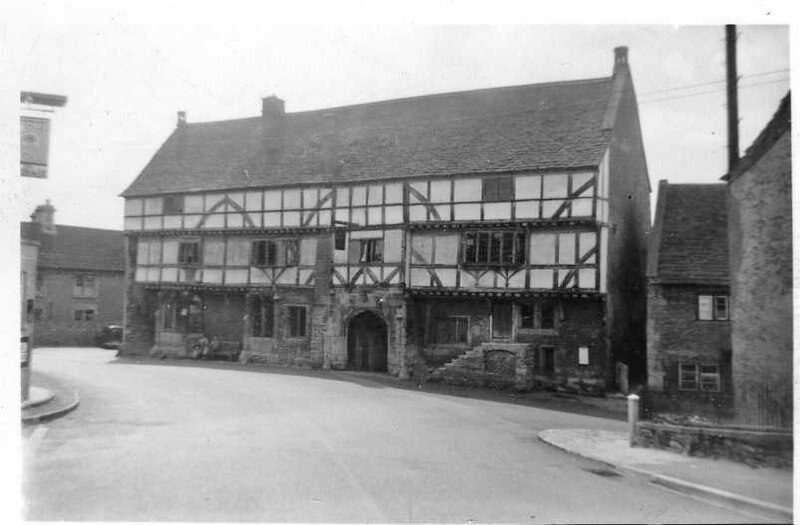

My verdict: this is the strongest claim in England, but read the wording. Reports of Dr Wright’s findings variously call it the oldest purpose-built inn and the oldest continually licensed pub, and the first is the part the evidence proves. Nobody has a licence register running back to 1400, here or anywhere else. As the oldest surviving inn that was built as an inn and still pours a pint, it has no serious rival.
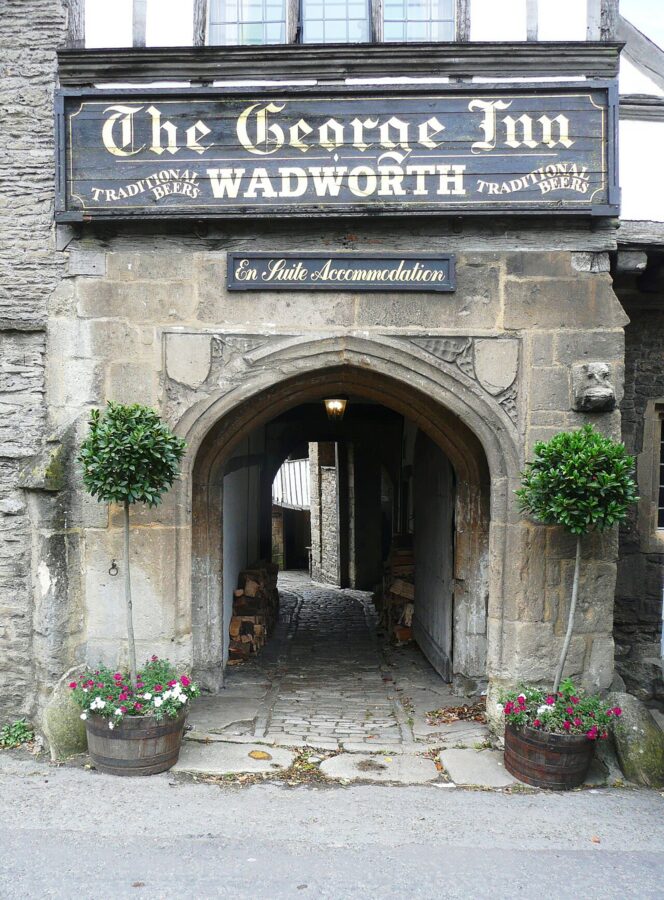
Butcombe bought the George and reopened it in November 2023 after a major refurbishment that moved the main bar to the rear. There is a beamed bar with a big fireplace, a large dining room, a cellar bar called the Dungeon, the courtyard and a garden looking over the meadow known as the Mead. Expect Butcombe Original on cask and one changing beer. It opens at 08:00 every day except Sunday (12:00), serves breakfast, and keeps food going until 21:00 most days and 20:00 on Sunday; dogs and children are both welcome, and there are rooms upstairs and across the road.

The famous claims, one by one
These are the pubs that turn up on every “oldest” list, usually with the date copied from their own signs. Each gets the claim, the evidence and my view. None of them is a bad pub, and a couple are among the best old interiors in the country.
Ye Olde Trip to Jerusalem, Nottingham: claims 1189
The claim is that crusaders bound for the Holy Land with Richard I stopped here for a drink in 1189. The name is the whole basis of it. The Trip stands in Brewhouse Yard, which belonged to Nottingham Castle until the seventeenth century, and Historic England’s 2023 listing dates its timber-framed core to about 1680, roughly when the castle was rebuilt.
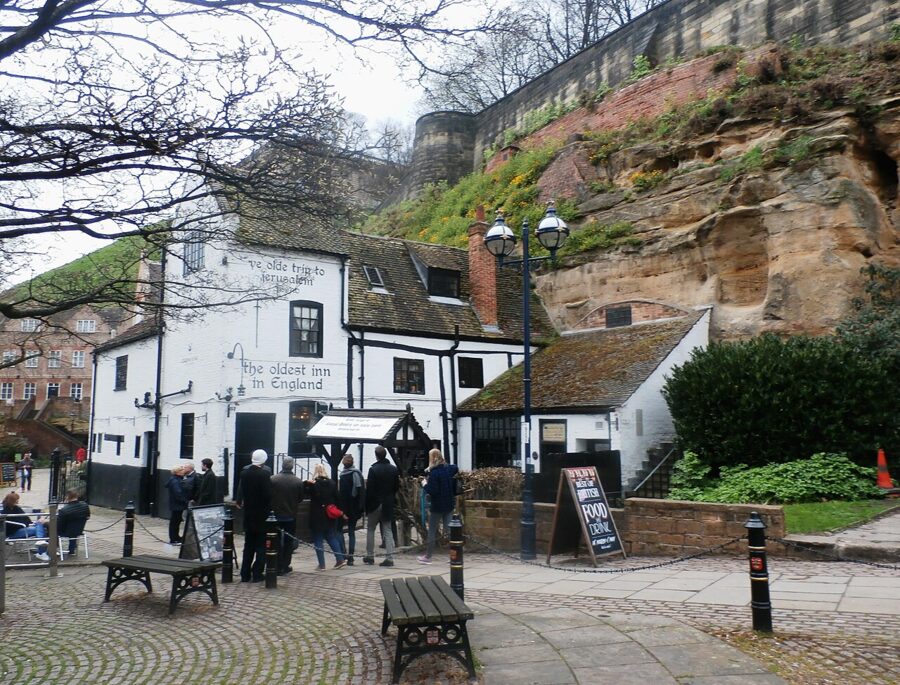

The paperwork starts in 1760, when the landlord William Marriott was licensed for a house called the Pilgrim; some accounts give 1751 for the first mention. By 1799 it was the Trip to Jerusalem. Historic England traces the “oldest inn in England” line to new signage of around 1910, when the landlord was drumming up trade.
The caves are the interesting part, and they are also where the claim has its only real foothold. The large conical caves cut into the rock may be medieval, possibly part of a castle brewhouse, and the beer cellars below are likely later. Caves cannot be tree-ring dated, though, and nobody has shown that anyone sold a drink in them before the eighteenth century.
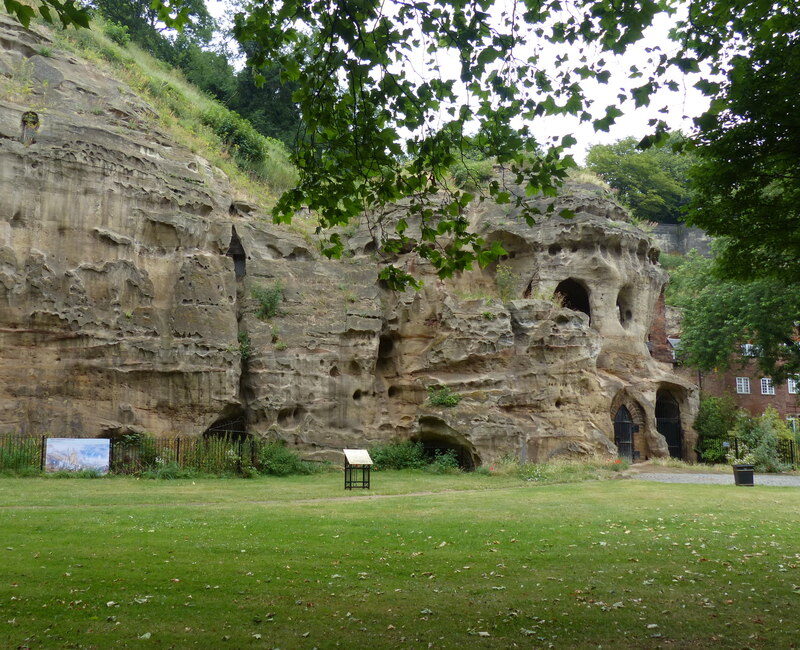

Verdict: not the oldest pub in England, and probably not even the oldest in Nottingham. Go anyway. CAMRA puts the interior on its National Inventory at three stars, its highest rating, and the Rock Lounge, carved out of a cave with 1930s panelling and a curved oak bar, is one of the great pub rooms anywhere. Look for the “cursed galleon” model, the bull’s horn on the wall of the Ward Room for the old game of ringing the bull, and the tiny haunted snug.
Greene King owns it, so expect Hardys & Hansons Olde Trip and Theakston Old Peculier alongside a run of changing cask beers. It opens 11:00–23:00 daily with food until 20:00, and it is roughly a seven-minute walk from Nottingham station. It gets very busy on summer afternoons; go early on a weekday and take the caves to yourself.

Ye Olde Fighting Cocks, St Albans: claims 793
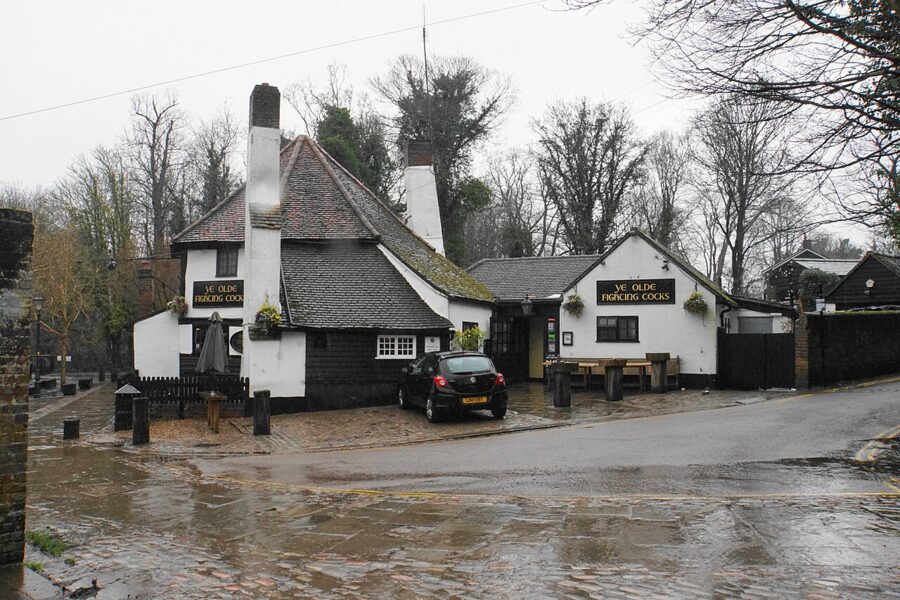
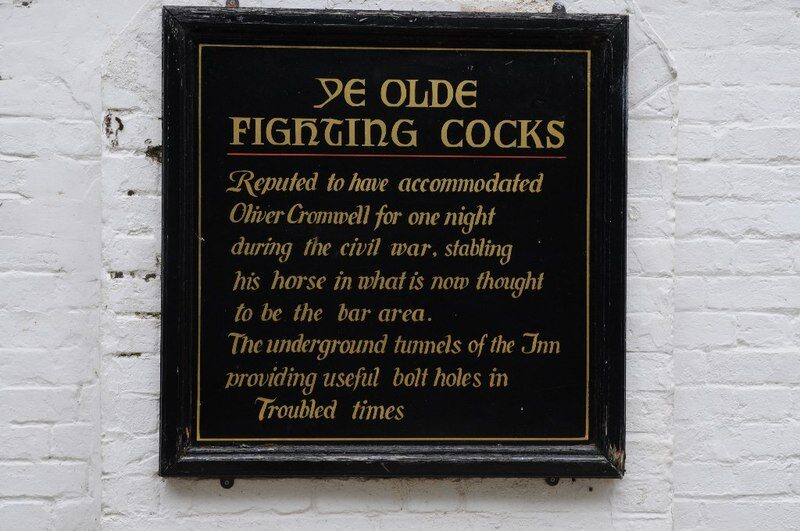
The claim ties the pub to 793, the year King Offa is said to have founded the abbey up the hill. Historic England has found that the date first appeared on an early-twentieth-century postcard. The pub held the Guinness record for years, which explains how far the number travelled.
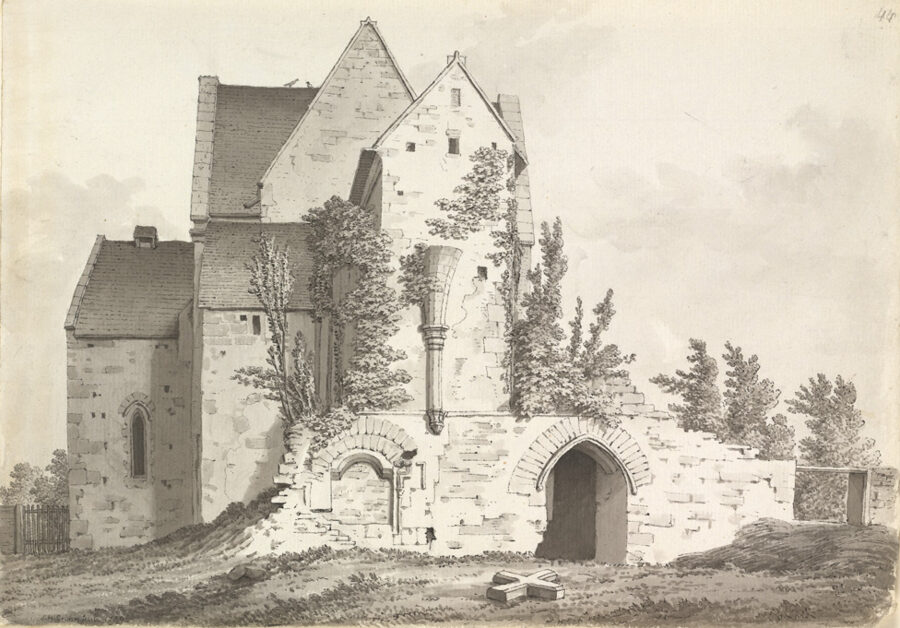
The building has a better story than the date. The octagonal timber frame began as a dovecote of around 1400 at the monastery, and around 1600 the whole frame was taken down and reassembled on this spot as a house. It was the Three Pigeons in 1756 and was selling beer as the Fighting Cocks by 1807. The listing describes a timber building of sixteenth-century appearance with very heavy, widely spaced timbers, and the name comes from the cockpit it was later known for.

Verdict: an old structure, a young pub. It was nearly lost in 2022, when the leaseholder went into administration and the doors shut in February; former staff took over and reopened it that April, and Mitchells & Butlers still owns the freehold. Inside there are low ceilings, odd corners and a bread oven beside one fireplace, and up to eight changing cask beers.
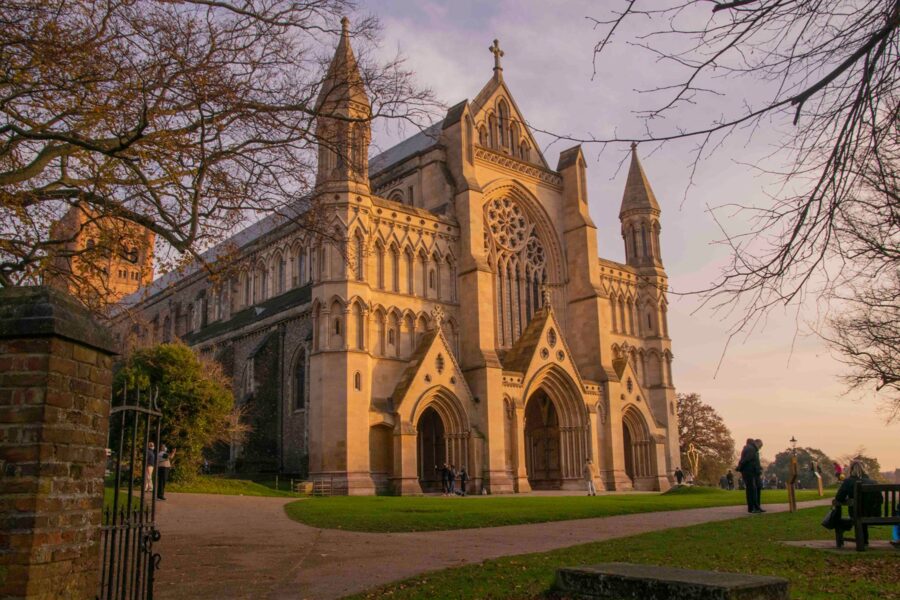
It opens at noon every day and stays open late (01:00 on Friday and Saturday), with food at lunch and in the evening on weekdays, all day on Saturday and until 16:00 on Sunday. Children and dogs are welcome and there is a garden by the River Ver. The nearest station is St Albans Abbey, about ten minutes’ walk, and the walk back up Abbey Mill Lane to the cathedral is the right way to finish.
The Bingley Arms, Bardsey: claims 953
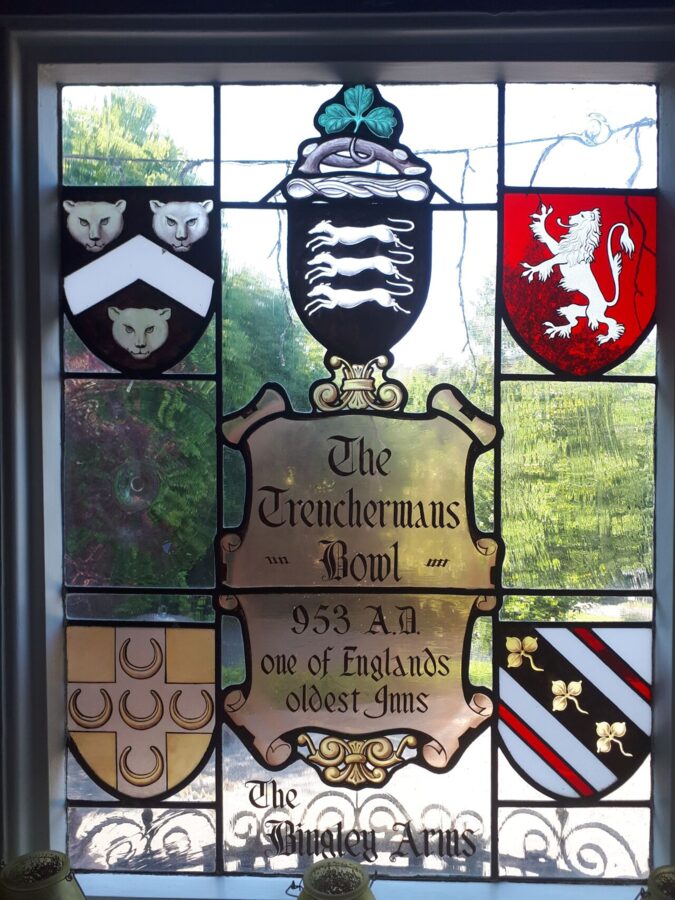
The Bingley Arms in a village north-east of Leeds claims a recorded history from 953, an origin as the Priest’s Inn, a mention in the Domesday Book and, at one time, a Guinness record. The present name is usually said to come from the Lords Bingley, who bought the Bardsey estate in the eighteenth century. Its website calls it the original English pub, older than England’s first king.
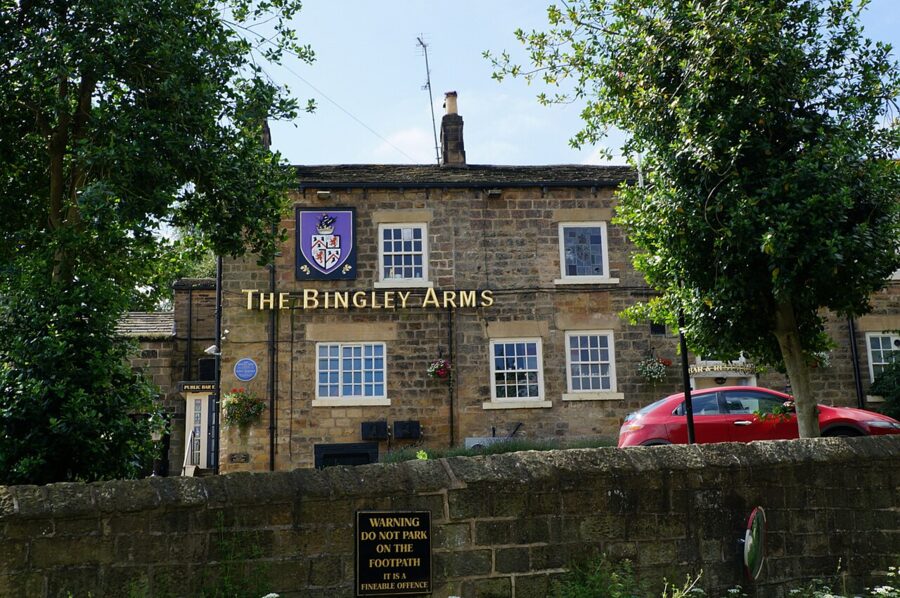

The evidence points the other way. Historic England’s listing describes a mid-eighteenth-century building in a typical West Yorkshire style, consistent with that 1738 datestone, and there are no pubs at all in Domesday. Dr Wright, writing on his own blog about the claim, notes that ordinary houses in this part of Yorkshire were timber-framed until stone took over in the eighteenth century, and that no secular roofed building in England is known to survive from the tenth century. The 953 date may borrow from All Hallows church across the lane, whose tower is genuinely Anglo-Saxon.
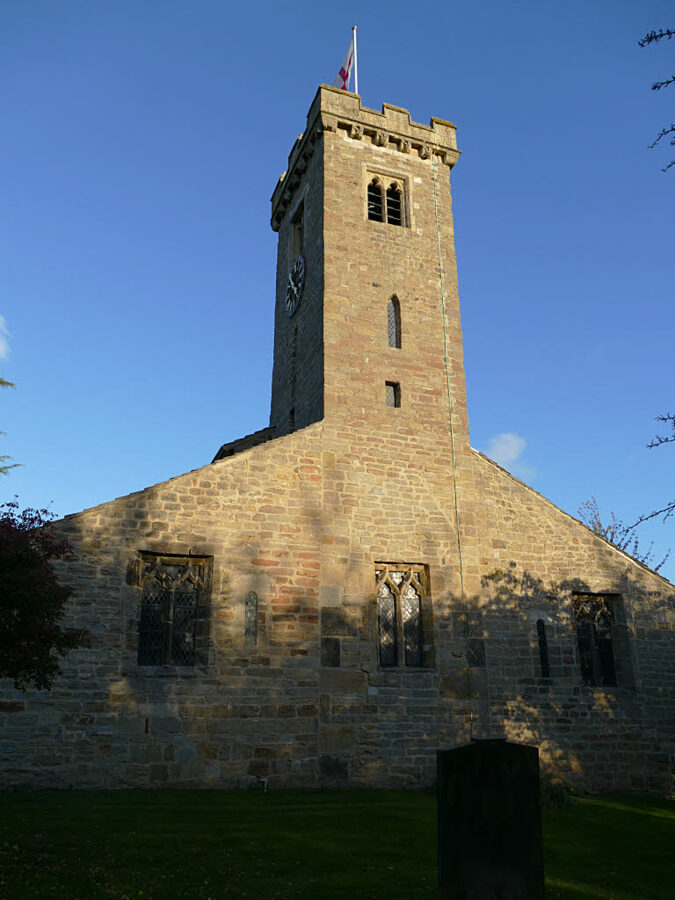

Verdict: a good eighteenth-century village pub with a claim it doesn’t need. The priest holes in the chimney and the Dutch oven in the lounge are worth a look, and the food is the main event now. Ossett Brewery owns it; expect Ossett Blonde and Timothy Taylor Landlord on cask.
It is closed on Mondays. Tuesday to Saturday it opens at 12:00, with food until 20:30, and on Sunday it serves a Sunday roast from 12:00 to 18:00, booked by phone or email only. Midweek deals include two steaks and a bottle of wine for £50 on Tuesdays and two fish suppers for £28 on Fridays. Leeds is the nearest mainline station; the bus stops a few minutes’ walk away, but most people drive.

The Old Ferry Boat Inn, Holywell: claims 560
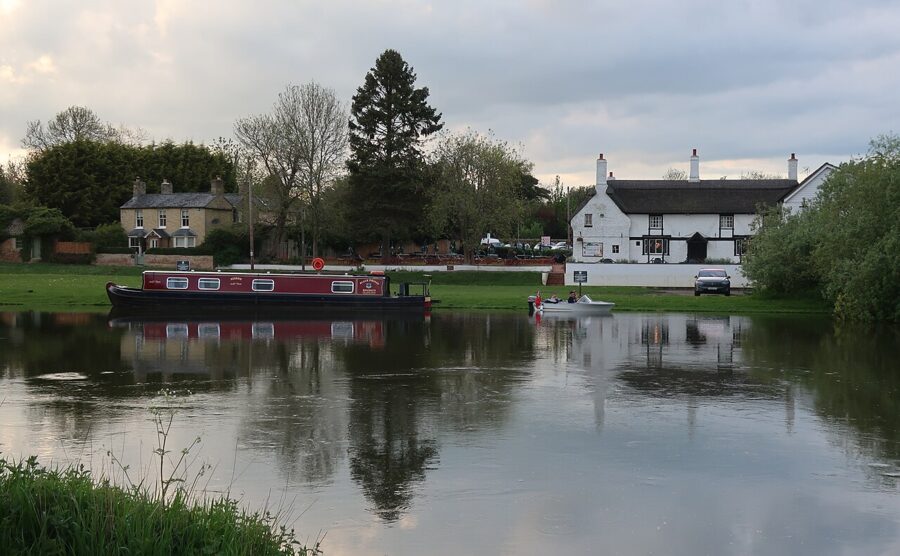
This thatched inn on the River Great Ouse, a few miles downstream of St Ives in Cambridgeshire, is said to have served drink since 560. It comes with a ghost: Juliet Tewsley, a local girl said to have died for love on 17 March 1050 and been buried by the river, whose grave slab is now set into the floor of the bar. On the anniversary she is supposed to rise from the water and glide towards it.
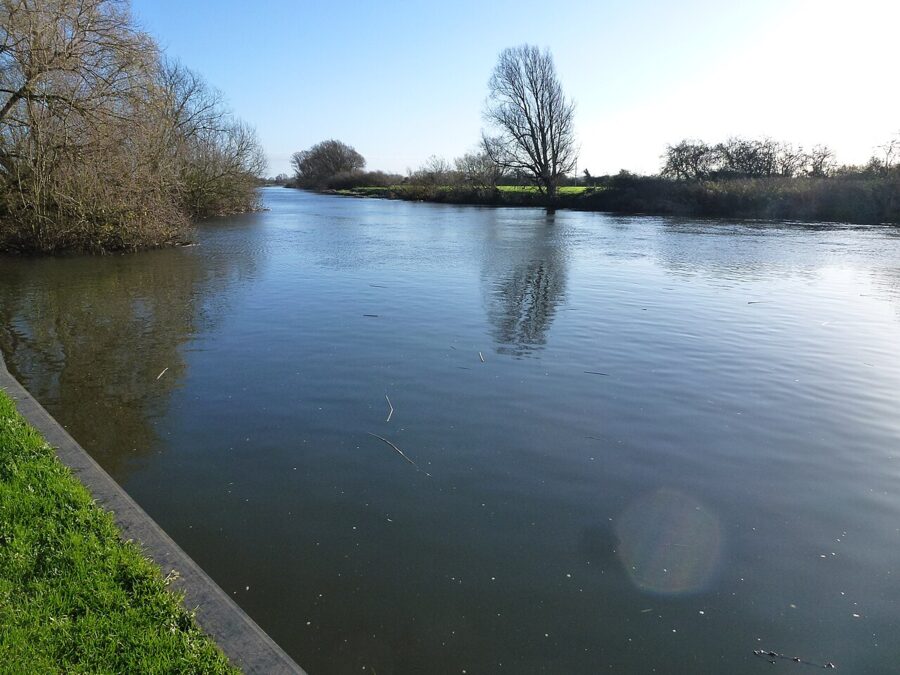

No document supports 560, and the dates that do exist are much later. The listing calls it a seventeenth-century inn with an earlier cross-wing, thatched and timber-framed, with a big inglenook and a baking oven. CAMRA’s entry adds that much of what you see is a modern rebuild after a fire, and the building began as two dwellings, the Boat facing the river and Ferry Cottage facing west. Census returns put the Metcalf family at the inn in 1841, with the widowed Alice Metcalf named as publican by 1851.
Verdict: a seventeenth-century riverside inn with an Anglo-Saxon press release. On a fine day the garden running down to the water is the best seat in any pub on this list, and that is reason enough. Greene King runs it, with Greene King IPA and a few of the brewery’s other beers on cask.
It opens at 07:00 for breakfast and serves until 21:00, Sunday roasts start at £14.45, and dogs and children are welcome. There are seven bedrooms upstairs. The nearest station is Huntingdon; the guided busway from Cambridge gets you to St Ives, and from there it is a taxi or a long riverside walk.
The Adam and Eve, Norwich: claims 1249
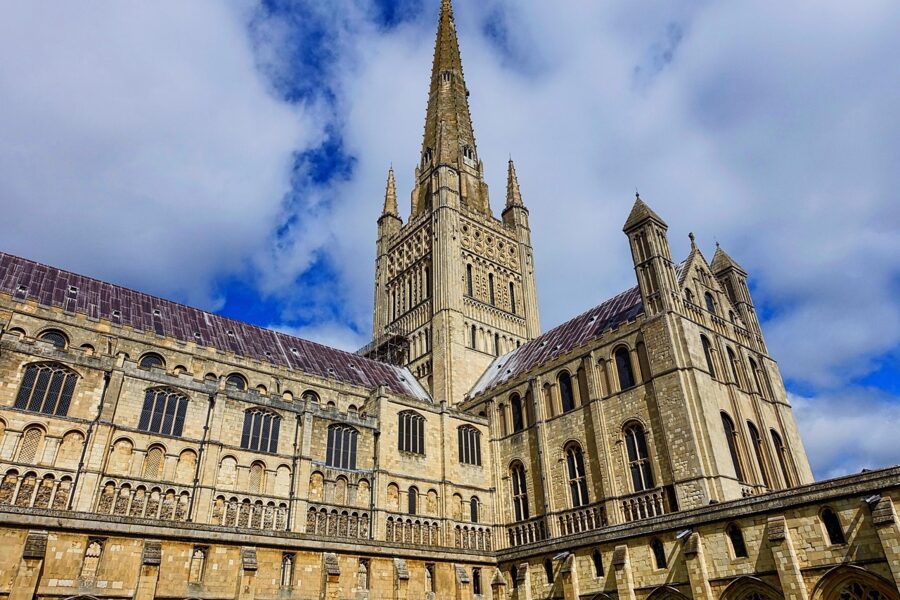
Norwich’s favourite claim is that the Adam and Eve was first mentioned in 1249 and that monks building the cathedral drank here, at a brewhouse built around a Saxon well. The pub is said to sit on the site of a monastic brewhouse, and it was leased from the Great Hospital charity well into the twentieth century. Nobody has produced the 1249 document.
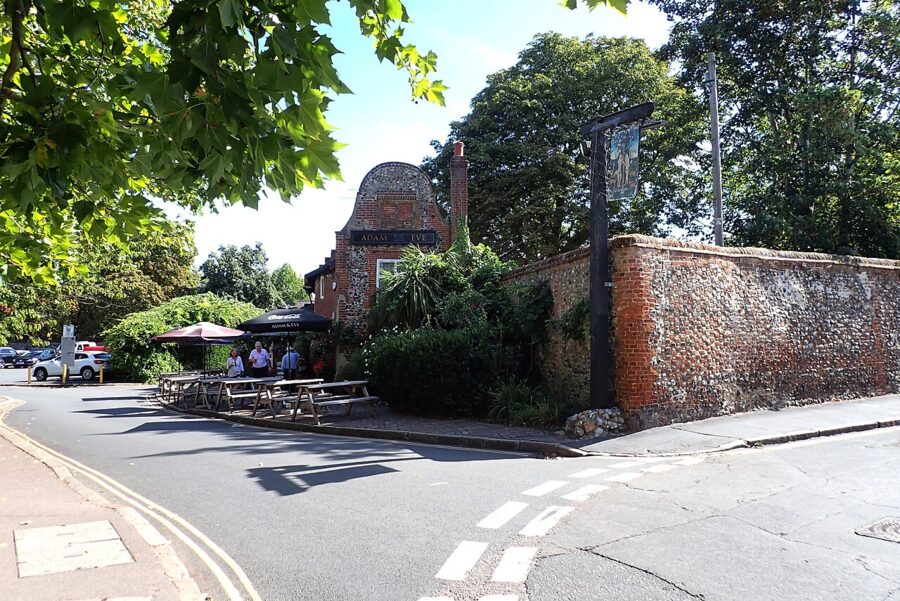

The listing calls it seventeenth century, brick and flint with a pantile roof and a Dutch gable, with twentieth-century alterations. The first hard evidence of an alehouse here is a trade token issued in 1667 by James Barton, which still makes it one of the oldest documented pubs in the city. The lower bar was only created in 1973.

Verdict: seventeenth century, documented from 1667, and a smashing pub. CAMRA rates the interior one star on its National Inventory, with the 1930s snug the best-preserved part, and the low, beamed main bar is tiny. Expect Adnams Southwold Bitter and Theakston Old Peculier with a couple of changing Norfolk beers, Wolf or Woodforde’s usually.
It opens at noon daily, closing at 21:00 Monday to Thursday, 23:00 on Friday, 22:00 on Saturday and 18:00 on Sunday. Food runs until 18:45, or 16:00 on Sunday, so this is a lunch pub more than a supper pub. Norwich station is about fifteen minutes’ walk.
The Porch House, Stow-on-the-Wold: claims 947
The Porch House says it was founded in 947 by Athelmar, Duke of Cornwall, and later run by the Knights Hospitallers. Its supporters also say the timbers have been carbon dated to about the year 1000, and CAMRA’s listing still repeats that Guinness once authenticated it as England’s oldest inn. No dating report has been published that anyone can check.
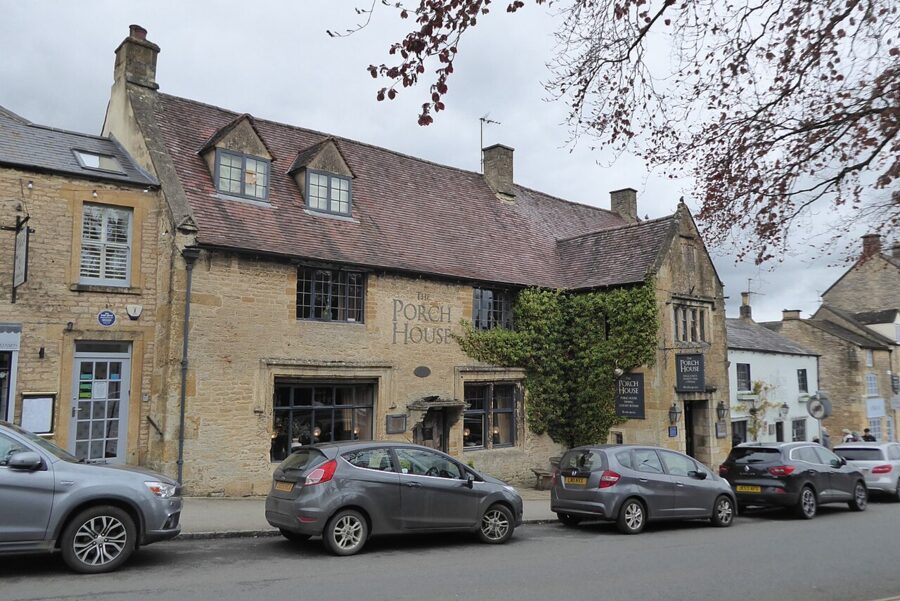

Historic England’s listing, under its old name of the Royalist Hotel, grades it II*, calls it possibly sixteenth century and remodelled in the early seventeenth, and points to a datestone reading 1615. Radiocarbon dating, even when it is done, gives a range of decades and dates when the tree grew, not when the beam went into a building. Old timber was often reused, so an old beam proves an old beam.
Verdict: a handsome sixteenth or seventeenth-century building with an exceptional claim and no published evidence for it. Brakspear owns it, and it serves Brakspear Original Gravity and Noble Nectar on cask. It opens at 08:00 every day, food runs at lunch and in the evening, dogs are welcome and there are rooms; Moreton-in-Marsh is the nearest station, and buses stop right outside.
The Royal Standard of England, Forty Green
Up a lane outside Beaconsfield, the Royal Standard calls itself England’s oldest free house, with “over 900 years” on its website and a Domesday mention in its past publicity. Local history has it as a Royalist mustering point in the Civil War, renamed after the Restoration. CAMRA’s entry calls the oldest-free-house claim unverifiable, and Domesday, as above, has no pubs in it.
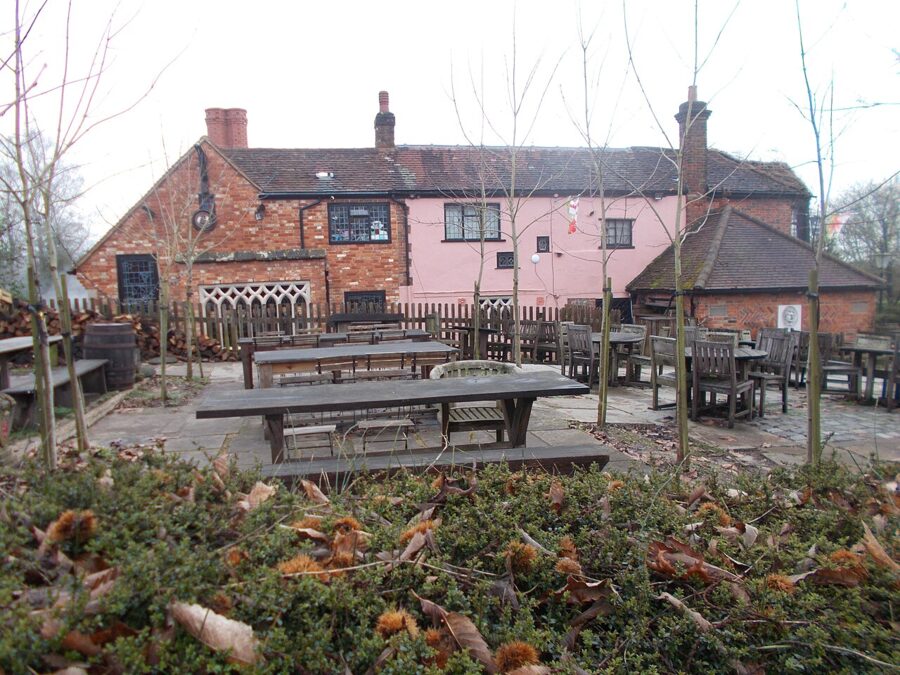

Verdict: the claim is unprovable, and the pub is lovely anyway. It isn’t even a listed building, but CAMRA rates its interior two stars on the National Inventory for the rambling rooms, log fires, cast-iron stoves and the huge old settle that bulges into the entrance corridor. There is a carving of the Last Supper on the bar back, Chiltern Beechwood Bitter and Rebellion IPA on cask, and the place turned up in Hot Fuzz.
It opens at 11:00 (12:00 on Sunday), serves food from 11:30 until 21:00 or 22:00 depending on the day, and welcomes muddy dogs. Beaconsfield station is the nearest, and a taxi is the sensible way up.
Nottingham’s other two: the Bell Inn and Ye Olde Salutation
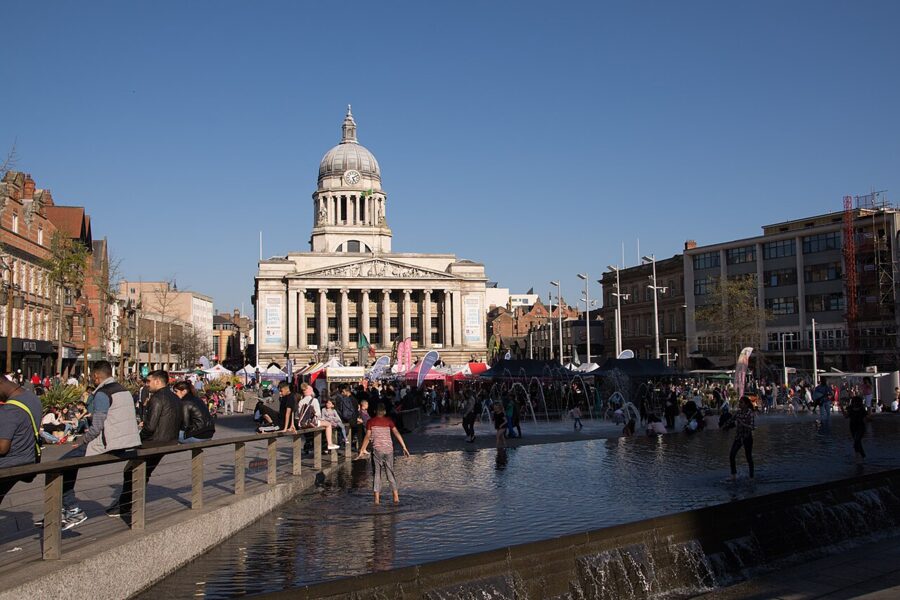
Nottingham has three pubs claiming to be its oldest, and the Trip is probably the youngest of them. Historic England reckons the Bell Inn on Angel Row, overlooking the Old Market Square, has the better case: a fifteenth-century building, refronted around 1820, and in use as a pub by the 1630s. CAMRA’s entry adds that its roof timbers have been tree-ring dated to around 1430.
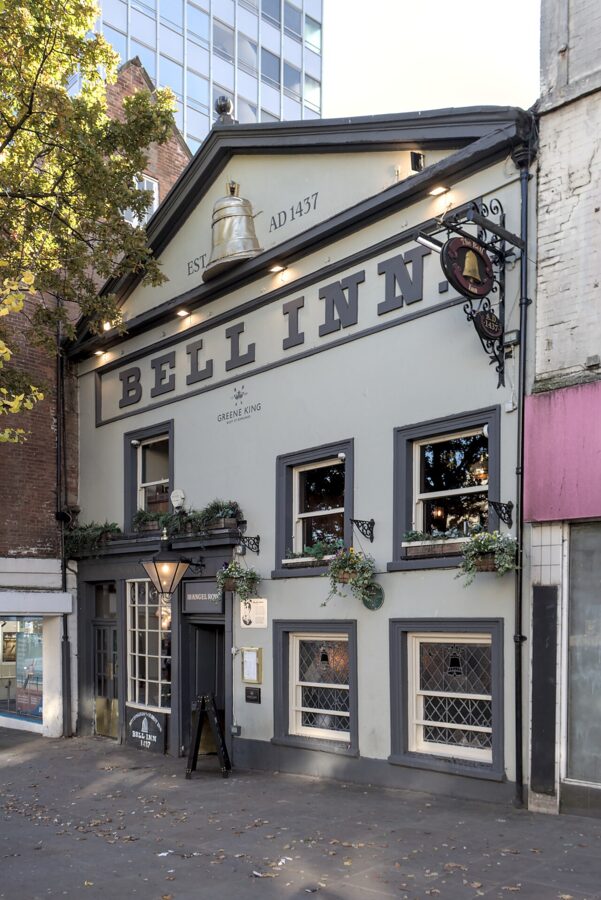
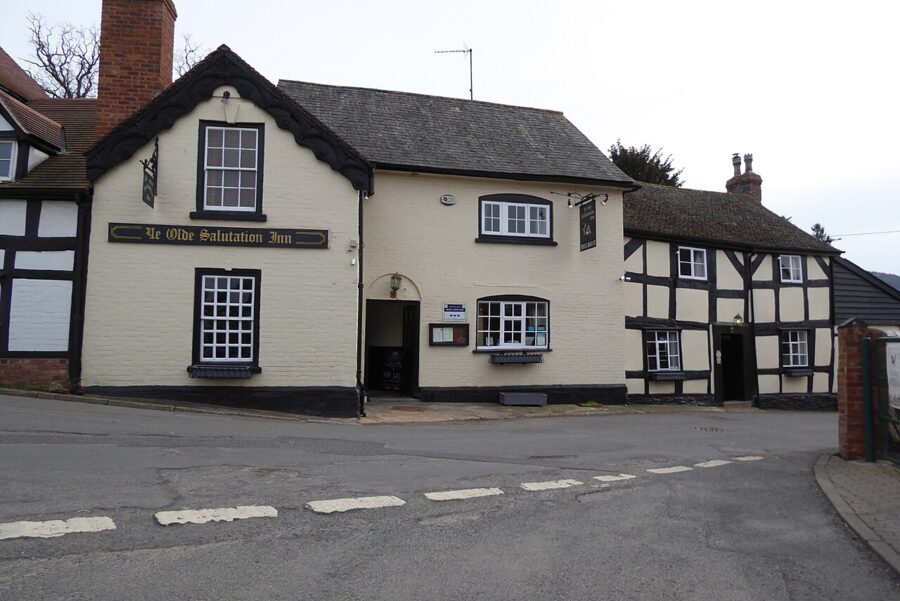
The Bell is a Greene King house with Abbot and IPA on cask, food until 21:00 (20:00 on Sunday) and an upstairs restaurant. Ye Olde Salutation on Hounds Gate has 1240 on its wall, but CAMRA puts its oldest parts in the sixteenth and mid-eighteenth centuries. It has its own sandstone caves under the floor, which staff will sometimes show you at quiet times, and these days it is Nottingham’s rock pub, with gigs most weekends.


Medieval inns that never needed a painted date
The odd thing about the “oldest pub” lists is how rarely they include the genuinely medieval inns. These buildings have tree-ring dates, documents and Grade I listings, and they simply never got into the habit of painting a number on the wall. Both of the best are easy to reach by train.
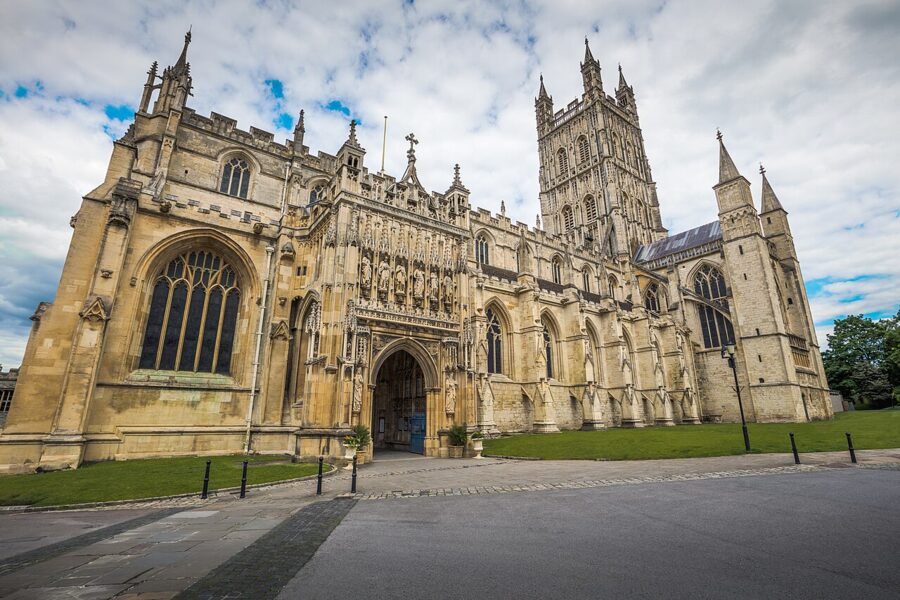
The New Inn on Northgate Street in Gloucester is the most complete galleried courtyard inn surviving from the Middle Ages. Tree-ring dating shows construction began in 1432, on the orders of John Twyning, a monk of St Peter’s Abbey (now Gloucester Cathedral), and it is first mentioned in writing in the 1450s. It had at least twenty bedchambers and could sleep something like two hundred people.
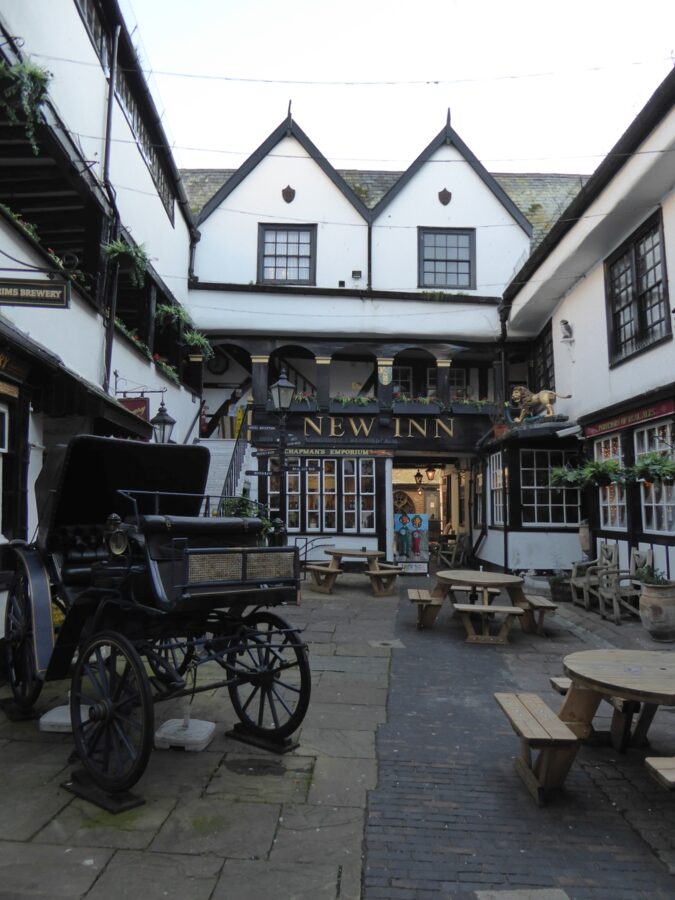

Today it is a hotel with bars and a restaurant, open from 07:30, and about ten minutes’ walk from Gloucester station. Go for the courtyard, which is the finest thing of its kind in England. One warning for beer drinkers: CAMRA’s current listing shows no cask ale, so this is a place to stand in, not to drink in.
The King’s Head in Aylesbury is a few minutes from the station, tucked behind the Market Square. Its oldest part dates from around 1450, and its windows hold painted glass with the arms of Henry VI and Margaret of Anjou, probably put in before the Wars of the Roses broke out in 1455. The National Trust owns it and Chiltern Brewery runs the bar as its brewery tap.
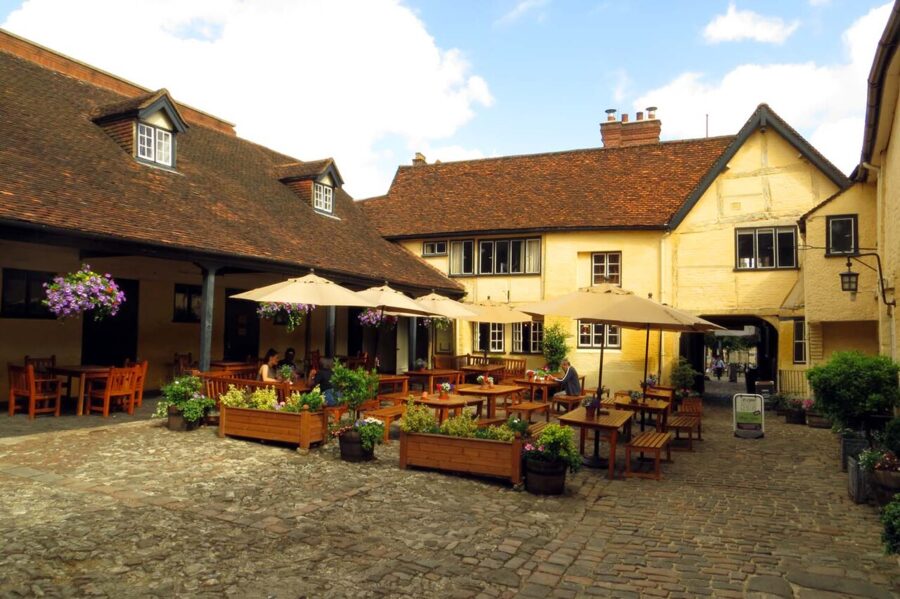

The King’s Head is closed on Mondays and Tuesdays, opens at noon from Wednesday (11:00 on Friday and Saturday), and serves food at lunch and early evening. The local CAMRA branch made it runner-up in its 2026 pub of the year. If you want a medieval inn with a proper pint, this is it.

What listings and tree rings have settled, and what they haven’t
Two kinds of evidence keep coming up in this argument, and both are often misread. Historic England’s listing tells you a building has special architectural or historic interest and roughly how old its fabric is. Dendrochronology tells you when the trees in it were cut down. Neither, on its own, tells you when somebody first sold a pint there.
Listings: good on fabric, silent on beer
A listing grade (I, II* or II) measures interest, not age, and many entries were written in the 1950s to 1980s as short descriptions to help identify the building. Some have been revised with far more research, as the Trip’s was in 2023; others have not been touched in decades. That is how the George’s entry can still say its timber front is sixteenth century when the tree rings say 1430.
What listings have settled is the building half of most claims. They put the Trip at about 1680, the Bingley Arms in the mid-eighteenth century, the Ferry Boat and the Adam and Eve in the seventeenth, the Porch House in the sixteenth or seventeenth, and the George, New Inn and King’s Head in the fourteenth and fifteenth. None of them can tell you whether a building was a pub before its first licence turns up in the records.
CAMRA’s National Inventory of Historic Pub Interiors answers a different question again: how much of the pub’s historic fitting-out survives. That is why the late-seventeenth-century Trip has three stars while the much older George does not. For a drinker, the inventory is the more useful list.
Dendrochronology: precise, but only about wood
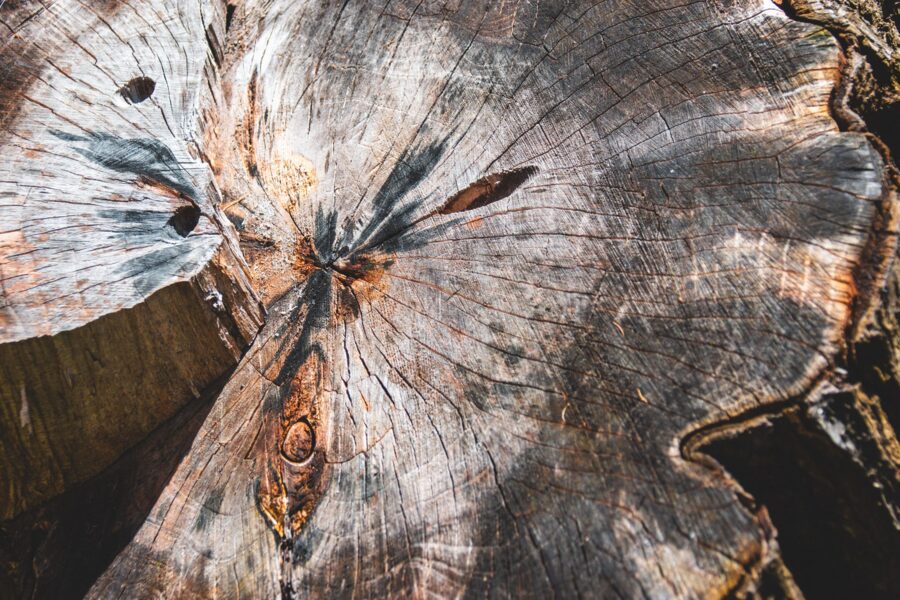
Tree-ring dating works by measuring the widths of the annual rings in a timber and matching the pattern against master sequences built from thousands of dated samples. If the outer sapwood and bark edge survive, the result is the year the tree was felled, and because medieval carpenters worked oak while it was green, construction usually followed within a year or two. That is how the George’s front is dated to 1430–1432 and the New Inn to 1432.
Its limits matter just as much. Beams were often reused from older buildings, so one old timber does not make an old building. Stone and brick cannot be tree-ring dated at all, and neither can a cave, which is why the Trip’s cellars will probably never get a firm date. Most of the pubs claiming the earliest dates have published no tree-ring results whatsoever.
So the score stands like this. Settled: the George, the New Inn and the King’s Head are genuine medieval inns, and the Bell has fifteenth-century timber. Not settled, and unlikely ever to be: whether anyone sold ale on the Ferry Boat’s riverbank in 560, in the Trip’s caves in 1189 or in Bardsey in 953. The sensible position, and the one Historic England takes, is that pubs are worth celebrating whatever their age.
London, in one paragraph
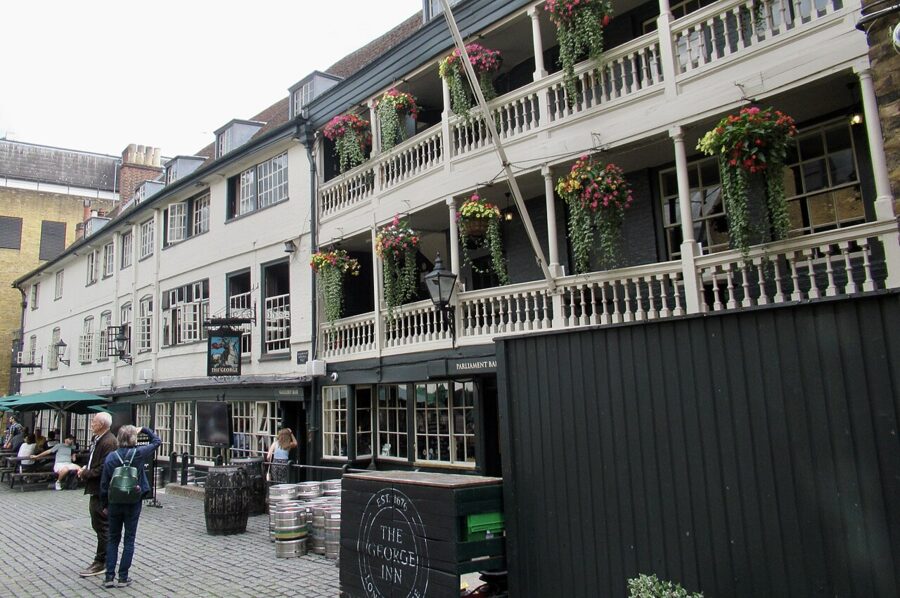
The oldest pubs in London run their own version of this argument, with as many painted dates and rebuilt fronts as anywhere else. The one building every Londoner should know is the George Inn on Borough High Street, a few minutes from London Bridge station. Rebuilt in 1676 after a fire, owned by the National Trust since 1937 and rated three stars by CAMRA, it is the capital’s last galleried coaching inn, and it makes a fine companion to the George at Norton St Philip.
If you meant Britain: Wales and Scotland
Ask about the oldest pub in Britain rather than England and two more countries join the argument, each with its own favourite. Their claims follow the same pattern as the English ones: a striking date, a building that turns out younger, and a pub well worth the trip regardless.
Wales: the Skirrid and the Old House
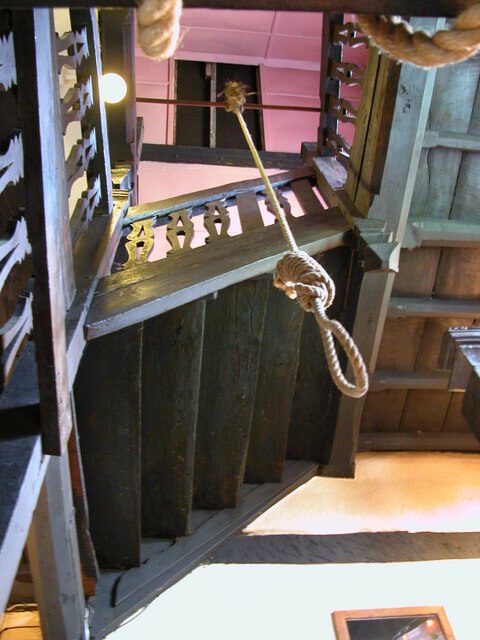
The Skirrid Mountain Inn at Llanfihangel Crucorney, north of Abergavenny, calls itself Wales’ oldest pub and more than 900 years old. Its story is darker than most: a courtroom upstairs, and a beam in the stairwell where condemned men were supposedly hanged, with a noose still dangling from it. Cadw’s listing is unusually blunt, noting that the inn had been described as a well-restored medieval stone house and advertised as the oldest in Wales, and that close inspection makes both claims unlikely.
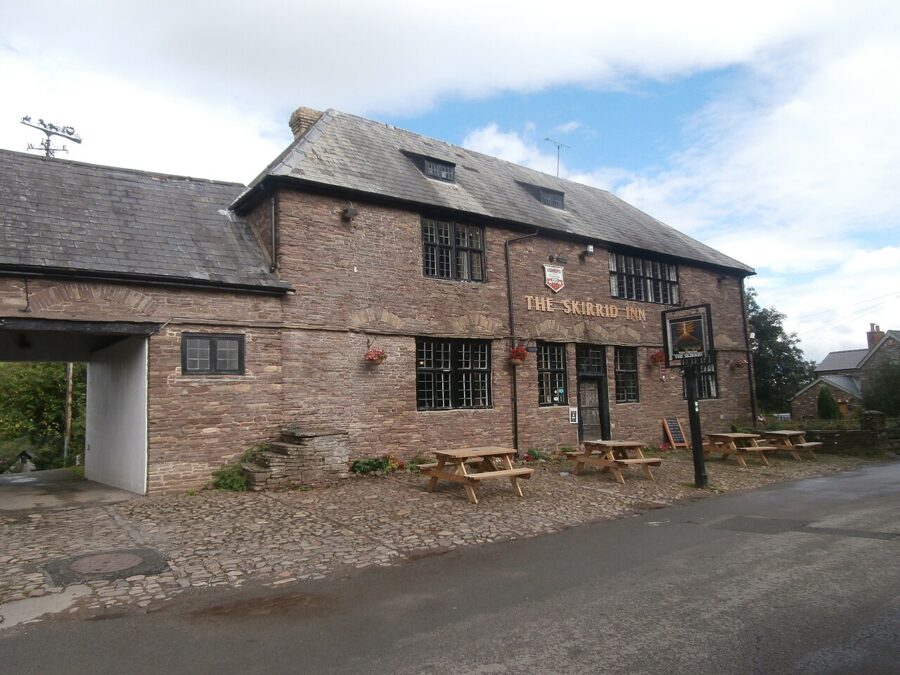

The present building is mostly mid to late seventeenth century. That still makes it old, and it is a properly atmospheric pub, with Wye Valley Butty Bach on cask, three bedrooms (two with four-posters) and food at lunch and in the evening. Note the split hours: Tuesday to Thursday it closes between 14:30 and 17:30, and on Monday it opens only in the evening. Dogs are welcome in the bar but not where people eat, and the X3 bus from Abergavenny stops outside every two hours or so in the daytime.

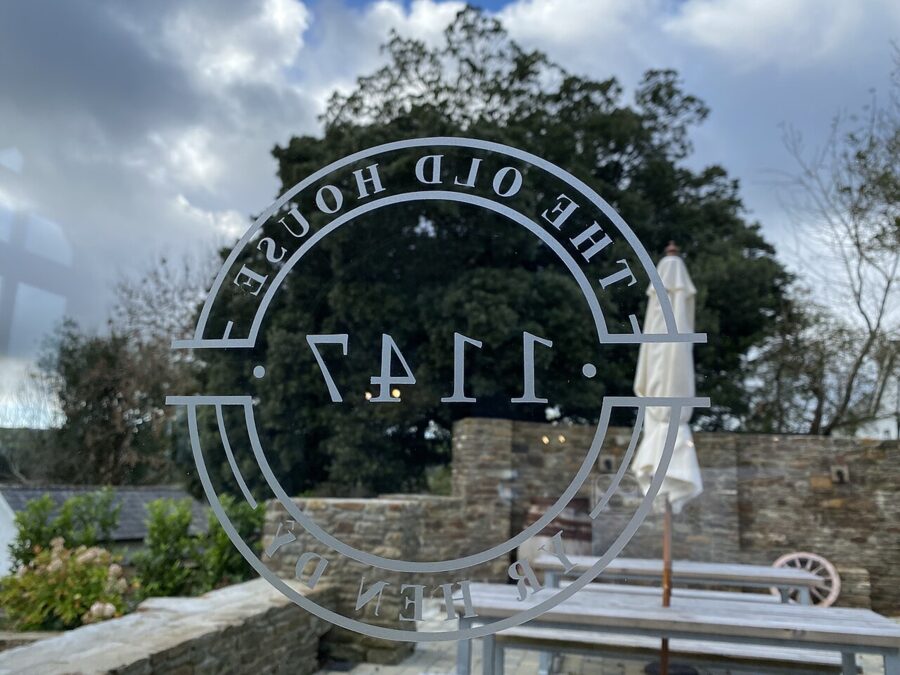
In south Wales, the Old House at Llangynwyd near Maesteg puts its claimed date in its name, 1147. Its listing says the building is of later seventeenth-century origin. It reopened in 2019 after a three-year rebuild, now does food and weddings, and opens 11:00 to midnight every day.

Scotland: the Sheep Heid
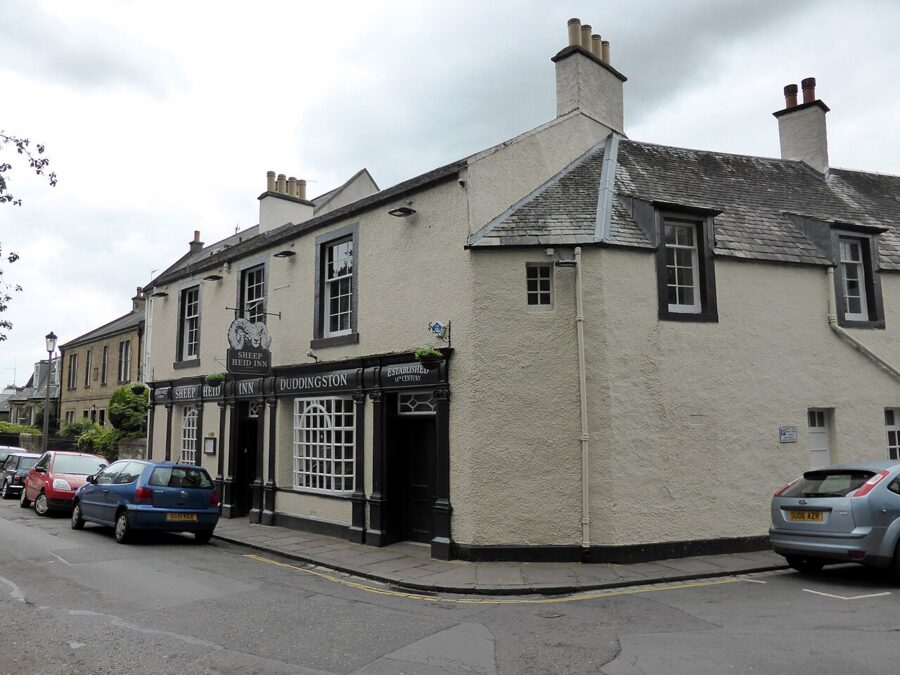
The Sheep Heid Inn in Duddingston, on the far side of Arthur’s Seat from Edinburgh‘s Old Town, is usually called Scotland’s oldest pub, with an inn said to have stood here since 1360. Nobody has a document for 1360, and the building you drink in is eighteenth century.

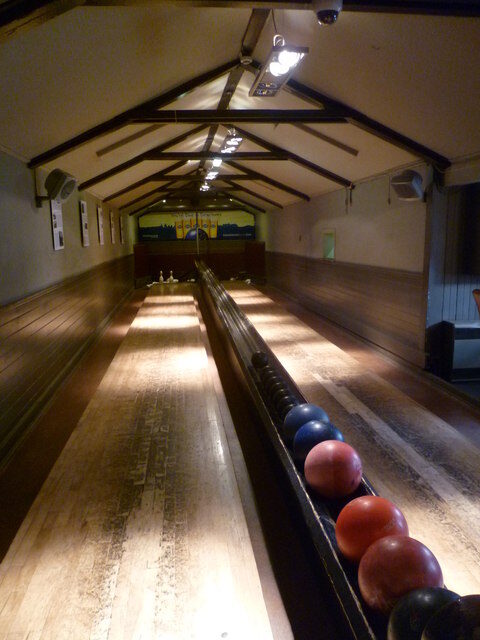
What it does have is a skittle alley from the 1880s, claimed as the oldest still in use in Scotland, and a bar counter, gantry and mirrors from a 1930s refit good enough for one star on CAMRA’s Scottish inventory. It opens at noon, serves food until 21:00, welcomes children until 22:00 and dogs throughout. Walk there over the shoulder of Arthur’s Seat and take the bus back.


Visiting them: the practical table
If you want to see the evidence for yourself, this is where to go and what to look at. Opening hours change with the seasons and the landlord’s mood, so check the day before, especially for food. Most of these pubs are on cask, and a couple are among the better places in England to try real ale in an old room.
| Pub and place | Nearest station | What to see inside | Food |
|---|---|---|---|
| George Inn, Norton St Philip | Bath Spa, then the D2 bus towards Frome | Stone stair, courtyard gallery, the Dungeon bar | Breakfast from 07:30, then all day to 21:00 (Sun 20:00) |
| Ye Olde Trip to Jerusalem, Nottingham | Nottingham, about 7 minutes’ walk | Rock Lounge, caves, the haunted snug, ringing the bull | 11:00–20:00 daily |
| Ye Olde Fighting Cocks, St Albans | St Albans Abbey, about 10 minutes’ walk | The octagon, bread oven by the fireplace, riverside garden | Lunch and evening; Sun to 16:00 |
| Bingley Arms, Bardsey | Leeds, then bus or taxi | Priest holes in the chimney, Dutch oven in the lounge | Tue–Sat 12:00–20:30, Sun 12:00–18:00, closed Mon |
| Old Ferry Boat Inn, Holywell | Huntingdon, or the busway to St Ives | Juliet’s grave slab in the floor, inglenook, river garden | 07:00–21:00 daily |
| Adam and Eve, Norwich | Norwich, about 15 minutes’ walk | The 1930s snug, the tiny beamed bar | 12:00–18:45 (Sun to 16:00) |
| Porch House, Stow-on-the-Wold | Moreton-in-Marsh, then bus | Beams, fireplaces, the 1615 datestone outside | Lunch and evening; all day at weekends |
| Royal Standard of England, Forty Green | Beaconsfield, then taxi | The great settle, Last Supper carving, log fires | From 11:30 (Sun 12:00) to 21:00 or 22:00 |
| Bell Inn, Nottingham | Nottingham, about 15 minutes’ walk; tram to Old Market Square | 1928 panelling and stained glass upstairs | 11:00–21:00 (Sun 20:00) |
| New Inn, Gloucester | Gloucester, about 10 minutes’ walk | The galleried courtyard | 07:30–20:00 daily |
| King’s Head, Aylesbury | Aylesbury, about 5 minutes’ walk | Heraldic glass, the courtyard | Wed–Sat lunch and early evening, Sun lunch |
| Skirrid Inn, Llanfihangel Crucorney | Abergavenny, then the X3 bus | The stairwell beam, old stone and woodwork | Lunch and evening, Mon evening only, Sun lunch only |
| Sheep Heid Inn, Duddingston | Edinburgh Waverley, then bus or a walk round Arthur’s Seat | 1930s bar fittings, the skittle alley | 12:00–21:00 daily |
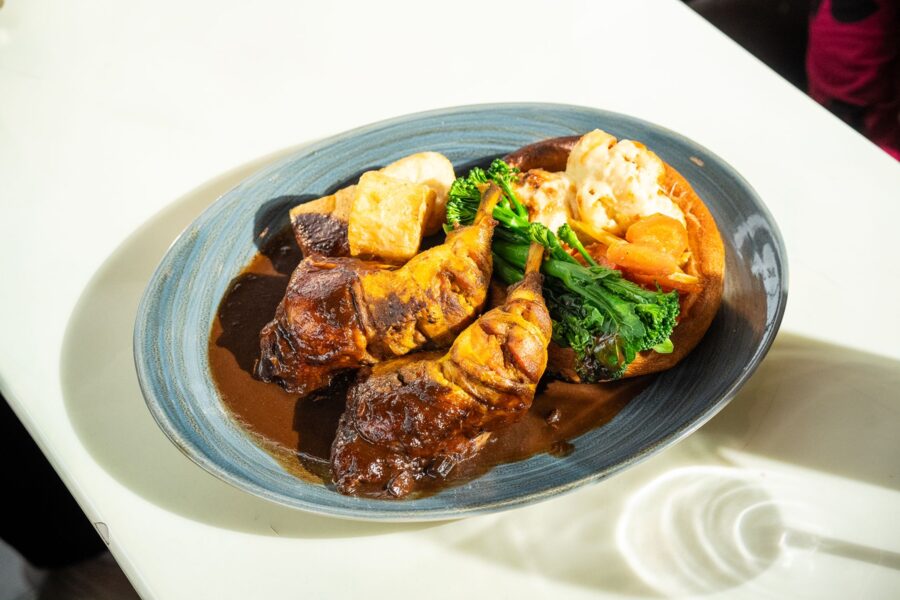
A few practical notes. The Trip, the Fighting Cocks and the Ferry Boat are tourist favourites and get very busy at summer weekends; go at opening time on a weekday if you want to look at the building rather than the backs of other people. The Bingley Arms and the Adam and Eve keep shorter hours than city pubs, and the Skirrid closes in the afternoon midweek. Children are welcome at most of them for food, and dogs at nearly all of them, but ask at the bar before you settle in.
Where I’d start
If you only visit one, make it the George at Norton St Philip. It is the one claim that holds up, and walking through that arch into the courtyard is about as close as you can get to arriving at a medieval inn on business. Order a pint of Butcombe, sit where you can see the timber front the tree rings dated, and remember that the monks who built it charged the merchants for storage too.
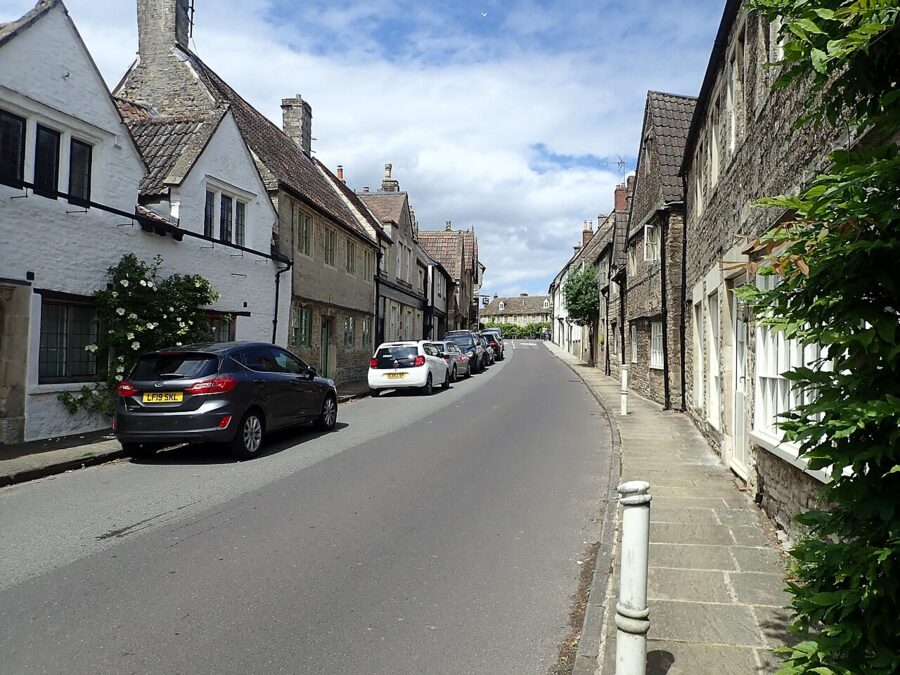

Then, if you can, go to Nottingham and stand in front of the Trip’s painted sign with the date in mind. Have a drink in the Rock Lounge anyway, because the room is real even if the 1189 isn’t. And on the way back to the station, stop at the Bell on Angel Row, the quietly older pub that never felt the need to paint a number on its wall.