
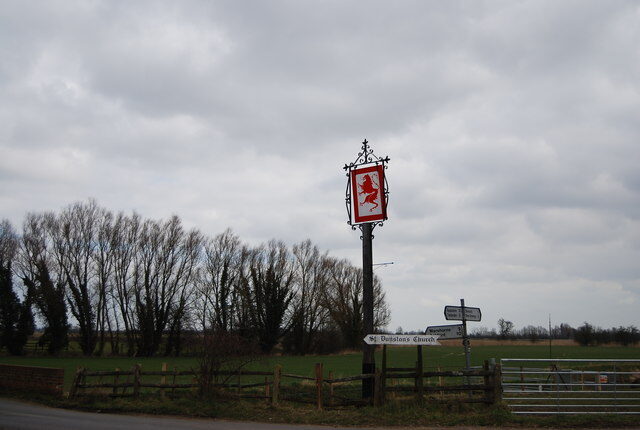
There are 510 pubs called the Red Lion open in the UK in autumn 2026, and the one at Snargate on Romney Marsh used to be the Shepherd and Lamb. That is the first thing to know about pub names: they look ancient and fixed, and they are neither. Kings, Puritans, brewers, accountants and marketing departments have all had a go at them, and the board over the door is only the latest word in a long argument.

Most names still say something, if you know how to read them. A crown or a king’s head was a loyalty oath you could drink under, and a wheatsheaf or a pair of crossed keys told you who drank there. Then there is the Bucket of Blood.

A lot of what gets repeated about pub names is wrong. Richard II never ordered every alehouse to hang his white hart, and nobody has produced the order in which James I supposedly put a red lion on every pub. The real stories involve a Chelsea brewer in trouble for having no sign, a poet who hung out his own face to dodge the Commonwealth, and a Mayfair pub whose name keeps getting shorter.

On this page
Why pubs hang out signs at all
Start with a bush on a stick. Roman wine shops hung greenery outside, and English alehouses kept the habit for the best part of a thousand years: a pole jutting over the street with a bush on the end, the ale-stake, meant fresh ale inside. Chaucer’s Pardoner stops “at this ale-stake” for a drink and a cake before he starts his tale, and nobody needed to read a word.
The 1393 law, and what it actually said
The date everybody quotes is 1393, in the reign of Richard II. The wording usually quoted is blunt: whoever brews ale in the town with the intention of selling it “must hang out a sign, otherwise he shall forfeit his ale”. The point was not decoration. The ale-conner, the official who tasted the ale and checked it against the price and the measure, needed to find every brewer in the parish without knocking on every door.
The evidence on the ground is more local than the legend. In Richard II’s sixteenth year, 1392–93, a Chelsea brewer called Florence North was presented at the manor court for not putting up a sign, “as was customary”. Chelsea’s manor court regularly fined brewers for short measures, for selling before the tasters had been round and for not posting the customary sign. Whatever was decreed in Westminster, a village by the Thames was already enforcing the sign as custom.
What no law ever did was tell anyone what to paint. You will read that Richard II made every pub hang his badge, the white hart, and that this is why there are so many White Harts. There is no such order. The sign could be anything the brewer liked, and the White Hart got popular for other reasons, which come further down.
When the sign was the address
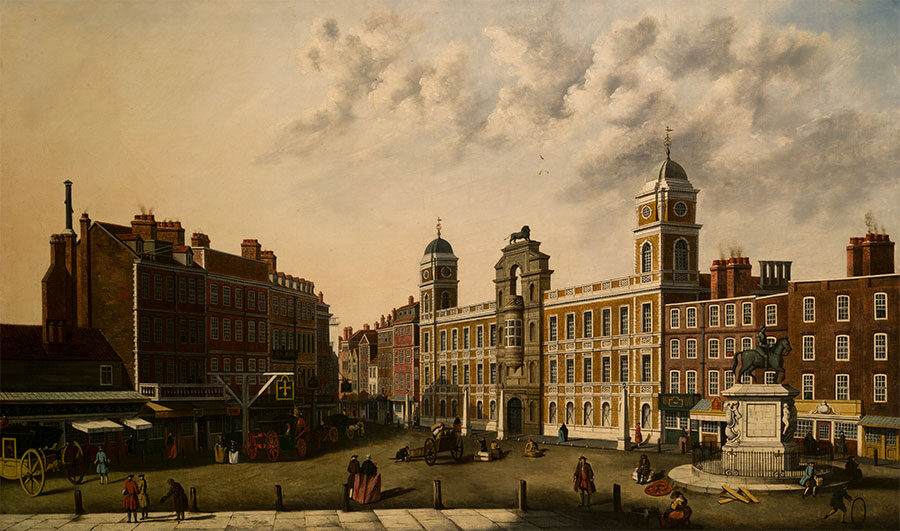
Before houses had numbers, the sign was how you found anything. London tradesmen gave their address as “at the sign of” whatever hung outside, and inns doubled as landmarks for everyone else on the street. When signs started carrying meaning, they started carrying risk. In 1643 the landlord of the Golden Cross on the Strand was made to take his sign down as superstitious and idolatrous.
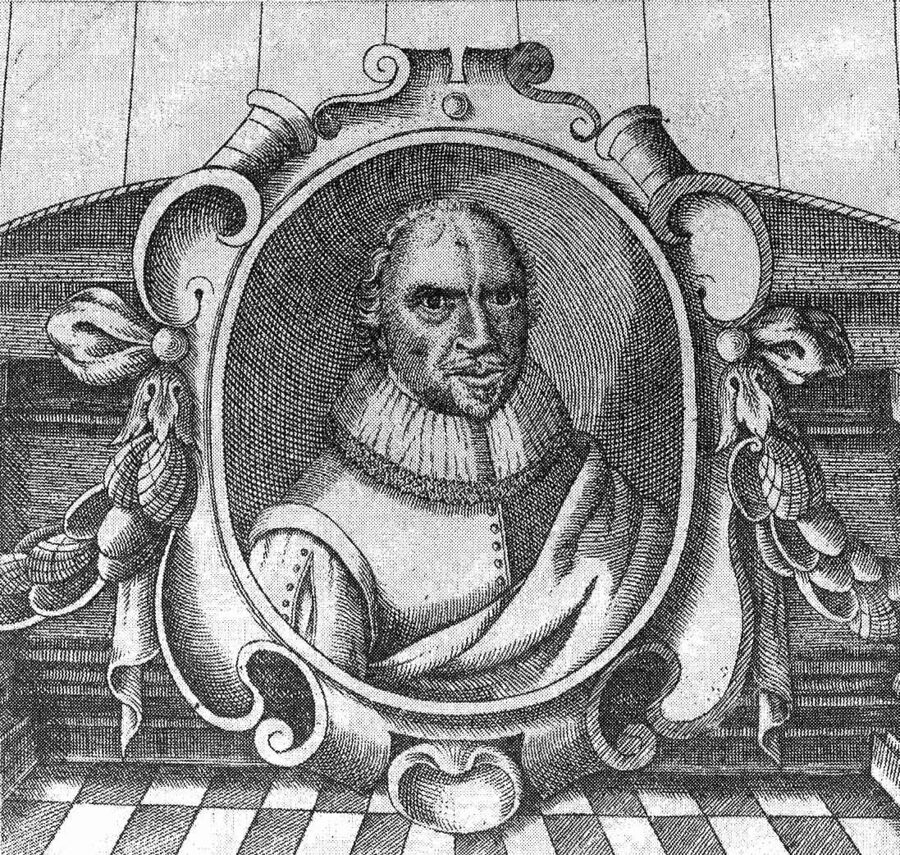
The waterman-poet John Taylor kept a tavern in Phoenix Alley and called it the Crown. After Charles I was executed in 1649 he renamed it the Mourning Crown, and when that went down badly with the new regime he hung out his own portrait instead and called the place the Poet’s Head. I cannot think of a more English answer to a political problem.
Signs grew with the streets, and then they grew dangerous. Charles II’s government ordered London’s signboards fixed flat to house fronts, yet in 1718 a heavy sign in Fleet Street still dragged down the front of a house and killed two people, by most accounts. In the 1760s Westminster and the City cleared hanging signs from their streets and began numbering houses. Shops lost their boards and pubs kept theirs, which is why a painted sign is now almost entirely a pub thing.
Gallows signs: the two you can still walk under
The showiest answer to a crowded street was the gallows sign, a beam right across the road so that nobody coming from either direction could miss the inn. A handful survive, and two are worth a detour.
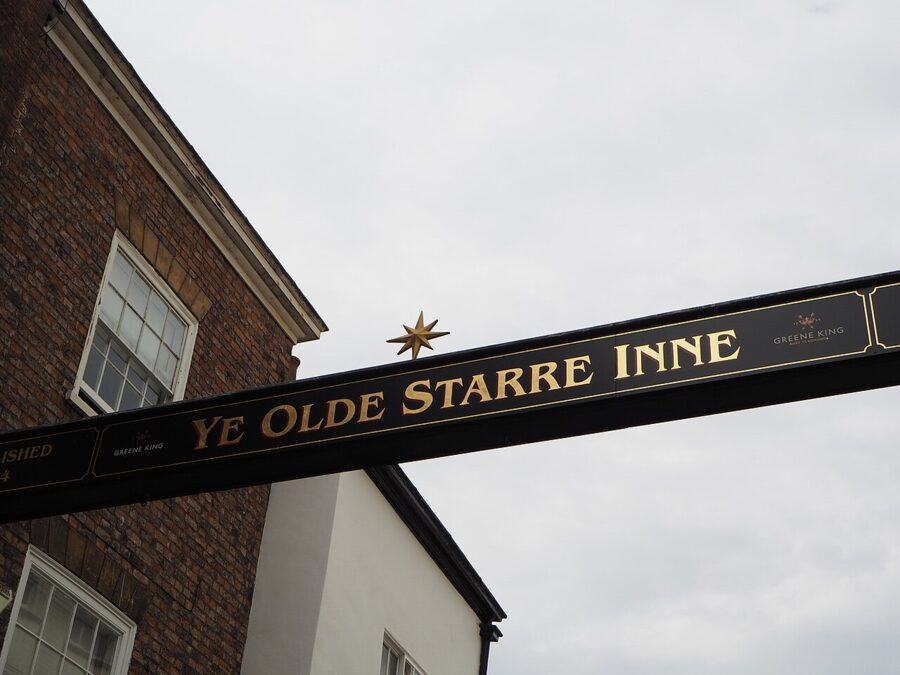
The best known is the beam across Stonegate in York for Ye Olde Starre Inne, at number 40. The inn itself is set back down a passage, which was the whole point of the beam: without it you would walk straight past. It calls itself the oldest inn in York on the strength of a mention in 1644, and like most such claims it is better treated as an opening bid; the oldest pubs in England have firmer evidence than most, and even they argue among themselves. It is a Greene King house, open from 11:00 every day with food 12:00–21:00, dogs and children welcome, and three beer terraces out the back.
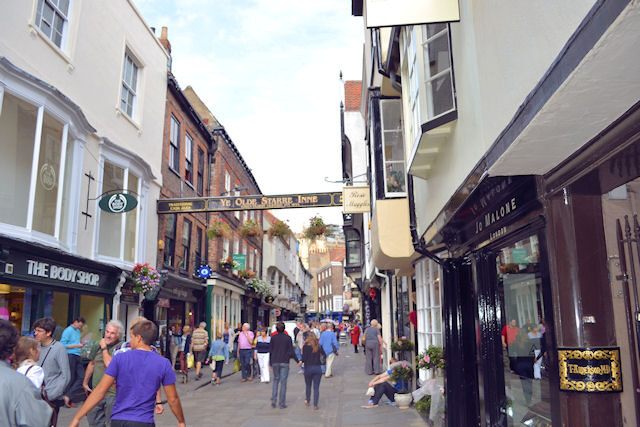

Of the best pubs in York, the Starre is the one first-time visitors find without trying, thanks to that beam. I’d go at opening time for the panelled front rooms and leave the terraces to the afternoon crowd.
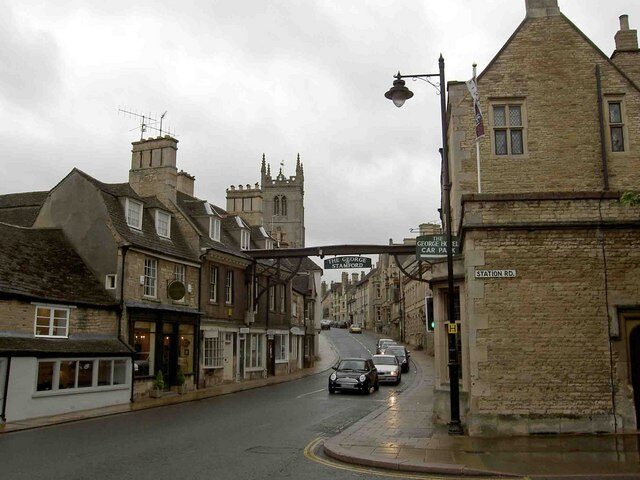
The other survivor is at Stamford, where the George’s sign crosses St Martin’s, the old Great North Road, just south of the river bridge. Daniel Defoe rated it one of the greatest inns in England, and Charles I and William III both stayed. Stamford likes to say the beam was a warning to highwaymen; I’d say it was an advert, and a very good one. The front bar has panelling, oak beams and a real fire, and it is a short walk from Stamford station.

The commonest names, counted
A pub directory’s count of the UK’s open pubs in November 2026 put the Red Lion top with 510, ahead of the Crown and the Royal Oak. That makes roughly one pub in every ninety a Red Lion. The exact numbers move by a few dozen depending on who is counting.
| Rank | Name | Open pubs, autumn 2026 |
|---|---|---|
| 1 | Red Lion | 510 |
| 2 | Crown | 456 |
| 3 | Royal Oak | 391 |
| 4 | White Hart | 283 |
| 5 | Swan | 271 |
| 6 | Railway | 264 |
| 7 | Plough | 264 |
| 8 | White Horse | 260 |
| 9 | Ship | 227 |
| 10 | Kings Arms | 223 |
| 11 | George | 219 |
| 12 | King’s Head | 205 |
Just behind come the Rose and Crown and the Bell on 201 each, the Queen’s Head on 191 and the Wheatsheaf on 190. Hardly any of them are about beer.
The Red Lion
There are two stories, and both get told as fact. The first gives the red lion to John of Gaunt, Duke of Lancaster and the most powerful man in late fourteenth-century England, on the grounds that the red lion was his badge. The second says that when James VI of Scotland became James I of England in 1603, he ordered the Scottish red lion displayed on public buildings, taverns included.
Nobody has produced that order, and a Red Lion was already brewing before James came south. A licence of April 1600 lets a brewer called William Catcher carry on in his brewhouse in East Smithfield, “commonlie called the Redd Lyon”, three years before the Scottish king arrived. My own view is duller: a red lion is heraldic, patriotic without committing you to a particular king, and readable from the end of the street.
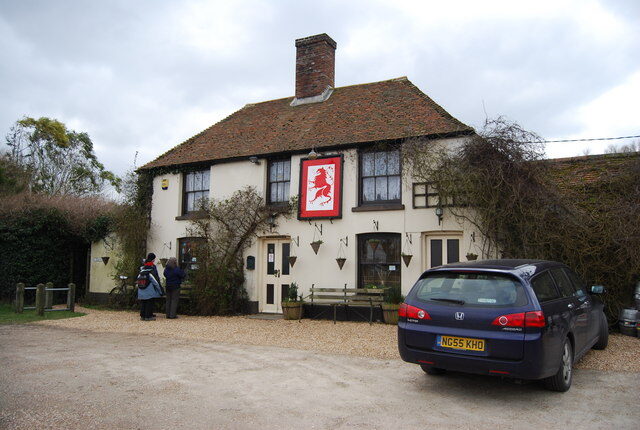
If you want to drink in a Red Lion that earns the name, go to Snargate. The locals call it Doris’s after the landlady who ran it for decades; her family has had it since 1911, and CAMRA rates the interior three stars on its National Inventory, the top grade. There is no food beyond bar snacks, the games are toad in the hole and table skittles, and dogs are welcome. It is on the B2080 a mile north-west of Brenzett, closed on Mondays, and otherwise open 12:00–15:00 and 18:00–21:00.

The Crown
Add the Crown’s 456 to the Rose and Crowns, the Crown and Anchors, the Three Crowns and the Old Crowns, and you have more than 700 pubs drinking to the monarchy. The crown is the safest loyalty sign there is, because it survives every change of king. The Rose and Crown adds the Tudor rose, and the Crown and Anchor is the navy’s version.
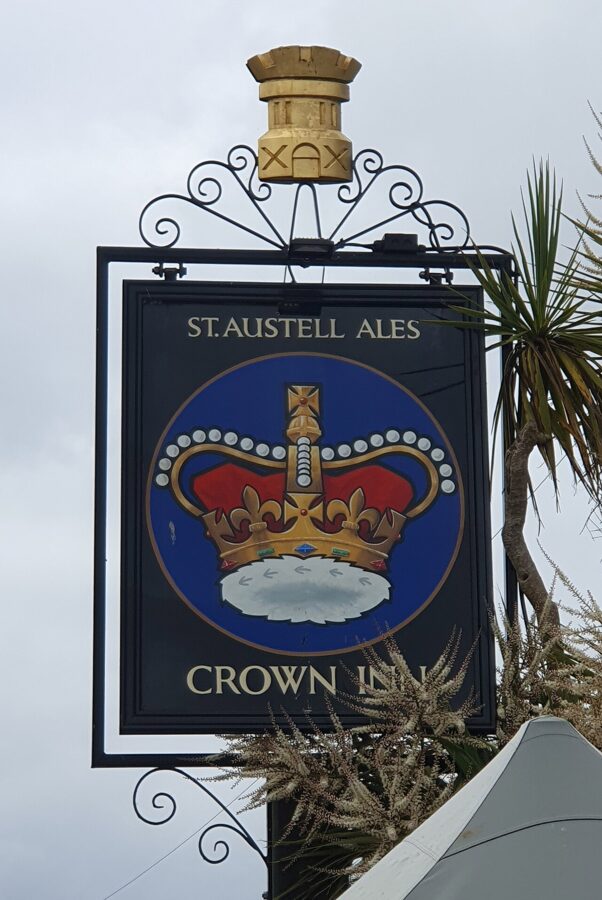
The Crown at Goldsithney is a fair example of the type: an L-shaped bar split by an archway, a real fire, a garden, and St Austell beers. Among Cornwall’s pubs it is nothing grand, which is exactly why I like it.
The Royal Oak
On 3 September 1651 Charles II lost the Battle of Worcester, and three days later he spent a day hiding in an oak at Boscobel in Shropshire, with Major William Careless beside him, while Parliament’s soldiers searched the woods below. When he came back as king in 1660, 29 May, his birthday and the day he rode into London, became Royal Oak Day. People wore oak sprigs, and alehouses all over the country renamed themselves the Royal Oak.
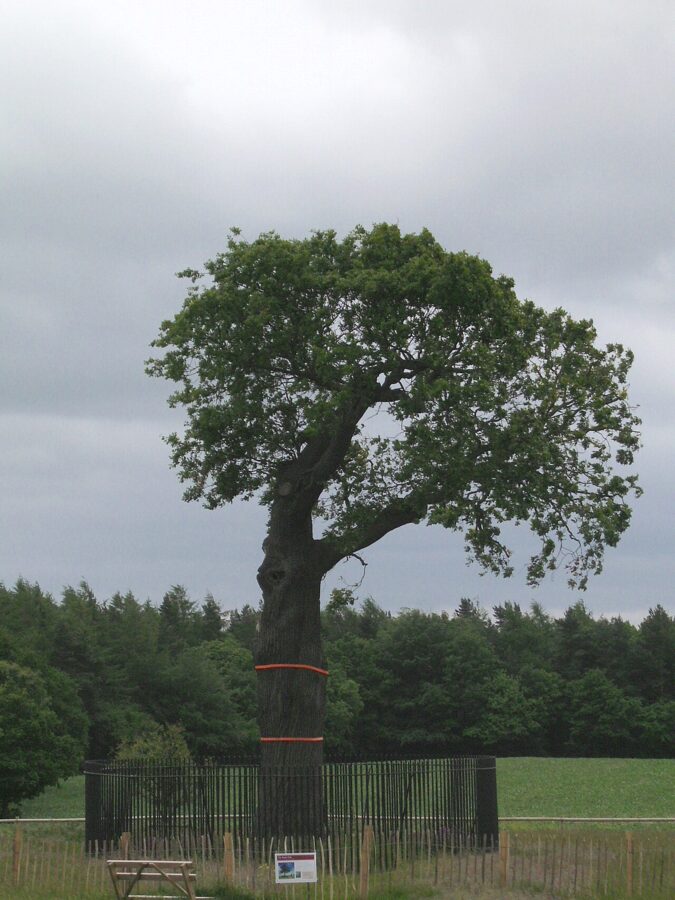

More than 360 years on, 391 of them are still open, which makes the Royal Oak the most successful piece of political branding in British history. Most signs show the king’s face peering out of the leaves. The best of them, further down, leaves him out altogether.
The White Hart
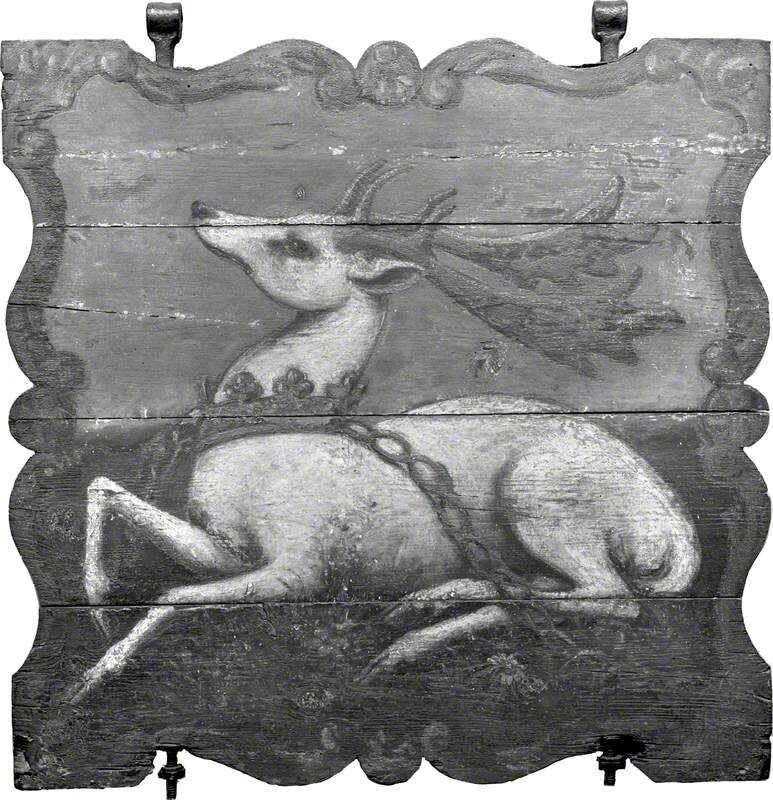
The white hart was Richard II’s personal badge, handed out to his followers from the 1390s and worn on their livery. In the Wilton Diptych, the little altarpiece painted for him in the late 1390s and now in the National Gallery, Richard kneels on one panel wearing his white hart, and every angel in the facing panel wears one too. Inns took it up as a mark of loyalty, and after he was deposed in 1399 it hung on anyway, because by then the White Hart simply meant a good inn.
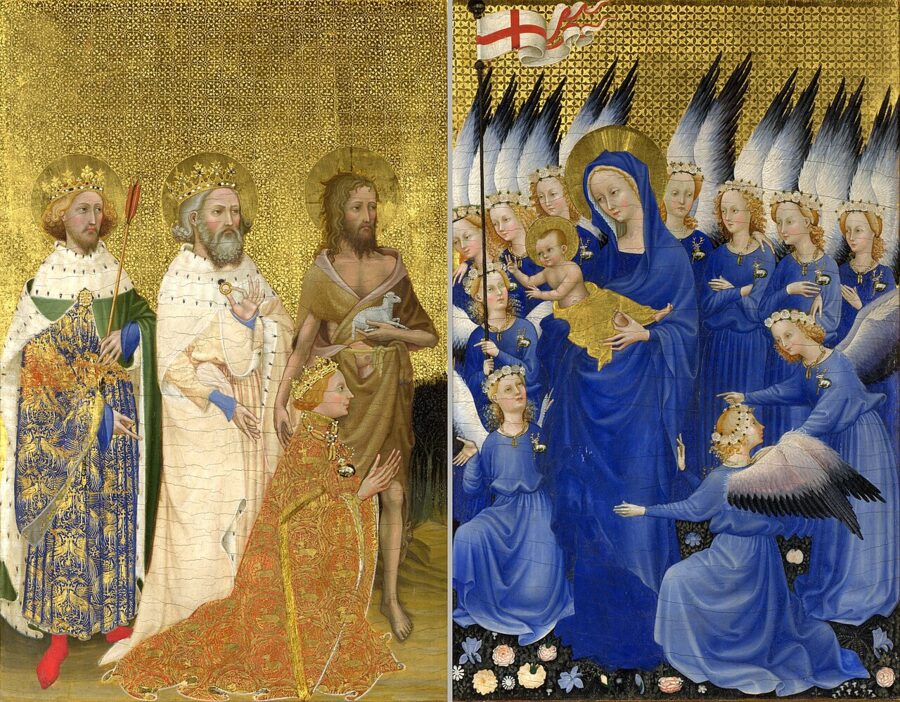
That is why there are 283 White Harts open today: loyalty first, then habit. The law of 1393 made a sign compulsory; it never told anyone to paint a deer.
The King’s Head and the Queen’s Head
The King’s Head (205) and the Queen’s Head (191) are the practical landlord’s names. The name stays when the monarch changes; only the face on the board needs repainting. The faces you meet most often are Henry VIII and Charles I, and Charles’s popularity as a sign grew after his execution, when a painted king was a quiet way for a royalist to say what he thought.
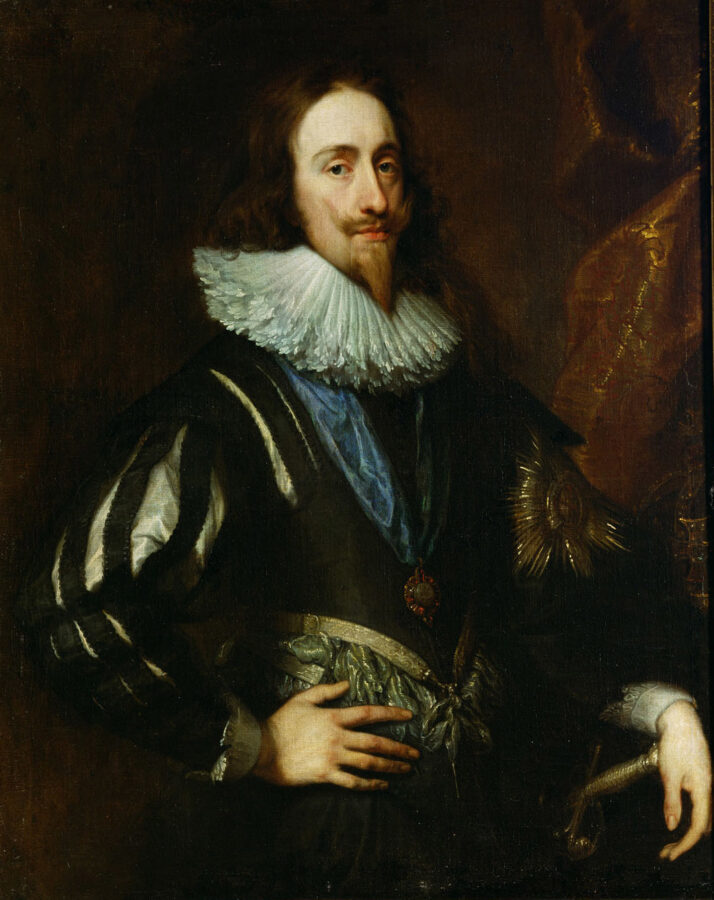
The Kings Arms (223) borrows the royal coat of arms instead of a face, and the George (219) covers six King Georges and a saint with a dragon.
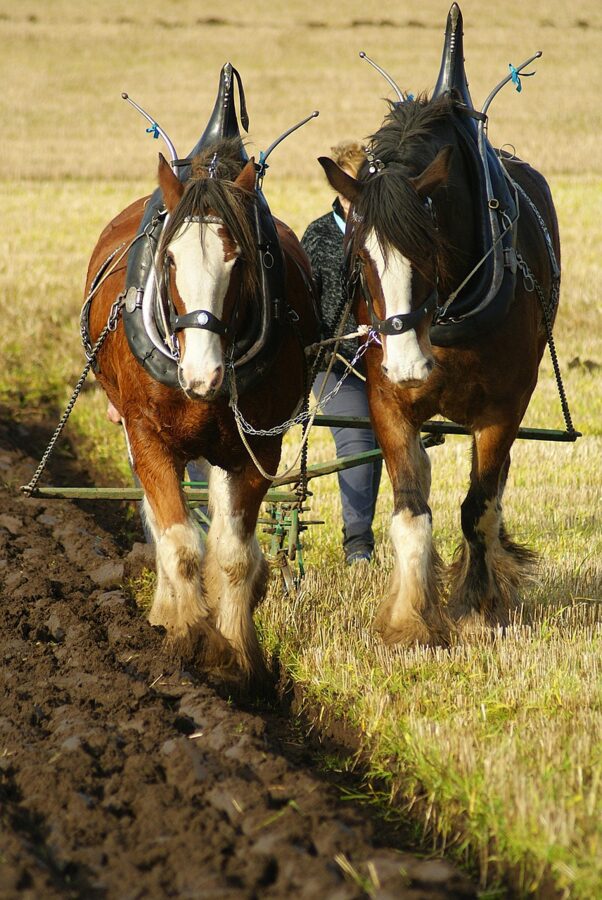
The Plough
The Plough (264), and the Plough and Harrow behind it, are the farm labourers’ pubs, named for the tool that paid for the beer. Some signs skip the tool and paint the seven stars of the Plough instead, which is a nice touch on a dark country road. On Plough Monday, after Twelfth Night, ploughboys dragged a plough round the village collecting money, and you can guess where much of it went.
The Swan
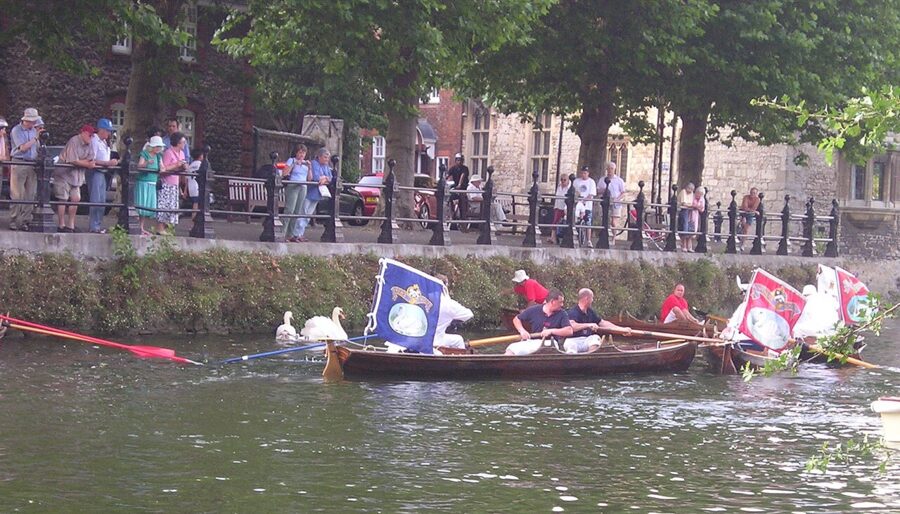
The Swan (271), with the White Swan and the Black Swan behind it, is partly heraldic and partly geography. The swan was the badge of the de Bohun family, which Henry IV married into, and his son Henry V wore it too. It also suits a riverside pub, and a lot of Swans are.
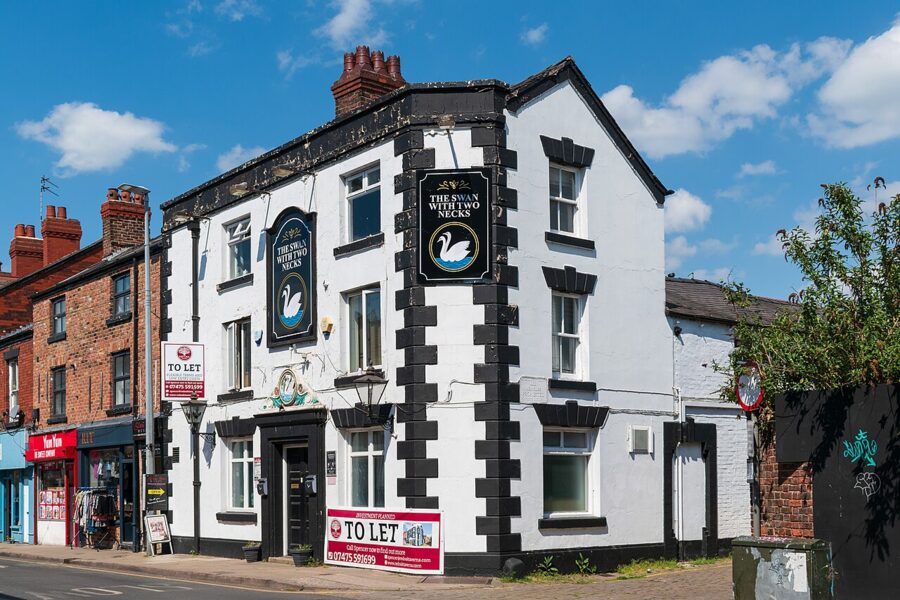
The Swan with Two Necks is the best name in the family. Swans on the Thames belong to the Crown, the Vintners’ Company or the Dyers’ Company, and for centuries the companies marked their cygnets by nicking the bill: one nick for the Dyers, two for the Vintners. A swan with two nicks became a swan with two necks, and sign painters happily gave the bird two heads. It is the likeliest story, and the Vintners were wine merchants with every reason to hang the bird outside a tavern.

There is a good example on Chestergate in Macclesfield, a black-and-white town pub that reopened after a refurbishment and now does live music on Friday and Saturday nights. The sign is the selling point.

Trades, coats of arms and saints
Below the top dozen the list breaks into three big families, and each tells you who the pub was built for.
The trades
An “Arms” was first a landowner’s coat of arms, hung over the inn he owned or wanted to flatter; there are still 26 Devonshire Arms open. Working men borrowed the idea for their own trades, and the arms of the livery companies came with them. So you get the Masons Arms (71), the Farmers Arms (63), the Butchers Arms (55), the Blacksmiths Arms (51), the Carpenters Arms (50), the Miners Arms (43) and the Bricklayers Arms (33).
These were often houses of call, where a tradesman looking for work, or a master looking for men, knew to go. The Wheatsheaf (190) carries a sheaf from the arms of the bakers and the brewers, and the Three Tuns (54) comes from the Vintners’ Company. The Three Horseshoes (97) often had a forge next door, and the Woolpack (49) turns up in wool towns. The Oddfellows Arms (36) is where a friendly society met and paid out its sick money.
Then there are the roads: the Coach and Horses (121), the Waggon and Horses and the Pack Horse, and the Navigation for the canal men. A pub name is often the only trace left of a trade that has vanished from the street.
Borrowed heraldry
A lot of animal names are somebody’s badge. The Bear and Ragged Staff belonged to the Earls of Warwick, the Talbot (a white hunting hound) to the Talbot earls of Shrewsbury, and the Blue Boar to the de Vere earls of Oxford. The White Lion (129) was a badge of the Mortimers and of Edward IV, and the Feathers is the Prince of Wales’s plume. The White Horse (260) is the horse of Kent, and the Hanoverian kings brought another white horse with them in 1714.
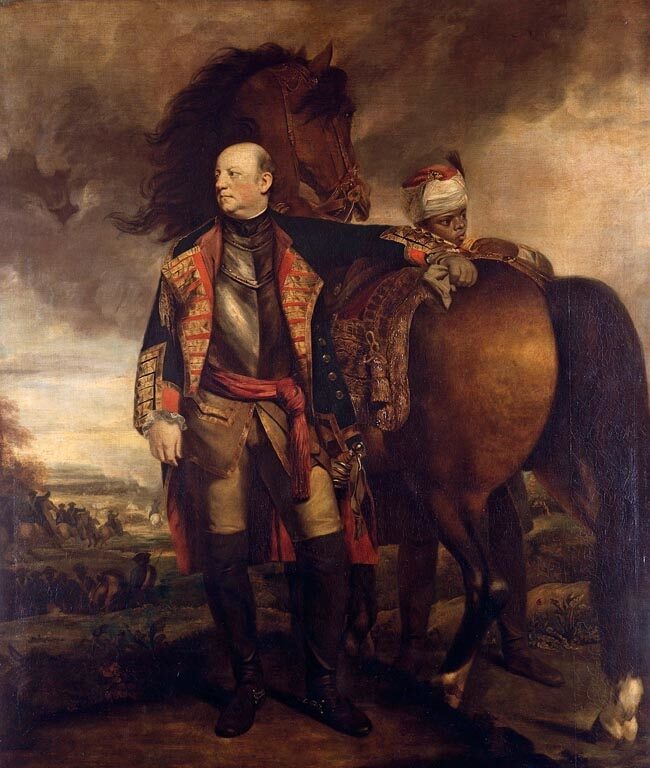
Some heraldry is personal. John Manners, Marquess of Granby, led the British cavalry in Germany during the Seven Years’ War, and the story goes that he helped his old non-commissioned officers set up as publicans when they left the army. At the Battle of Warburg in 1760 his hat and wig blew off as he led the charge, which is why so many Marquis of Granby signs show him bald. The publicans story is tradition rather than proof; the bald head is on the signs for everyone to see.
Saints, angels and the Reformation
Religious names are older than most and have had a rougher time. The Cross Keys (140) are St Peter’s keys to heaven, and often stood near a church or abbey that held land from him. The Mitre is a bishop’s hat. The Bell (201), the Six Bells and the Ring o’ Bells were the bellringers’ pubs, which makes sense once you have rung a peal and need a drink.
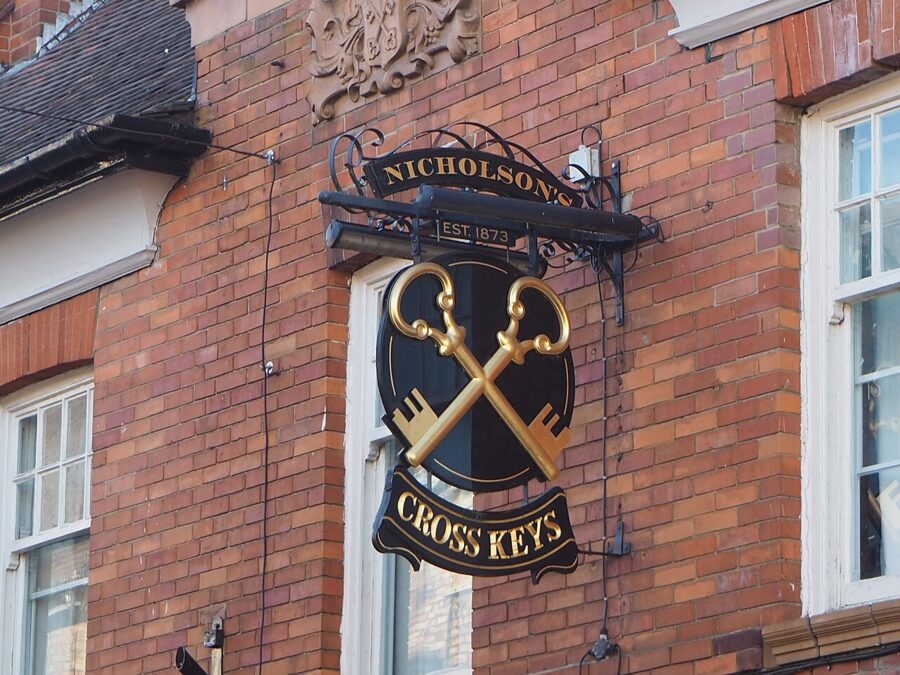

The Reformation and the Puritans went after the rest. St Catherine’s wheel became the Cat and Wheel, and Puritans objected to the Salutation, which showed the angel Gabriel greeting the Virgin. In at least one town the landlord kept his licence by renaming it the Soldier and Citizen and painting two men greeting each other. The Angel (98) survived by being vague.
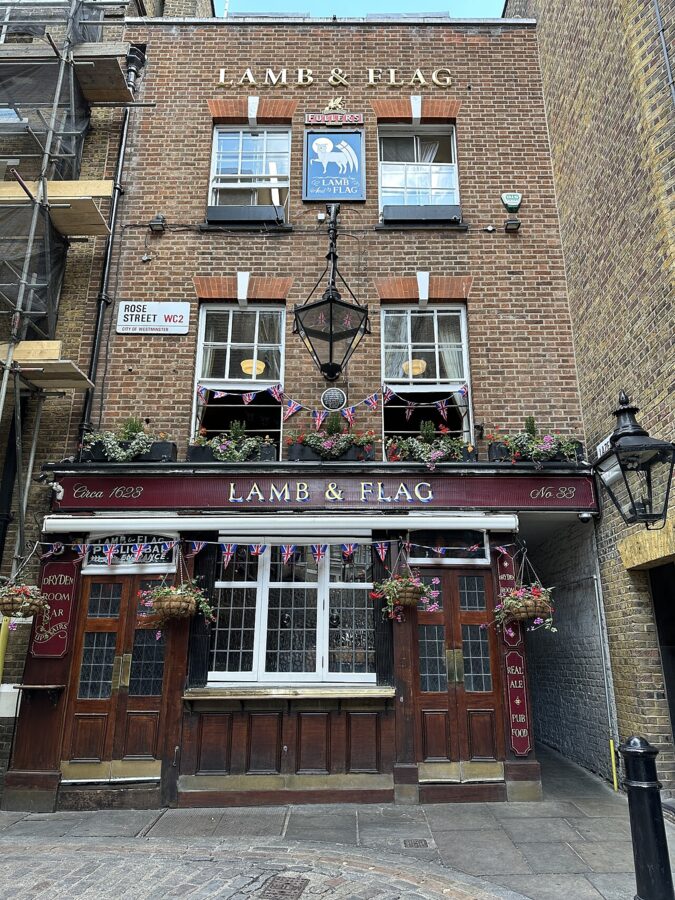
The Lamb and Flag in Covent Garden carries the Agnus Dei, the Lamb of God with a cross-marked banner. It was the Coopers Arms before that, it is reputed to have been licensed in 1623, and it turns up on most lists of London’s oldest pubs. In the nineteenth century it hosted bare-knuckle prize fights and earned the nickname the Bucket of Blood. It is a Fuller’s pub at 33 Rose Street, three minutes from Covent Garden station, serving food 12:00–21:30 (20:30 on Sundays), and the upstairs room is the place to be when downstairs is standing room only.

The odd ones
Every pub crawl conversation ends up here. Some odd names are older than they look, and some are much younger.
The Bucket of Blood
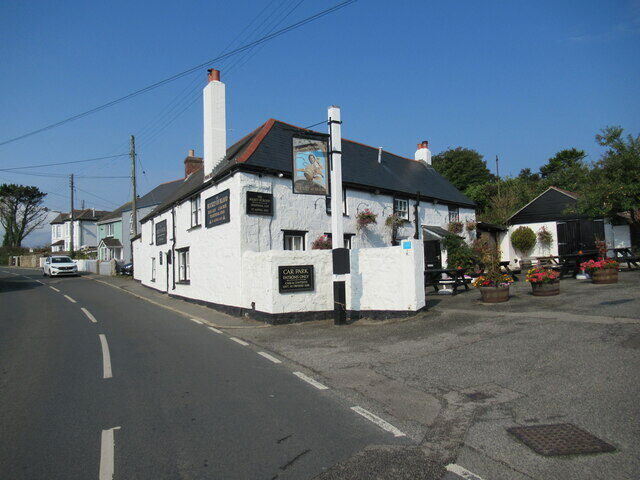
The real Bucket of Blood is at Phillack, a village on the edge of the dunes at Hayle Towans in west Cornwall. The story is that a landlord let a bucket down the well and drew it up full of blood, with a murdered revenue man at the bottom, which fits a smuggling coast. The duller explanation is red water from the old mine workings. I’d bet on the mine, but I’d tell the other story at the bar.
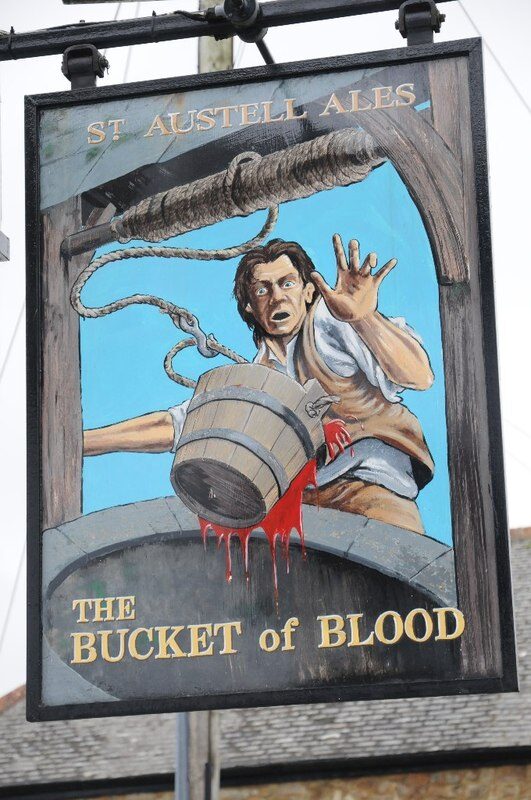

It is a St Austell house, with Tribute on the bar, a single low room with a pool table, and dogs and families welcome. It is closed on Mondays and Tuesdays and opens from 12:00 the rest of the week; food runs 17:00–20:00 Wednesday to Sunday, but the kitchen shuts between November and Easter, so ring before you plan a winter dinner around it. The building is Grade II listed.

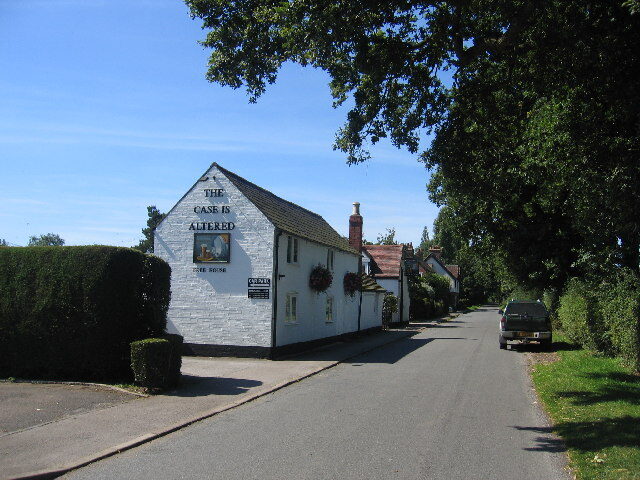
The Case is Altered
The Spanish stories (that it comes from “casa alta”, brought home by soldiers from the Peninsular War) are fun and unsupported. The phrase is a Tudor lawyer’s: Edmund Plowden is credited with saying “the case is altered” when new facts changed an argument, Ben Jonson used it as the title of a comedy, and by the 1600s it was a proverb. A landlord whose fortunes had changed could hang it out as a joke on himself.
The Case is Altered at Five Ways, between Warwick and Solihull, is the one to visit. CAMRA lists its bar and separate snug as a historic interior of special national interest, and the landlady has run it for more than 30 years after taking over from her grandmother. Children, dogs and mobile phones are not allowed. It opens 18:00–23:00 Monday to Wednesday, 12:00–14:00 and 18:00–23:00 Thursday to Saturday, and 12:00–19:00 on Sunday, and you will need a car or a taxi to reach Case Lane, off Five Ways Road near where the A4141 meets the A4177.

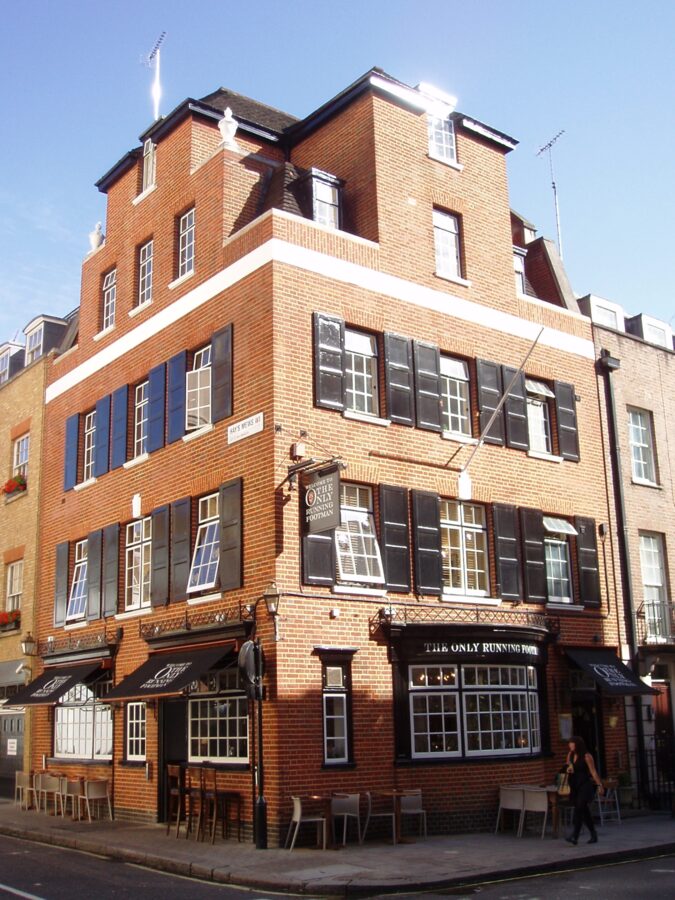
The longest name in London, getting shorter
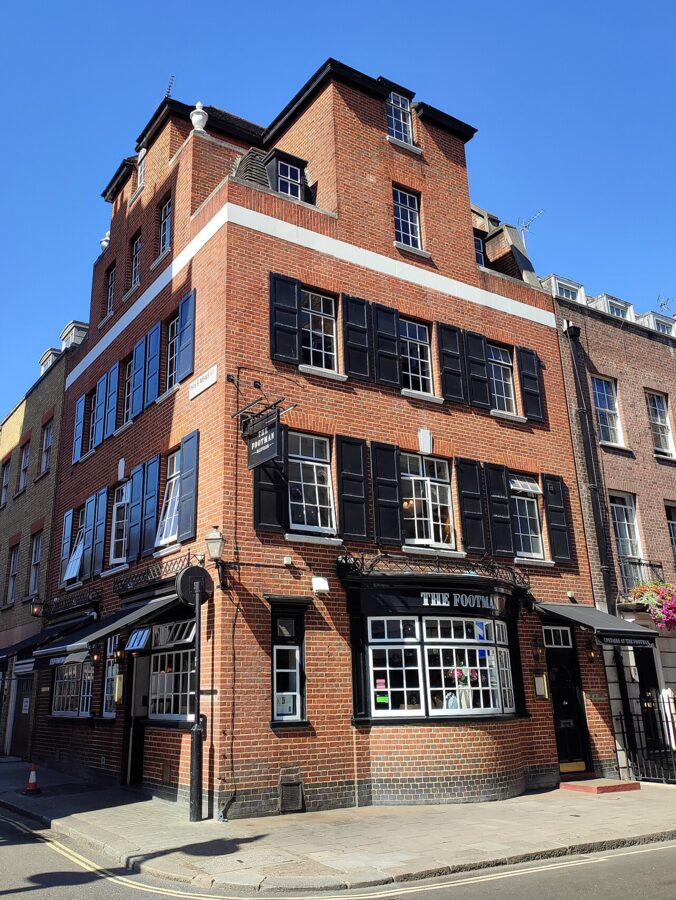
Running footmen were the servants who ran ahead of a gentleman’s carriage, clearing the road and paying the tolls. The Charles Street pub was built in 1749 as the Running Horse and later took the name I Am the Only Running Footman, which tradition credits to one of the last of them buying the place on his retirement. It was the longest pub name in London for years.
Then it shrank. It was the Only Running Footman by 2008, and CAMRA now lists it simply as the Footman. It is a Greene King pub with an upstairs restaurant, five minutes’ walk from Green Park station off Berkeley Square, serving food 12:00–21:30 (20:30 on Sundays). The house beer is called Footman Ale, which suggests someone at head office misses the old name too.

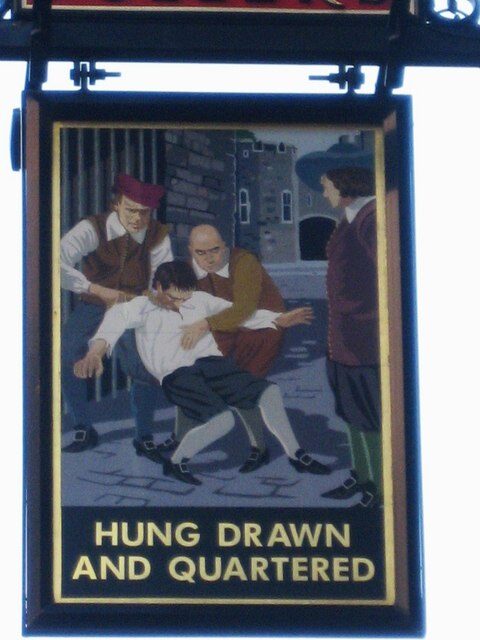
The Hung, Drawn and Quartered
On Great Tower Street, Fuller’s turned a listed former bank into an Ale and Pie house and named it after the grisliest of the old punishments, a nod to the execution ground on Tower Hill up the road. Samuel Pepys watched Major-General Harrison hanged, drawn and quartered at Charing Cross in October 1660, “looking as cheerful as any man could do in that condition”. The pub is cheerful too, with high ceilings, panelling and portraits of monarchs. It is a five-minute walk from Tower Hill station, open 12:00–23:00 Monday to Saturday and 12:00–18:00 on Sunday.

Myths with a grain of something
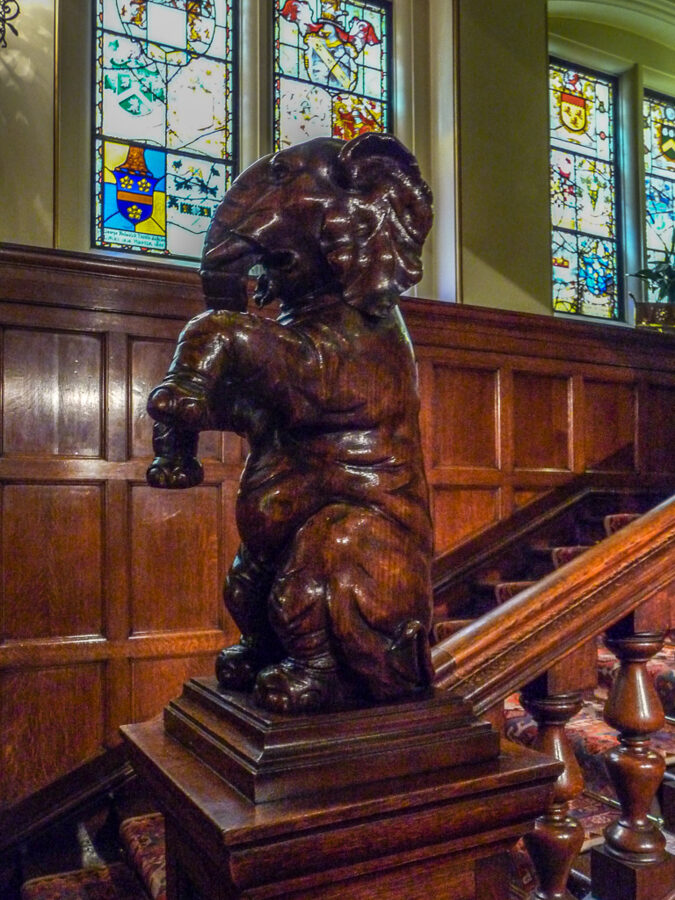
The Elephant and Castle (24 still open) is not a corruption of “la Infanta de Castilla”, whatever the pub quiz says; that story has been taken apart by local historians. The better bet is the crest of the Cutlers’ Company, an elephant carrying a castle, chosen because ivory made the best knife handles. The Swan with Two Necks you know about. And the Silent Woman and Quiet Woman signs, which show a headless woman, are a joke that has aged about as well as you would expect.

What the Victorians changed, and what the chains did next
In 1830 the Beerhouse Act let any ratepayer sell beer from his own house for a licence of two guineas. Tens of thousands of beerhouses opened within the decade, and they all needed names. The Railway (264) and the Station (116) followed the lines, the Alma commemorates a Crimean battle of 1854, and the Volunteer the rifle volunteers of 1859. The Victoria, the Prince Albert and the Commercial tell you which decades built them.
The big brewers bought the beerhouses up as tied houses and often renamed them with the new paint. The New Inn (202 still trading) is the oldest trick of all: a fresh name for a rebuilt house, which then stays new for three hundred years.
Orwell’s ideal pub, and the chain that borrowed it
In February 1946 George Orwell described his favourite pub, the Moon Under Water, in the Evening Standard: no radio, quiet enough to talk, draught stout, a garden for families, and barmaids who called everyone “dear”. At the end he admitted it did not exist. Wetherspoon took the name for several of its pubs. The one on Deansgate in Manchester opened in August 1995 in the old Deansgate Picture House and is one of the biggest pubs in the country, which is about as far from Orwell’s snug local as you can get.
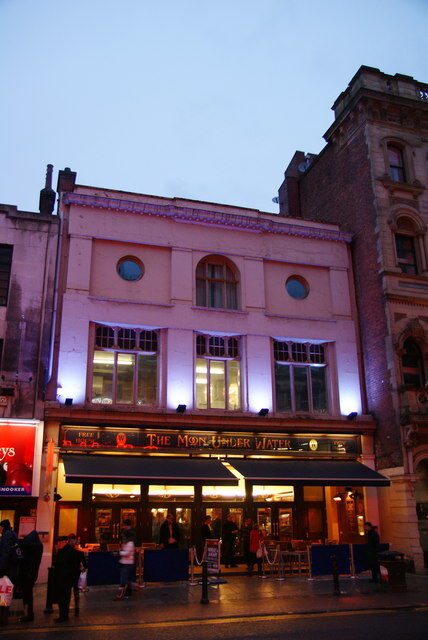

It is not one of the best pubs in Manchester, but the name alone makes it worth a look. Conversions often take the name of what the building used to be, which is why the count includes 22 Old Banks and 21 Old Post Offices.
Firkins, frogs and theme bars
In July 1979 David Bruce borrowed against his house, took over the Duke of York at 47 Borough Road in Southwark, put a brewery in it and called it the Goose and Firkin. A firkin is a nine-gallon cask, and the puns that followed (the Frog and Firkin, the Flounder and Firkin) became a chain of eleven pubs. Bruce sold up in 1988, the brand changed hands several times, and by 1999 the Firkins had stopped brewing altogether.
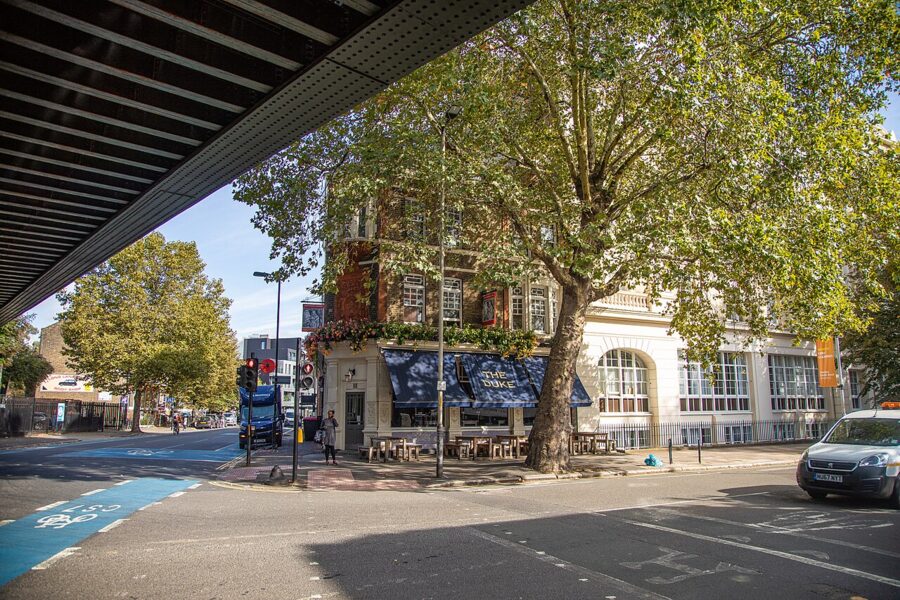

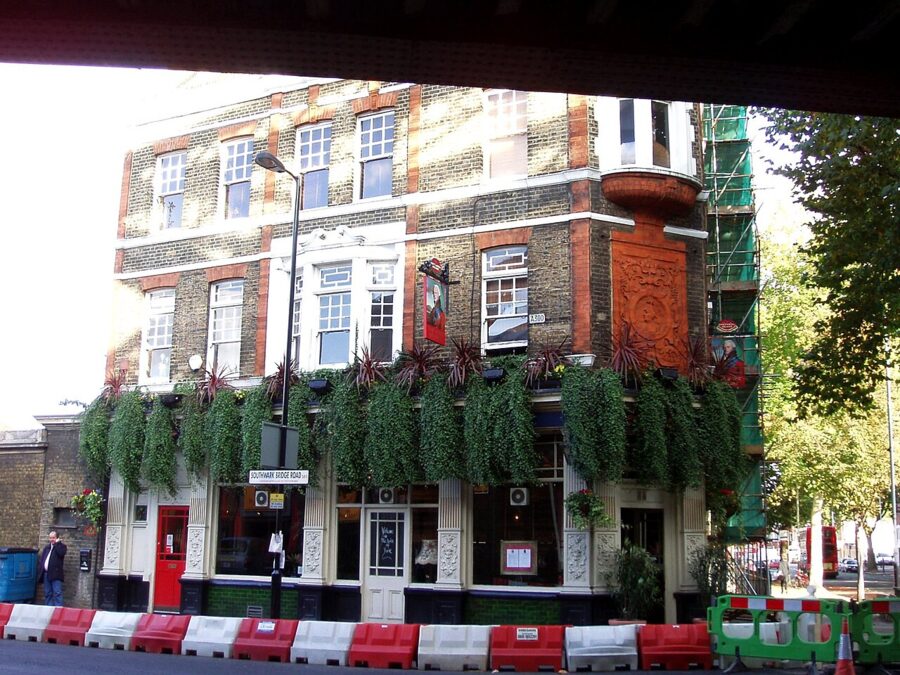

The Firkin trick of renaming an old local with a brand was copied across the 1980s and 1990s, and theme chains such as the Slug and Lettuce and the Rat and Parrot renamed plenty of old Crowns and King’s Heads. Some have since gone back to their old names, which is the best argument for keeping the old sign in the cellar. Today’s version is the bar brand: the count includes 24 Botanists and 22 Alchemists.
Sign painters, and where to see the good ones
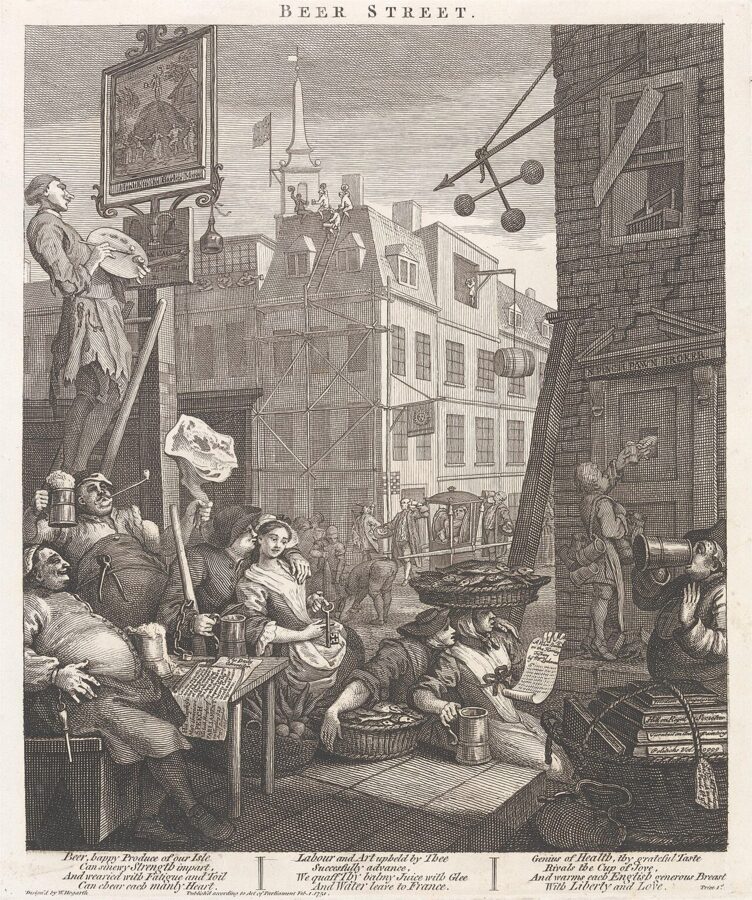
For most of their history pub signs were painted by local tradesmen, coach painters and the odd hard-up artist. In Beer Street, Hogarth’s 1751 engraving of a happy, beer-fed London, one of the few thin, ragged figures is the sign painter up his ladder. Painting signs was what artists did when nobody bought their pictures.
In 1762 Hogarth’s friend Bonnell Thornton staged a spoof Grand Exhibition of the Society of Sign-Painters at his rooms in Bow Street: about 110 inn and shop signs, a shilling to get in, and a running joke at the expense of the fashionable art exhibitions of the day. It was a satire, but it was probably also the first exhibition of signboards anywhere.
Artists who painted for their local
A few proper painters did sign work for love. Myles Birket Foster, the Victorian watercolourist, painted a White Hart for the village inn at Witley in Surrey around 1875 with his friend Alfred W. Cooper. The Victoria and Albert Museum bought it in 1938, and it can be seen there by appointment.
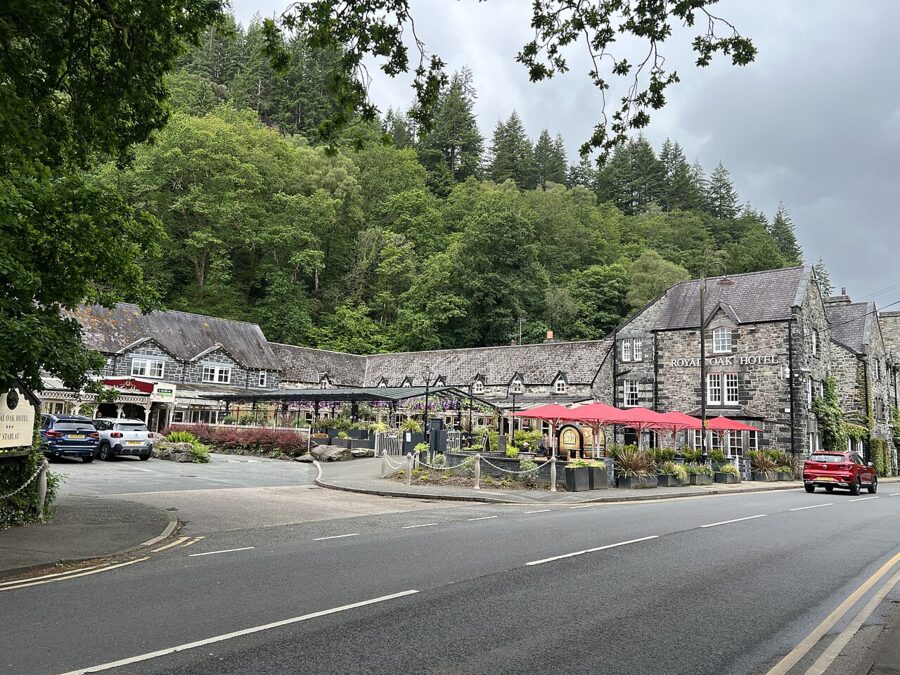
David Cox, the Birmingham watercolourist, came to Betws-y-Coed in 1844 and made the Royal Oak his summer base; other artists followed him and the village became an artists’ colony. In 1847 he painted an oak tree for the hotel, and it hung outside as the sign before it was brought indoors. It now hangs above the fireplace in the main lounge. The Stables bar next door serves Conwy beers, with food 12:00–21:00 every day.

Cambridge had Richard Hopkins Leach (1794–1851), whose obituary praised his inn signs. Dorset had George Biles of Bridport, apprenticed in 1914, who painted for Palmers Brewery for most of a career that ran nearly 70 years; in 1931 he and his assistants got through more than 20,000 leaves of gold leaf on lettering alone. Palmers has kept many of his swing signs, some with a different picture on each side, so look up when you visit the brewery’s Dorset pubs around Bridport.
Who still paints them by hand
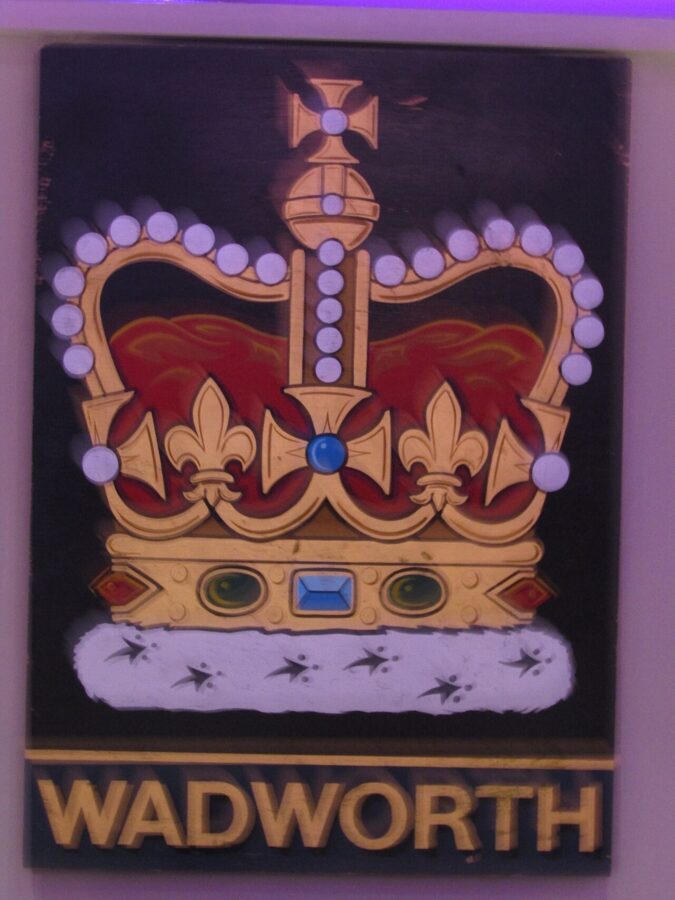
Most signs now are printed panels, which is cheaper and looks it. Wadworth in Devizes still runs its own sign shop, where a sign writer letters the boards by hand, with real gold leaf for the gilding, and an artist paints the pictures; the brewery says it is the only one left doing it.

The Inn Sign Society, founded in 1990, keeps an archive of around 50,000 signs and runs a Pub Sign of the Year; 39 signs had been entered for 2026 by mid-November, with entries closing on 30 November.
Where to look up
For gallows signs, go to Stonegate in York and St Martin’s in Stamford. For an artist’s sign, the lounge of the Royal Oak at Betws-y-Coed. For hand-painted boards still doing their job, Palmers’ pubs around Bridport and Wadworth’s around Devizes.
Next time you go into a pub, stop under the sign first. Work out whose badge it is, which king it flattered, which trade it served, and whether the board has been changed since. Then go in, ask what is on cask, and if it is a Red Lion, ask what it used to be called. At Snargate the answer is the Shepherd and Lamb.