
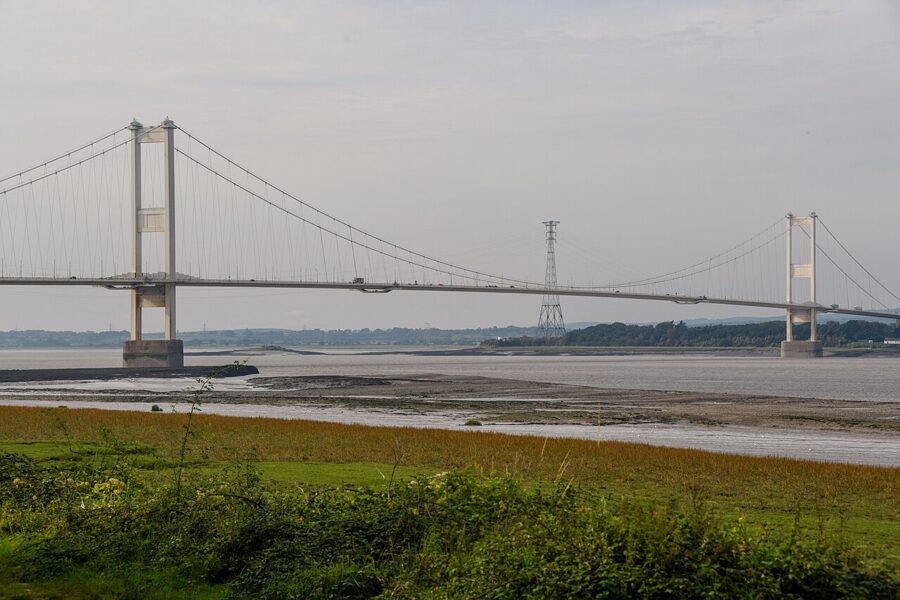
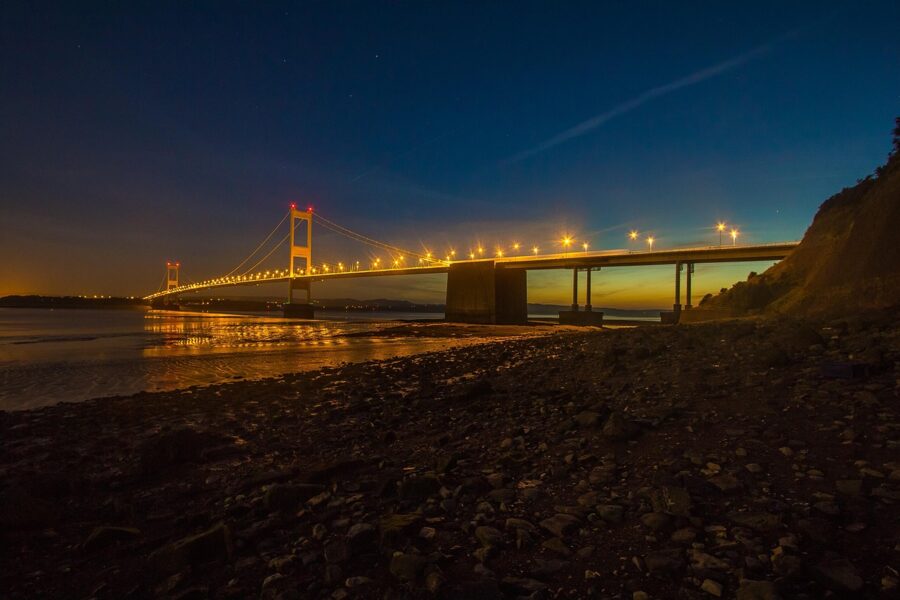
Nellie is a boar’s head mounted on an inside wall of the Boar’s Head at Aust, and she keeps an eye on a run of low-ceilinged little rooms in a building that goes back to the 16th century. A few hundred yards west, the first Severn Bridge carries the M48 over to Wales. Before it opened in 1966, the way across was a car ferry from a slipway below the village, and the queue for it was the reason half of England had heard of Aust at all.
That is South Gloucestershire in one pub: an old inn on an old road, built for traffic that has since found a faster way past. The county wraps round the north and east of Bristol, and its pubs sit in three quite different kinds of country. There are the villages of the Frome valley around Winterbourne, half swallowed by the city and still stubbornly villages; the flat levels along the Severn shore; and the Cotswold edge to the east, where the land finally lifts.

Add Thornbury, a small market town with two pubs worth the detour, and the docks at Sharpness just over the line in Stroud district, and you have a long day’s drive or several good walks. The city itself is covered in the guide to Bristol’s pubs. Out here you need a car, a bus timetable or decent boots, and you need to check opening hours, because country pubs keep their own.
On this page
What South Gloucestershire drinks
This is not big brewing country any more, and the beer on the bar mostly tells you who owns the building. Stonegate, Greene King, Marston’s, Admiral, Punch and Mitchells & Butlers all have pubs here, so Doom Bar, London Pride and Greene King’s range turn up often. The local ownership is where it gets interesting. Butcombe, from the Mendips side of Bristol, owns the Bowl at Almondsbury; Wadworth of Devizes owns the Plough at Pilning and the Rose & Crown at Pucklechurch; and Bath Ales brews on the eastern edge of Bristol at Warmley.
The best beer pubs are the free houses and the family-run ones. The Rising Sun at Frampton Cotterell is the tap for Hop Union, a brewery in Brislington run by the same family. The Horseshoe at Chipping Sodbury pours seven handpumps of mostly West Country beer, including its own Chipping Sodbury Bitter. And the Masons Arms at Watleys End still keeps Draught Bass, which is always good news.
If the terms are new to you, the guide to real ale explains what cask beer is and why it tastes different.
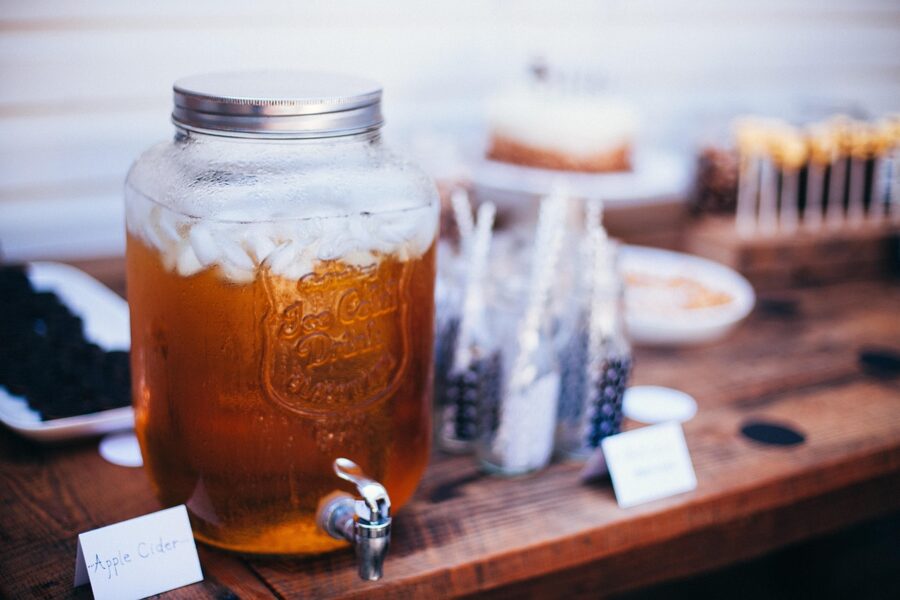
Cider is part of the furniture. You are a short drive from Somerset’s orchards and the perry-pear country of the Severn vale, and a real cider, still and cloudy, turns up at the Butcher’s Hook in Thornbury, the Anchor at Oldbury, the Wishing Well at Codrington and the Lamb at Iron Acton in summer. If you want to understand what you are drinking, start with cider; if you want it by the dozen, Bristol’s cider pubs are a short bus ride away.
What the county does best is the old village pub with a big garden. Almost every pub in this guide has one, a lot of them have a play area, and a surprising number have something else in it: a brook, a stream, boules pistes, a camping field, alpacas.
It also has more than its share of old coaching inns on the main roads north and east of Bristol, from the A38 at Alveston to the A46 at Old Sodbury. Some have stayed pubs. Others are now carveries with a listed building wrapped round them, and I’ll say which is which.
Winterbourne and the Frome valley
The River Frome rises near Old Sodbury and runs south-west through a string of villages into Bristol, and the Frome Valley Walkway follows it most of the way. Winterbourne, Frampton Cotterell and Iron Acton have grown into commuter villages without quite letting go of being villages, and their pubs show it. You will find a nationally rated Victorian local, a brewery tap that won its branch’s top award, and a 17th-century roadside inn on the Yate road.
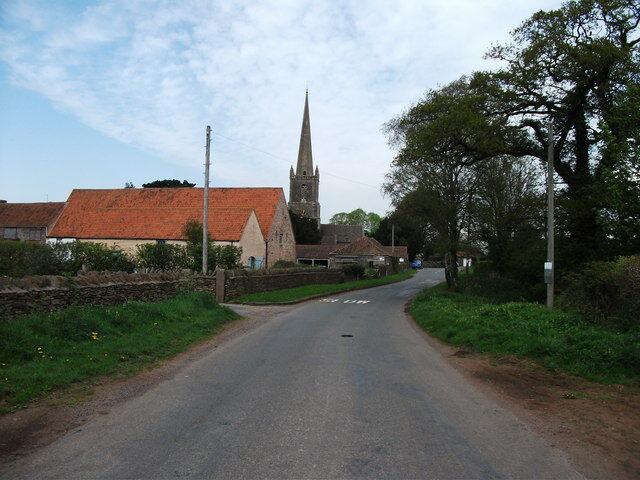

Winterbourne and Winterbourne Down
Start with the Masons Arms on North Road at Watleys End, which CAMRA describes, fairly, as a locals’ pub that no traveller could stumble on by accident. It is a brick-built community pub of the 1880s with two bars, and CAMRA rates its interior as one of special national historic interest on its National Inventory. That is rare for a suburban local of this age. The building is not listed; the rooms are the point.
Go for conversation rather than a meal. There is Draught Bass and Butcombe Original on the bar, a garden at the back, live sport on the screens and a welcome for dogs. Check the hours before a weekday afternoon visit: CAMRA’s listing has it shutting between 15:00 and 17:30 on weekdays, while the pub’s own page says it opens from noon every day.
Down the hill, the Golden Heart on Down Road at Winterbourne Down is a different animal: a large family dining pub, run by Mitchells & Butlers, with extensive gardens. It reopened in 2011 after a big refurbishment. The front room is the old pub, with stripped beams, low ceilings and a real fire, and that is where I would sit; the family restaurant is at the back.
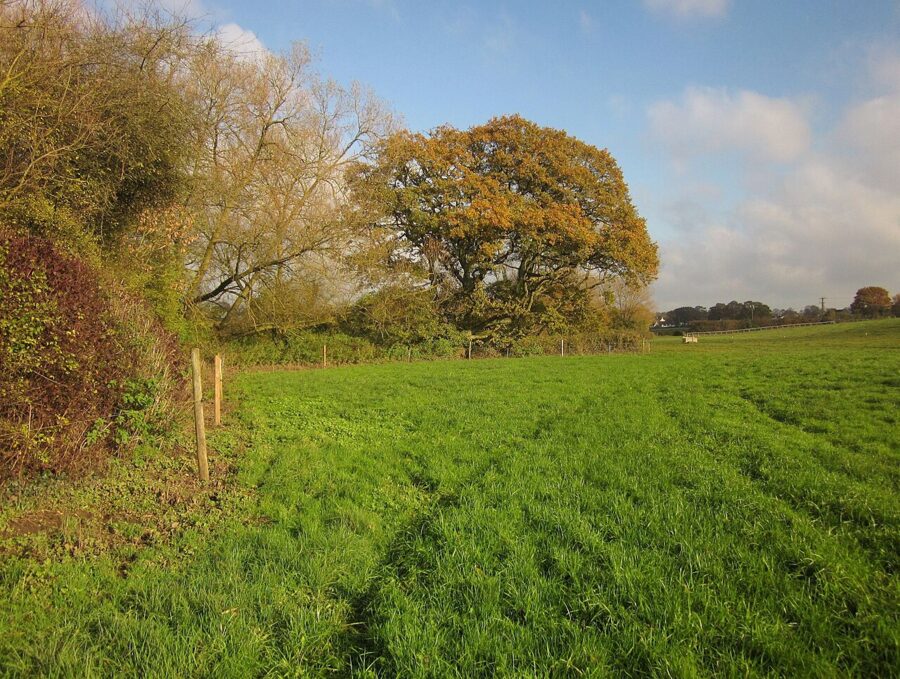

The Swan on Winterbourne High Street, an early 17th-century inn with a cobbled floor in the bar that traded in recent years as a smokehouse grill, is closed long term. So, for now, is the little brewery tap in the old cow byres at the medieval barn. Winterbourne’s pub map is shorter than it was, which makes the Masons Arms more worth the walk.
Hambrook, Frampton Cotterell and Mayshill
The White Horse on Bristol Road in Hambrook was closed for over two years before it reopened in 2017, and it came back better than most. There are two rooms with wooden floors, candles on the tables and a big fireplace, and a menu built on suppliers from within about 25 miles. The garden is the thing: it runs down in levels to the Bradley Brook.
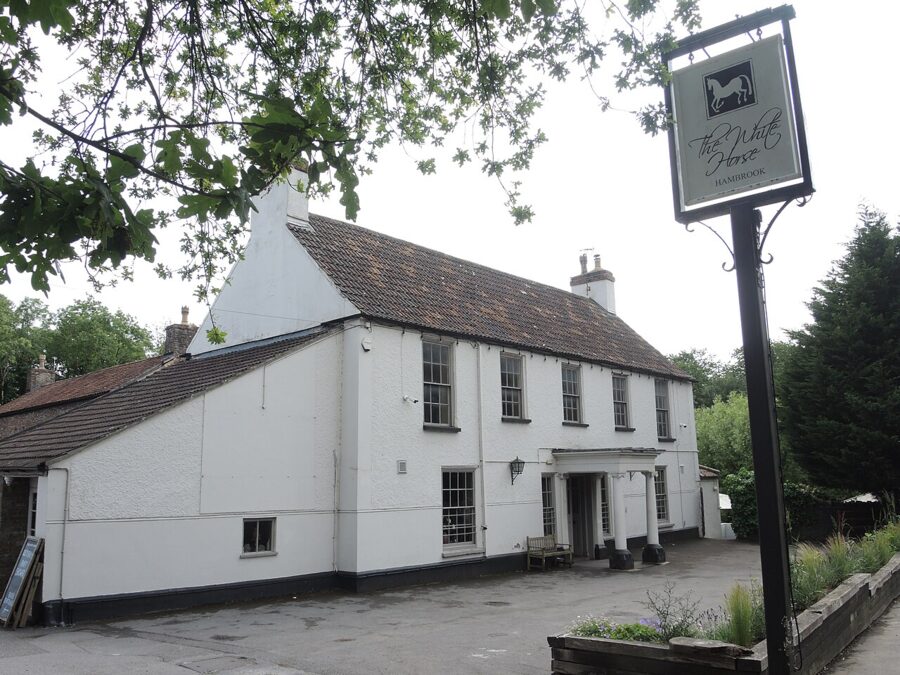

Hours are particular, so note them. The White Horse opens at 17:00 on Mondays, with food 17:00–21:00, and 12:00–23:00 Tuesday to Saturday, with food 12:00–15:00 and 17:00–21:00. On Sundays it closes at 20:00 and the kitchen stops at 17:00. Dogs are welcome on a lead, and the pub is firm about well-behaved ones only.
In Frampton Cotterell, the Rising Sun on Ryecroft Road has been in the same family since 1982 and was named Bristol & District CAMRA’s Pub of the Year for 2025, a title it last held in 1985. It is the tap for Hop Union, the family’s brewery in Brislington, so the handpumps carry a rotating range of their beers alongside a guest or two. A single bar runs back under three archways past slate pillars, there is a log-burning stove, and the conservatory restaurant runs burger night on Tuesdays, pie night on Wednesdays and steak night on Thursdays.
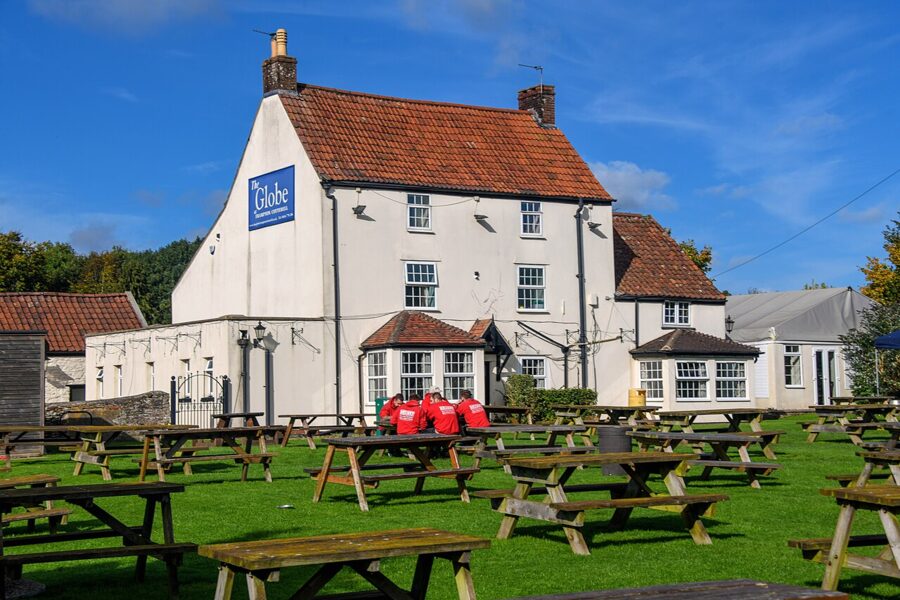
The Globe, a free house on Church Road, faces St Peter’s church across the road and sits right on the Frome Valley Walkway, which makes it the obvious lunch stop on a walk. Inside it is one L-shaped bar with low ceilings and patterned carpet; outside is a big lawned garden looking at the church, with a play area. There is always at least one guest ale and a quiz on Tuesdays. Dogs are allowed in the garden only.

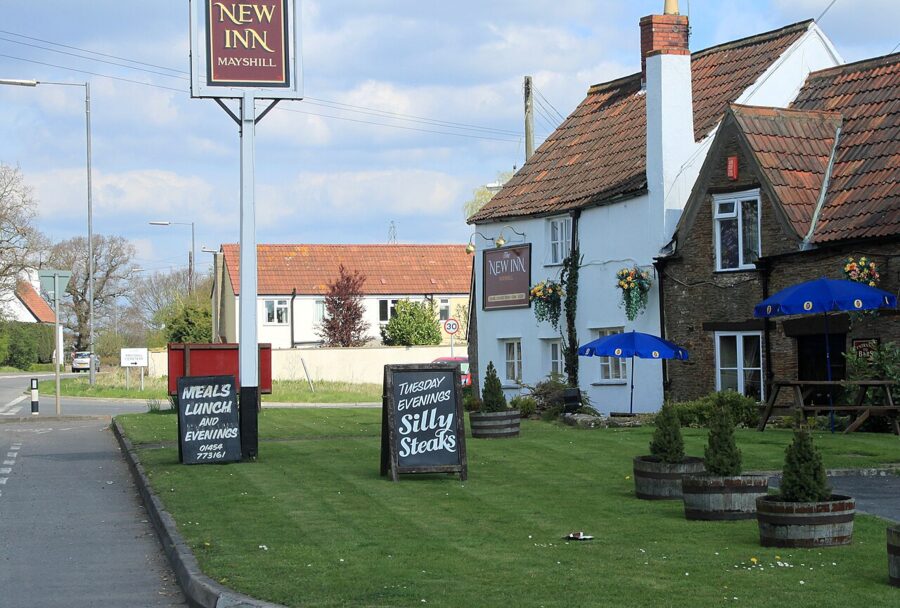
A mile or so east, the New Inn at Mayshill sits on the A432 between Coalpit Heath and Yate. It was built in the 1600s as a roadside inn and is now one of the busiest food pubs in this part of the county, with a gluten-free menu, a log fire in the main bar and one of the better children’s play areas around. Book: the pub itself says so, and it is right. Children are welcome until 20:45.

Iron Acton
Iron Acton, named for the iron once worked here, has two pubs a few minutes apart, and they could hardly be more different. The Lamb Inn on Wotton Road has been a coaching house since 1690 and is Grade II listed. The story that William of Orange stayed here is told by the pub and repeated by CAMRA, and no evidence is offered for it; enjoy it as a story.
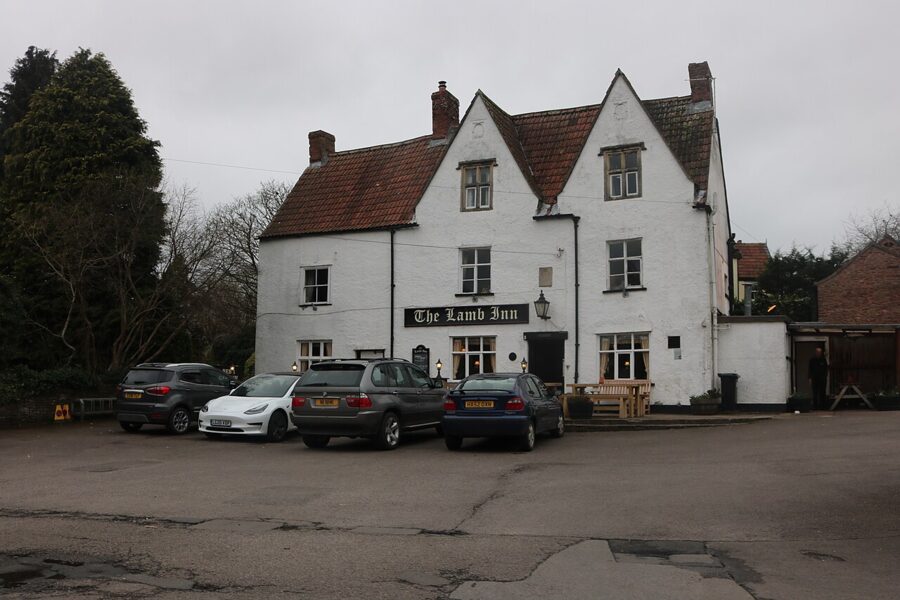

What is not in doubt is that the Lamb is a proper old pub: a wood-burning stove in the main bar, a skittle alley, a big garden and real cider in the summer. It opens 12:00–23:00 every day except Sunday, when it shuts at 22:00. Look out for its weekday meal offers.
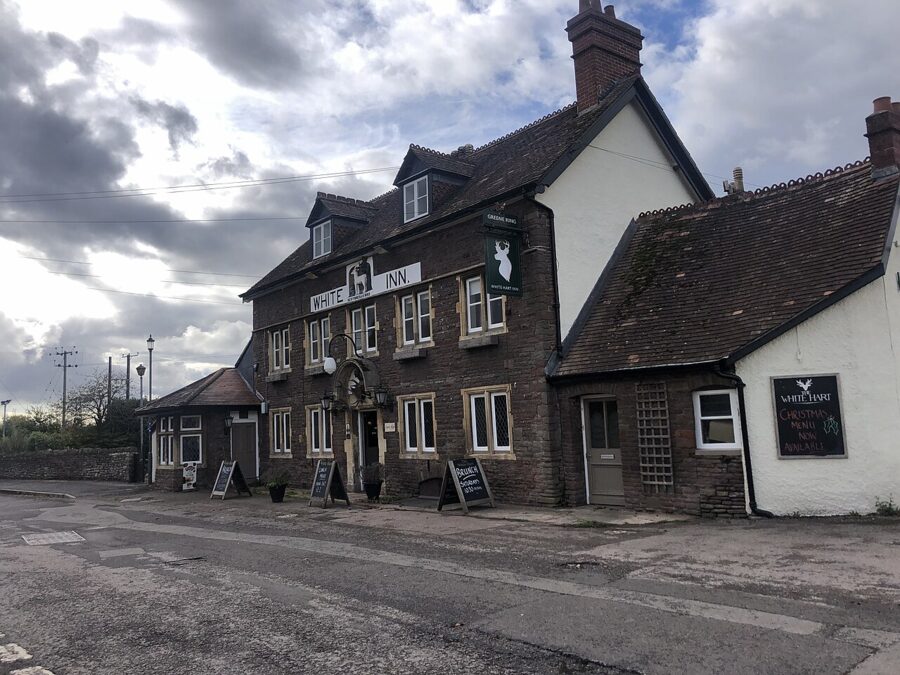
Up the High Street, the White Hart has one of the best pub fronts in the county, with a relief of the hart on its sign and a declaration that the house was restored in 1892. Inside, the beer is from the Greene King range plus a rotating guest, but the food is the surprise: an extensive menu that includes Eastern European dishes. There is an enclosed garden with a play area, and dogs are welcome.

Along the A38: Almondsbury, Rudgeway and Alveston
The A38 was the main road from Bristol to Gloucester long before the M5, and it still carries a run of old inns between the Almondsbury interchange and Thornbury. They range from one of the best pubs in the county to a roadside carvery, sometimes within a mile of each other.
The Bowl Inn on Church Road in Lower Almondsbury stands beside the church below the ridge, a few minutes from the motorway and feeling a long way from it. Butcombe owns it and says its history goes back to the 12th century. CAMRA dates the inn to the 16th, which is what the building itself suggests; a 12th-century claim usually means there was something on the site when the church was young, which is a different thing from the pub you are sitting in.
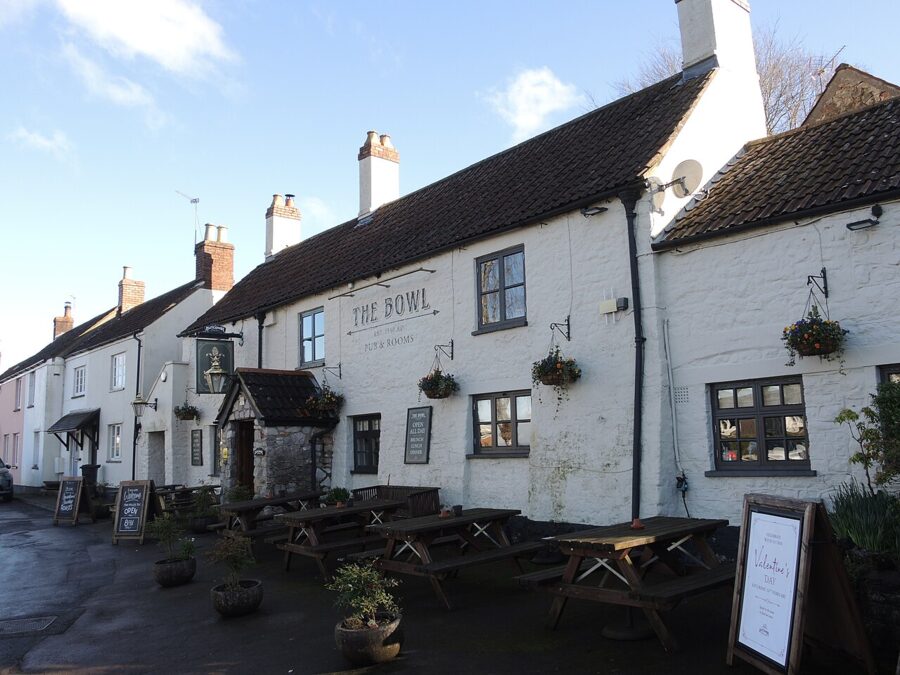

Either way it is a good stop. There is a long bar with low beams, Butcombe beers, local cider and food from breakfast onwards: the kitchen runs 07:00–21:00 Monday to Friday, 08:00–21:00 on Saturday and 08:00–20:00 on Sunday. Twelve en-suite rooms make it a good base for the Severn shore, and dogs are allowed in the bar and outside.
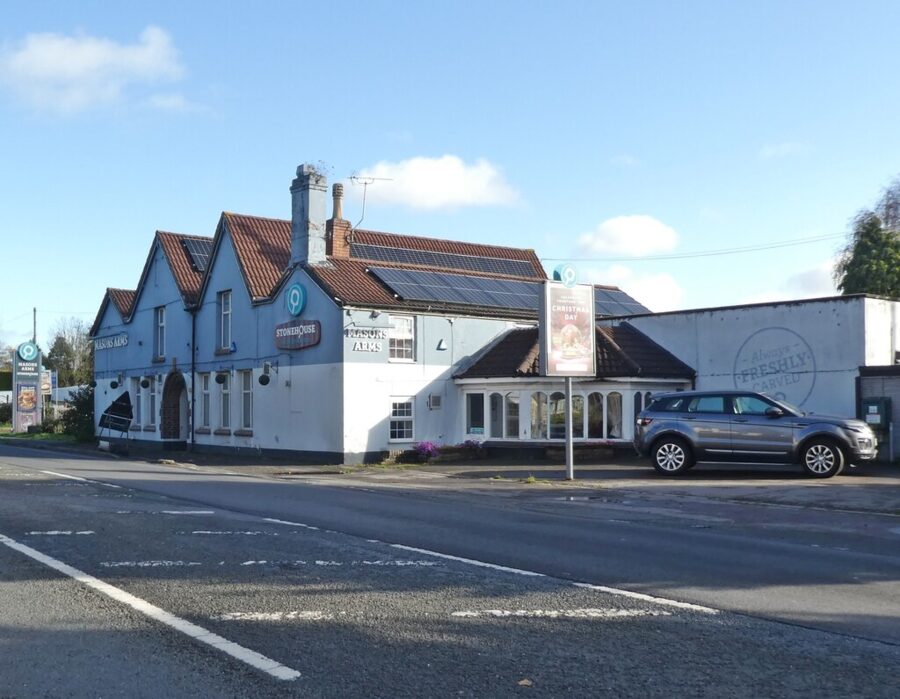
North at Rudgeway, the Masons Arms on the A38 is now a StoneHouse Pizza & Carvery, after spells as a Brewers Fayre and a Crown Carvery. CAMRA lists no cask beer. It is what it is: somewhere to feed a car full of people on the way north, not a pub to seek out.

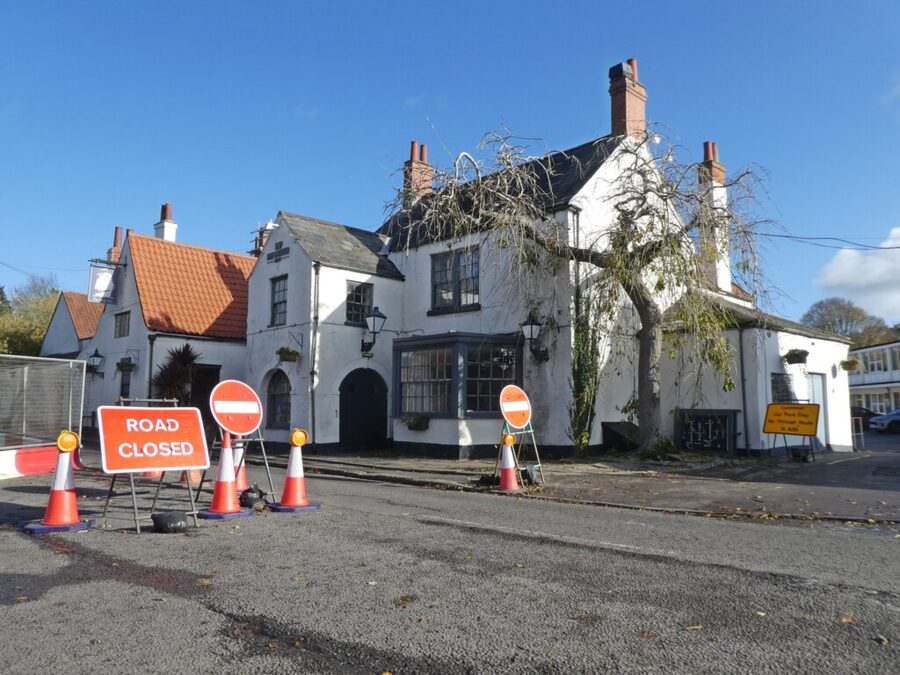
The Ship Inn at Alveston, just off the A38 on Thornbury Road, is the better roadside bet. CAMRA dates the old coaching house to 1589, and the flagstones, open fires and nooks inside earn their keep. It is a Chef & Brewer, attached to a Premier Inn, with four handpumps (one regular, up to three changing), food from the main menu and a specials board, and opening hours of 09:00–23:00. Dogs are welcome.

The Severn shore
West of the A38 the land drops onto the Severn levels: flat fields, rhines, sea walls and enormous skies, with the two bridges on the horizon and Oldbury’s shut-down nuclear power station on the skyline to the north. The Severn Way runs along the shore. The villages are small, the lanes are narrow, and the pubs are among the best reasons in the county to leave the motorway.
Tockington and Olveston
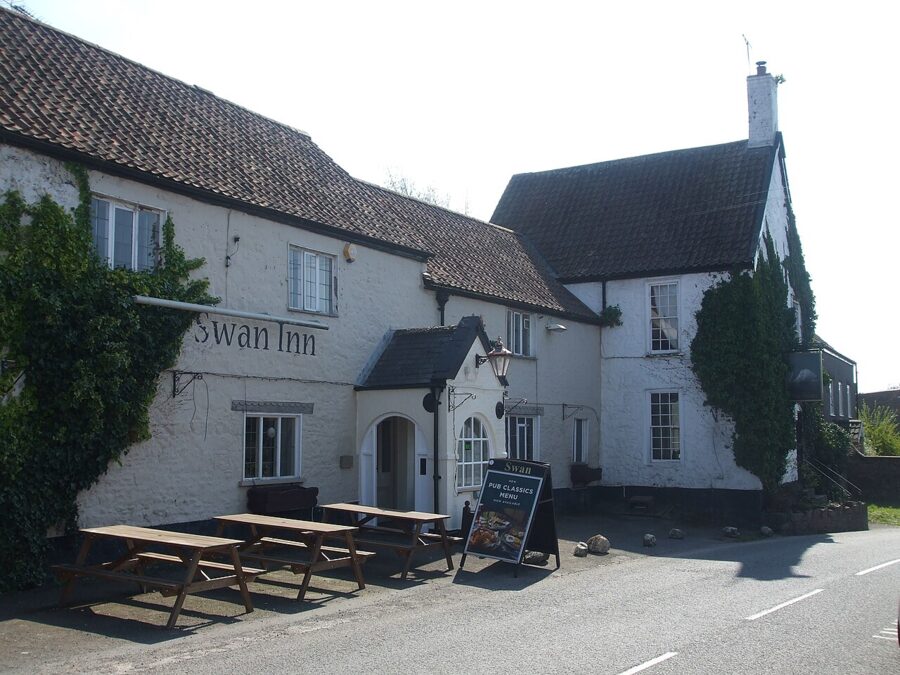
The Swan Inn on the green at Tockington is a Greene King country pub that does food and drink equally well, and its secluded garden has boules pistes, which tells you the kind of summer evening it is good for. A Sunday roast starts at £12.95 and the pub is dog friendly. Guest beers come from the Greene King list.

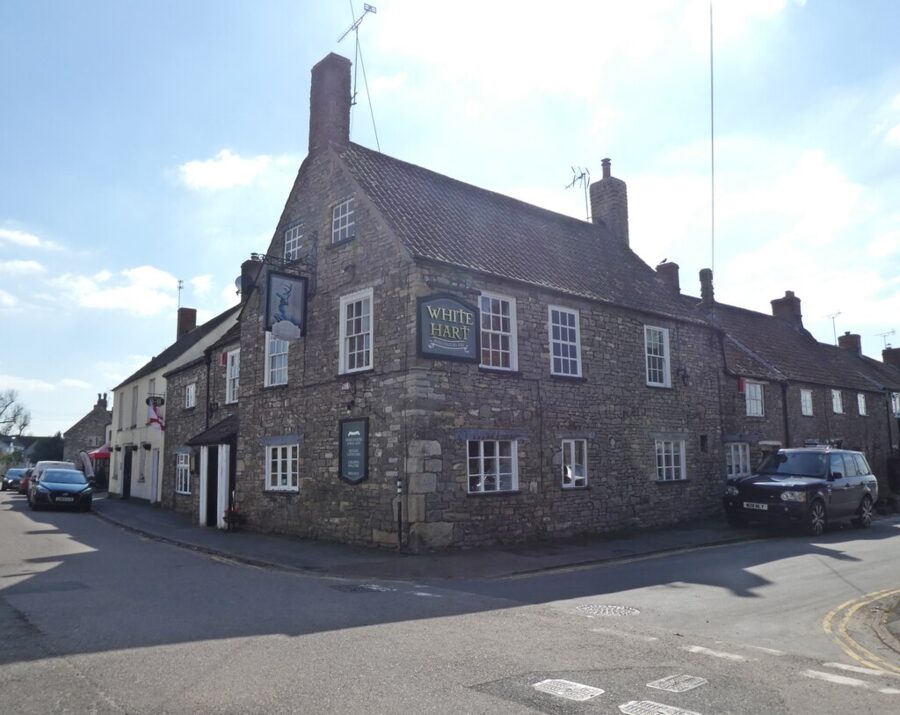
A mile away in Olveston, the White Hart on The Street is the more local of the two: oak beams, a dark wooden bar, open fires in winter, a pool room and a skittle alley. It does a full restaurant menu as well as the bar. If you want a pint among the people who live here rather than the people driving through, it is the one.

Easter Compton and Pilning
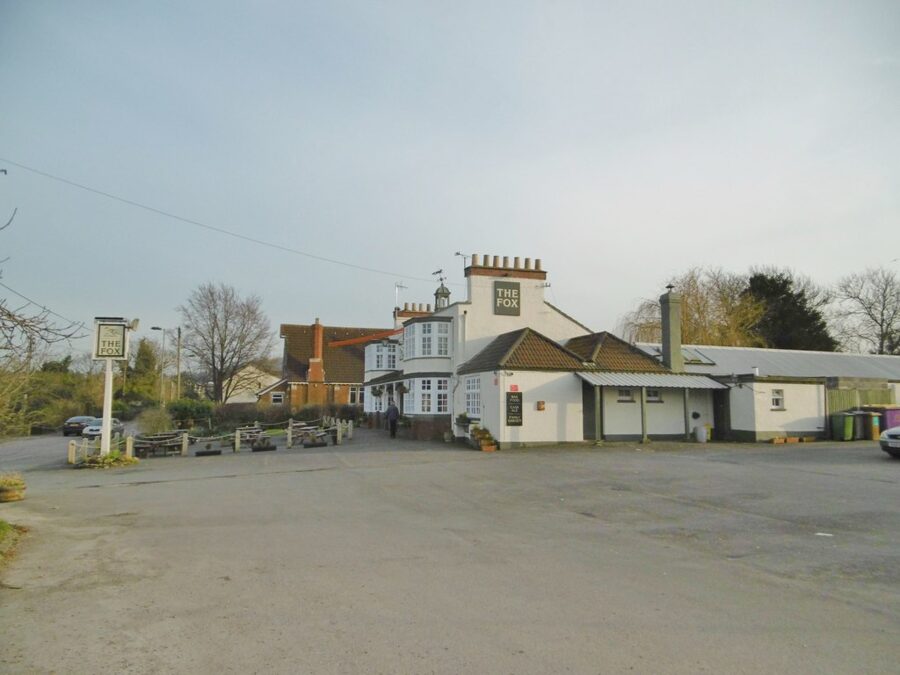
The Fox on Main Road at Easter Compton is a plain, friendly village pub with a lounge and a bar, homemade food and a big side garden open through British Summer Time. It keeps short, daytime-leaning hours and CAMRA lists it as closed on Mondays, so ring before you plan an evening there.

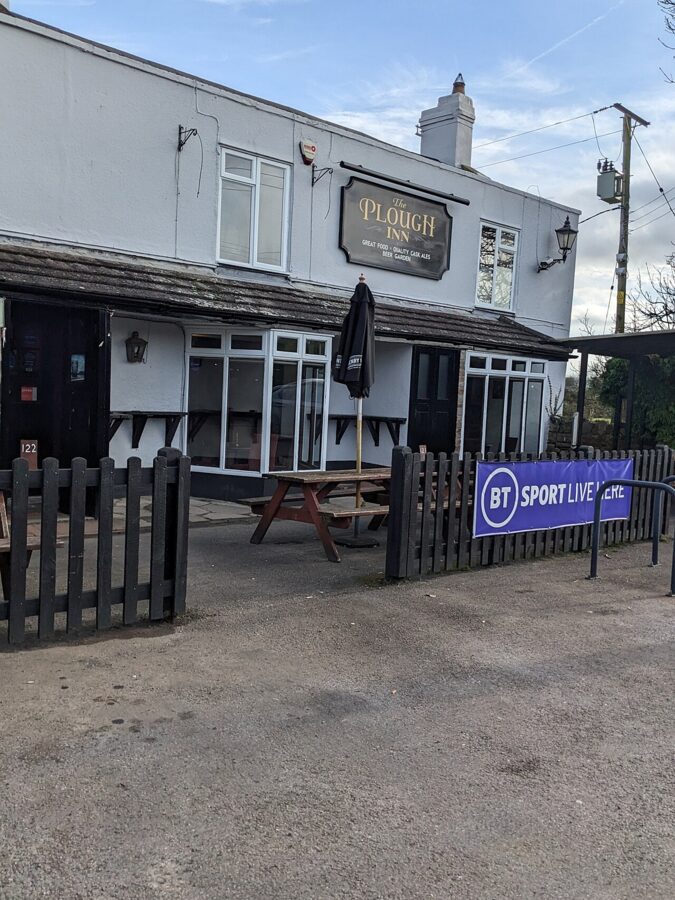
The Plough on Pilning Street is the pub I would send you to on the levels. It is a Wadworth house with 6X and Henry’s IPA on handpump and guest ales alongside, flagstone floors, log fires, two or three small rooms at the front and a big dining room behind. The Sunday roast is served until it runs out. Outside is a large garden with a play area, and in August the pub holds its own music festival.

Pilning has a railway station, which sounds useful until you look at the timetable. Its service has long been a token one, a very few trains on Saturdays only, so treat it as a curiosity rather than a plan. Severn Beach, at the end of the branch line from Bristol Temple Meads, is the realistic railhead for this stretch of shore.
Aust and the old ferry
Back to Nellie. The Boar’s Head on Main Road in Aust is close to the old bridge and junction 1 of the M48, and you can tell the building is 16th-century from the low ceilings and the way its small rooms have been knocked into one another. Pine furniture, old prints and crockery fill the rest. Timothy Taylor’s Landlord and Fuller’s London Pride are the regulars, with two changing beers beside them, and the food is cooked to order, including a short list of small plates.
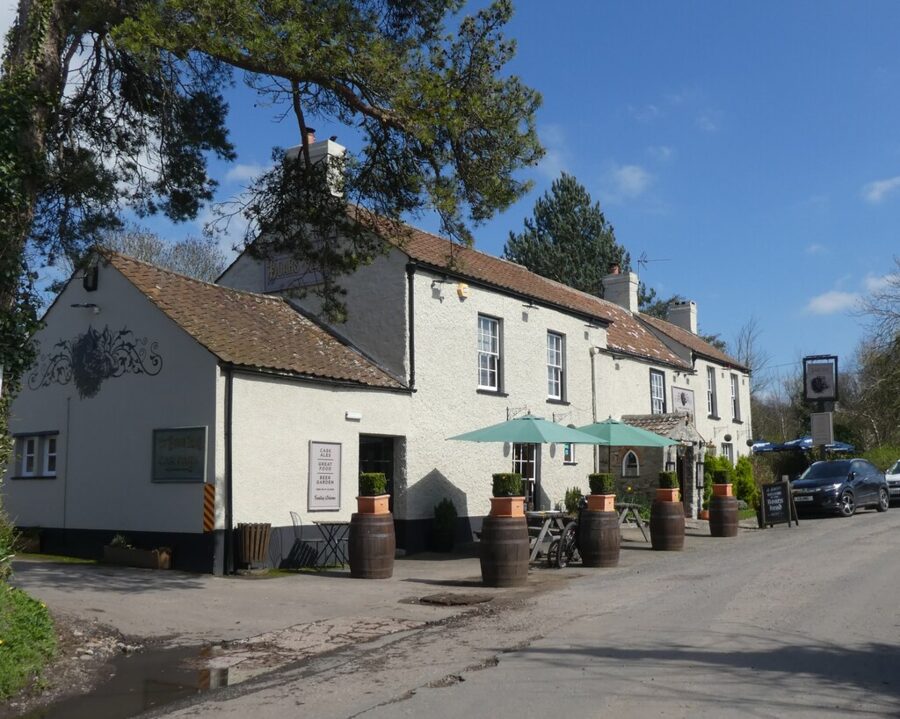

The camping field makes this the obvious base for a night on the estuary. CAMRA’s latest listing has the pub shut on Wednesdays and closing at 18:00 on Sundays, so plan around those. On any other day, walk down the lane to the shore after lunch.
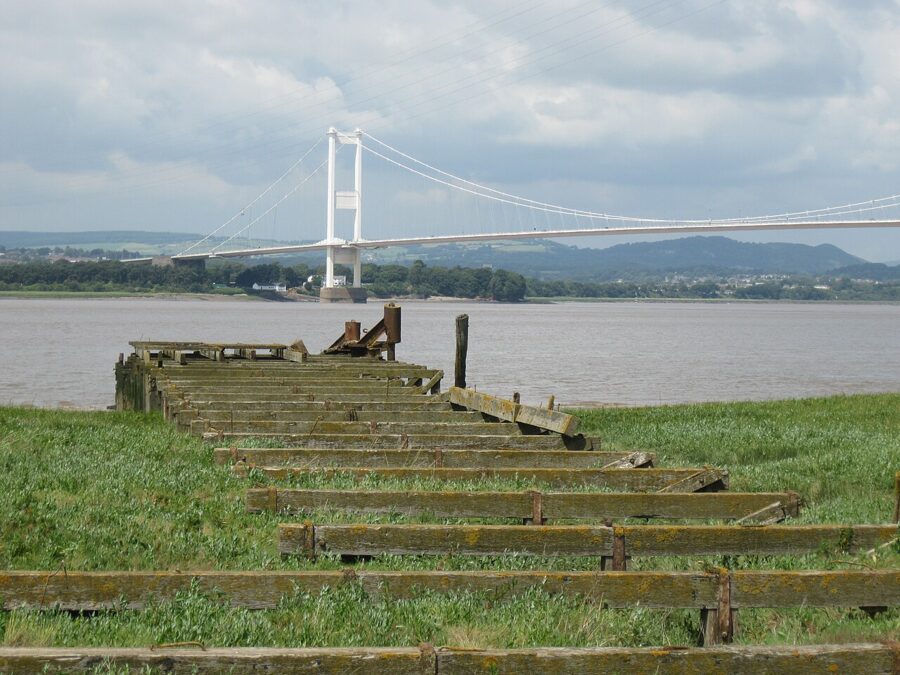

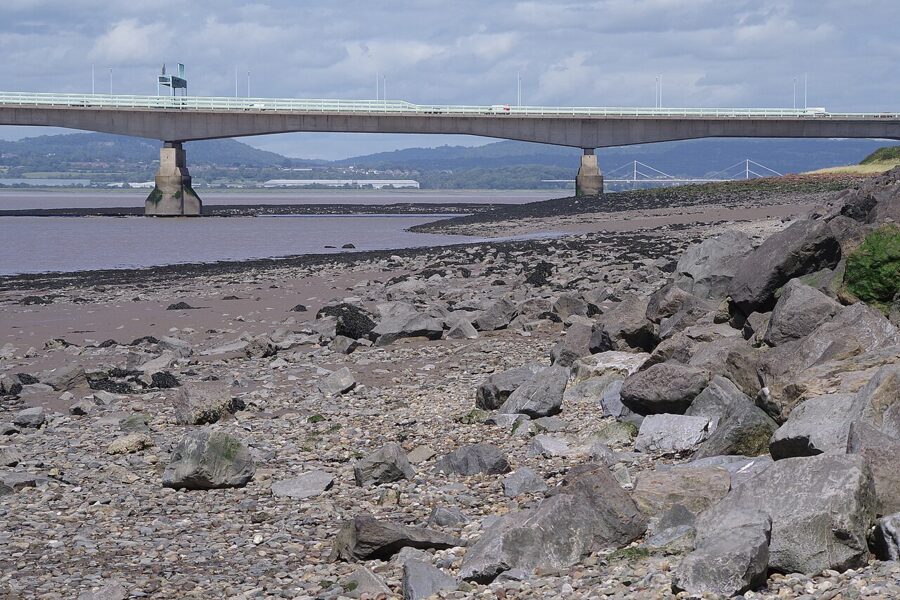
The concrete remains of the slipway are still there, crumbling into the mud just upstream of the bridge. Stand on them at high water and you see what the ferry was up against: one of the biggest tidal ranges in the world, and a river that runs like a mill race on the ebb.
Littleton-upon-Severn
The White Hart at Littleton-upon-Severn is the pub I would drive furthest for. It is a whitewashed late 17th-century building in the middle of a tiny village, listed by Historic England, with a warren of small rooms full of old wooden furniture and a dedicated family room. The front garden looks out over the river to the west, which means sunsets, and there is an orchard garden behind with chickens and geese.
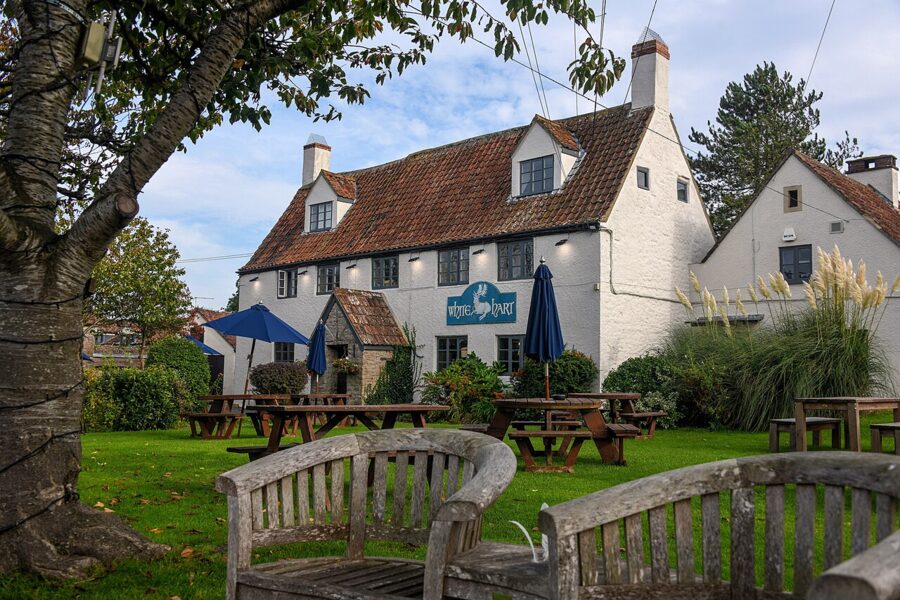

It opens 12:00–22:00 Monday to Thursday, 12:00–23:00 on Fridays and Saturdays, and 12:00–20:00 on Sundays. The kitchen runs 12:00–20:00 on Mondays and Tuesdays, 12:00–20:30 Wednesday to Saturday and 12:00–17:00 on Sundays, so do not turn up hungry at 20:45. The roast has a following, and booking is wise on a sunny weekend.
The village has one claim to fame beyond the pub. In January 1885 a 68-foot rorqual whale washed up on the shore here; thousands came to see it, special trains were laid on, and the spot is still called Whale Wharf.
Oldbury-on-Severn
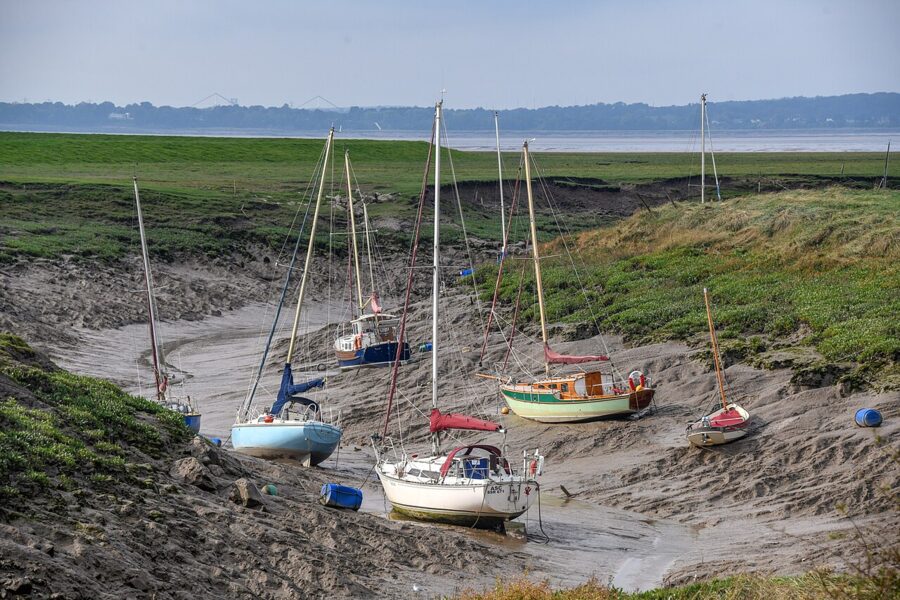
The Anchor Inn sits on Church Road beside Oldbury Pill, the tidal creek that once let boats up to the village, and it is Grade II listed. Through the front door is a comfortable lounge and dining area; to the right is the traditional public bar, its walls hung with old photographs of life on the river. A bright dining room at the back looks onto a big garden with mature trees and a petanque piste that hosts a summer league.

The guest beer goes on on Thursday evenings and stays until it runs out, which in a village pub is rarely long. There is real cider too, and three bedrooms above the pub. It opens 12:00–14:30 and 17:30–22:00 Monday to Thursday and all day Friday to Sunday, and Sunday lunch books up.

Thornbury
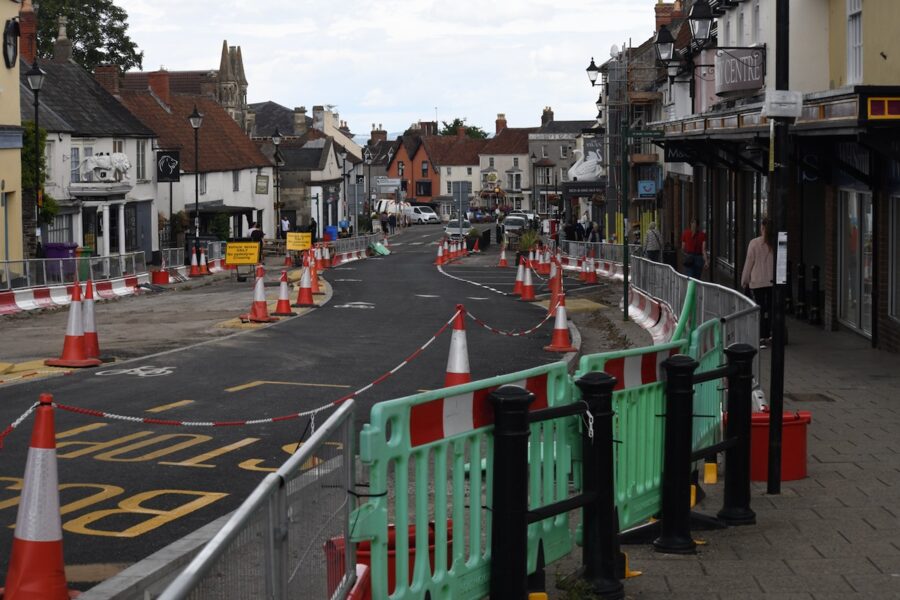
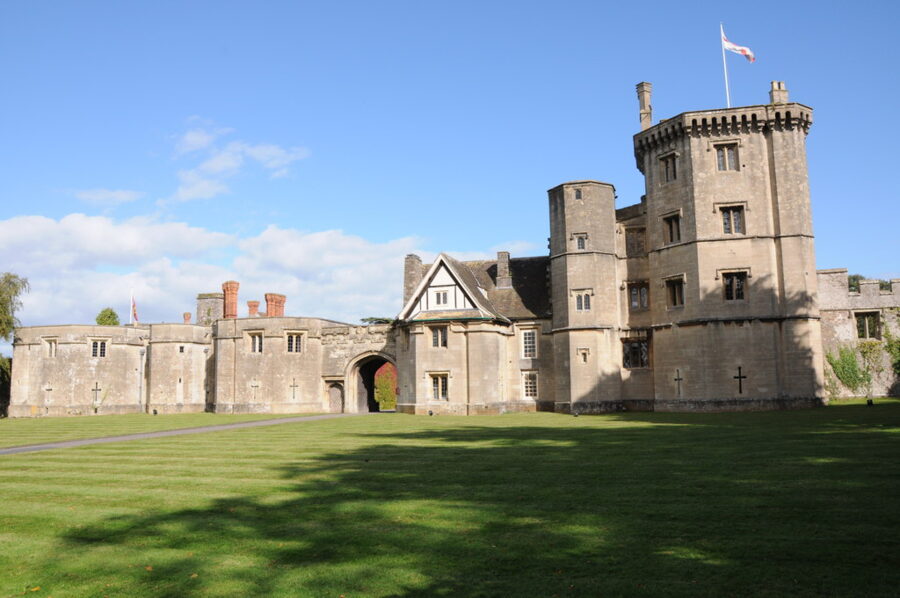
Thornbury is the county’s one proper market town north of Bristol, with a long High Street, a Tudor castle and a pub scene that is better than it looks from the main road. Two pubs make the case.

The Butcher’s Hook at 8 High Street is a beer drinker’s pub in a Grade II listed building that dates to the mid 17th century and spent about two hundred years as a butcher’s shop, hence the name. Its three rooms keep their fireplaces, alcoves and ceiling beams, and the front door is massive and very old. Up to six cask beers are on handpump, with six craft kegs and a real cider. It opens at 16:30 Monday to Wednesday, from noon Thursday to Sunday, runs a quiz on Thursdays and welcomes dogs.
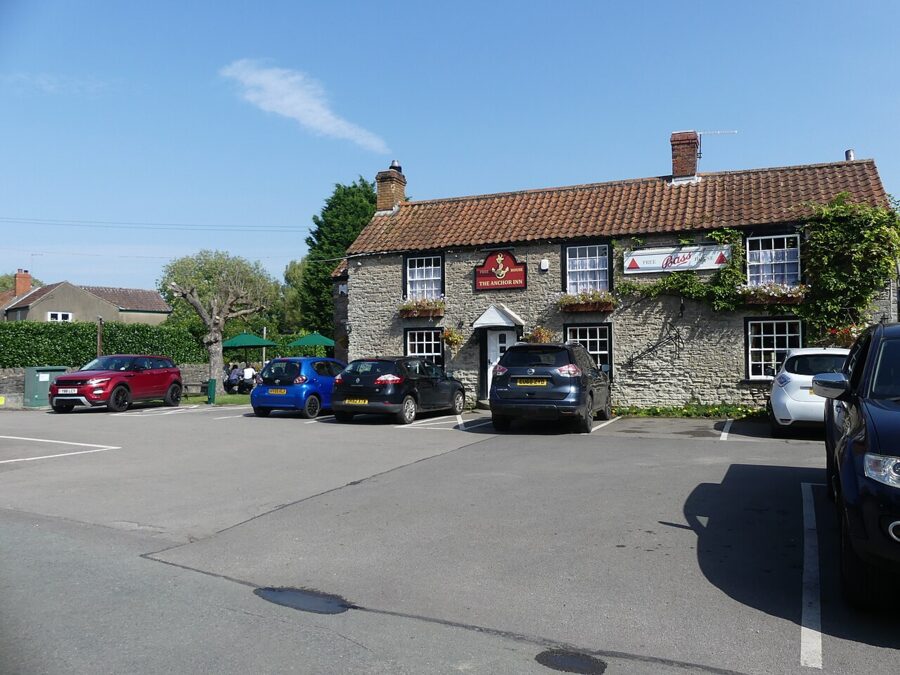
Out on Gloucester Road at Morton, the Anchor Inn has been licensed since 1695 and calls itself the second oldest pub in Thornbury. Which pub is the oldest is not something anyone in Thornbury has settled with paperwork, so treat the claim as local pride. What it does have is five changing beers on handpump (sometimes four in summer), breakfast from 09:00, home-cooked food all day and a garden with a play area.
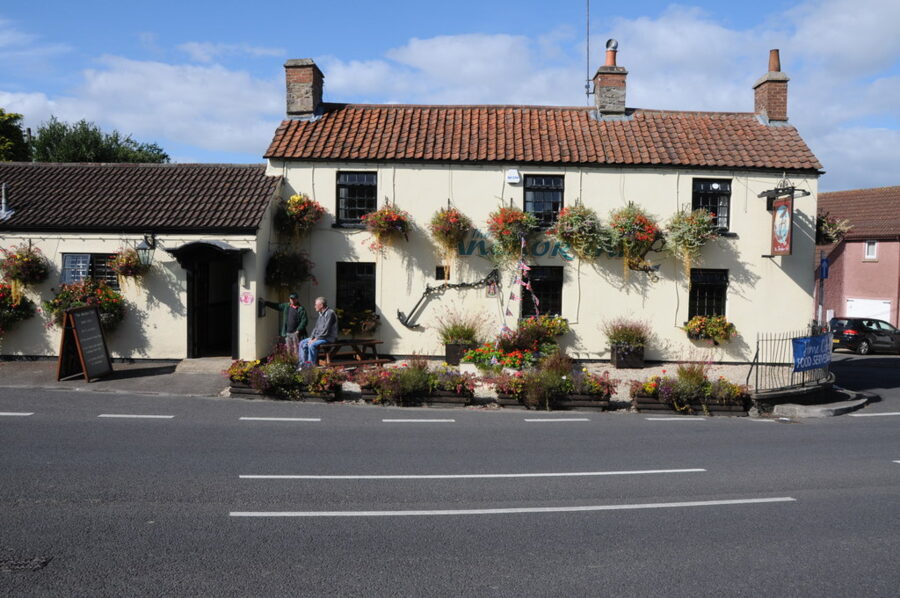

The Anchor opens 09:00–23:00 every day, has its own cribbage team and runs a quiz on Sundays. It is a short walk from the north end of town, or a stop on the way out towards Berkeley.

North to Sharpness
Past Thornbury the A38 crosses into Stroud district, and the shore beyond Berkeley ends at Sharpness, where the Gloucester and Sharpness Canal meets the river. The canal opened in 1827 so ships could avoid the worst of the Severn, and the docks still handle cargo. Out here the pubs are scattered, and three are worth the drive.
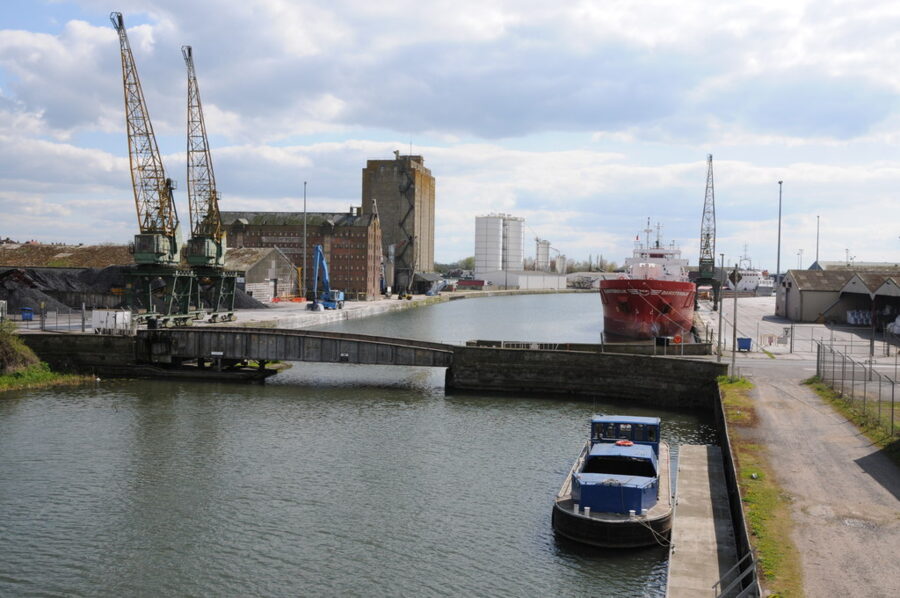

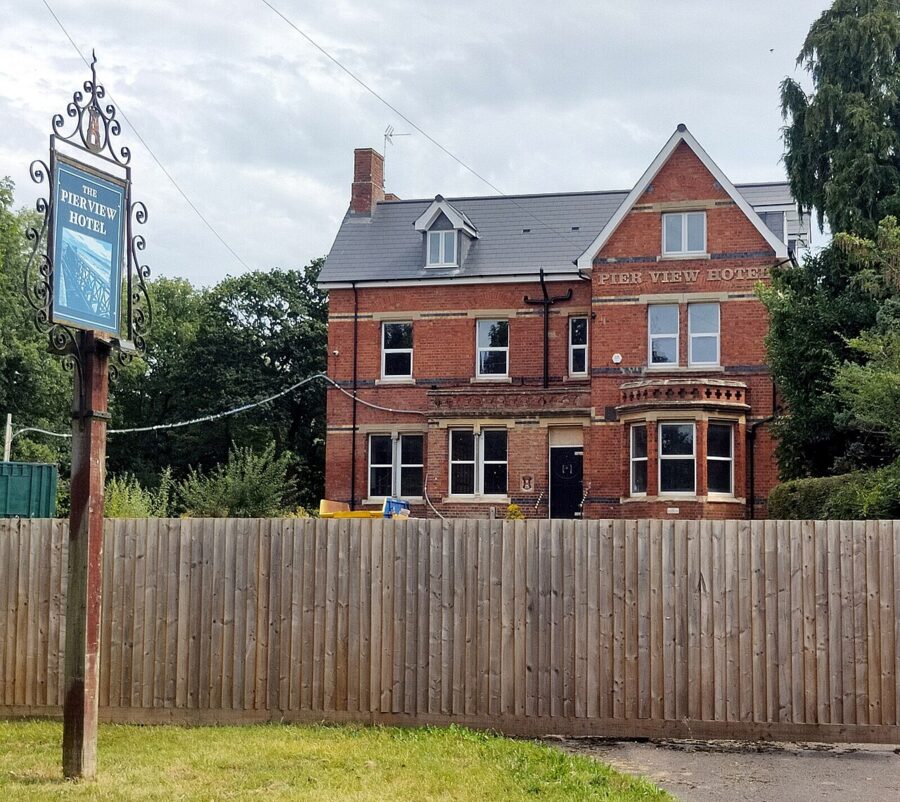
The pub most people remember at Sharpness is gone. The Pier View Hotel on Oldminster Road, built in 1891 to look out over the docks, is closed; plans to turn it into flats went to Stroud’s planners in 2023, and CAMRA lists it as closed long term.

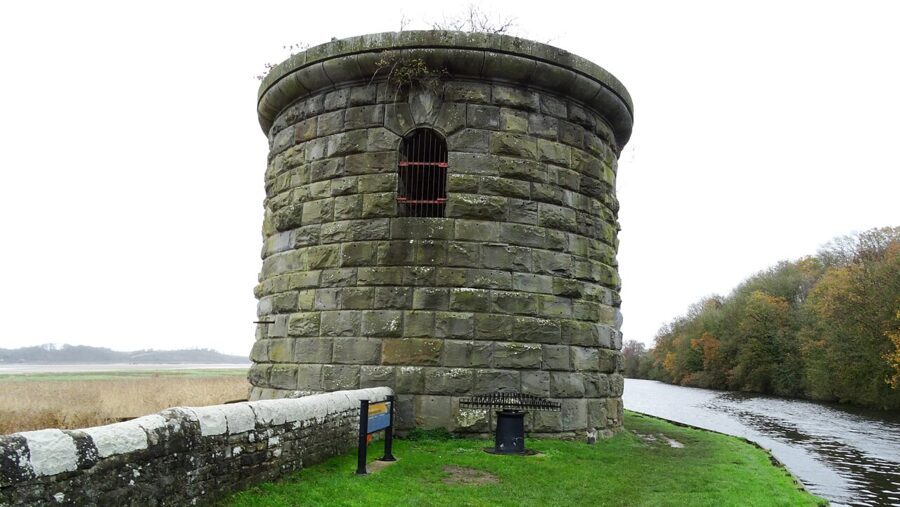
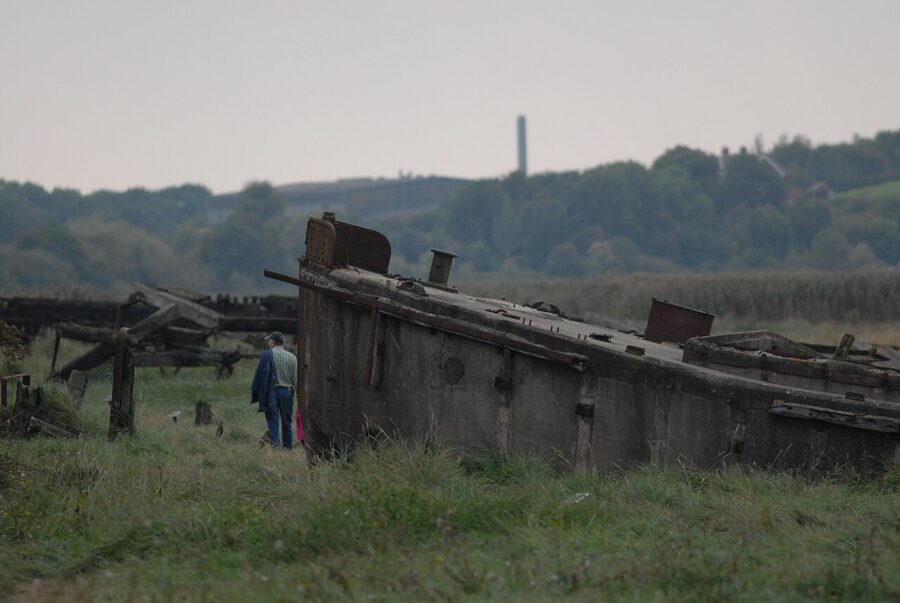
Walk north along the canal from Sharpness instead. You pass the stump of the Severn Railway Bridge, which carried trains to Lydney until two tanker barges hit it in fog in October 1960 and brought two spans down. Further on, at Purton, the riverbank is lined with the hulks of old barges and boats, beached deliberately from 1909 onwards to stop the Severn eating the bank between river and canal.


The Berkeley Arms at Purton overlooks the river, and its story is a sad one with a hopeful end. CAMRA used to give its unspoilt interior its highest rating; while the pub stood closed for several years, the bar counter and bar-back were ripped out. It reopened in June 2026, with a flagstoned room to the left of an enlarged bar, a log fire and a big garden.
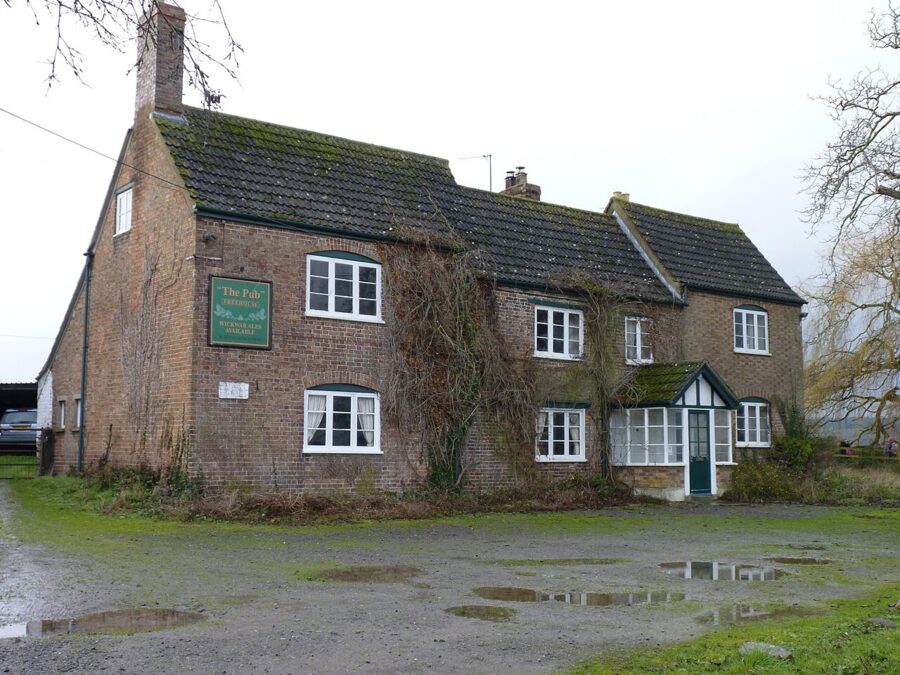

Whether what is left inside earns back its heritage rating, CAMRA says it will decide once it has looked again. For a pint above the Severn after the hulks, it does the job. CAMRA’s latest listing has it open Wednesday to Sunday.
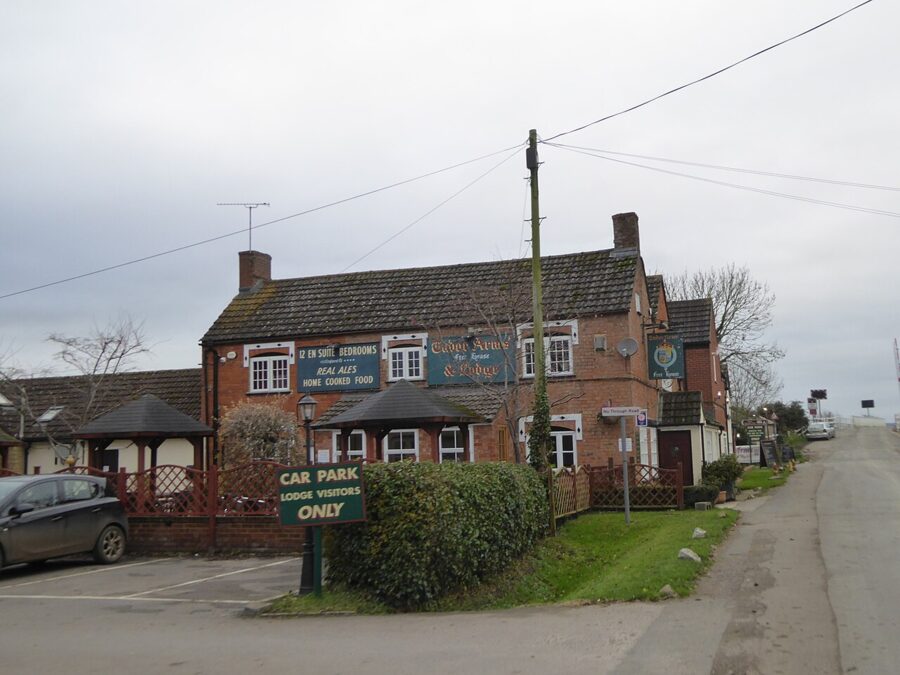
The Tudor Arms at Shepherd’s Patch, beside the canal and half a mile from the Slimbridge wetland centre, is a family-run free house in an 18th-century building that the pub says was a beer and cider house for the navvies who dug the canal. Today it has two bars with cask and keg beers and ciders, and B&B rooms in the Tudor Arms Lodge next door. The pub’s own advice is to check hours with them, as they vary in quiet and busy spells, and to book a table online.

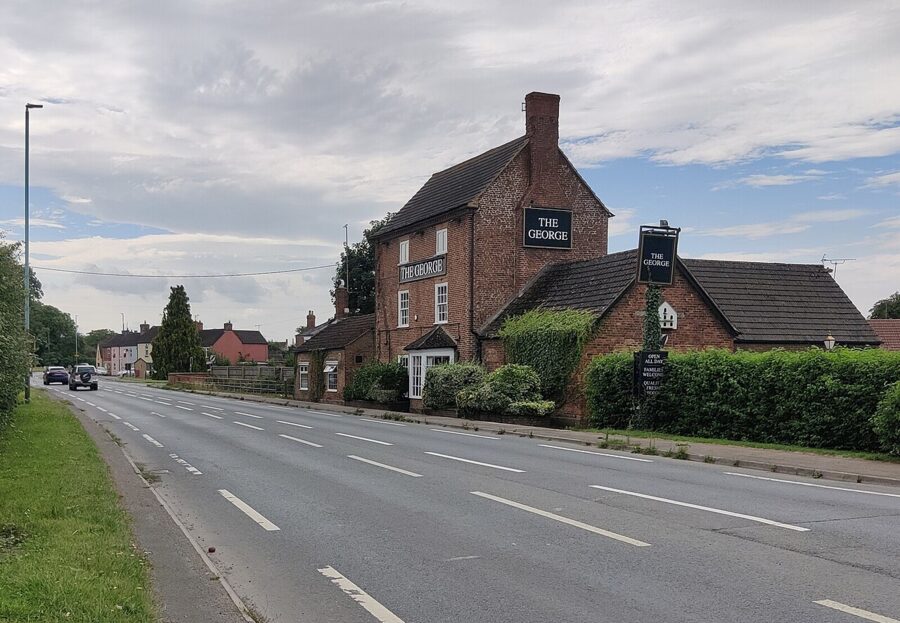
Back on the A38, the George Inn at Cambridge (the Gloucestershire one, on the little River Cam, and nothing to do with punting) is a Grade II listed old coaching inn with a half-timbered interior. It serves food all day from breakfast, a Sunday carvery from midday, and has a children’s playground and a field for camping and caravans. Well-behaved dogs are welcome in the bar. It opens 09:00–23:00, and 09:00–22:00 on Sundays.

The Cotswold edge
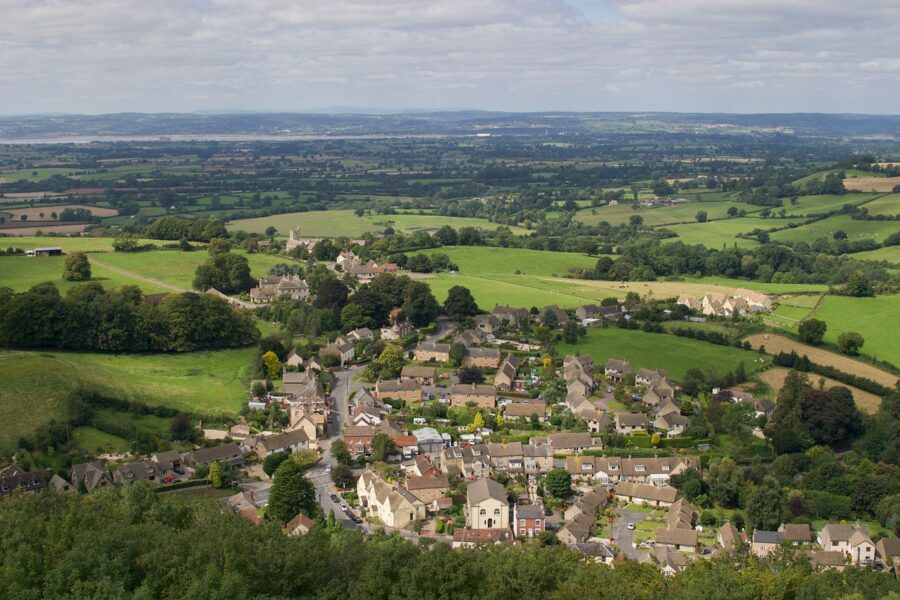
East of Yate the land climbs to the Cotswold escarpment, and the Cotswold Way runs along the top of it from Hawkesbury Upton south through Old Sodbury and down towards Bath. These are walkers’ pubs and drivers’ pubs at once: the M4 crosses the ridge at junction 18, and the A46 and A432 meet at its top. For the hills beyond, carry on to the Cotswolds pubs.
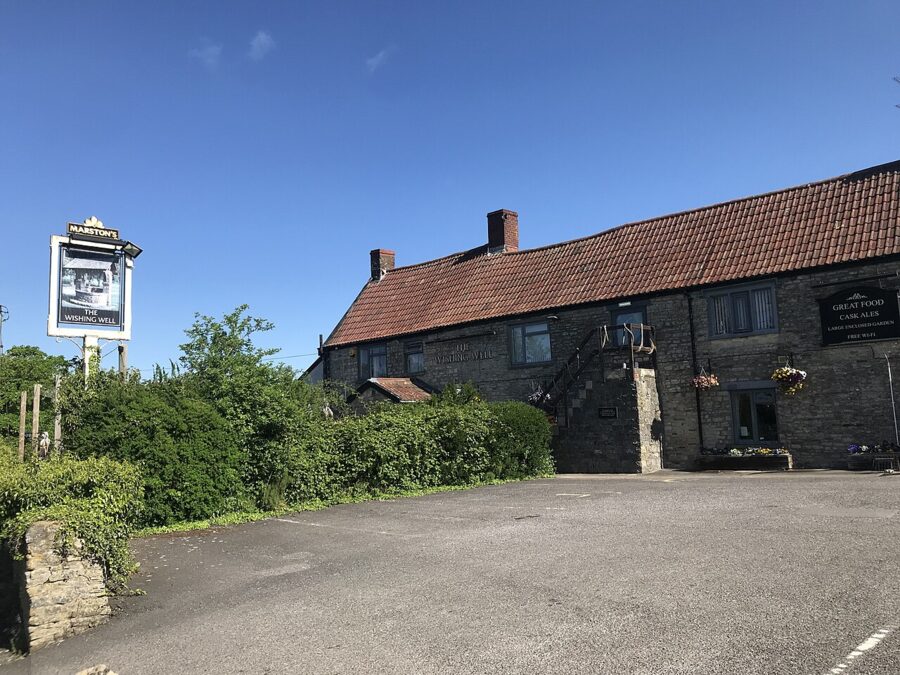
At Codrington, close to junction 18, the Wishing Well on Wapley Road was the Codrington Arms until it was renamed. It is a Marston’s pub serving food from midday every day, with real ale, real cider and guest beers from the wider Marston’s list that can be unexpectedly good. It is dog friendly, with a front patio, a big garden and a heated patio at the back.

Old Sodbury
Old Sodbury has three pubs and the best hillfort on this stretch of the Cotswold Way. The Dog Inn on Badminton Road, run by Glenn and Vicky, says it is over 500 years old. The building is certainly old, with a single bar, a rabbit warren of dining areas off it and huge log fires at either end.
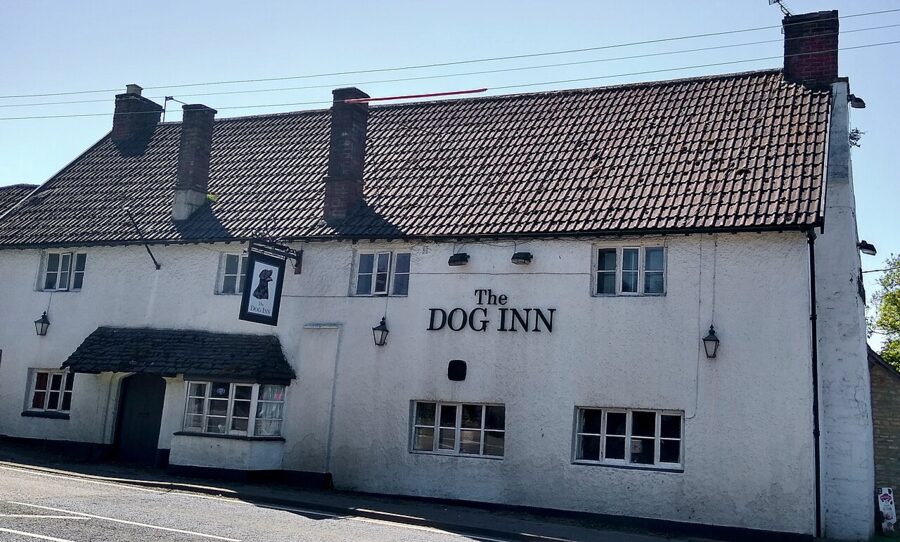
It is known for fish and Sunday roasts, has four en-suite rooms and a big garden with a play area, and welcomes families and dogs. The Cotswold Way passes the door. If you are walking, this is the one.
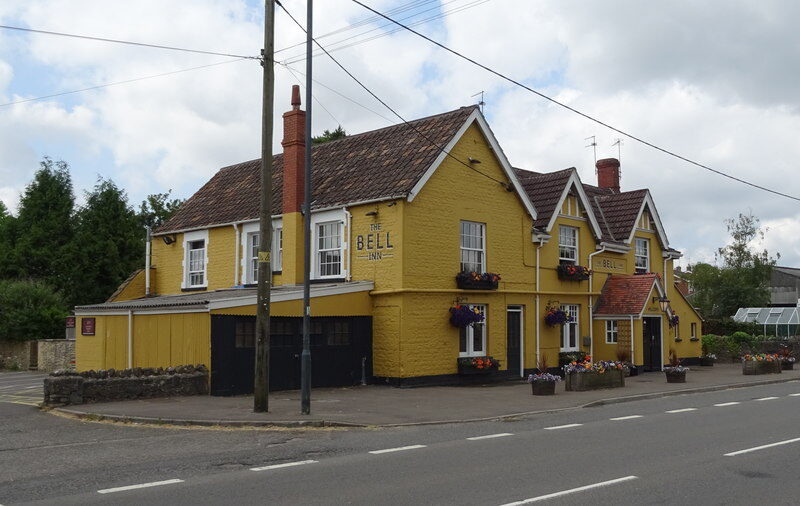
The Bell Inn, also on Badminton Road, is a country dining pub with B&B rooms, breakfasts and a Sunday lunch menu, set in the Frome valley just below the escarpment. CAMRA’s listing has it closed on Mondays, with a break between lunch and evening Tuesday to Thursday.

Up at the A46 junction, the Cross Hands Hotel claims to be a 14th-century posting house, and it is now a Greene King hotel with 21 bedrooms and a pub and restaurant open to anyone, 07:00–23:00. A Sunday roast starts at £14.45 and dogs are welcome. It is more hotel than inn these days, but useful if you need a bed by the motorway.


Chipping Sodbury
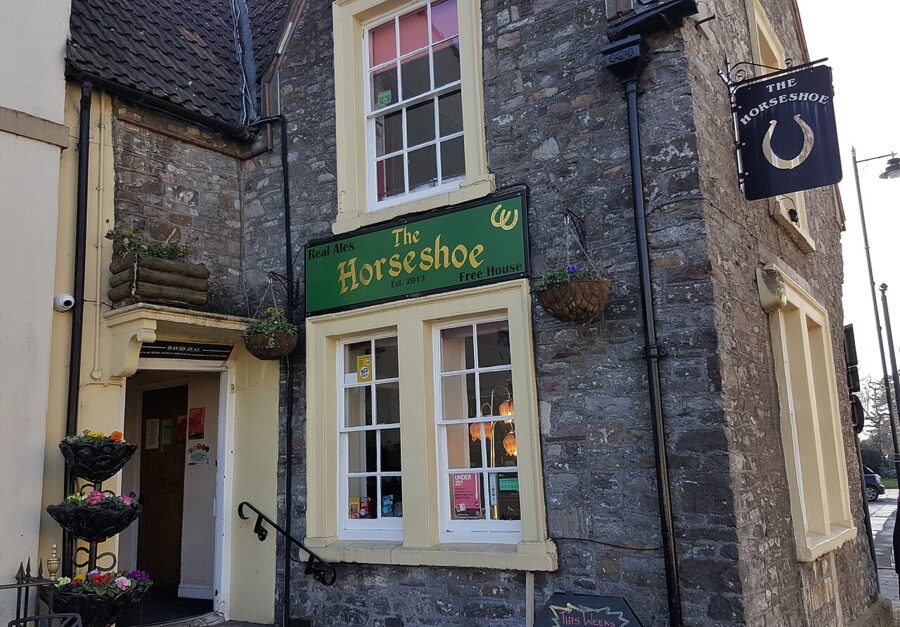
Chipping Sodbury’s High Street is broad enough for a market and lined with old fronts, and the Horseshoe at number 2 is one of the oldest buildings in the town. It was a stationery shop until it became a pub in 2013 and has had new owners since 2022. Bristol & District CAMRA named it Pub of the Year for 2024, and it has been in the Good Beer Guide for the last five years.
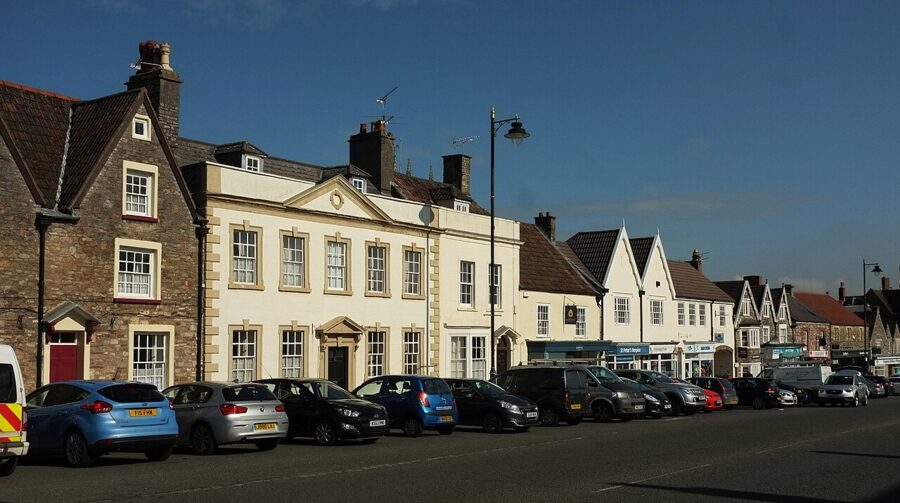

There are seven handpumps, mostly West Country beers and often something dark or strong, plus its own Chipping Sodbury Bitter brewed by Fierce & Noble in Bristol. The three linked rooms have a jukebox and the TV, there is a covered, heated garden at the back, and freshly made rolls are on all day. The quiz is on the first Wednesday of the month and there is live music from 16:00 on the last Sunday.

Hawkesbury Upton and Pucklechurch
At the northern end of the county’s stretch of the Cotswold Way, the Beaufort Arms on the High Street in Hawkesbury Upton is a Grade II listed Cotswold stone free house that a local family historian dates to 1602. It has two low-beamed bars full of pub, brewery and village memorabilia, plus a collection of period dentists’ chairs, which I have never seen explained. The stables are now a dining room, and the skittle alley has a well in it.
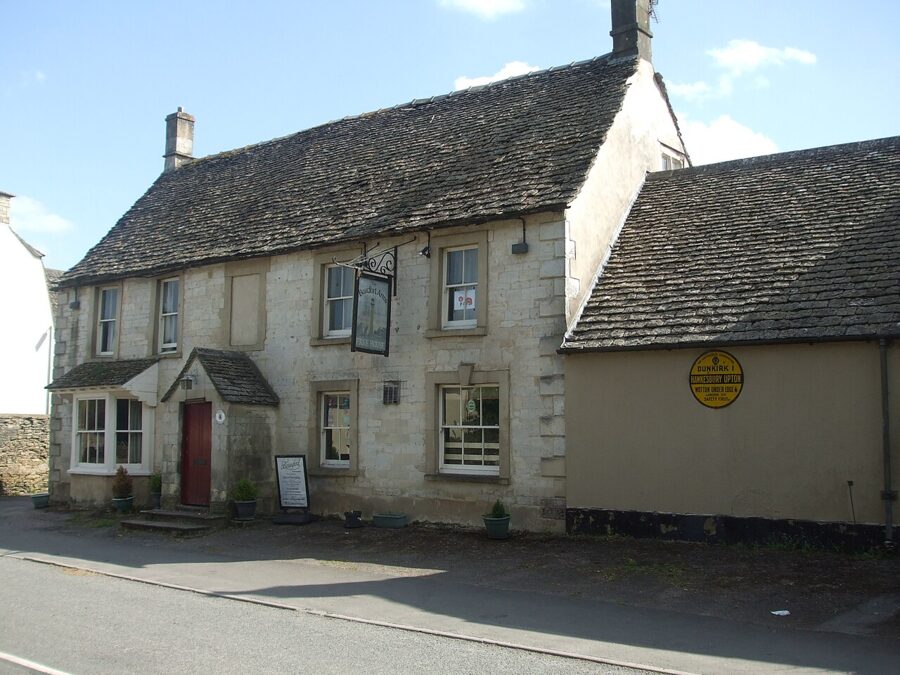

Food is served every lunchtime, 12:00–14:30, and Monday to Saturday evenings, 18:00–21:00, with takeaway too. Dogs are welcome in the public bar but not in the carpeted lounge or dining room. The pub opens 12:00–23:00 Monday to Saturday and 12:00–22:30 on Sundays.

Back towards Bristol, the Rose & Crown on Parkfield Road in Pucklechurch is a Wadworth pub on the edge of the village with a country-pub bar and snug at the front, a newer restaurant behind and log burners for winter. The menu changes with the seasons, there is real ale and cider, and outside are a play area and alpacas, whose food you can buy at the bar. Each year it also runs its own festival, Pucklefest.
One pub you will drive past and wonder about: the White Hart at The Folly, Cold Ashton, on the A46 towards Bath. It closed years ago and is now offices. For a pint on that road, carry on to Bath’s pubs instead.
Walks, drives and the nearest stations
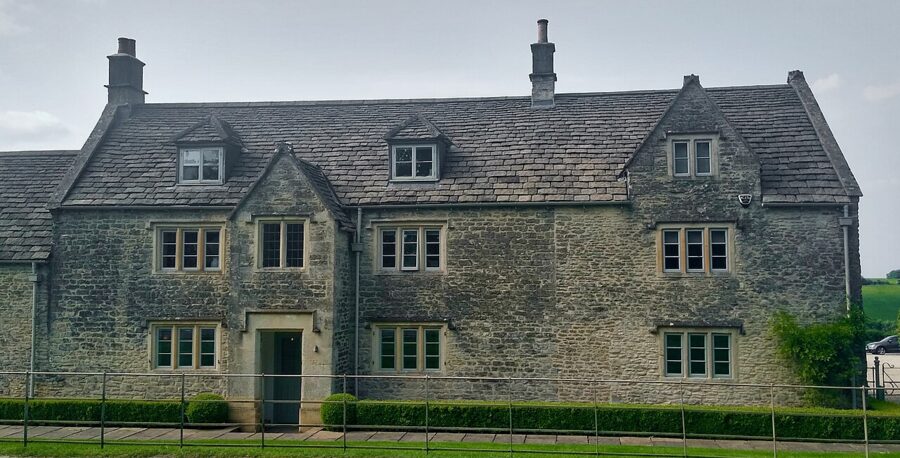
The Severn shore on foot. Lunch at the Boar’s Head in Aust, walk down to the old ferry slipway, then follow the Severn Way north along the sea wall under the bridge to the White Hart at Littleton, and on to the Anchor at Oldbury. It is about five miles of flat walking with a pub at each end and one in the middle. There is no station on this stretch, so arrange a lift back; for a longer day, start at Severn Beach station, at the end of the line from Bristol Temple Meads, and walk north past Pilning to Aust first.
The Frome valley. Start at the Golden Heart in Winterbourne Down, follow the Frome Valley Walkway about two miles north to the Globe at Frampton Cotterell, and finish at the Rising Sun on Ryecroft Road. Keen walkers can carry on along the walkway through Iron Acton towards Chipping Sodbury and Old Sodbury, where it meets the Cotswold Way. Bristol Parkway is the nearest main-line station to the southern end, and Yate to the northern.
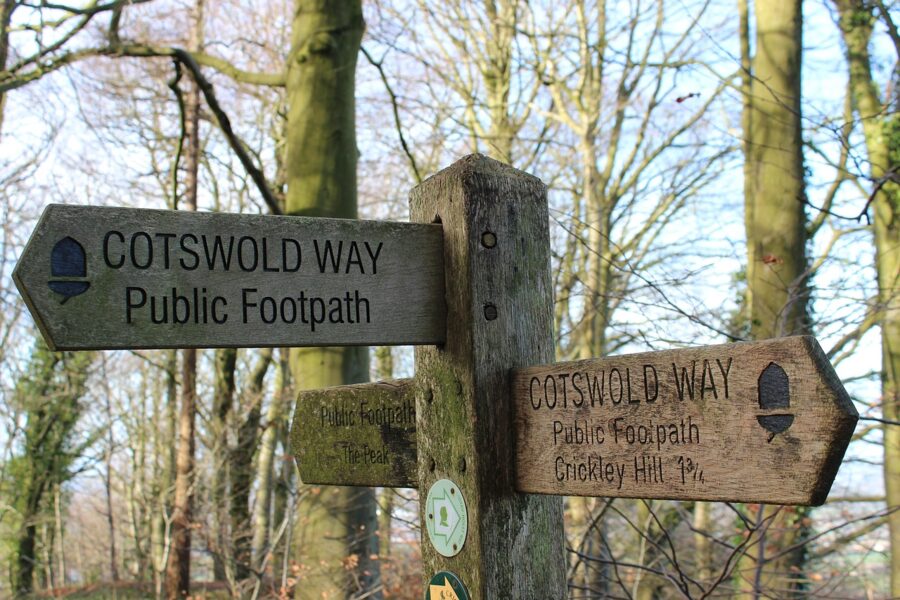
The Cotswold edge. Walk the Cotswold Way from the Dog Inn at Old Sodbury, over the hillfort, north to the Beaufort Arms at Hawkesbury Upton: about five miles with the Severn vale on your left all the way. Yate station is the nearest railhead, about two miles from Chipping Sodbury, where the Horseshoe makes a good finish.
The A38 to Sharpness by car. Coffee at the Bowl in Almondsbury, a look at Thornbury and the Butcher’s Hook (driver on soft drinks), then north to Sharpness, the canal walk to the Purton hulks and the Berkeley Arms, and the Tudor Arms for a late lunch. The George at Cambridge is on the A38 for the run home. Cam and Dursley is the nearest station to the Slimbridge end.
Hours, food, rooms, dogs and parking
Hours. Country pubs here do not keep city hours. Several shut for the afternoon on weekdays (the Anchor at Oldbury, the Bell at Old Sodbury), at least one closes midweek (the Boar’s Head on Wednesdays), and Sunday closing can be as early as 18:00 or 20:00. Hours change with the seasons, so check on the day.
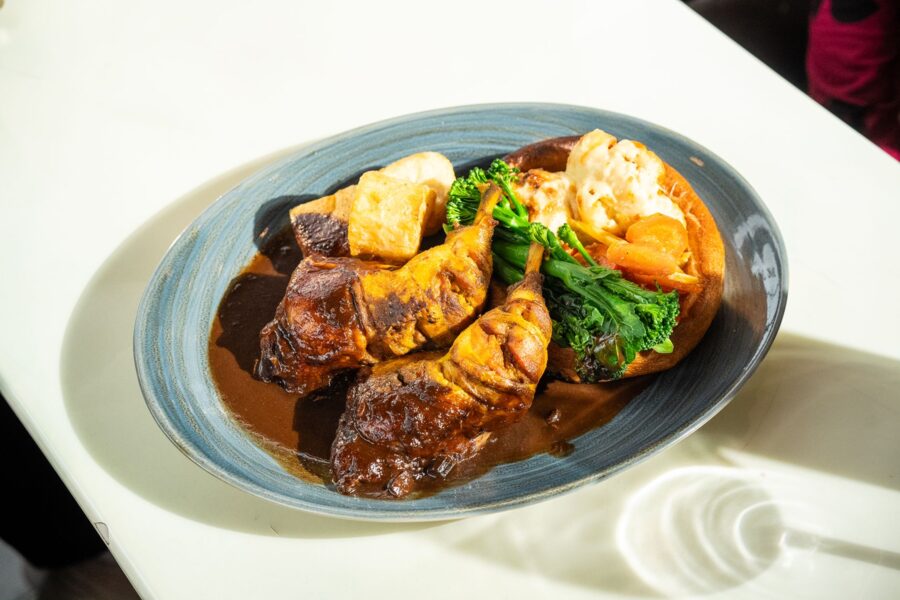
Food. Kitchens stop earlier than the bar, often by 20:00 or 21:00 on weekdays and 17:00 on Sundays. The Sunday roast is a fixture almost everywhere; at the Plough it goes until it runs out, and at the New Inn, the White Hart in Littleton and the Anchor in Oldbury you should book.
Rooms. The Bowl at Almondsbury has 12, the Anchor at Oldbury three, the Dog at Old Sodbury four, and the Bell in the same village does B&B. The Cross Hands Hotel has 21, the Tudor Arms has its lodge, and the Boar’s Head and the George at Cambridge both have camping fields.
Dogs. Most of these pubs welcome dogs somewhere. A few draw lines worth knowing: the Beaufort Arms allows them in the public bar only, the Globe in the garden only, the Bowl in the bar and outside, and the Anchor at Thornbury in its public bar. Almost all of them have a garden, which is where your dog will be happiest anyway.
Parking and getting about. Nearly every pub outside Thornbury and Chipping Sodbury has its own car park. Buses link the bigger villages with Bristol, but evening services are thin, so if you are relying on one, check the last bus before your second pint. The Severn Beach line and the stations at Bristol Parkway, Yate and Cam and Dursley are the useful rail links.
If you have one evening, make it a Thursday and make it the Anchor at Oldbury. Walk the sea wall to the pill as the tide comes in, then go into the public bar with the river photographs and ask for the guest beer before the regulars finish it.