
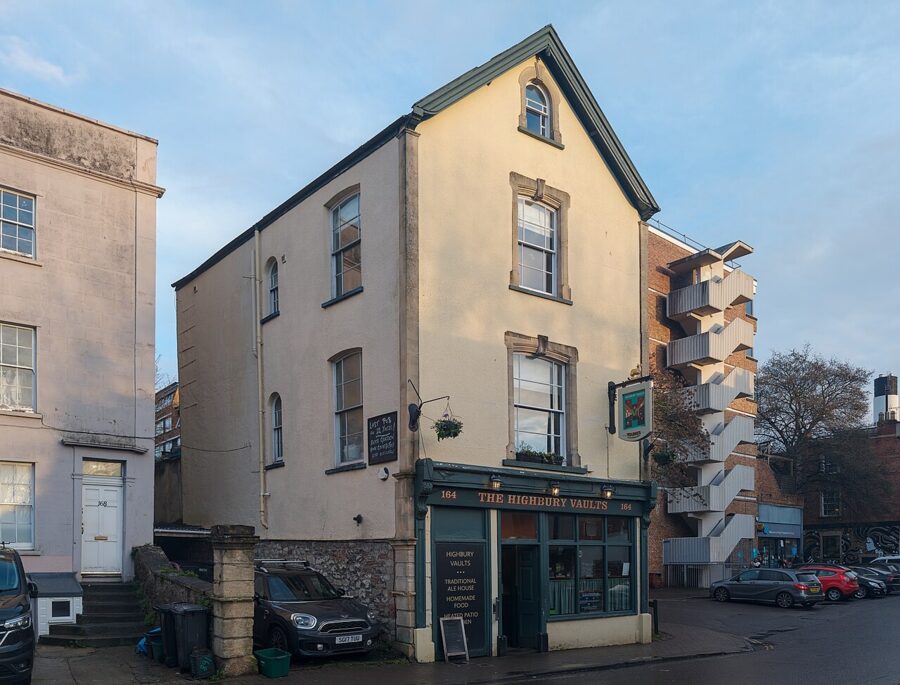
Inside the Highbury Vaults hangs a hand-painted board with a tiny gallows drawn at the bottom. It says the pub was built around 1840 as a turnpike house, that hangings were carried out at the top of the hill where the roundabout is now, and that the condemned ate their last meal here on the way up. Half a kilometre down St Michael’s Hill, the Open Arms tells exactly the same story about itself, except that in its version it was the last pint.
They cannot both be right, and quite possibly neither is. But the argument is a good excuse for the walk, which is the point of this part of Bristol: a steep Georgian hill with a pub every few minutes, a hospital at the bottom, a university halfway up, and the old gallows ground at the top now occupied by a church and a roundabout.
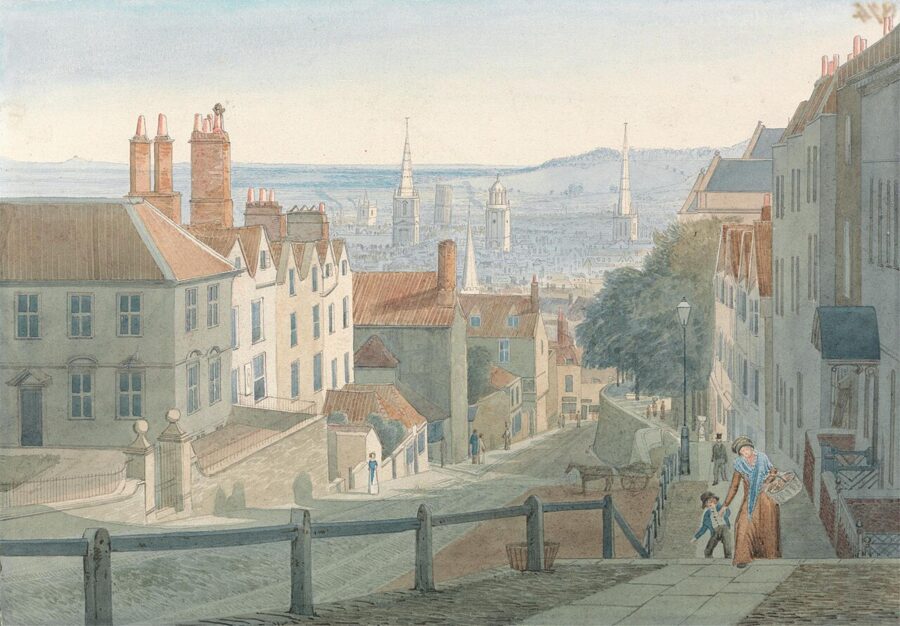
Start at the bottom, climb while you are fresh, then roll down the far side into Kingsdown proper once you are not.


On this page
- The hill, the streets and who drinks here
- Up St Michael's Hill
- Over the top: Cotham Road South and Kingsdown Parade
- Down the far side: the Hillgrove and the Hare
- The Cotham and Redland edges
- Pubs that have gone
- The walk: route, times and gradients
- Getting there, opening quirks and the rest
- Where to finish
The hill, the streets and who drinks here
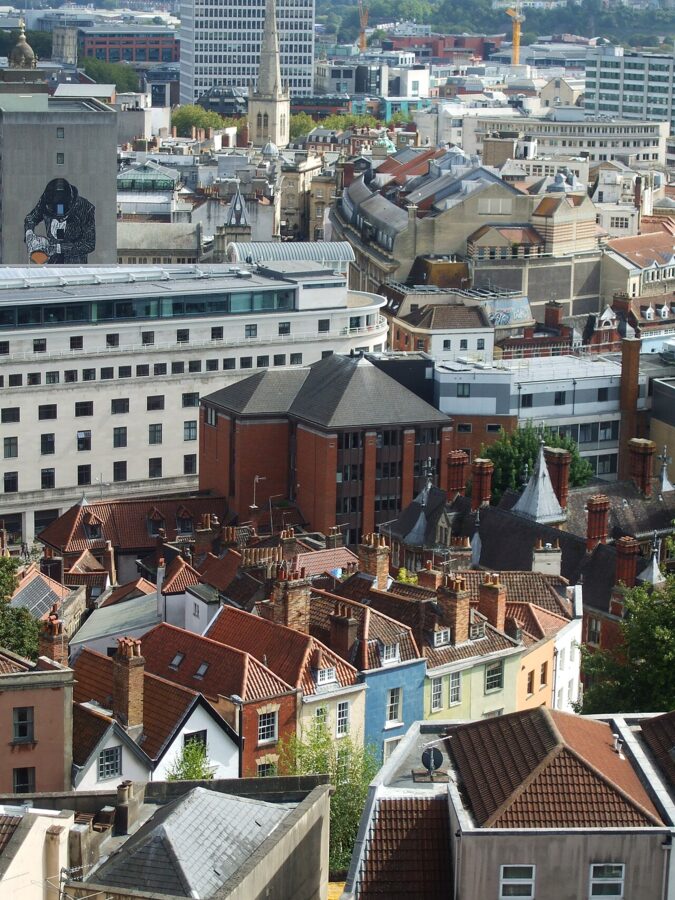
Kingsdown is the steep ridge that rises north of the old city, between St Michael’s Hill on the west and Stokes Croft on the east, with Cotham and Redland running on behind it. My Bristol pubs guide covers the city as a whole; this is the close-up of one hillside. The drinking here is for locals, students, nurses coming off shift and anyone willing to climb, and it is mostly small: front rooms, corner pubs and back gardens wedged between terraces.
Three institutions shape the crowd. The Bristol Royal Infirmary and its neighbours fill the foot of the hill, St Michael’s Hospital sits a few hundred yards up, and the University of Bristol’s science and medical buildings line the west side near the top. In term time that means a lot of lanyards at the bar after 17:00. Outside term the hill is quieter, which is when I like it best.


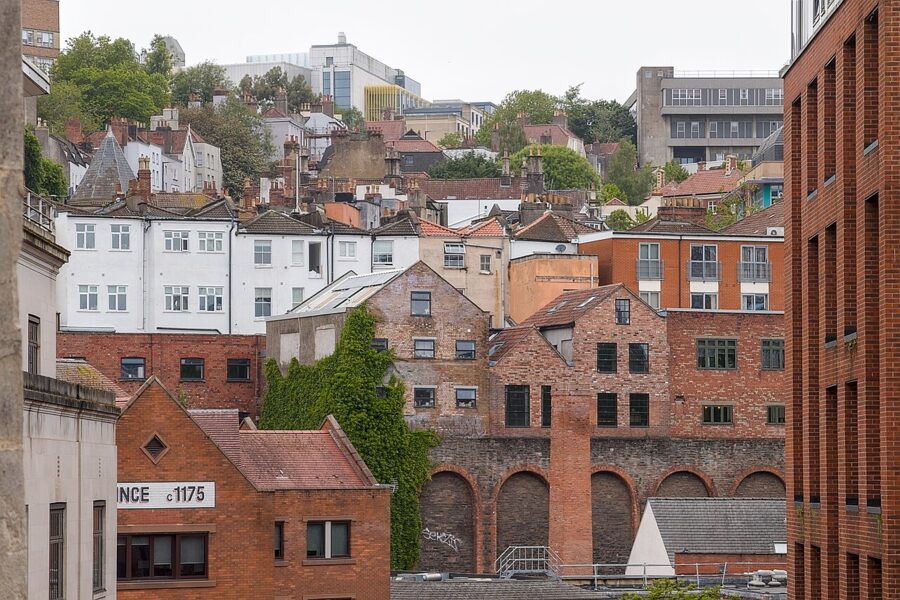
The streets themselves are the other reason to come. The first house in Kingsdown, the Montague, went up around 1737 and was named after the family who owned the estate. It was a tavern from at least the 1790s until the 1930s, was pulled down after bomb damage in the Second World War, and its site is now the little green triangle at the top of Horfield Road. Bristol’s Victorian historian John Latimer recorded a dinner there in August 1817 for twelve guests, with venison and turtle, that cost fourteen guineas before anyone had touched the wine.
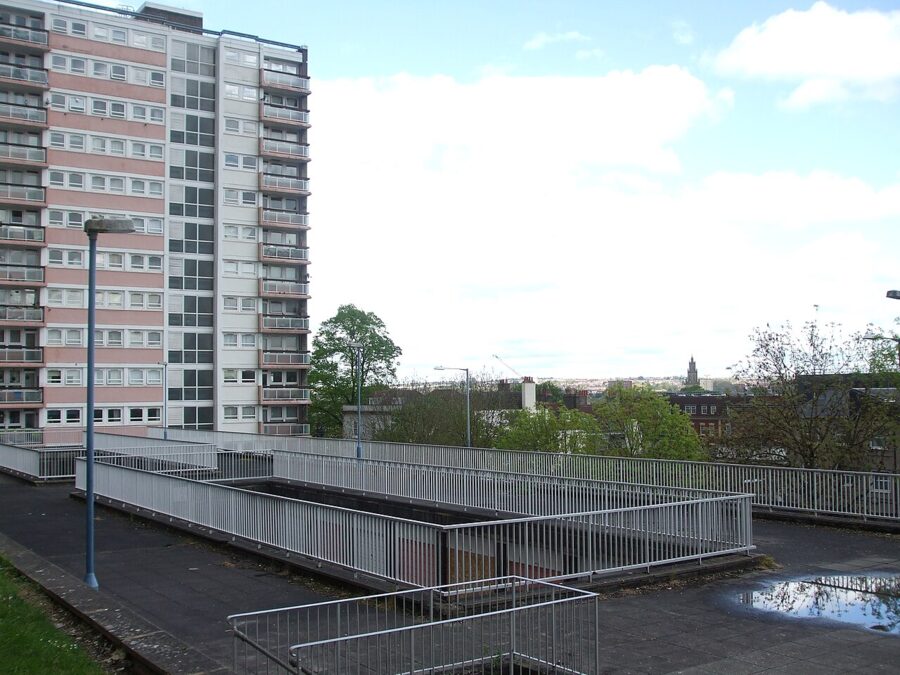
Most of what you walk past was built in the late Georgian decades. The long terrace at 65–101 Kingsdown Parade dates from around 1792, possibly by William Paty, and Historic England lists it Grade II. Then came the 1960s, when the council cleared a swathe of the area for tower blocks. In 1982 The Spectator called the redevelopment of Kingsdown the worst example of official redevelopment in the city, and by then the survivors had already been made a conservation area, in June 1973.
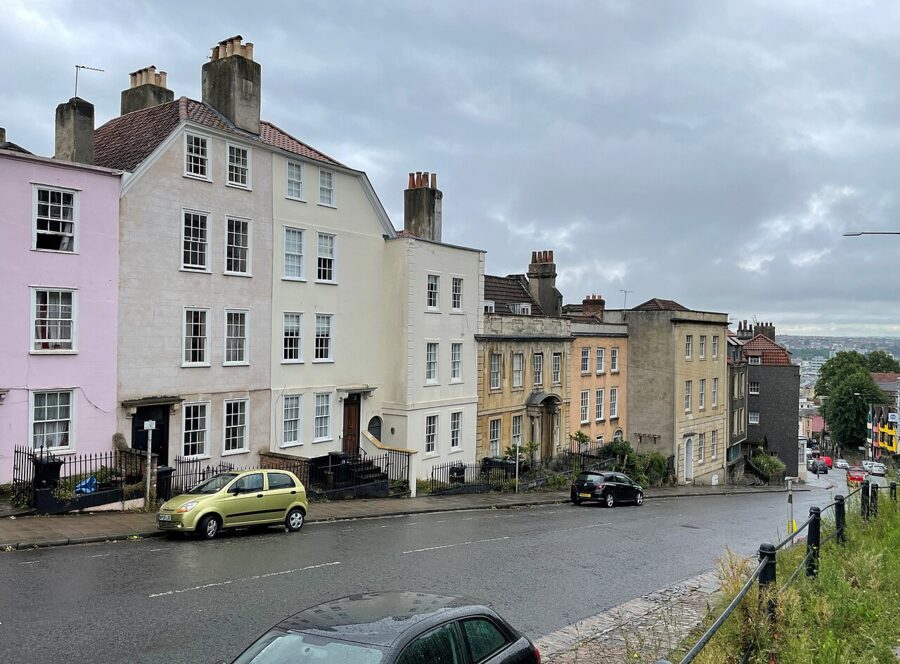

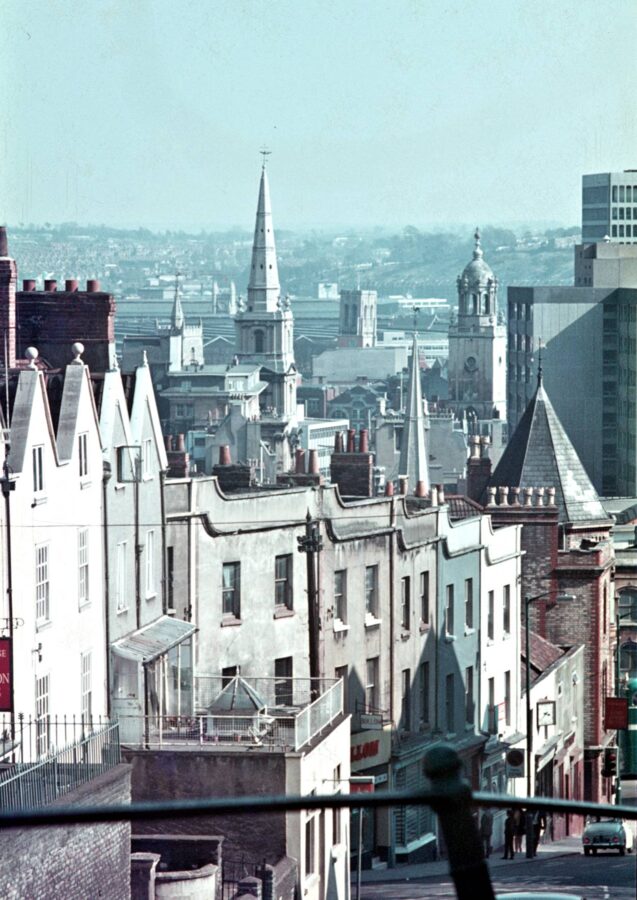


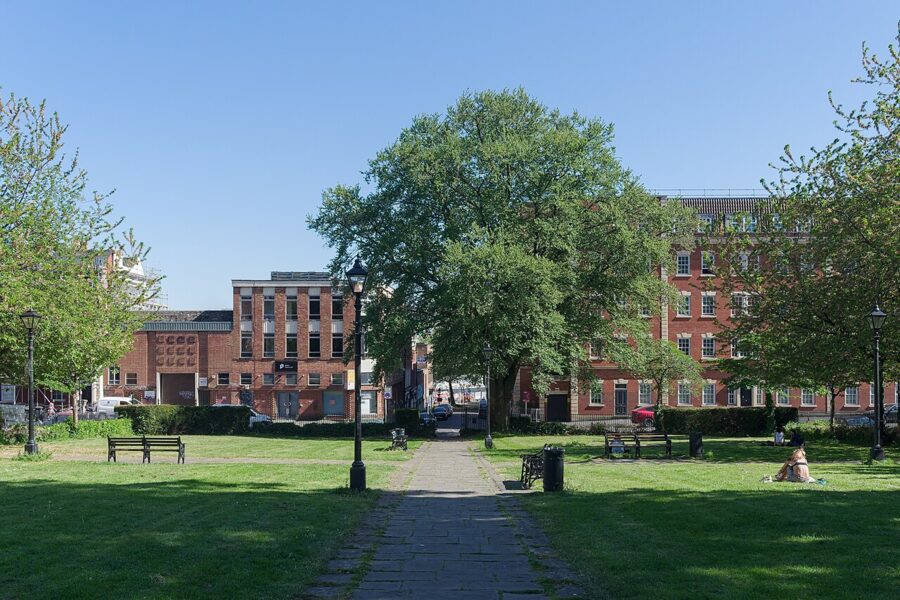

What survives is a tangle of squares, steps and lanes: Fremantle Square, King Square, Spring Hill with its long stairs, Dove Street with its gardens. Take the steeper of any two options; the pubs reward it.

Up St Michael’s Hill
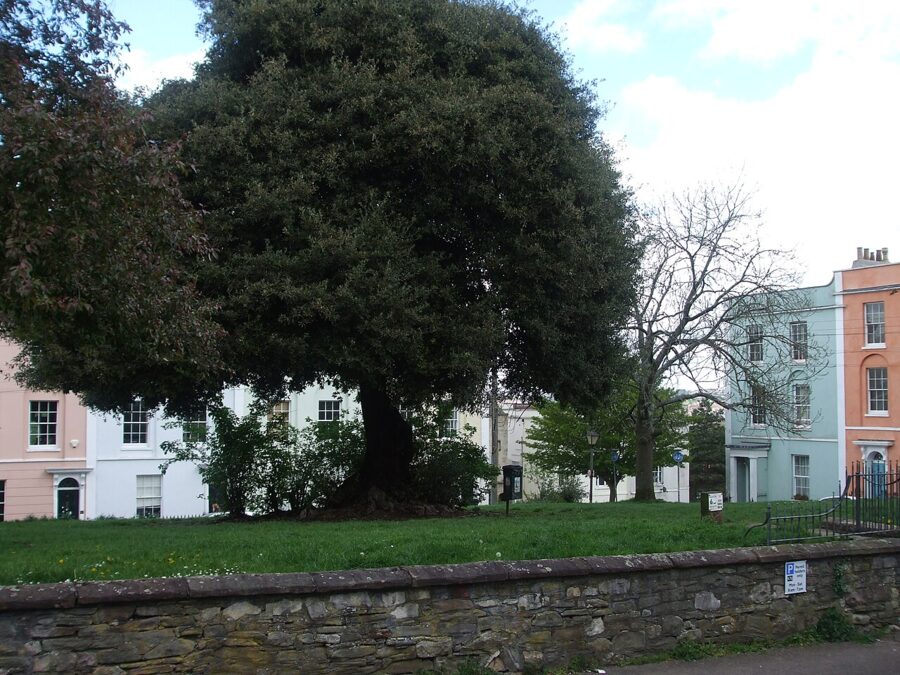
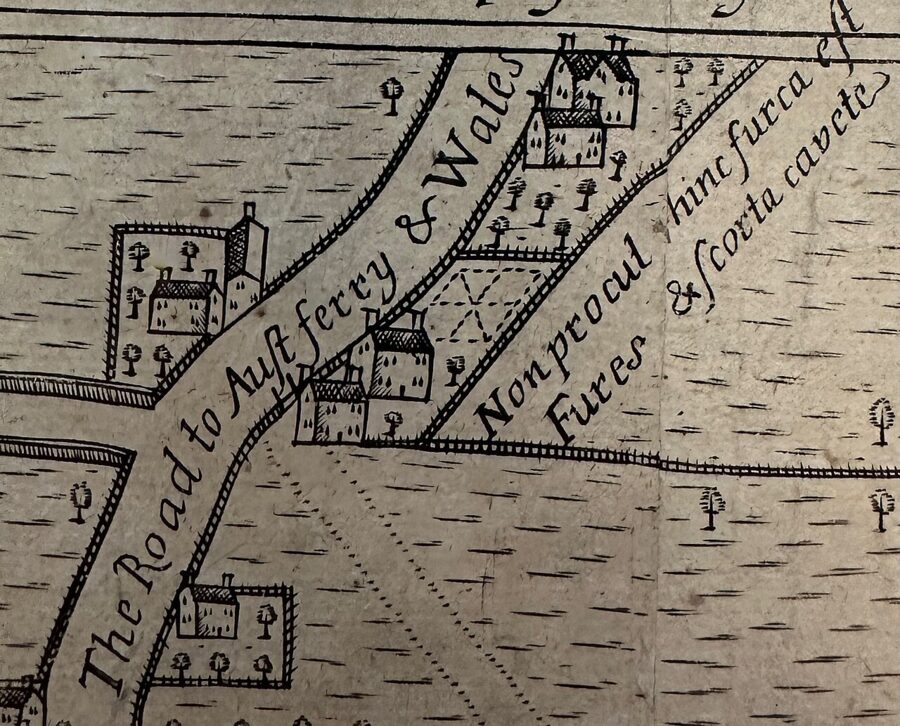
St Michael’s Hill was the main road out of Bristol towards Wales, by way of the Severn ferry at Aust. James Millerd’s map of 1673 marks it as exactly that, with a handful of houses along the climb and the gallows waiting at the top. Coaching inns and alehouses followed the traffic, and four pubs still trade on the hill today, every one of them a short, steep walk from the last.
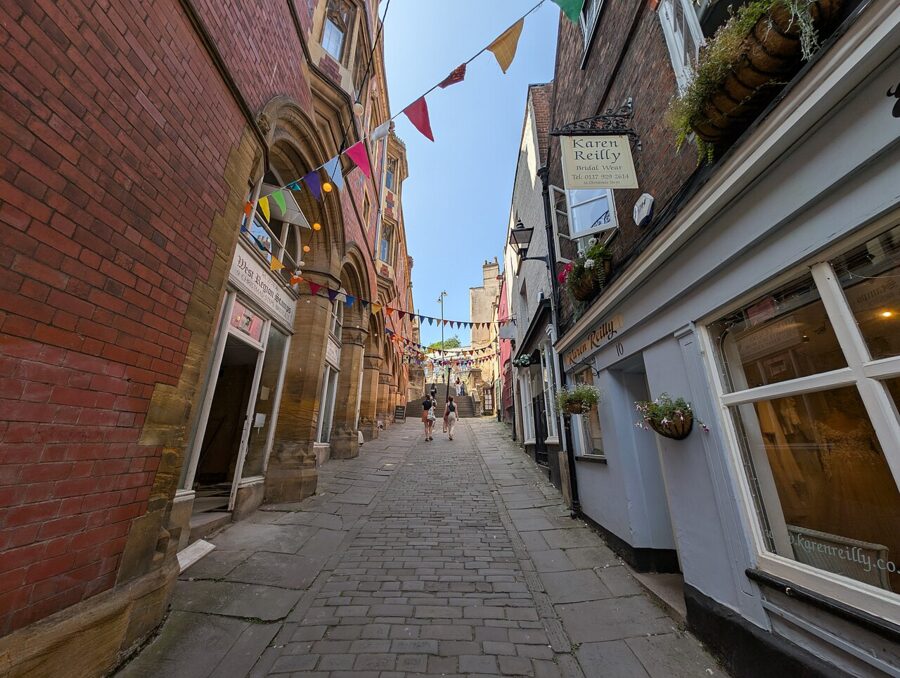
From the centre, climb Christmas Steps from the pubs of the old city; the top is a short walk from the foot of the hill proper.
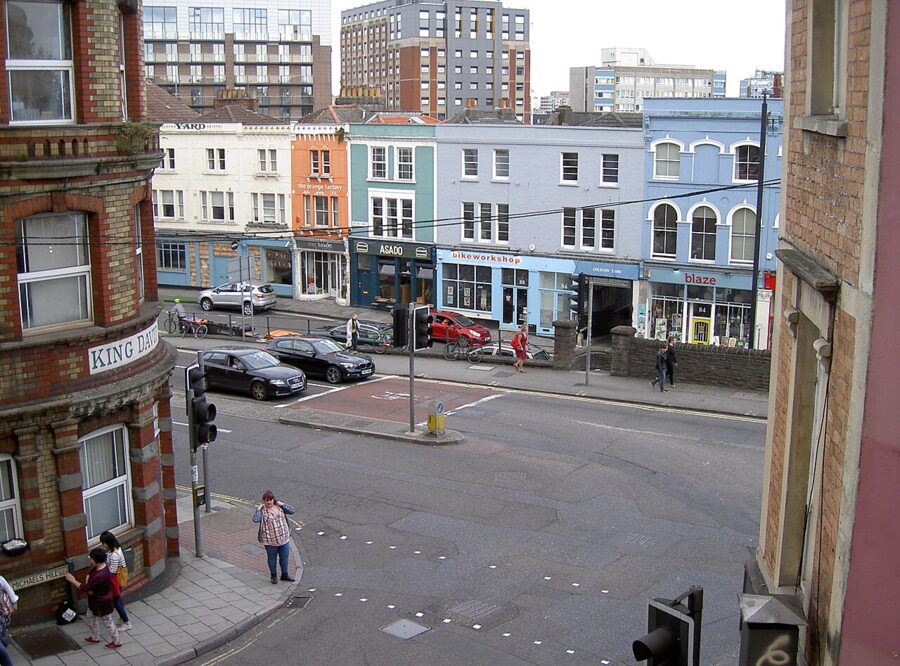

The Open Arms
The first pub on the hill is the Open Arms at number 24, a small, informal local that has had more names than most people have had jobs. The earliest licensee on record, Edward Roche, was serving here in 1816, when it was the Colston’s Arms. It later spent a spell as Micawber’s Ale House, and CAMRA’s records also list, with a straight face, Pubby McDrunkface. It became the Open Arms in 2021, dropping the Colston name to sever its link with the slave trader, the year after protesters pulled his statue into the harbour.
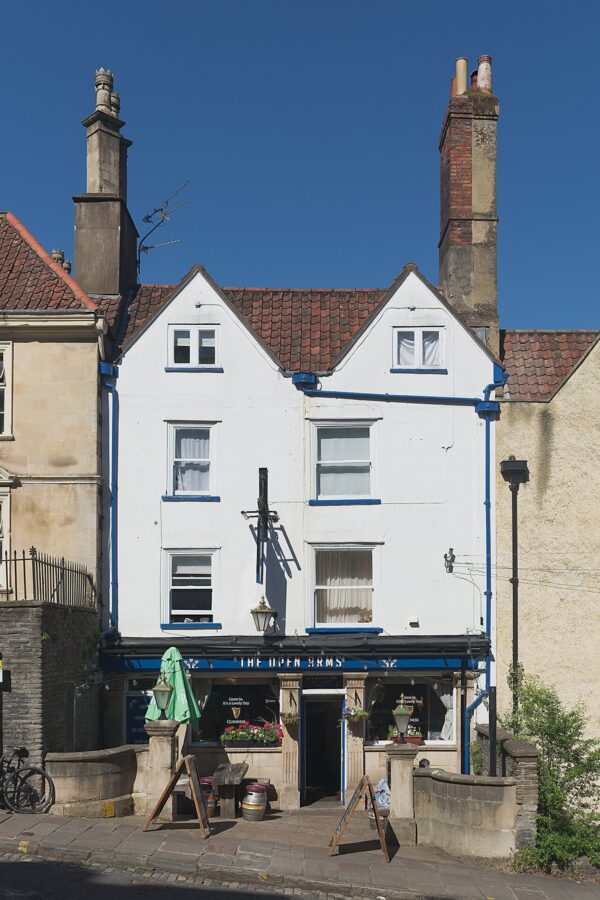

It is a sport-and-Sunday-roast kind of pub. Premier League football is on the screens, there is a table football table, and the food is straightforward pub cooking: CAMRA lists food 12:00–14:30 and 17:30–21:00 on weekdays, all day to 21:00 on Saturday and 12:00–17:00 on Sunday. The pub opens at noon every day and stays open until 01:00 on Fridays and Saturdays. Beers seen on the bar recently include Butcombe Original, Wye Valley HPA and Bristol Beer Factory’s Everytime, with three ciders, and dogs are welcome.
Then there is the gallows story: a final pint here, a final meal at the Highbury. A man walking to his execution would have taken whatever was offered at both, and the story has outlived any evidence in either building.

The Robin Hood
Halfway up, the Robin Hood at number 56 has the best pub front on the hill: two storeys of pale stone with arched windows and a fascia that Historic England’s Grade II listing describes as a vigorous late Victorian public house front, added to a building of the late eighteenth century. It started life as a grocer’s. CAMRA says it has been licensed since 1841 and the pub’s own website says 1848, so pick your date.
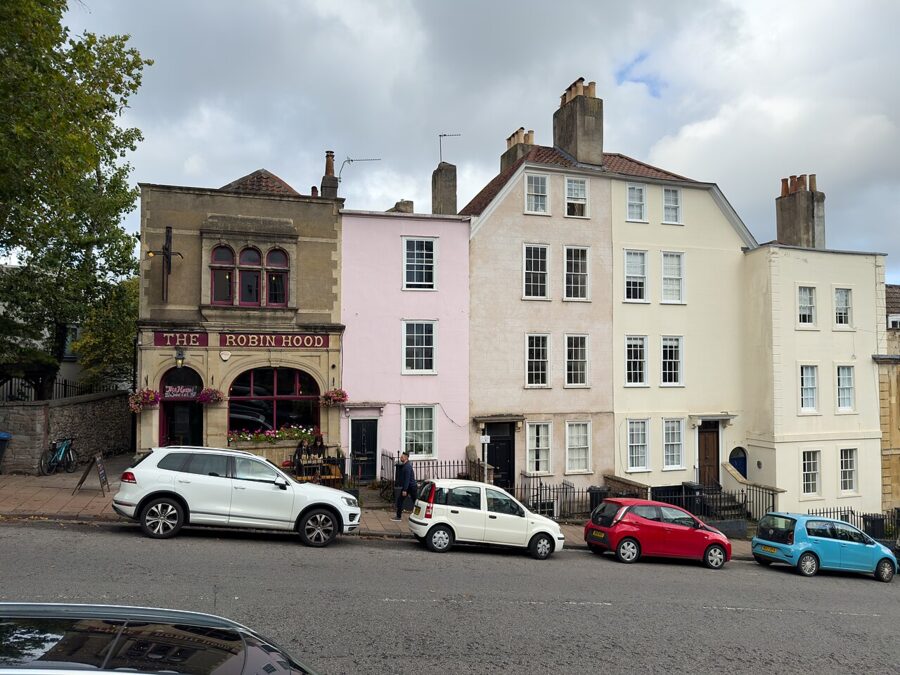

Inside, it is wood panelling and bare boards with murals by local artists, a dumbwaiter disguised as the TARDIS, and knitted hats on the handpulls. Three to five cask beers are usually on, mostly from Bristol and nearby breweries; Frome Brewing’s The Usual was a recent regular. Students, university staff and NHS workers from the hospitals make up much of the crowd, and there are student and NHS discounts on some drinks.
Food comes from a pop-up kitchen, at the time of writing Vietnamese street food from The Hanoi Social, served 17:00–21:30 Tuesday to Saturday, and Wednesday is quiz night. The pub opens at 16:00 Monday to Wednesday and at 14:00 from Thursday, and it welcomes children and dogs. There is a small garden at the back and an upstairs room that is free to hire, which is rarer than it should be.
The White Bear
Near the top of the hill, a large white bear stands on the front of the White Bear at number 133, looking down at the traffic. CAMRA says there was a coaching inn here by 1752, serving traders heading up from the docks; the Grade II listing describes an inn and stabling of about 1800 with a mid-Victorian pub front. Either way, it is the old coaching house of the road to Wales, and it has the bulk to prove it.
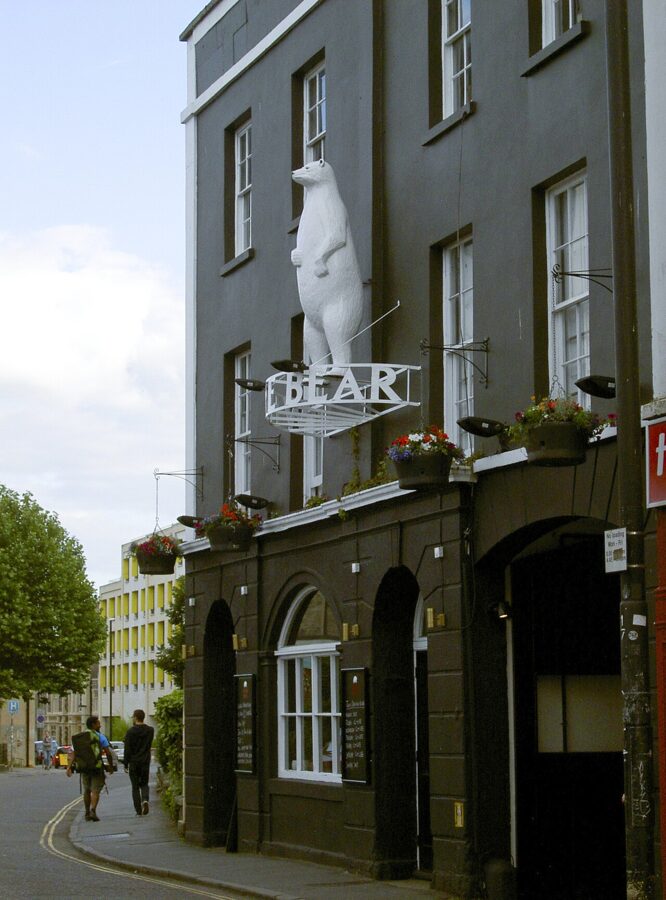

It reopened in November 2022 after a long internal refit and is now more of a night out than a quiet pint. There is a traditional front bar, a lounge at the back and a small performance space upstairs that seats about fifty for comedy, film nights, talks and fundraisers. Buffoon Comedy runs there on Friday nights at 19:30 through the late autumn of 2026, and DJs take over at weekends.
It opens 17:00–23:30 on weekdays and from noon at weekends. CAMRA lists no cask ale here, so I treat it as the place for the show and the Highbury Vaults, two minutes on, as the place for the pint.
The Highbury Vaults
The Highbury Vaults at 164 St Michael’s Hill is the pub I would send anyone to first. It has a narrow front, a tiny snug just inside the door, a long passage, a back bar and an early 1980s extension that CAMRA calls sympathetic. Beyond that is a heated walled garden, partly covered, that you would never guess at from the street.
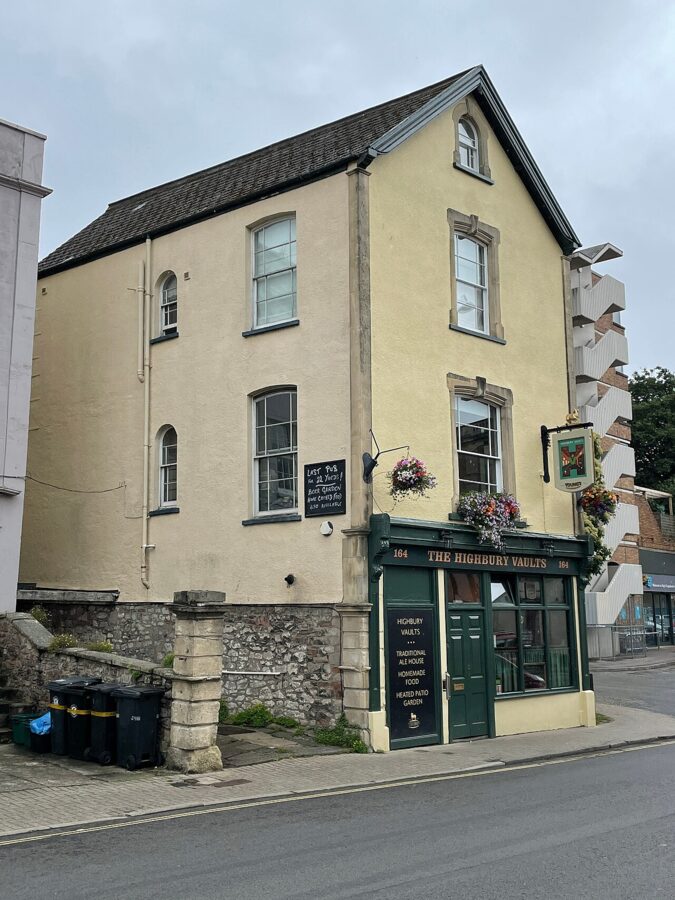

The snug is the thing to see. It has bare boards, dark green dado panelling, an old and possibly Victorian bar counter with gilded brackets, and a set of five Gaskell & Chambers handpumps dated 1936. The bar back of mirrored panels and gilded relief looks every bit as old. CAMRA puts the interior on its regional inventory of historic pub interiors; the building itself is not listed by Historic England.
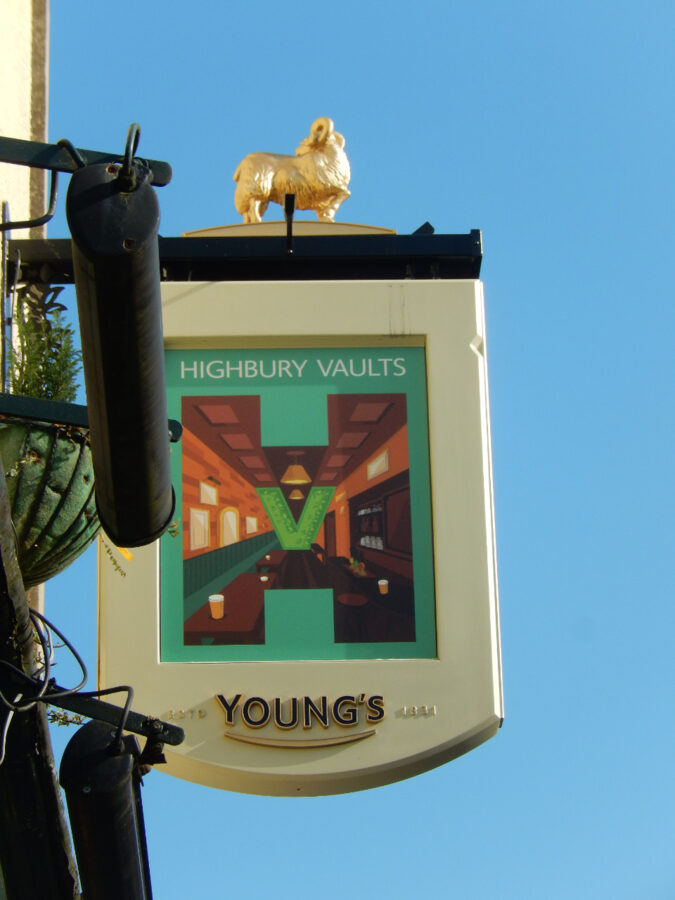
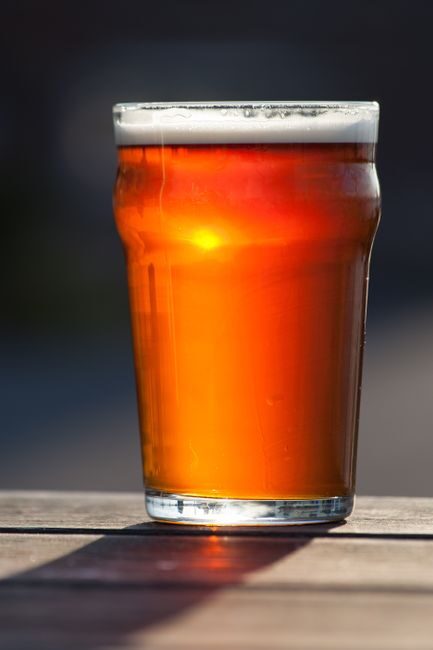
Young’s own the pub, so London Original is the house bitter, and St Austell’s Proper Job and Tribute are regulars. Up to three guest beers sit alongside, often from local breweries. If any of that is new to you, my real ale guide covers what is in the cask and why it pours as it does.

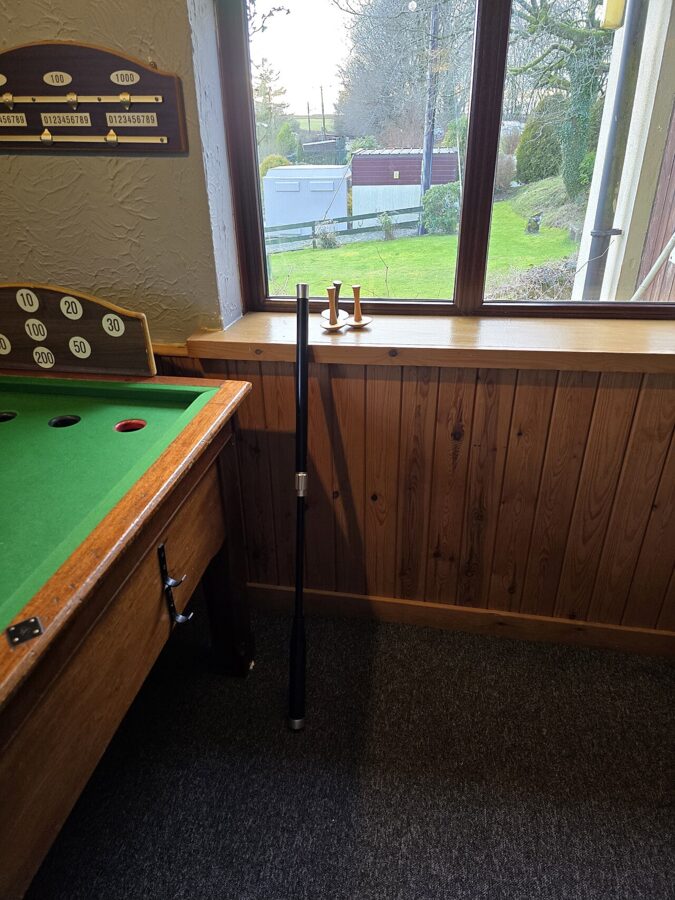
Meals are no longer served, but there are filled rolls and home-made sausage rolls on the bar, which is all you need. A model railway runs from room to room on a shelf along the wall, and there is one of the few bar billiards tables left in the city, plus a good stack of board games. It is a quiet pub with no music, so you can hear yourself talk.

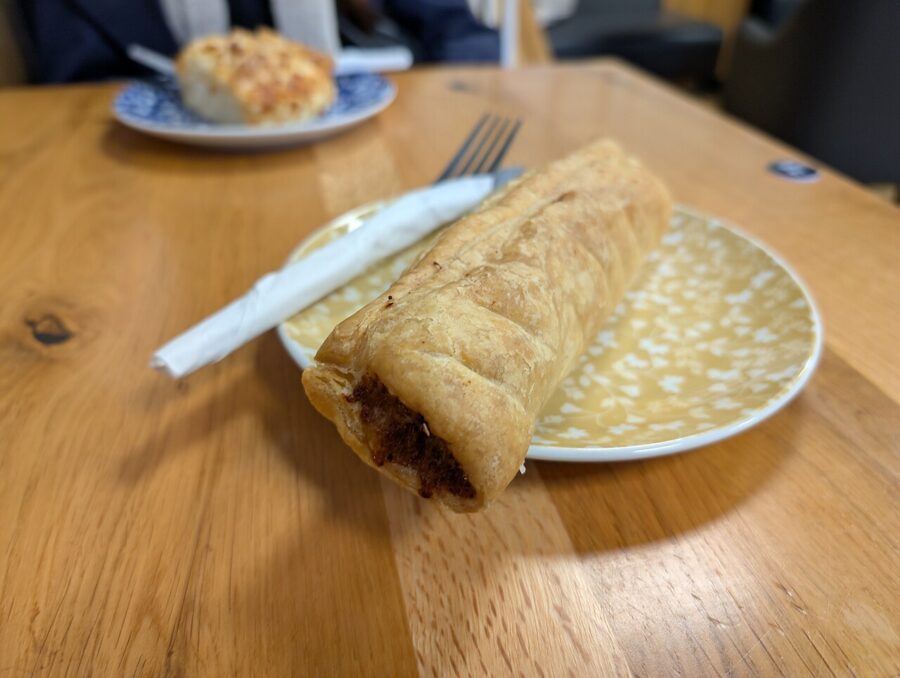
It opens 11:00–23:00 Monday to Saturday and 12:00–22:00 on Sunday, and dogs on a lead are welcome in the front snug and the first room of the main bar. The toilets are down a steep, narrow flight of stairs in the original vaults, and the garden is up steps at the back, so step-free it is not. The Telegraph named it among the best pubs in the UK for 2026, so arrive early on a term-time evening if you want the snug.
The gallows ground and Highbury Chapel
Across the road at the top of the hill stands Cotham Parish Church, built in 1842–43 as Highbury Chapel, a Congregational chapel and the first commission of the architect William Butterfield. It is listed Grade II* and became an Anglican church in the 1970s. The pub shares the Highbury name, and the junction between them was once the city’s gallows ground.
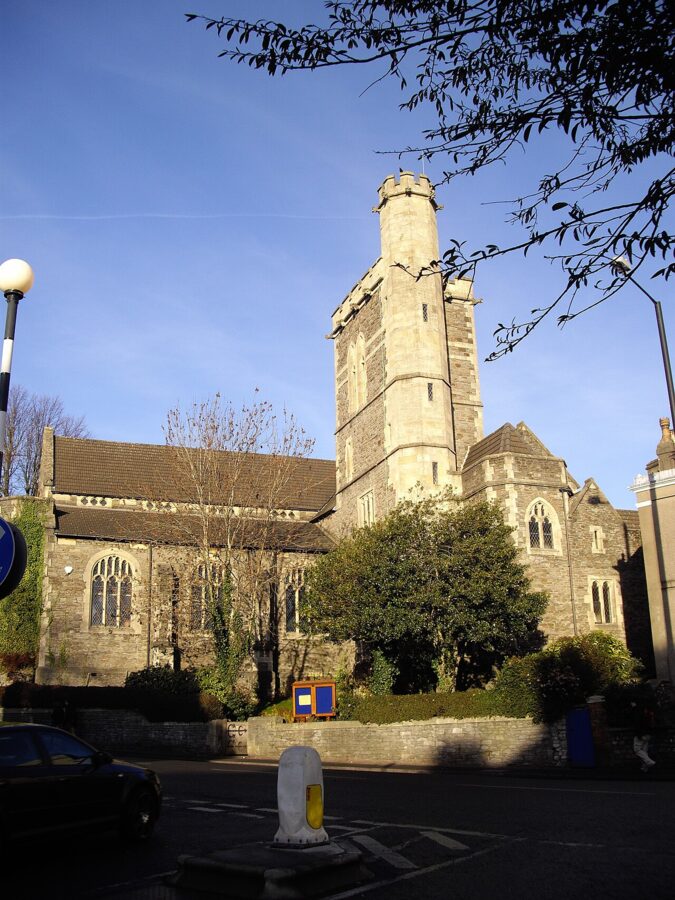

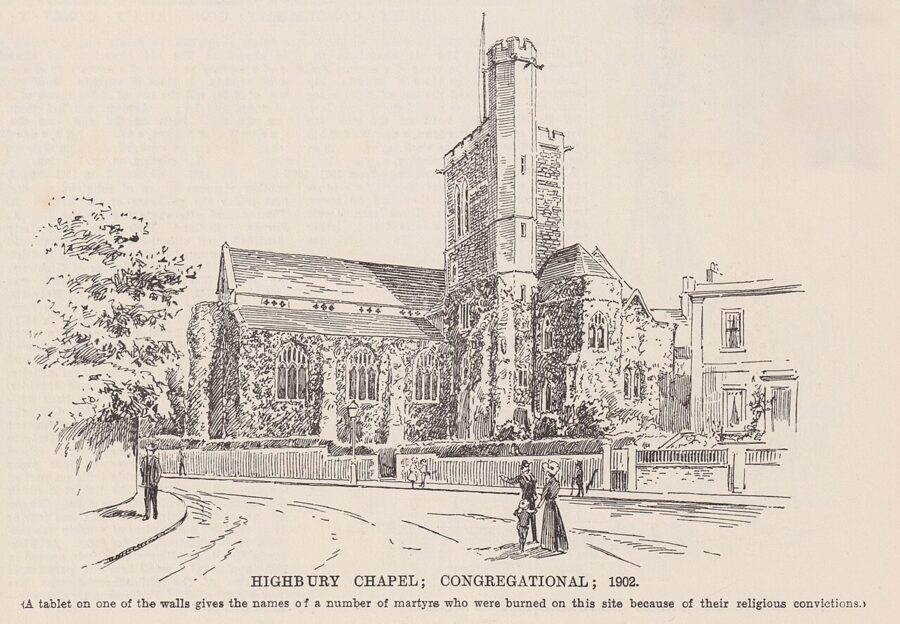
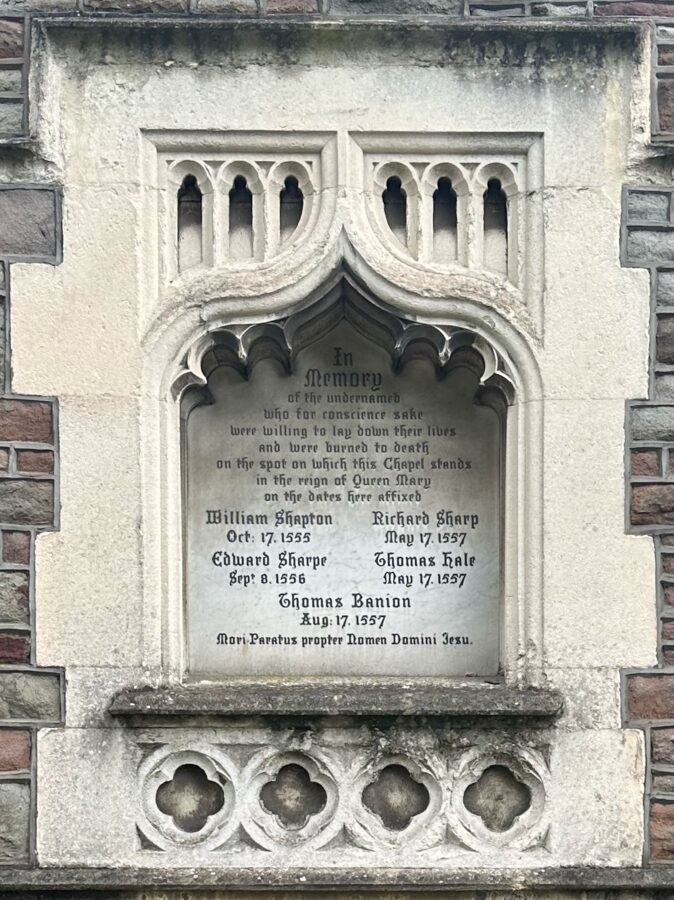
In the 1550s, under Mary Tudor, Protestants were burned to death here; sources give the years as 1555–57 or 1556–57, and John Foxe’s Book of Martyrs recorded the Bristol cases. A nineteenth-century memorial on the church’s north wall names them. It is a sober thing to look at before a pint, and that is no bad thing.

Over the top: Cotham Road South and Kingsdown Parade
From the top of St Michael’s Hill, head north-east along Cotham Road and Cotham Road South. The road runs almost level along the ridge for about six minutes, and Kingsdown Parade runs off it at the far end. Two pubs sit here, a couple of minutes apart.

Cotham Porter Stores
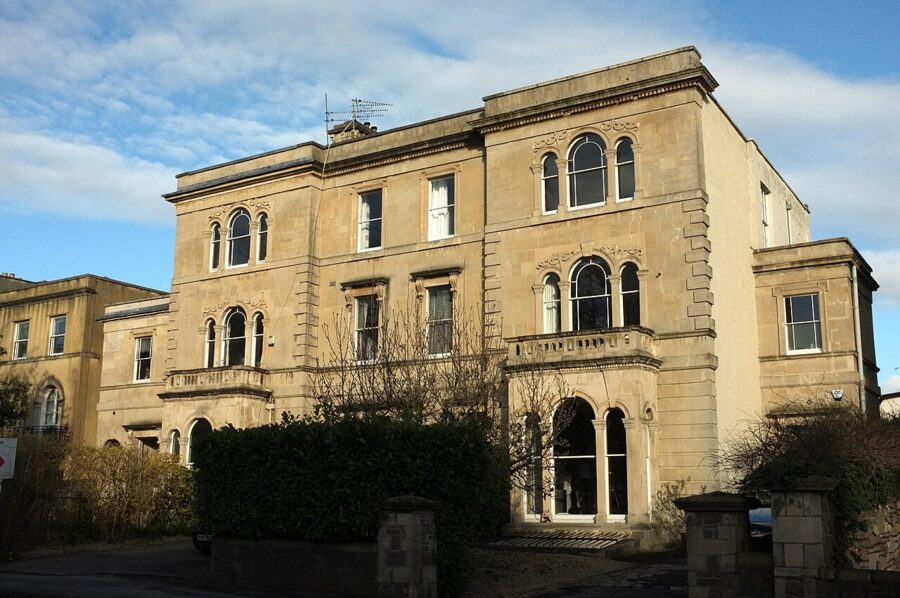
The Cotham Porter Stores at 15 Cotham Road South is a small local owned by the Wickwar brewery from Gloucestershire, which bought it and reopened it in August 2013. Wickwar’s own beers, usually BOB and Falling Star, are on the handpulls, with rotating guest ales and ciders served straight from the cask. CAMRA’s listing calls it a real cider pub, and cider is still part of the deal: Ganley & Naish’s Barn Razer has been a recent one. Inside, settles run along the wall to the left and there is more formal seating at the back.
The pub tells a story that the Beatles, after playing the Colston Hall in November 1963, ended up at a lock-in here, and that a preserved mural inside is the evidence. I have found nothing beyond the pub’s own word for it, and the pub is careful to call it a local legend. Look at the mural and decide for yourself.
Thursday is quiz night, and it is serious: £60 cash for first place, ten pints of Wickwar for second and five for third. The quiz starts at 19:30 and the pub suggests arriving by 18:30 for a table, which tells you how full it gets. Two screens show Sky and TNT sport, and there are four tables out front.
Hours are 16:00–23:00 Monday to Wednesday, 16:00–00:00 on Thursday, noon to midnight on Friday and Saturday, and noon to 21:00 on Sunday. It is a walk-in pub, though you can book a table.
The Kingsdown Vaults
The Kingsdown Vaults at 31 Kingsdown Parade, on the corner of Clevedon Terrace, has been a pub under several names: the Star, Booth’s Hotel, White’s Hotel and the Kingsdown Wine Vaults. Before that the building housed Solomon Fry, a bed and mattress maker. The licence records show one name above all: Emily Millman, a widow who ran the place from 1881 to 1911.
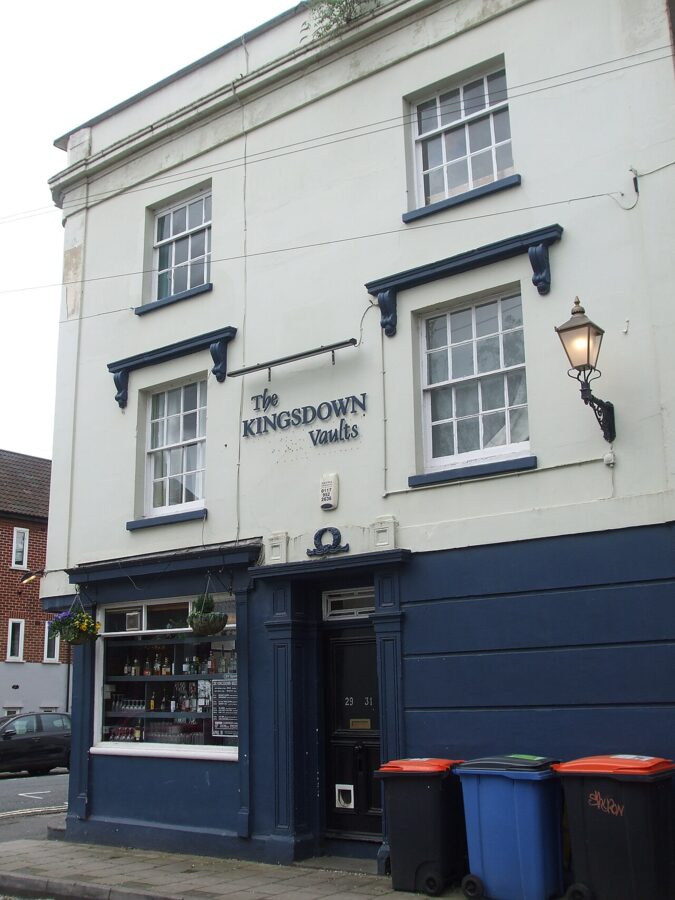

I like Emily Millman’s census entries more than is reasonable. In 1881 she gave her job as beerhouse keeper, in 1891 as tavern keeper, in 1901 as beer retailer and in 1911 as wine vaults keeper: four titles for one woman behind the same bar for thirty years.
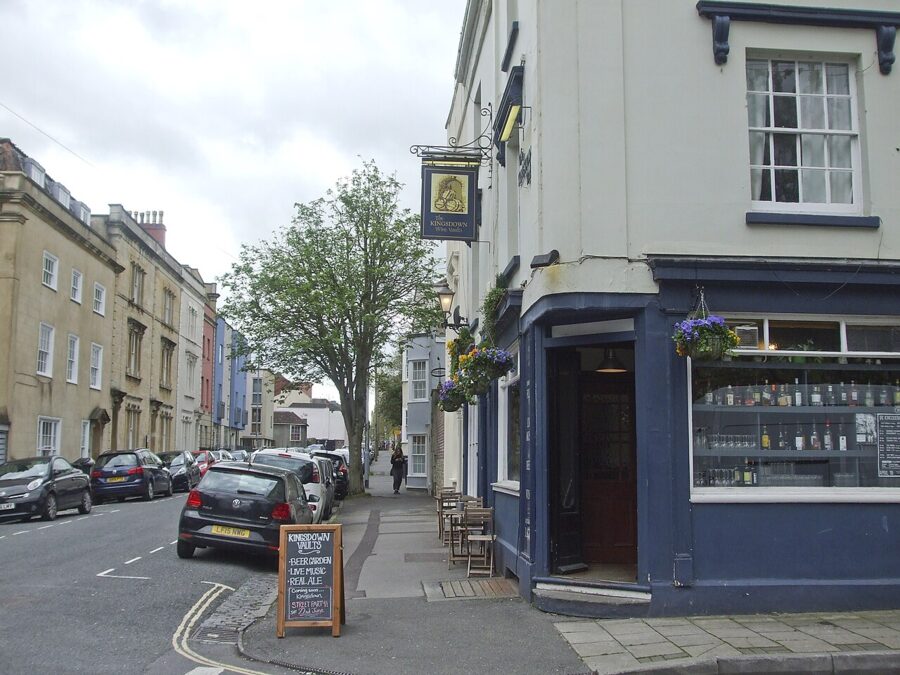

Today the pub’s line is live music, mostly folk, Americana, country and blues, with entry free, plus quizzes and open mic nights. It holds about 160 people, a hundred inside and sixty in the garden. Bristol Beer Factory supplies a couple of the beers, and pizzas are on in the evenings.
That garden made the local news in July 2026, when neighbours asked the council to restrict it to twelve drinkers and a 19:00 closing time. Councillors declined to review the licence after other residents spoke up for the pub, and the garden still closes at 22:00 as it already did. CAMRA lists the pub as closed on Mondays and open from noon the rest of the week, until 01:00 on Fridays and Saturdays.
A few minutes south, on Alfred Place, the Green Man was a tiny Grade II listed pub licensed since 1851, once called the Bell. It closed in April 2026 with its future uncertain, and at the time of writing it has not reopened, so it is history for now.
Down the far side: the Hillgrove and the Hare
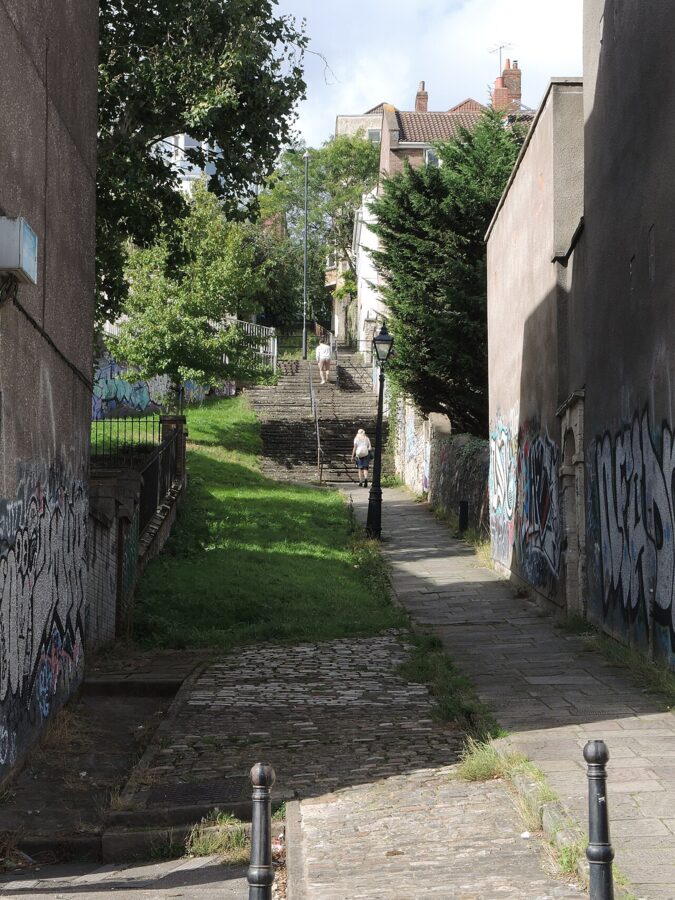
From Kingsdown Parade the walk drops east, down through the lanes and steps towards Stokes Croft. It is about five minutes and fifteen metres of descent to the Hillgrove. The Hare on the Hill is a hundred yards beyond it, and the two behave like old neighbours who have stopped pretending they are not friends.

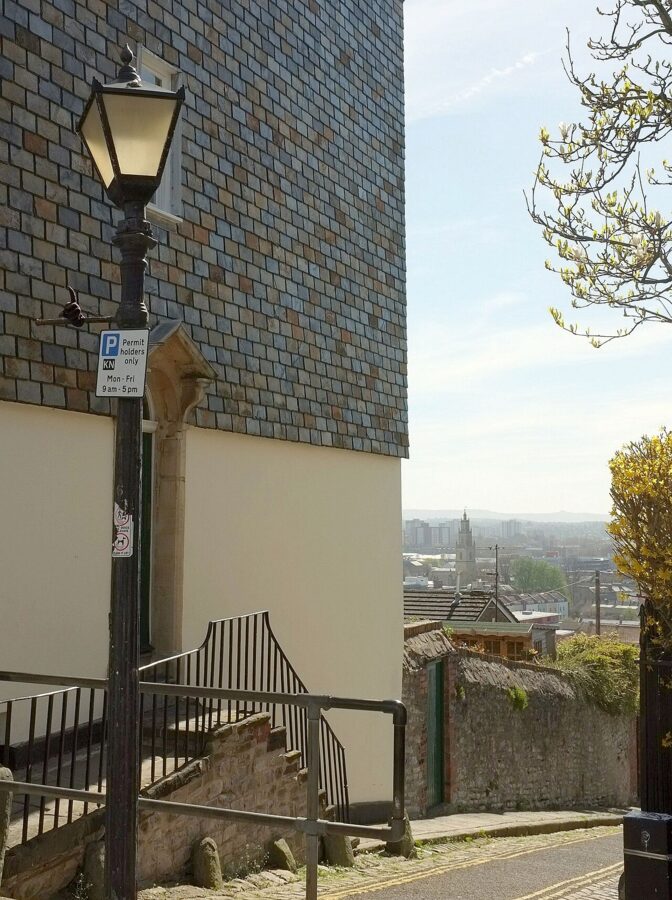

The Hillgrove Porter Stores
The Hillgrove Porter Stores at 53 Hillgrove Street North began as the Dublin Porter Stores; the first licensee, Mary Stone, appears in 1853. It drops out of the trade directories through much of the 1960s, when the area was run down and waiting for the bulldozers, then reappears around 1970 under its present name. It was a Dawkins house for years, and Dawkins Taverns still own the freehold, though the Dawkins brewery itself closed in May 2023.
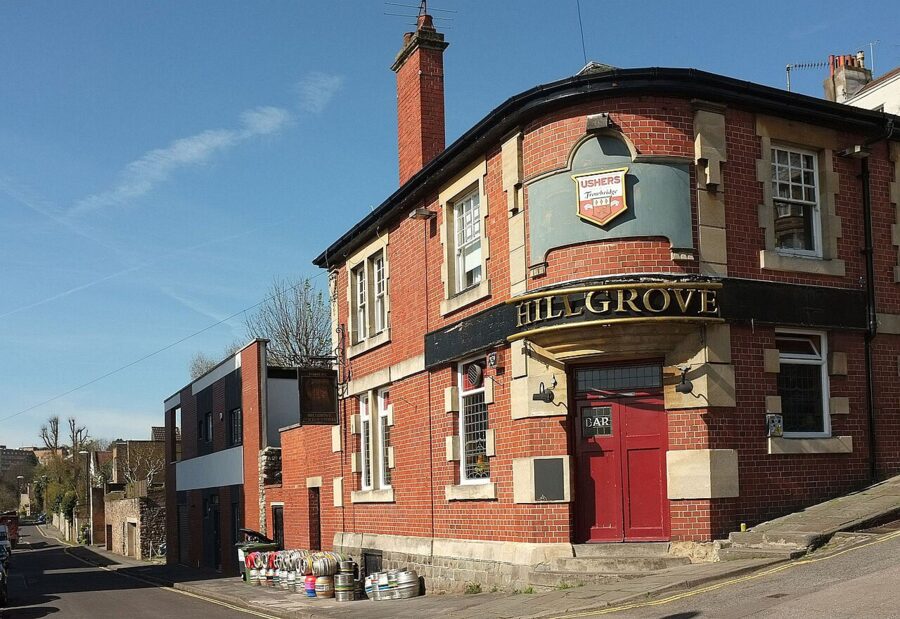

This is the beer pub of the walk. There are twelve handpulls, and at weekends the full dozen is often on, with local Bristol and South West breweries to the fore and usually a low or no alcohol option among them. Two real ciders and several craft kegs add to it, and there is a good shelf of single malts. The room is horseshoe-shaped, lined with old pump clips and lit by stained glass.
The surprise is the food: Japanese, from Kansai Kitchen, served 17:30–21:00 Monday to Saturday and 17:00–21:00 on Sunday, with a shorter menu on Sundays and Mondays. The menu has run to okonomiyaki, kushikatsu and edamame, which go well with a pint of pale ale. It works far better than it has any right to.
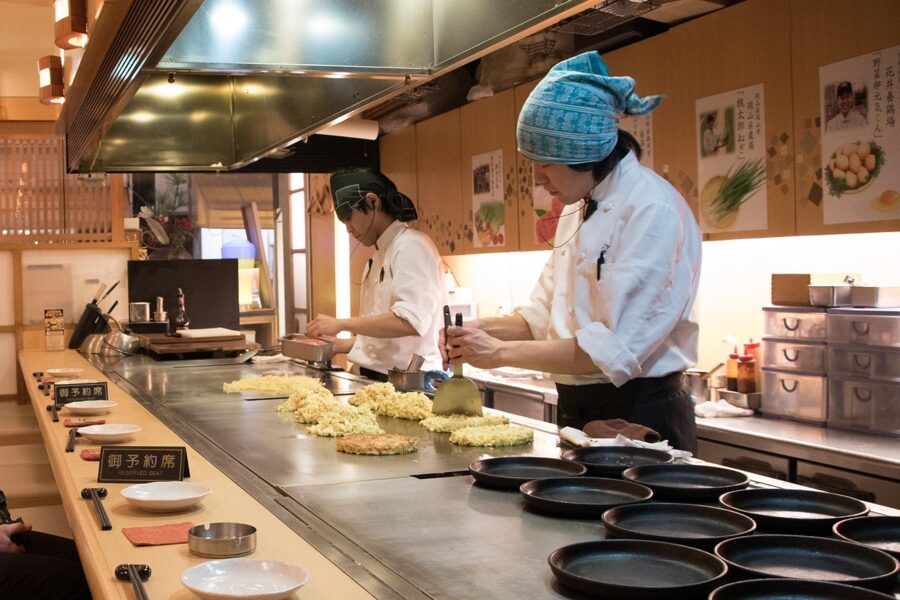
Hours are long: 16:00 to midnight Monday to Thursday, 16:00–01:00 on Friday, 14:00–01:00 on Saturday and 14:00 to midnight on Sunday. Families are welcome and so are dogs on a lead. There is a covered patio garden to one side. There is no step-free access to the bar or toilets.
The Hare on the Hill
The Hare on the Hill at 41 Thomas Street North, on the corner of Dove Street, wears its best feature on its front: green glazed tiles with yellow flowers, a ground floor that stands out from every house around it. It was the Masons Arms until September 1997, when the three partners behind Bath Ales bought it and renamed it. It was their first pub, and its takings helped pay for moving the brewery to Siston Common the following year.
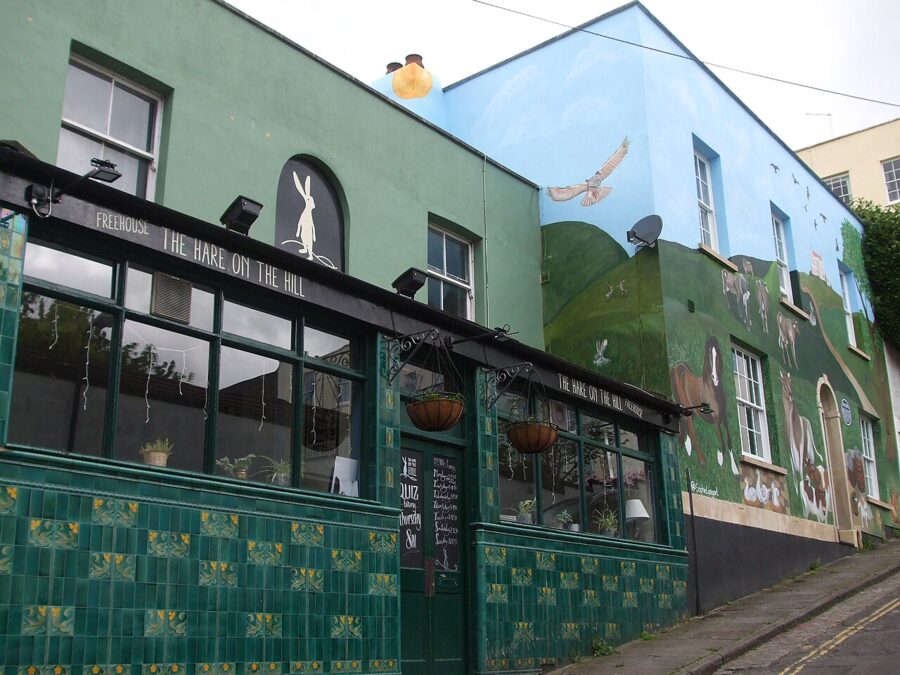

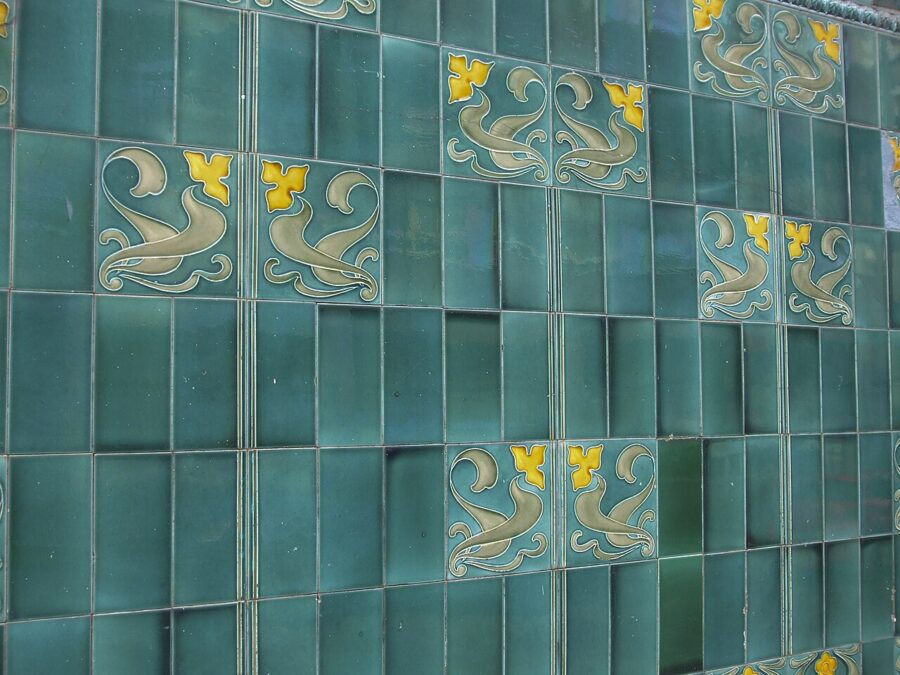

Bath Ales has long since gone its own way; the Hare is now an independent alehouse with five cask beers and ten keg lines, heavy on Bristol breweries, plus a real cider such as Brislington Braintwister or Severn. There is live music, a record deck, a weekly quiz and, for big England tournament matches, a projector. The pub describes itself as an independent alehouse up a big hill, which saves me the trouble.
CAMRA lists opening at 17:00 on Monday and Tuesday, 16:00 from Wednesday to Friday and 14:00 at weekends, closing at midnight on Friday and Saturday. Children and dogs are welcome. A few yards further up Thomas Street North, an early Banksy stencil of a rat survives under Perspex on a house wall.
The Hare and the Hillgrove also run a festival together. The 110 Yard Dove Street Jazz & Folk Festival, its name presumably a nod to the distance between the two front doors, reached its fifth year on 30 August 2026, with a band in each pub from 14:00 to 23:00, over thirty beers and food from Kansai Kitchen. If you can be in Bristol on the next one, go.
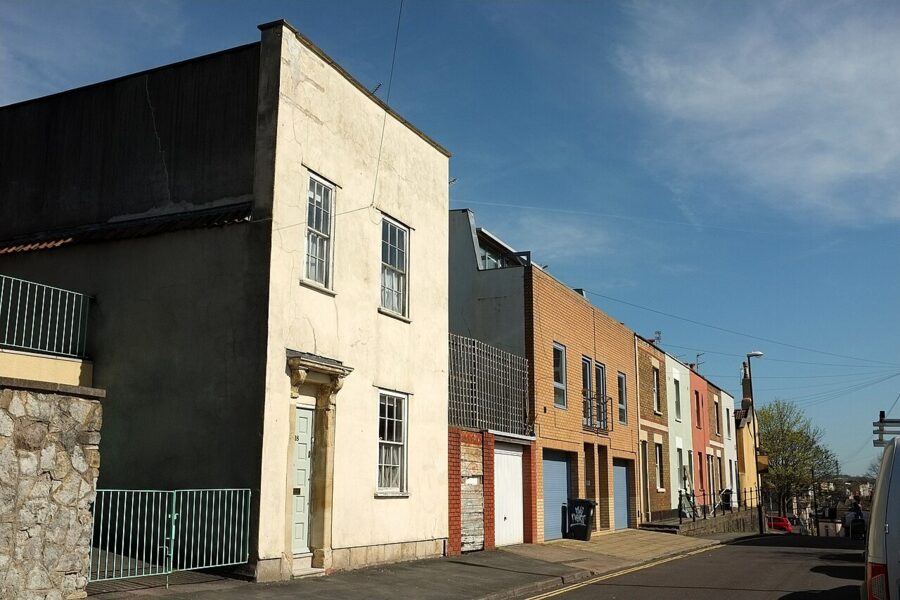

The Bell, at the foot of the hill
Carry on down towards Stokes Croft and you reach the Bell on Hillgrove Street, which has licensees going back to 1792 and has been independently run since April 2022. It is a two-roomed pub with local art on wood-panelled walls, a dartboard in the back room and a heated garden behind. DJs play from 22:00 on Fridays, when drinkers on their way to the clubs of Stokes Croft pass through. Children are welcome until 19:00 and dogs are too.
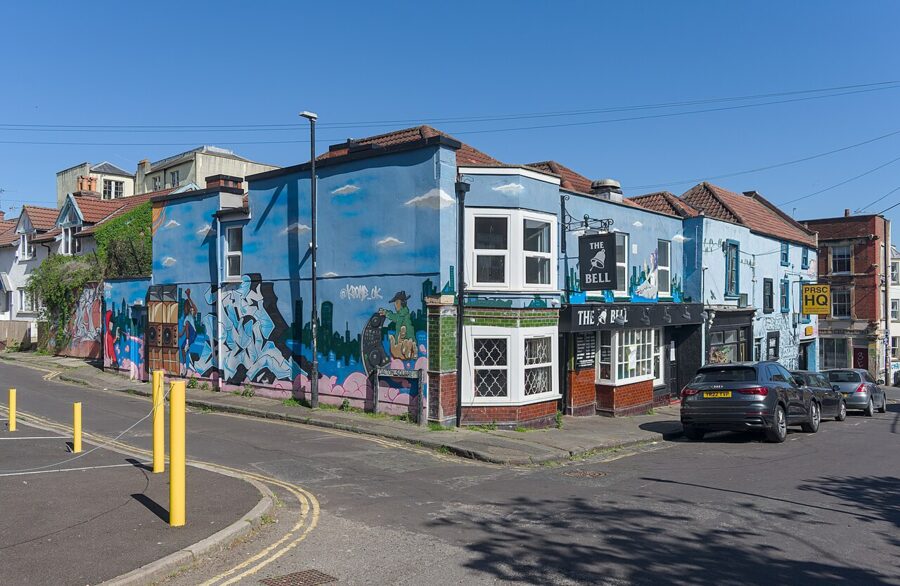

The Cotham and Redland edges
Two more pubs sit just off the ridge, each worth the extra ten or fifteen minutes.
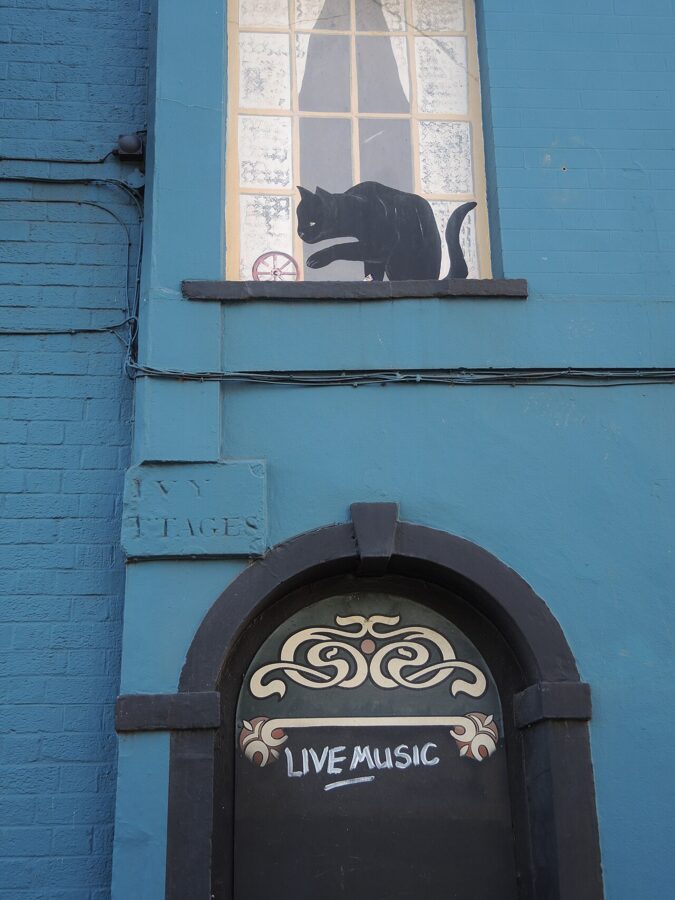
The Cat & Wheel
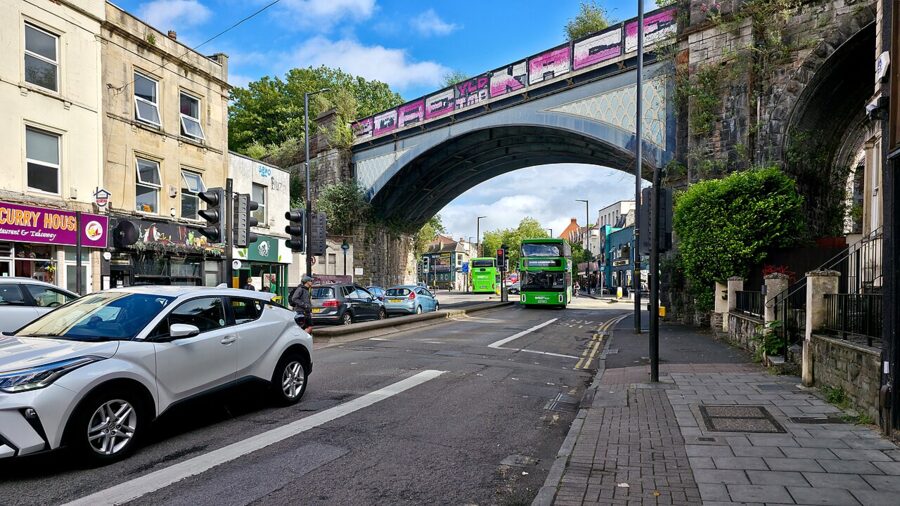
The Cat & Wheel at 207 Cheltenham Road sits beside the railway arches on the main road north, about ten minutes from the Hare. The building was a pair of cottages until 1885, when it opened as a pub called the Beaufort House with Eliza Clark, a widow from Bath, selling beer from it. It was later renamed the Cat & Wheel in tribute to a famous old tavern of that name in Castle Green, down in the city centre, which had been trading by 1752.
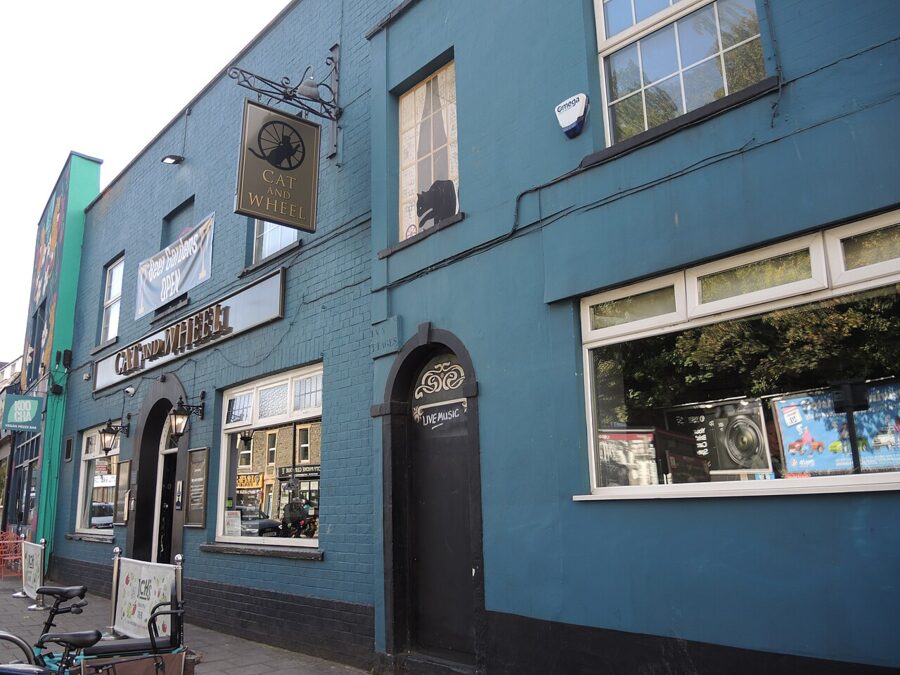

Today it is a Wickwar pub, like the Cotham Porter Stores, with Falling Star and BOB on the bar alongside St Austell’s Tribute. It is a traditional locals’ pub with darts, pool, newspapers, Sky and TNT sport, live music and a garden. Dogs are welcome. CAMRA lists it open from 11:00 daily and late into the night, which suits the stretch of Stokes Croft and Cheltenham Road it serves.


The Shakespeare, Redland
The Shakespeare on Lower Redland Road is a different sort of pub: a big brick local just off Redland Road, with a J-shaped bar, high ceilings and large leaded windows. Local rumour, which the pub repeats, says there has been a pub on the site since around 1803. It is a food pub as much as a drinking one, with a courtyard garden that catches the sun in summer and is covered over in winter.
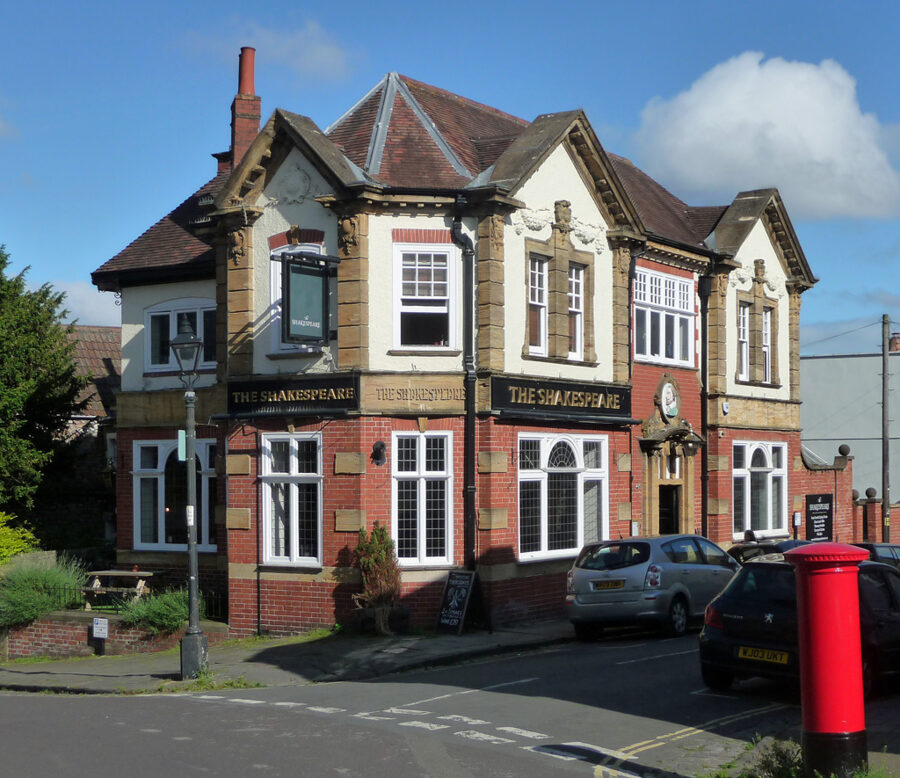

Food runs 17:00–21:00 Monday to Wednesday, with lunch 12:00–15:00 added on Thursday and Friday, all day to 21:00 on Saturday and 12:00–16:00 on Sunday. The pub opens at 16:00 Monday to Wednesday and at noon from Thursday, and it shuts at 18:00 on Sundays, so do not plan a late Sunday finish here. Children and dogs are both welcome, and there is a quiz on Monday nights. Butcombe Original is the regular cask beer.
It is about seventeen minutes on foot from the Highbury Vaults, and ten from Redland station. If you are also covering the pubs over the hill in Clifton, it makes a natural bridge between the two.
Pubs that have gone
Several names on old lists of Kingsdown pubs no longer pour a pint. For the record:
- The Brewery Tap, at the foot of the hill on Upper Maudlin Street, was the Smiles brewery’s own tap. Smiles went into receivership in 2005, Butcombe ran the building under other names, and since May 2021 it has been Haveli, an Indian restaurant and bar.
- The Green Man, Alfred Place, closed in April 2026 with its future uncertain.
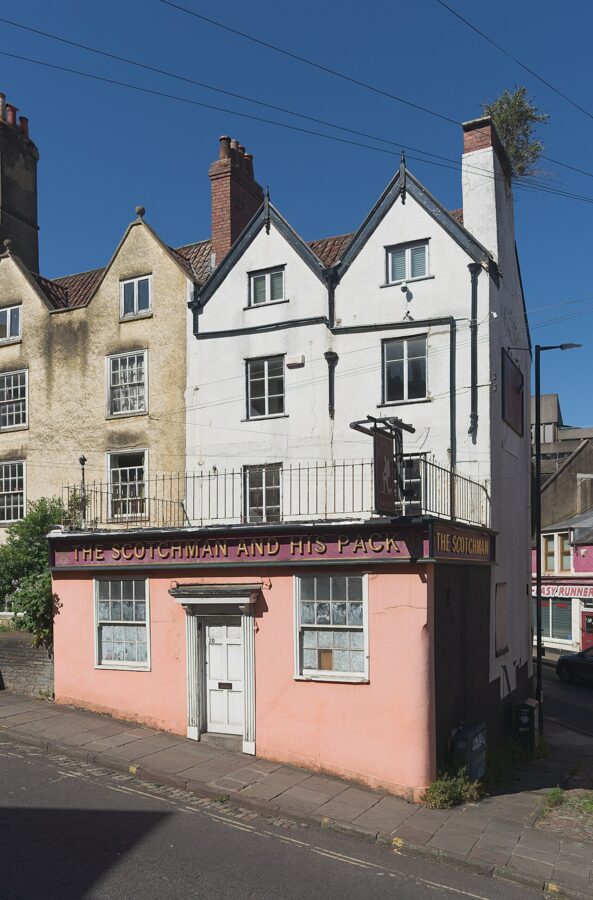
- The Scotchman and His Pack, 20 St Michael’s Hill, has been closed since 2014.
- The Cotham Arms, 155 St Michael’s Hill, closed in 2023 and is now serviced apartments.
- The Montague, Kingsdown’s first house and later a tavern, was pulled down after bomb damage in the Second World War.
The walk: route, times and gradients
The whole route from the foot of Christmas Steps to the Hare on the Hill is a little under two kilometres, and the walking alone takes about twenty-five minutes. The climb is all at the start: about fifty-five metres of rise from the foot of Christmas Steps to the Highbury Vaults, and the stretch from the Open Arms to the Robin Hood climbs roughly one metre in every ten. After the White Bear it is level along the ridge, then downhill all the way to Stokes Croft. Times below are flat-ground walking times; add a minute or two on the uphill legs.
| From | To | Distance | Walk | Ground |
|---|---|---|---|---|
| Foot of Christmas Steps | Open Arms | 350 m | 5 min | Up the steps, then up again |
| Open Arms | Robin Hood | 170 m | 2–3 min | Steepest stretch |
| Robin Hood | White Bear | 290 m | 4 min | Gentler climb |
| White Bear | Highbury Vaults | 130 m | 2 min | Level at the top |
| Highbury Vaults | Cotham Porter Stores | 460 m | 6 min | Level along the ridge |
| Cotham Porter Stores | Kingsdown Vaults | 140 m | 2 min | Gently down |
| Kingsdown Vaults | Hillgrove Porter Stores | 400 m | 5 min | Down, with steps |
| Hillgrove Porter Stores | Hare on the Hill | 100 m | 1 min | Across Dove Street |
| Hare on the Hill | Bell | 350 m | 5 min | Downhill to Stokes Croft |
| Hare on the Hill | Cat & Wheel | 790 m | 10–11 min | Down, then along Cheltenham Road |
All of it is ten pubs, too many for anyone who wants to remember the Highbury’s snug. My pick for one evening is four: the Robin Hood, the Highbury Vaults, the Hillgrove and the Hare. Best front, best room, most beer, best tiles, one serious climb.

Getting there, opening quirks and the rest
Trains and buses
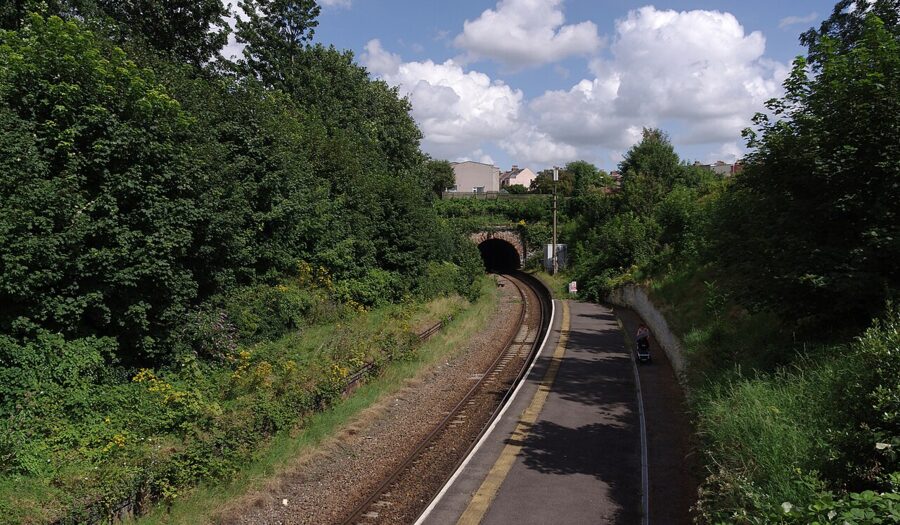
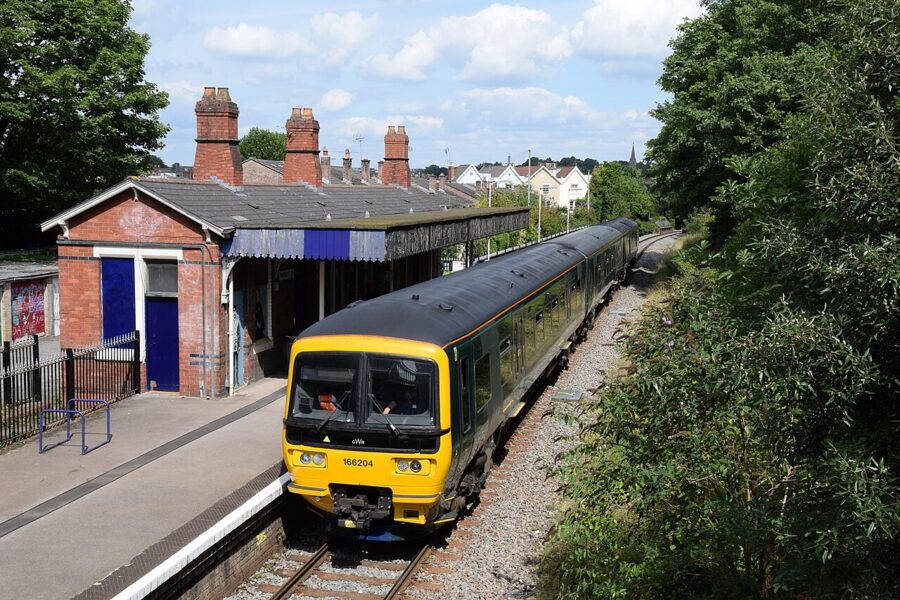
From Bristol Temple Meads it is about twenty-five minutes on foot to the bottom of St Michael’s Hill, through the centre and up Christmas Steps or past the Bristol Royal Infirmary. The better rail option is the Severn Beach line, which stops at Montpelier, Redland and Clifton Down stations. Montpelier is five minutes from the Cat & Wheel, Redland ten from the Shakespeare, and Clifton Down about eleven from the Highbury Vaults.


Buses run up Stokes Croft and Cheltenham Road, a few minutes below the Hillgrove, the Hare and the Bell, and CAMRA’s listings name the 72 for the top of St Michael’s Hill. Taxis can reach every pub in this guide, though some of the Kingsdown lanes are stepped, so check the drop-off point.
Opening quirks
- Most of these pubs do not open until 16:00 or 17:00 on weekdays. The daytime options are the Highbury Vaults and the Cat & Wheel (11:00), the Open Arms (noon) and the Kingsdown Vaults (noon, Tuesday to Sunday).
- The Kingsdown Vaults is listed as closed on Mondays.
- The Shakespeare in Redland closes at 18:00 on Sundays, and the Cotham Porter Stores at 21:00.
- Late finishes are on Fridays and Saturdays: 01:00 at the Hillgrove, the Kingsdown Vaults, the Open Arms and the Bell.
- Food on a Monday: the Open Arms, the Hillgrove (reduced menu) and the Shakespeare. The Robin Hood’s kitchen is closed on Sundays and Mondays.
Sport and match days
None of these is a football pub in the away-fans sense. The places showing sport are the Cotham Porter Stores and the Cat & Wheel, with Sky and TNT, the Open Arms with Premier League games, the Kingsdown Vaults, and the Robin Hood with free-to-air sport on a pull-down screen. The Hare brings out its projector for big England tournament matches. If you want a quiet pint on a big match day, the Highbury Vaults is the quiet one, with no music.
Dogs, children and steps
Dogs are welcome at the Highbury Vaults (front snug and first room), the Hillgrove (on a lead), the Hare, the Robin Hood, the Open Arms, the Bell, the Cat & Wheel and the Shakespeare. Children are welcome at the Hillgrove, the Hare, the Robin Hood, the White Bear, the Shakespeare and, until 19:00, the Bell.
Step-free access is the weak point of the area: the Highbury has stepped access and steep stairs to the toilets, and the Hillgrove has no step-free route to the bar. If you need level access, ring ahead.
Where to finish
If you have done the climb, finish at the Hillgrove or the Hare, five minutes from the buses on Stokes Croft or fifteen from Montpelier station. If you are only having one, make it the Highbury Vaults, in the snug, with a pint of whatever local guest is on the third pump and a sausage roll from the bar.
And when someone at the next table tells you that this was where the condemned ate their last meal, nod, and point out that the Open Arms says the same thing. The prisoners walked up St Michael’s Hill to the gallows. You get to walk down the other side to the Hare.