
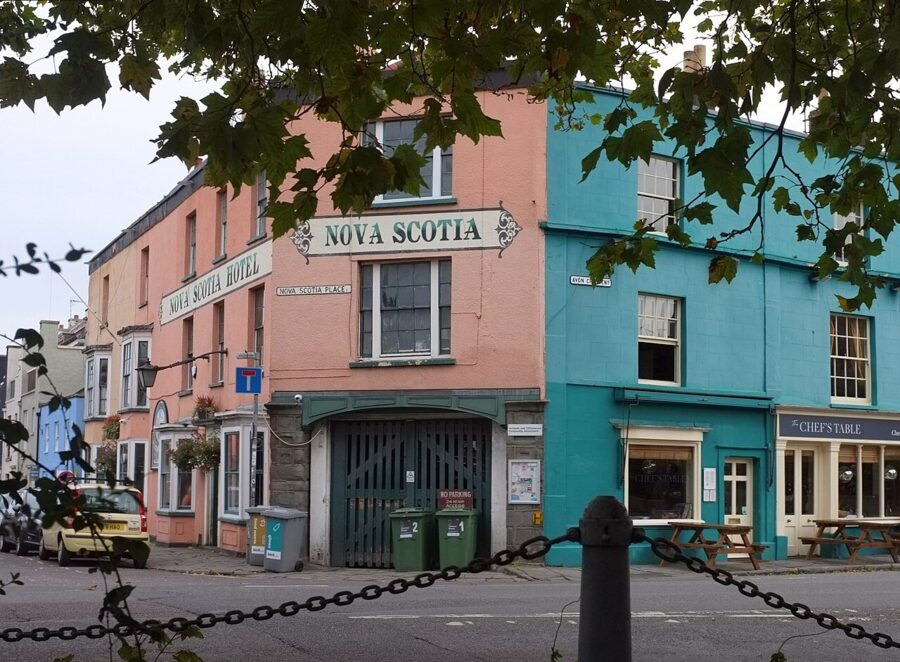
Behind the clock on the bar-back of the Nova Scotia, where only the bar staff ever look, there is a maker’s label: Parnall’s, a firm that fitted out ships. The story in the pub is that the whole mahogany fitting was built for a liner, didn’t fit, and came ashore instead. Nobody seems to know which liner. I like the story anyway, because it suits this end of Bristol, where the pubs were built for sailors, dockers and lock-keepers and still sit within a rope’s throw of the water.
Hotwells is the old dock edge of the city: a strip of Georgian terraces and Victorian dock buildings squeezed between the cliffs below Clifton and the western end of the harbour, with the Cumberland Basin locks at its tip and the narrow end of Spike Island across the water. The drinking here is unhurried and local. You come for an old interior, a cask pint by the locks and a walk, not for a big night. The rest of the city, from the old quays to the hill-top locals, is in the guide to Bristol pubs; this is the half-day out to where the harbour ends.
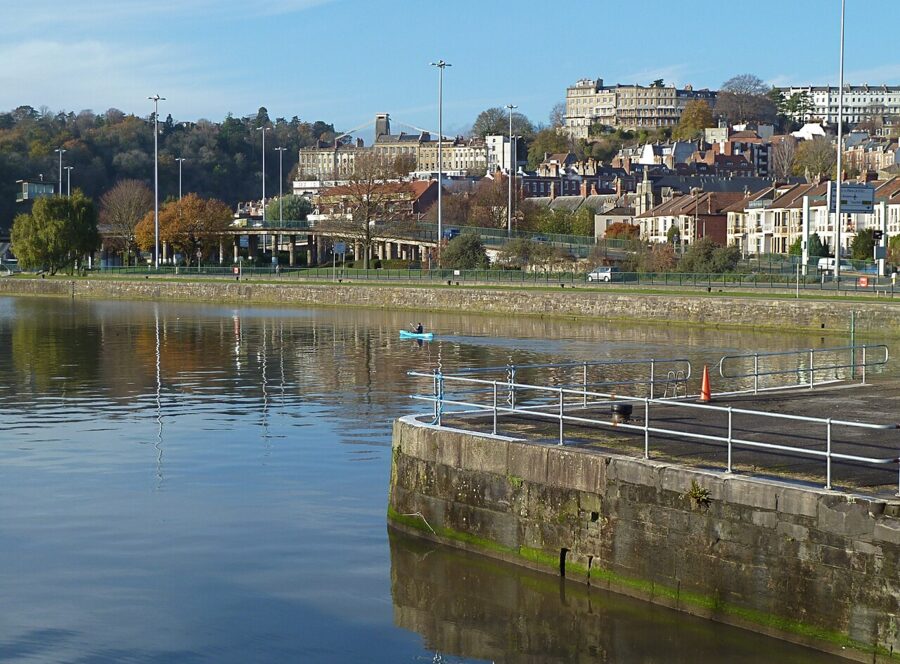

Eight pubs on the flat are worth the walk, plus one up the hill, and they fall into two groups. On the Hotwells side of the water, along Hotwell Road and Merchants Road, are the Merchants Arms, the Pump House, the Rose of Denmark, the Grain Barge and, up towards the cathedral, the Bag of Nails. Across the swing bridge on Spike Island are the Nova Scotia, the Cottage Inn and the Orchard Inn. Nothing is more than ten minutes from its neighbour, and the harbour ferry stops at both ends.

On this page
A spa that never quite became Bath
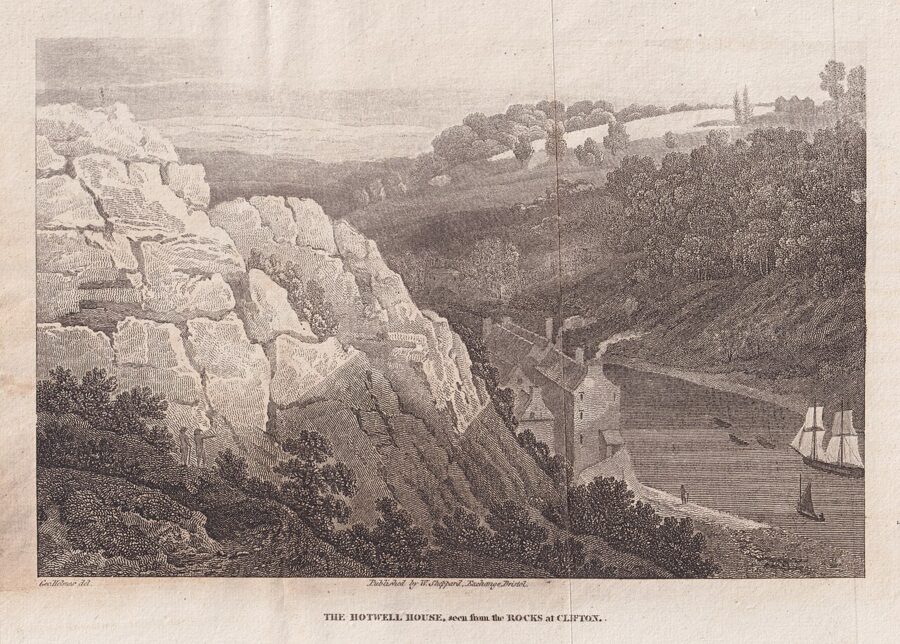
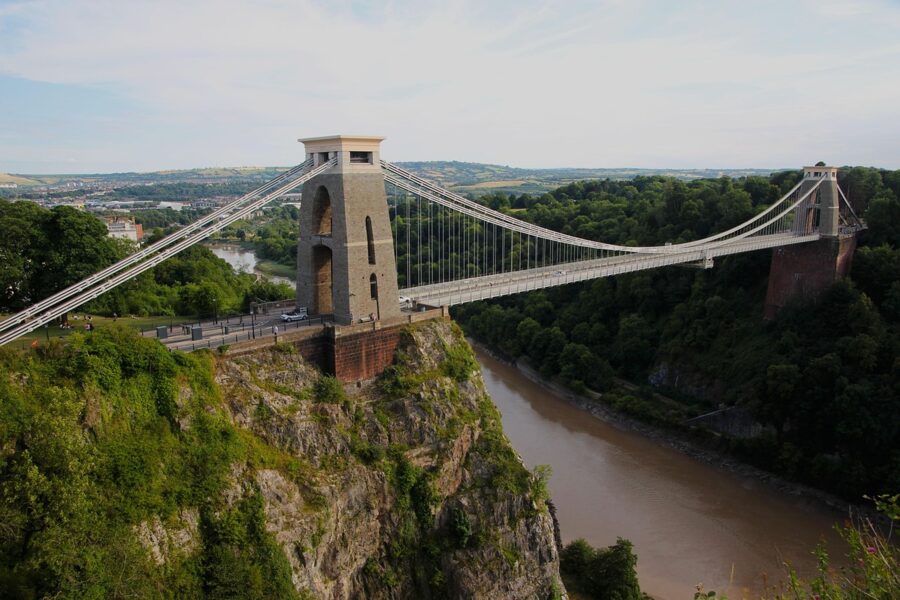
The name is literal. A warm spring rises through the rocks of the Avon Gorge below the Clifton Suspension Bridge, and the chronicler William Worcester was writing about it in 1480, describing water as warm as Bath’s. By the end of the 17th century the Society of Merchant Venturers had leased it and built a pump room, and Hotwells water was being bottled and shipped across England and beyond. Daniel Defoe counted Bristol’s glass-houses in 1724 and put a good share of their bottles down to the Hotwell; Nelson was buying Bristol water in 1798.
For a few decades the place tried hard to be a second Bath. Dowry Square was built for the season’s visitors, the Colonnade on Hotwell Road opened as a row of little shops for them in the 1780s, and Fanny Burney sent the heroine of Evelina here. The water came up at a steady 76°F, which is pleasant for a bath and not much of a cure for anything.
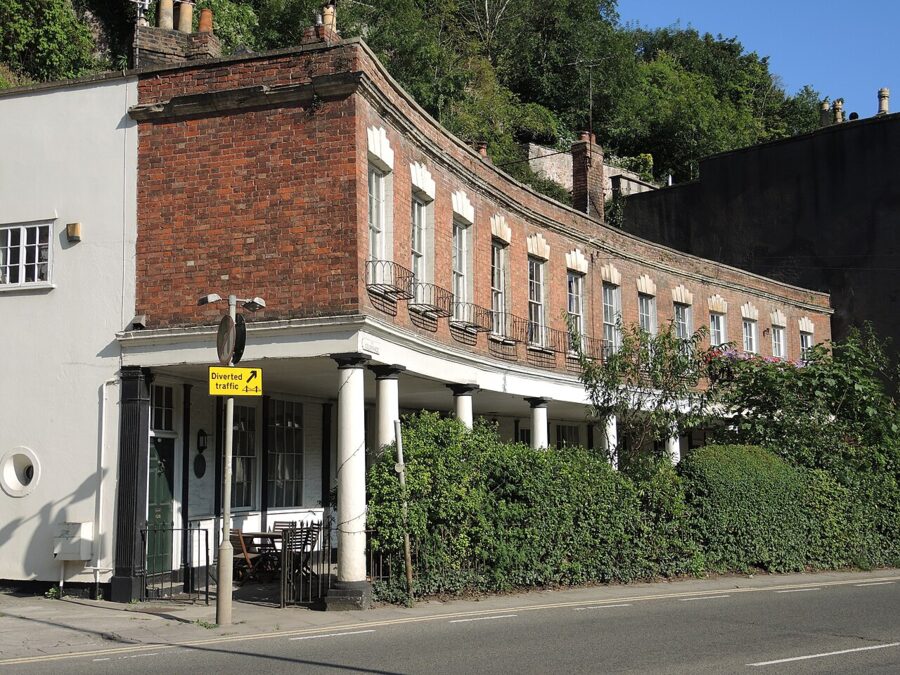

It did not last. By the Napoleonic Wars the visitors had drifted to Bath and Cheltenham, and one local doctor wrote in 1816 that the spa had “the silence of the grave”. A revival as the Royal Clifton Spa came and went in the mid-19th century, and the spa buildings at the foot of the gorge were pulled down in 1867 when the river was widened for shipping. A new pump put in during 1877 lasted until 1913, when the water was found to be polluted and the pipe was sealed.
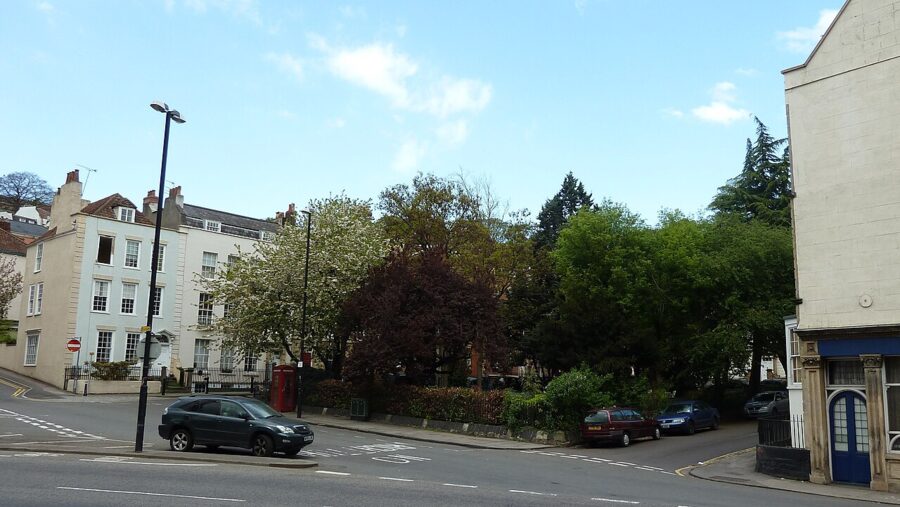

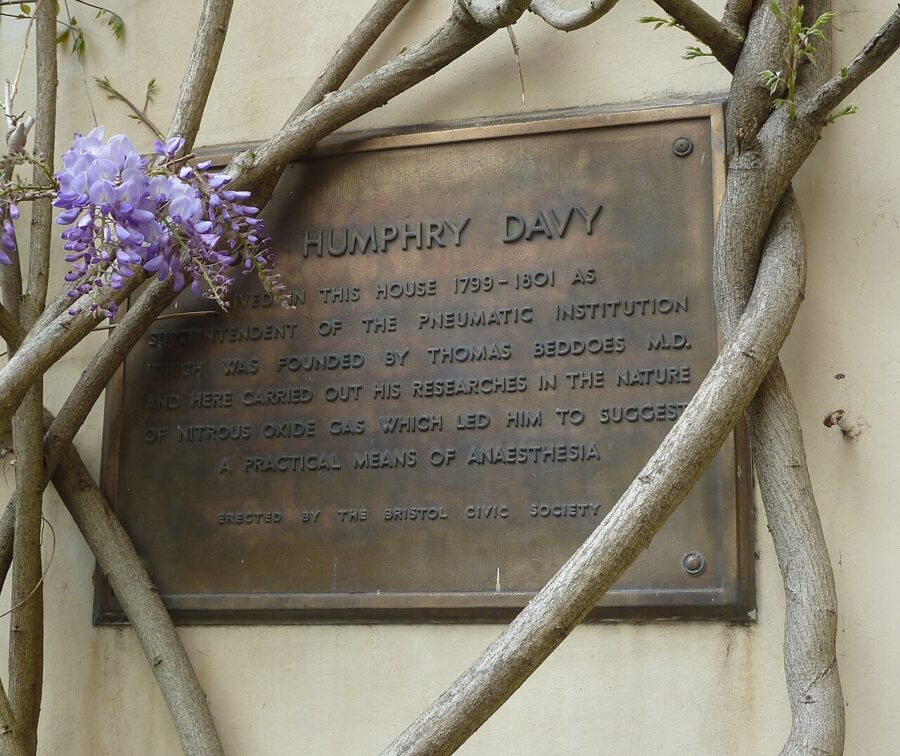
The square has one more claim. In 1799 the physician Thomas Beddoes opened his Pneumatic Institution at No. 6, with the 20-year-old Humphry Davy running the laboratory, and Davy’s experiments with nitrous oxide turned into laughing-gas parties attended by Coleridge and Southey. It is a two-minute detour from the pub route, and the best thing in Hotwells that is neither a pub nor a lock.

Locks, swing bridges and a flyover
The pubs exist because of the docks, and the docks exist because the Avon here rises and falls by about 14 metres between high and low water. William Jessop’s answer, opened on 1 May 1809, was to lock off a loop of the old river as a Floating Harbour, dig the New Cut to carry the tide around it, and build the Cumberland Basin at the western end as a pool between the river and the harbour. The scheme cost £530,000, and it gave Hotwells its locks, its quays and a population that needed a drink at odd hours.
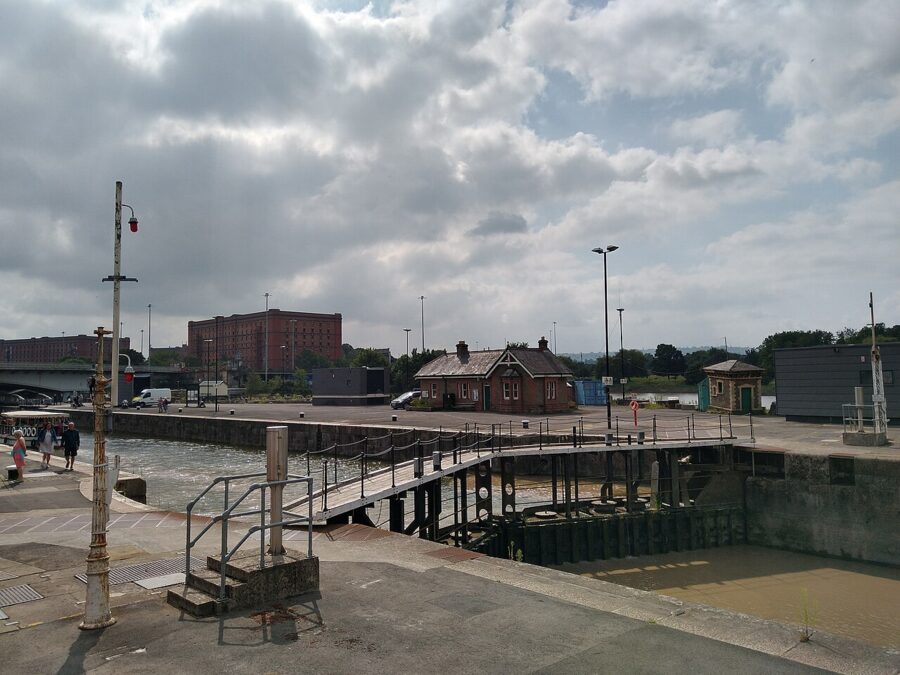

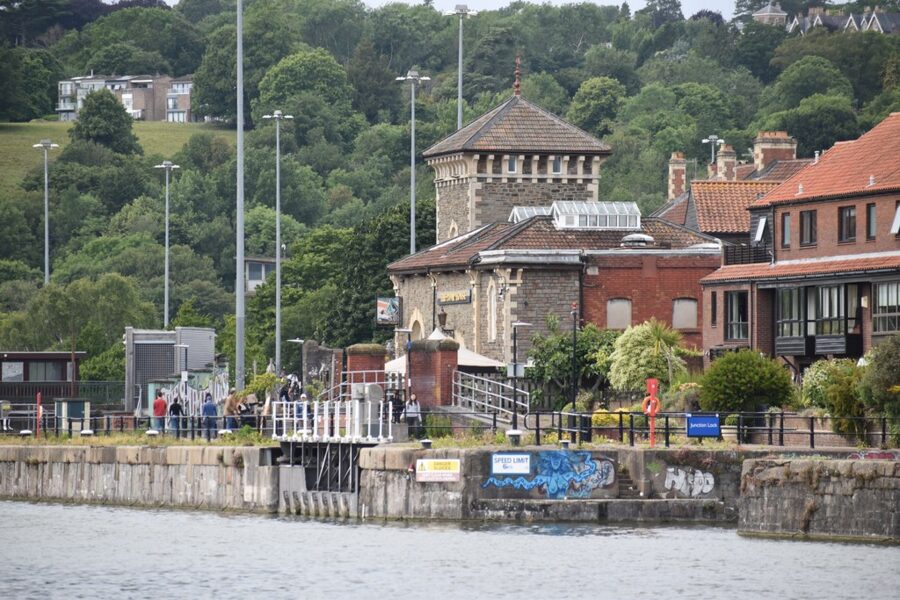
Brunel rebuilt the entrance locks in 1848–49 and gave them his first moving bridges, wrought-iron swing bridges with long, lopsided spans. One of them, moved to the north lock in 1873, still lies beside the water under the modern road and is known locally as Brunel’s other bridge; it has been on Historic England’s Heritage at Risk register. Around 1870 the docks engineer Thomas Howard built a hydraulic pumping station to work the bridges and lock gates by water pressure. You can drink in it.
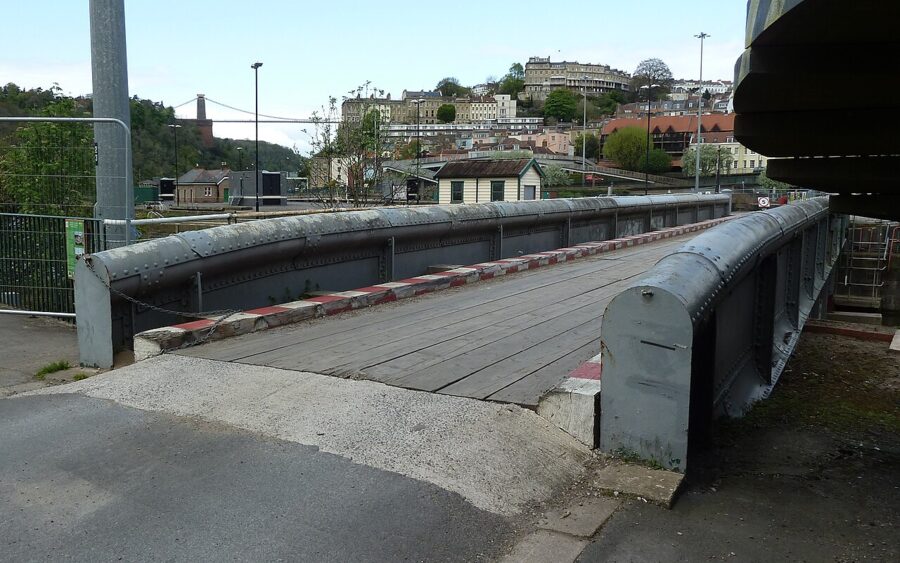

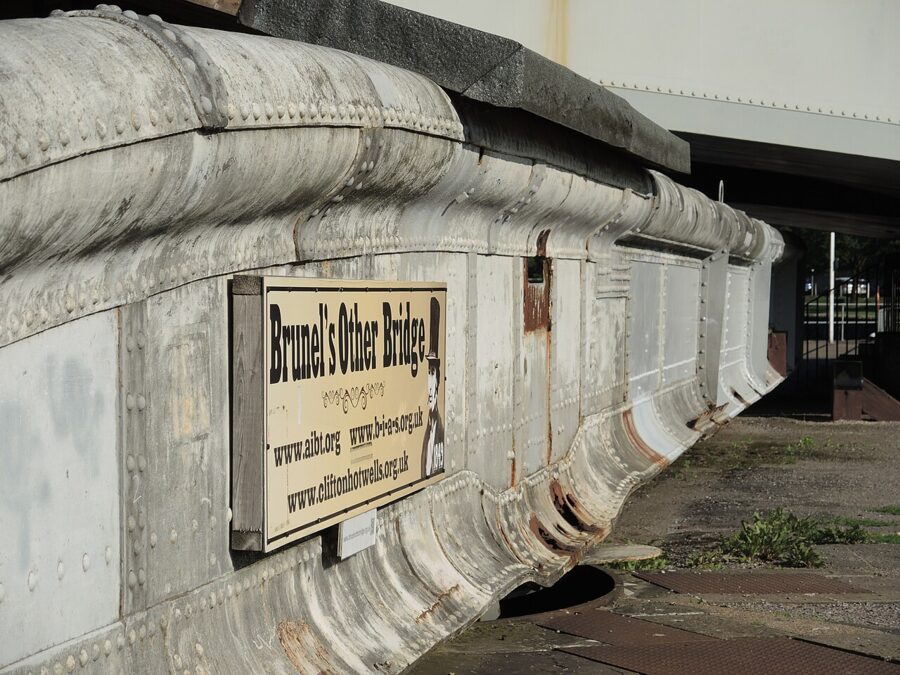

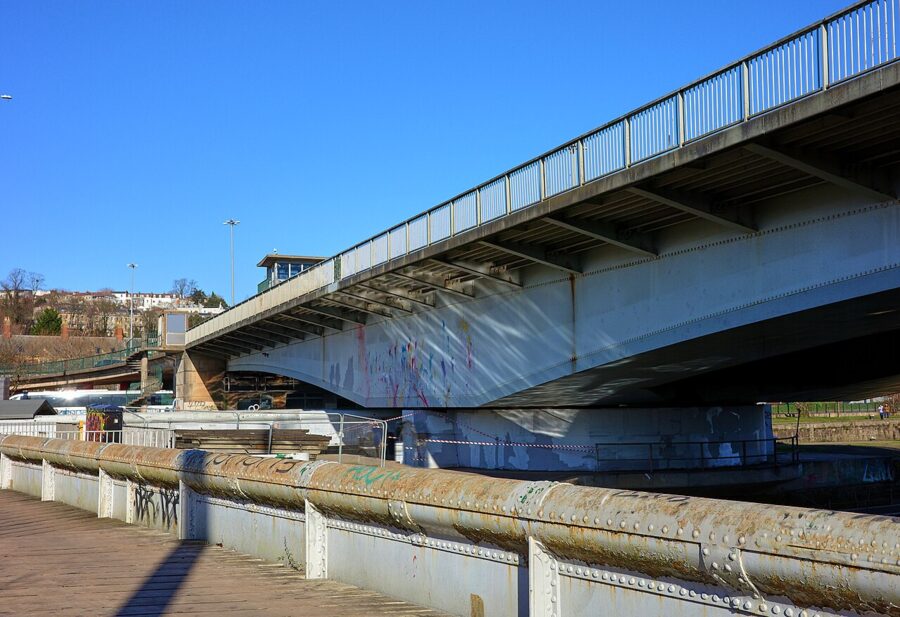
Then came the car. In 1963 a slice of Hotwells including the 18th-century Assembly Room, three entire streets, shops and five pubs was demolished for the Cumberland Basin road scheme, and the Plimsoll Bridge followed in 1965. The flyovers still dominate the western end.
Now the concrete is near the end of its life, the city has a Western Harbour masterplan for up to 1,200 homes, and a report in November 2026 priced new gates for the entrance lock at up to £168 million. Expect scaffolding at some point; the pubs have seen worse.

The pubs, one by one
Nova Scotia
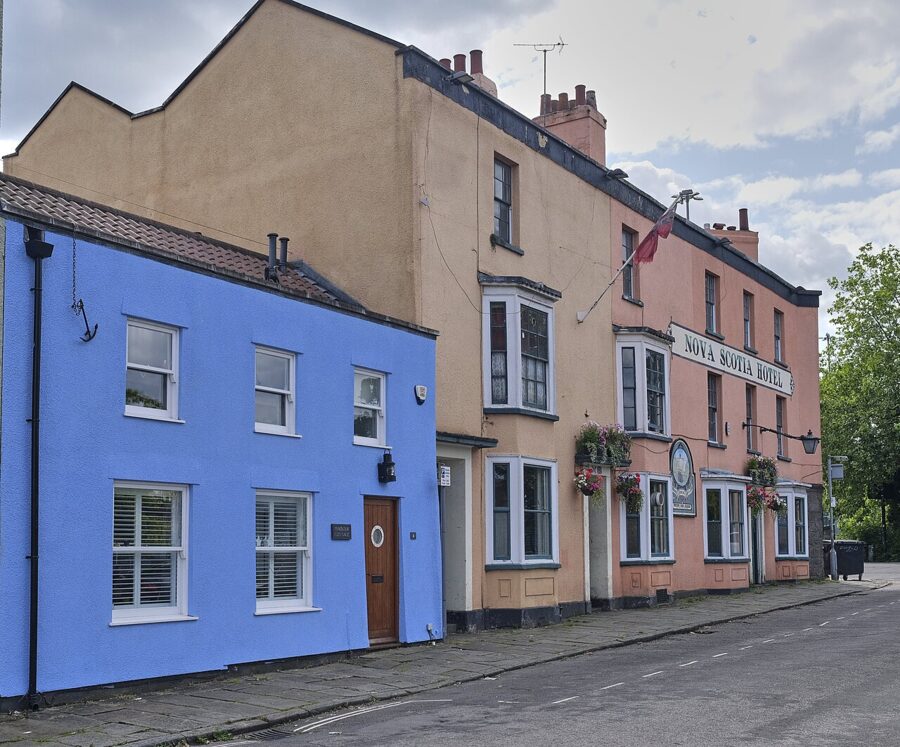

If you only have time for one, make it the Nova Scotia, on the tip of Spike Island where the harbour meets the basin. It is a Grade II listed terrace of three early 19th-century houses, and CAMRA rates its interior two-star, of very special national historic interest. The single bar serves a small lounge, a plain strip along the counter and, best of all, the Captain’s Cabin: a snug made by a low Victorian screen hung from the ceiling on an iron stay, with “Private Bar” etched into its glass.
The dates need care. The pub says it has been here since 1811, and a coaching-inn story gets attached to it, but the listing describes three houses converted later, and CAMRA’s heritage survey puts the conversion in the late 19th century, which is when the counter and that mahogany bar-back date from. My view is that 1811 is a fair date for the houses and an optimistic one for the pub. It matters less once you are sitting under the old charts with a pint.
The beer is traditional and well kept: Butcombe Original, St Austell Tribute and Sharp’s Sea Fury, a changing guest such as Draught Bass or Wye Valley Butty Bach, and Thatchers Traditional cider on tap, which fewer pubs bother with now. Food runs 12:00–16:00 every day: burgers, Scotch eggs, sausage or gammon and eggs. Monday is quiz night and Thursday brings a live Irish session. It opens 12:00–23:00 (Sunday to 22:30), dogs are welcome, children in the daytime, and on Ashton Gate match days it fills early.
The Pump House
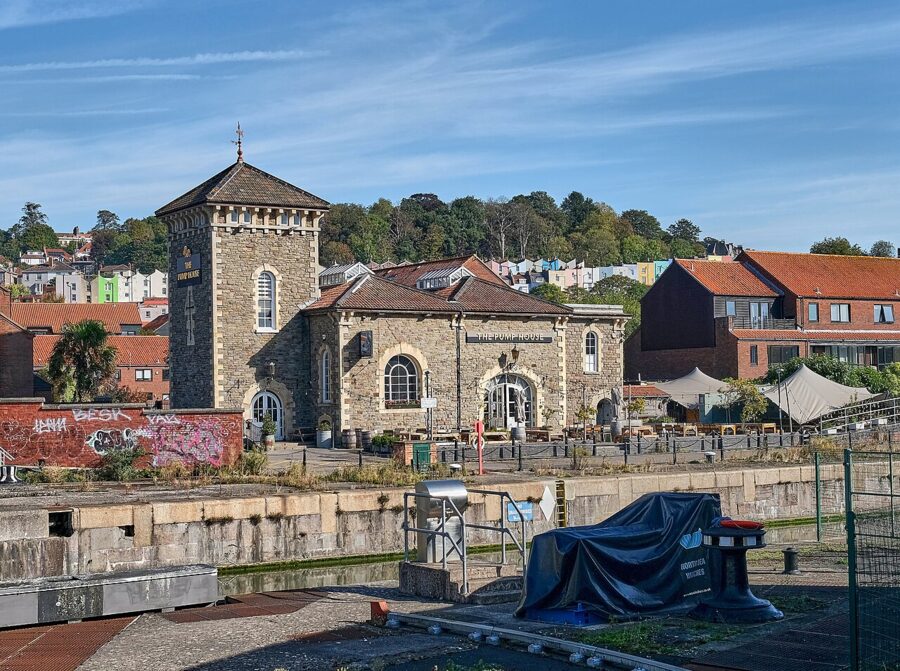

The grand one. Howard’s hydraulic engine house is Grade II listed, built of squared Pennant stone with a two-stage accumulator tower, and once Underfall Yard took over its job in 1888 it was free for a long second life, eventually as a pub. Inside are several roomy drinking areas, an upstairs room and a long harbourside terrace, part of it under cover, with a ramp from the car park, level access to the bar and an accessible toilet on the ground floor.
Bristol Beer Factory took it on in September 2025, scrapped table service for drinks and cut the bar prices, which made it a pub again rather than a restaurant you happened to be able to drink in. The handpumps carry the brewery’s own beers, which include Independence, the 2026 Champion Beer of Britain, plus a cider. Food comes from Cord Kitchen, 12:00–21:00 Monday to Saturday with roasts 12:00–17:00 on Sunday; the spring 2026 menu had burgers at £13 and beer-battered fish at £17.75. It opens at 11:30 daily and closes at 22:00 Monday to Wednesday, 23:00 Thursday to Saturday and 21:00 on Sunday.
On match days a pop-up bar on the terrace sells takeaway pints for the walk to Ashton Gate. If you want a Sunday roast by the water, this is the one to book; Sunday is the only day they still serve at the table.
The Merchants Arms
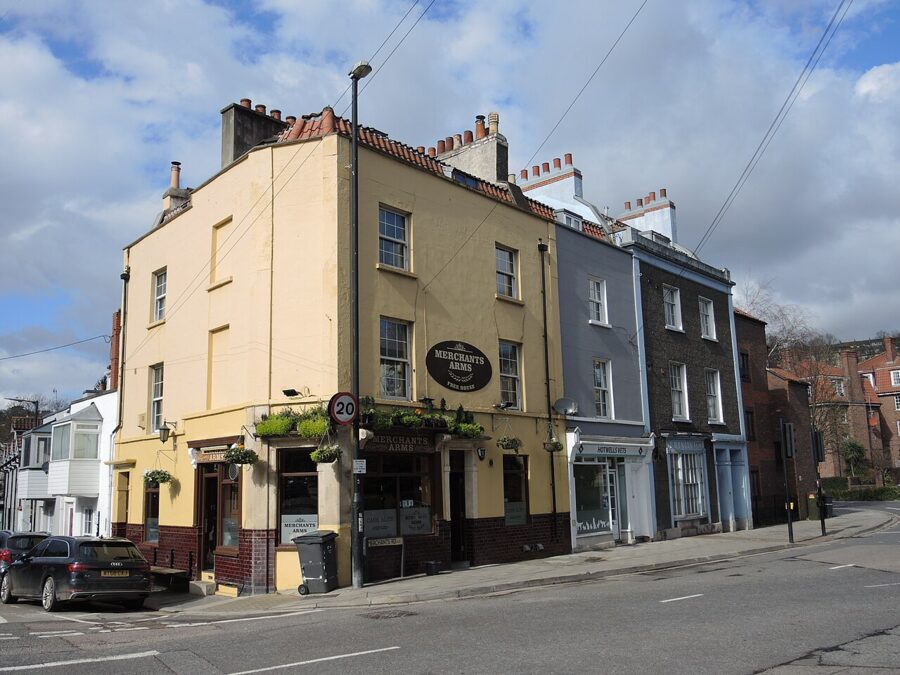

A few doors up Merchants Road, the Merchants Arms is the quiet one, and the one I’d pick for a proper pint. It has been licensed since 1832, it is free of tie, and it has two small rooms with dark wood seating, a real fire in the front one and a collection of board games in the back. CAMRA gave it a national award for refurbished street-corner locals in 2001, and the local branch made it runner-up for Pub of the Year in 2023.
Four cask ales are usually on, from local and regional breweries. Cheddar Ales Gorge Best is the regular; Otter Head, Wye Valley HPA and Cheddar’s Potholer have been through lately, and there is usually something dark, such as Glastonbury’s Black As Yer ‘At. There is no kitchen, only home-made rolls, pork pies and pasties. It opens at 16:00 Monday to Thursday and at 12:00 from Friday, there is a Thirsty Thursday price offer, and both the entrance and the toilet are step-free.
The Rose of Denmark
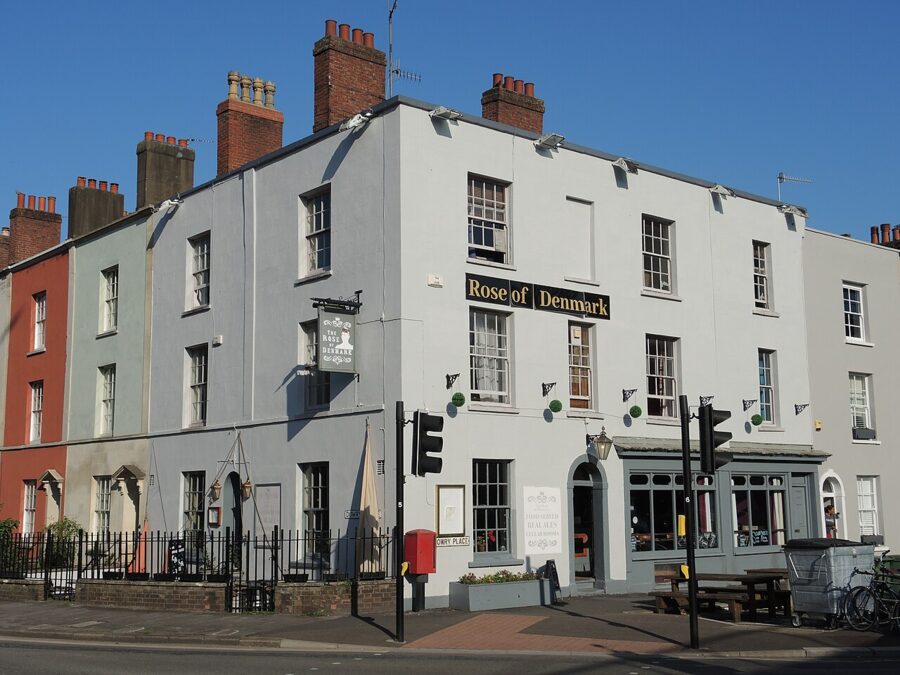

Round the corner on Dowry Place, the Rose of Denmark is named after Alexandra, the Danish princess who married the future Edward VII, which is about as royal as pub names get in a docks district. It is part of a listed early 19th-century terrace and only just escaped the bulldozers in 1963. After a long closure it reopened on 25 October 2024 following a careful refit by its owner, Star Pubs: stripped floorboards, a slate bar and a big real fire.
It calls itself a neighbourhood pub for sport and food pop-ups, and that is fair. Draught Bass is the regular cask, with Timothy Taylor Landlord or Butty Bach alongside; there is TNT Sports on the screens and a small patio to the side. It opens 16:00–23:30 Monday to Wednesday and at noon from Thursday, staying open to 00:30 at the weekend, which makes it the late option on this side of the water.
The Grain Barge
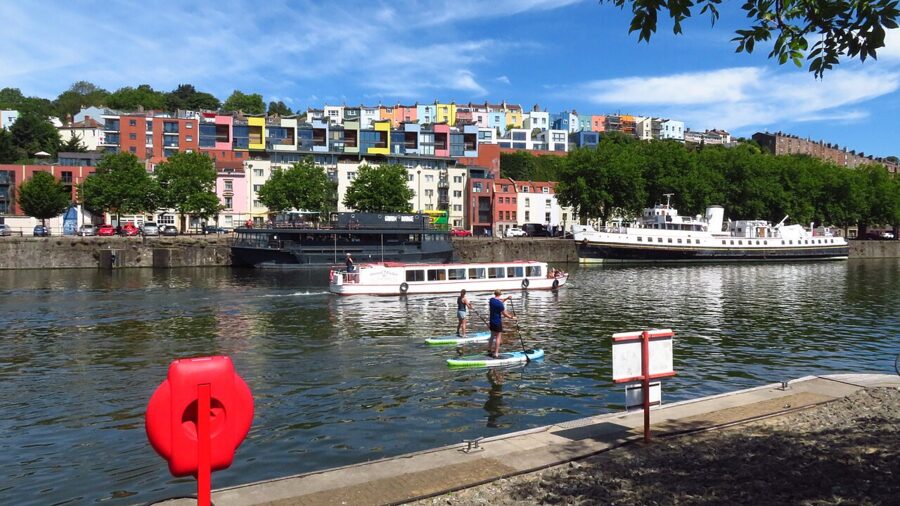

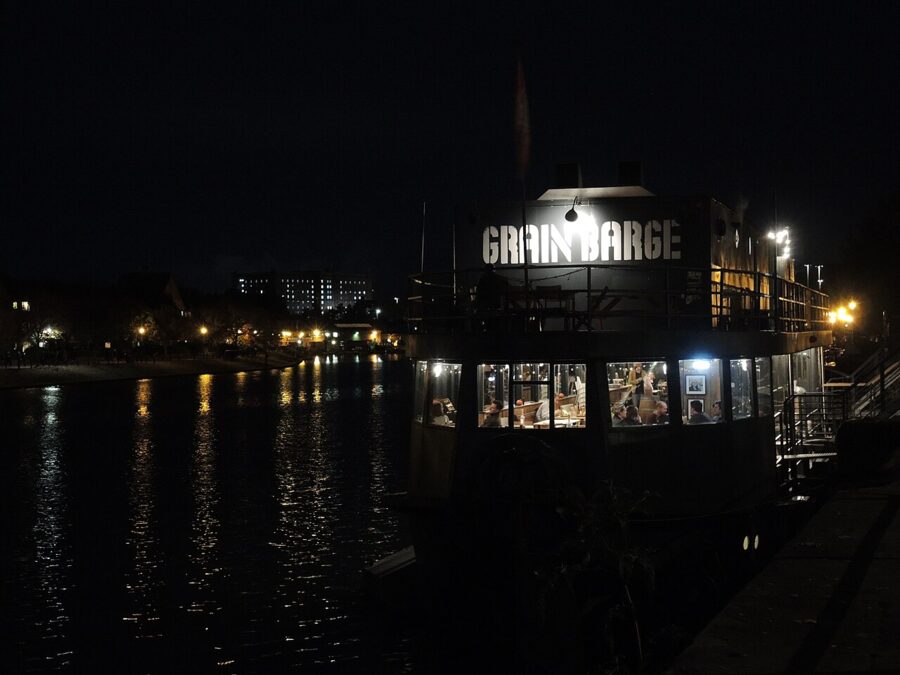
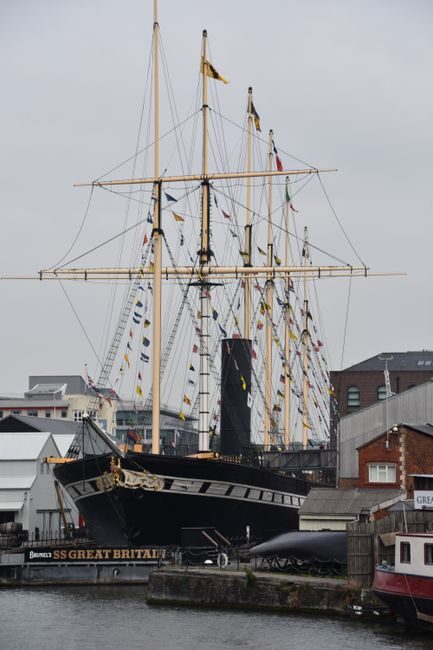
Further east along Hotwell Road, the Grain Barge is a 1930s barge built to carry grain across the Severn estuary, turned into a floating pub by Bristol Beer Factory in 2007. A flight of steps from the harbourside walkway takes you to the main bar, and above it the open top deck faces the SS Great Britain across the water. Below, the old hold is a room for music, comedy and art, and there is a quiz every Monday at 20:00.
Four cask ales are on: Bristol Beer Factory’s Everytime, Fortitude and Independence, plus a guest from another local brewery such as New Bristol or Arbor. The kitchen leans on vegetables, many from its own farm at Backwell, and serves 12:00–15:00 and 18:00–21:00 on weekdays, 12:00–21:00 on Saturday and 12:00–20:00 on Sunday. It is card only. Dogs are welcome, and children until 21:30.

The Bag of Nails
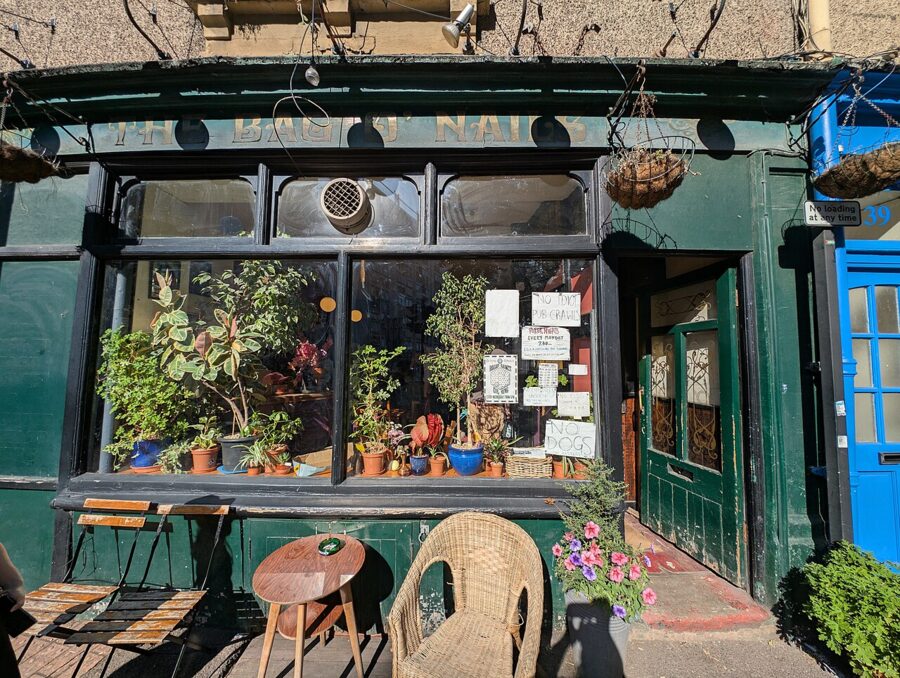
At the top of the walk, on St George’s Road between the cathedral end of town and Hotwells proper, the Bag of Nails is Bristol’s cat pub, though its landlord has long insisted it is a pub with cats rather than a cat café. The cats roam freely and curl up in their nests on the bar. The rest is just as particular: glowing portholes set into the wooden floor and an eclectic mix of music played on a record player.
The beer is the point, though: six changing cask ales, usually including a dark one, from local breweries and further afield, with one real cider and no draught lager at all. Tuesday is quiz night and Wednesday is board games. Because of the cats there are no dogs, and no children under 14; don’t count on food either. It opens at 16:00 on Monday and 12:00 the rest of the week, until 23:00.
The Cottage Inn
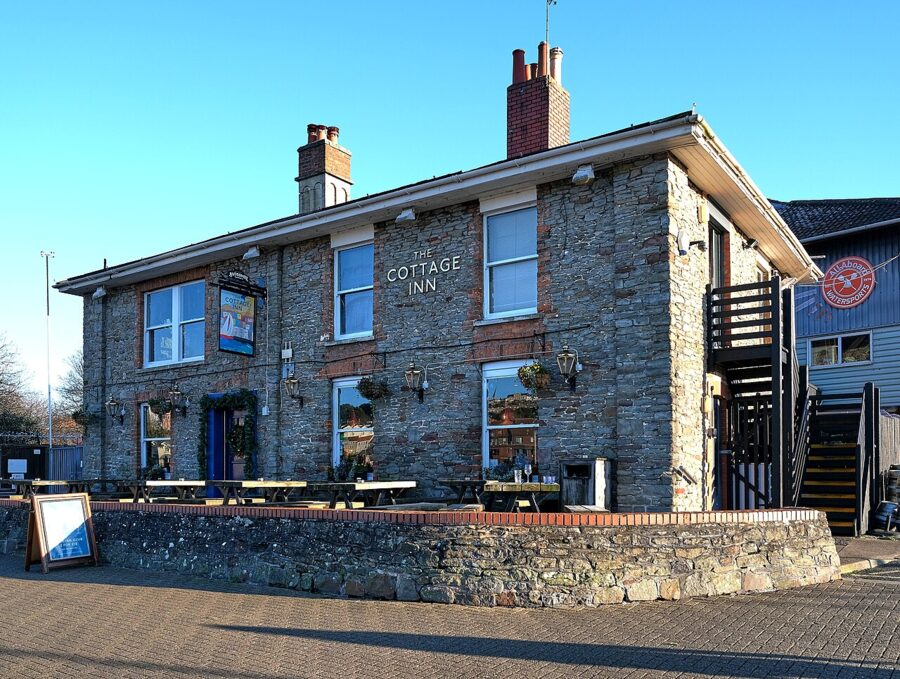

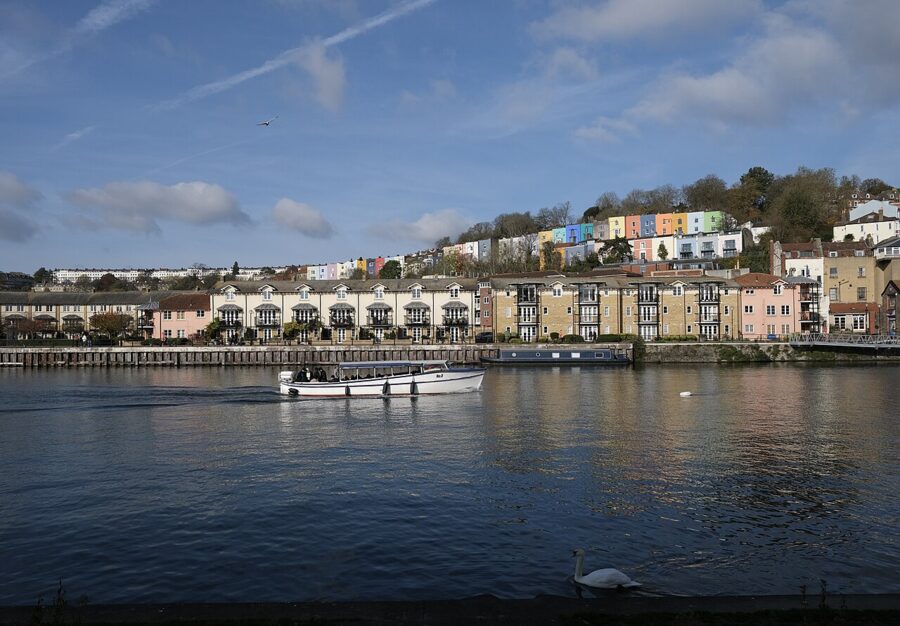
Back across the water and a few minutes east of the Nova Scotia, the Cottage Inn sits on Baltic Wharf with one of the best outlooks in Bristol: down the harbour to the coloured houses of Cliftonwood and the Suspension Bridge. The building dates from 1868, when merchants used it to store Baltic timber for the docks. It is a Butcombe pub, so expect Butcombe Original, Gold and a seasonal, plus local cider.
Food is a brewery-pub menu with a lean towards fish: Butcombe Gold beer-battered fish and chips, seafood, roasts on Sunday and a children’s menu. The kitchen runs to 20:30 (20:00 on Sunday). It opens at 11:00 on weekdays and 10:00 at the weekend, closing at 22:00, 23:00 on Saturday and 21:00 on Sunday.
Dogs are welcome throughout; there is ramp access but no accessible toilet. The terrace catches the sun in the afternoon and evening, which is exactly when it is full, and the ferry stops outside.
The Orchard Inn
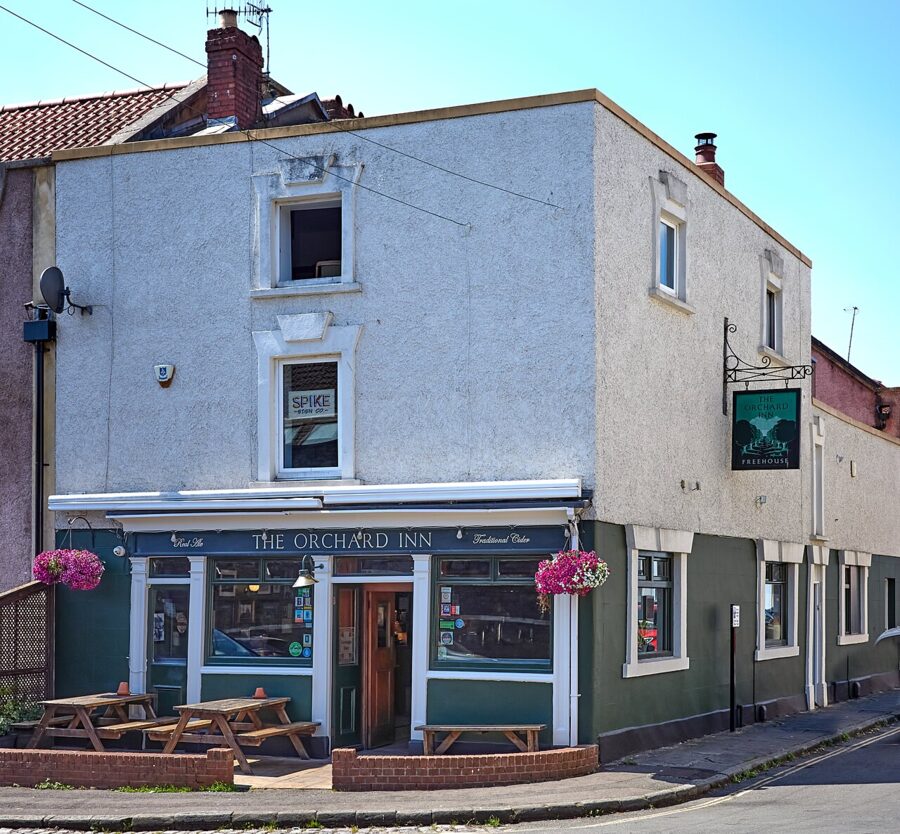

On a corner of Hanover Place, a street back from the harbour, the Orchard Inn is the best reason to come to Spike Island if you drink cider. It was the White Horse from 1834 until the 1980s, and it is now one of the city’s few remaining free houses, with twenty or more ciders on at once. Around fifteen are flat farmhouse ciders from makers such as Westcroft, Rich’s, Hecks, Iford, Harry’s and Worley’s, with Thatchers Traditional, Gold and Haze on tap for the less adventurous. CAMRA made it national Cider Pub of the Year in 2009, and the Bristol branch named it Cider Pub of the Year again in 2026.
Beer drinkers are fine too: Otter Bitter and St Austell Proper Job poured from the cask behind the bar, a guest from Arbor or Bristol Beer Factory, and plenty of local keg. Food is rolls, pasties and pork pies until they run out. Monday night is a blues jam from 20:30, the first Wednesday of the month is an Irish session and the second is quiz night. It opens at 16:00 on Monday and 12:00 the rest of the week, at 11:00 on match days with a 15:00 kick-off, and welcomes dogs, and children until 21:00.
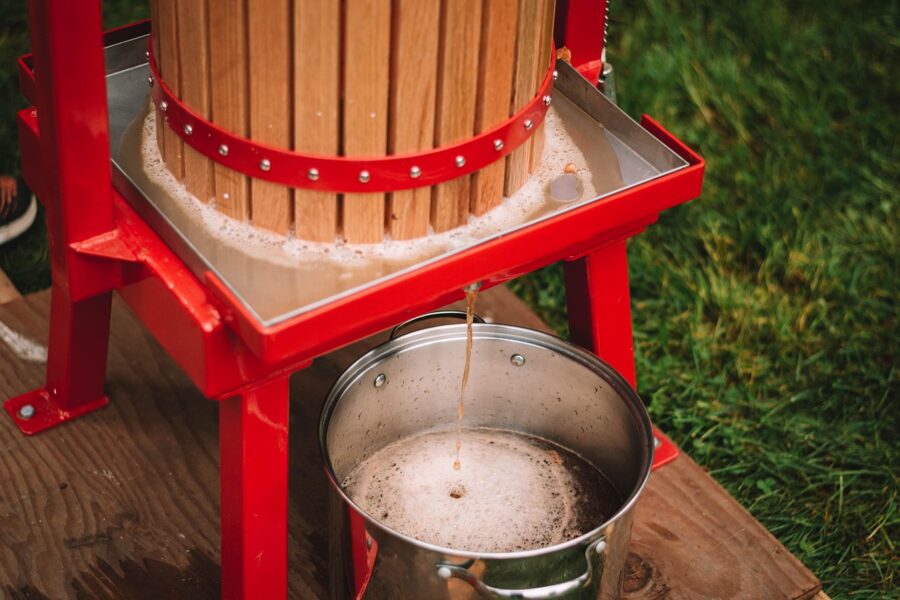
If cider is the reason you came, the Bristol cider pubs make a crawl of their own, and the Orchard belongs near the top of it. For what separates a farmhouse cider from the stuff on the fonts, the short version is that it is still, often cloudy, and stronger than it tastes.
Up the hill: the Hope & Anchor
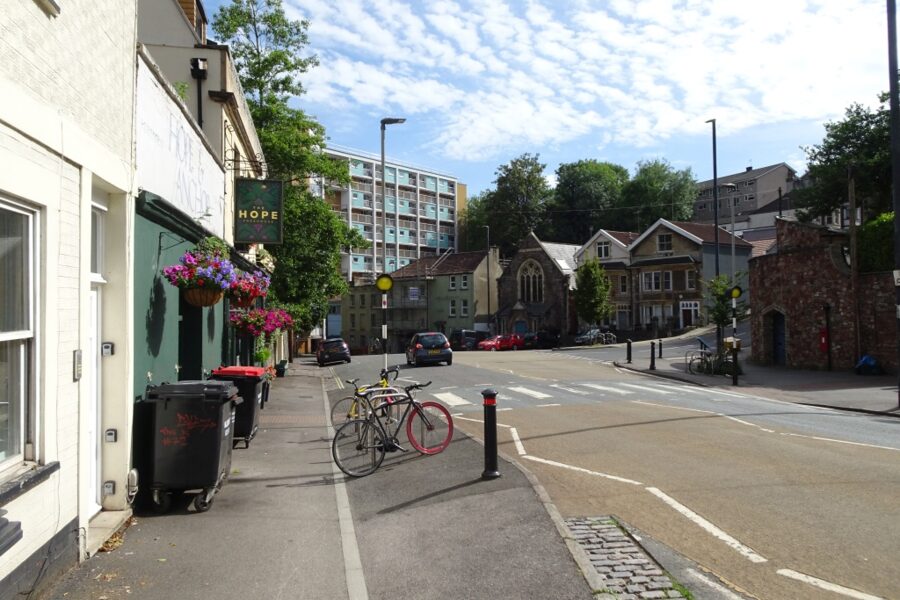

Where Hotwell Road meets Jacob’s Wells Road the city starts to climb, and a few minutes up the hill the Hope & Anchor marks the eastern edge of Hotwells. It has up to two local cask ales and a house pale made by New Bristol Brewery, inexpensive food, and a secluded terraced garden up steep steps at the back that is the nicest place to sit for half a mile around on a summer evening. The legend that Brunel did business here is just that. It is card only, opens at 16:00 Monday to Thursday and at noon from Friday, and serves food from Tuesday.
Underfall Yard and the working end of the harbour
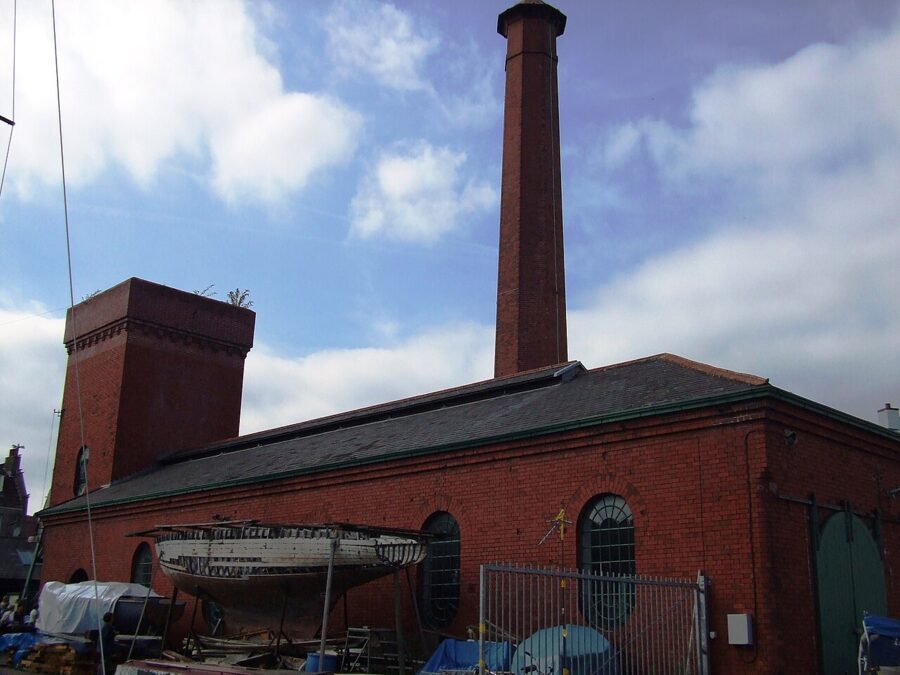
A minute’s walk from the Nova Scotia, Underfall Yard is the harbour’s maintenance yard and worth an hour between pints. The name comes from the underfall sluices: Jessop’s original dam had an overfall weir, and in the 1830s Brunel replaced it with sluices that scour the silt out of the harbour at low tide. The system was rebuilt in the 1880s and still does the same job.
Most of the yard’s buildings went up between 1880 and 1890. The red-brick hydraulic engine house of 1888 holds pumps of 1907 from Fullerton, Hodgart and Barclay of Paisley, and it replaced the original pumping station, which is how the Pump House came to be free for a second career. Today the yard is home to boatbuilders, a blacksmith and riggers, a visitor centre and a café.
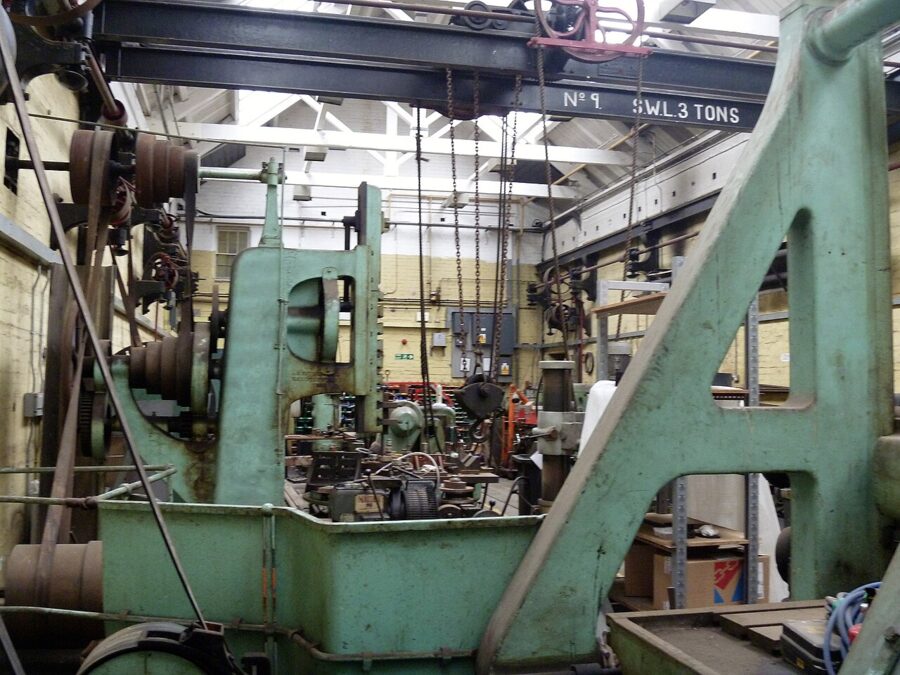

In May 2023 an arsonist set fire to the yard and destroyed its best-known building, the Big Shed, along with workshops and boats. A twelve-month rebuild of the shed and its three workshops, as close as possible to the originals, began in December 2025, and the trust is still raising money for the work.
A walking route between them
The whole round is about 3 kilometres and 45 minutes of walking, almost all of it level at water height. Start at the top end, so that every pub after the first is downhill or flat.
- College Green to the Bag of Nails: 10 minutes along St George’s Road, level or gently downhill.
- Bag of Nails to the Grain Barge: 5 minutes, down to Hotwell Road and the harbour wall.
- Grain Barge to the Rose of Denmark: 10 minutes west along Hotwell Road, past the end of Dowry Square. The road is busy, so use the harbourside path where you can.
- Rose of Denmark to the Merchants Arms: 3 minutes, round the corner into Merchants Road.
- Merchants Arms to the Pump House: 2 minutes.
- Pump House to the Nova Scotia: 3 minutes over the Junction Lock swing bridge. If a boat is going through, the bridge swings and you wait; nobody minds.
- Nova Scotia to the Cottage Inn: 4 minutes east along the quay, with a look into Underfall Yard on the way.
- Cottage Inn to the Orchard Inn: 8 minutes along Baltic Wharf, then into Hanover Place off Cumberland Road.
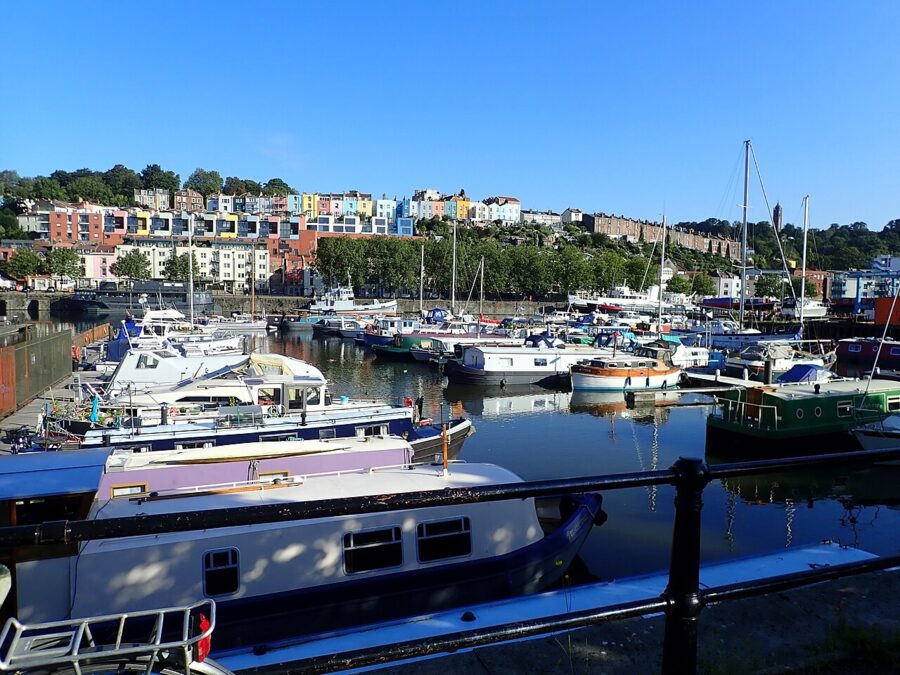

From the Orchard it is 3 minutes to the SS Great Britain and 10 to 15 more along the quays to Wapping Wharf and the middle of town, or you can take the ferry back. The only climbs worth mentioning are the side trips: Jacob’s Wells Road up to the Hope & Anchor, which is short and steep, and the path up to Clifton described below. The swing bridges are the only things likely to hold you up.
The Avon walk to Clifton

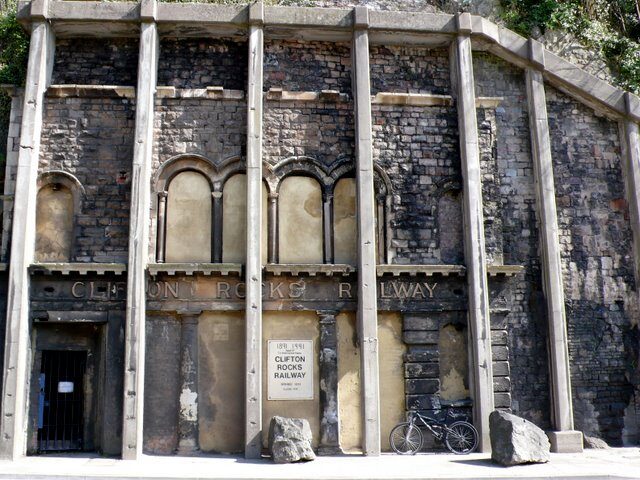
From the Pump House, walk west along Hotwell Road under the flyover with the river on your left. After about ten minutes the cliffs close in and you reach the Colonnade, the last of the spa. A little beyond, set into the rock face, is the lower station of the Clifton Rocks Railway, a funicular that ran up through a tunnel in the cliff from 1893 to 1934, climbing about 60 metres at a gradient of roughly 45 per cent. In the Second World War the tunnel served as an air-raid shelter for local people and housed the BBC.

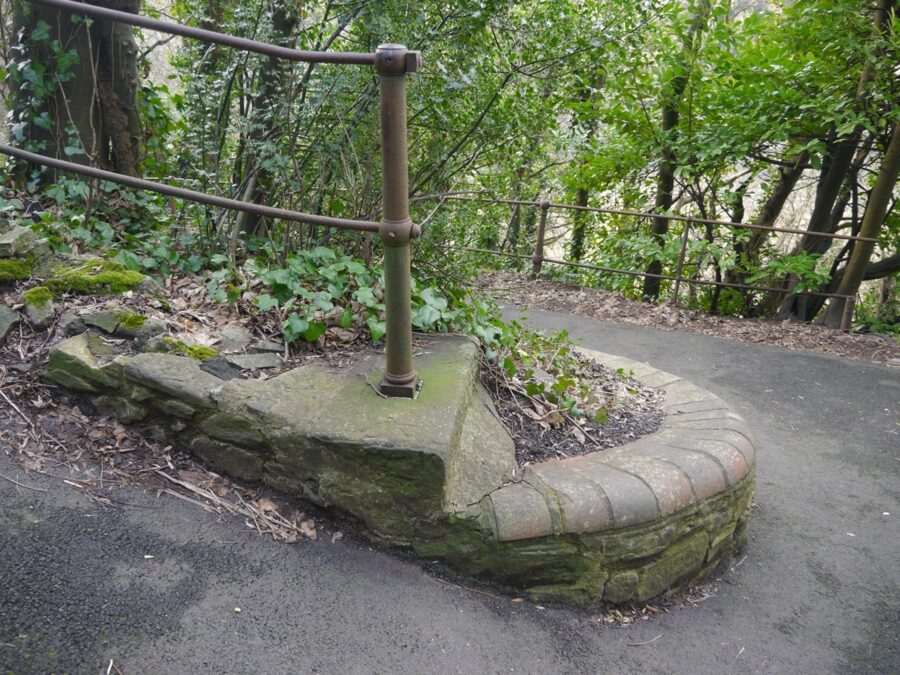
The spring that started all this still rises somewhere near your feet, below the Suspension Bridge, though trial borings in 1913 and 1925 failed to find it again. Carry on along the Portway pavement for the full view of the bridge from below, or turn up the Zig Zag for 10 to 15 minutes of steady climbing to Sion Hill, by the Avon Gorge Hotel and the end of the bridge. At the top you are in Clifton village, and the Clifton pubs are a few minutes away. It is roughly the height the railway climbed, and easier with a pint behind you than ahead of you.
Practical notes
Getting there. From College Green it is a 10-minute walk to the Bag of Nails and about 25 minutes along the harbour to the Pump House. Buses towards Portishead, Clevedon and Weston-super-Mare run along Hotwell Road, and the Grain Barge and the Pump House are each within 100 metres of a stop.
The harbour ferry from Temple Meads and the city centre calls at Hotwells and at The Cottage, outside the Cottage Inn, which is the pleasant way in. From Temple Meads station on foot, allow 35 to 40 minutes along the harbour; Clifton Down station is about 1.7 kilometres away and uphill on the way back.

Opening quirks. Several pubs here keep weekday afternoons shut. The Merchants Arms and Rose of Denmark open at 16:00 early in the week, the Bag of Nails and the Orchard at 16:00 on Monday, and the Hope & Anchor at 16:00 until Friday. Food at the Nova Scotia stops at 16:00.
The Pump House shuts at 22:00 Monday to Wednesday and 21:00 on Sunday. The Grain Barge and the Hope & Anchor take cards only.
| Pub | Opens (weekdays) | Food | Dogs | Children |
|---|---|---|---|---|
| Nova Scotia | 12:00 | 12:00–16:00 daily | Yes | Daytime |
| Pump House | 11:30 | 12:00–21:00; Sunday roasts to 17:00 | Yes | Yes |
| Merchants Arms | 16:00 (Fri 12:00) | Rolls, pies, pasties | Yes | Yes |
| Rose of Denmark | 16:00 (Thu–Fri 12:00) | Pop-ups | Yes | Yes |
| Grain Barge | 12:00 | Lunch and dinner | Yes | Until 21:30 |
| Bag of Nails | 12:00 (Mon 16:00) | None | No | 14 and over |
| Cottage Inn | 11:00 | To 20:30 | Yes | Yes |
| Orchard Inn | 12:00 (Mon 16:00) | Rolls, pasties, pies | Yes | Until 21:00 |
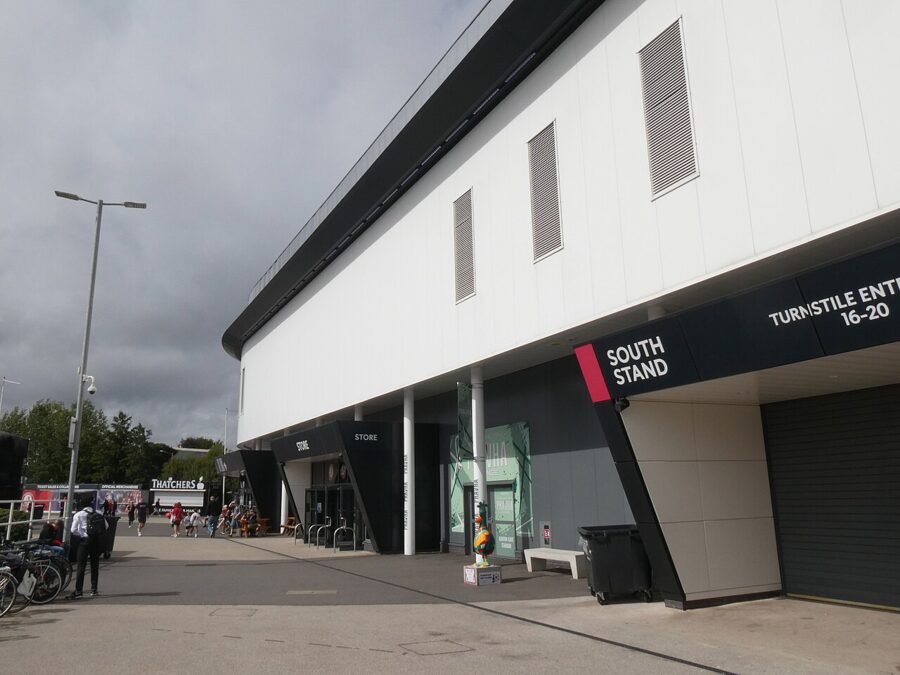
Match days. Ashton Gate, home of Bristol City and the Bristol Bears, is about 20 minutes’ walk over the Plimsoll Bridge, so on home games the whole area fills before and after. The Orchard is certified away-friendly and opens at 11:00 for 15:00 kick-offs, the Nova Scotia is packed early, and the Pump House runs its outdoor bar; if you want a quiet pint, check the fixtures first. For the pubs on the far side of the stadium, in Southville and Bedminster, see the south Bristol pubs.

Traffic. Merchants Road and Hotwell Road carry fast traffic off the flyovers, and the Merchants Arms has been hit by cars more than once, most recently in March 2026. Use the crossings, and keep an eye on anyone who has had a few between pubs.
Dogs and children. Dogs are welcome everywhere on this list except the Bag of Nails, where the cats come first. Children are fine in the daytime at most pubs: the Grain Barge allows them until 21:30, the Orchard until 21:00 and the Nova Scotia in the daytime only, and the Bag of Nails admits nobody under 14.
Where to finish
Finish at the Orchard for cider or the Nova Scotia for history, and then take the ferry back from the stop outside the Cottage. If it is the Nova, sit in the Captain’s Cabin, look at that ship’s bar-back, and decide for yourself which liner it didn’t fit.