
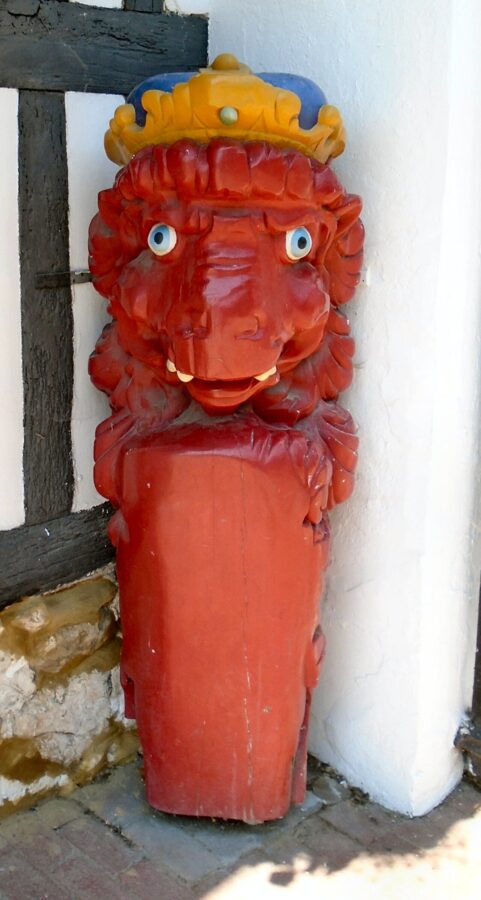
Outside the Star in Alfriston stands a red lion with a gilded crown and the expression of a man who has been kept waiting at the bar. It is a ship’s figurehead, and the story told about it is that it came ashore at Cuckmere Haven, a few miles downstream, and was carried up the valley by smugglers. Nobody can prove that. But it means the first thing you see on a pub crawl from Alfriston to the sea is something that made the same journey the other way round.

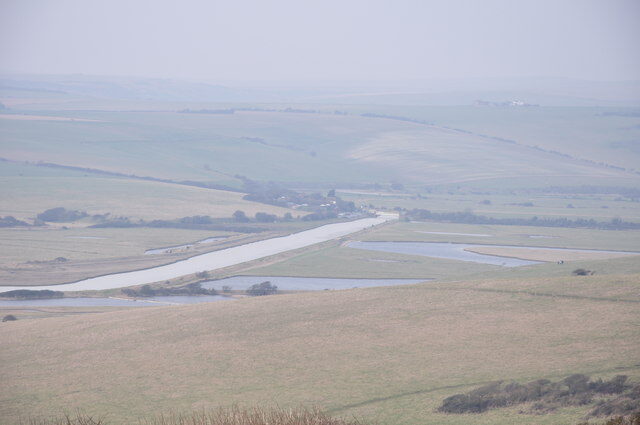
The Cuckmere is a short river with a lot of pubs per mile. It comes down off the Weald, slips through a gap in the South Downs at Alfriston, then loops across a flat green floodplain to a shingle mouth between Seaford Head and the first of the Seven Sisters. Along that last stretch you get three old inns a few doors apart, a brewery tap with a 1950s bar nobody has dared to touch, a riverside pub that used to be a tea room, and a railway station with real ale on the platform.
Every pub I name here is trading as I write, and most sit on or near the South Downs Way. Bring boots: the best way to arrive at any of them is slightly muddy and very thirsty.


On this page
- What the valley drinks
- Alfriston: three inns on one street
- Litlington: the Plough & Harrow and the brewery up the lane
- Exceat: the Cuckmere Inn, once the Golden Galleon
- Seaford: a station bar and four locals
- Over the hill: Berwick, Jevington and East Dean
- Walks that join them up
- Practical notes
- Where to finish
What the valley drinks
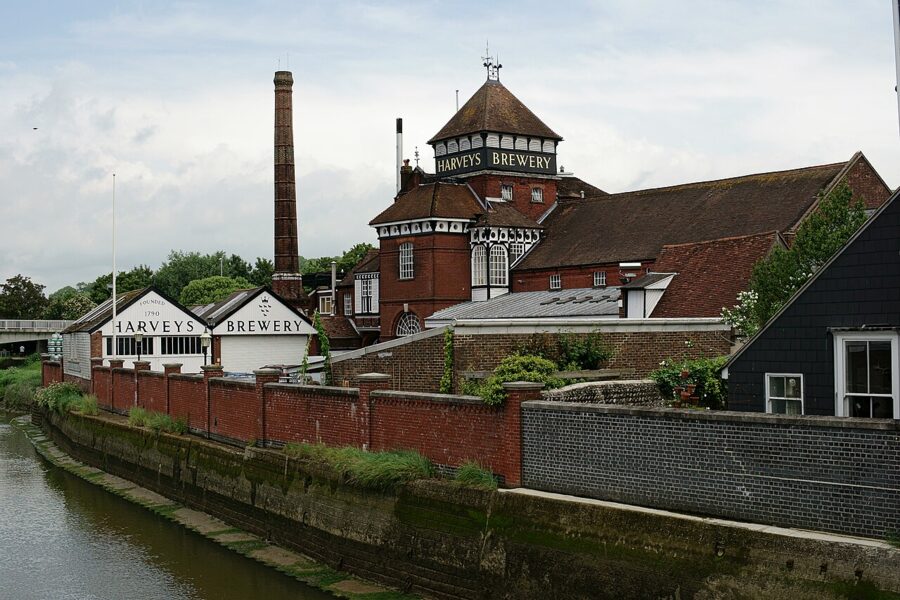
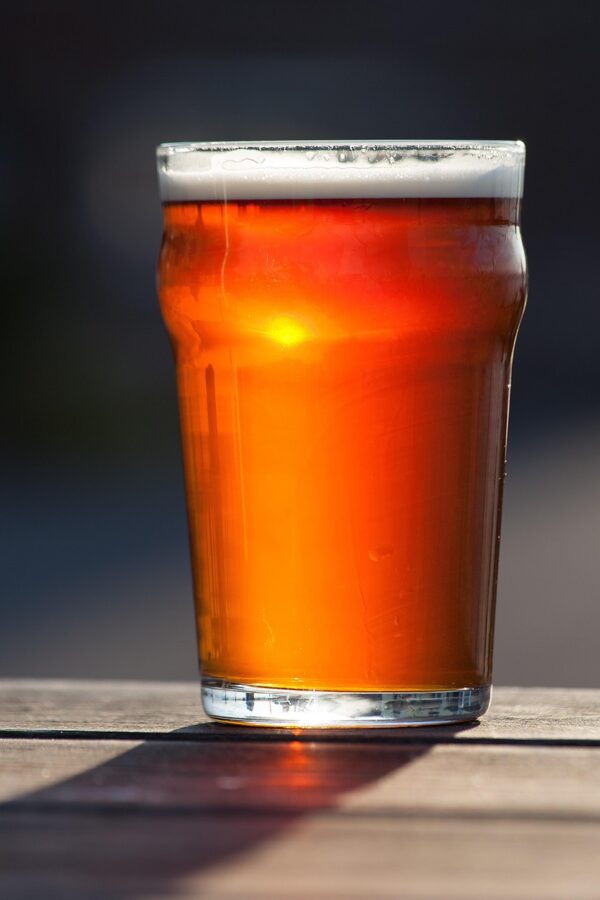
Two breweries do most of the work here, and you will meet both before lunch. The first is Harvey’s of Lewes, which has been brewing beside the River Ouse since 1790 and owns pubs right across East Sussex. Its Sussex Best Bitter, 4%, is the house pint of the county: copper, dry, a little bitter at the finish, and at its best in exactly the kind of low-beamed room this valley specialises in.

The second is Long Man, which brews at Church Farm in Litlington, about a mile south of Alfriston, using barley grown on the same farm. It started brewing in 2012 and has since spread across the county’s handpumps. Long Blonde is the pale one for warm afternoons; Best Bitter, 4%, is the brown one for everything else. If you see Long Man on a bar in this valley, it has travelled less than five miles, and that shows.
Beyond those two, the guest pumps lean local. Seaford’s station bar rotates Bedlam, 360 Degree and Gun, all small Sussex breweries, and the Smugglers in Alfriston keeps a real cider. If you are new to real ale, this is a forgiving place to start: low strengths, quick turnover and bar staff used to walkers asking what everything is.
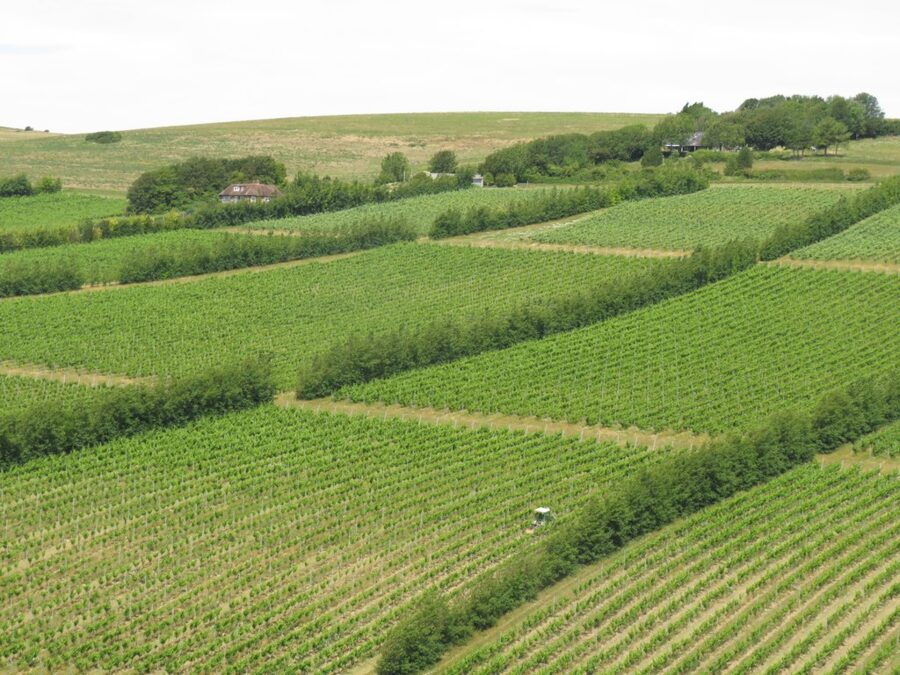
There is also wine. Rathfinny, on the chalk downs just west of Alfriston, makes sparkling wine from its own vines. Its cellar door is open 10:00–17:00 Monday to Saturday and 10:00–16:00 on Sunday for drop-in tastings, and it is a fair detour if someone in the party does not drink beer.

As for the pubs themselves, the valley does two things very well. One is the old village inn: flint walls, timber frames, inglenook fires and floors that slope towards the bar. The other is the walkers’ pub, which in practice means the same building with a big garden and a kitchen that does not close at 14:00.
What it does not have is a pub crawl in the city sense. Seaford has a handful of good bars; everywhere else you are walking between villages, and the walk is half the point.
Alfriston: three inns on one street
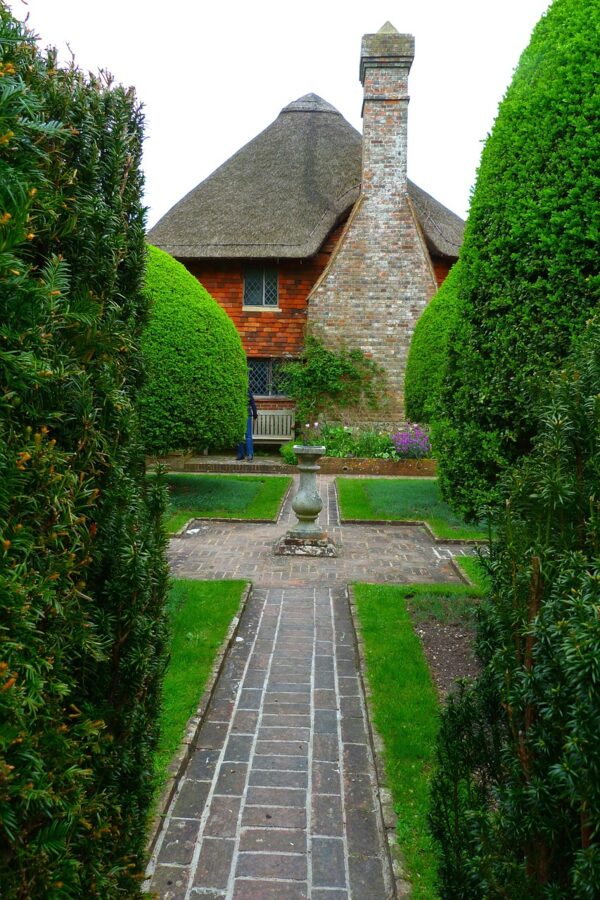
Alfriston is the reason most people come here, and it earns it. The village sits where the South Downs Way crosses the Cuckmere, and its High Street is narrow enough that the Star and the George face each other across what is effectively a lane. The church stands on a green above the river, and next to it is the thatched Clergy House, the first building the National Trust ever bought: it paid £10 for it in 1896.
The village has three pubs worth your time, and none of them is a secret, so on a sunny Saturday all three fill by noon. Go early, go in the week, or go in winter, when the fires are lit and the coach parties are elsewhere.
The Star
The Star has the best carvings of any pub in Sussex and is, these days, more hotel than pub. It was closed for a spell, then bought and remodelled by Olga and Alex Polizzi, who run it as a 29-bedroom hotel with a restaurant opening onto the courtyard. The beamed front bar still opens straight off the High Street, though, and CAMRA’s local branch lists Harvey’s Best on cask there, with Harvey’s Old Ale when it is in season.
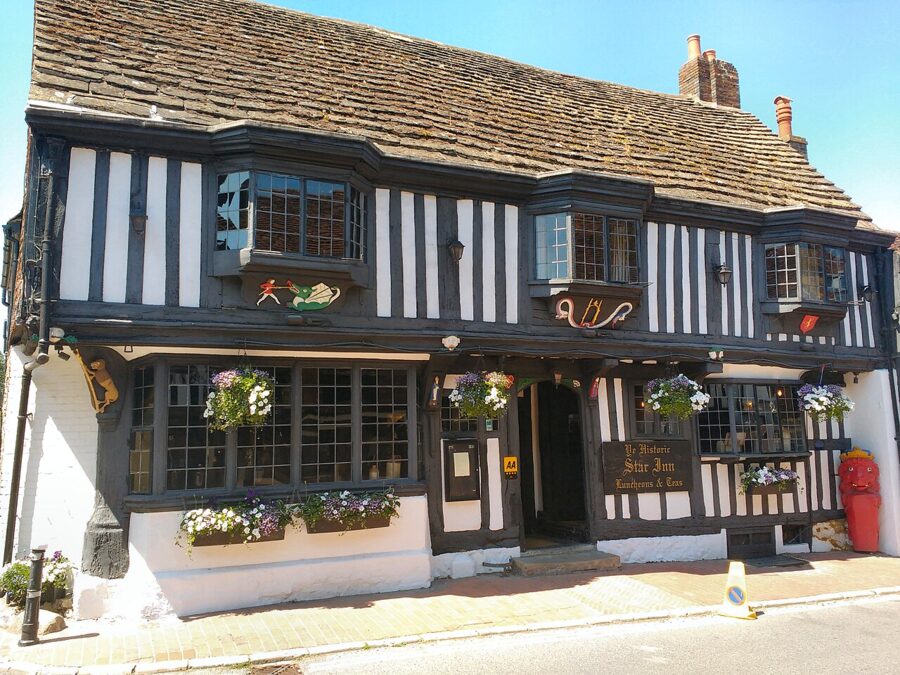

The age of the building is a good test of how to read an “oldest” claim. The Star’s own account says it was built in 1345 as a hostel for monks and pilgrims. Historic England dates what stands now to the fifteenth century, and the oldest timbers have been professionally dated to around 1490. My view: a hostel on the site in the fourteenth century is plausible, the building you drink in is late medieval, and the same rules apply to most of the oldest pubs in England.
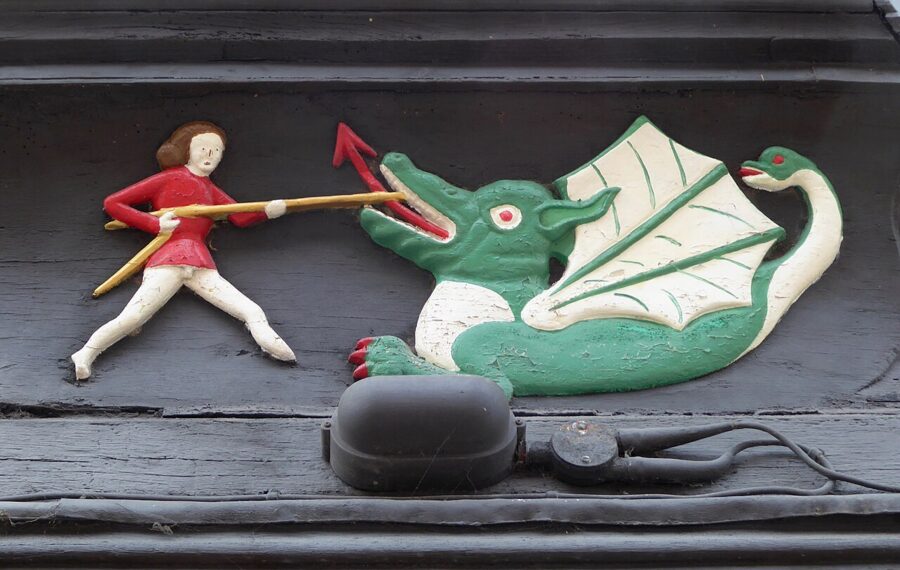

Go to the Star for a pint in the old front room on a weekday afternoon, and for the carvings. Go elsewhere for a cheap lunch.
The George
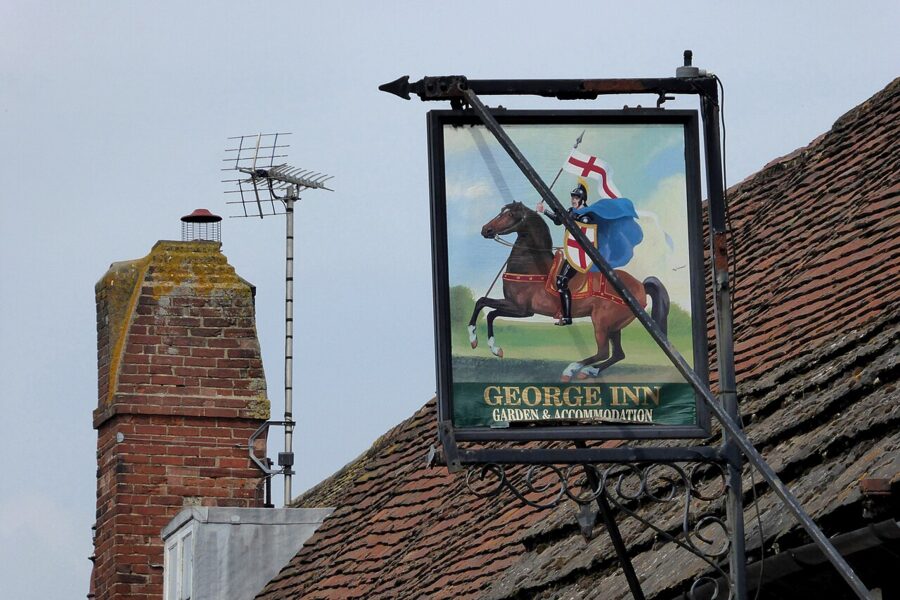
Across the road, the George is the most pub-like of the three. It claims a licence from 1397 and foundations from about 1250; Historic England describes a restored fifteenth-century timber-framed building with the ground floor rebuilt in flint, and notes the remains of late sixteenth- or early seventeenth-century wall paintings in one of the upstairs rooms. There is also a story about smugglers’ tunnels running from the cellar, which every pub in this village tells about itself.
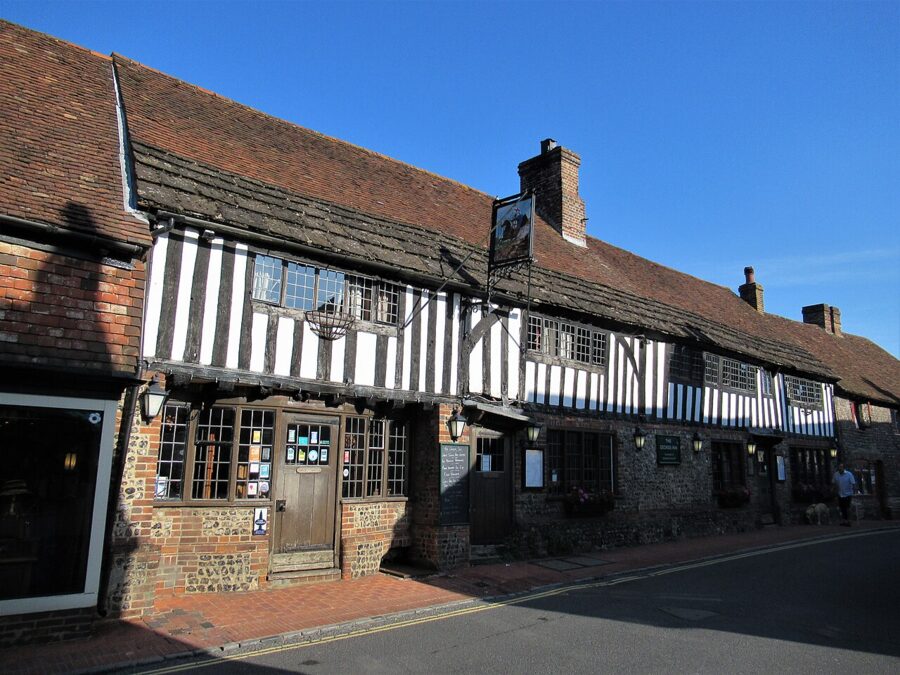
The bar is the room to be in: an inglenook with a huge copper hood, oak floors and dried Sussex hop bines on the walls. It is a Greene King house, so expect Timothy Taylor’s Landlord and Abbot alongside a Long Man beer. Food runs 12:00–21:00 every day, which matters in a village where kitchens close early. There is a big garden at the back with a heated terrace, dogs are welcome, and there are rooms upstairs.

Ye Olde Smugglers Inne
At the top of the High Street, facing the old market cross, is the pub with two names. The swing sign says Market Cross; the board on the wall says Ye Olde Smugglers Inne. The second name comes from Stanton Collins, a butcher who lived here from 1822 and led the Alfriston gang, whose cargoes came ashore at Cuckmere Haven. In 1831 he was sentenced at Lewes to seven years’ transportation; the accounts disagree on whether the crime was sheep-stealing or barley taken from a farm at Litlington.
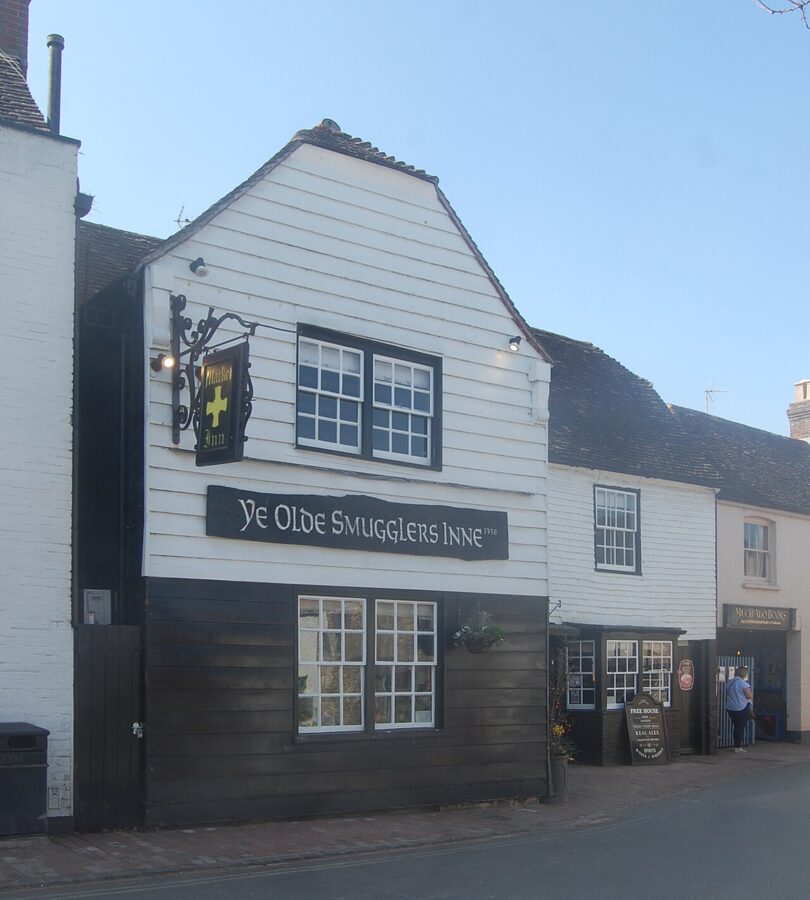
Inside, it is a warren: a main bar with a brick floor and an inglenook, small rooms on different levels, then a conservatory, a sun-trap patio and a walled garden at the back. Harvey’s Best is the regular, with Long Man beers alongside and Harvey’s Old Ale in winter. There is real cider, a Toad in the Hole board for the patient, and rooms upstairs.
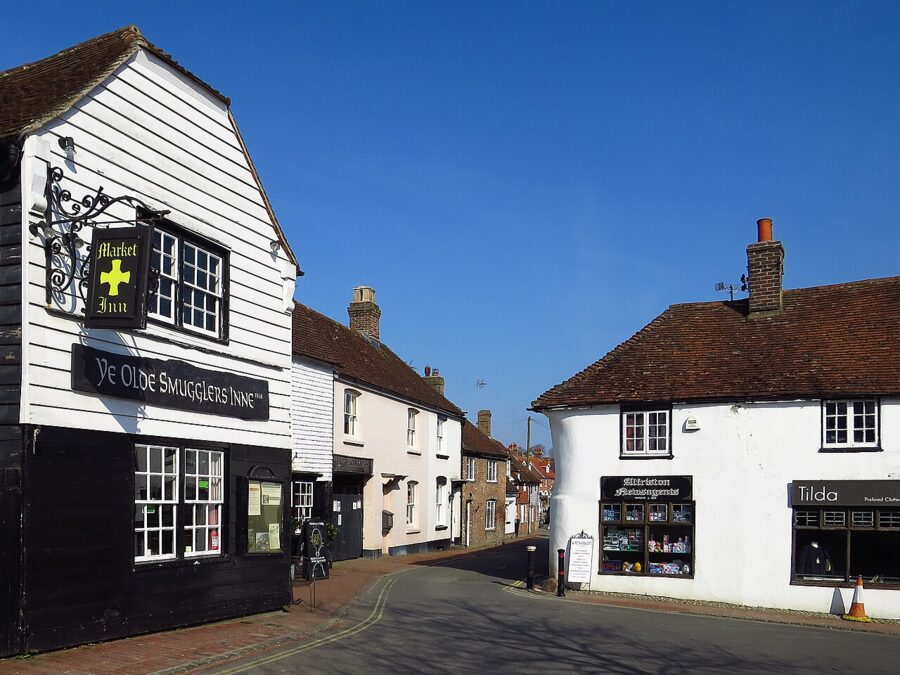

The pub dates itself to 1358, and I would treat that the way I treat the George’s tunnels: as part of the furniture. What is not in doubt is that this is the friendliest of the three on a wet day. Food is served at lunchtime and in the evening Monday to Saturday and from noon into the early evening on Sunday, so do not walk in at 15:00 on a Tuesday expecting a hot meal.
Litlington: the Plough & Harrow and the brewery up the lane
Walk south out of Alfriston on the riverside path and in a little over a mile you reach Litlington: a church, a handful of flint cottages and one of the best-preserved bars in the county. The Plough & Harrow looks like any village pub from the road. Go in and turn towards the counter.
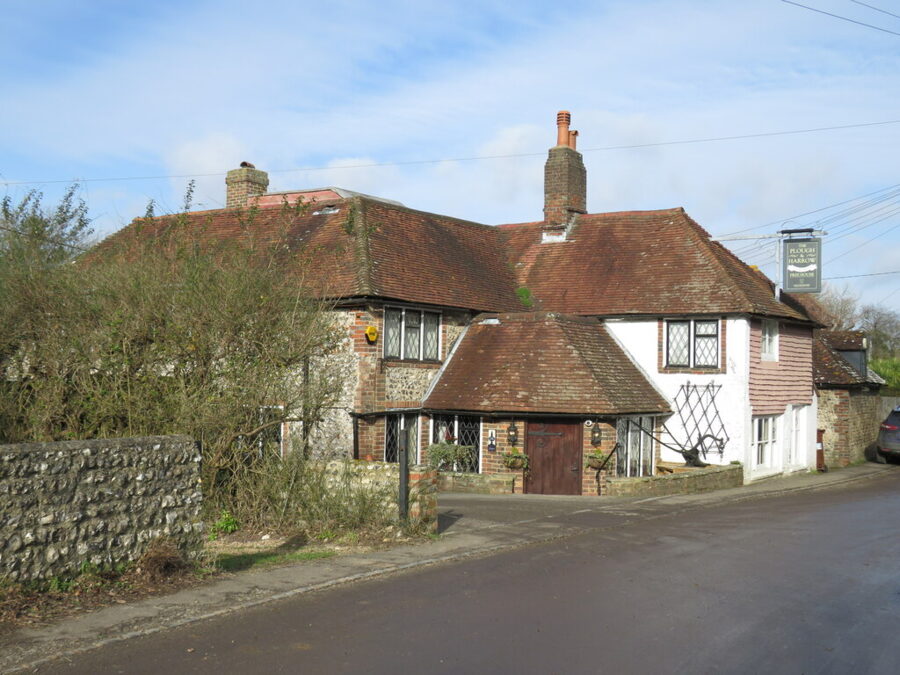

In the late 1950s Tamplin’s, a Brighton brewery long since gone, refitted the inside, and almost nothing has changed. The curved counter, the stone fireplace and a scatter of Tamplin’s barrel seats are still there, and CAMRA lists the interior as a one-star Real Heritage Pub. It is a good example of something people walk past without noticing: a post-war interior can be as worth seeing as a medieval one, and there are far fewer of them left.
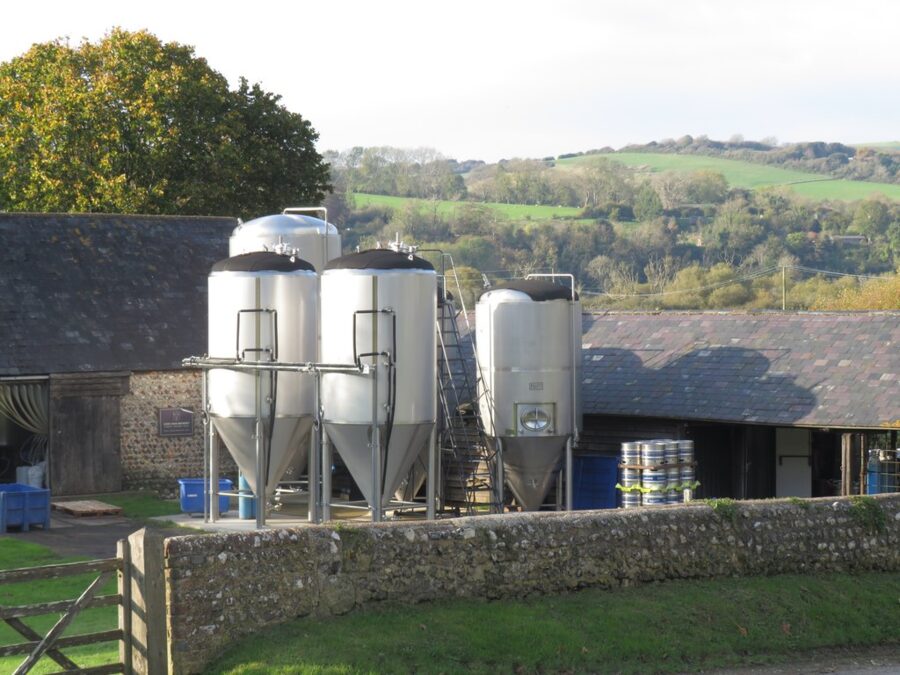
The beer is almost all Long Man, because the brewery is up the lane. CAMRA’s last survey found six handpumps, five of them Long Man (Long Blonde, Best Bitter, Old Man and the stronger Rising Giant among them) and one guest.
The pub opens daily from noon and closes early on Sunday evenings. Food runs 12:00–14:45 and 17:30–20:30 Monday to Friday, until 20:30 on Saturday and 12:00–17:45 on Sunday. Dogs are welcome, and get their own menu.

The garden is big and has an outside bar in summer, which is when the Plough & Harrow fills with walkers coming off the South Downs Way. Book for Sunday lunch. On a weekday out of season, head for the small snug off the main bar.

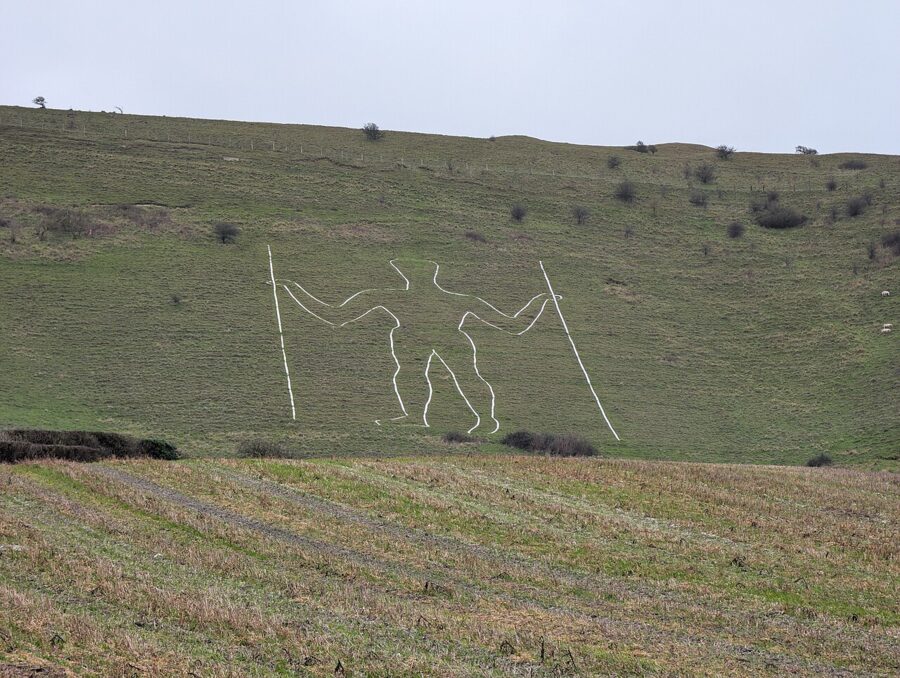
The brewery is named after the Long Man of Wilmington, the chalk giant on Windover Hill a couple of miles north-east. For years he was taken for a prehistoric figure. Excavation led by the University of Reading in 2003 pointed to the sixteenth or seventeenth century instead, which makes him younger than the George.
Exceat: the Cuckmere Inn, once the Golden Galleon
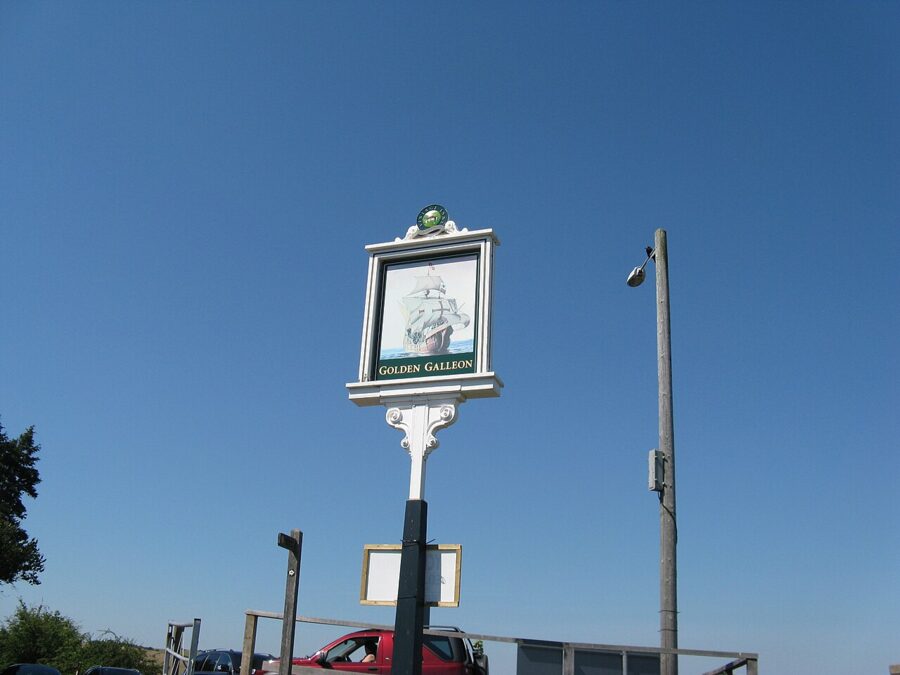
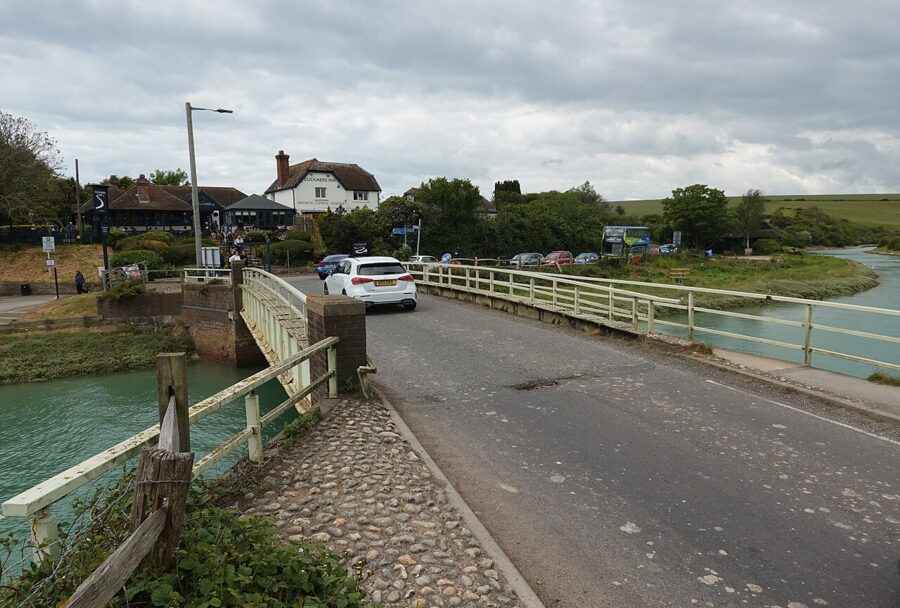
Where the A259 crosses the Cuckmere on its way east to Eastbourne, there is a white pub with a car park, a garden by the river and a view straight down the valley to the sea. For most of its life it was the Golden Galleon. Since about 2014 it has been the Cuckmere Inn, run by Vintage Inns, part of Mitchells & Butlers.
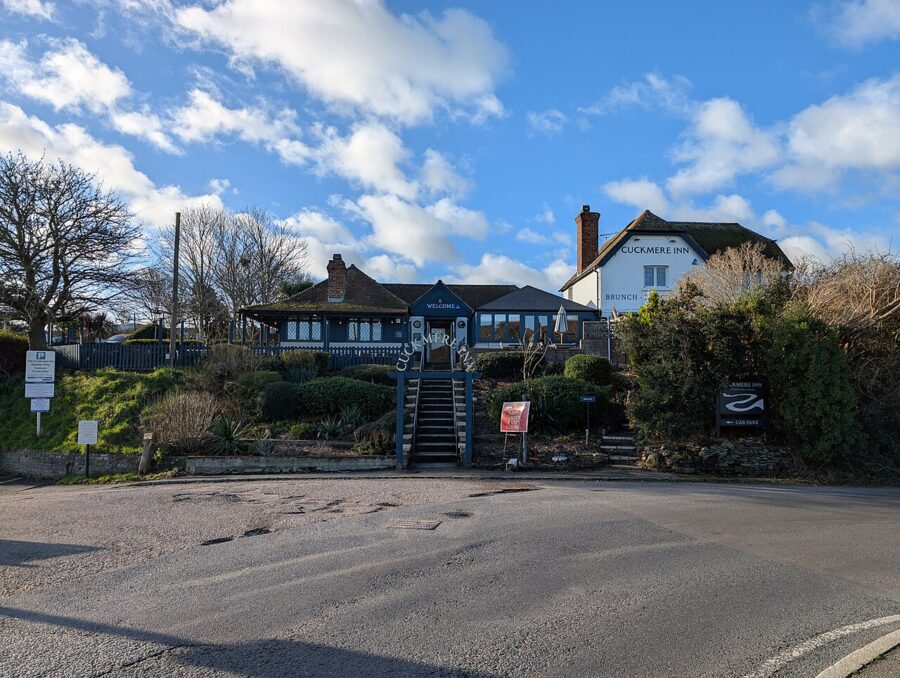
Its history is more interesting than its current name suggests. The site began as a tea house built and run by Captain Douglas Ann, a keen fisherman, who in 1947 swapped it with the telegraph company for the old cable hut on the beach at Cuckmere Haven. The Golden Galleon later became a pub, and from 1994 it had its own brewery: the Cuckmere Haven Brewery, set up alongside by Alan Edgar, who grew hops near the garden and brewed Downland Bitter and a beer called Guv’nor. Its beers no longer appear on the bar, and the old name has gone too.

What it is now is a chain dining pub in an unbeatable position. Harvey’s Best and Sharp’s Doom Bar are the regulars, with one changing beer, and the pub is Cask Marque accredited. It opens 11:30–21:30 Monday to Saturday and 11:30–20:30 on Sunday, and serves food all afternoon, which makes it the easiest place on the Seven Sisters walk to get a hot meal at 16:00. It is family friendly and has its own car park.
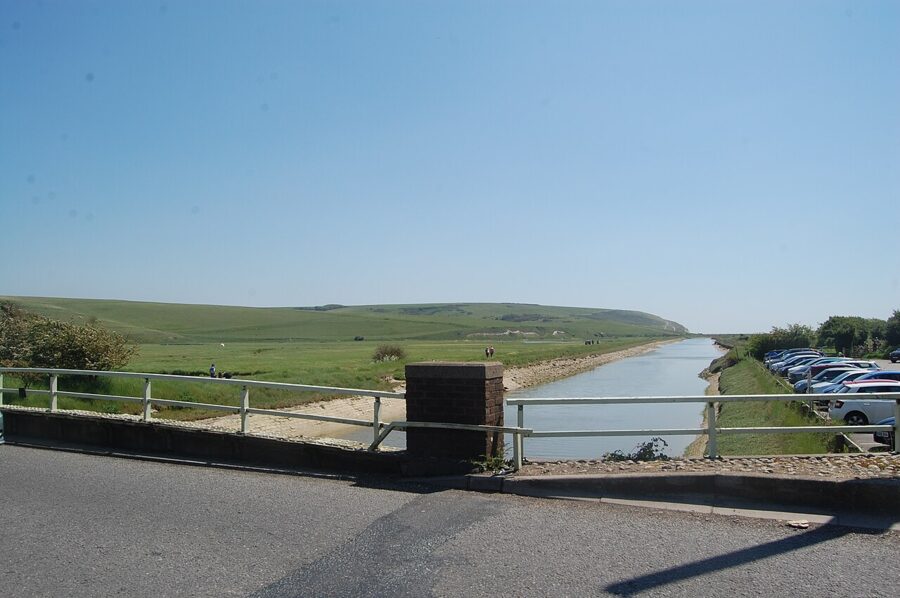
I would not cross the county for the food, but I would cross the road for the garden. Get a pint of Harvey’s, take it out to the garden and watch the light go down the valley. On a summer weekend, book a table if you want one inside.
One thing to know before you go: the Victorian bridge outside is being replaced. A new two-lane bridge is being built alongside the old one, with piling under way since the summer of 2026 and completion planned for May 2028; the start was delayed by six weeks when archaeologists turned up Iron Age and Roman pottery. Expect site fencing for now, and a road diversion later when the new bridge is tied in.

Seaford: a station bar and four locals
Seaford is the valley’s town, a quiet seaside place at the end of the branch line from Lewes. It was a member of the Cinque Ports confederation in the Middle Ages, which is where its best local gets its name, and its pubs are the opposite of Alfriston’s: no coach parties, no carvings, decent beer and a lot of regulars. It is also where the Seven Sisters walk starts, so it is worth knowing where to drink before and after.

Steamworks, on the platform
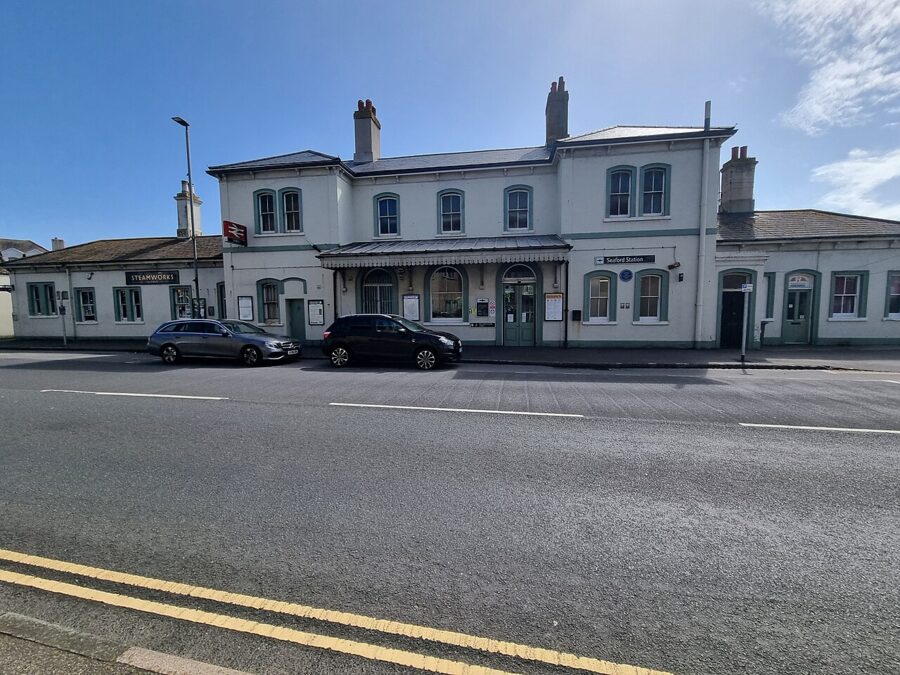
I’d start here, because it is the first thing you reach off the train and the last thing before it. Steamworks opened in the station café unit in late 2017 and serves Sussex beer straight from the cask on gravity, with no handpumps, plus cider from boxes and a few keg craft beers. There are four casks on, changing most weeks: Long Man, Bedlam, 360 Degree and Gun turn up often.
It opens at 08:00 Monday to Thursday and 09:00 Friday to Sunday, closes between 22:00 and 23:30 depending on the day, and runs a happy hour 16:00–19:00 Monday to Friday. Food is snacks. Dogs and accompanied children are welcome, and the bar is step-free from the street.
The Cinque Ports
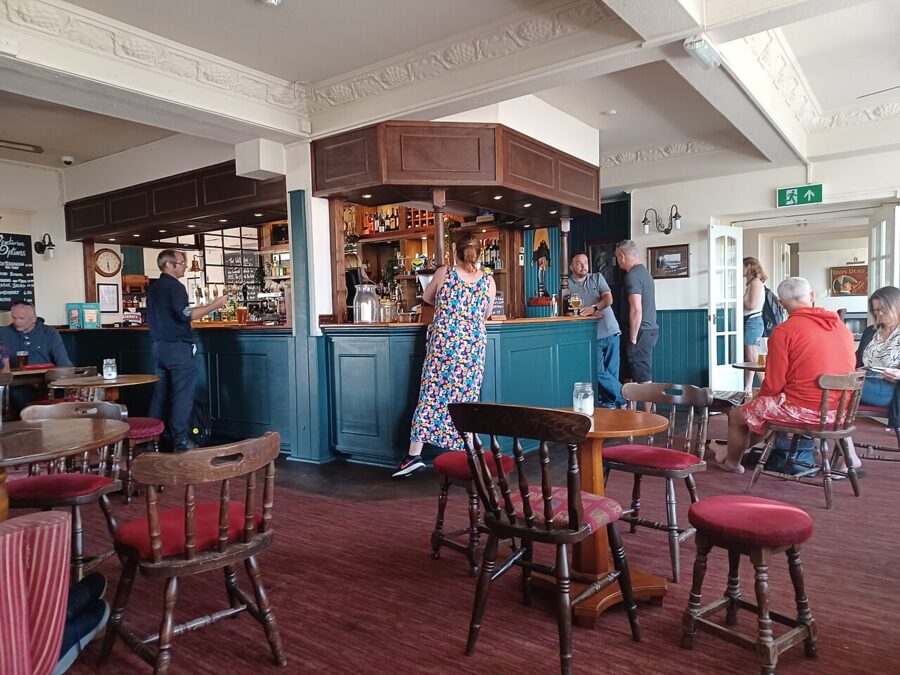
Five minutes’ walk away at the bottom of Broad Street, on the High Street, the Cinque Ports is a proper locals’ pub: three pillars at the door, a central bar, a darts room that curves round past the fire, and a side yard for smokers. Much of an interwar refit survives, including half-height tongue-and-groove panelling and a 1930s red tiled floor in the public bar. Before it took the name of the old confederation it was the Rising Sun.
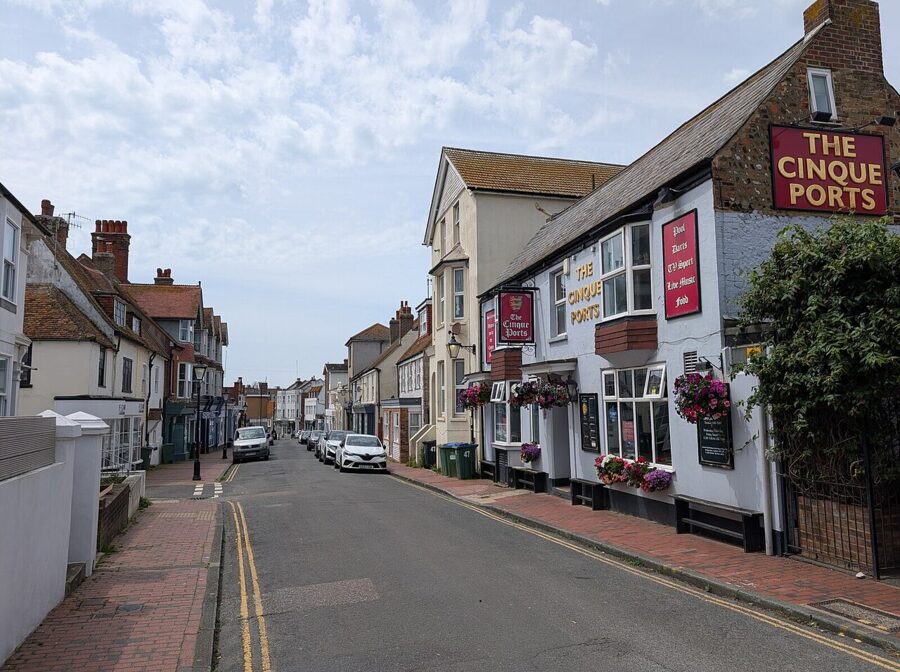

The food is a surprise: authentic Thai, 17:00–21:00 Wednesday to Sunday. The pub opens 11:00 every day and is dog friendly, with a Toad in the Hole board for anyone who wants to learn the Sussex pub game.
The Wellington
Round the corner on Steyne Road, a short walk from the beach, the Wellington used to be the New Inn. Local lore says the Duke himself stayed here while reviewing the Cinque Ports as their Lord Warden, which may be true and is certainly good for trade. It is a Greene King pub with a spacious refurbished lounge bar, Harvey’s Best and Landlord on the pumps, a real fire and bed-and-breakfast rooms upstairs.

The Kings Head and the Old Plough
Two more for completeness. The Kings Head on Pelham Road, a couple of minutes from the station, has reopened under new management in recent years and is a straightforward community pub: Greene King IPA, Abbot and London Glory, pool, darts, sport on the television and live music on Fridays and Sundays. Its earlier names were the Bay Tree Inn and the Lord Admiral.
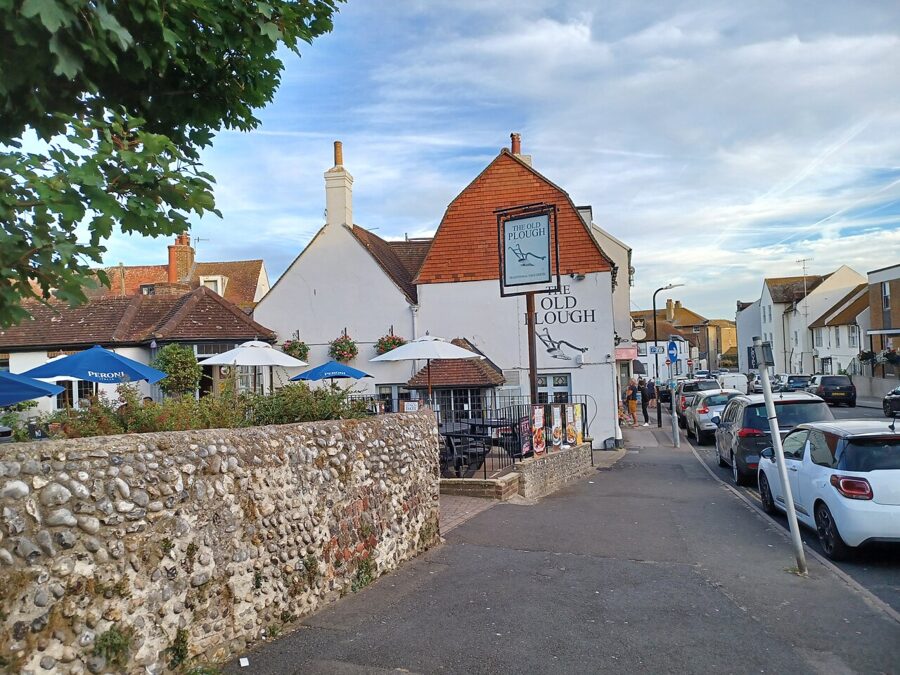
The Old Plough on Church Street, next to St Leonard’s church, had a beer retailer trading from it by 1851 and was refurbished in 2016. It works as the town’s family dining pub, with a big patio and a Sunday roast that gets better notices than the rest of the menu. I’d come for the roast and drink in the Cinque Ports.

Over the hill: Berwick, Jevington and East Dean
Three more pubs sit just outside the valley floor, each at the end of a walk from it. Berwick is north, near the railway; Jevington is east, over the downs; East Dean is at the far end of the Seven Sisters.
The Cricketers Arms, Berwick
Two flint-walled cottages knocked into one, a cottage garden in front and Harvey’s in the cellar, or rather the cold room, because the building has no cellar. The Cricketers is a Harvey’s tied house, and it has been allowed to stay a small village pub. Harvey’s Best is on all year, with Old Ale in winter and the brewery’s seasonal beers the rest of the time.
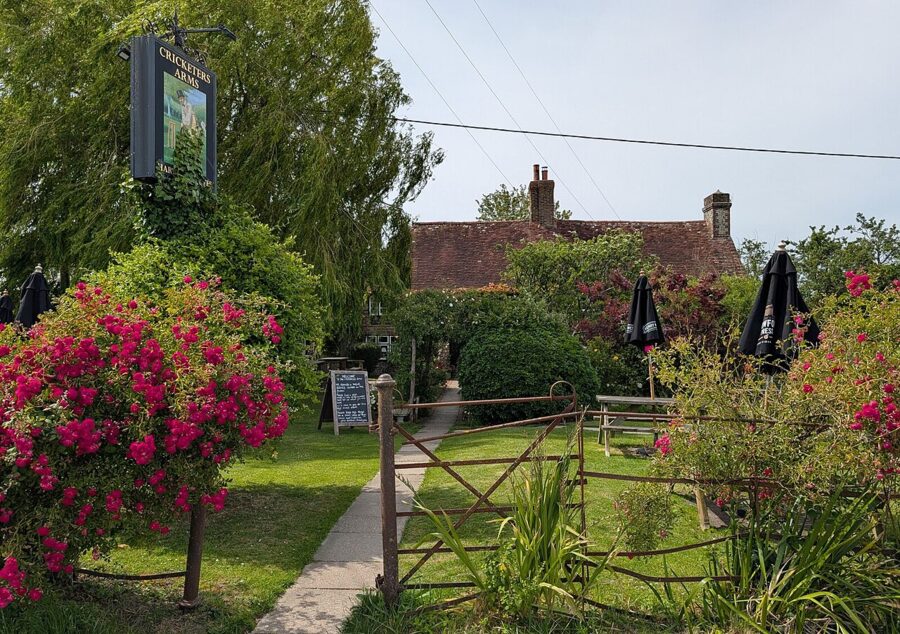

Food is the draw, and it is properly cooked: a Sussex Smokie (smoked haddock baked in a cheese sauce) is £19.50, steaks run to £31, and the Sunday roast is served 12:00–17:00. The pub asks you to book by phone and does not take email bookings. Its winter hours, from late September, run 11:30–23:00 on Saturday and 12:00–19:00 on Sunday; on weekdays it lists split hours (11:30–15:30, then from 18:00) alongside all-day ones, so check before a mid-afternoon arrival. Dogs are allowed on a short lead, one per booking indoors because the rooms are small.
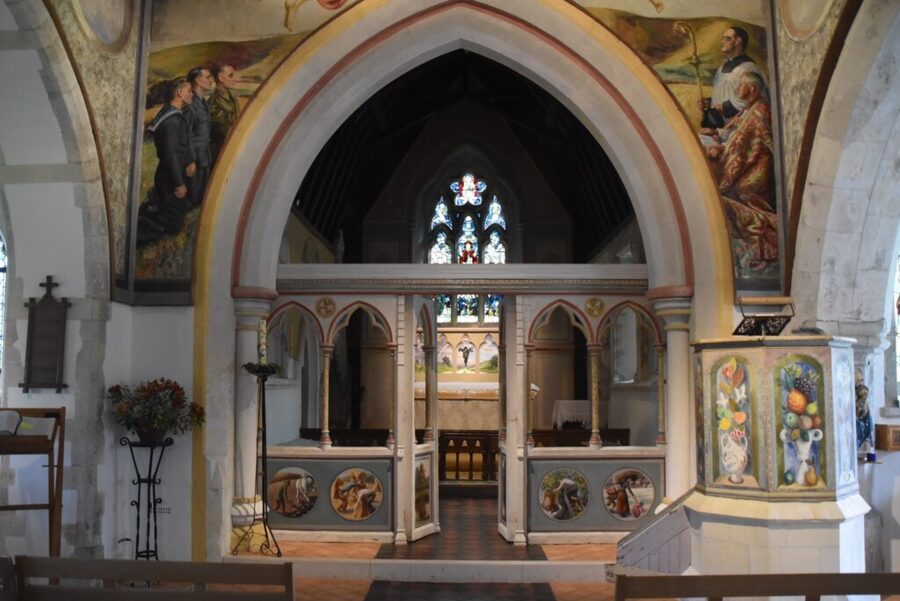

Berwick station, on the line between Lewes and Eastbourne, is about a mile from the pub, and Alfriston is about a mile and a half to the south. The church and the Cricketers together make the best short half-day in the area.
The Eight Bells, Jevington
Take the bridleway branch of the South Downs Way out of Alfriston, over Windover Hill, and the first pub you hit is the Eight Bells in Jevington, an eighteenth-century building on the village street. It was named the best pub in Sussex at the BRAVO awards in 2026, having taken the same title in 2024, and its kitchen holds two AA Rosettes, so this is the most ambitious food on the route.
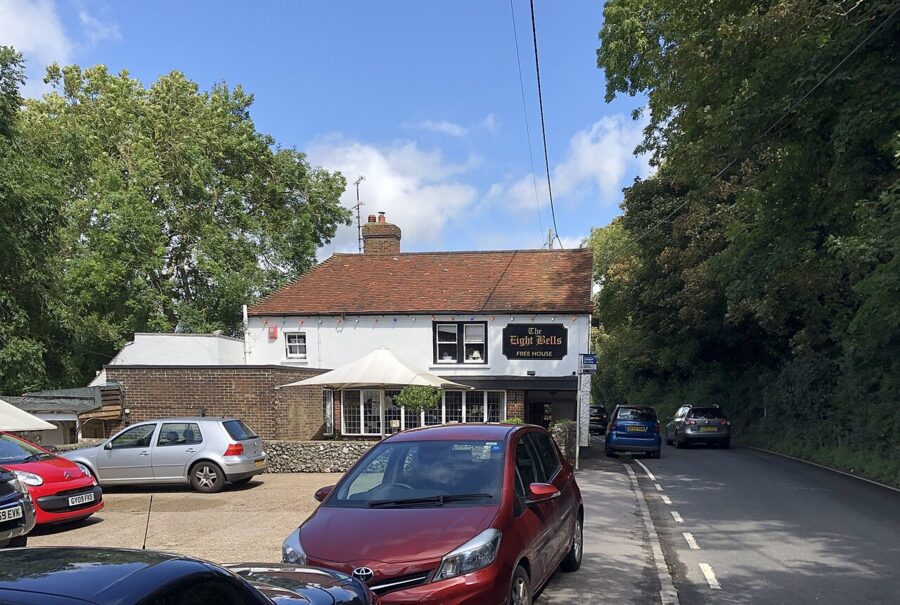

Walkers are not an afterthought: there are sandwiches at lunchtime, and at weekends and bank holidays the Barn, an outside bar and barbecue, runs 12:00–16:00 when the weather allows. Its published hours vary from one listing to the next, so check the day before you go.
The Tiger Inn, East Dean
At the eastern end of the Seven Sisters, a short walk inland from Birling Gap, East Dean is built around a village green, and the Tiger fills one side of it. The estate that owns it dates the inn to the fifteenth century. Inside there is a beamed central bar with a log fire and stone floors, with dining rooms either side.
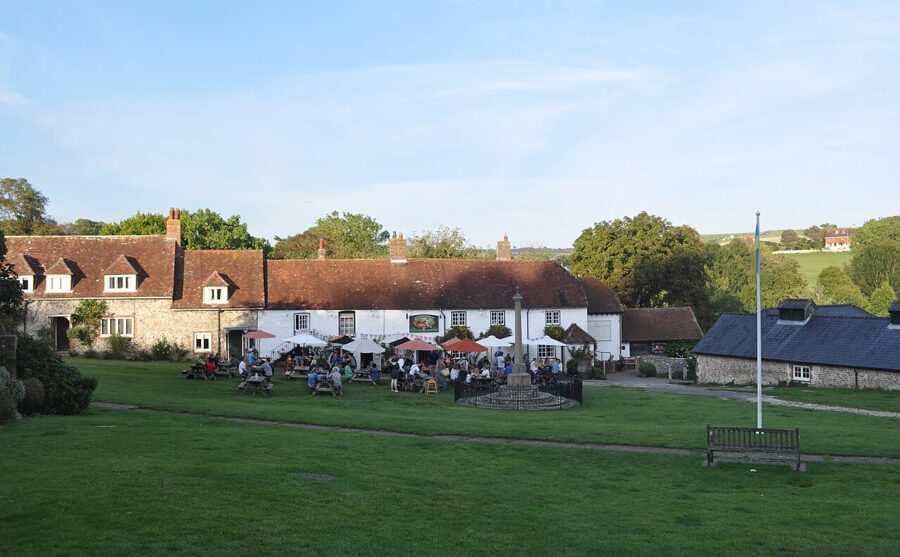
Long Man Best Bitter is the regular, with three changing beers. The kitchen runs 12:00–15:00 and from 17:00 in the evening on weekdays, all day on Saturday and 12:00–19:00 on Sunday. There are five bedrooms upstairs, dogs are welcome, and the public car park is free. One quirk worth knowing: you cannot reserve a table just for drinks, but there are tables for drinkers in the main bar.
Walks that join them up
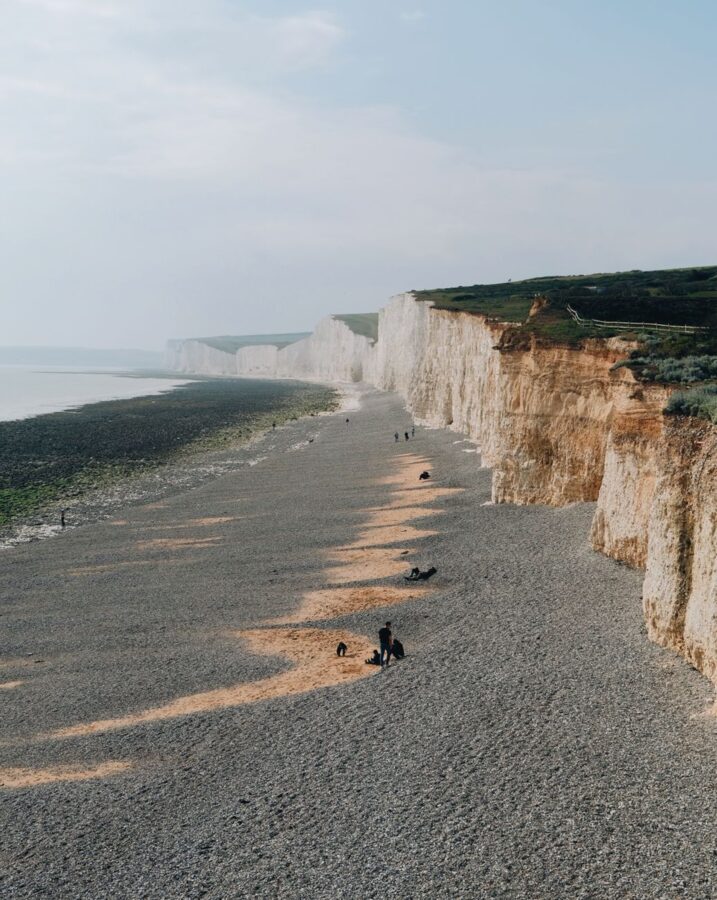
None of these routes is long, but the cliff path is a series of short, sharp climbs. Wear proper boots, take water, and keep at least five metres from the edge of the Seven Sisters: the chalk crumbles, and the edge is often undercut.
Alfriston to the sea
The classic is the South Downs Way footpath down the valley to Exceat, about four miles from Alfriston. You follow the river south to Litlington (lunch at the Plough & Harrow, or a look round the brewery shop), climb through the edge of Friston Forest to Westdean, a tiny flint hamlet with an old church, then drop down to the Seven Sisters visitor centre and across the road to the Cuckmere Inn.
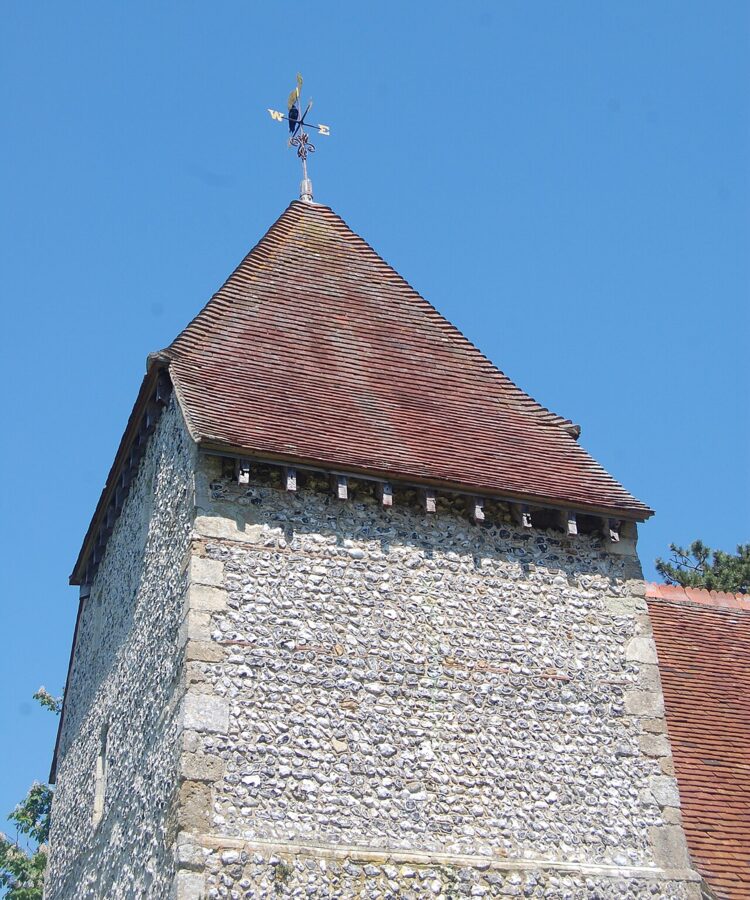
From Exceat you can carry on to the beach at Cuckmere Haven along the flat path beside the river, and back. That makes a day of about seven miles with three good pubs on it. If your legs are done, the coastal buses stop outside the visitor centre for Seaford and Eastbourne.
The Seven Sisters: Seaford to East Dean
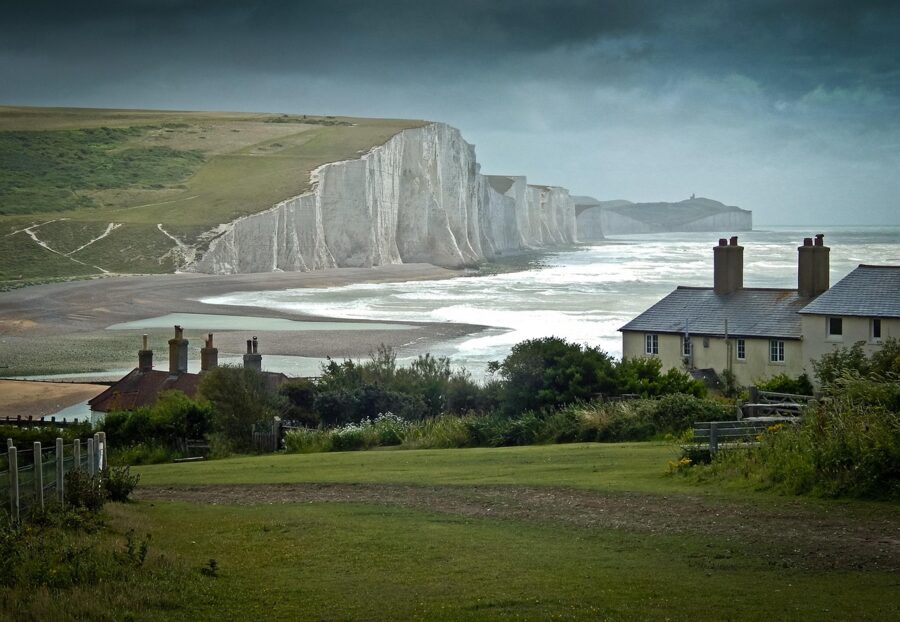
Start at Seaford station with a coffee or a half at Steamworks, walk east along the seafront and up over Seaford Head, past the Coastguard Cottages with the view on every calendar in Sussex, down to Cuckmere Haven and inland to Exceat: about four miles, with the Cuckmere Inn at the end of it.
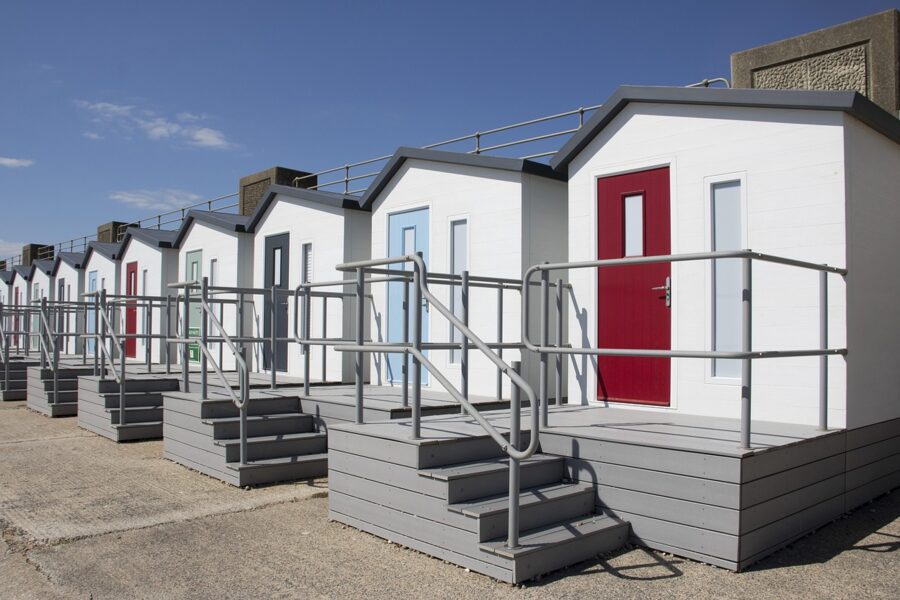
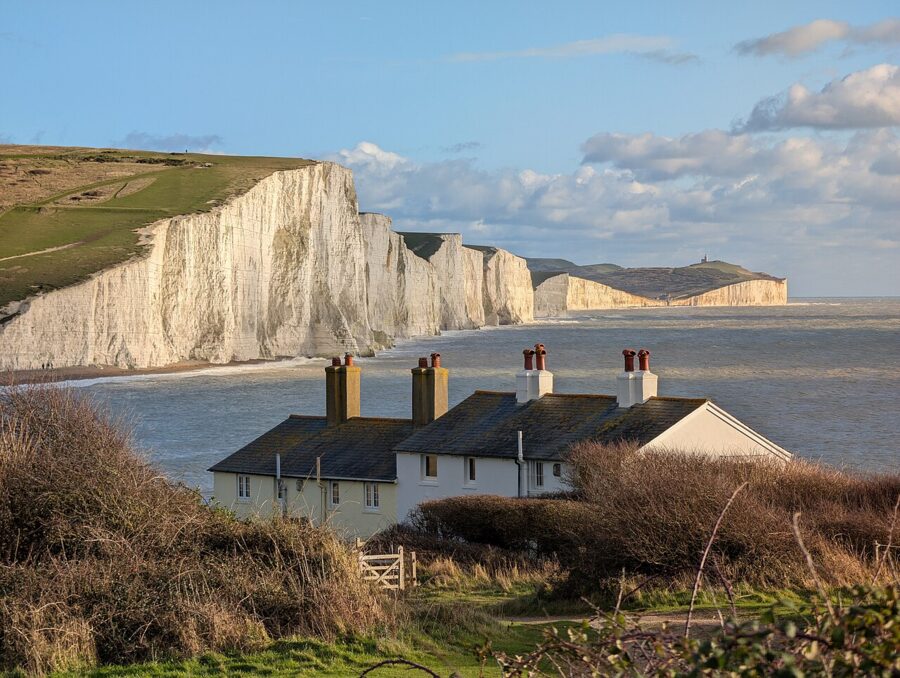
From Exceat the path climbs onto the first of the Seven Sisters, Haven Brow, and rolls over the rest to Birling Gap: another four miles of steep ups and downs, with the National Trust café at the Gap as the only refreshment. From Birling Gap a link path runs a mile and a half inland to East Dean and the Tiger, from where buses return to Seaford or on to Eastbourne. Total: about nine miles, and a great deal of up and down.
Without a car
Seaford is the railhead for the coast: trains run to Brighton via Lewes, where you change for London. For Alfriston and Berwick, use Berwick station on the Lewes to Eastbourne line, about a mile from the Cricketers and two and a half miles from Alfriston.
The Brighton and Hove coastal buses, the 12 and its variants, run along the A259 through Seaford, Exceat and East Dean several times an hour in daytime, and the 13X adds Birling Gap and Beachy Head on a more limited timetable. Alfriston has local buses to Seaford and Berwick station, and on summer weekends and bank holidays the community-run Cuckmere Valley Ramblerbus, route 47, loops from Berwick station through Alfriston and Litlington to the Seven Sisters visitor centre. Timetables change by season, so check them the night before.
Practical notes
Hours. The George, the Smugglers, the Cinque Ports and the Tiger are open all day. The Cricketers may close in the afternoon on weekdays, and the Plough & Harrow closes early on Sunday evenings. The single most useful thing to remember is that food stops well before the bar does: kitchens in the valley typically close at 20:30 or 21:00, and earlier on Sundays.
Booking. For Sunday lunch anywhere, for any table at the Cricketers or the Star’s restaurant, and for the Eight Bells at weekends, book. Midweek outside the school holidays you can usually walk in.
Dogs. Most of the pubs here welcome dogs in the bar. The Plough & Harrow has a dog menu and the Cricketers asks for one dog per indoor booking; check before you take one into a dining room.
Rooms. The Star, the George, the Smugglers, the Tiger and the Wellington all have bedrooms. The Star is the expensive one; the others are inn rooms above a working bar, which is a recommendation or a warning depending on how you sleep.
Parking. Alfriston fills up early on fine weekends, and the Seven Sisters Country Park car parks at Exceat open at 07:00 and are locked at 18:00 in winter. The Cuckmere Inn and the Cricketers have their own car parks for customers. Far better to come by train and walk.
Where to finish
If you walk the valley from Alfriston, finish at the Cuckmere Inn with the light going down towards the sea, then get the bus into Seaford. If you walk the cliffs, finish at the Tiger, on the green at East Dean, with a pint of Long Man that was brewed a few miles up the valley you have just looked down.
And if you have a train to catch, end where the walk began: on the platform at Seaford, with a half from the cask at Steamworks. Ask what has just been tapped, and drink it before the doors close.