
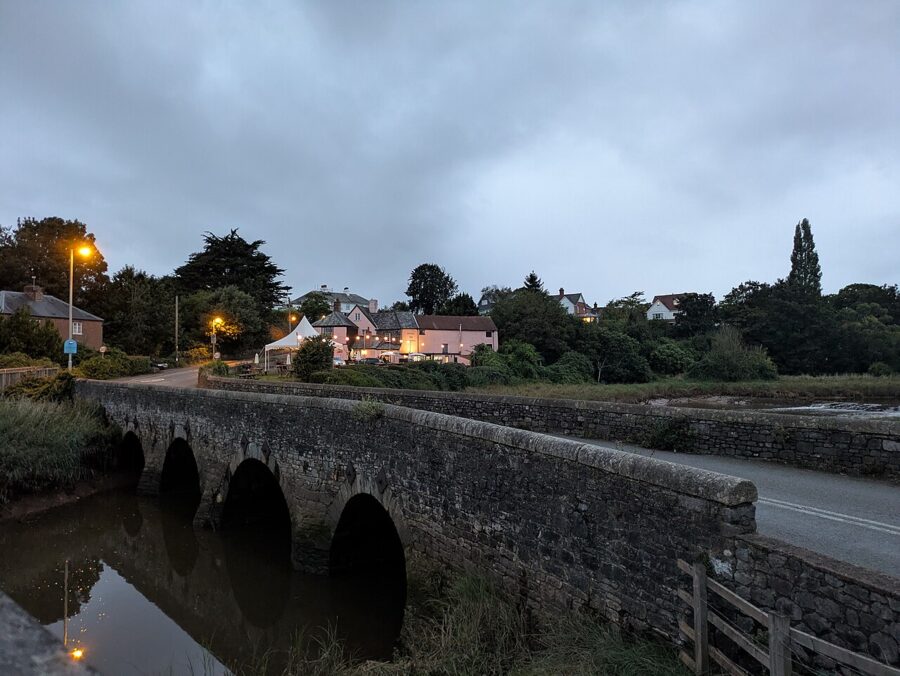
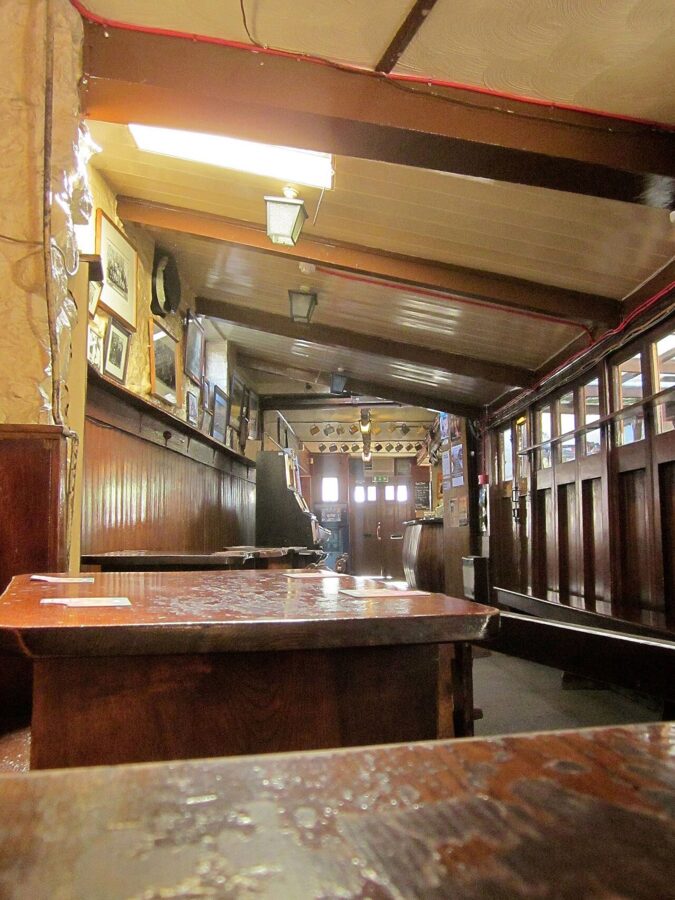
There is no bar at the Bridge Inn in Topsham. You stand in a panelled corridor, lean towards a hatch, and someone fetches your beer from casks on the ground floor of a building the same family has run since 1897. A sign on the door still quotes the opening hours set under the Defence of the Realm Act in 1914, and the place shuts for the afternoon as if the war had never ended.
That is Devon drinking at its best: beer straight from the cask, rooms that were never knocked through, and a family who have kept the place for five generations. The county has more pubs like it than its reputation for cream teas suggests. It also has plenty of thatched dining inns where the beer is an afterthought, and it pays to know which is which before you drive half an hour down a lane.
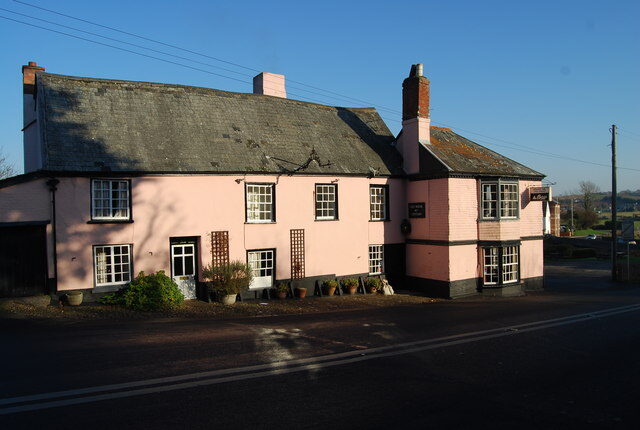

From the Exe the route runs through Exeter, East Devon, Dartmoor, the Dart, Plymouth and the north coast, then four days out and some notes on hours, which in rural Devon are a sport in themselves.
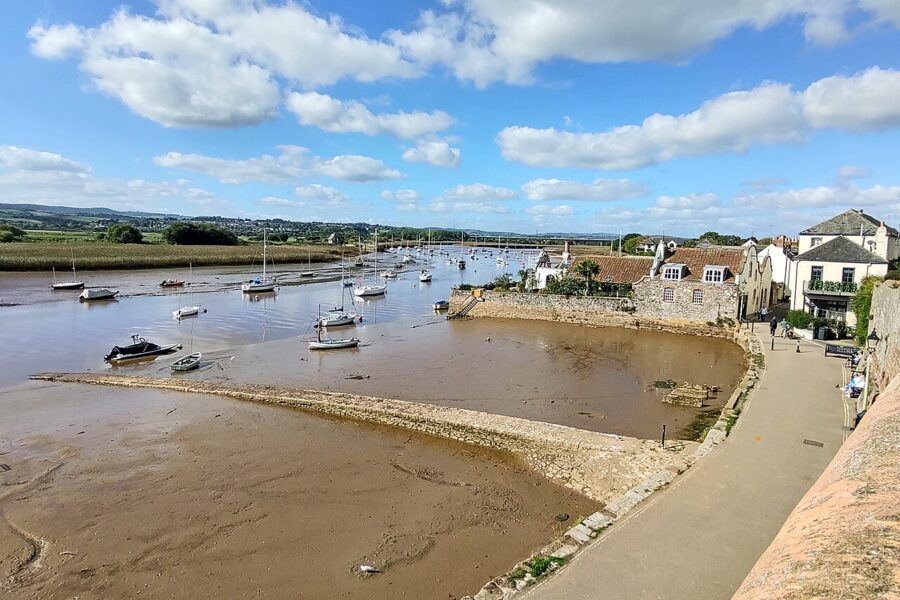

On this page
- What Devon pours
- Topsham and the Exe estuary
- Exeter
- East Devon: Branscombe, Ottery and the Blackdown Hills
- Dartmoor and its edges
- Totnes and the Dart
- The South Hams coast and Plymouth
- North Devon and the edge of Exmoor
- Devon's "oldest" pubs, and what to believe
- Four days out, with the trains
- Practical notes: hours, food, rooms and dogs
What Devon pours
The beer you will see most often comes from Dartmoor Brewery at Princetown, which started in 1994 behind the Prince of Wales pub and calls itself England’s highest brewery. Its Jail Ale, named after the prison down the road, is a 4.8% premium bitter that turns up everywhere from Plymouth to the far side of Exeter. Drink it once, then try something else.
Exeter Brewery supplies its own pub, the Hour Glass, and plenty of others with Avocet and Darkness. Otter, in the Blackdown Hills near Honiton, fills East Devon’s pumps with Otter Bitter and Amber, and Branscombe Brewery’s Branoc is the regular at the Bridge Inn. Bridgetown brews for the Albert Inn in Totnes, and Teignworthy, Hanlons, Bays, Red Rock, Holsworthy and the newer Tavistock Brewery all appear below. Nearly all of it is real ale, conditioned in the cask, and that is what to ask for.

Watch how it is served. More Devon pubs than you would expect pour by gravity, with the cask on a stillage and a tap knocked into it, no handpump at all. The Bridge Inn, the Drewe Arms at Drewsteignton, the Volunteer in Ottery St Mary, the Duke of York at Iddesleigh and the Dolphin in Plymouth all do it, and a well-kept gravity pint is soft, cool and a shade less lively than you are used to.
Plymouth keeps an old habit of its own: Draught Bass, poured from the barrel in the Dolphin on the Barbican. From outside the county come St Austell, which owns pubs across Devon, and Hall & Woodhouse, whose Tanglefoot is on at the Lighter in Topsham and the Rising Sun in Lynmouth.
Then there is cider. Sandford Orchards at Crediton turns up in a lot of the pubs below. The place to drink it is Ye Olde Cider Bar on East Street in Newton Abbot, one of a tiny handful of true cider houses left in Britain and the best lesson in what West Country cider should taste like. Expect hard benches, a barrel-fronted counter, seventeen-odd ciders and perries, and no beer.

The county does three kinds of pub especially well. The church house, built beside a parish church for brewing and feasting and later turned into an inn, survives at Rattery, Holne and Meavy. The moorland inn is at its purest at Warren House. And the estuary pub, from Topsham to Noss Mayo, is where you go on a sunny afternoon to watch the tide come in.
Topsham and the Exe estuary
The Bridge Inn
The Bridge stands at the bottom of Bridge Hill, by the old bridge over the River Clyst, about 400 metres from Topsham station on the Exeter to Exmouth line. The building is rendered and tile-hung, mostly seventeenth century, and at the back is a malthouse of Devon cob with the remains of a malting floor and a brick furnace. Beer was brewed here until the early 1900s, and at quiet times the staff will open the furnace for a look.
William John Gibbings took the inn in 1897, and it has passed down the family to Caroline Cheffers-Heard, his great-granddaughter. It is listed Grade II, and CAMRA gives the interior three stars, its top grade, on the National Inventory of Historic Pub Interiors. On 27 March 1998 Queen Elizabeth II came on an official visit, the only one she paid to a pub, as the family and CAMRA record it. By the family’s account she drank nothing, though she was given a case of specially brewed “101” ale for Prince Philip.
Up to ten real ales are on, mostly from Devon, listed on a beer menu printed daily, and you can have them in thirds. Lunch is pasties, sandwiches and a proper ploughman’s lunch from 12:00 to 14:00, and Ember Pizza cooks here on Tuesdays from 17:30 to 20:00. The pub opens 12:00–14:30 and 17:30–21:30 (18:00 on Sundays): this is a pub for talking, not a late bar. Many regulars order at the parlour door and drink in the tap room opposite, and so should you.
Down the Strand: the Passage House, the Lighter and the Globe
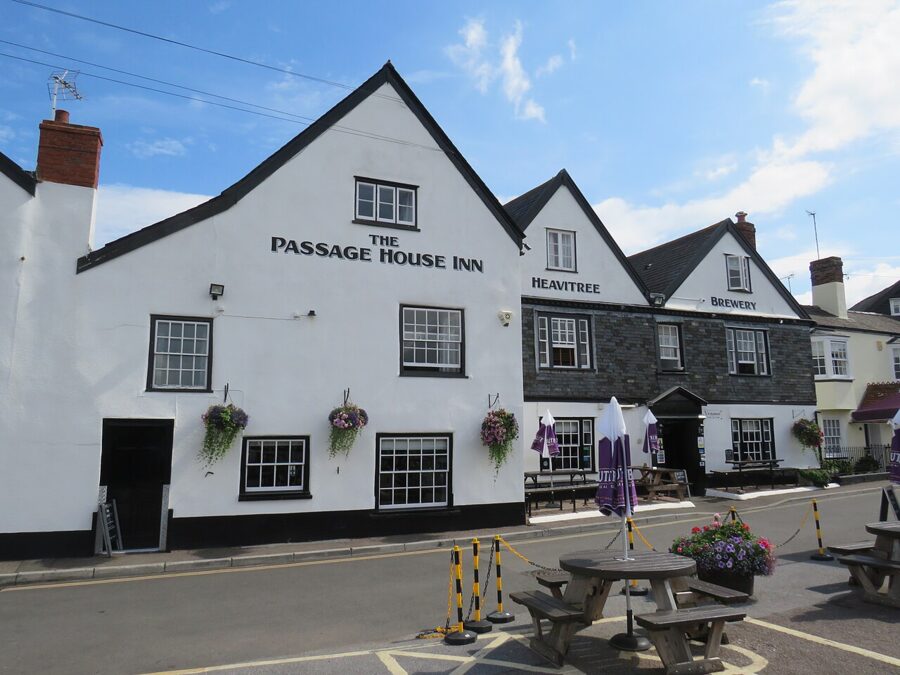
From the Bridge it is ten minutes’ walk into the old town and down to the water. The Passage House Inn on Ferry Road is the riverside pub with the birdwatchers outside: a small bar with dining rooms off it, six handpumps and food from 12:00 to 20:45 every day. Book at weekends.

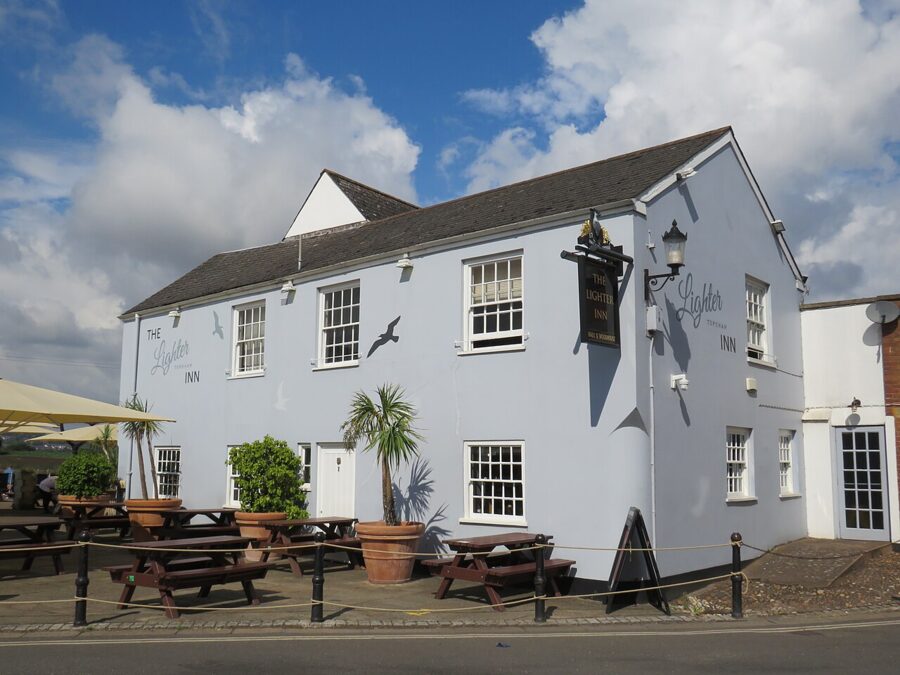
The Lighter Inn, on the quay a few minutes south, is the big one: a Hall & Woodhouse pub-restaurant with Tanglefoot on and food all day. It is good for families and for a pint looking across the estuary, and very busy in the holidays.

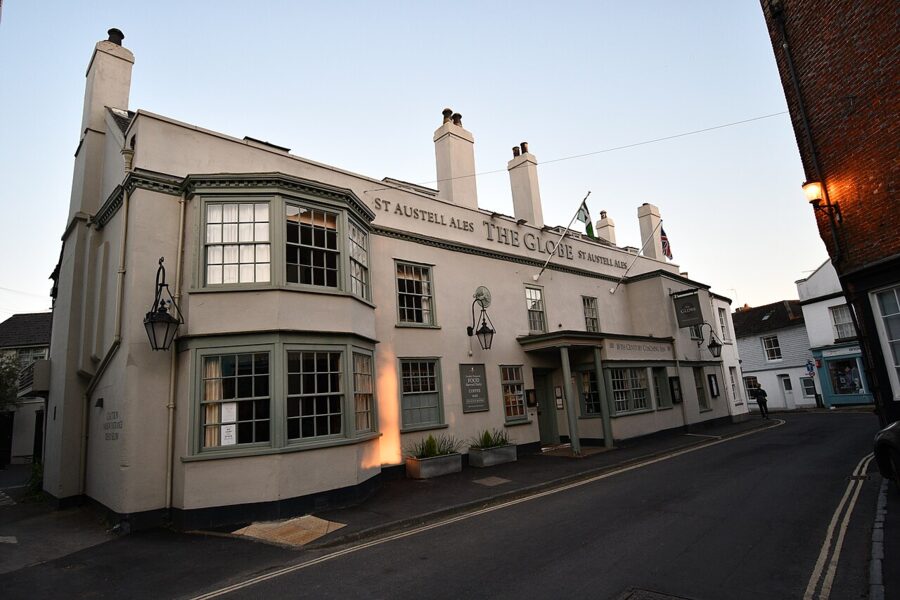
Back on Fore Street, the Globe Hotel is a sixteenth-century coaching inn bought by St Austell in 2011, with a log fire, a big bay window, nineteen rooms and breakfast from 08:00. It is the obvious base if you want to do Topsham properly.
The Turf and the canal
Across the water, where the Exeter Ship Canal meets the estuary, the Turf has stood beside Turf Lock since 1827. You cannot drive to it. You walk, cycle or come by boat, and that is the joy of it: a Grade II house with slanting floors, a big lawn, cask ale and food at the end of a path across Exminster Marshes, where lapwings and redshanks breed.
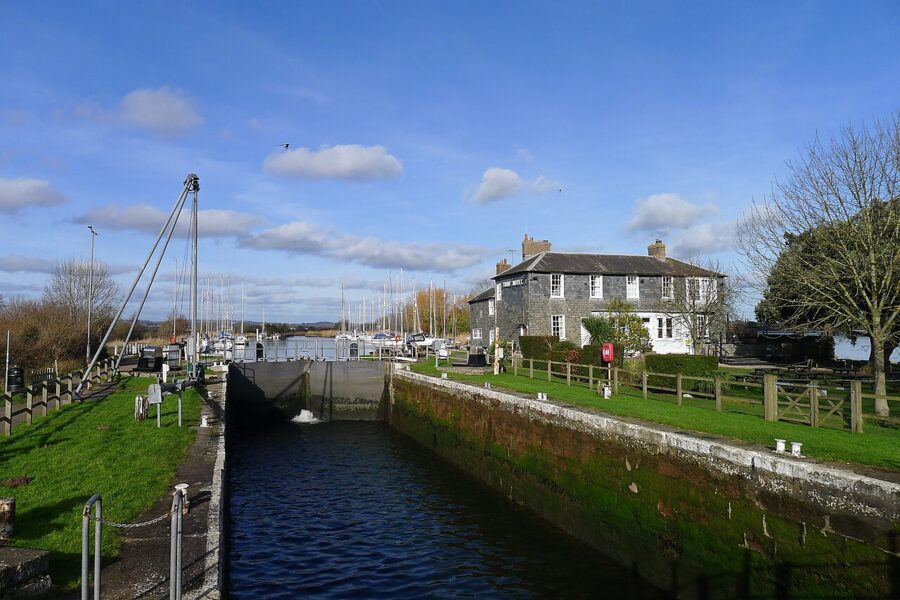

It is seasonal, which catches people out, and even in season the days vary: this autumn it opened Thursday to Sunday, 10:00 to 18:00, with food from 12:00 to 16:00. The nearest car park is a twenty-minute walk away, with nineteen bays and a clamping policy, and a second by the Swan’s Nest is thirty minutes off. Check the hours before you set out.
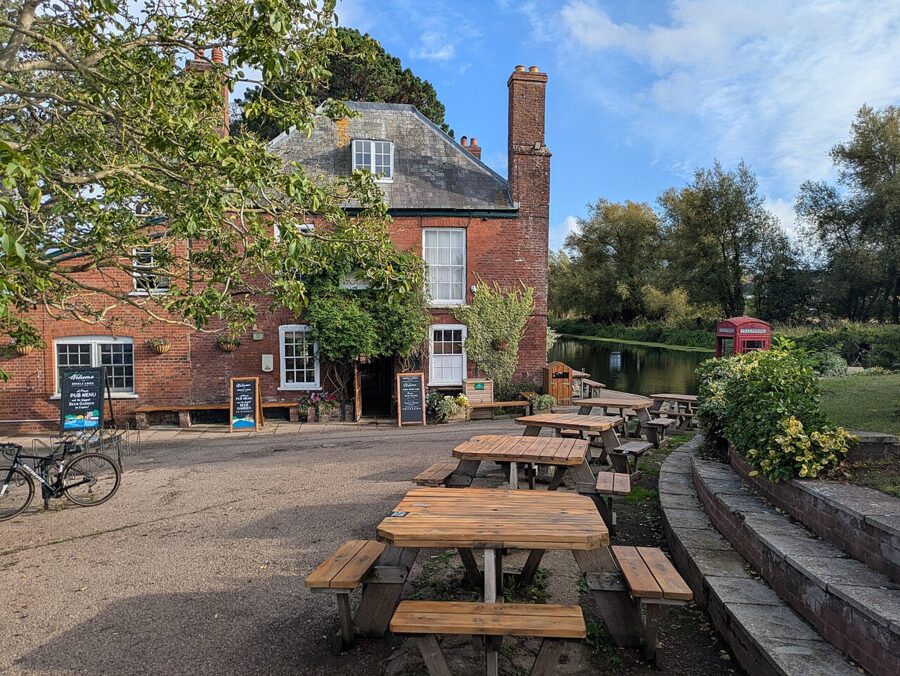
Further up the canal towards Exeter, the Double Locks is the Turf’s year-round cousin: a red-brick lock keeper’s house of the 1820s, Grade II, with log fires, a big garden and food all day. Its lock is claimed to be the longest in Britain. The permanent beer is from Wells & Young’s, but there is always a Hanlons and usually a Bays, and the new Marsh Barton station is a short walk away.
Cockwood
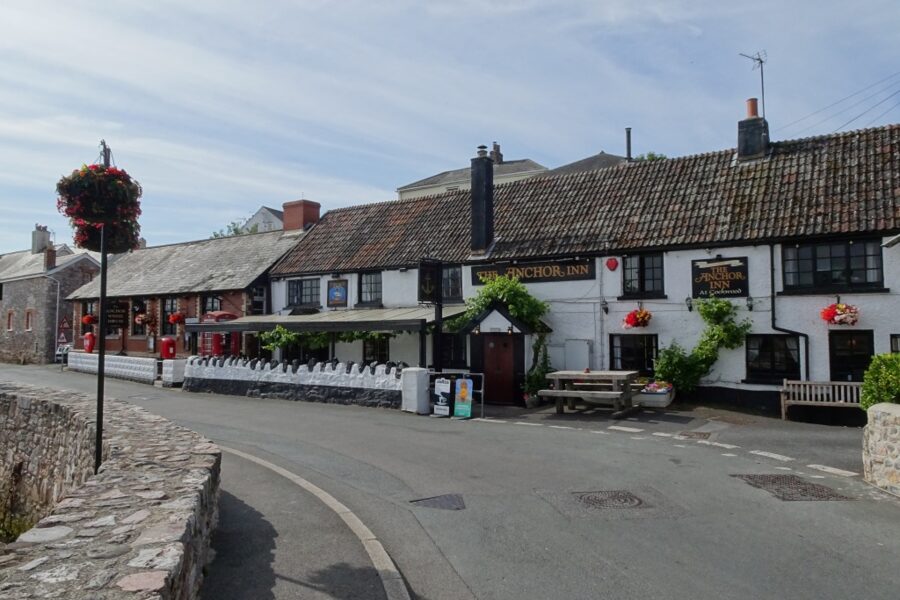
On the western shore, between Starcross and Dawlish Warren, the Anchor Inn sits by Cockwood’s tiny harbour with the main railway line at its back. Inside it is low beams, settles, panelling and nautical clutter, and it claims 450 years and a spell as a seamen’s mission. It is a seafood pub, mussels above all, and food stops at 19:00. The number 2 bus stops on Cockwood Bridge, about 200 yards away.

Exeter
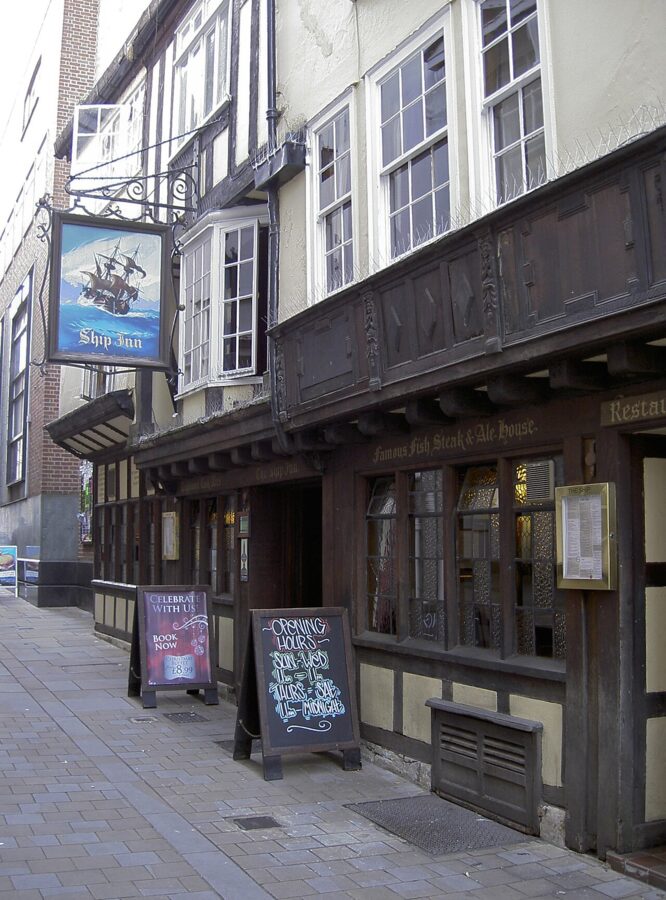
Exeter is a good pub city that most people only change trains in. The oldest name is the Ship Inn in Martin’s Lane, between the High Street and Cathedral Green, a Greene King pub with four regular ales and two guests. It claims Sir Francis Drake as a regular and displays an inscription said to be his, from 1587, praising the place. I’d treat that as a good story; the beams are real enough.

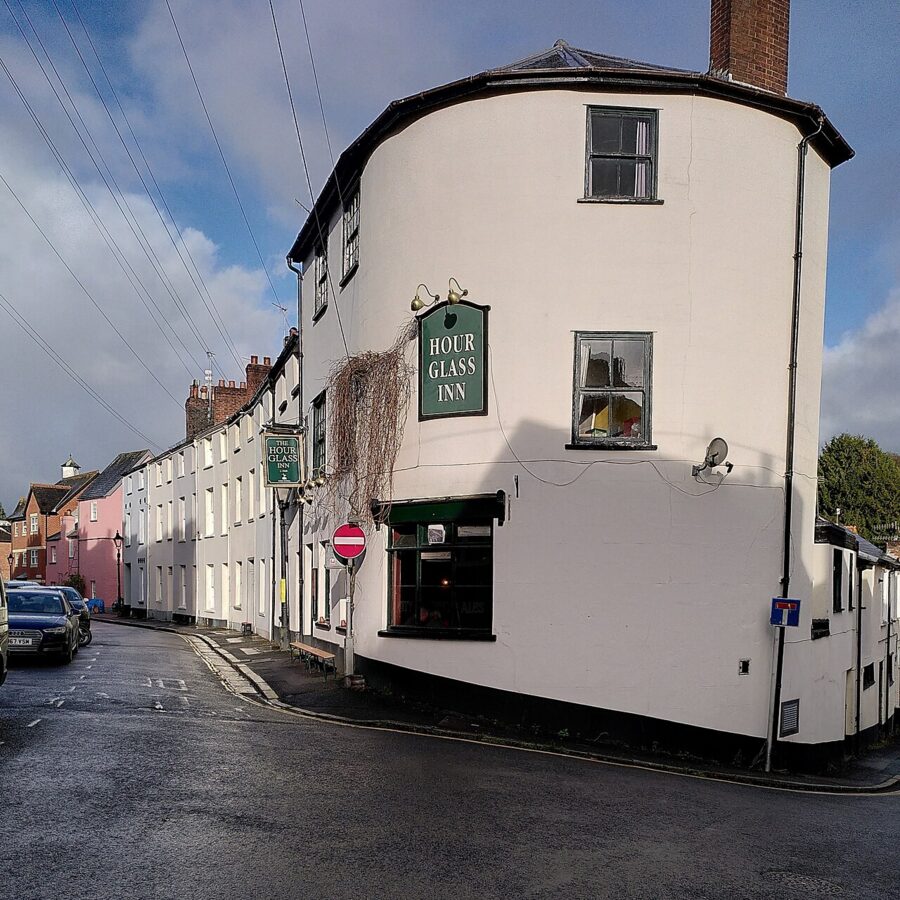
The best pub in the city, to my mind, is the Hour Glass, on the corner of Melbourne Street and Colleton Row above the Quay. It is a wedge-shaped, Grade II pub that has traded since at least 1847, now owned by Exeter Brewery, with the drinking area flowing round the bar and a fire in winter. It opens at 17:00 Monday to Wednesday and at noon from Thursday. Food runs from Wednesday evening to Sunday lunch only.

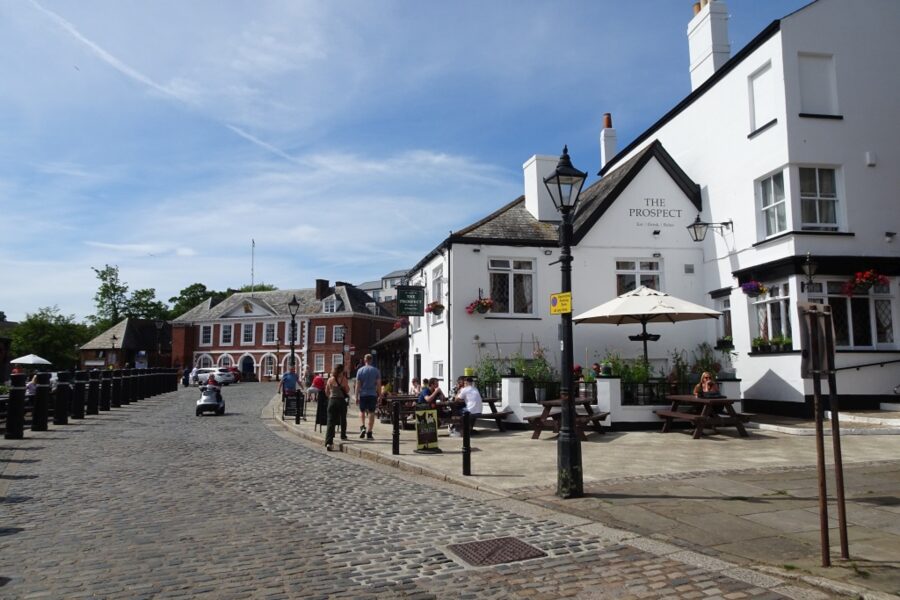
On the Quay itself, the Prospect Inn hides seventeenth-century origins as a warehouse behind a later front. It is a busy, friendly pub with seats on the waterfront, Hanlons and Otter beers and Sandford Orchards scrumpy. It is closed on Mondays, and the kitchen stops at 16:00 on Sundays.

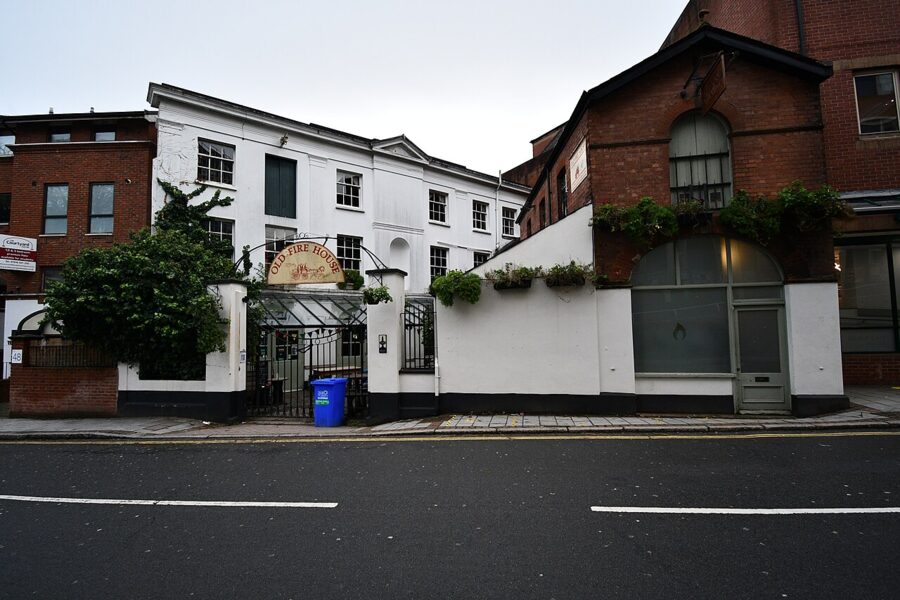
For a late one, the Old Fire House on New North Road is reached through a courtyard and spreads over three floors, with cask ales on gravity, a long list of boxed ciders, big square pizzas and a Sunday roast. It stays open until 02:00 or 03:00 and takes cards only. No children under ten, and over-18s only after 17:00.
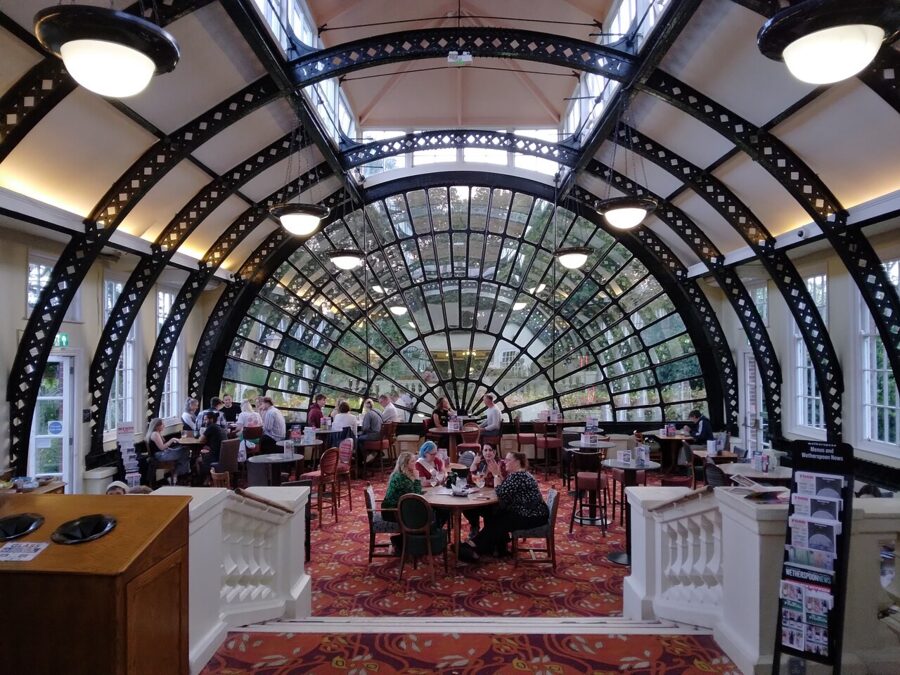
And then the Imperial, the Wetherspoon near St David’s station. It is a Grade II* house of around 1810, a hotel from 1923 and a Wetherspoon since 1996. The ballroom came from Haldon House at Dunchideock and the orangery was moved here in 1926 from Streatham Hall, now part of the university. Up to ten cask ales over two bars and a vast garden make it the handsomest Wetherspoon I know.
East Devon: Branscombe, Ottery and the Blackdown Hills
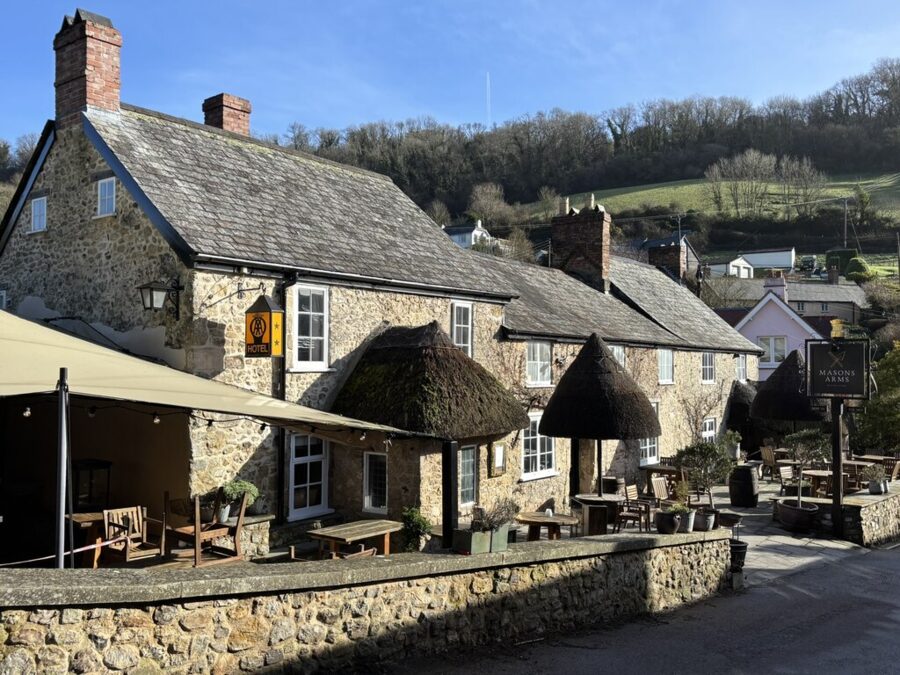
Branscombe is one of the longest villages in England, strung out down a valley to a shingle beach on the Jurassic Coast, which runs on east into Dorset. It has a pub at each end. The Masons Arms, at the lower end, is a fourteenth-century thatched inn owned by St Austell, Grade II listed, with low beams, open fires and plenty of rooms. More hotel than local, and none the worse for it after a coast path walk.

The Fountain Head, at the western end a mile and a quarter from the beach, is the drinker’s choice. It has an inglenook, panelling and flagstones, Branscombe Brewery beers and ciders, and good-value home cooking. The pub says the building has been a cider house, a forge and a doctor’s surgery. It is closed on Mondays and opens only in the evening on Tuesdays.
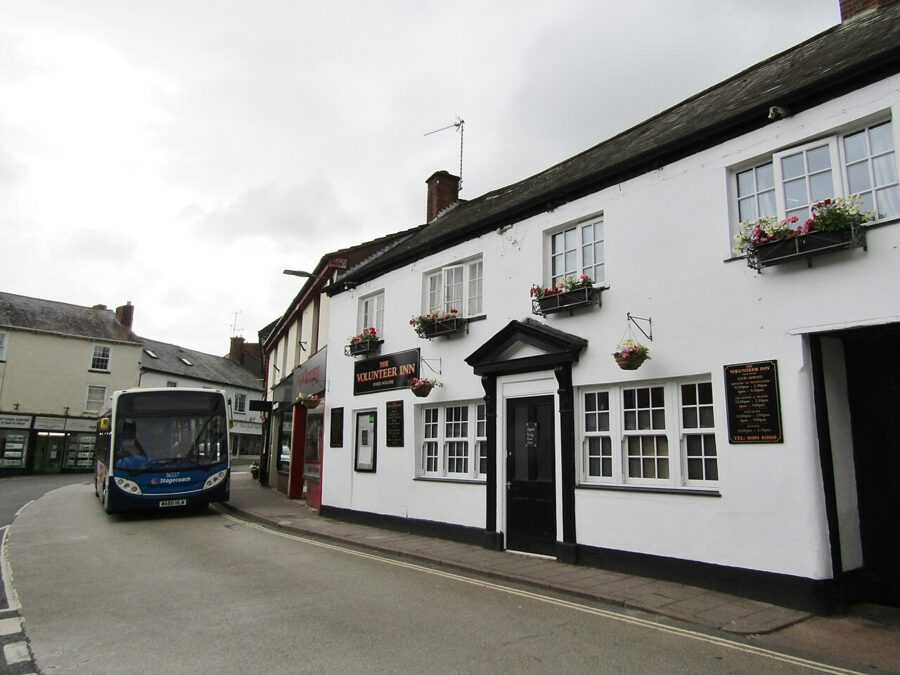
Inland, the Volunteer Inn in Ottery St Mary opened in 1810 as a house, an inn and a recruiting office for the Napoleonic War, and took its present name in 1831. The front bar is kept traditional, the beers are served by gravity and mostly local, and the food runs seven days with a proper Sunday roast. Come on 5 November, when the town runs blazing tar barrels through the streets, and you will see why the regulars are a hardy lot.

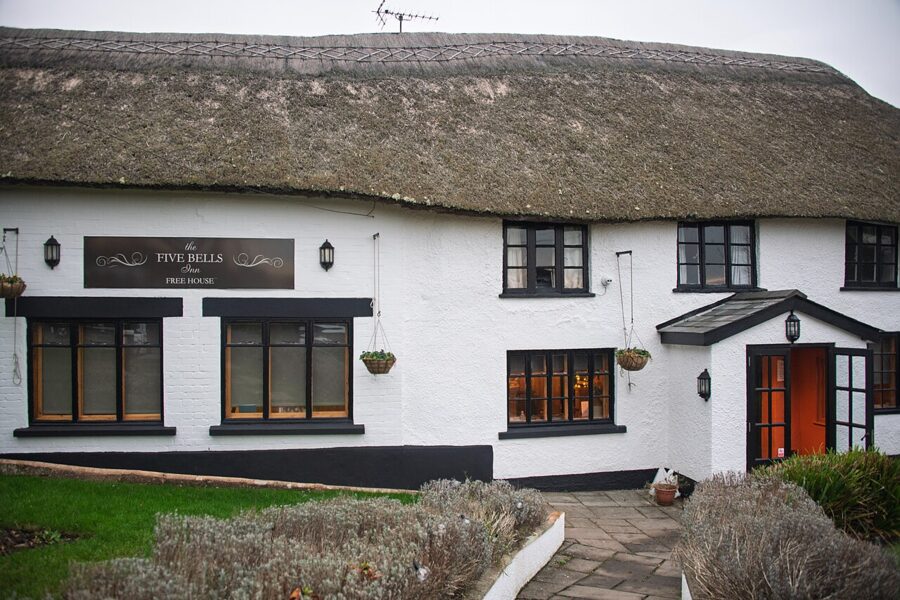
Down narrow lanes outside Clyst Hydon, the Five Bells is a big, ornately thatched pub that sat closed for some years until the village took it on as a community pub. It is a free house with local beer and cider and visiting cooks in the kitchen. It opens from 16:00 Tuesday to Friday and from noon at weekends, and is shut on Mondays.

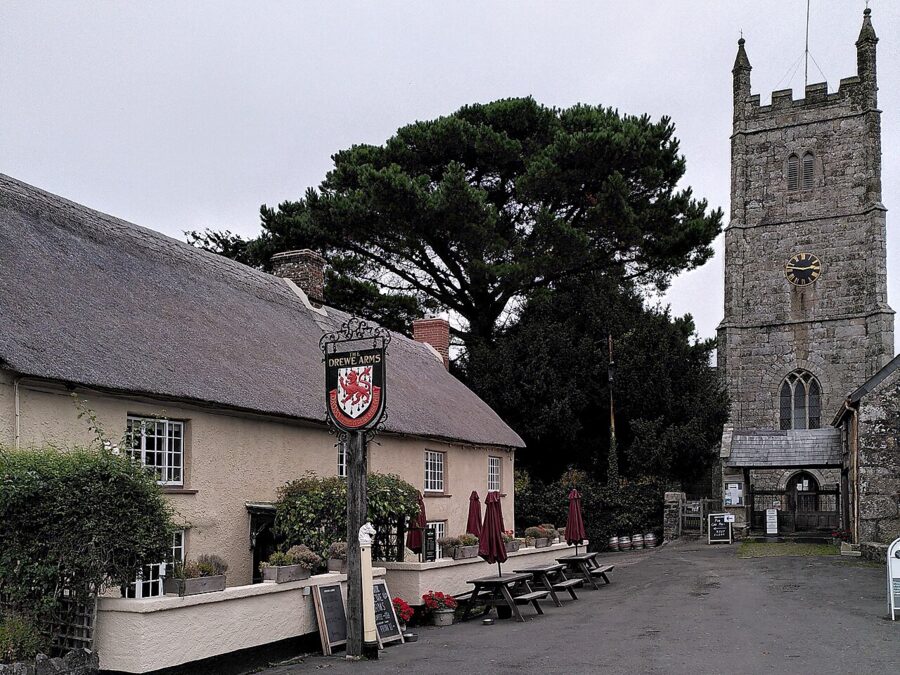
Up in the Blackdown Hills, Broadhembury is an estate village of cob and lime-washed cottages, and its Drewe Arms is a sixteenth-century thatched pub with low beams and uneven floors. Otter Bitter is the regular and Red Rock brews the Broadhembury IPA. It is closed on Mondays, with no food on Sunday evenings.
Dartmoor and its edges
The Drewe Arms, Drewsteignton
If the Bridge Inn is the best pub in Devon, the Drewe Arms is a close second, and its story is better. Mabel Mudge kept it for 75 years, from 1919 until 1994, when she retired aged 99, thought to be England’s oldest licensee. For most of that time it was part of a working farm and was called the Druid Arms. It was renamed in the 1920s at the urging of Julius Drewe, the grocery magnate building Castle Drogo down the road.

The pub closed in 2022 and the village bought it, reopening in March 2024. It has no bar counter: the casks sit on a stillage in the old cellar and you are served through a hatch into a plain room with seats round the walls. CAMRA gives the interior three stars, like the Bridge. There are rooms, a garden, and beers from Exeter and Dartmoor.
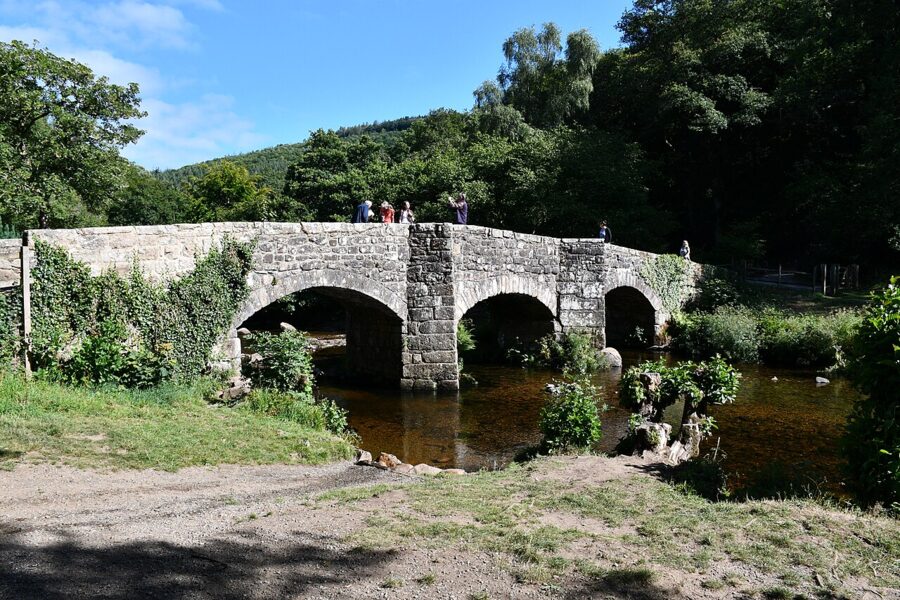
It is closed on Mondays and opens at 16:00 on Tuesdays, with food Wednesday to Saturday (12:00–14:30 and 18:00–20:30) and Sunday lunch until 16:00. Walk it off at Fingle Bridge in the Teign gorge, or at Castle Drogo.
The northern edge: Sticklepath and Spreyton
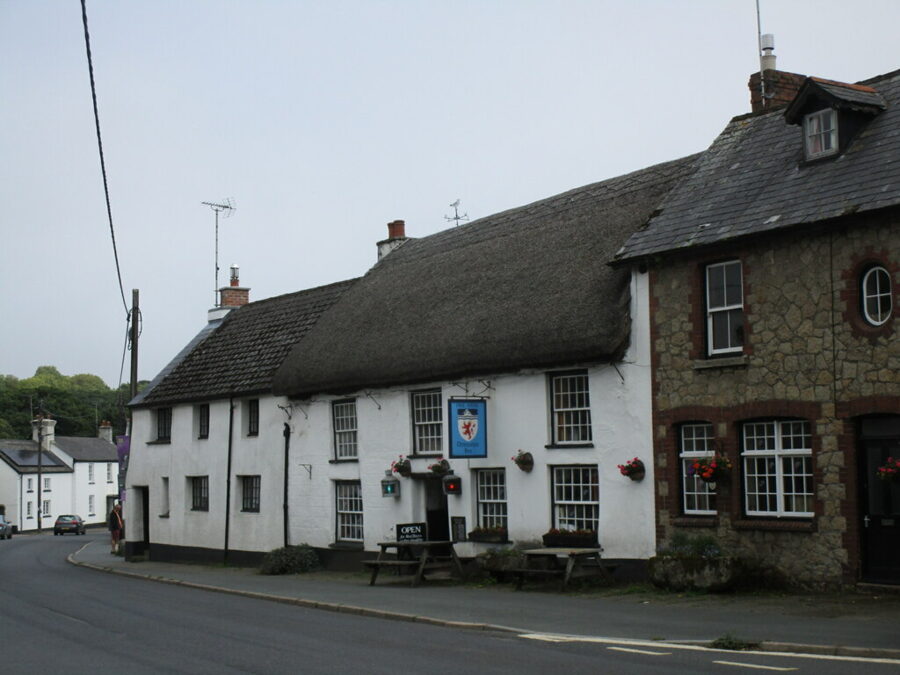
The Devonshire Inn at Sticklepath is a thatched local at the end of a row of Elizabethan cottages, with low ceilings, an open fire and casks on a stillage behind a 1950s counter. A leat runs past the back wall, cooling the beer and turning the waterwheel of the Finch Foundry next door. The hours are short: Wednesday evening, Friday and Saturday from 14:00, Sunday from noon to 17:00, and closed otherwise.

A few miles north, the Tom Cobley Tavern at Spreyton is the only pub to have won both CAMRA’s national pub of the year (2006) and its national cider pub of the year (2023), and it was the local branch’s cider pub of the year again in 2026. Expect fifteen or more West Country ciders, up to four ales in summer, good food and a bar with its own thatched roof indoors. It is closed on Mondays and opens only in the evening on Tuesdays.
The name is Uncle Tom Cobley’s, the last of the riders on Tom Pearce’s grey mare in the folk song “Widecombe Fair”. Spreyton claims the real Tom Cobley as its own, and nobody in the bar will argue.
The high moor: Warren House and Princetown
The Warren House Inn stands alone beside the B3212 between Postbridge and Moretonhampstead, at 1,425 feet, one of the highest pubs in England. It was rebuilt on this side of the road in 1845 to serve the tin miners, and tradition says one of its fires has burned ever since. There is still no mains electricity: it runs on a generator, with water from a spring.
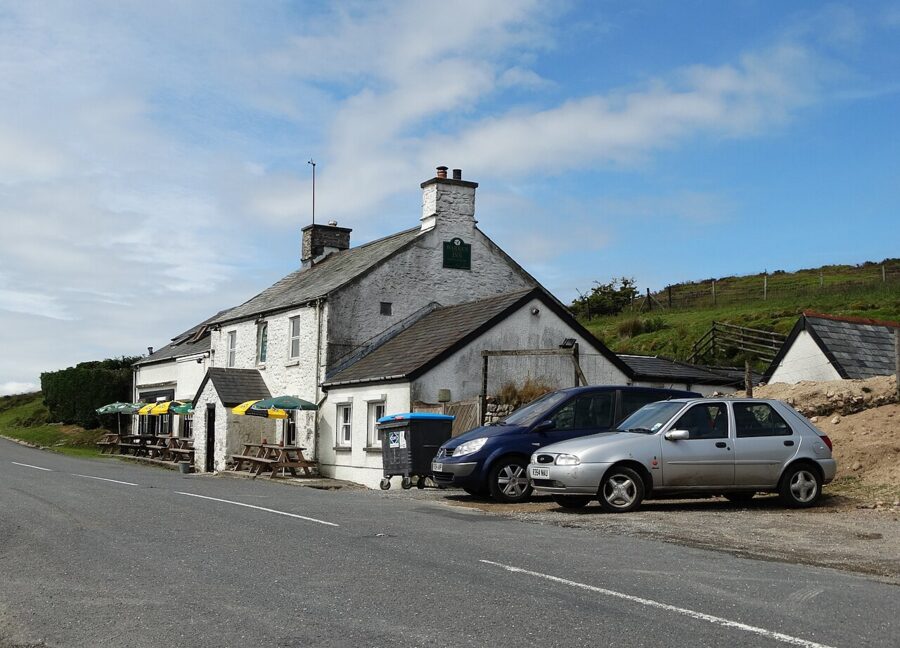

The panelled main bar is mostly a 1963 refit, with two log fires, and the food is moorland comfort: rabbit pie with shortcrust pastry, steak and ale pie, Dartmoor steaks and treacle tart. It opens daily, but closes at 16:00 Monday to Thursday, so a late lunch is the safe plan.
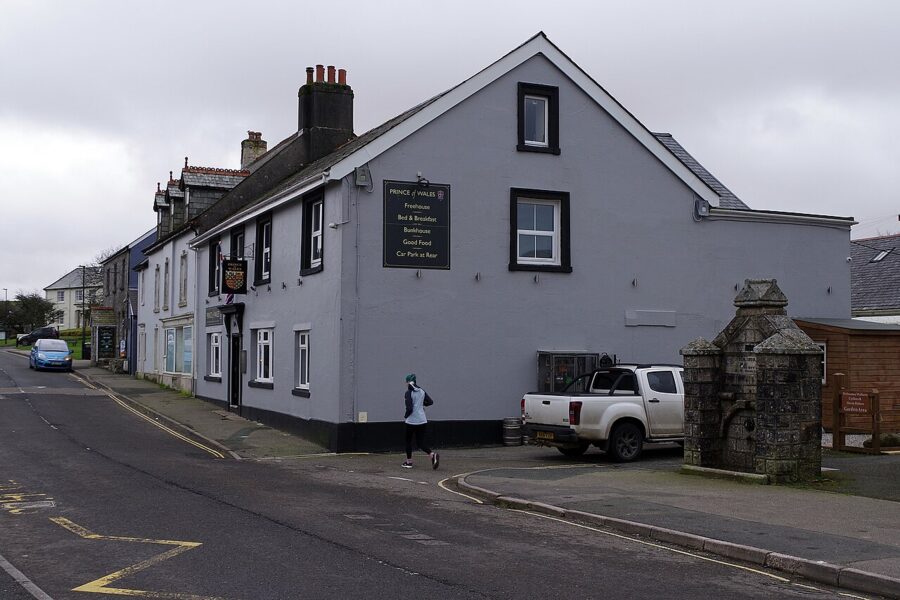
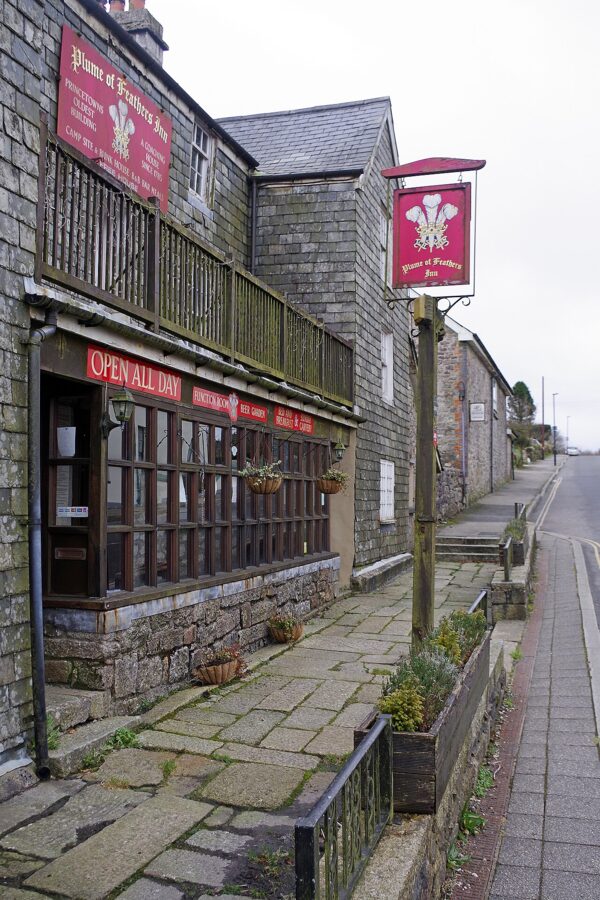
Princetown, a few miles west, is the bleak little prison town where Dartmoor Brewery lives. The Plume of Feathers, granite-walled and slate-floored at the junction of the B3212 and B3357, calls itself the oldest building in town and gives 1785; Historic England’s listing says late eighteenth or early nineteenth century. Under new management since October 2026, it pours up to three Dartmoor beers and Sandford Orchards cider, opens Wednesday to Sunday from noon, and has a bunkhouse and camping.

The Prince of Wales, down the road, is the brewery tap, open daily, with three Dartmoor beers, popular food, a few rooms and the end of the Yelverton cycle path behind it. I’d drink in the Prince and sleep at the Plume.
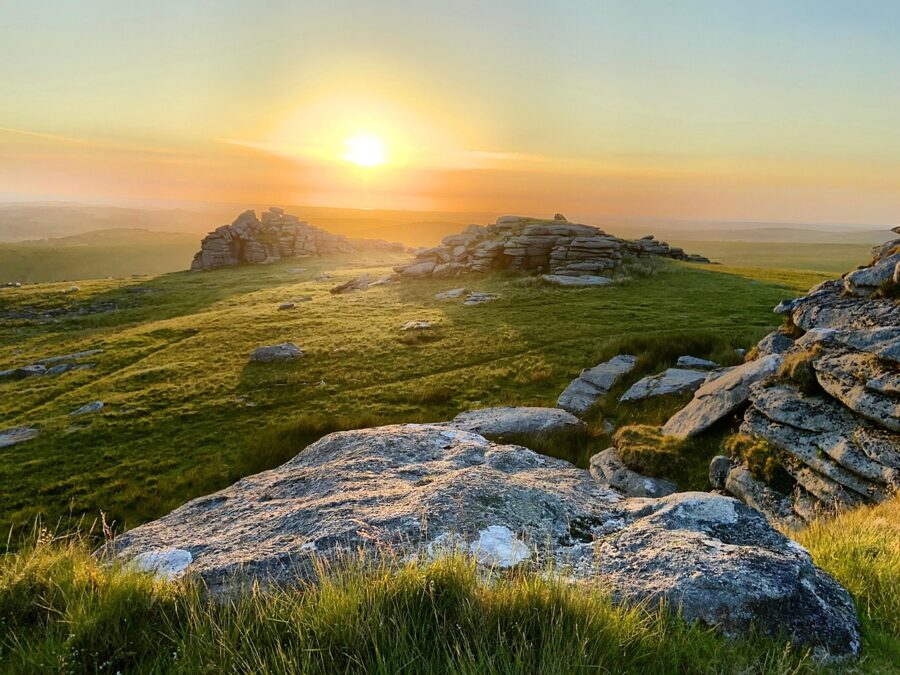
Widecombe and the eastern valleys
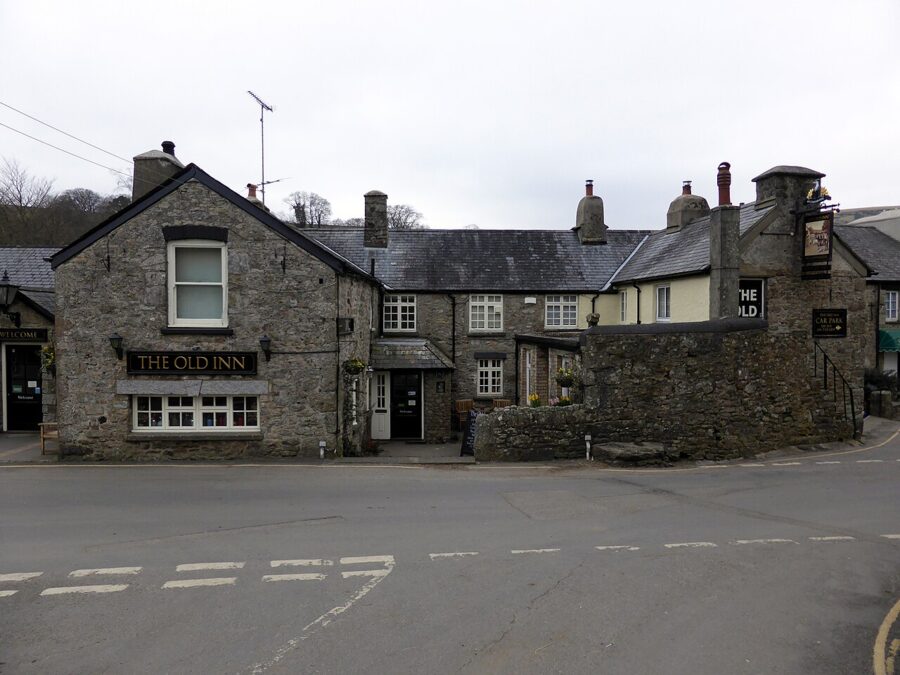
Widecombe in the Moor has the fair, on the second Tuesday in September, and the Old Inn, opposite St Pancras church. Its central part is said to have been built by the masons working on the church in the fourteenth century, and the thick walls and oak beams make that believable. It is bigger inside than it looks, with a stream in the garden.

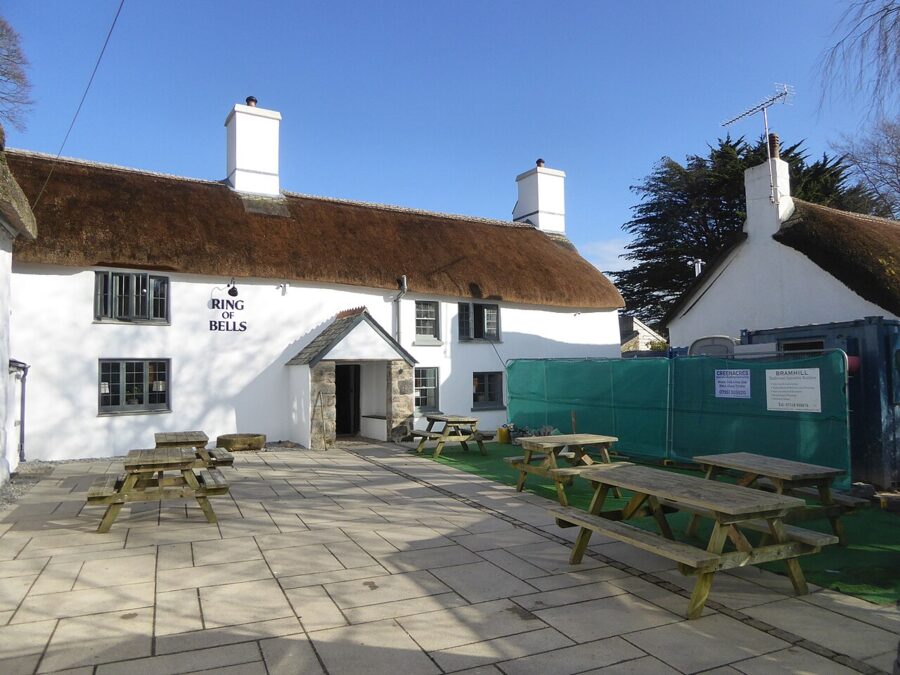
North Bovey’s Ring of Bells is a thatched inn on a tree-lined green, with a fifteenth-century arched doorway and a grandfather clock built into a wall. A fire gutted it in January 2016, and it reopened, rebuilt, in December 2017, so the thatch is newer than the stories.

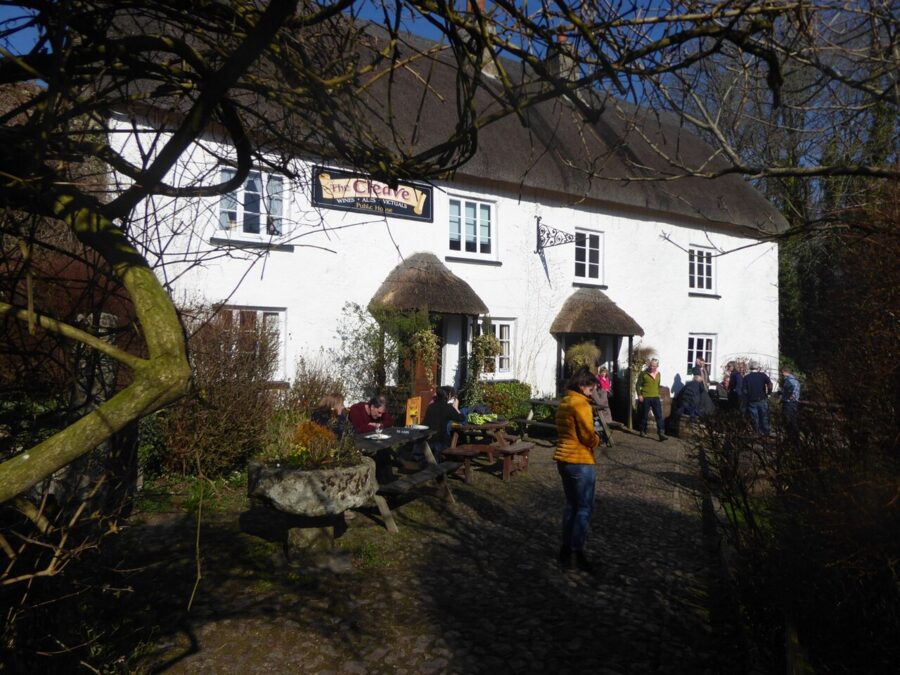
Lustleigh has the Cleave, a thatched fifteenth-century pub by the village cross, with a snug of beams and granite floor and a cottage garden. The dining room at the back is said to be the old railway station’s waiting room. New licensees arrived in December 2024; Jail Ale is the regular.

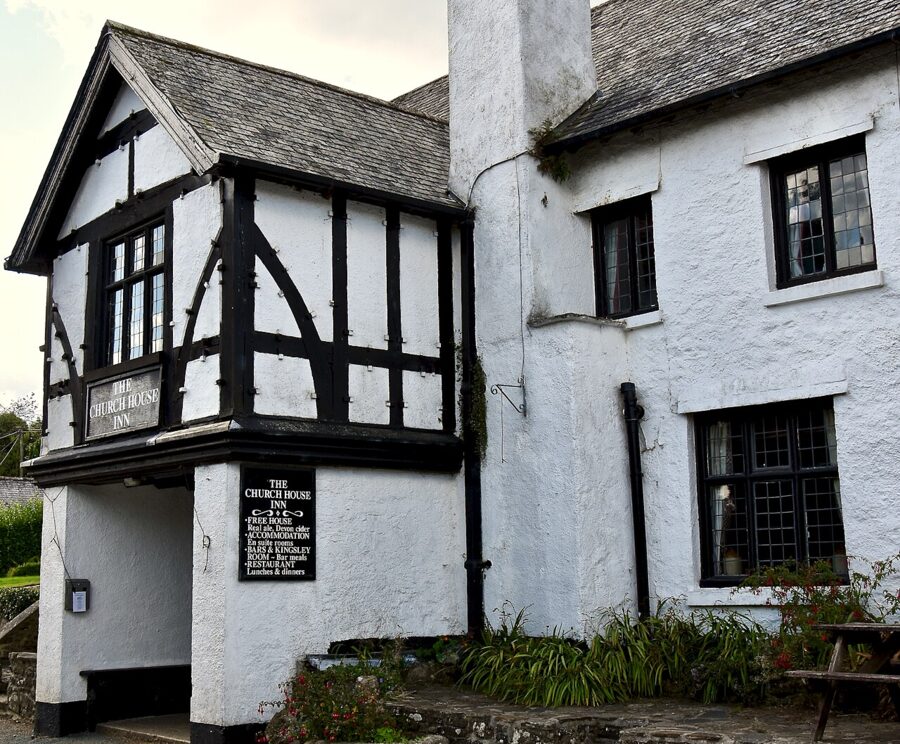
On the southern edge, the Church House Inn at Holne is said to have been built in 1329 to house the masons building the church beside it. Later it put up monks from Buckfast Abbey, and now it serves Jail Ale and Teignworthy’s Thirsty Blonde in four separate rooms, with the moor at the end of the lane.

The west side: Meavy
The Royal Oak at Meavy is a former church house of the early sixteenth century, Grade II listed, on a green between St Peter’s church and the parish hall. The parish council owns it, which is rare. Two bars face each other across a flagstoned passage: a quiet lounge for food and a lively public bar with a vast inglenook. Up to four ales and three ciders are on, often with a beer from Tavistock.
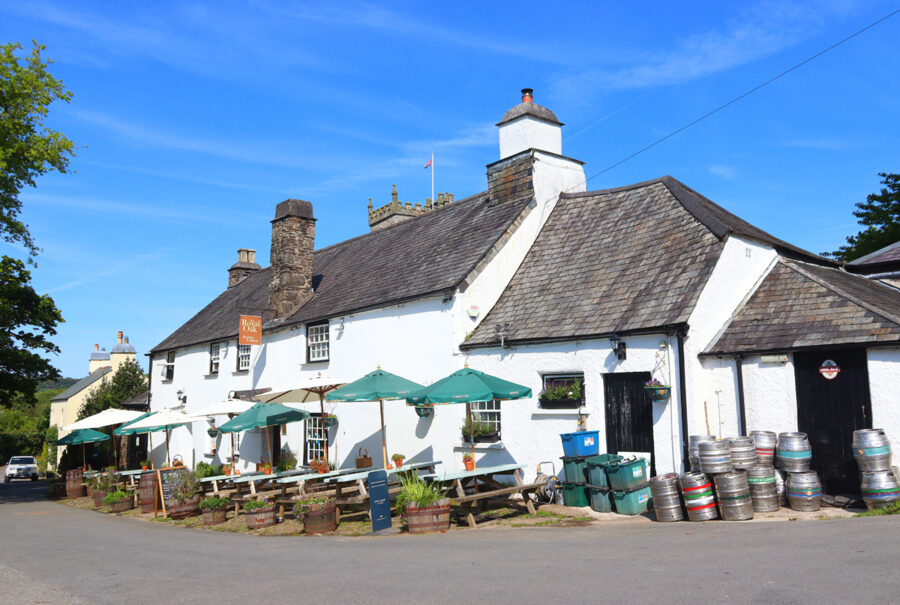

It is closed on Mondays and open only at lunchtime on Tuesdays. Otherwise food is 11:30 to 14:00 and 17:30 to 20:15, and on Sundays from noon until 17:00; book by phone. Burrator reservoir, a mile or so up the road, is the walk before.
The Teign valley: Doddiscombsleigh and Trusham
East of the moor, in the hills above the Teign, the NoBody Inn at Doddiscombsleigh has been a tavern since 1837 and served as the parish’s unofficial church house from the early 1600s. It is old beams and antique furniture, with over 240 whiskies, 150 wines, five bedrooms and a menu that changes daily. The staff have heard every joke about the name.
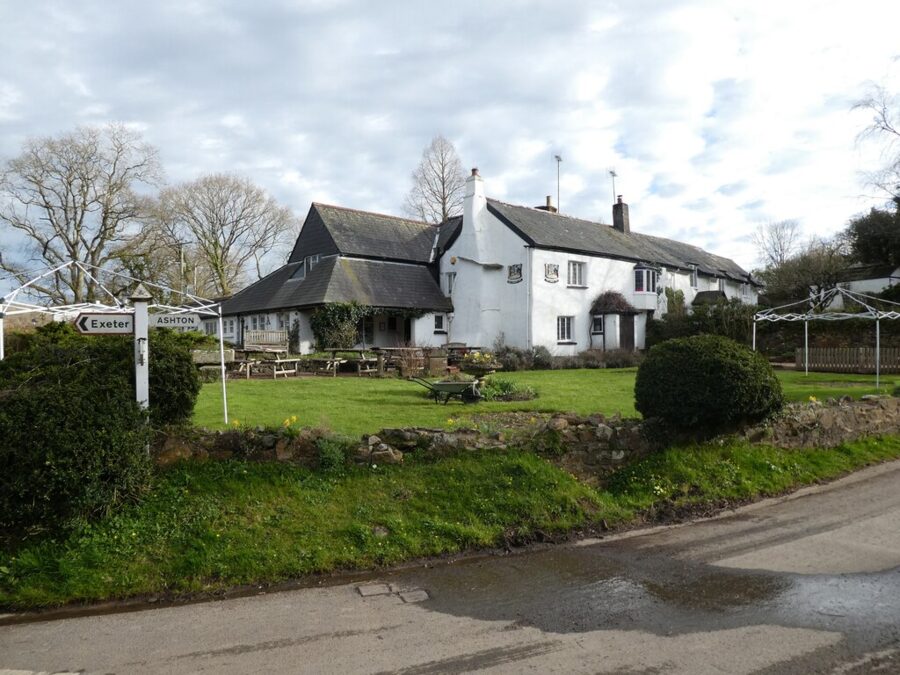

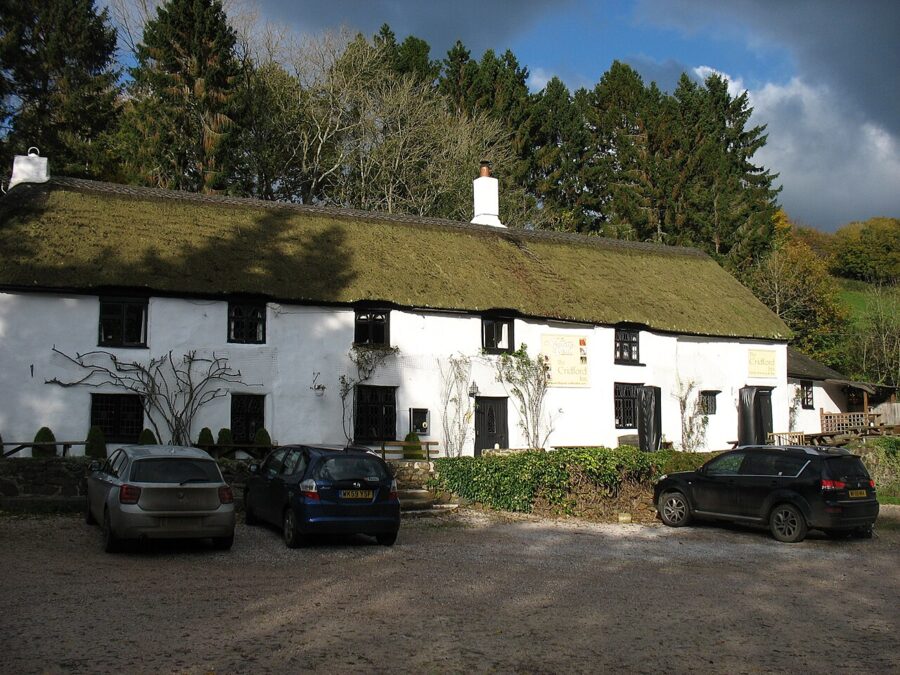
The Cridford Inn at Trusham is the place to sharpen your eye for the real and the made-up. It was a farmhouse until 1982, when it became a pub, though researchers say a Devon longhouse stood on the site in the ninth century and was rebuilt in the thirteenth. It is a lovely building on three levels, but the age is in the stones, not the bar.

Totnes and the Dart
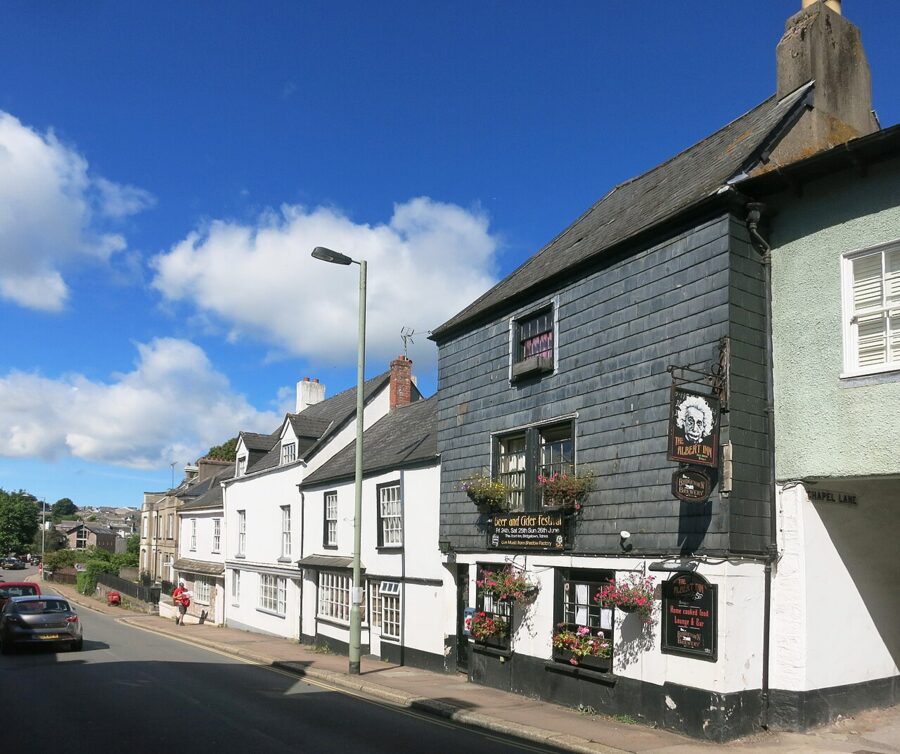
Totnes station starts the best pub walk in South Devon. Cross the bridge over the Dart into Bridgetown, and a hundred yards on is the Albert Inn, an old-school community pub with pub teams, music and four beer and cider festivals a year. It is the tap for the separate Bridgetown Brewery, whose Albert Ale and Cheeky Blonde are always on.

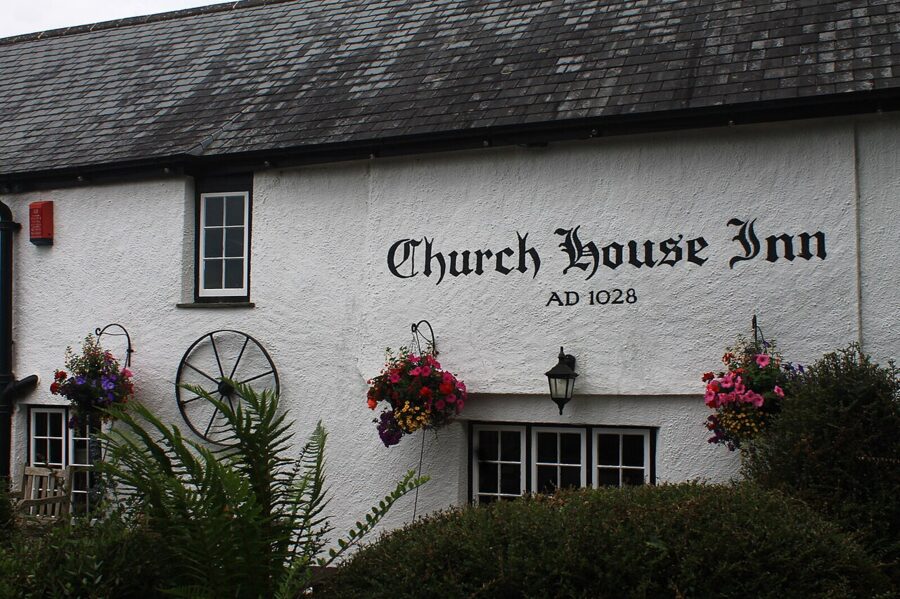
West of Totnes, just off the A38, the Church House Inn at Rattery is a Grade II church house that the listing dates to the sixteenth century. Expect Jail Ale, another Dartmoor beer and a guest, Bulkamore cider made a mile away, and wood-fired pizza at weekends, weather permitting.

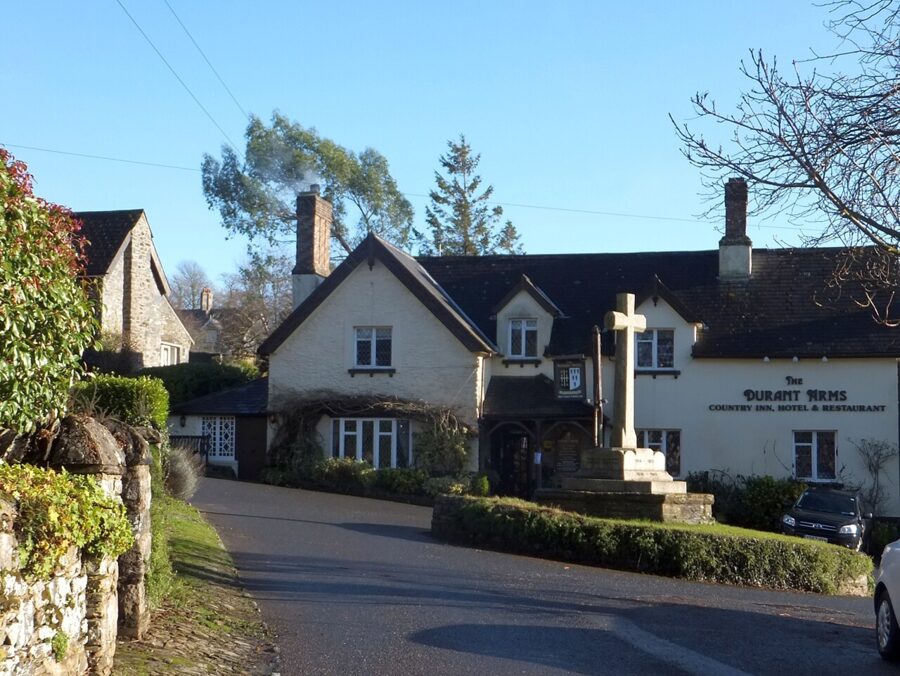
Three miles from Totnes on the Dart Valley Trail, the Durant Arms in Ashprington is a small, family-run eighteenth-century inn, part of the Sharpham estate until 1940. Its name dates from about 1922, after Richard Durant, the lord of the manor, did up the village. It was the South Devon CAMRA branch’s pub of the year in 2024 and 2026, with Otter and Dartmoor beers. It opens on bank holiday Mondays and closes the day after.

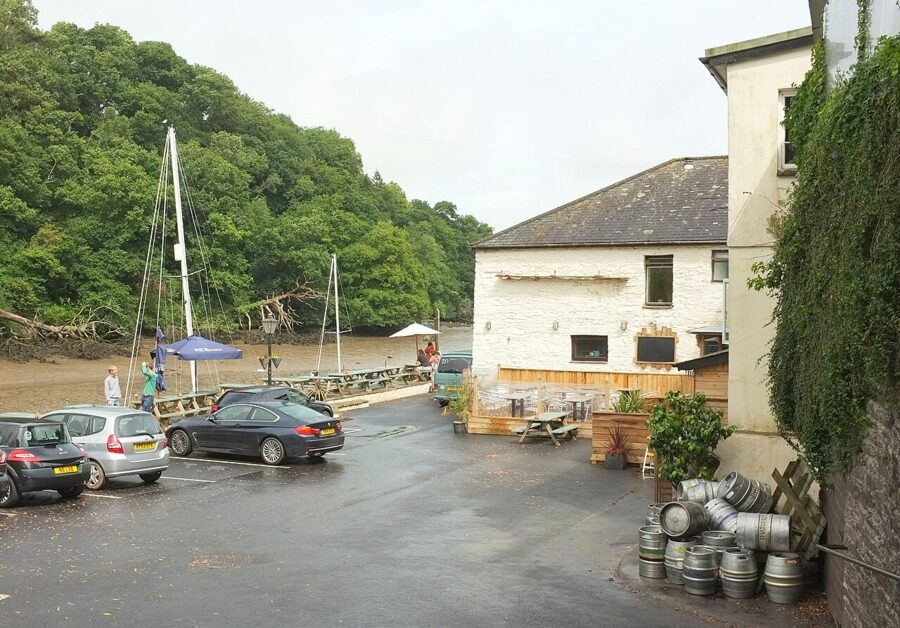
Carry on down the lane to Tuckenhay and the Maltsters Arms on Bow Creek, an eighteenth-century riverside pub once owned by the television cook Keith Floyd. It is a fish restaurant with a good West Country pub attached and tables by the water. It closes from 4 to 20 January 2027.

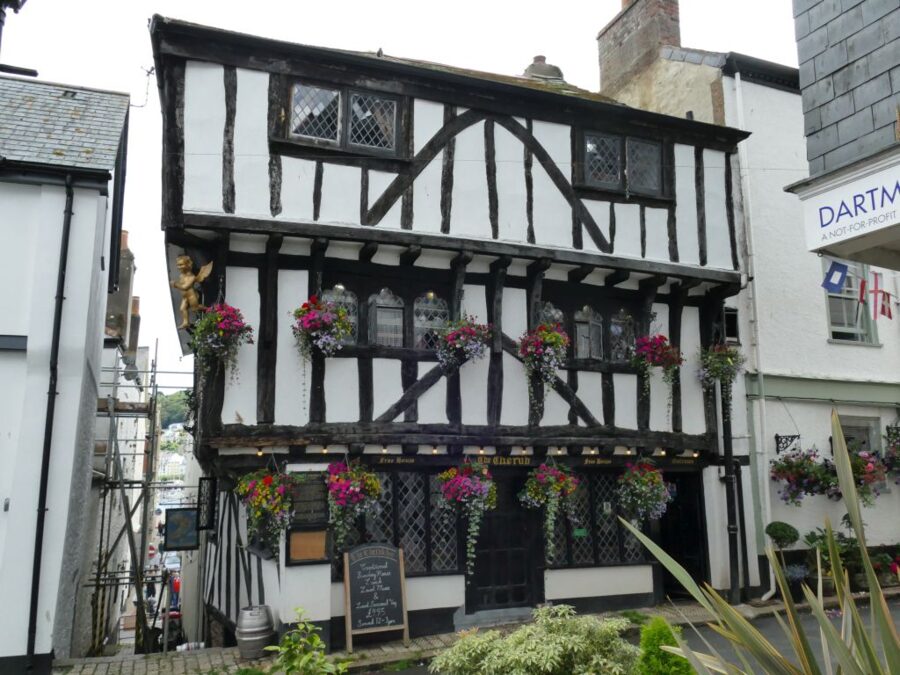
Dartmouth, at the river mouth, has the Cherub on Higher Street, built around 1380 as a merchant’s house and claimed as the oldest building in town. It is timber-framed and jettied over the street, with beams said to be ship’s timbers, six handpumps and a spiral staircase to the dining rooms. It only became a pub and restaurant in the 1970s, after a spell as a private members’ club.

The South Hams coast and Plymouth
The South Hams pubs work with the tide. The Millbrook Inn at South Pool sits at the head of a tidal creek off the Kingsbridge estuary, and in summer much of its trade is walkers and boaters. It is a seventeenth-century pub with ducks on the stream by the back terrace and meat from its own farm. Winter hours are shorter, so check before you drive down the lanes.
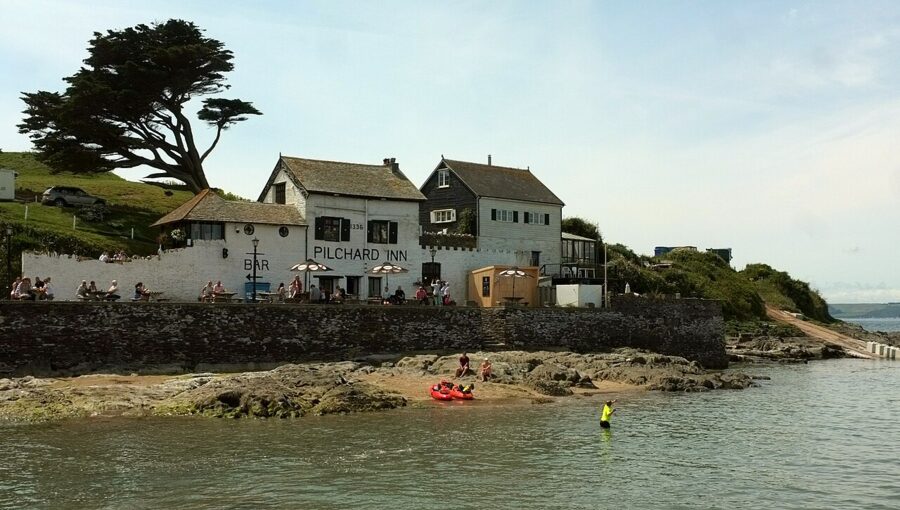
The Pilchard Inn is on Burgh Island, off Bigbury-on-Sea, reached across the sand at low tide or by sea tractor at high. It says it has been pouring since 1336. The main bar is kept for hotel guests and regulars; visitors use the Slipway Bar, with up to two ales and food from 12:00 to 21:00. Check the tides, unless you fancy a night on the island.

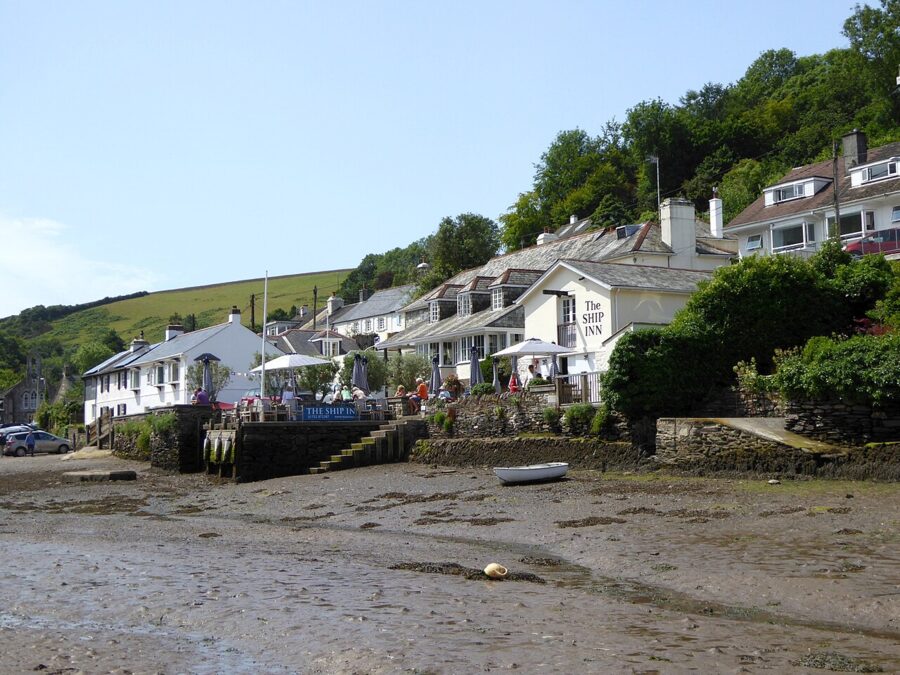
West again, the Ship Inn at Noss Mayo stands on a creek of the Yealm, split over two levels, with four ales and food all day until 21:00. It is the start or finish of the walk round Lord Revelstoke’s Drive, a carriage road along the cliffs. There are no buses in the evening or on Sundays, and sailors should ring ahead about the tide.

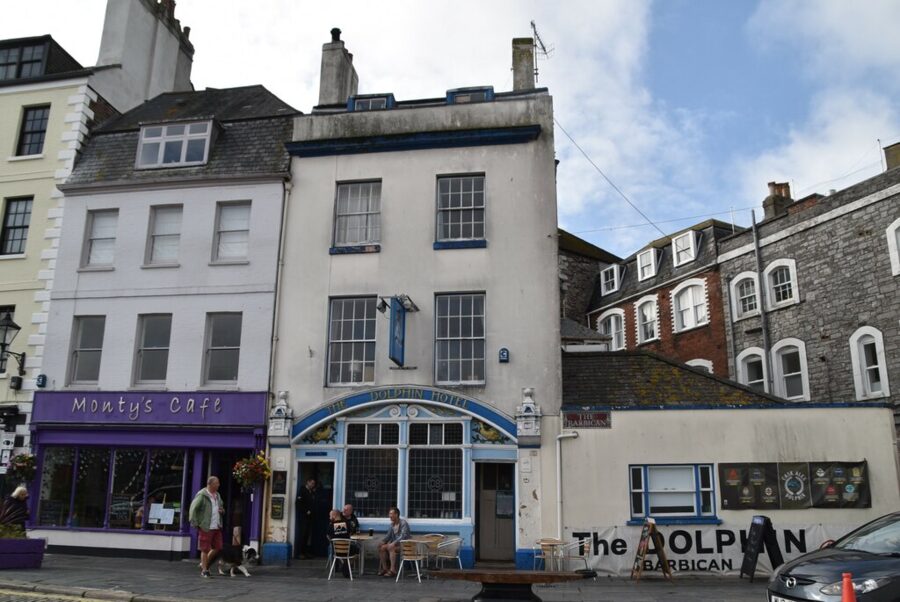
Plymouth is a naval city looking across the Tamar to Cornwall, and its two essential pubs are five minutes apart. The Dolphin on the Barbican is the one I would cross the city for: one plain room with tiled floor, benches, a real fire, up to eight beers by gravity, and Draught Bass beside Jail Ale. The walls are hung with Beryl Cook’s paintings of the people she drank with here. There is no food, but you may bring in your own fish and chips.

The Minerva on Looe Street was built before the Armada as a pair of merchants’ houses and is recognised as the oldest pub in Plymouth, though nobody knows when it started serving. Its spiral staircase is said to be made from the mast of a captured Spanish galleon, and I would love that to be true. St Austell’s Tribute is the regular, with three guests and live music from Thursday to Sunday.
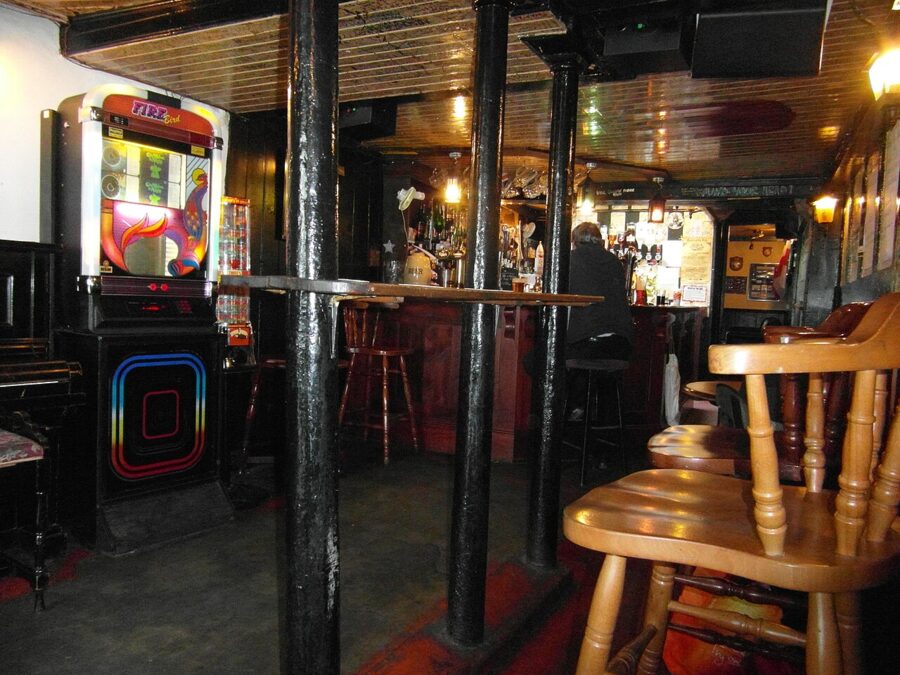

North Devon and the edge of Exmoor
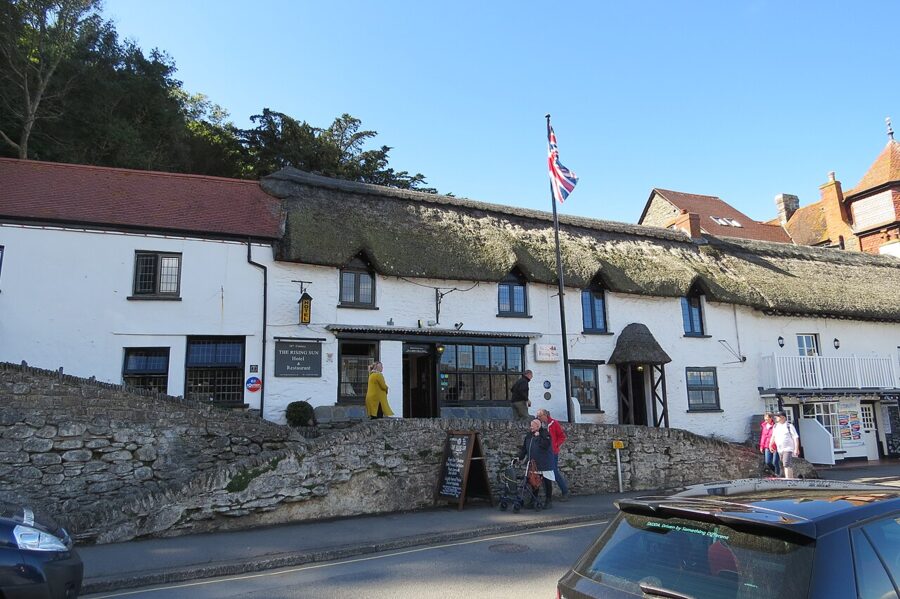
Lynmouth sits at the foot of a gorge where two rivers meet the sea, with Exmoor rising behind it and running on into Somerset. The Rising Sun, on the harbour, is a thatched fourteenth-century inn of crooked stairs, narrow passages and sloping floors, and R.D. Blackmore is said to have written part of Lorna Doone while staying here. It keeps four real ales all year, cooks local fish and Exmoor game, and has sixteen rooms.

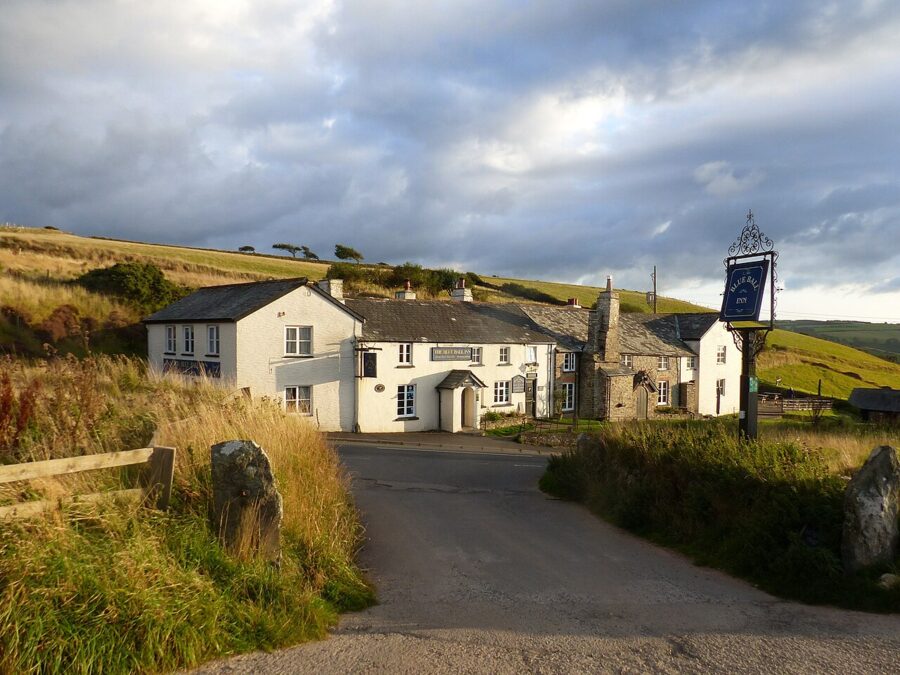
Up the A39, the Blue Ball Inn at Countisbury is the walkers’ pub, all blackened beams and stone fireplaces on the old coaching road between Porlock and Lynmouth. It claims the thirteenth century and is now owned by St Austell. Food runs all day, except 15:00 to 18:00 in winter, and there are rooms. The coast path up from Lynmouth is a steep mile and a half or so, and the pint at the top is earned.

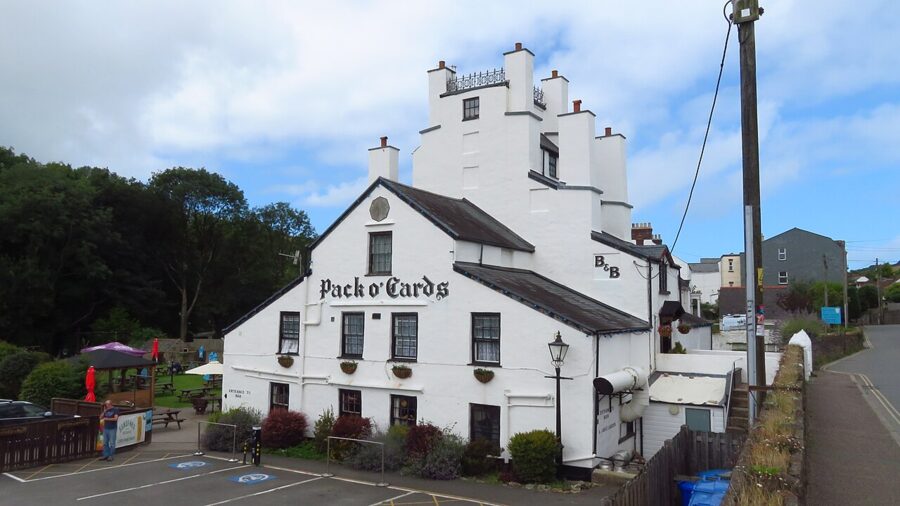
Combe Martin’s Pack o’ Cards is a folly, and makes no secret of it. The story is that George Ley built it after a big win at cards in 1690, with four floors for the suits, thirteen rooms for the cards in a suit and fifty-two windows. The building is more likely early eighteenth century, and its sundial carries 1752 and his initials. It became an inn, the King’s Arms, around 1822, and took its present name in 1933.

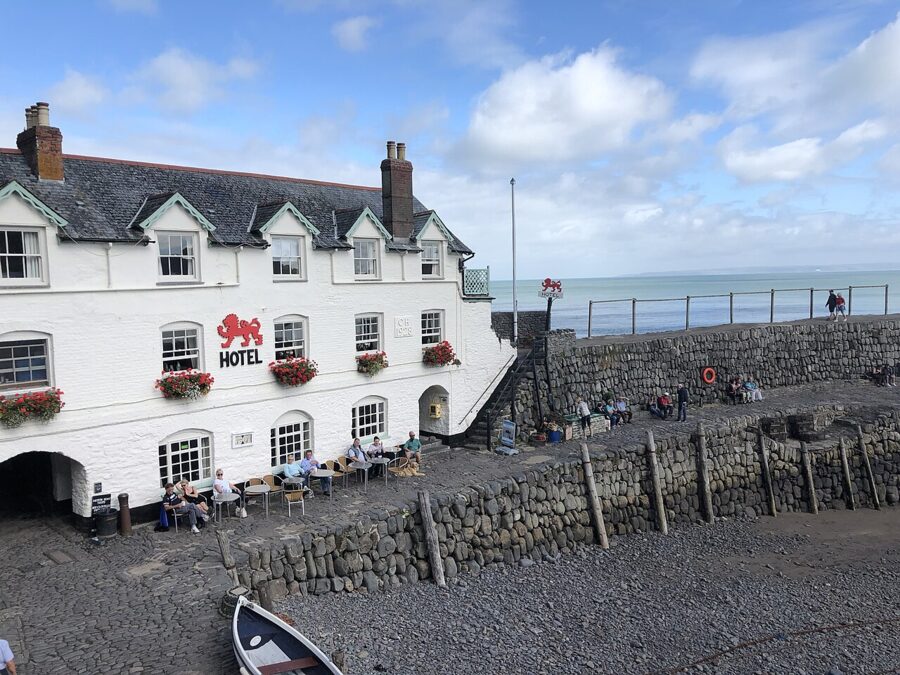
Clovelly is a privately owned, car-free village of cobbled steps down to a harbour, entered through the visitor centre at the top, where you pay. The Red Lion, at the very bottom by the harbour wall, is an eighteenth-century inn with two bars, seventeen rooms and a seafood restaurant. Have a drink on the quay, and remember that the only way back is up.

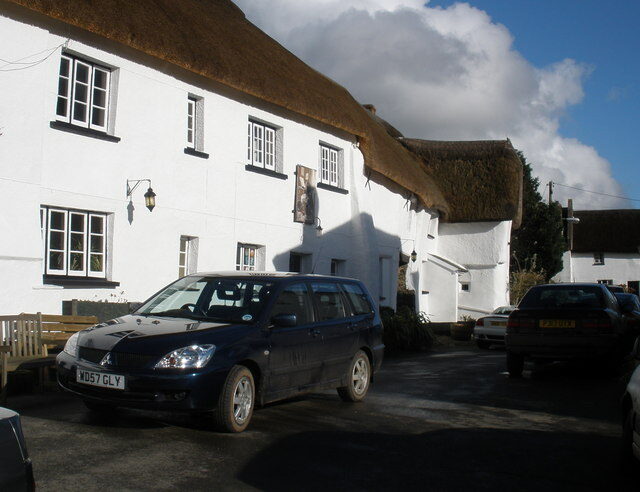
Inland, near the Torridge, the Duke of York at Iddesleigh is a fifteenth-century thatched inn made from four cottages built for the craftsmen rebuilding the church. The public bar has a stone fireplace with a bread oven and a ceiling left undecorated for sixty years, now the colour of strong tea. Ales are on gravity, the cider is Sam’s from nearby, portions are big and there are seven rooms. Michael Morpurgo is said to have found the beginnings of War Horse talking to old soldiers by this fire.

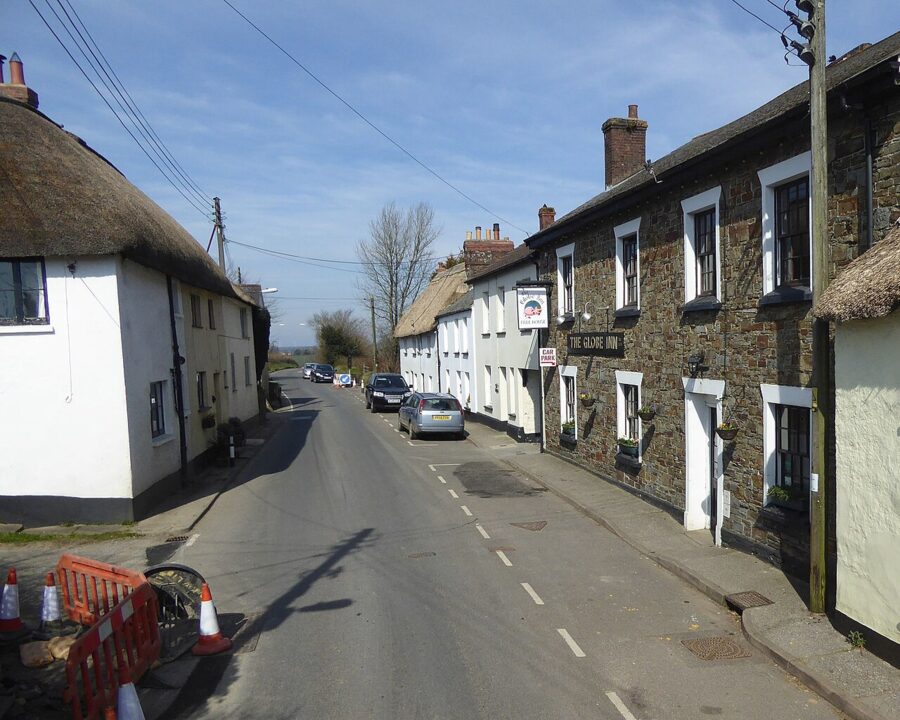
A few miles east, the Globe Inn at Beaford was North Devon CAMRA’s village pub of the year in 2026. It is a cosy country inn with three changing local ales, craft kegs from the likes of Verdant and Bristol Beer Factory, and seasonal food.

Devon’s “oldest” pubs, and what to believe
Devon has plenty of pubs with big dates on the board, and most are dates for the building rather than the bar. The Pilchard gives 1336; the Cherub was built around 1380; the Old Inn at Widecombe and the Church House at Holne both claim church-building masons of the fourteenth century. Each may be true of the stones. Whether anyone was selling beer there in the 1300s is another matter.
The Church House at Rattery shows the gap: the pub has long claimed 1028, and the listing calls it a sixteenth-century church house. The Cridford is the clearest case, with very old fabric and a pub only since 1982. The Minerva in Plymouth makes the most careful claim, oldest in the city with no date for the first pint, and that restraint is why I believe it. Most claims to be among the oldest pubs in England come apart the same way.
For real age, look at the interior rather than the date: the Bridge Inn and the Drewe Arms have rooms that have barely changed in a century, which is rarer than a beam from 1336.
Four days out, with the trains
The Exe on foot
Start at the Prospect on Exeter Quay and follow the canal south on the National Cycle Network route 2 signs. The Double Locks comes up after a couple of miles and is open all year. In season, carry on past Countess Wear and across Exminster Marshes to the Turf at the end of the canal; out of season, turn back at the Double Locks and walk to Marsh Barton station.
Topsham by train
Take the Exmouth line from Exeter St David’s or Central to Topsham. Arrive for noon at the Bridge Inn, then walk down through the town to the Passage House and the Lighter for the afternoon.
Over the moor
There is no sensible way round the high moor without a car or great patience with the buses, so bring a driver who doesn’t drink. Lunch in Princetown, take the B3212 north-east to the Warren House before 16:00 on a weekday, then cut south to Widecombe or carry on to North Bovey and Lustleigh. For the north side, take the Dartmoor Line train to Okehampton, a taxi ride from Sticklepath and Spreyton.
Totnes and the Dart
From Totnes station, walk over the bridge to the Albert Inn, then follow the Dart Valley Trail to the Durant Arms at Ashprington and on to the Maltsters at Tuckenhay. In summer the river boats run between Totnes and Dartmouth, which is the best way to reach the Cherub; sailings follow the tide, so check first.
Practical notes: hours, food, rooms and dogs
Mondays are the problem. The Drewe Arms at Drewsteignton, the Tom Cobley, the Royal Oak at Meavy, the Five Bells, the Fountain Head, the Prospect and the Drewe Arms at Broadhembury are all closed on Mondays, and the Plume of Feathers on Tuesdays as well. Several more open only in the evening on Tuesdays, and the Turf is shut all winter.
Country kitchens stop early: lunch commonly ends at 14:00 or 14:30, evening food at 20:00 or 20:30, and Sunday food is often lunch only. The Bridge Inn serves lunch only, and the Dolphin and the Olde Cider Bar do no proper meals. Book at weekends anywhere that cooks, and on the coast all summer.
Rooms are easy to find: the Globe in Topsham, the Masons Arms, the NoBody Inn, the Rising Sun, the Blue Ball, the Red Lion and the Duke of York all have them, and both Princetown pubs have bunkhouses. Dogs are welcome in the bars of nearly every pub here. The Turf, Clovelly and Burgh Island are on foot for the last stretch.
Whatever else you do, end at the Bridge. Get there for 17:30 when it reopens, ask at the parlour door for the day’s beer menu, order a third of something from a Devon brewery you have never heard of, and take it into the tap room. Topsham station is 400 metres away.