
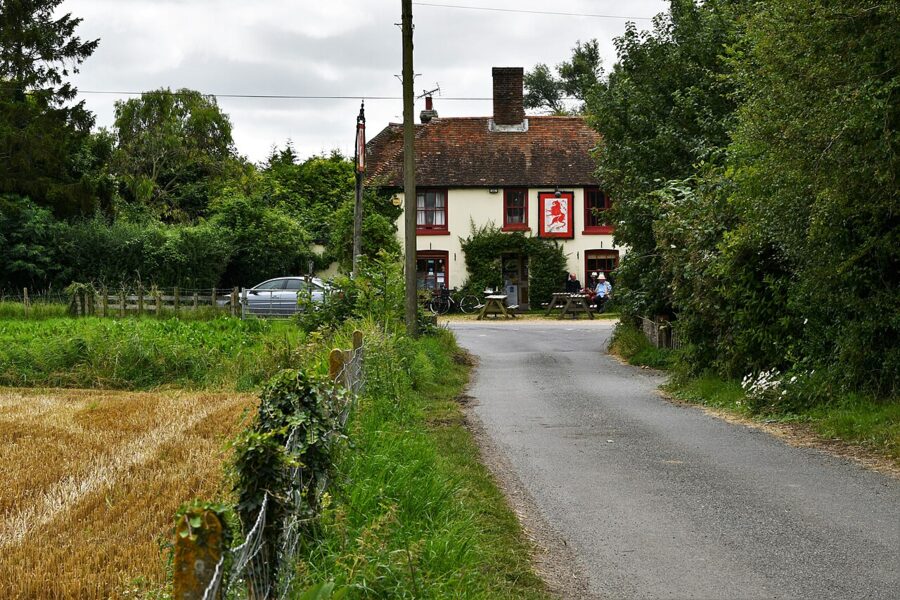
The four handpumps on the bar of the Red Lion at Snargate were made around 1870, sit in a pewter housing on a white marble counter, and have not pulled a pint in about ninety years. Every beer in the place comes straight from a cask behind the bar. The Jemison family has kept the pub since 1911, and although Doris Jemison handed it to the next generation in 2016, half of Romney Marsh still calls it Doris’s.
That is Kent at its best: a county that has had every chance to modernise its pubs and, here and there, simply declined. It is also the county that was England’s hop garden, that still has the brewer claiming to be Britain’s oldest, and that invented the micropub in a former butcher’s shop in Herne in 2005. You can drink in a fourteenth-century hall house in Canterbury at lunchtime and in a former shop on Margate seafront by teatime.

What Kent does best is the plain country pub with beer from the barrel, and the small, talkative town bar where nobody plays music. This guide goes area by area, with the stations you need and the days the pubs shut.


On this page
- What Kent drinks
- The micropub started here
- Canterbury and Fordwich
- Faversham and the creeks
- Whitstable and Seasalter
- Thanet: Margate, Broadstairs and Ramsgate
- Deal and the white cliffs
- Romney Marsh and Dungeness
- The Weald: oasts, orchards and the Halfway House
- Rochester and the Medway towns
- Four days out, with the stations
- Before you go
What Kent drinks
Go into any village pub east of Maidstone and the odds are that the pump clips say Shepherd Neame. Go west, towards Tonbridge and Tunbridge Wells, and you are as likely to find Harvey’s from Lewes, Larkins from Chiddingstone and Tonbridge Brewery’s beers. Between the two runs a scatter of small breweries whose beers fill the changing pumps.
Shepherd Neame and Faversham
Shepherd Neame says it was founded in 1698 and calls itself Britain’s oldest brewer. The company’s own history puts brewing on the Faversham site back to at least 1573, which is the more interesting date, and it is still independent and family run. It brews around 180,000 barrels a year and owns a large share of the county’s pubs, so a Kent pub crawl is often a Shepherd Neame crawl whether you planned one or not.

The beers to know are Master Brew, the session bitter, Spitfire, Bishops Finger and Whitstable Bay Pale Ale. In a Shep’s house I don’t know, I order Master Brew: it is the one the cellar turns over fastest. The brewery says it typically uses around 85 per cent Kentish hops across its ales, which matters to the county’s remaining hop growers.
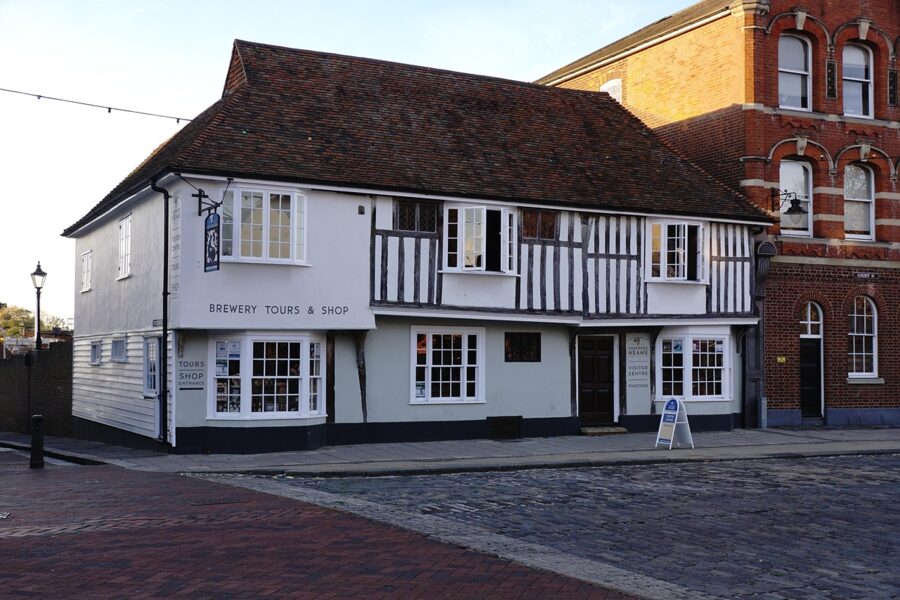
The visitor centre is in a restored medieval hall house on Court Street, and guided tours finish there with a tutored tasting. Outside the Hop Festival weekend, tours are for adults only. Book ahead; the groups are small.
Hops and oast houses
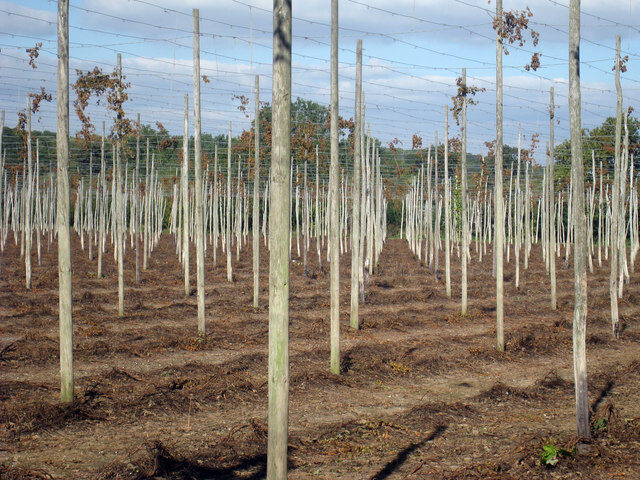
Kent’s pubs are full of dried hop bines hung over the bar, and the reason is all around them. The Fuggle, the hop behind a great many English bitters, was found growing wild in a garden at Horsmonden in 1861 and put on the market in 1875 by Richard Fuggle of Brenchley, the village the Halfway House stands just outside. The Goldings family of hops grew out of the old Canterbury Whitebine, selected by a Mr Golding in the 1790s, and East Kent Goldings is still the most prized name in English hops.
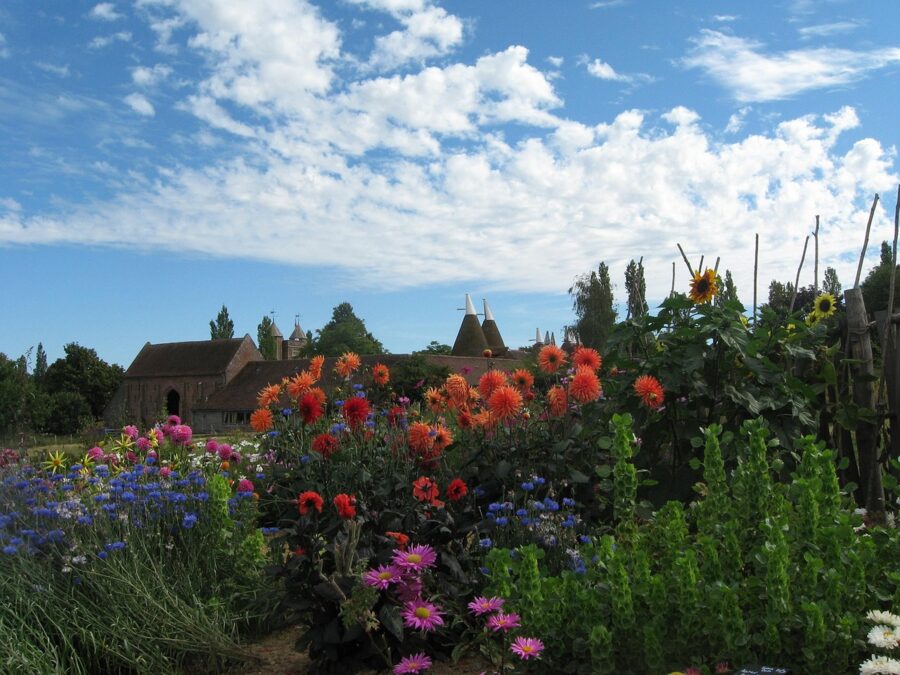
The oast houses that dried those hops are the county’s signature buildings. The round kilns with conical roofs and white cowls date from the nineteenth century; square ones came back into fashion late in that century. Once picking was mechanised most oasts fell idle, and nearly all are houses now. You see them from the train all the way between Tonbridge and Ashford.
Faversham holds a Hop Festival every September, and that weekend is the one time the brewery tours are open to children as well.

The rest of the bar, and the cider
Goacher’s in Maidstone brews the house beer at the Three Chimneys and turns up across the county. Tonbridge Brewery supplies house beers to half the Weald, Kent Brewery’s Session Pale and Quiet American are on bars at Hollowshore and in Deal, and Gadds’ No. 5 from Ramsgate is the regular bitter at the Butchers Arms in Herne. Canterbury Ales, Wantsum and Iron Pier fill a lot of the changing pumps.
Kent makes cider too, and it is drier and lighter than the West Country stuff you may know from Devon. Biddenden’s dry cider is on the bar at the Three Chimneys, the Handsome Sam and the Man of Kent in Rochester, Turners appears at the Hopbine, and Dudda’s Tun and Kentish Pip are common guests. Ask what’s on: most micropubs keep a box or two in the cool room.
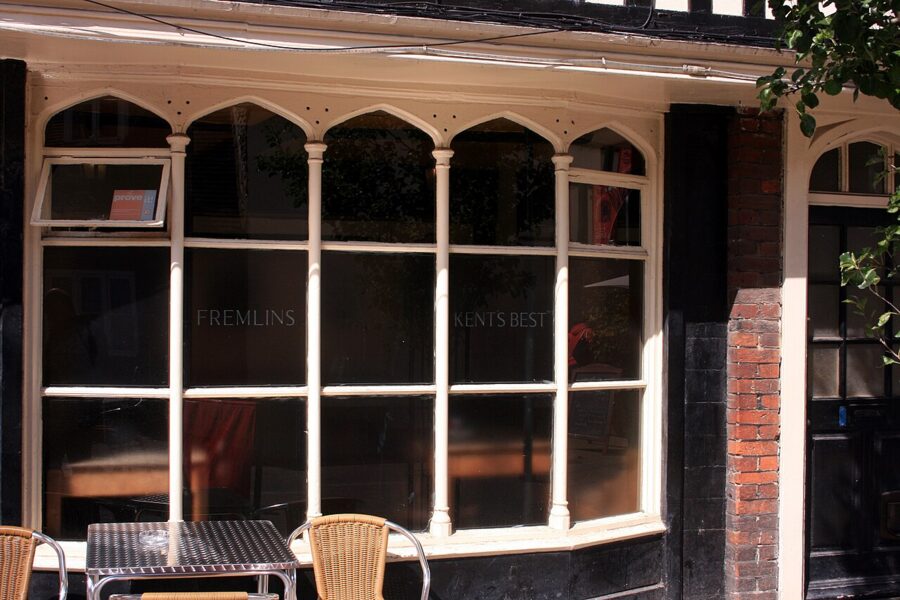
The county also lost a great many breweries in the twentieth century, and their names survive in glass. Fremlins of Maidstone and Tomson & Wotton of Ramsgate both disappeared into Whitbread, and you can still read their etched windows in Canterbury and Deal. Look up before you go in.
The micropub started here
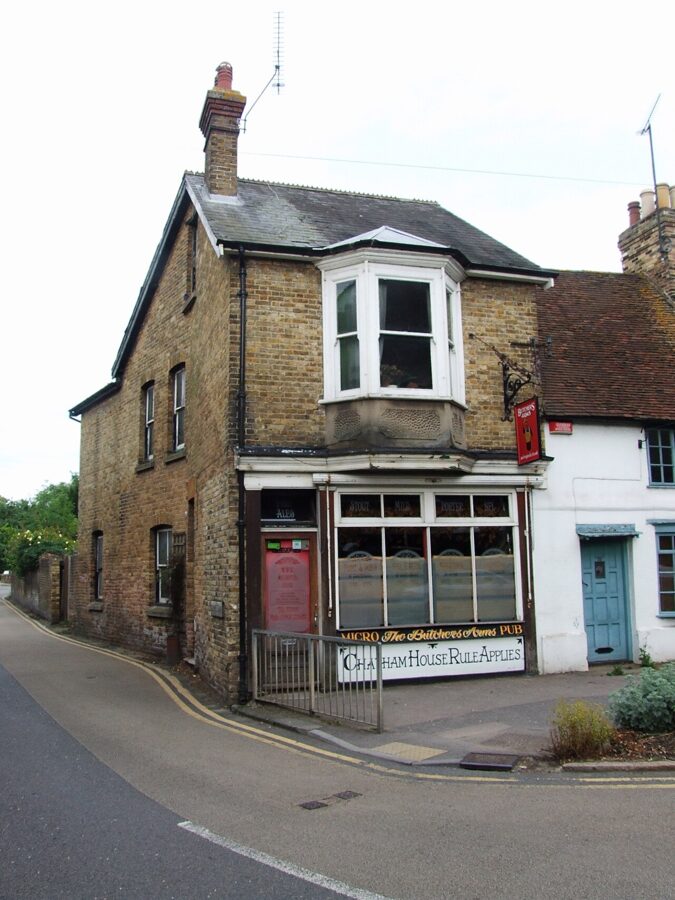
On 24 November 2005 the Licensing Act 2003 came into force, and the same day Martyn Hillier opened the Butchers Arms on Herne Street in Herne, in a former butcher’s shop where he had been selling beer to take away. The new law made it far harder for rival pubs to object to a licence. The result was a room about three metres by four, beer poured from casks in a cold room at the back, no music, no fruit machine, and conversation as the only entertainment.


Hillier pushed the idea at CAMRA’s national meeting in 2009, and CAMRA named him its Campaigner of the Year in 2015. By 2012 there were eleven micropubs; there are now close to a thousand across Britain. Thanet alone could keep you busy for a weekend.
The Butchers Arms itself changed hands in May 2026, when Hillier retired and one of his regulars took it on, promising to keep it as it is and open longer. It seats twelve, with standing room for about fifteen more, and the butcher’s chopping tables and hooks are still there. It takes cash only, and there is no cashpoint nearby. The hours published by the local CAMRA branch are 18:00–21:00 Wednesday to Friday and 12:00–15:00 at weekends, but the new owner has promised more, so check the pub’s own page before you go.
The rules of a micropub are simple and mostly unwritten. You talk to whoever is next to you, phones stay in pockets, and the beer list is on a board, not on the pumps. If any of that sounds alarming, read up on pub etiquette first; nobody will mind if you ask what everything is.
Canterbury and Fordwich
Canterbury is a good drinking city because it is small: every pub below is within a twenty-minute walk of the others. Start at Canterbury West station, a few doors from two of the best.
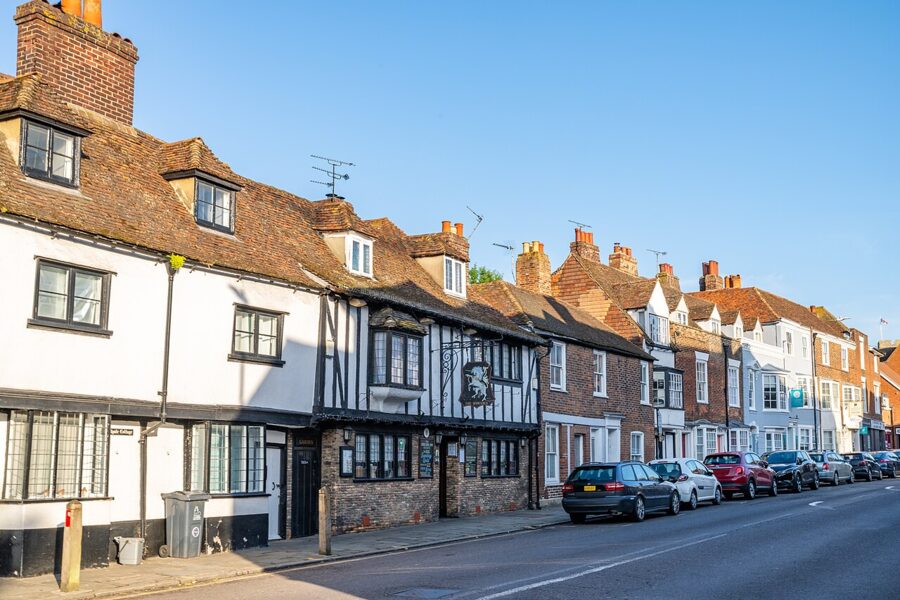
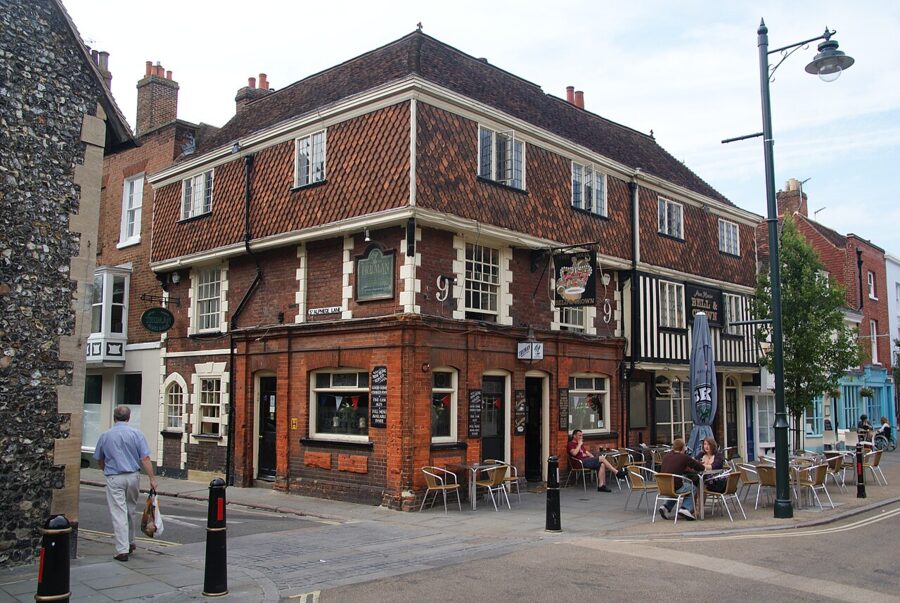
The Unicorn on St Dunstan’s Street dates from 1604, and CAMRA rates its interior one star on the National Inventory. Look closely and the timbering on the front is an interwar job, possibly from when the Maidstone brewers Leney and then Fremlins took it over in the 1920s, and so is the panelling inside. It is a proper local, with bar billiards at the back, a garden that catches the sun, and a real cider among the five handpumps.

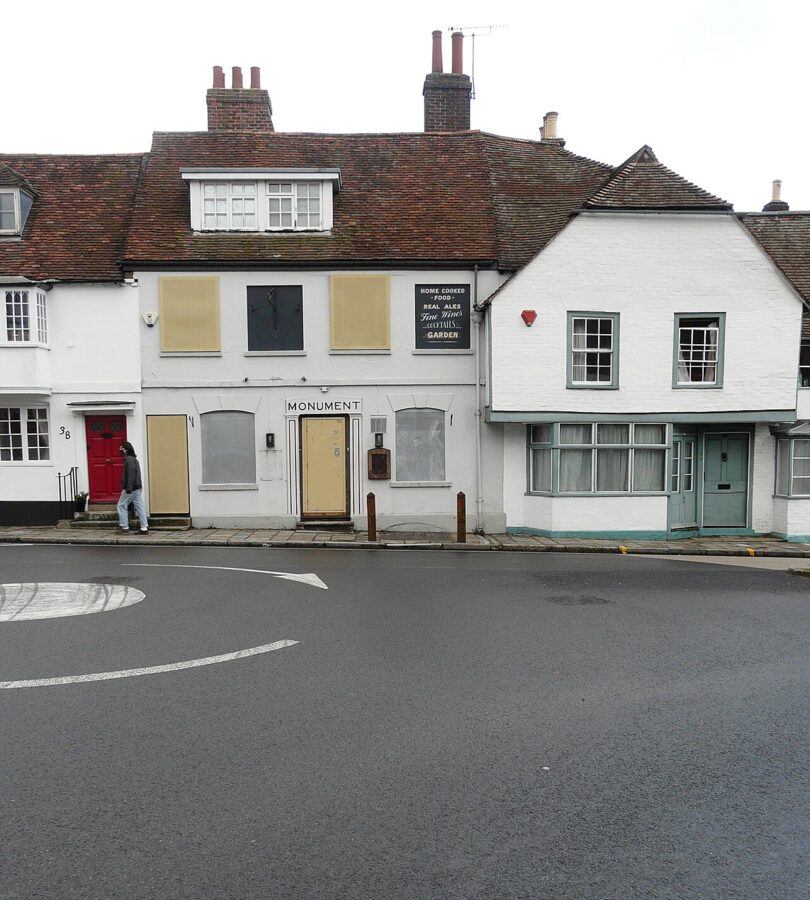
Further along, the Monument has been a pub since 1803 in a building about two centuries older, named after a wooden crucifix that once stood at the crossroads to greet pilgrims. There is a pianist on Thursday evenings and Sunday afternoons and a quiz on Mondays that you need to book for. It opens at 16:00 on most weekdays.

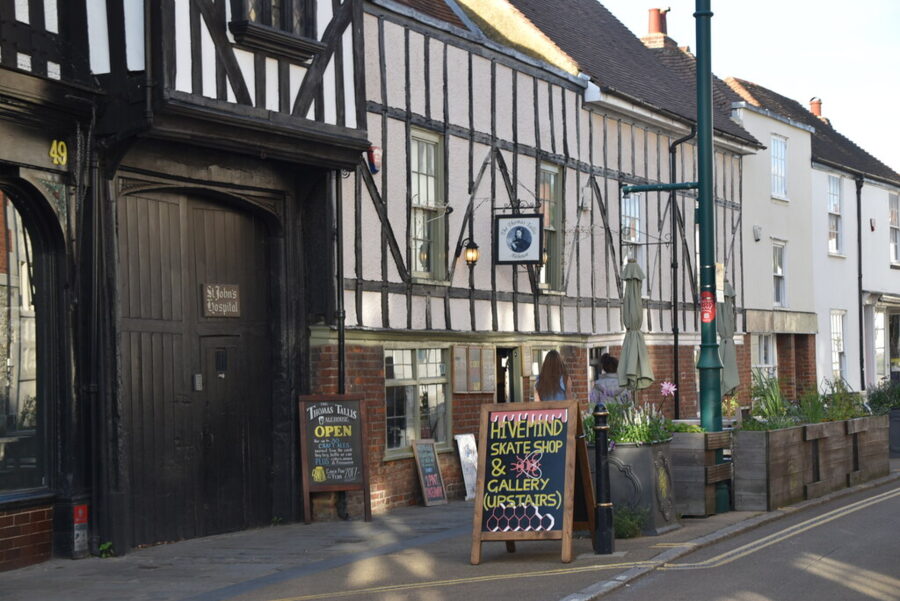
Inside the walls, the Thomas Tallis Alehouse on Northgate is my pick for the beer. It occupies a fifteenth-century half-timbered building that belongs to the Hospital of St John, opened in 2016, and pours two or three Kent cask beers by gravity alongside a big range of keg and cans. It takes cards only, opens from 17:00 Tuesday to Thursday, earlier at weekends, and shuts on Mondays.

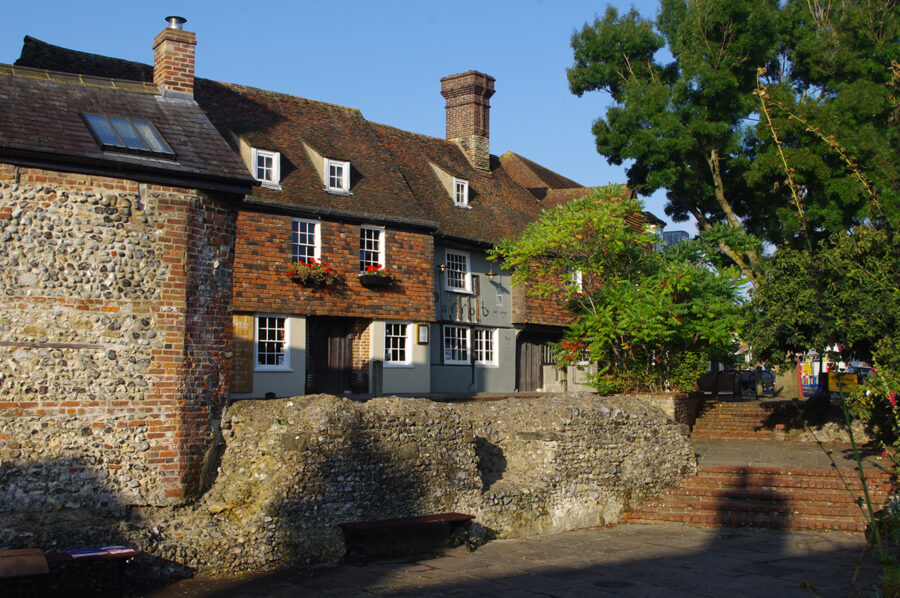
The Parrot on Church Lane is the one with the “oldest pub in Canterbury” claim, and it deserves a careful reading. The building is a fourteenth-century timber-framed hall house with parts of the Roman city wall in front, which is genuinely old.
The pub in it is young by comparison: it traded as Simple Simon’s before it became the Parrot, and CAMRA lists it as an outstanding conversion rather than a survivor.
It is a Shepherd Neame house with three open fires, flagstones, and a fine roof over the upstairs dining room; children are welcome in the bar until 18:00. On old-pub claims generally, see the oldest pubs in England.

For the view, take your pint to the benches outside the Bell & Crown on Palace Street, which look straight at the cathedral, with the flint walls of the King’s School opposite. Inside it is a wood-panelled city pub with a famous jukebox, food at lunchtime only, and a changing range from Canterbury Ales, Hop Fuzz and Tonbridge.


Fordwich
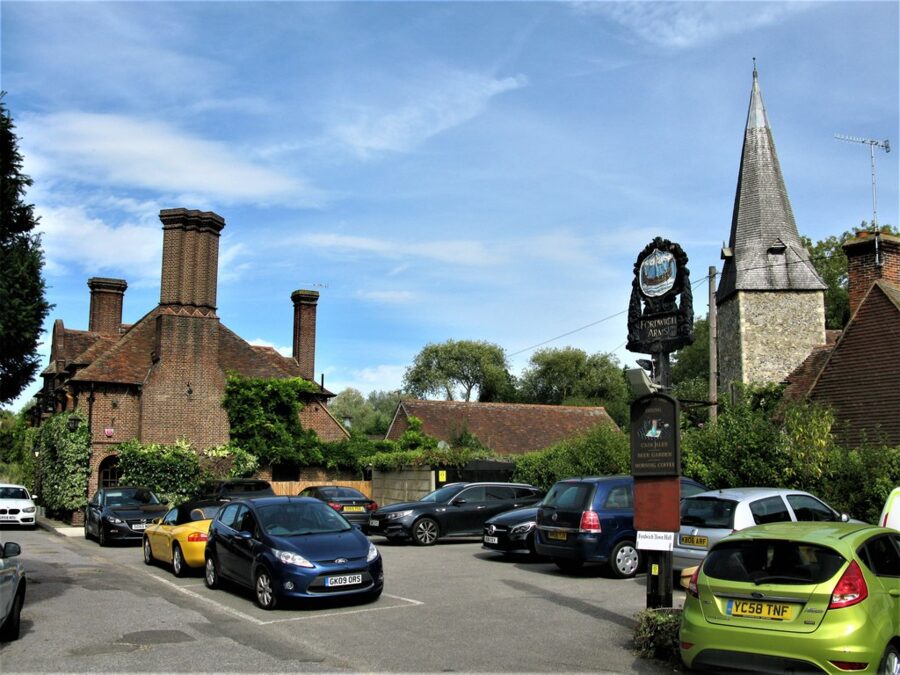
Two miles north-east, Fordwich claims to be England’s smallest town, and has two pubs on the river. The Fordwich Arms is a handsome 1930s brick pub opposite the old town hall, and CAMRA gives its interior two stars for the panelled dining room, the three original fireplaces and the brass penny-in-the-slot locks on the toilet doors. It won a Michelin star within nine months of becoming a restaurant pub in 2018, so the dining room needs booking, but the bar still pours a Canterbury Ales beer at pub prices. It is closed on Mondays.

The George & Dragon across the road is a big, comfortable Brunning & Price pub with a sheltered garden by the water and mostly Kentish guest beers; it is the easier walk-in. Sturry station is a ten-minute walk away, or follow the Stour Valley Walk back into Canterbury.
Faversham and the creeks
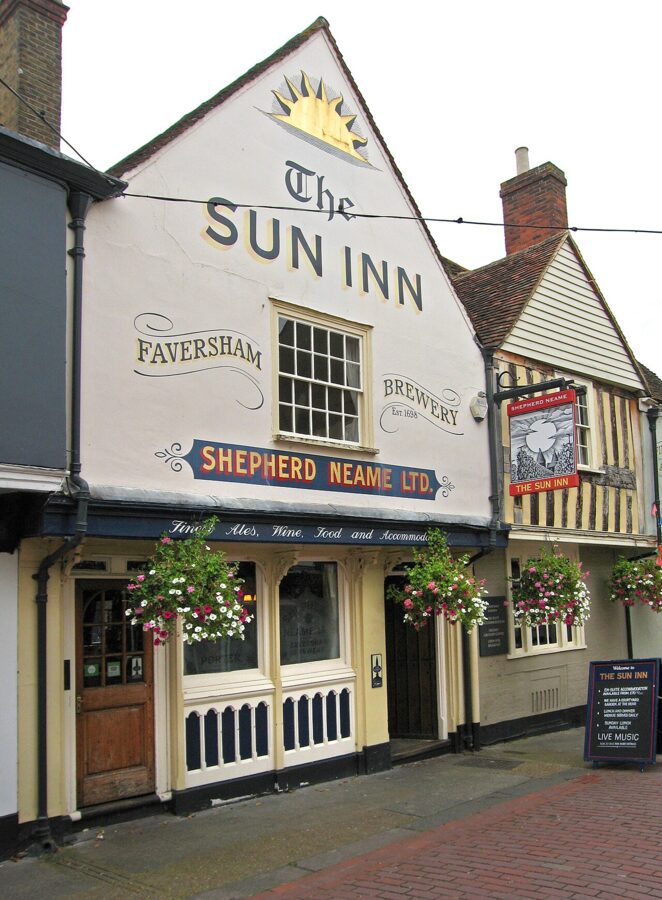
Faversham is the town to give a whole day to: the brewery, a dozen pubs within walking distance of the station, and the marshes beyond. Start at the Sun Inn on West Street, a fourteenth-century inn with inglenook fireplaces, oak beams and a courtyard garden, run by Shepherd Neame itself. It does breakfast from 08:30, food at lunch and from 18:00 to 21:00, and has rooms upstairs. It is a five-minute walk from the station.

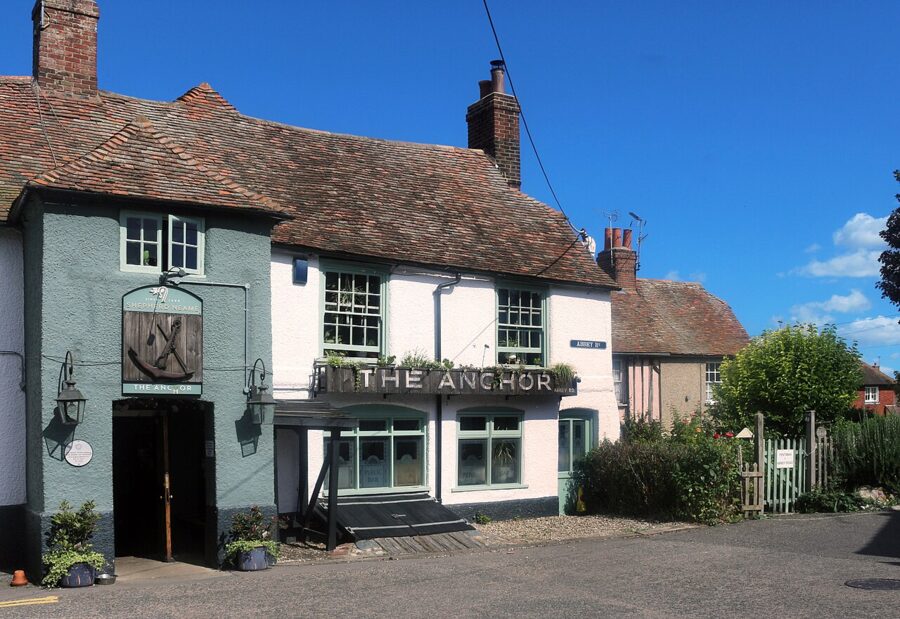
Walk down Abbey Street, one of the finest streets of old houses in the county, to the Anchor by the creek. A plaque says it has offered hospitality for at least three hundred years, and the nautical clutter inside agrees. It is a Shepherd Neame house with a large garden and live music on Sunday evenings; it shuts on Mondays and serves food from Wednesday to Sunday.

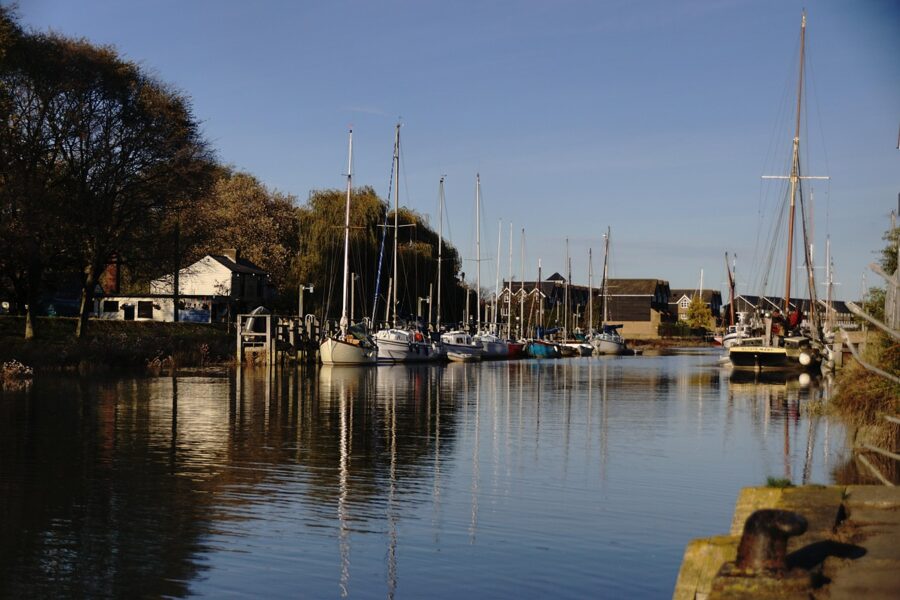
From the Anchor, the Saxon Shore Way follows the creek out across the grazing marsh to the Shipwrights Arms at Hollowshore, about forty-five minutes on foot. It is a weatherboarded free house around three hundred years old, standing alone where Faversham and Oare creeks meet, with boats hauled out next door and bat and trap in the garden. Kent Brewery’s beers are the regulars.
It is shut on Mondays and Tuesdays. On Wednesdays and Thursdays the food is soup and sandwiches, with a full menu Friday to Sunday, and in bad winter weather it is worth phoning before you set off.
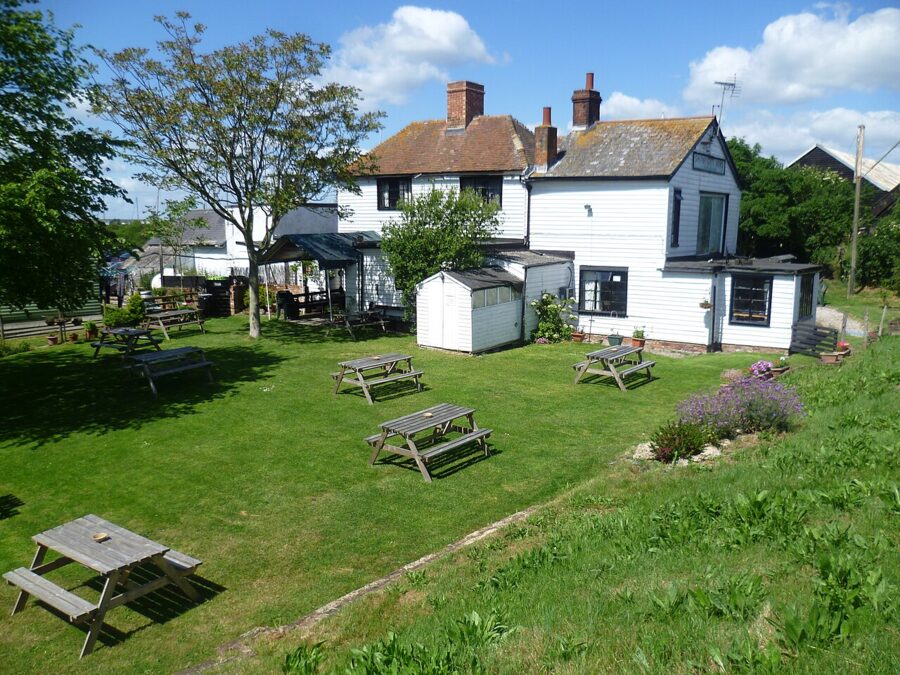

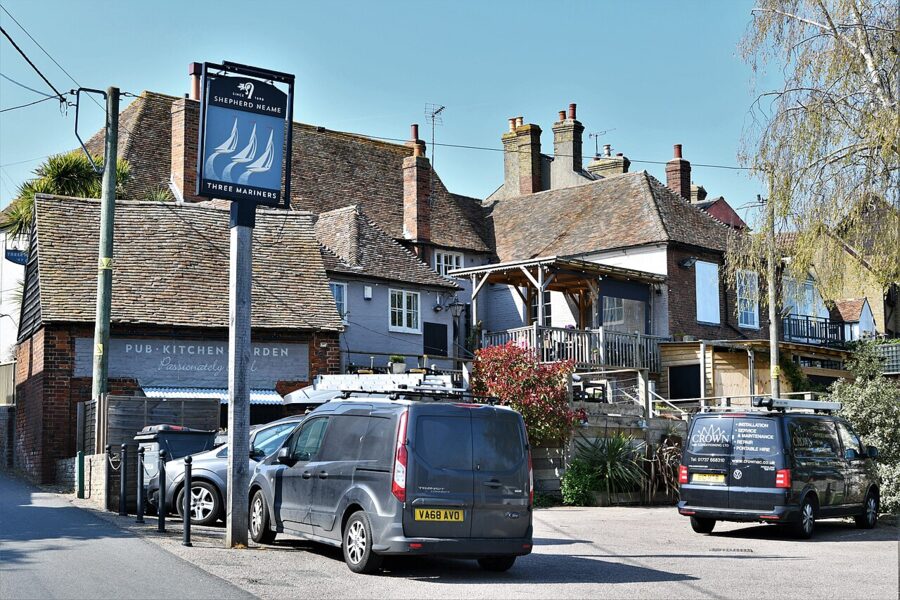
Carry on round the head of Oare Creek and you come to the Three Mariners in Oare, an eighteenth-century Grade II listed Shepherd Neame pub that reopened in June 2024 under new licensees. The garden steps down in three levels towards the creek, and in summer the stage is a restored boat called Betina, rescued from the mud below. It is about half an hour’s walk back to Faversham.

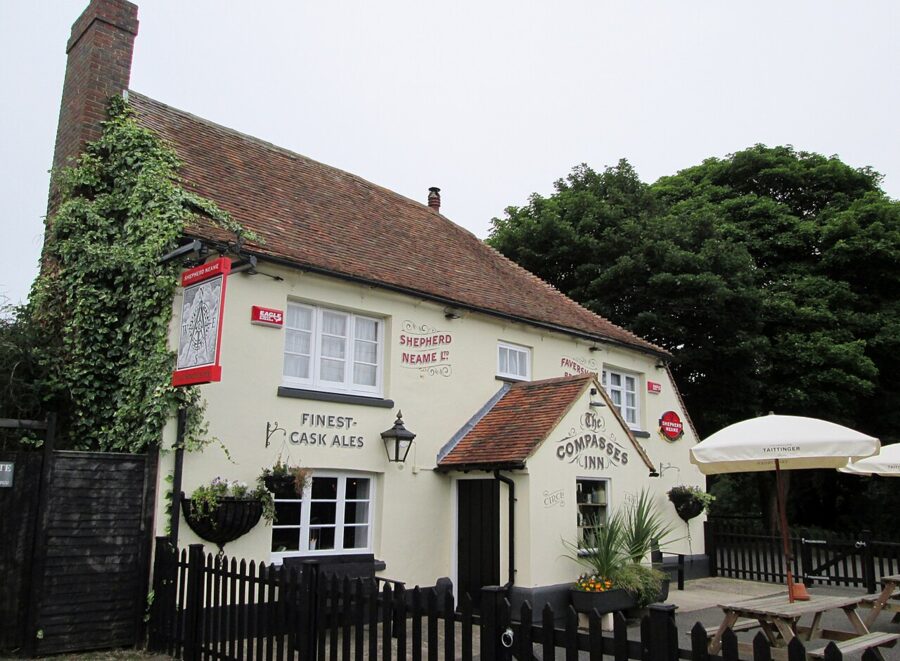
Up on the North Downs south of Faversham, the Compasses at Sole Street near Crundale is now the Timber Batts @ The Compasses, run since 2023 by the people who had the Timber Batts at Bodsham. Expect a sixteenth-century inn with oak beams, hops overhead, a large garden and a collection of strange objects that CAMRA’s local branch describes as a feast for the eyes and possibly later nightmares. It opens evenings from Wednesday and all day at the weekend.

Whitstable and Seasalter
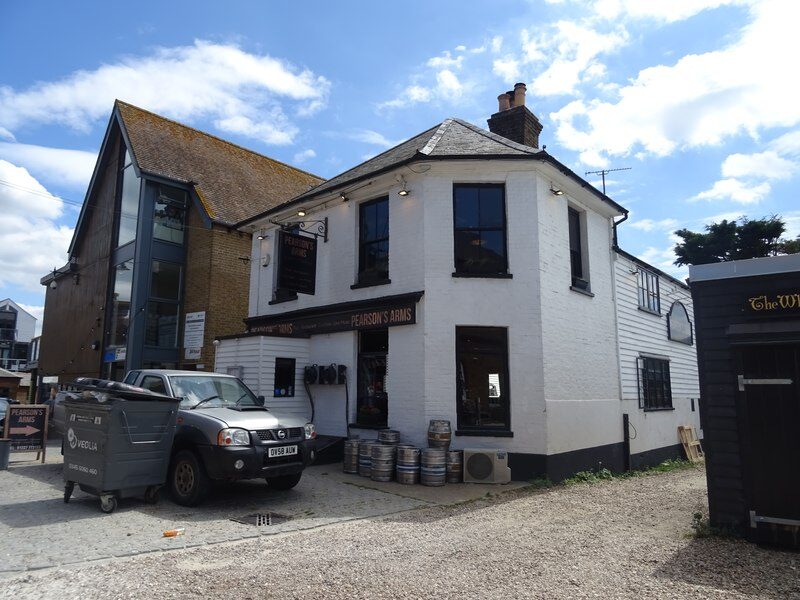
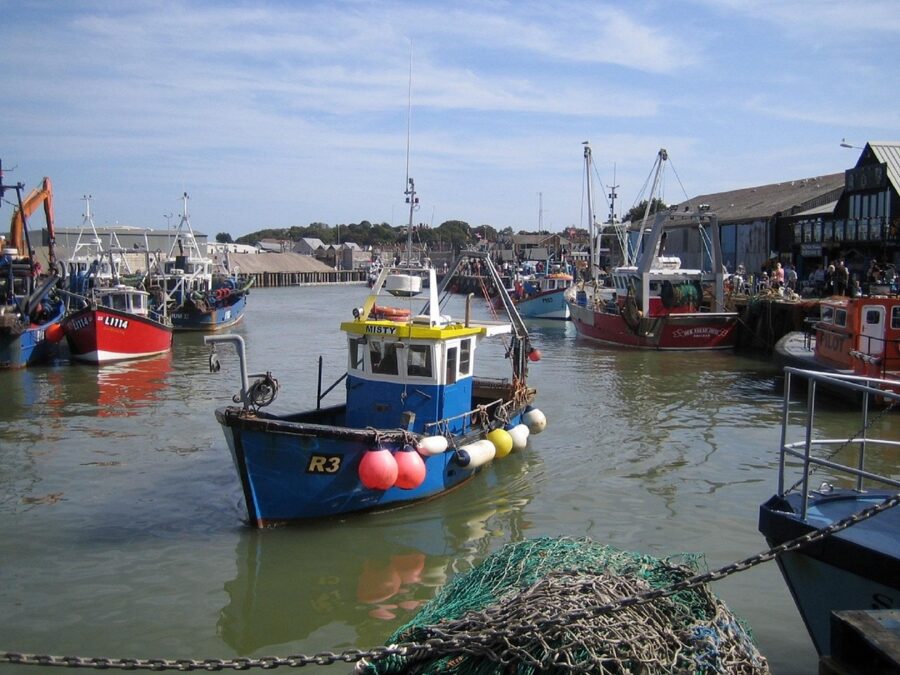
Whitstable is oysters, weatherboarded sheds and crowded sunny weekends. The Pearson’s Arms on Horsebridge Road is almost on the shingle: wood-panelled downstairs, a restaurant upstairs with a view of the beach, and a house beer brewed by Adnams. Dogs are welcome in the bar, and under-18s are not after 21:00.

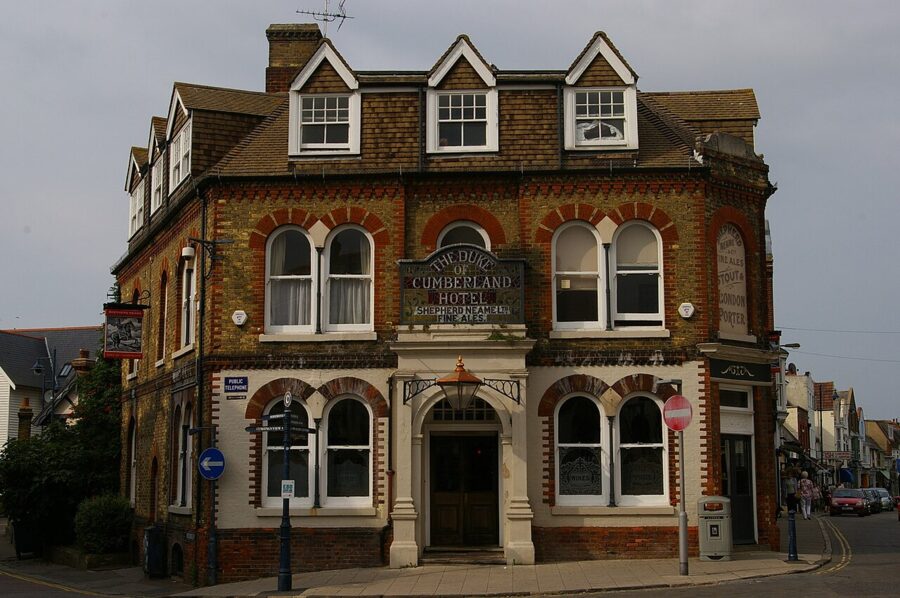
On the High Street, the Duke of Cumberland is the big old inn: called the Noah’s Ark until 1747, renamed after the victor of Culloden, used as the headquarters of the oyster dredgermen, burned in 1866 and rebuilt by 1878. Shepherd Neame reopened it as a hotel with rooms in 2023. Along the High Street, Twelve Taps is the craft-beer bar, all KeyKeg and gin, open evenings from Tuesday and from 13:00 at weekends.

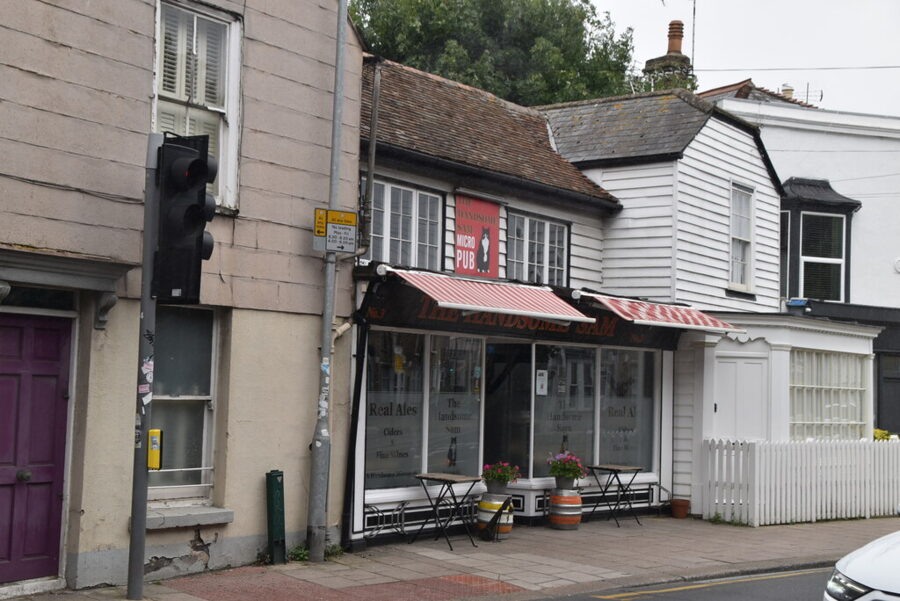
The Handsome Sam on Canterbury Road is the town’s micropub, opened on 4 November 2014 and named after the founder’s cat. There are cat murals, high tables, beer by gravity, mostly from Kent, and draught Biddenden cider.

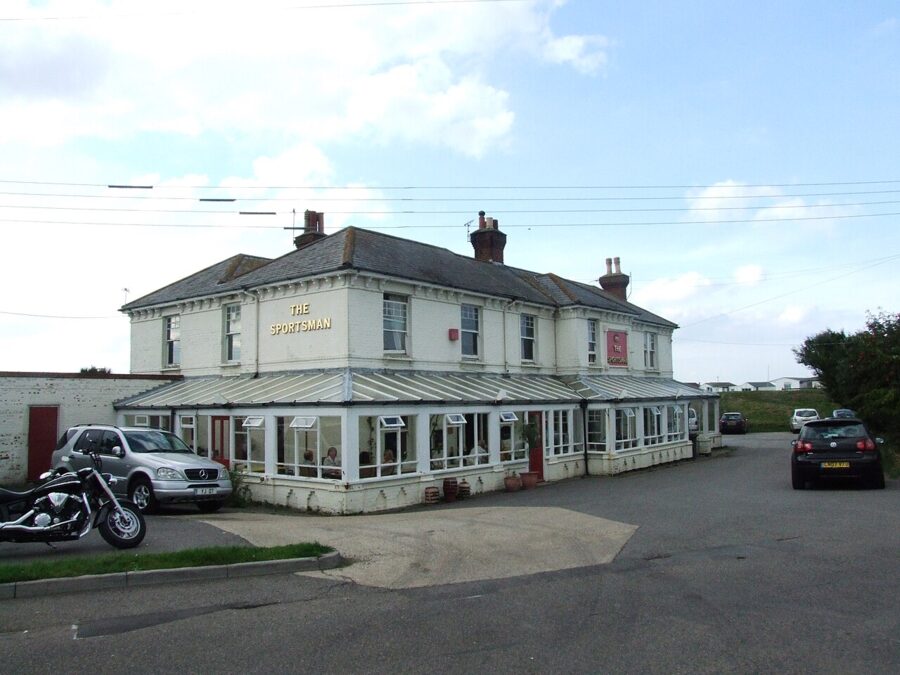
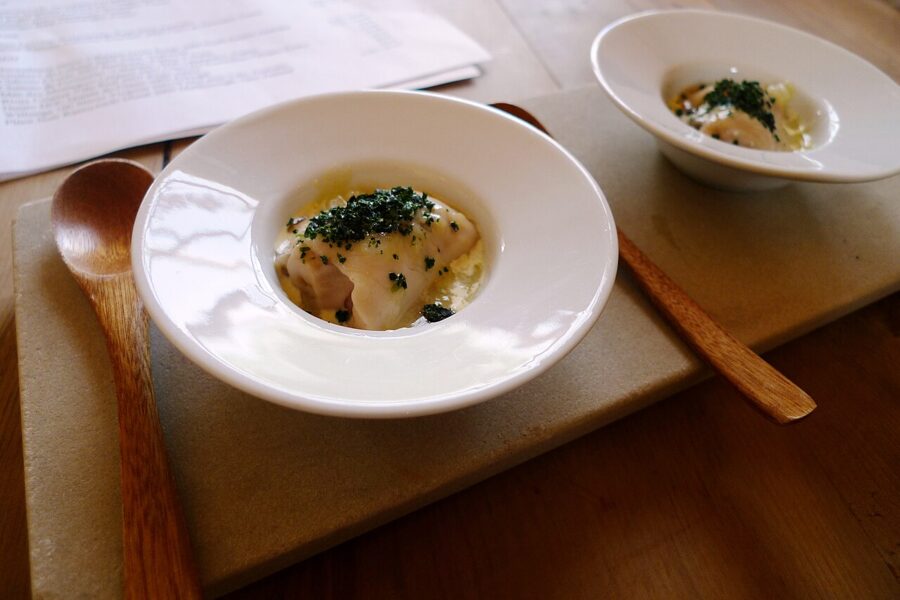
Out on the marsh road to Faversham, the Sportsman at Seasalter is one of the most famous pub kitchens in Britain, long a holder of a Michelin star, with a full menu at £85 a head. It looks like a plain seaside pub that has seen some weather, which is part of the charm. Book well ahead: the inside tables are reserved for diners, drinkers get the conservatory if there is space, and children must be ten or over.


Thanet: Margate, Broadstairs and Ramsgate
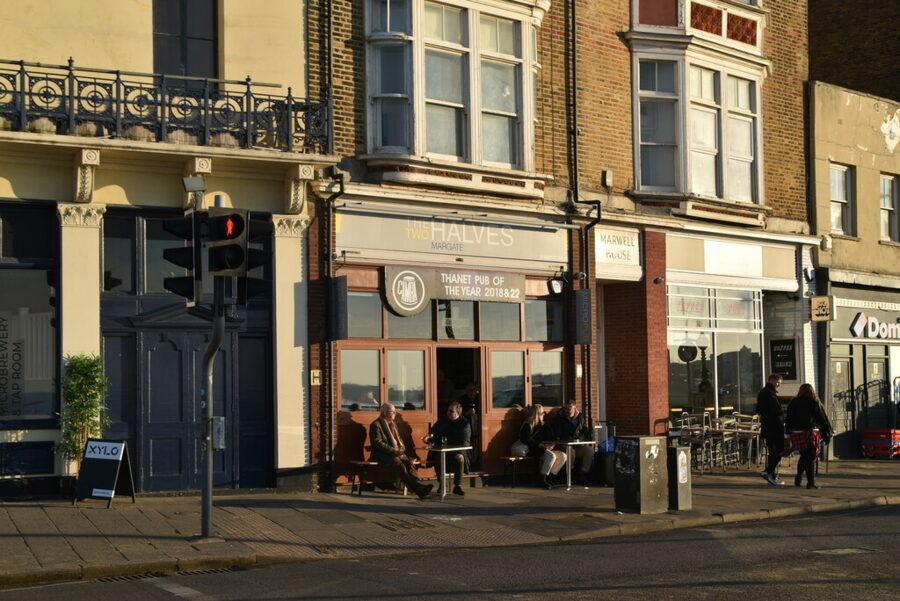
The three Thanet towns are linked by train and by Stagecoach’s Loop bus, and between them they could fill a weekend of micropubs. Margate first. The Two Halves on Marine Drive opened in a former shop in 2015, looks straight out at the stone pier, and pours beer and Dudda’s Tun cider by gravity. It opens at 15:00 on weekdays, earlier at the weekend, and is well placed for the sunset.

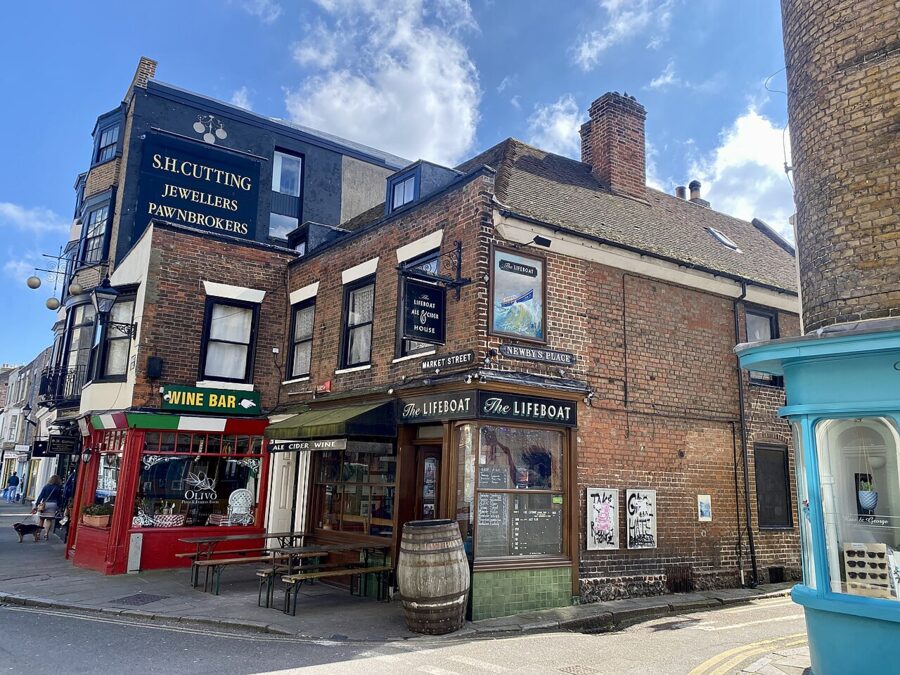
In the old town, the Lifeboat on Market Street was taken on in March 2026 by FLOC, a brewery from near Canterbury, and now pours its beers with a few guests. It is open Wednesday to Sunday.

In Broadstairs, the Royston on The Broadway was CAMRA’s Kent Pub of the Year for 2025 and was shortlisted nationally. It is a micropub dressed in Victorian, steampunk and art deco, with four cask ales and real ciders dispensed from a showpiece chiller cabinet, thirty-odd cans, and good coffee. Wednesday is quiz night and the tables can go early. In St Peter’s, inland, the old Four Candles reopened on 23 May 2026 as Trigger’s Broom, with a new layout and two handpumps; it closes on Wednesdays.
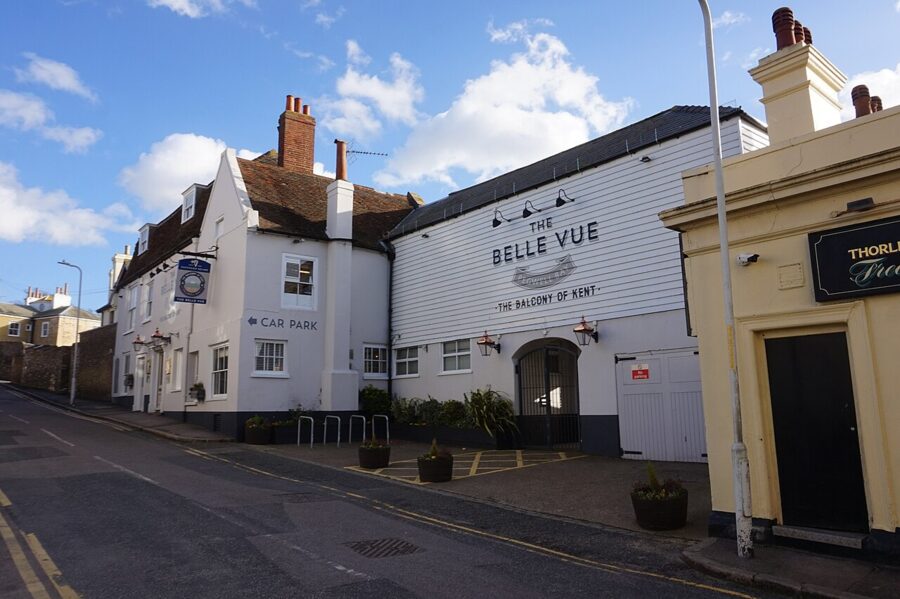
Ramsgate has the Conqueror Alehouse on Grange Road, Thanet’s first micropub, opened in 2010 and now in its third incarnation. It feels like a boat cabin, with banquettes facing inwards so you can’t avoid conversation. Then walk or take the 45 bus out to the Belle Vue Tavern at Pegwell, a Shepherd Neame pub known as the balcony of Kent for the view across Pegwell Bay from its clifftop garden. It was once owned by Tomson & Wotton, Ramsgate’s own brewery, which closed after Whitbread bought it in the 1960s.

Deal and the white cliffs
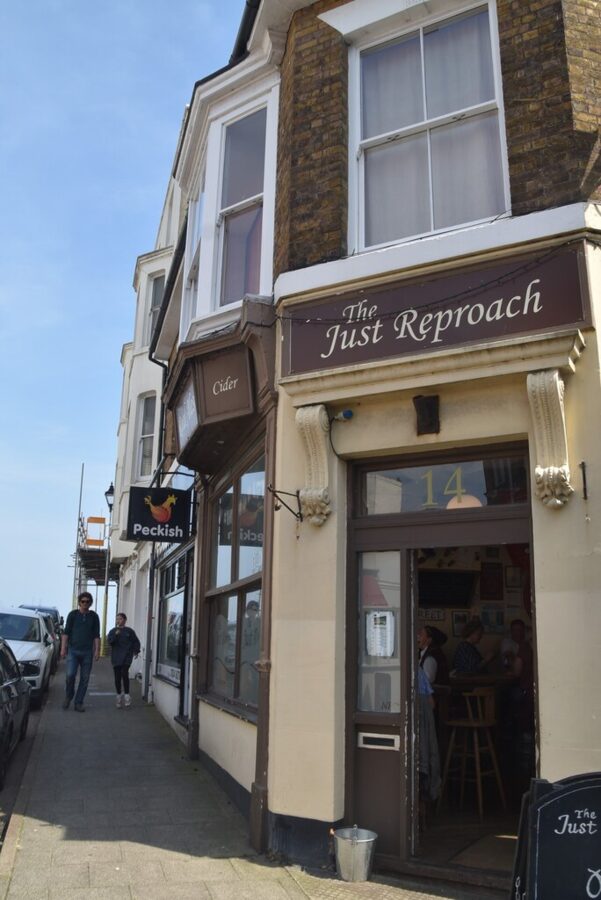
Deal is the best small pub town on the Kent coast, and the Just Reproach on King Street is why I’d go. The local CAMRA branch made it Pub of the Year for 2026: a family-run micropub with high benches, table service, no keg, no music and no fruit machines, four cask ales (five on Fridays) from a cool room, and a Kentish cider. It opens Thursday to Sunday only.

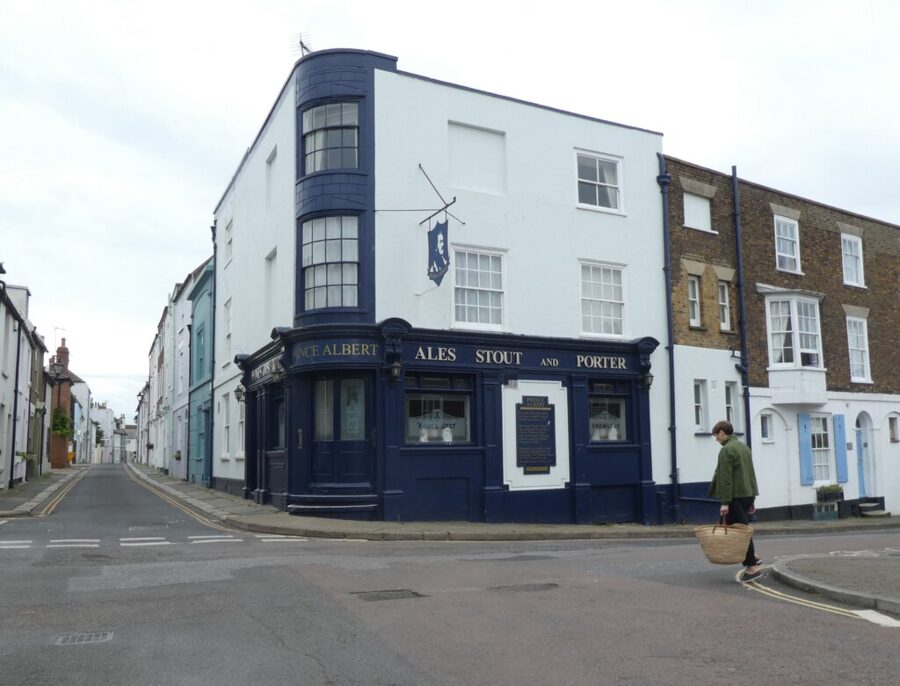
Ten minutes’ walk north of the station along Middle Street, the Prince Albert is a Georgian corner pub behind old Fremlins windows and curved doors, with cask beer from Canterbury Ales and a small courtyard. It opens in the evenings from Wednesday, and on Sundays serves a Sunday roast from noon. Dogs are allowed in the courtyard but not the bar.

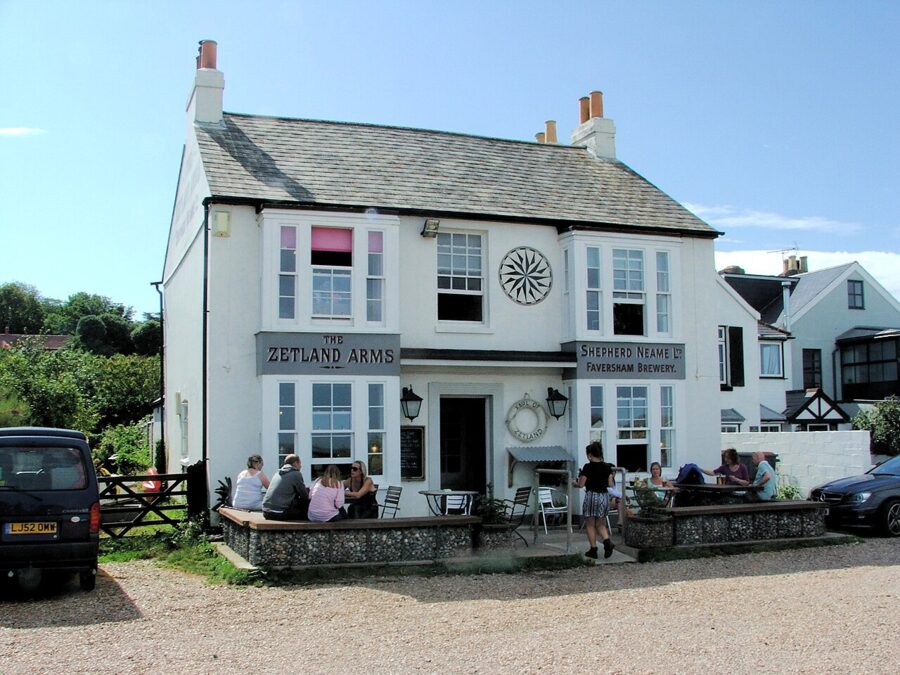
South of Deal, the Zetland Arms at Kingsdown sits on the shingle itself, with pebbles nearly to the door and tables on the beach. It is a Shepherd Neame house, opens from 09:30 for coffee, and serves food every lunchtime and in the evenings from Wednesday. The access tracks are potholed: walk along the beach from Walmer instead.

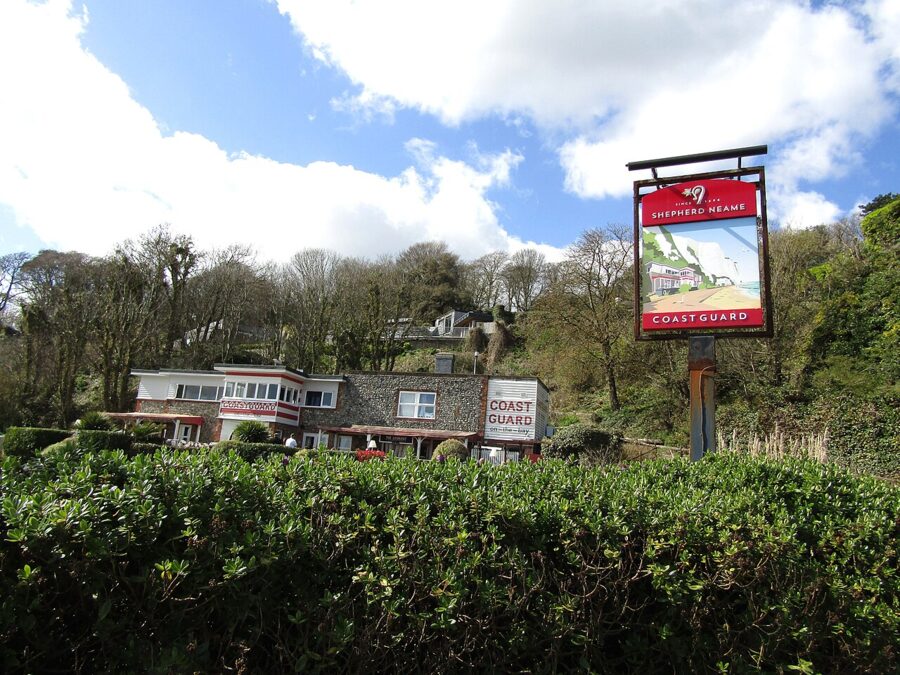
Further on, at the foot of the white cliffs in St Margaret’s Bay, the Coastguard was called the Green Man from 1740 until 1971. It is a modern, nautical-themed bar and restaurant now, with a terrace for watching the shipping in the Strait of Dover, and CAMRA’s local branch warns that your phone may pick up a French signal. The road down is steep; the 93 bus stops at the top.

Romney Marsh and Dungeness
The marsh is flat, empty and full of medieval churches, and its pubs were smugglers’ pubs because there was nothing else for miles.
The Red Lion at Snargate, on the road between Brenzett and Appledore, is the one to plan a day around. Part seventeenth- and part nineteenth-century cottages, it has a small public bar on the left with the marble-topped counter and the unused pumps, a games room on the right with toad in the hole and table skittles, and a lot of Second World War posters, because this was militarily sensitive ground. The toilets are outside.
Food is limited to bar snacks. It opens 12:00–15:00 and 18:00–21:00, Tuesday to Sunday, and shuts on Mondays.
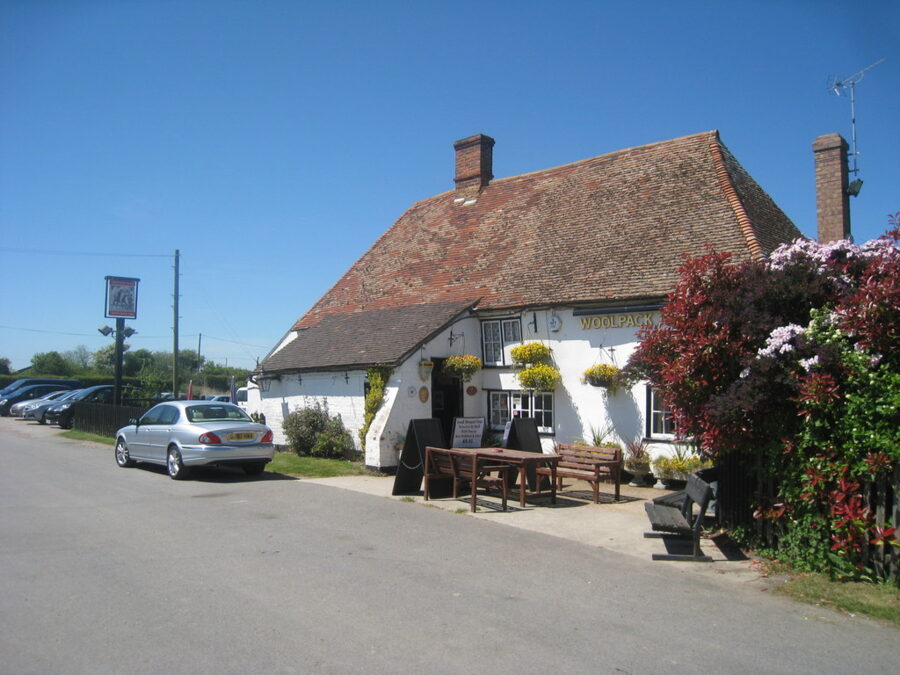
The Woolpack Inn, up a lane off the A259 between Brookland and Rye, is a low, fifteenth-century Shepherd Neame pub with pegged beams, wattle-and-daub walls and an inglenook big enough to sit inside. It takes its name from the owlers, the wool smugglers who ran fleeces out to France and brought brandy back. Food runs at lunch and from 18:00, all day on Fridays and at weekends.

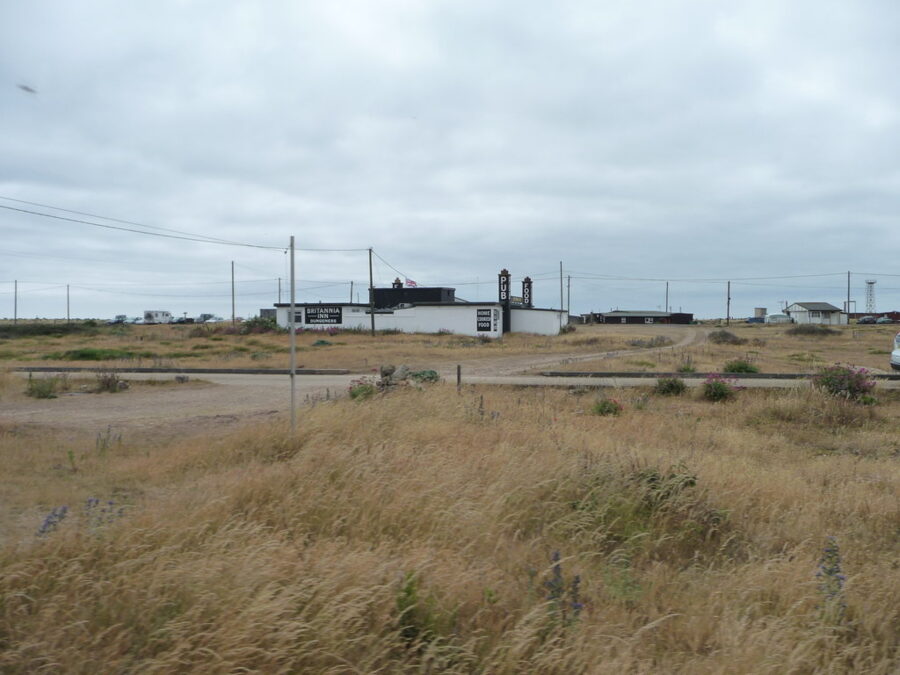
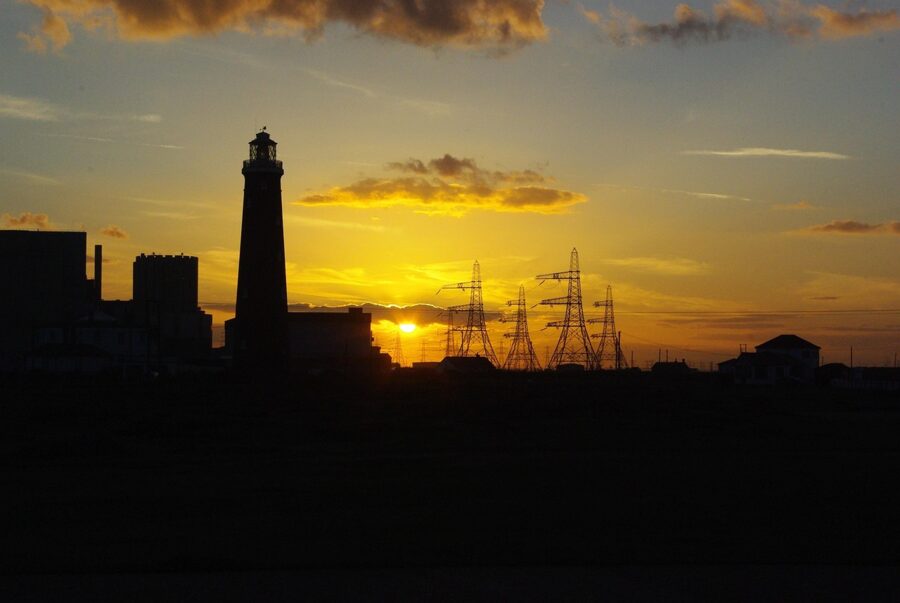
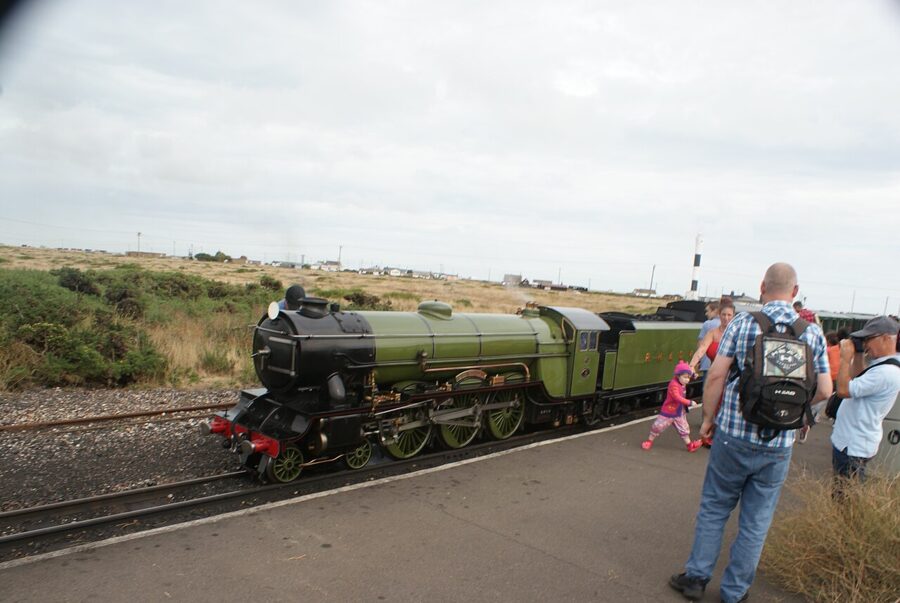
At the end of the shingle, the Britannia at Dungeness stands between the two lighthouses, a few minutes from Dungeness station on the Romney, Hythe & Dymchurch miniature railway. It is a Shepherd Neame pub whose speciality is fresh fish. It keeps short hours, closing at 18:00 most days, 20:00 on Fridays and later on Saturdays, so this is a lunch stop rather than an evening out.


The Weald: oasts, orchards and the Halfway House
The western half of Kent is the Weald: small fields, woods, orchards, oasts, and villages of tile-hung and weatherboarded houses that carry on west into Surrey and south into Sussex. The pubs here are country pubs in the plainest sense, and several of the best are in hop country between Paddock Wood and Goudhurst.
The Halfway House, Brenchley
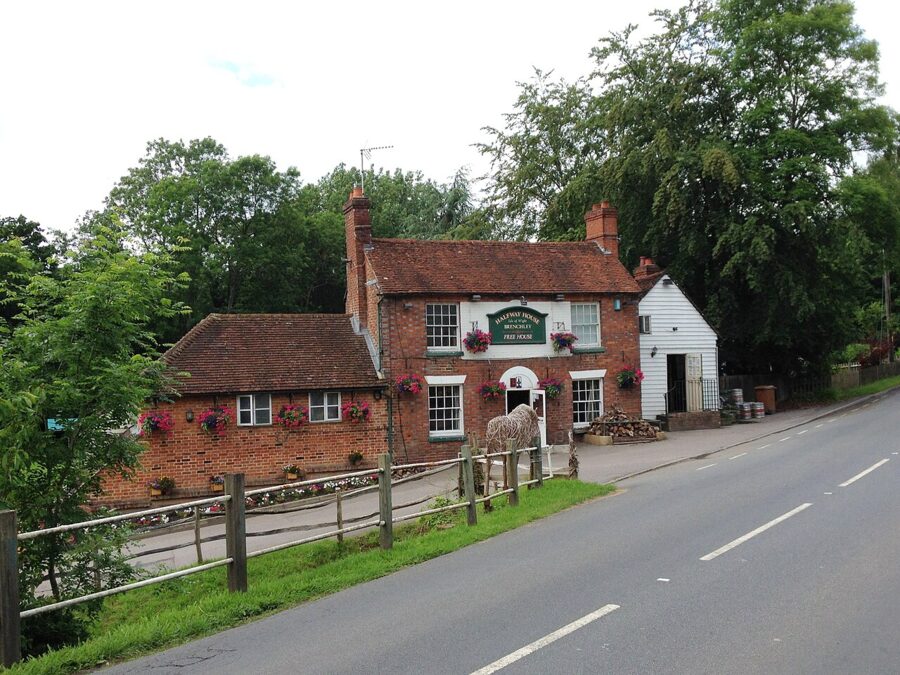
If you only go to one pub in the Weald, go to the Halfway House on Horsmonden Road outside Brenchley. It is a Grade II listed building and a free house that serves eight to ten beers straight from the cask, with ciders from Chiddingstone and Biddenden. Two of the beers are brewed only for the pub: Horsmonden Pale by Kent Brewery and Brenchley Best Bitter by Tonbridge Brewery. The regulars on the cask list include Tonbridge’s Rustic, a mild, which is worth trying in a county where mild is scarce.
The gardens are large, with one set aside for families, and they come into their own at the beer festivals over the Whitsun and August bank holidays, when up to 75 ales go on. The West Kent branch of CAMRA presented its runner-up Pub of the Year award at the May festival in 2026. Food is chalked up in the bar: 12:00–14:30 and 17:00–20:30 on weekdays, 12:00–20:30 on Saturday, 12:00–17:00 on Sunday; the bar is open 12:00–23:00 every day. The bus from Tunbridge Wells takes about half an hour and stops at the door, but ring the bell or wave it down.
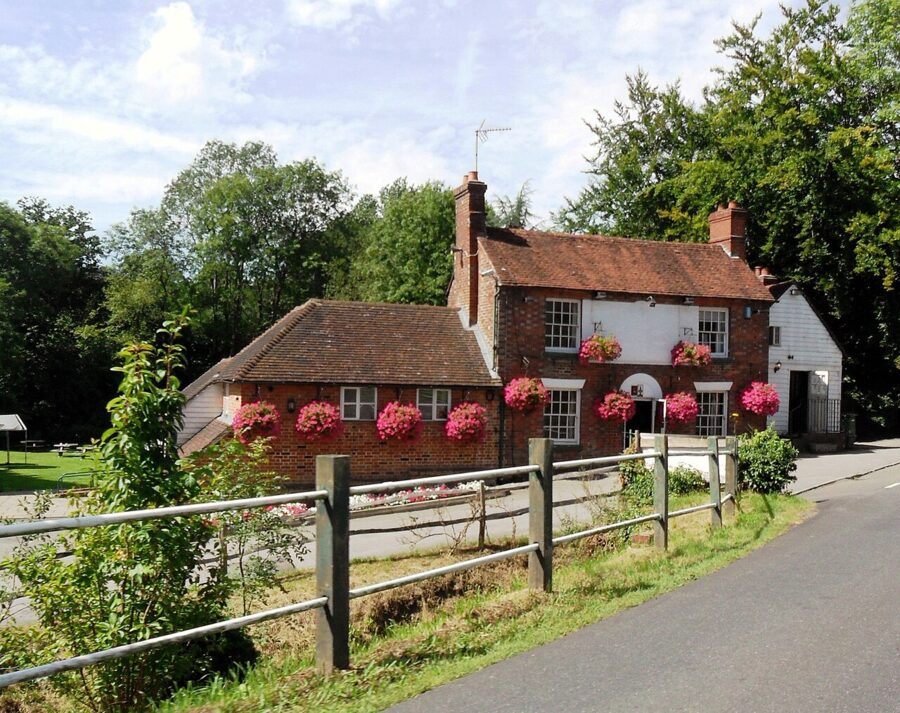

Barely a mile west, at Petteridge, the Hopbine is a small weatherboarded pub on a hilly corner, formerly a King & Barnes and then a Hall & Woodhouse house and now independent. It serves Kent and Sussex beers, Timothy Taylor’s Landlord and Turners cider, with pizzas prominent on the menu. It shuts on Mondays, and there is no food at Tuesday lunchtime.
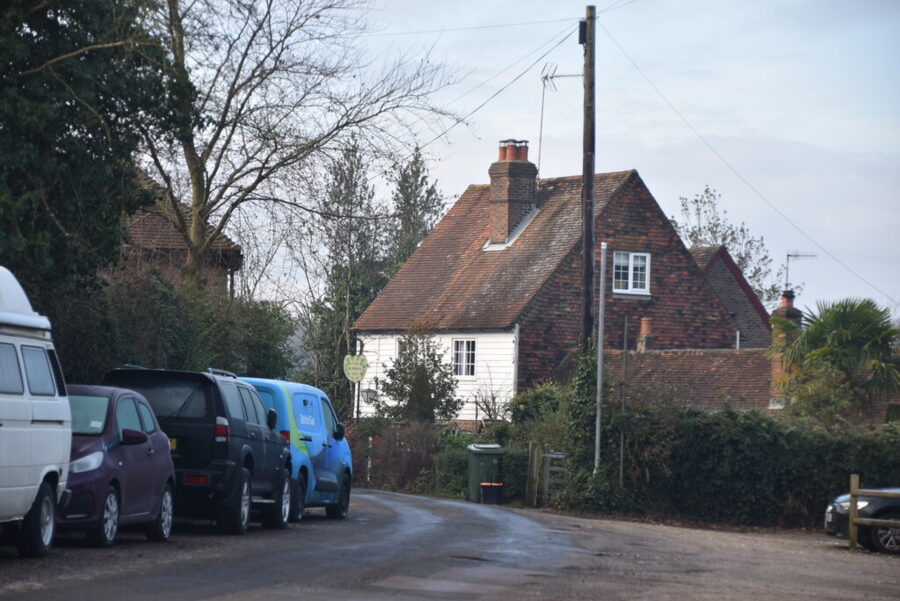

North towards Tonbridge, the George & Dragon at Tudeley is a fifteenth-century free house, painted pastel green and refurbished by its owners since 2021, with four separate rooms, low beams and an inglenook. It is closed on Mondays.
Biddenden, Chiddingstone and Penshurst
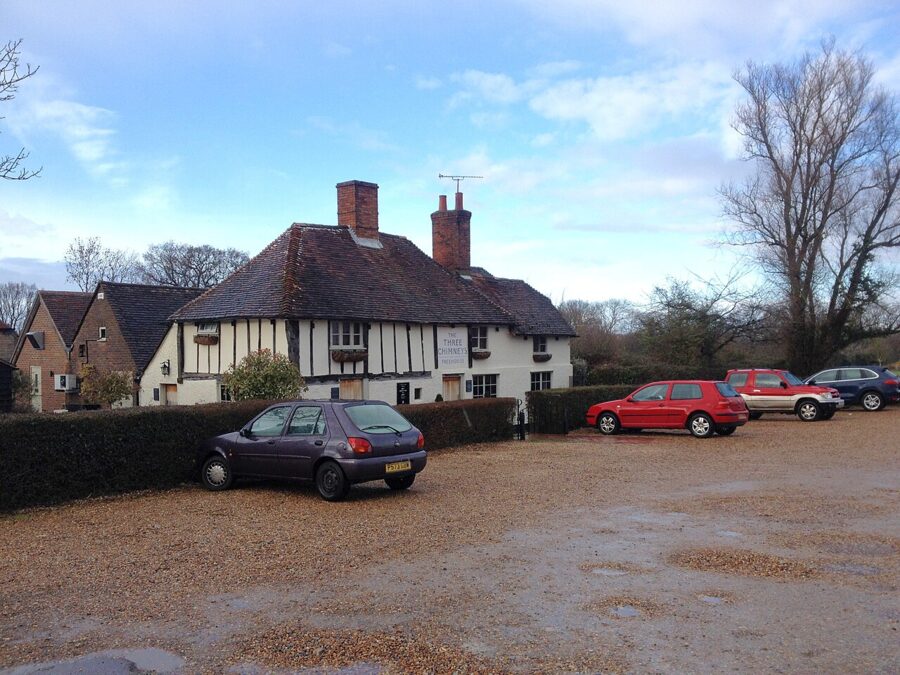
The Three Chimneys, a mile west of Biddenden, is a fifteenth-century timber-framed pub that is famous for its dining and has one of the best plain bars in the county. CAMRA gives it a one-star historic interior for the left-hand bar, with its narrow L-shaped bench, two-plank backrest and matchboarded walls, once the drinking room for labourers. The beer still comes from casks at ground level, including Chimneys Ale brewed by Goacher’s, and the cider is Biddenden Dry. Between lunch and dinner there is a bar menu only, and there are rooms.

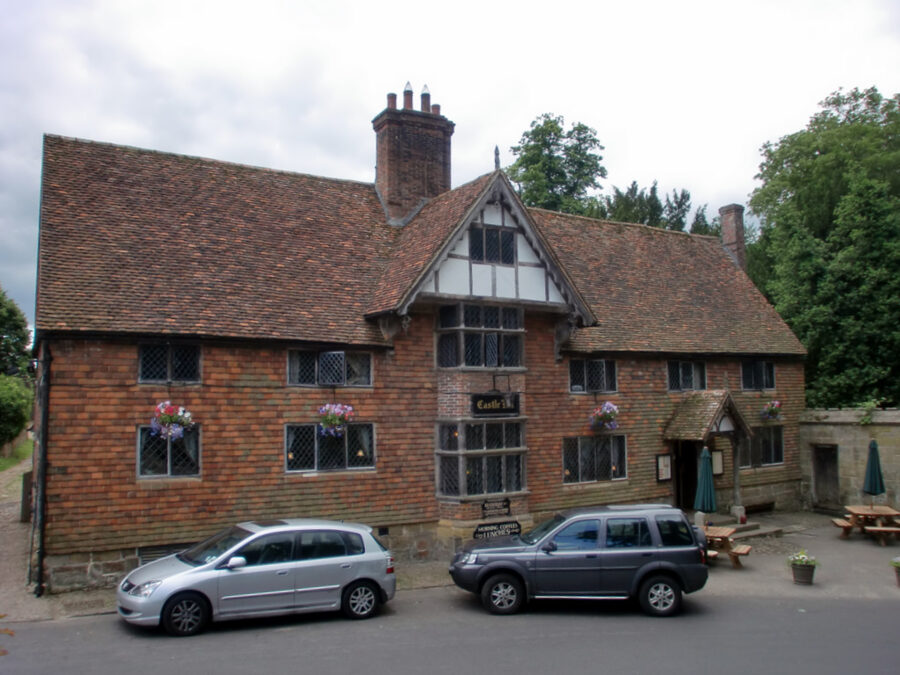
Chiddingstone is a single street of timber-framed houses owned by the National Trust, and the Castle Inn is in the middle of it. The building is recorded in 1420 as Waterslip House and became an inn around 1730. It is Grade II* listed and has a one-star historic interior: a small public bar with a red and black quarry-tiled floor and matchboarded walls, and a tiny alcove called the Confessional.
It closed suddenly in June 2024 after a cavity was found beneath it, and has since reopened, pouring Larkins from the brewery up the road and Harvey’s. Children are not allowed in the public bar.

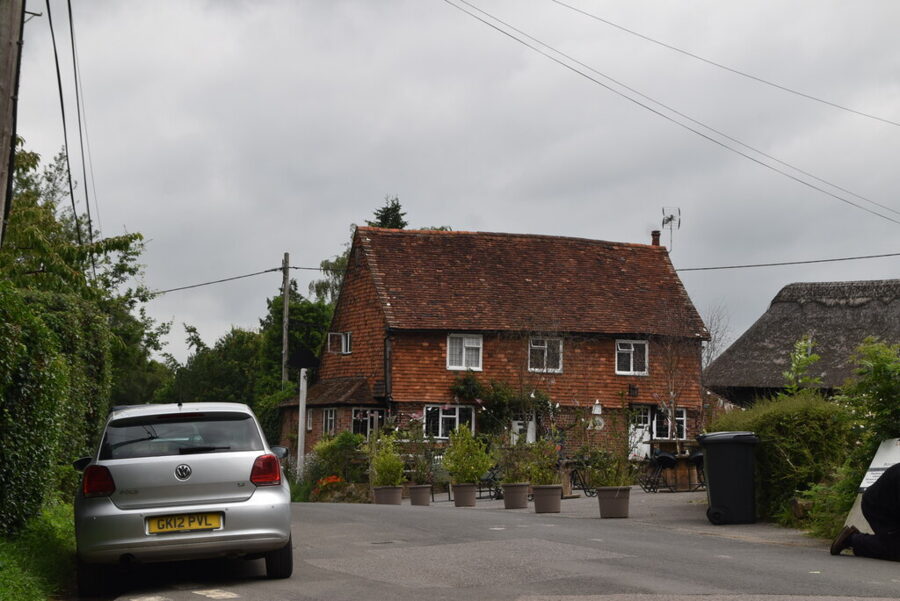
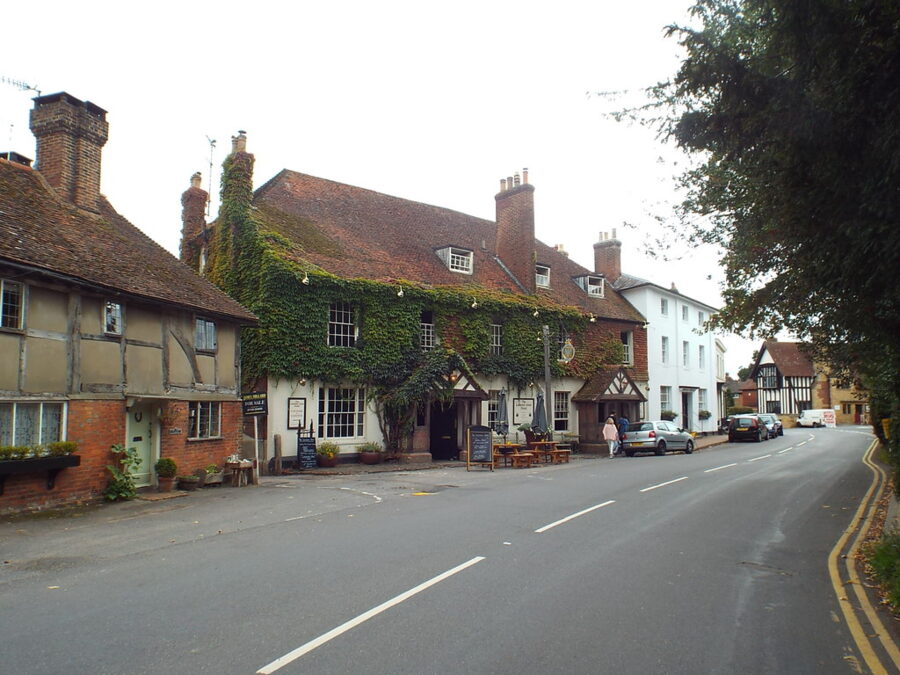
A couple of miles away at Chiddingstone Hoath, the Rock is a five-hundred-year-old drovers’ inn with a brick floor that dips and folds, a wood burner, Larkins and Harvey’s on the bar and a ring-the-bull game. At Penshurst, the Leicester Arms by the church is the end point of the five-mile cycle path from Tonbridge, refurbished in 2024 as a hotel with eleven rooms; it is named after the Earls of Leicester, the Sidney family of Penshurst Place.


Around Tunbridge Wells
The Crown at Groombridge faces the green and the church in the Kent half of a village split by the county boundary. The building is a seventeenth-century timber frame, and a ceramic plaque by the inglenook advertises the People’s Refreshment House Association, a temperance-minded company founded in 1896 to run better pubs.
Some sources date it to 1585; CAMRA’s heritage experts put the frame at the mid to late 1600s, which I trust more. It has a one-star historic interior, five rooms, and Larkins and Harvey’s on the bar. Groombridge station on the Spa Valley Railway is under ten minutes’ walk.

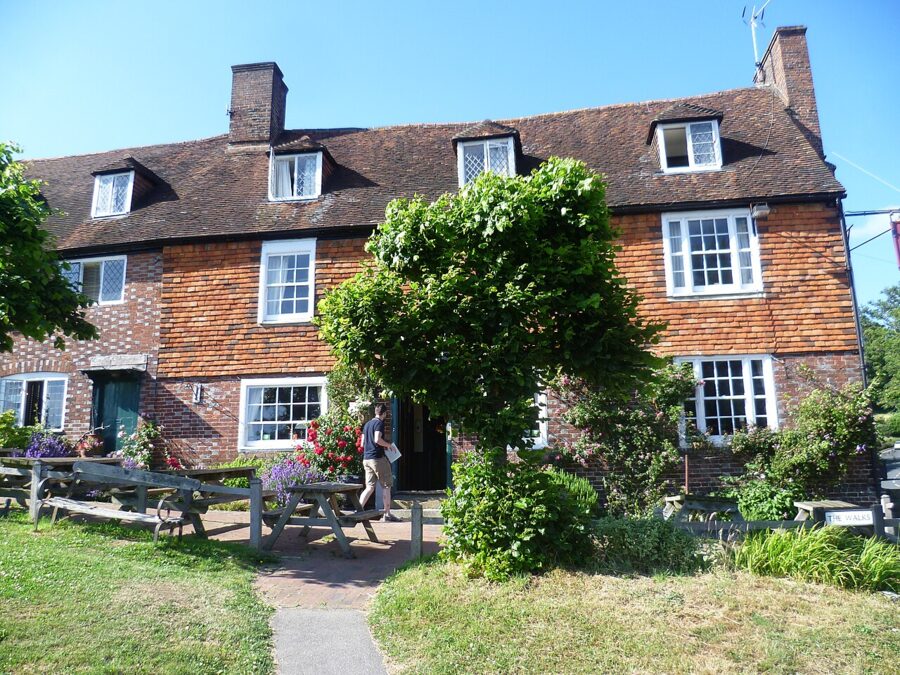

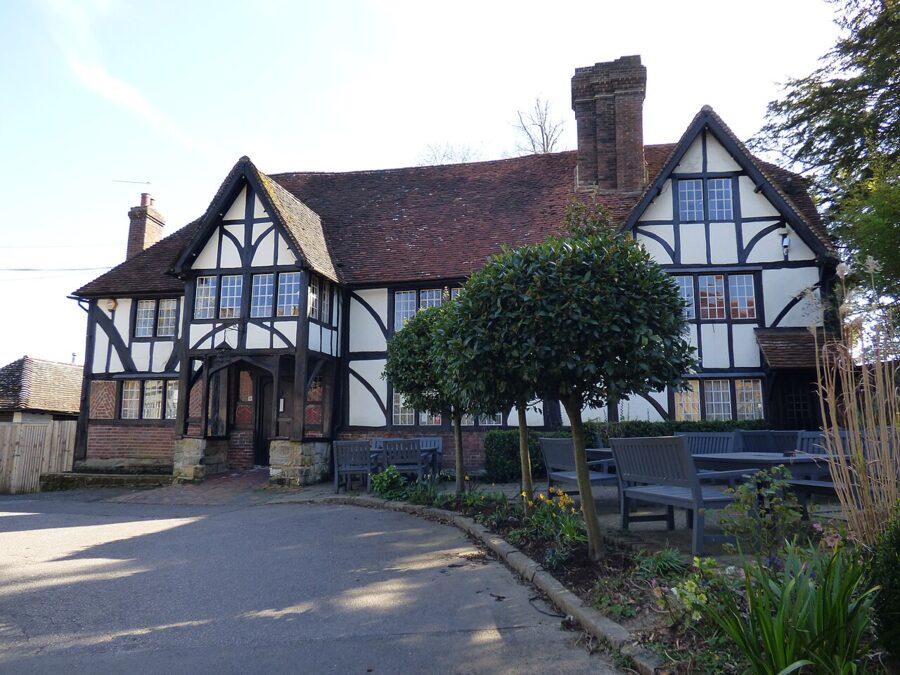
At Speldhurst, the George & Dragon opposite the church claims a date of 1212 and occupies what CAMRA calls a former medieval hall. The village legends (sealed tunnels, a vicar hanged from the rafters, a fireplace scarred by sword-sharpening) are best enjoyed rather than believed. It serves good game cooking and keeps food going all day on Fridays and Saturdays.

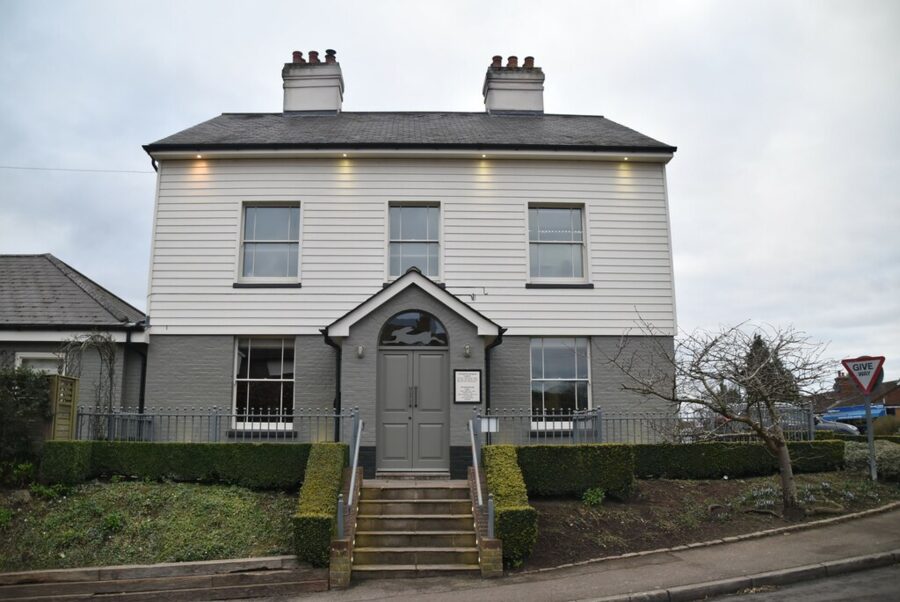
Up on the ridge at Bidborough, the Kentish Hare was a failing village pub called the Hare & Hounds until it reopened in 2014 under the chefs Chris and James Tanner. It is food-led, but the public bar welcomes drinkers, and the house beer, Kentish Hare, is brewed by Tonbridge Brewery. It is closed on Mondays and Tuesdays and shuts at 17:00 on Sundays.

Rochester and the Medway towns
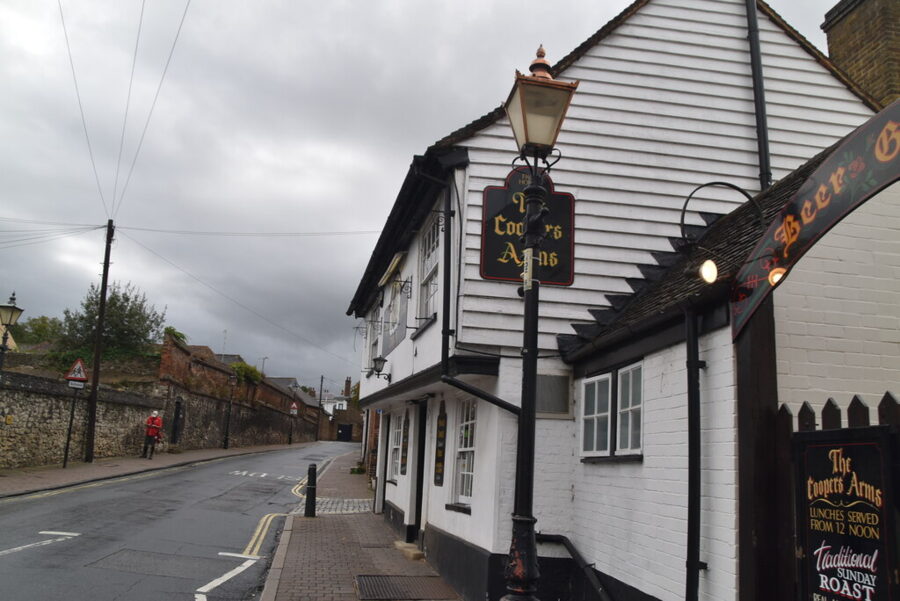
Rochester has the cathedral, the castle and Dickens, and behind the cathedral it has the Coopers Arms, which says it dates from 1199 and is one of the oldest inns in Kent. Treat the date as a claim; the beams and fireplaces in the front bar are old enough without it. It was the local CAMRA branch’s Pub of the Year in 2023 and 2024, keeps up to seven cask beers, and is about ten minutes’ walk from Rochester station.

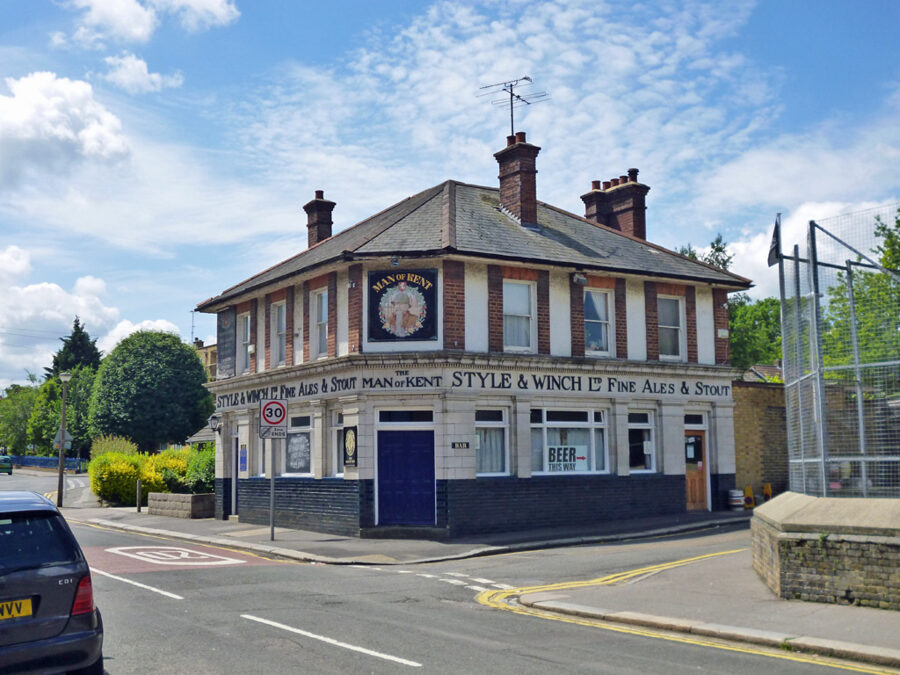
The Man of Kent Ale House on John Street is a different sort of pub: eleven handpumps selling beer only from Kent breweries, a long list of real ciders, and a surviving tiled brewery fascia outside by Style & Winch. It opens in the evenings only, from 18:00, is closed on Tuesdays, and admits over-18s only.

Four days out, with the stations
Faversham and the creeks (on foot, about 8 km). From Faversham station walk to the Sun Inn, then down Abbey Street to the Anchor. Follow the Saxon Shore Way along the creek to the Shipwrights Arms at Hollowshore (about 45 minutes), round the head of Oare Creek to the Three Mariners, and back into Faversham (about 30 minutes). Do it Wednesday to Sunday, when the Shipwrights is open.
Canterbury and Fordwich (on foot). From Canterbury West, the Unicorn and the Monument are on St Dunstan’s Street. Walk through the Westgate to the Thomas Tallis on Northgate, then the Parrot and the Bell & Crown.
For Fordwich, take the Stour Valley Walk out of the city or the train one stop to Sturry, and finish at the Fordwich Arms. Avoid Mondays, when the Thomas Tallis and the Fordwich Arms are shut.
The Thanet micropubs (train and Loop bus). Start at the Two Halves in Margate, take the train to Broadstairs for the Royston and Trigger’s Broom, then on to Ramsgate for the Conqueror. Many open mid-afternoon, so start no earlier than 15:00 on a weekday. Thursday to Saturday is the best spread, and you can add Deal and the Just Reproach by train from Ramsgate.
The Weald by bike, bus or designated driver. Cycle the path from Tonbridge to Penshurst and the Leicester Arms, then on by lanes to the Castle Inn at Chiddingstone. Another day, take the bus from Tunbridge Wells to the Halfway House at Brenchley and add the Hopbine at Petteridge. Groombridge’s Crown is easy from Tunbridge Wells on the Spa Valley Railway, on the days it runs.
For the marsh, there is no getting round it: you need a car or a bike. Snargate, Brookland and Dungeness make a loop of about an hour’s driving, with the Romney, Hythe & Dymchurch railway an option for the last leg to the Britannia.
Before you go
Monday and Tuesday. Kent’s country pubs close early in the week more than you would expect. The Shipwrights Arms, the Kentish Hare and the Timber Batts are shut on Mondays and Tuesdays; the Red Lion at Snargate, the Fordwich Arms, the Hopbine, the George & Dragon at Tudeley and the Sportsman are shut on Mondays. Some micropubs keep short weeks: the Just Reproach opens Thursday to Sunday only.
Food times. Most country pubs serve 12:00–14:30 and 18:00–21:00, with Sunday food stopping between 16:00 and 17:00. Micropubs do crisps and nuts. For the Sportsman, the Fordwich Arms, the Three Chimneys and any Sunday roast, book.
Rooms. The Sun Inn, the Duke of Cumberland, the Three Chimneys, the Crown at Groombridge and the Leicester Arms all have rooms; the Sportsman has cabins in the garden.
Dogs and children. Most of the pubs here take dogs in the bar. The exceptions to note: Trigger’s Broom (assistance dogs only, for lack of space), the Prince Albert in Deal (courtyard only) and the Man of Kent in Rochester (over-18s only, though dogs are fine). Children are welcome in most country pubs by day; the Castle Inn keeps them out of the public bar, and the Royston and the Parrot have evening cut-offs.
Paying. The Butchers Arms is cash only and the Thomas Tallis is card only. Carry both.
The beer. In Kent a lot of the best real ale is poured by gravity straight from the cask, which means a softer, less lively pint than one pulled through a tight sparkler, and that is how it is meant to be.
And if there is only time for one, go back to the start. Drive out across the marsh to Snargate on a Saturday, any time between noon and three, ask for whatever is on the stillage behind the marble counter, and leave the four old pumps alone.