
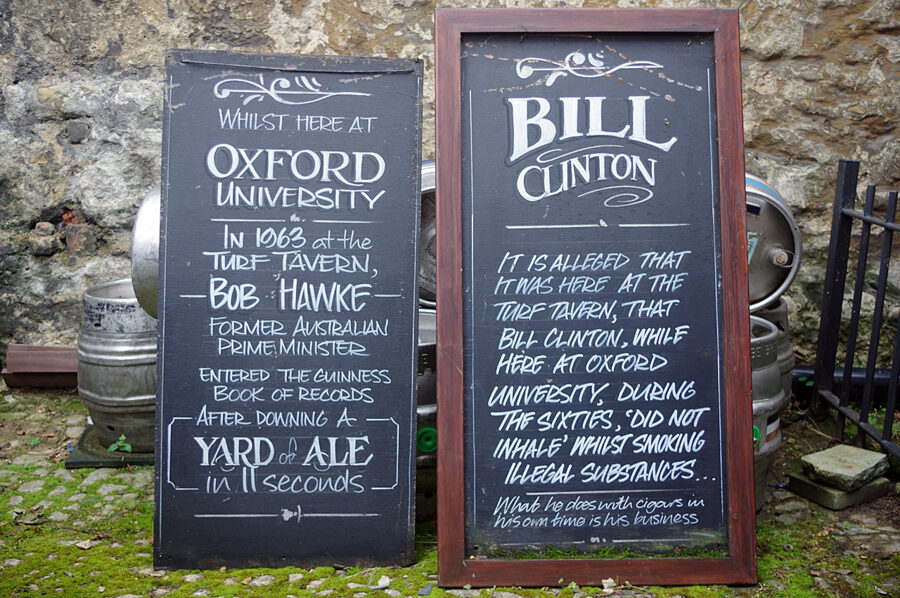
Chalked on two boards outside the Turf Tavern is the pub’s own honours list. Bob Hawke, a future Australian prime minister, downed a yard of ale here in eleven seconds, says one board; Bill Clinton, says the other, did not inhale. Oxford’s pubs trade on famous names the way its colleges trade on old members, and plenty of the drinkers in the centre on any afternoon are there to stand where somebody famous once stood.

That would be a poor reason to drink anywhere, and Oxford has far better pubs than its reputation needs. A Victorian brewery pub on St Ebbe’s Street has some of the keenest prices in the centre. A narrow Victorian room on George Street keeps six casks and forty keg lines and stays open until two in the morning. Up North Parade, a pub whose bar fittings have barely moved since the 1960s has had the same licensees since 1983.

The famous pubs deserve one visit each, once you know which of their stories are true. The ones Oxford’s own drinkers use deserve several. The great absentee is the Eagle and Child, the Inklings’ pub, shut since 2020 and not due back until 2027.
On this page
- How Oxford drinks
- Inside the old walls: the famous four
- The passages off the High
- West of Carfax: where Oxford's drinkers go
- St Giles and the Inklings
- Jericho and North Oxford
- Across Port Meadow: the Perch and the Trout
- East of Magdalen Bridge
- Headington: a beer festival and a 1712 play
- Historic interiors and famous names: what is genuine
- One evening, start to finish
- Practical notes
How Oxford drinks
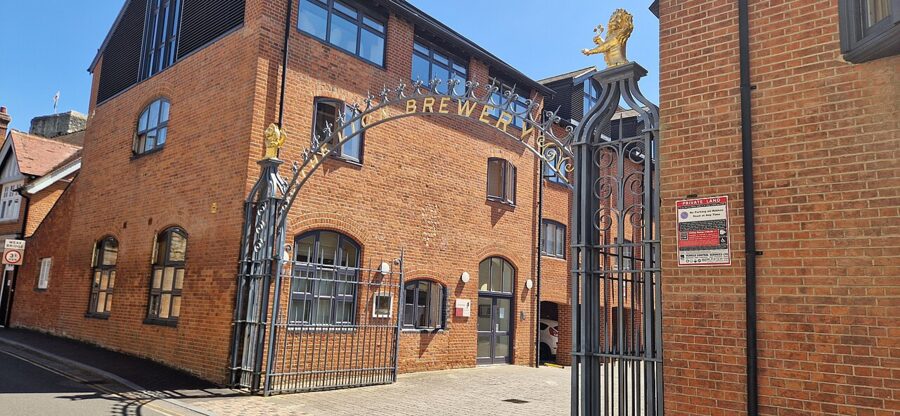
For two hundred years the city’s beer came from St Thomas, the old parish west of the castle. Morrell’s Lion Brewery stood on the Castle Mill Stream until a family quarrel closed it in 1998; the site became flats in 2002, but the chimney, the waterwheel and the gates with their gold lions were kept. Most of the older pubs in this guide were Morrell’s houses once, and you will meet the name again and again.

The beer now comes from small brewers round the edge. Oxford Brewery, which started in 2009 as Shotover in a converted stable at Horspath, makes Prospect, the 3.7% bitter found on more city-centre bars than any other beer in 2025. Tap Social Movement gives work to people rebuilding their lives after the criminal justice system and now sells to Waitrose; Loose Cannon is at Abingdon; Chadlington is out to the north-west; and Hook Norton, the Victorian tower brewery in the north of the county, owns a pub in the centre.
What the city does best is the small old room in a passage. Oxford’s medieval plan left alleys between the main streets, and the pubs got into them early: the Turf behind New College Lane, the Chequers and the Wheatsheaf down slits off the High, the White Rabbit in Friars Entry. What it does less well is cheap beer. In that November 2025 count the average pint of real ale in the centre was £5.62, and the dearest was £7.05, at the Turf.
The layout makes a crawl easy. Carfax, the crossroads at the top of the High, is the middle, and the oldest pubs sit within a few streets of it, none more than ten minutes from the next. St Giles runs north from the Martyrs’ Memorial past the Lamb and Flag, Jericho lies west of it by the canal, and the riverside pubs are a walk across Port Meadow. East of Magdalen Bridge is where many of the students live.
Inside the old walls: the famous four
The Turf Tavern
The Turf is hard to find on purpose. From the Bodleian, walk down New College Lane under the Bridge of Sighs and turn left into St Helen’s Passage, a gap so narrow two people have to turn sideways; or come in from Holywell Street through Bath Place. Either way you arrive at a set of low rooms and a walled garden built against the old city wall.
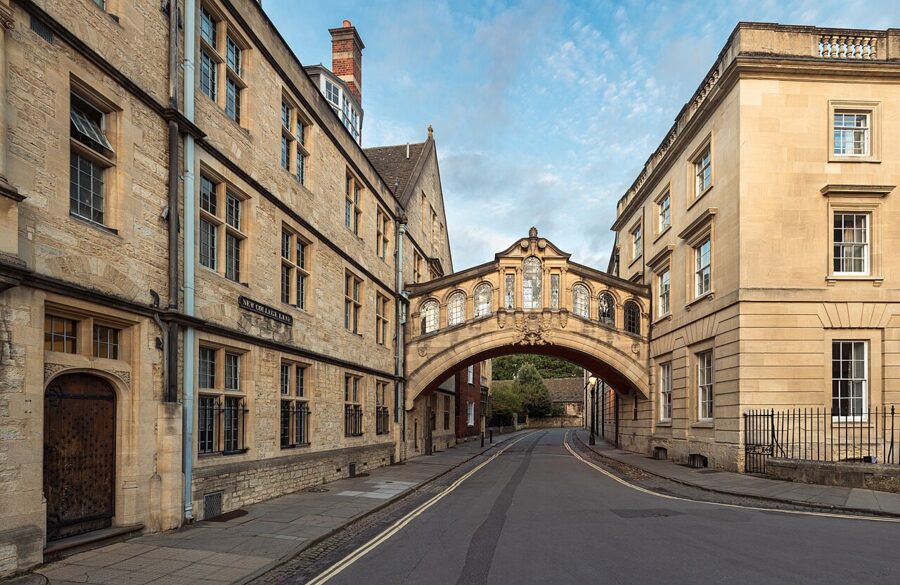

Greene King says the tavern opened in 1381; one of its own pages says the twelfth century. Historic England, which has listed the building at Grade II since 1954, calls its date indeterminate, with an eighteenth-century remodelling, a barrel-roofed cellar and one seventeenth-century casement window. Thomas Hardy put it in Jude the Obscure as an “obscure and low-ceiled tavern” but called it the Lamb and Flag, which has confused people ever since.
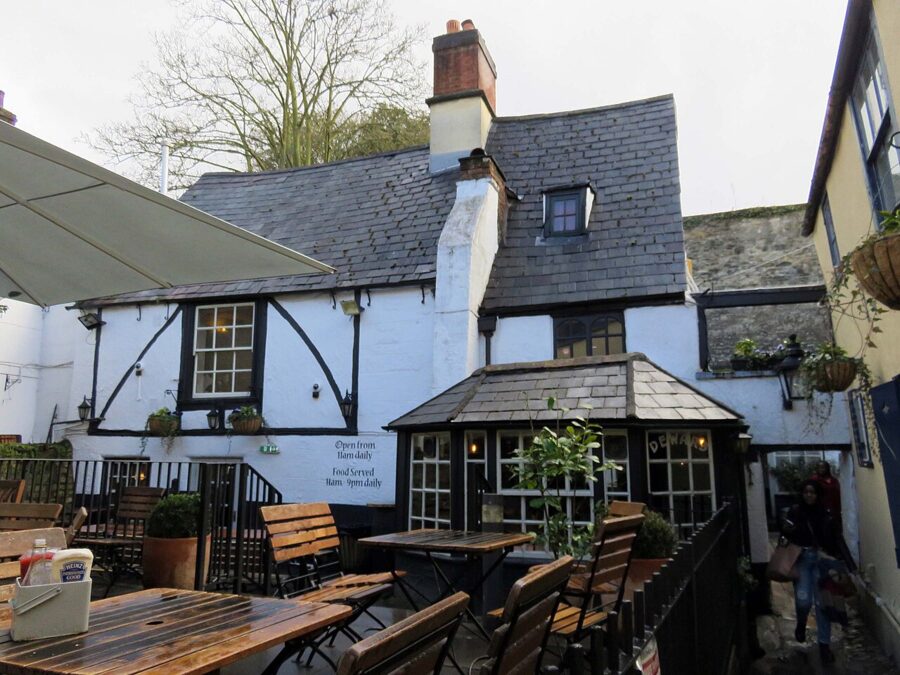

It is a Greene King pub with four regular beers and up to seven changing ones, often from Chadlington. It opens 11:00–23:00 every day, with food until 21:00, and takes no bookings from May to the end of September. Dogs and children are both welcome. Tourists fill it in the afternoon and students at night.
Is it worth it? Yes, once. Go at opening time on a weekday, take the low back room rather than the garden, and drink something local rather than the house IPA.
The King’s Arms
Two minutes away, on the corner of Holywell Street and Parks Road, the King’s Arms has been on its site since 1607 and is named after James I. Wadham College owns it, and its students live upstairs. The building was rebuilt in the early eighteenth century, which is why it looks Georgian, and CAMRA’s National Inventory of Historic Pub Interiors rates it One Star.
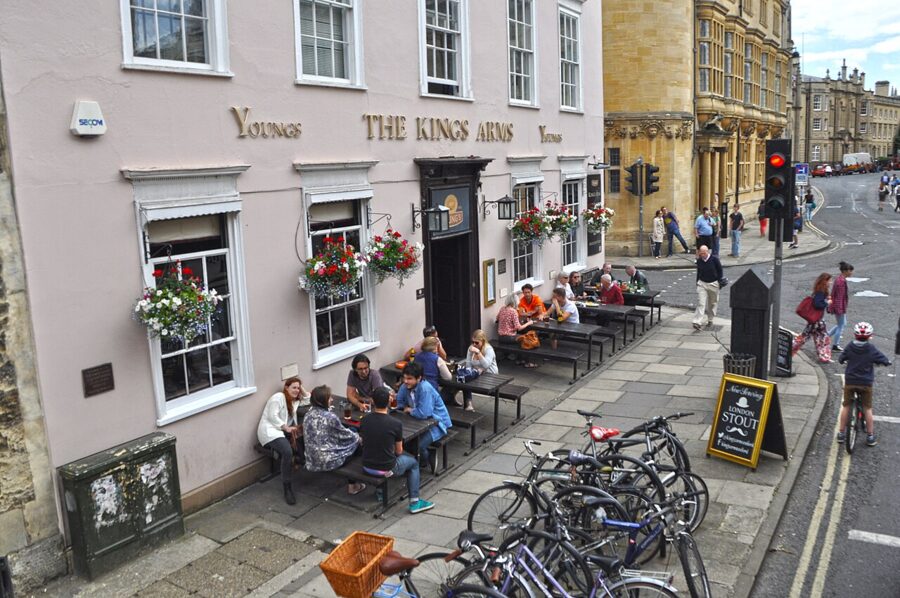

The heritage is round the back: a small back bar with old dado panelling and a bench, a bowed glazed partition with service hatches, a panelled lobby, and a room called the office with a real fire and leather sofas. A little bar with its own door onto Holywell Street was for men only until 1973. In March 1974 the Oxford branch of CAMRA held its first meeting here; its first local guide listed just 23 pubs in the city selling real ale.
It is a Young’s house, with London Original and Special, St Austell Tribute, Oxford Prospect and guests. It opens at 09:00 for breakfast, stays open until midnight every night, and serves food until 22:00 (21:00 on Sundays). The pub likes to say it has the highest IQ per square foot in Oxford, which nobody has measured.
The White Horse
Across Broad Street from the Sheldonian Theatre, squeezed between two entrances to Blackwell’s bookshop, the White Horse is probably the smallest pub in Oxford. You go down three steps into one low, narrow room with panelled walls and a long bar. At the back is a raised snug with a single large table, usually taken.
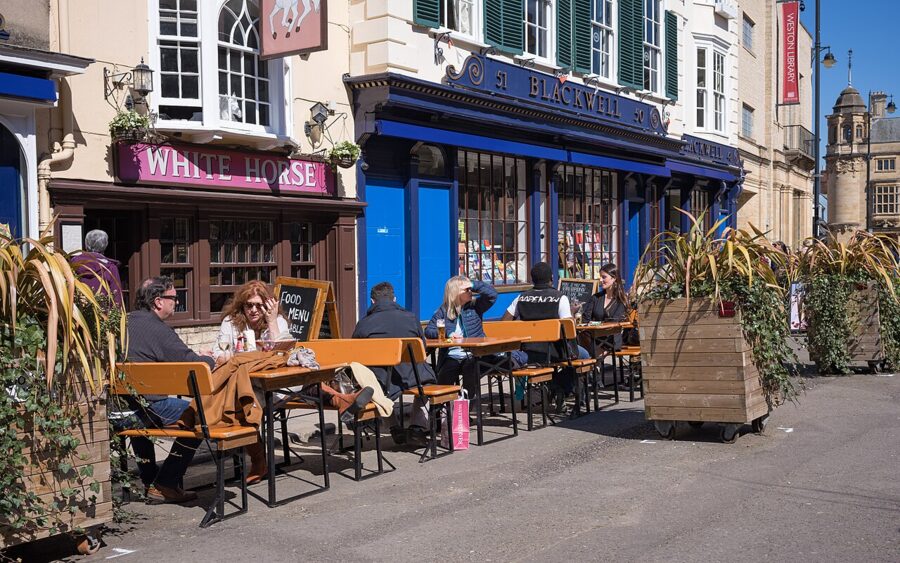

The building is sixteenth or seventeenth century behind an eighteenth-century front, listed Grade II. It turns up again and again in Inspector Morse, and Winston Churchill and Bill Clinton are both said to have drunk here. There is no fixed range, just four changing casks, with Draught Bass the one most often seen. Hours are 12:00–23:00 (from 15:00 on Mondays), with lunch 12:00–16:00 from Tuesday to Saturday.
Its size is the whole point and the whole problem. On a wet Saturday you will not get in. On a Tuesday at four you may get the snug, and then it is the best room on Broad Street.
The Bear
South of Carfax, on the corner of Alfred Street and Blue Boar Street, the Bear puts “Serving Oxford since 1242” on its website. The truth is better. The present building went up in 1606 as a house for the ostlers of a much larger inn, the Bear, which ran down to the High Street and was demolished in 1801. The small house was recorded as the Jolly Trooper in 1774 and took the old inn’s name when the big one went.
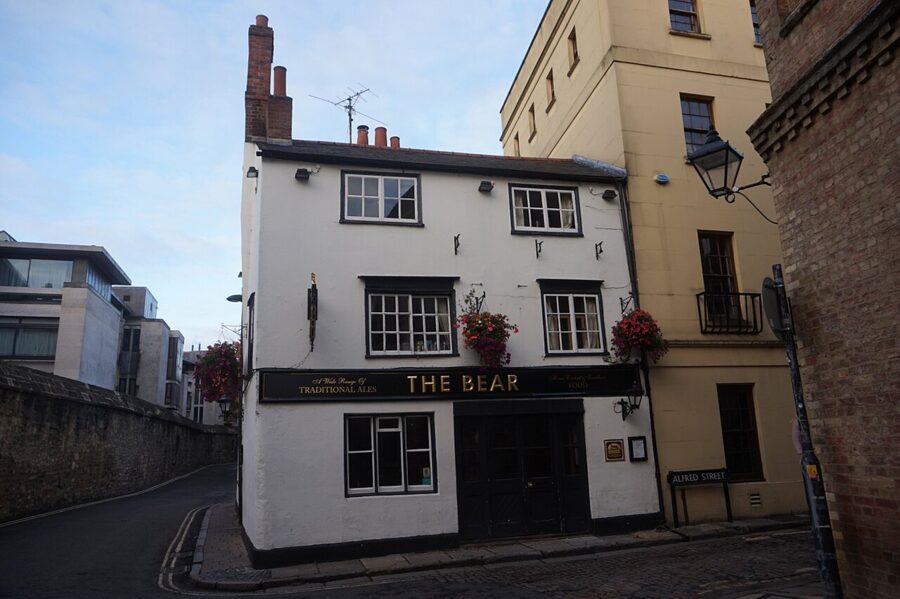

Inside there is a snug by the Alfred Street door, a little corner public bar with old fixed seating, and a back room with interwar panelling and brass bell-pushes from the days of table service. CAMRA rates the interior Two Star. Fuller’s runs it, with ESB, Gales HSB and London Pride. There are seats for only about two dozen inside, so in 2025 Fuller’s revamped the outside space and added seating in a converted shop next door.
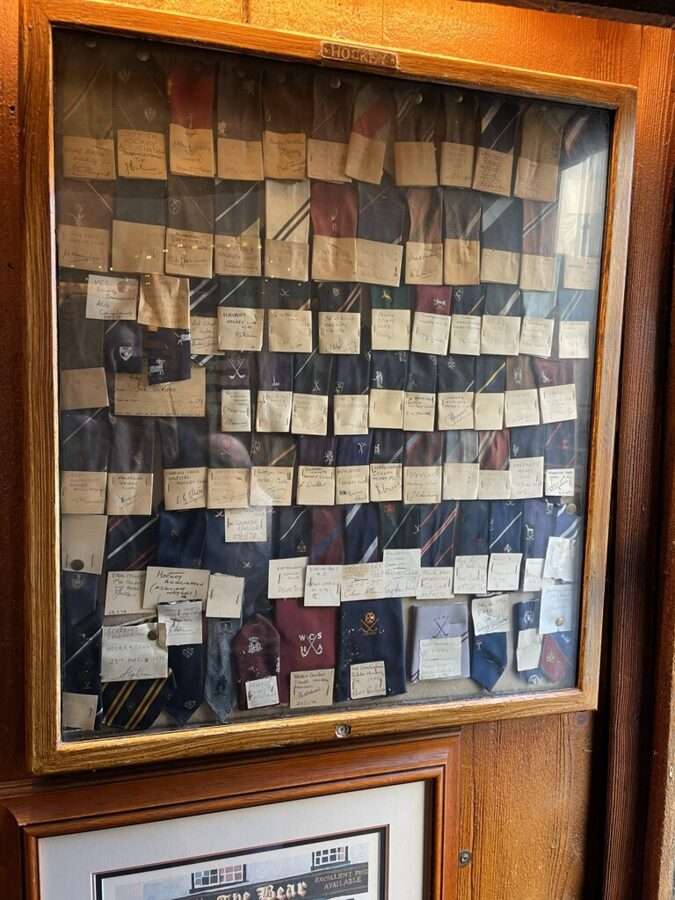

And then there are the ties. Since 1954 the cut-off ends of drinkers’ ties have gone into glass cases on the walls, more than 4,000 of them, mostly from college and sporting clubs. It opens 12:00–23:00 (22:30 on Sundays and Mondays), with food until 21:00 most days, and dogs are welcome. Nothing on the bar was under £6 in the 2025 count.
The passages off the High
The Chequers is down a medieval passage off the High Street. The building was a moneylender’s house rebuilt as a tavern in the early sixteenth century, and the name is recorded from 1605. Look up in the lower bar: the ceiling carries the crests of the Oxford colleges, except that the one for Corpus Christi belongs to the Cambridge college of that name.
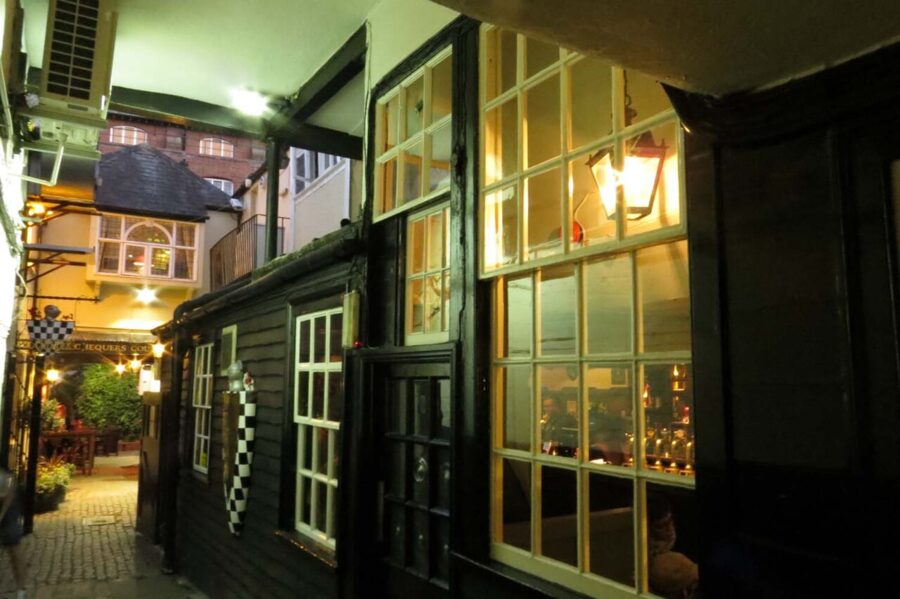

Nicholson’s runs it, with Nicholson’s Pale Ale, Adnams Broadside, Hobgoblin IPA and a few guests, and it is back in the Good Beer Guide for 2027. Upstairs are a dartboard and the only bar billiards table in the city centre. Hours are 12:00–23:00, until midnight on Fridays and Saturdays, with food until 21:00.
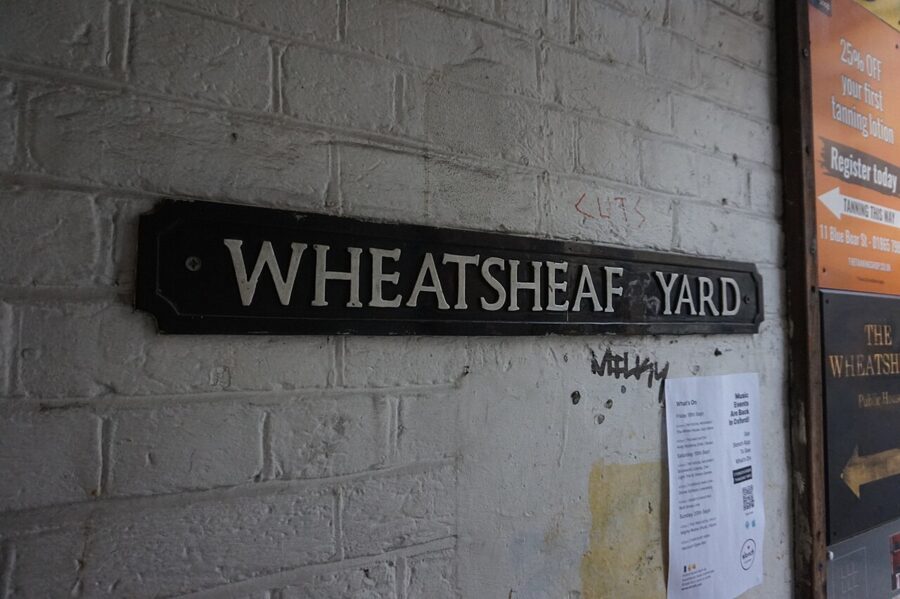
The Wheatsheaf is next door, down another slit off the High or in from Blue Boar Street through Wheatsheaf Yard. It was built in 1654 as the Hen and Chickens and rebuilt in 1896; today it is a rock pub, with pool and a jukebox downstairs and gigs upstairs. It opens at 13:00 and keeps Hook Norton Old Hooky. CAMRA’s write-up quotes drinkers calling it “a bit rough round the edges”, and I would not argue.

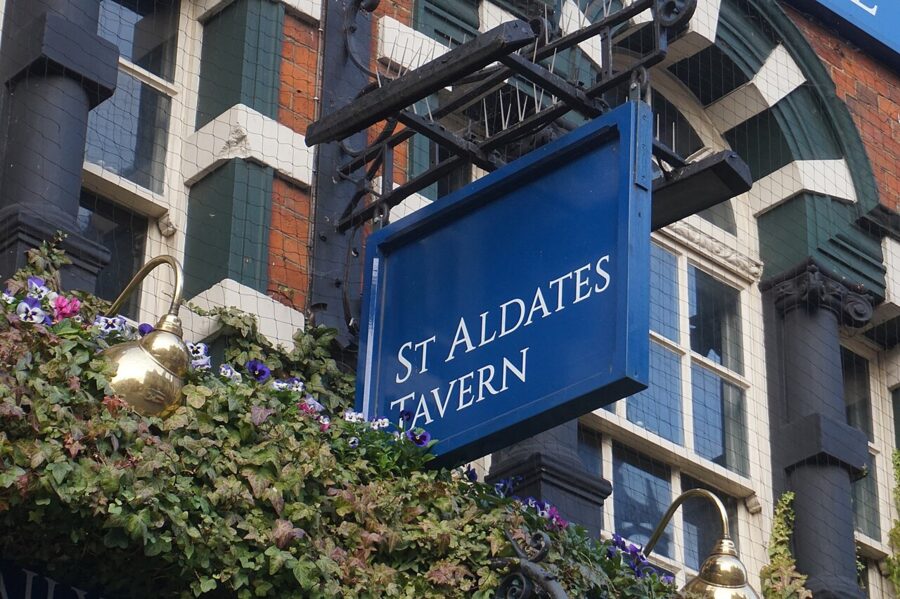
St Aldates Tavern, at 108 St Aldate’s on the way down to Folly Bridge, is the plainer, friendlier alternative. An inn is recorded on the site in 1397; it was rebuilt as a coaching inn in 1716 and spent forty years from 1965 as the Bulldog. Young’s has it now, with up to six casks, often two of them local, food until 21:00 and sport on TNT.

West of Carfax: where Oxford’s drinkers go
If you only have time for one pub and you care about the beer, make it the Royal Blenheim, on the corner of St Ebbe’s Street and Pembroke Street. It was built in 1889 for Hanley’s City Brewery, whose fermenting rooms survive in the building behind, and it is named after a stagecoach that once served the city. Titanic Brewery of Stoke-on-Trent runs it; Everards owns it.
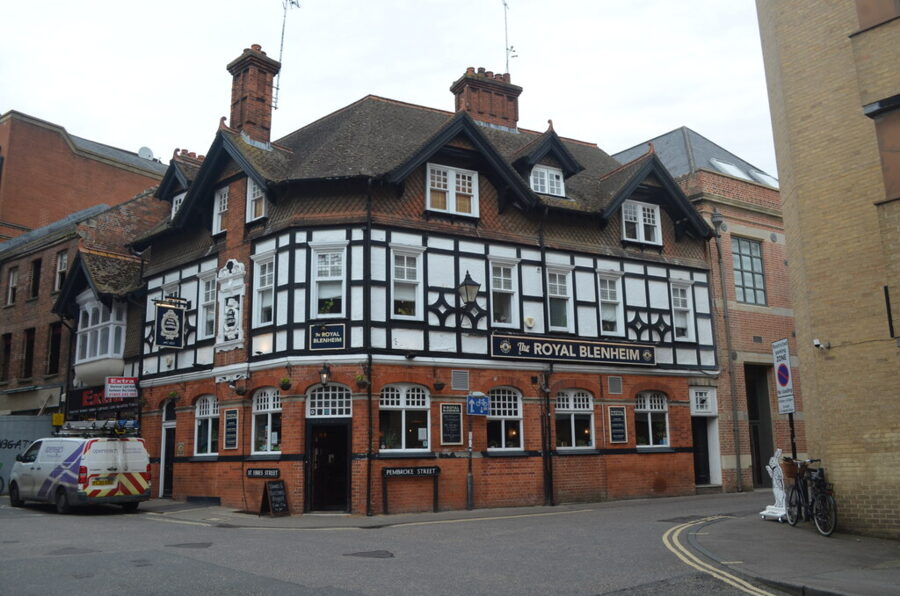

It is one L-shaped room with a raised seating area, ten cask beers and very little else. Half the beer is Titanic’s (Plum Porter, Iceberg, First Class and White Star are regulars), and the rest comes from anywhere; Green Duck’s Bostin Mild was on recently. It opens at 12:00 (11:30 from Friday to Sunday) and stays open until midnight on Fridays and Saturdays.
The Grapes, at 7 George Street, is the other one locals argue for. Built in 1820 and rebuilt in 1879, it is a rare Victorian pub in the centre: one narrow panelled room with the bar along one side and original tiling in the entrance. The Morgan Pub Collective runs it with six casks, two ciders and around forty keg lines, Harvey’s Sussex Best among them. It was City Pub of the Year for 2025 and runner-up for 2026.
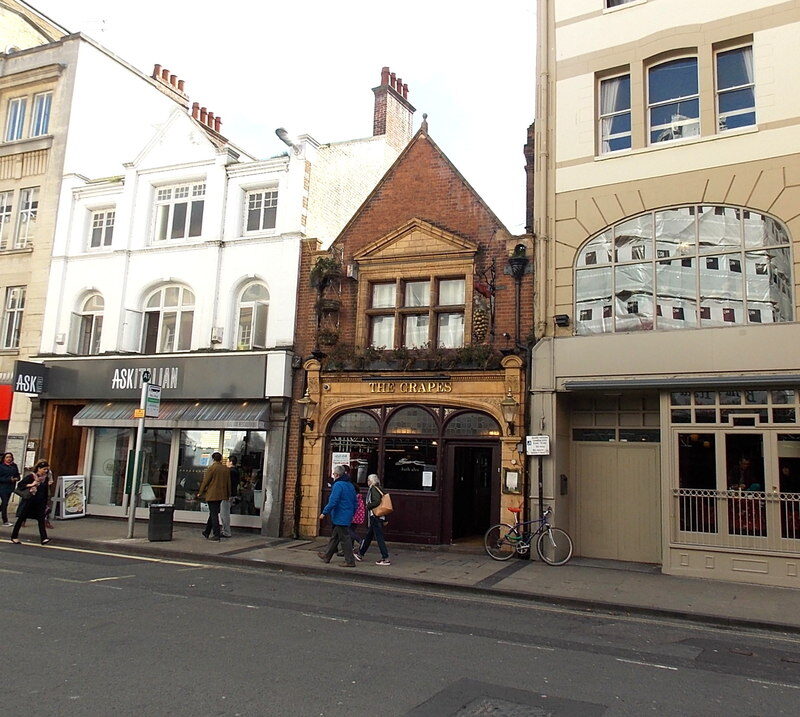

The Grapes opens at 11:00 and stays open until midnight from Sunday to Tuesday and until 02:00 from Wednesday to Saturday, so it is where a long evening in Oxford ends.
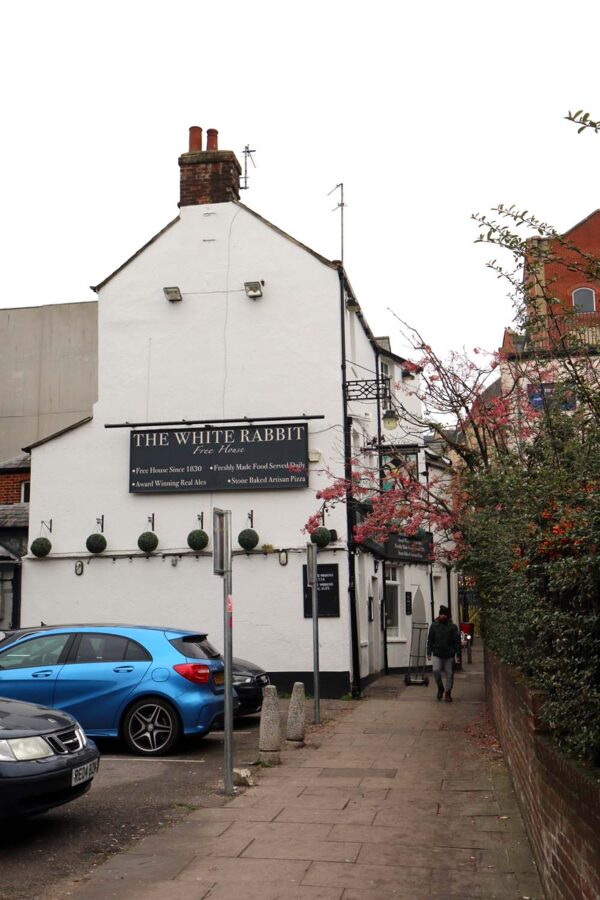
The White Rabbit, down Friars Entry between Magdalen Street and Gloucester Green, is the bargain. Its five cask beers all come from within 25 miles, and at £3.90 its pint was the cheapest in the centre outside Wetherspoon in the 2025 count. It makes Roman-style pizzas from scratch, the covered garden has heated benches, and it only takes bookings for groups of eight or more.

Towards the Westgate, the Castle on Paradise Street is Hook Norton’s pub in the city, bought in December 2016 and refitted. The present building dates from 1892. It is one long room with a half cellar, Hooky, Old Hooky and Off The Hook on the bar, and food until 21:00; Hook Norton gave it its Phoenix Award in 2026.

St Giles and the Inklings

On the west side of St Giles, at number 49, the Eagle and Child has been shut since March 2020. This is where the Inklings met. From the 1930s C.S. Lewis, J.R.R. Tolkien and their friends gathered late on Tuesday mornings (some accounts say Mondays) in a back room called the Rabbit Room, and called the pub the Bird and Baby.
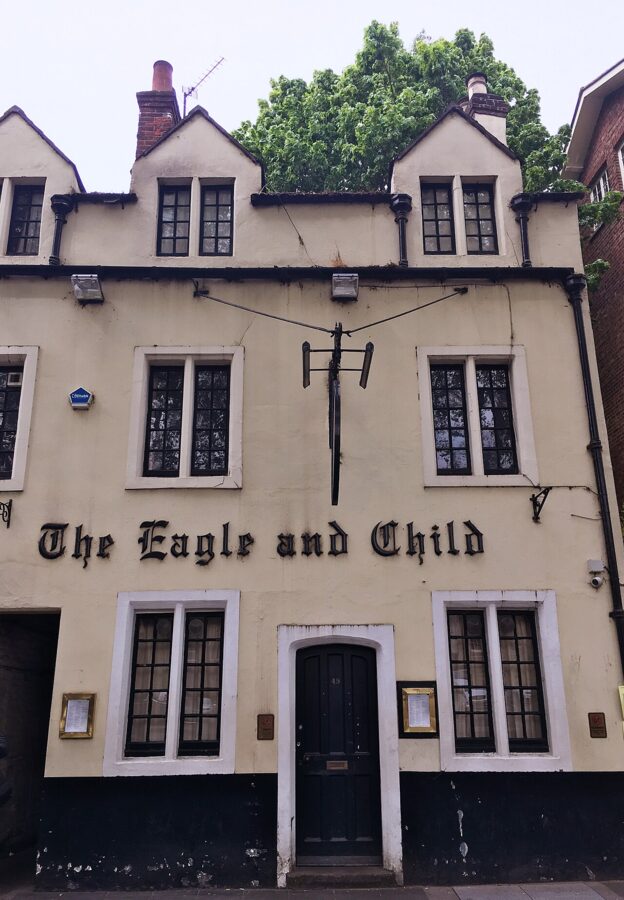

St John’s College sold the building in 2023 to the Ellison Institute of Technology, which is restoring it with Foster + Partners. Consent came in October 2025: a pub on the ground floor, meeting rooms above, the 1960s rear extension replaced and the garden opened up. In August 2026 the institute told the Oxford Drinker it was “on course for re-opening in 2027”.
The Inklings had left long before. When the Eagle and Child was extended to the rear in 1962, the Rabbit Room lost its privacy and the group moved across the road to the Lamb and Flag; after Lewis died in November 1963 the meetings faded. A former landlady once told the Oxford Drinker she had asked them to leave because they bought very little and wanted a room to themselves.
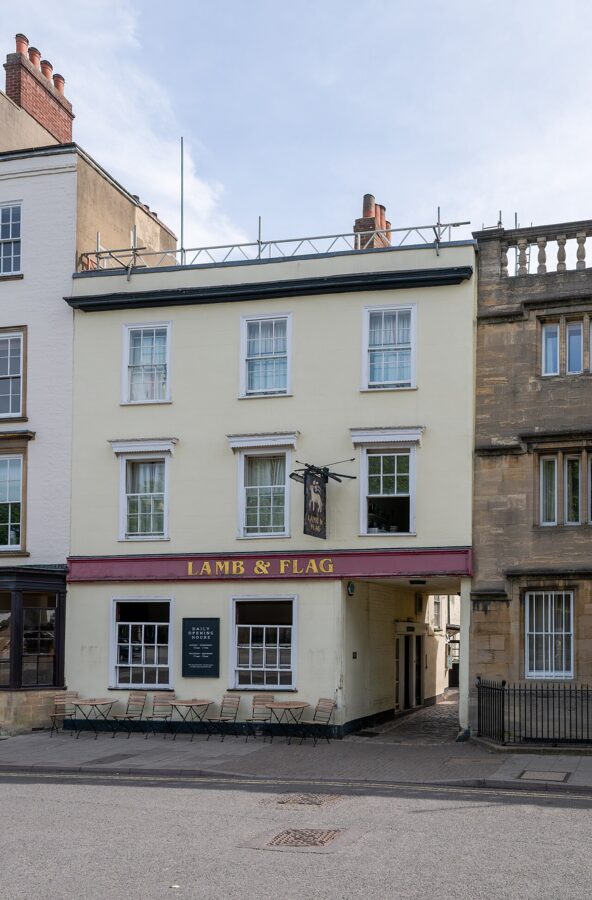

The Lamb and Flag, at 12 St Giles, is the one to go to. St John’s College has owned it since it became a tavern in 1695, and the lamb and flag are the emblems of St John the Baptist. The building has a Georgian front, a middle section about 400 years old and a medieval range at the back. Since October 2022 it has been run by the Inklings Group, a community interest company, after the previous operator failed in the pandemic.
The beer is excellent: Oxford Prospect and an Inklings Amber house beer brewed by XT, plus five changing casks from the likes of Elusive, North Cotswold and Siren. There is no music. It opens at 11:00, serves pizza 12:00–16:00 on weekdays, and stays open until midnight from Thursday to Saturday. Dogs are welcome.
Order a pint of the amber, take it to the back room, and toast the Inklings in the pub they ended up in.
Jericho and North Oxford
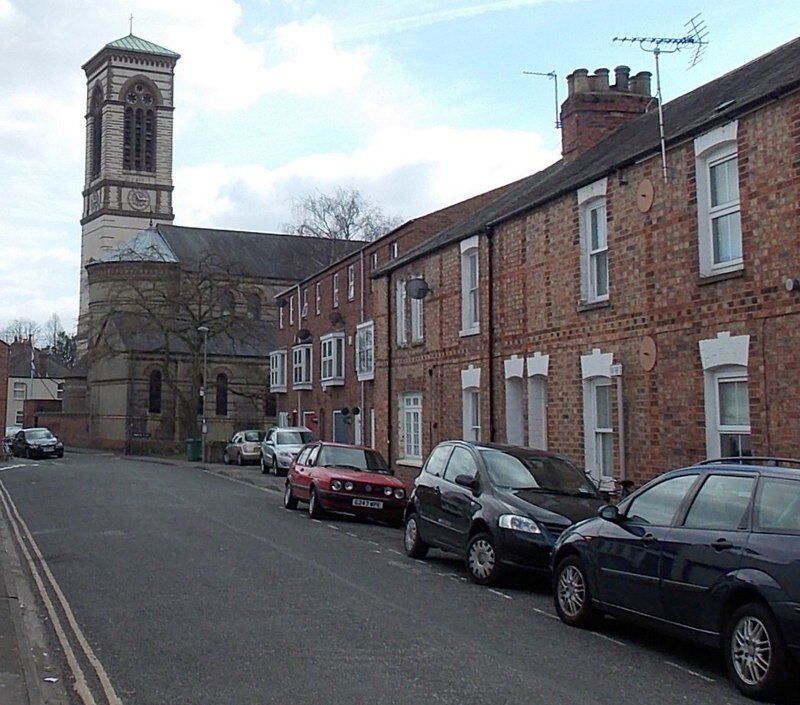
Jericho, the grid of Victorian streets between Walton Street and the Oxford Canal, was built for the workers of the University Press and the Lucy ironworks. It is the best part of the city for an unhurried afternoon of small pubs.

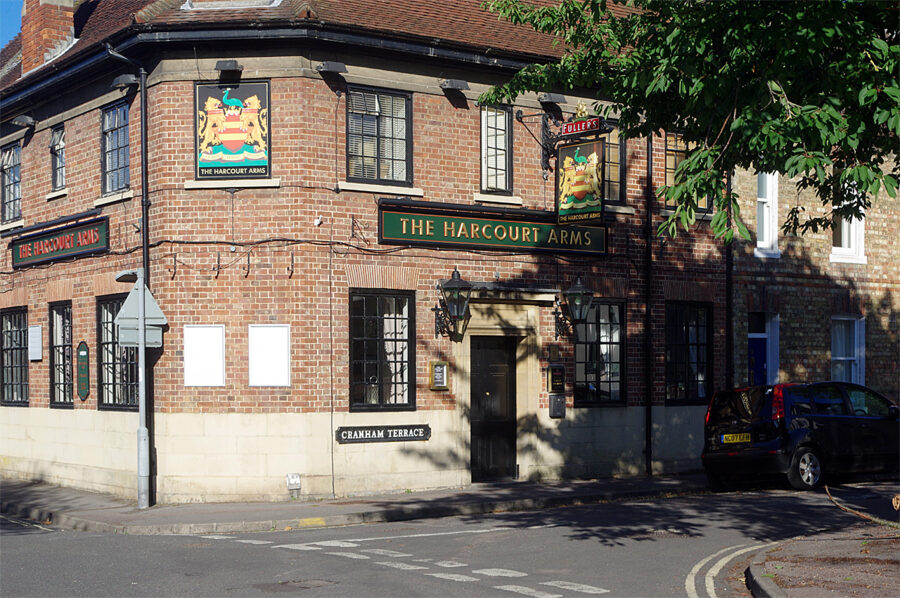
The Harcourt Arms on Cranham Terrace, behind the Phoenix cinema, is the one I would start in. An inn was first recorded here in 1871, and Ind Coope rebuilt it in the 1930s to its standard design. Fuller’s owns it now: London Pride, ESB and Gales Seafarers, log fires, sofas and pews, French posters on the walls. It is mainly a drinkers’ pub with a short menu, opens at 17:00 every day, and welcomes dogs.

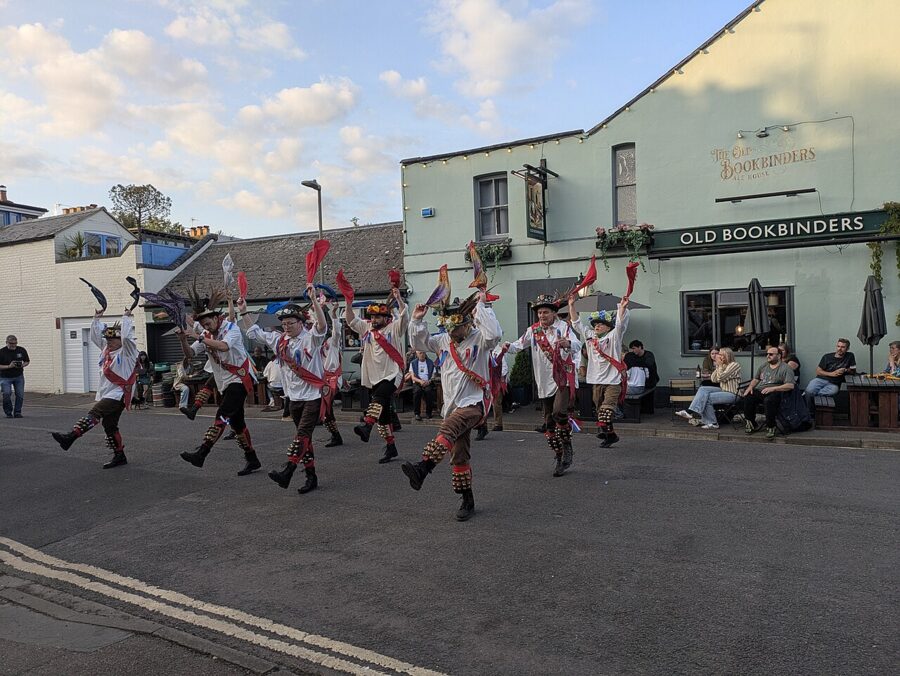
The Old Bookbinders, on the corner of Victor Street and Canal Street, is a back-street local brought back to life by a French landlord who cooks. There are two rooms off one bar full of mismatched furniture, three casks (more in term), and food in the evenings from Tuesday and at lunchtime from Wednesday; it is closed on Mondays. It appears in the very first Morse episode as the Bookbinder’s Arms, though the interior on screen was a set.

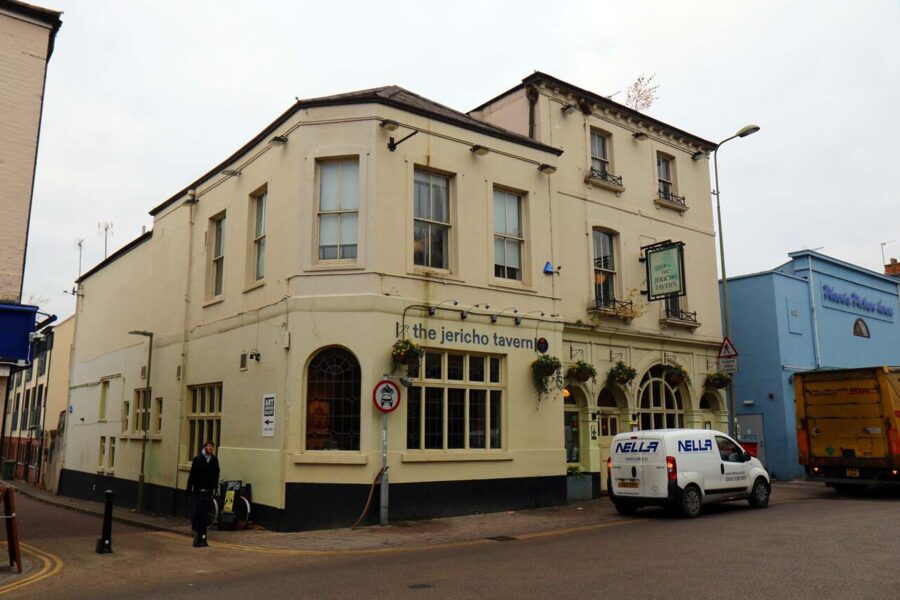
The Jericho Tavern, on Walton Street, is the music pub. It was rebuilt in the early nineteenth century beside the Jericho Brewery, which Morrell’s bought and closed in 1871. Radiohead and Supergrass started out in the upstairs room. It was refurbished in October 2026 and has a big garden; the keg list is stronger than the cask.

A little further up Walton Street, the Victoria is a corner pub of 1839 with a ceiling mural copying Michelangelo’s Creation of Adam, in which God and Adam each hold a pint. Pies are the speciality.
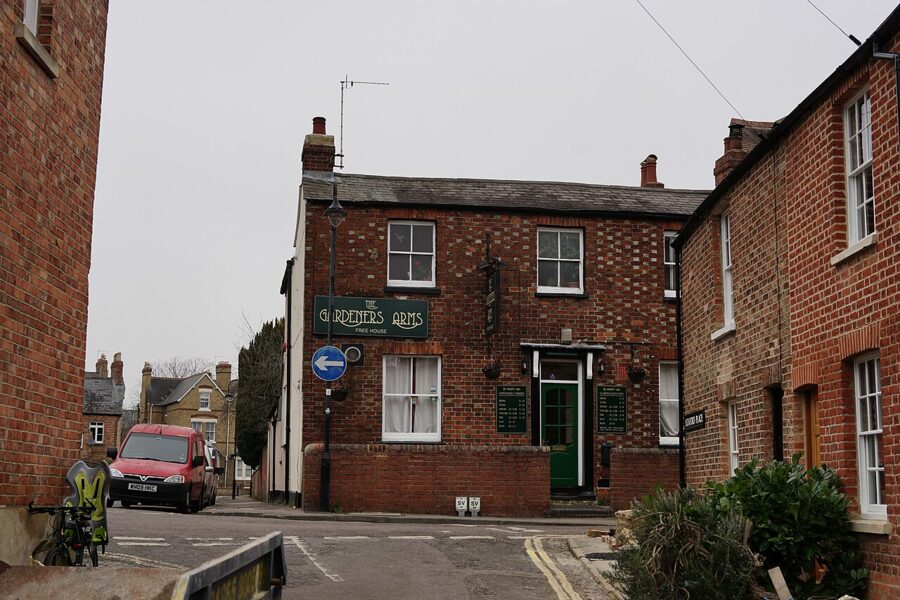
On Plantation Road, off the Woodstock Road, the Gardeners Arms is an 1830s pub that has served only vegetarian and vegan food since 2003: a small bar opening into a dining room, a big garden, outside toilets and a Sunday night quiz with a local following.

A few minutes north, on North Parade Avenue, is the Rose and Crown, which I would put alongside the Royal Blenheim as the best pub in Oxford. The building was farm cottages until it became a pub in 1865, and the same licensees have run it since 1983, buying the freehold from Punch Taverns. It is on CAMRA’s National Inventory at Two Star, though it is not even a listed building.
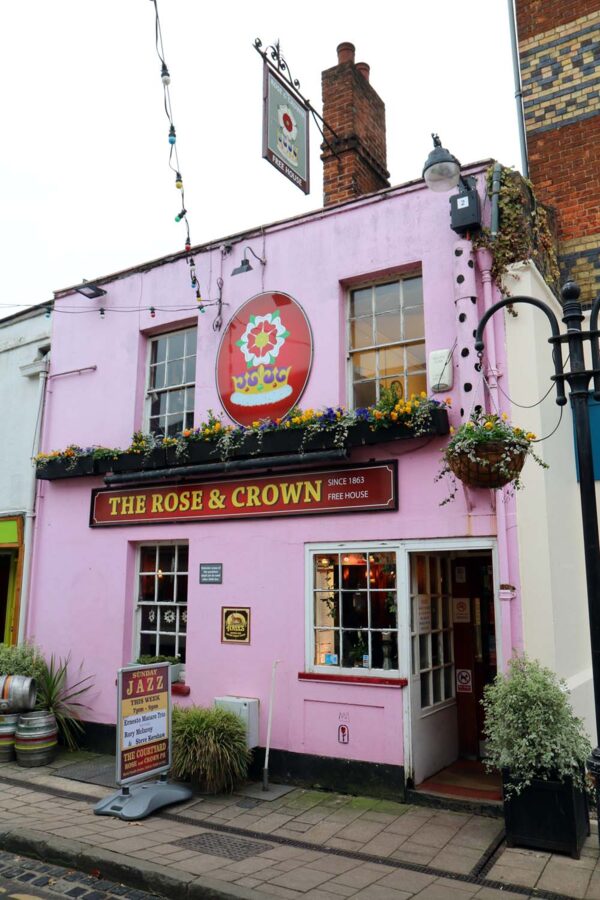

There are three small rooms. The rear bar has a ply-panelled counter and a back fitting with small glass pieces in a 1960s style; the front room has an Art Deco marble fireplace; the third is really a drinking passage from the front door, served through a hatch. Hook Norton Old Hooky, Oxford Trinity and Adnams Southwold Bitter are the regulars.
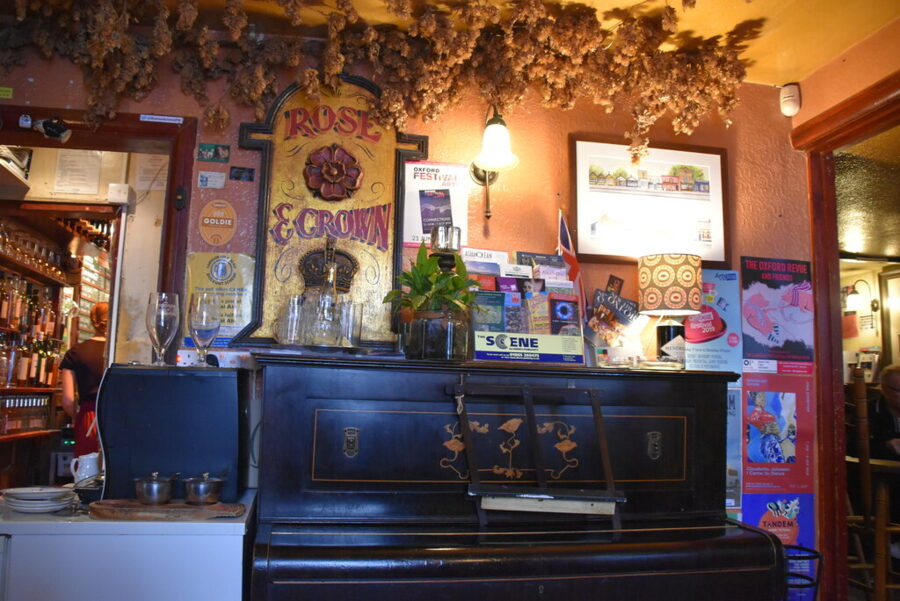

The house rules are part of the charm. Nobody under 18 after 17:00, and the front door shuts at 23:00, although the bar runs until midnight. Food is 12:00–14:30 (15:00 on Sundays) and 18:00–21:00, with a Sunday roast from October to Easter. Book by phone; a WhatsApp message without a reply is not a booking.
Across Port Meadow: the Perch and the Trout
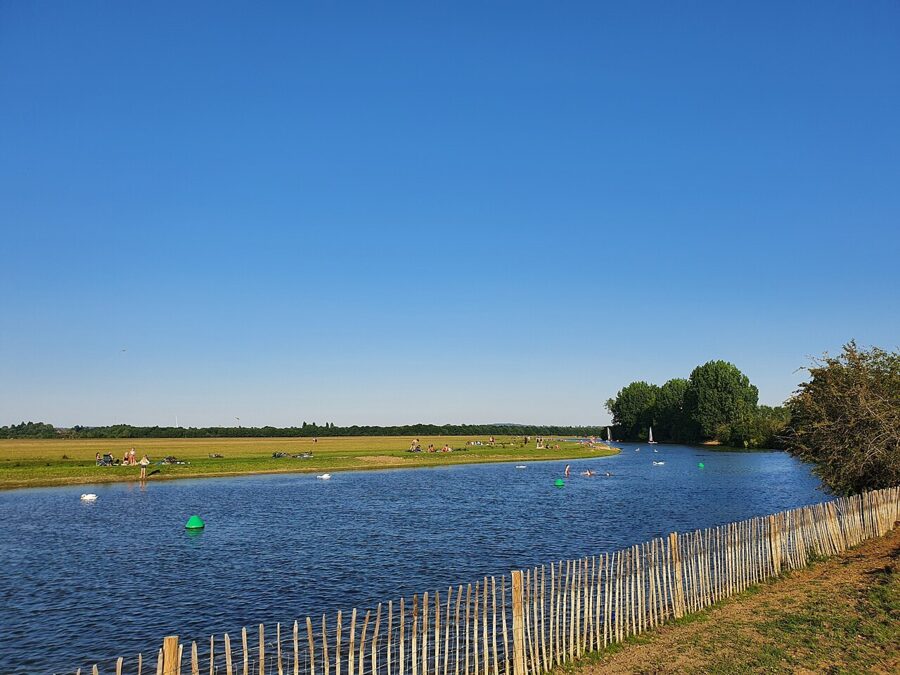
The two riverside pubs everyone asks about are a walk out of town, and the walk is half the point. From Jericho, follow Walton Well Road over the canal and the railway onto Port Meadow, the common that runs north beside the Thames towards Wolvercote. Horses and cattle graze it, and in a wet winter much of it floods.

The Perch
The Perch is on the west bank at Binsey, reached from the meadow or along Binsey Lane from the Botley Road. It is a seventeenth-century thatched building with a large garden. The pub says there has been an inn on the site for at least 800 years, which may be true of the site but not of the thatch. Lewis Carroll is said to have read here, and from 1928 to 1948 it was a jazz venue.
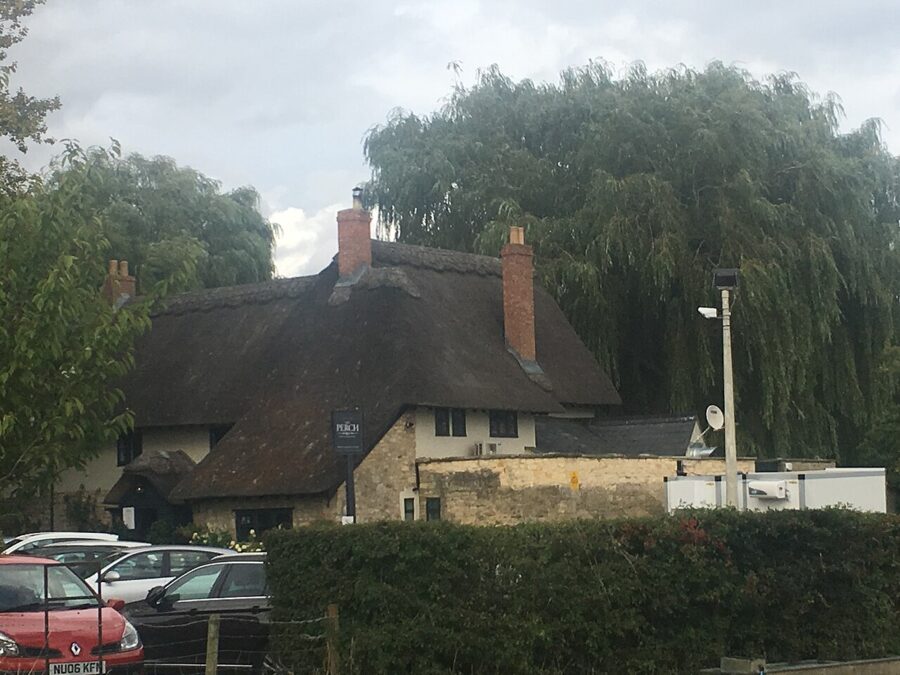

Most of the inside is now restaurant, but the small bar with sofas and a big fireplace survives. Hook Norton’s Hooky is the regular beer, with two guests, and on weekends and bank holidays (11:00–19:00, weather permitting) a Shed Bar in the garden does barbecue food and ale from the barrel. The pub opens 11:00–22:00 daily, with food 12:00–21:00, and takes cards only. Families and dogs are welcome, and there is a ploughman’s lunch on the menu, which is the right order after the walk.
The Trout
Carry on up the Thames Path, about half an hour from Binsey, to Godstow, where the Trout sits on the river at the edge of Lower Wolvercote. There has been a building here since the twelfth century and the present pub dates from 1737; it is listed Grade II, as are the footbridge to its island and both road bridges. The island is private, reached by a bridge actually called the Rickety Bridge.
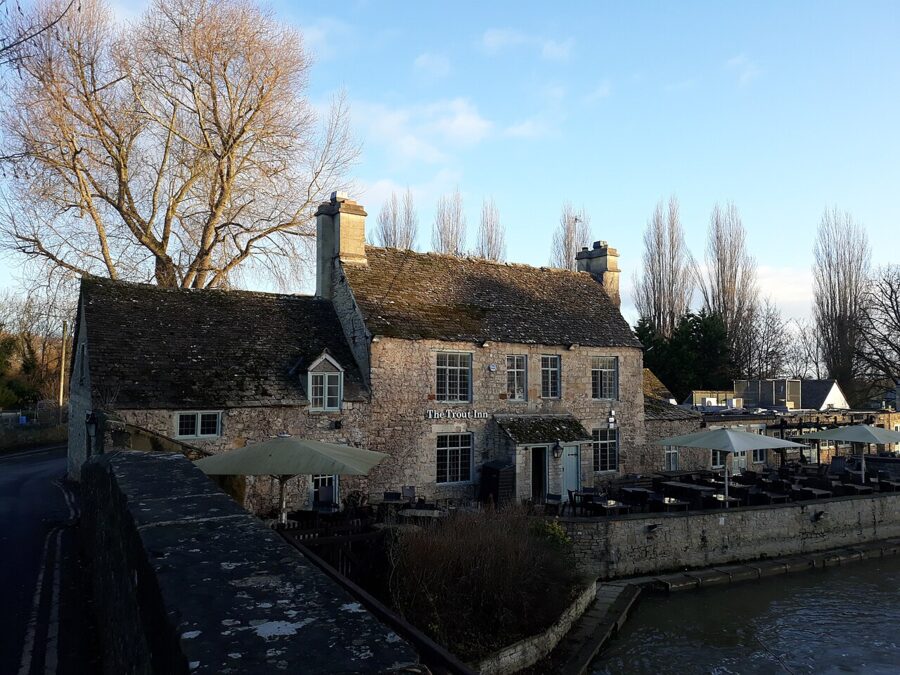

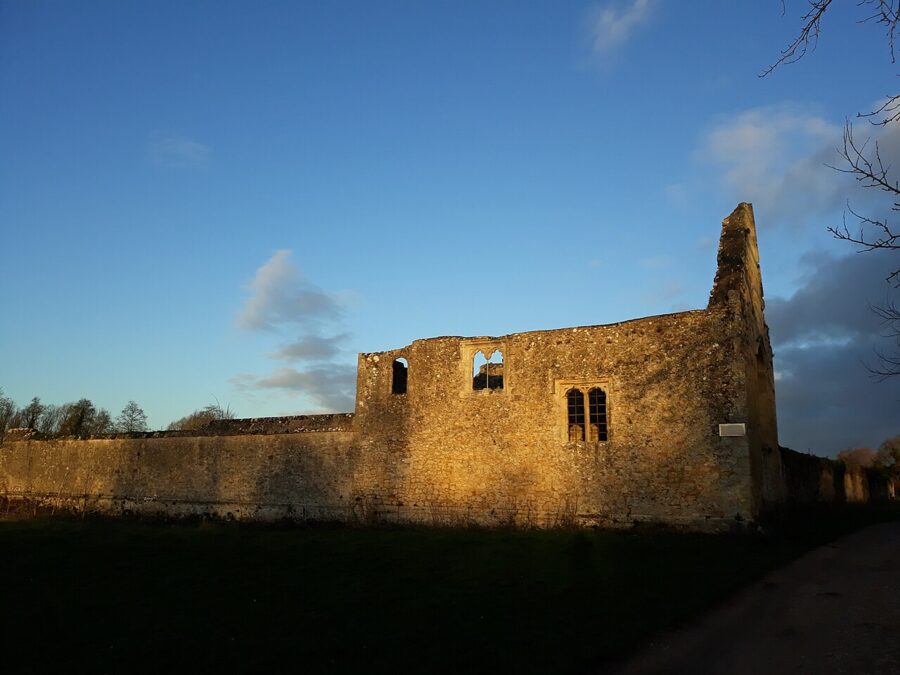
This is the riverside pub of Oxford legend, a regular location for Morse and Lewis, and it knows it. Mitchells & Butlers runs it as a dining pub with Doom Bar and Timothy Taylor Landlord, open 12:00–23:00 (22:30 on Sundays) with food until 21:00. Reviews of the food are mixed; the terrace, the river and the ruins along the road are the point.

Wolvercote
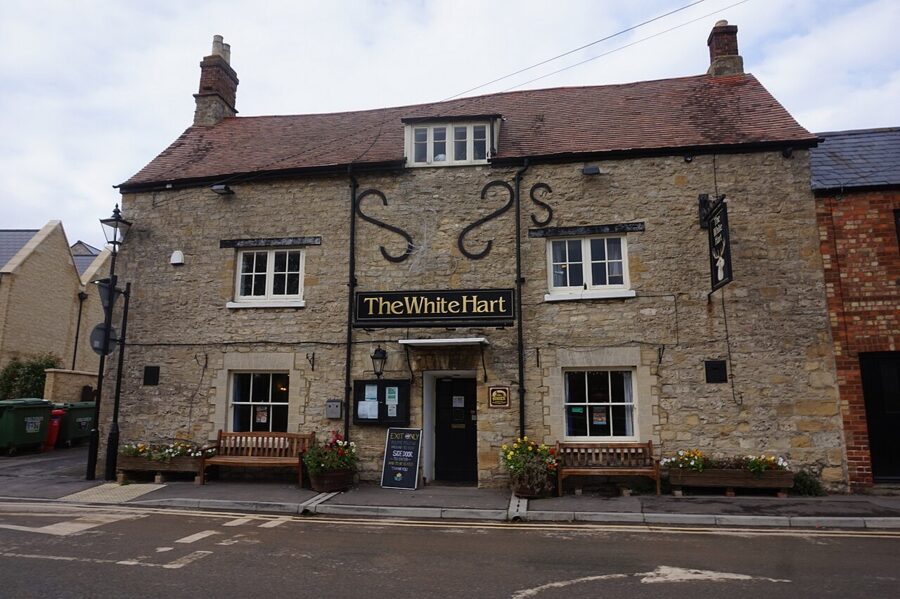
Up the Godstow Road, the White Hart faces the green at Lower Wolvercote. It was a house in the seventeenth century and a pub since at least 1763, and since 2014 it has been run by a community company: three or four local casks, a pizza oven, aunt sally in the garden and a Sunday farmers’ market with brunch from 10:00. It opens at 15:00 or 16:00 from Monday to Thursday and at noon on Fridays and Saturdays.

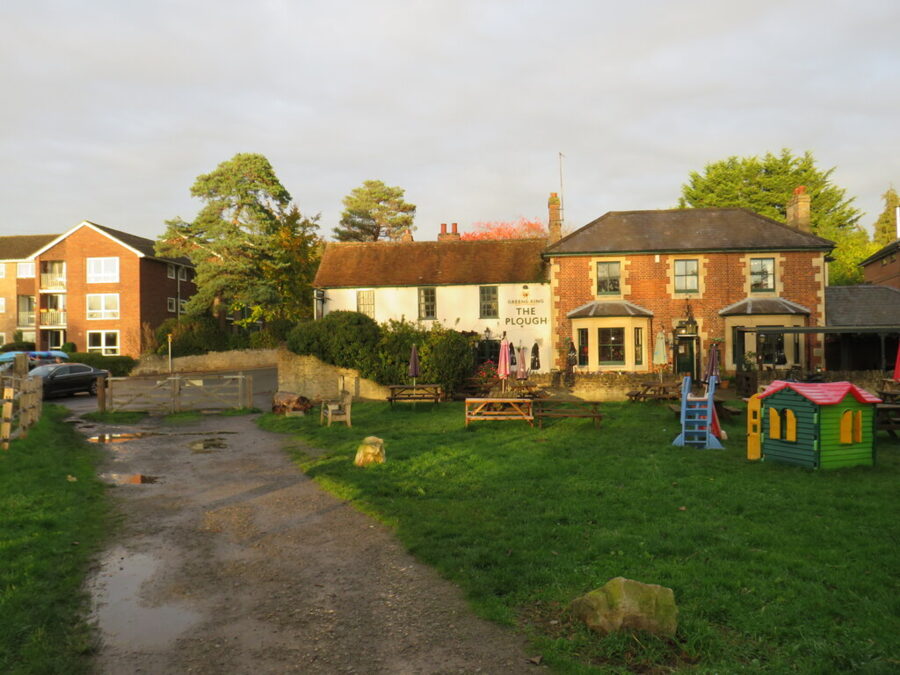
The Plough overlooks the green at Upper Wolvercote, by the canal. Its front bar dates from about 1860, when canal boatmen brawled in it, and it served as a mortuary after the Christmas Eve rail crash of 1874, which is why the regulars say it is haunted. It is closed on Mondays and Tuesdays.

East of Magdalen Bridge
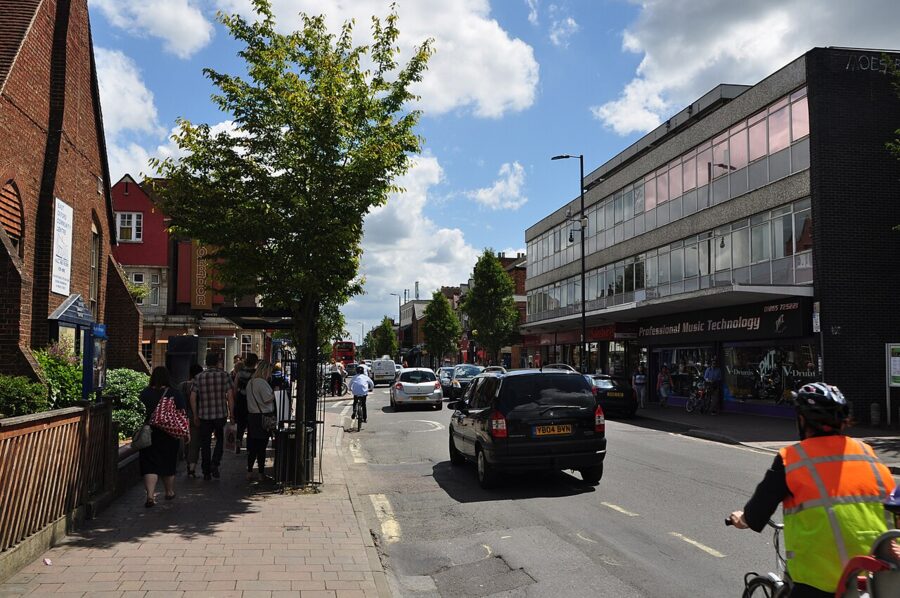
Cross Magdalen Bridge and the city changes. St Clement’s, the Iffley Road and the Cowley Road are where most of Oxford’s students and younger residents live, and the pubs are locals with better beer than you might expect.
The Oranges and Lemons, at 30 St Clement’s Street, has had more names than most pubs have landlords. A beer house from 1880, it became the Burton Ale Stores in 1920, the Oranges and Lemons in 1970, briefly a cocktail bar called Parker’s in the 1980s, and the Angel and Greyhound under Young’s from 1991. Young’s sold it in 2024, and the Morgan Pub Collective, who run the Grapes, reopened it under its 1970 name in February 2025.
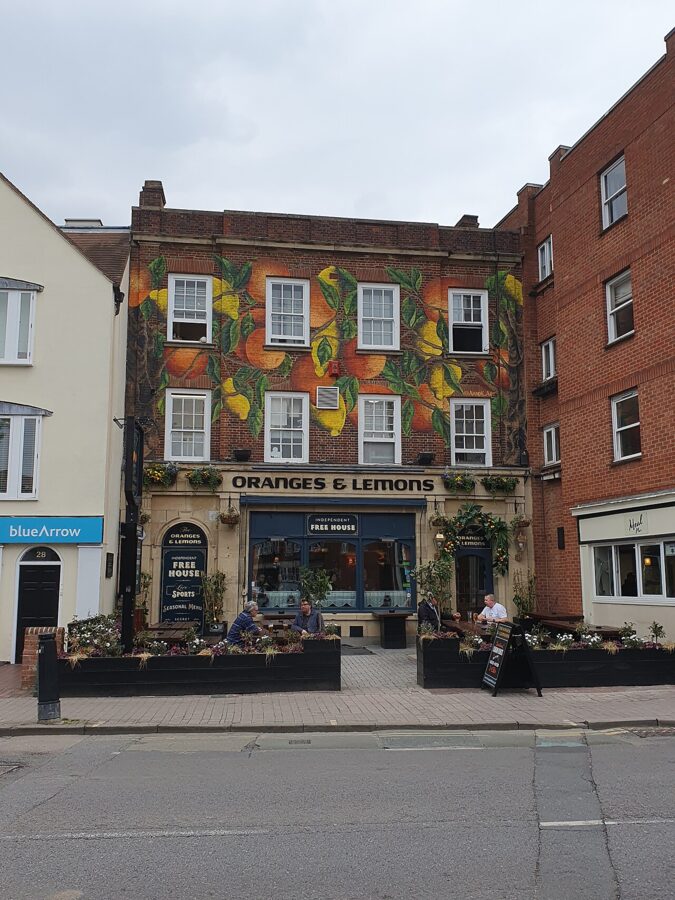

It is one room with a raised seating area, five casks including Harvey’s Sussex Best, three ciders and a good keg list. It opens at 08:00 for breakfast, with the bar from 11:00, until midnight every night. It made the Good Beer Guide within a year of reopening, and it is the place for cider on draught.
Off the Cowley Road, the Star on Rectory Road opened in 1876 and is as traditional as east Oxford gets: a wooden floor, beer mats on the ceiling, a pub dog, a semi-divided front room and a smaller back one. It entered the Good Beer Guide for the first time in 2026 and took up pizza the same year. The garden is excellent but closed in winter under planning rules. It opens at 16:00 on weekdays and 14:00 at weekends, until midnight, and takes cards only.

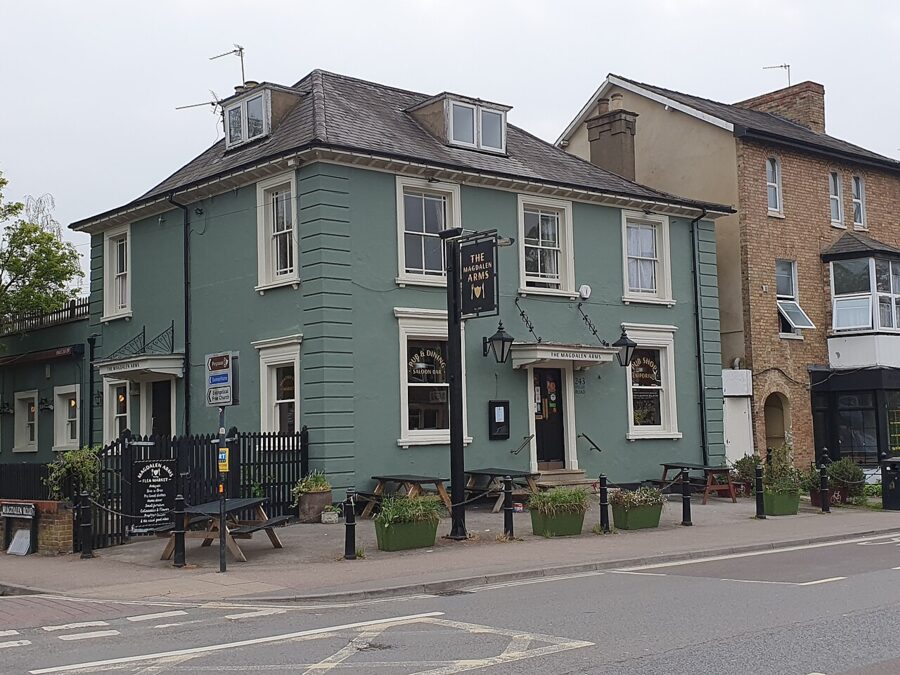
Down the Iffley Road, the Magdalen Arms is the food pub: a front bar full of animal heads and bric-a-brac, a restaurant screened off behind, daily specials on the blackboards and Hook Norton beers. It is closed on Mondays.

Headington: a beer festival and a 1712 play
Headington is up the hill east of the city, a bus ride from Carfax, and it has two of the best pubs in Oxford. The Masons Arms on Quarry School Place, in the old stone-quarrying village of Headington Quarry, is a free house run by the Meeson family and six times Oxford CAMRA’s City Pub of the Year. They brewed as Old Bog, named after the outhouse, though that brewery is resting.
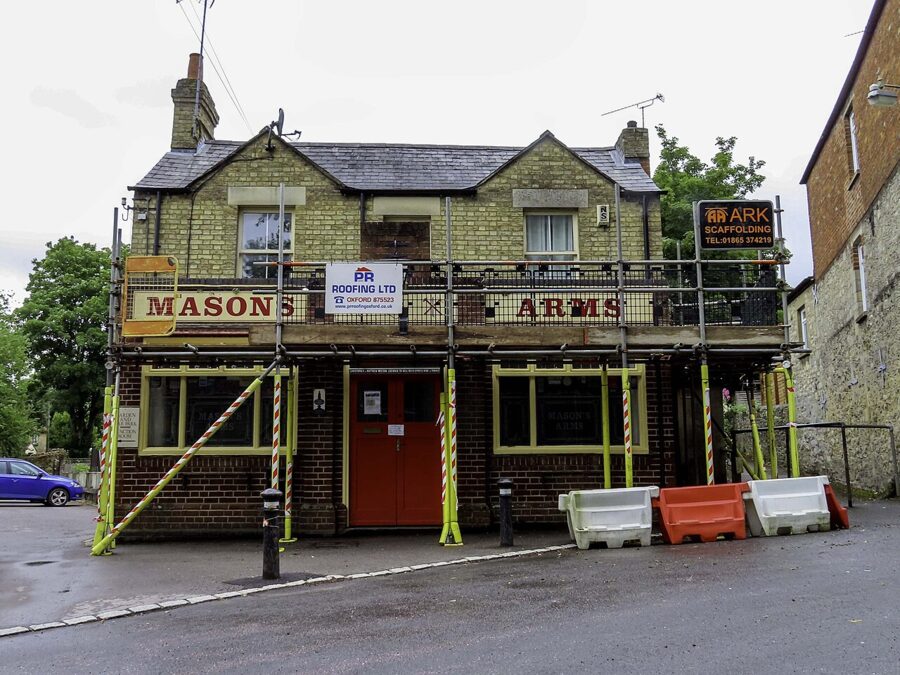

It is a proper community pub, with darts, crib, aunt sally and bar billiards teams, a Saturday quiz, Sky Sports, a big garden and heated decking. The Headington Beer Festival is held in its function room on the first weekend of September, with more than forty casks and free entry in 2026. It is closed on Mondays, opens at 17:00 from Tuesday to Friday and at 15:00 on Saturdays, and runs 12:00–19:00 on Sundays.
In Old Headington, opposite the church on St Andrew’s Road, the White Hart is a stone Everards pub of the late seventeenth century, listed Grade II, with some original panelling and doors. On the wall is a framed extract from The Tragi-comedy of Joan of Hedington, a play of 1712 by Dr William King of Christ Church about the keeper of a disreputable alehouse. The pub’s reputation has improved since.
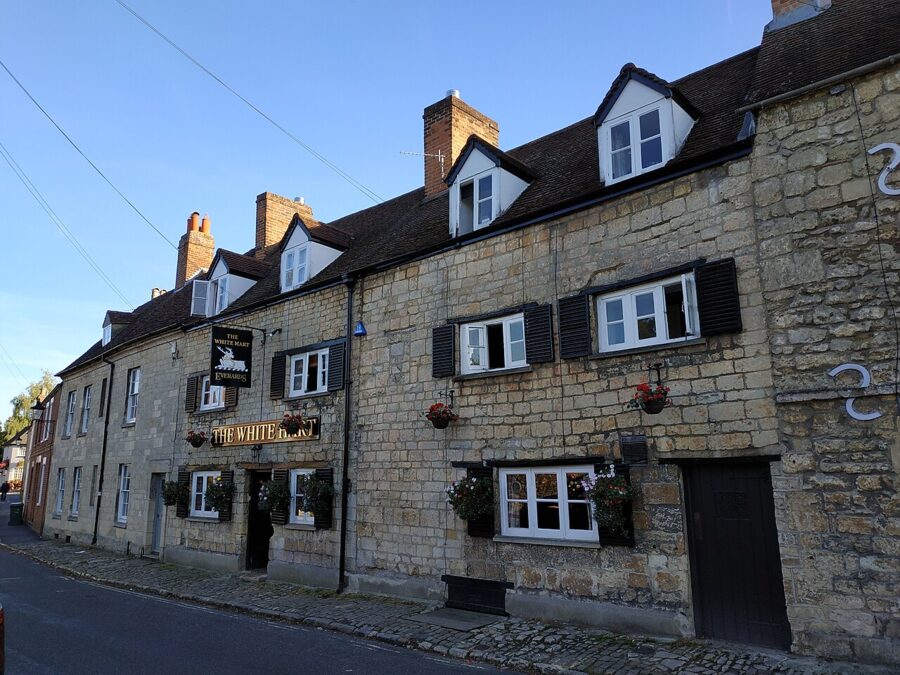

It has three drinking areas, a very large garden, home-made pies and a beer festival every May. Food runs 12:00–21:00, or 12:00–16:00 on Sundays, when the pub closes at 18:00.
Historic interiors and famous names: what is genuine
CAMRA’s National Inventory of Historic Pub Interiors lists the pub rooms in Britain that have survived largely intact, and three in this guide are on it: the Bear and the Rose and Crown at Two Star, the King’s Arms at One Star. Between them they show what an Oxford pub looked like before the great opening-out of the late twentieth century.
The claims to be oldest are shakier. The Bear’s 1242 belongs to a demolished inn; the Turf’s 1381 is the brewery’s, not the listing’s; the Perch’s 800 years are about the site. Most claims among the oldest pubs in England work the same way, by borrowing the date of something that stood there before. In Oxford the King’s Arms has the earliest firm date for its site, and the oldest fabric may be the medieval range at the back of the Lamb and Flag.
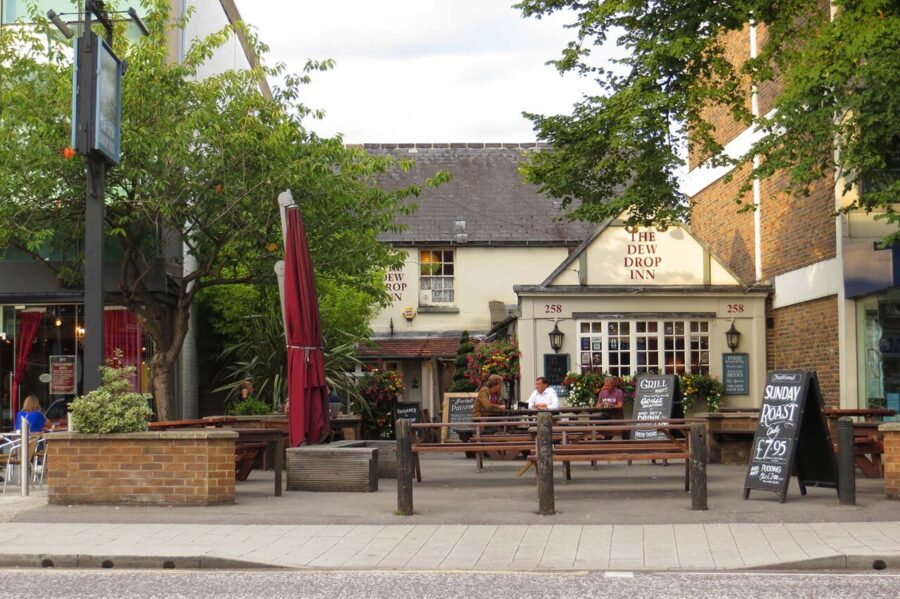

Inspector Morse is everywhere and mostly harmless. The White Horse and the Trout are genuine filming locations, and the Old Bookbinders appeared in the first episode, if only from outside. Colin Dexter, who wrote the novels, was a regular at the Dewdrop on the Banbury Road in Summertown, which turns up in many of the books. The Turf claims Morse among its customers too; so does half the city.
The Inklings story is true but belongs to two pubs, the Eagle and Child until 1962 and the Lamb and Flag after. Hardy’s Lamb and Flag, confusingly, was the Turf.
One evening, start to finish
This route covers the best of the centre in under two miles, and no leg is longer than ten minutes. Start at about 17:00 and keep to halves in the first two pubs.
- The Royal Blenheim, St Ebbe’s Street. Something from Titanic and something you have never heard of.
- The Bear, Alfred Street, five minutes east across St Aldate’s. Ask for the snug; look at the ties.
- The Chequers, up Wheatsheaf Yard to the High and a few steps along. Look up at the crests.
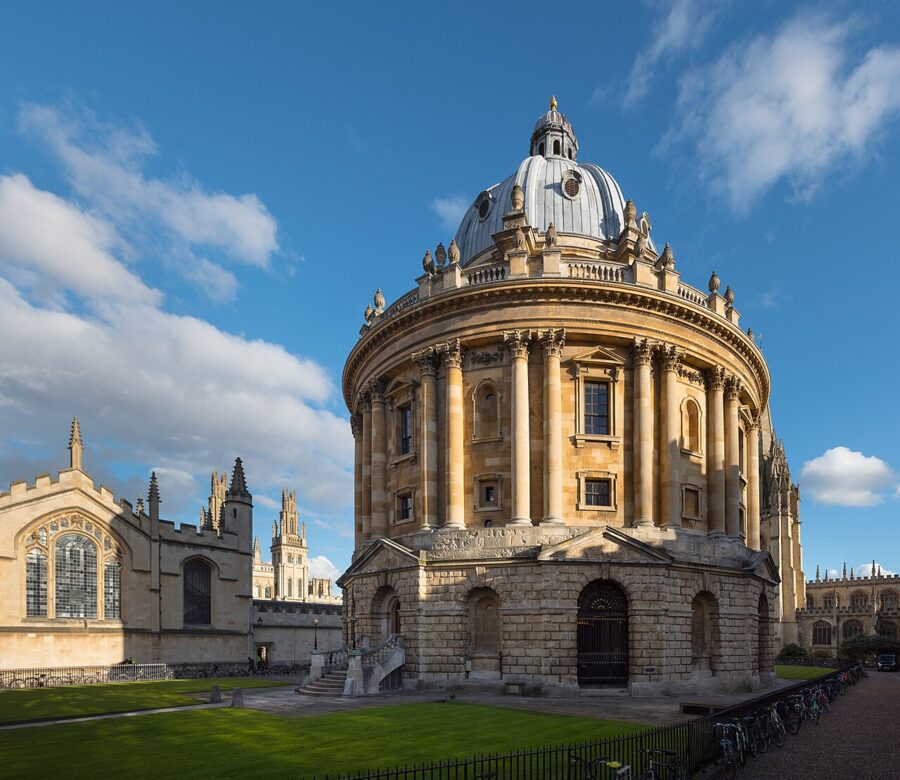
- The Turf, via Radcliffe Square and New College Lane. Get there before 19:00 if you want a seat inside.
- The King’s Arms, two minutes away at the end of Bath Place. Find the back bar.
- The Lamb and Flag, along Broad Street past the White Horse (go in if the snug is free) and up St Giles.
- The Grapes, George Street, five minutes south, open until 02:00 from Wednesday to Saturday.
On a fine weekend, swap it all for the river: the Harcourt Arms or the Old Bookbinders first, Port Meadow to the Perch, the Thames Path to the Trout, and the White Hart at Wolvercote while you wait for a lift back.
Practical notes
Getting there. Oxford station is on the Botley Road on the west side of the city, about fifteen minutes’ walk from the Turf and ten from the Royal Blenheim; the canal towpath gets you to Jericho. Oxford Parkway, on the northern edge, is the nearest station to Wolvercote. Coaches from London stop at Gloucester Green, a minute from the White Rabbit.
Late licences. The Grapes runs until 02:00 from Wednesday to Saturday. The King’s Arms, the White Rabbit, the Oranges and Lemons and the Star stay open until midnight every night, and the Lamb and Flag, the Chequers, the Royal Blenheim and the Harcourt Arms do at weekends. Most of the rest close at 23:00.
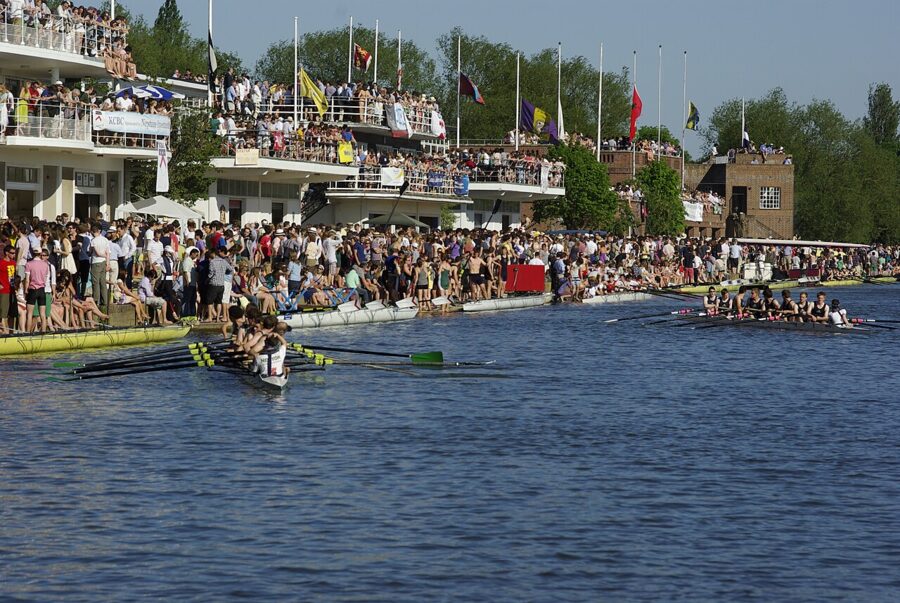
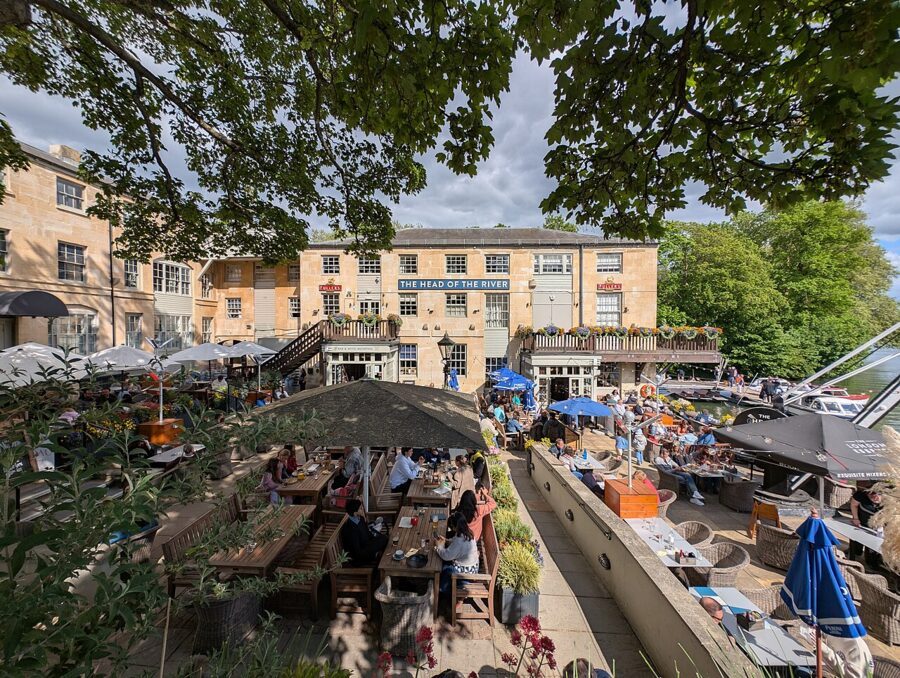
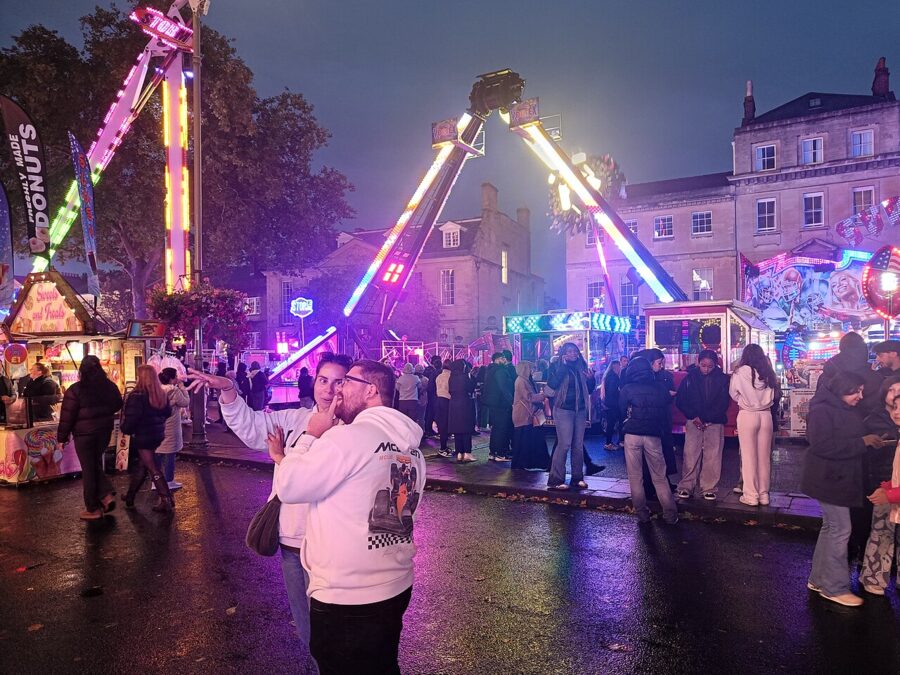
Term time and big days. The centre is fullest in term (October to early December, mid-January to mid-March, late April to June) and full of tourists the rest of the year. Eights Week in late May packs the Head of the River by Folly Bridge, a converted wharf warehouse named for the college bumps races, which opens at 07:00 for breakfast, is licensed from 10:00 and takes cards only. St Giles’ Fair, in early September, closes St Giles for two days.


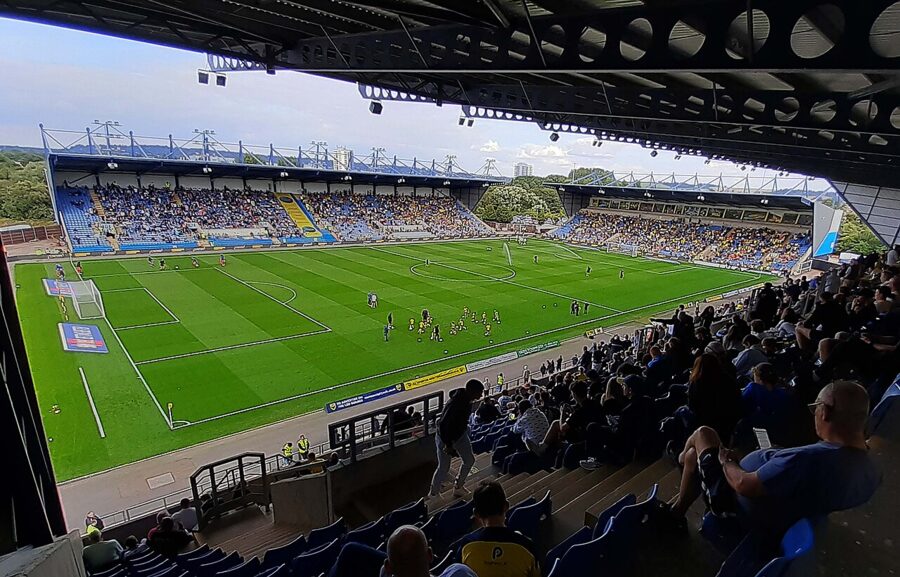
Match days. Oxford United play at the Kassam Stadium on the city’s southern edge, and the centre is no football town. For rugby or the Premier League, the St Aldates Tavern, the Chequers and the Masons Arms have the screens; the Lamb and Flag, the Rose and Crown and the Harcourt Arms are where to hide from them.

Booking and paying. The Turf takes no bookings from May to September and the White Rabbit only for groups of eight or more; the Rose and Crown and the Magdalen Arms want a phone call. The Perch, the Star and the Head of the River take cards only.
Paying less. The two Wetherspoons, the Four Candles and the Swan and Castle, were the cheapest pints in the centre in 2025, at £2.59. Everywhere else you order at the bar, and the usual pub etiquette of rounds applies.
Children and dogs. Dogs are welcome at the Turf, the Bear, the Lamb and Flag, the Harcourt Arms, the Perch, the Trout and the White Hart at Wolvercote. Children are fine by day almost anywhere that serves food, but the Rose and Crown admits nobody under 18 after 17:00, and the tiny city-centre rooms are no place for a pushchair.
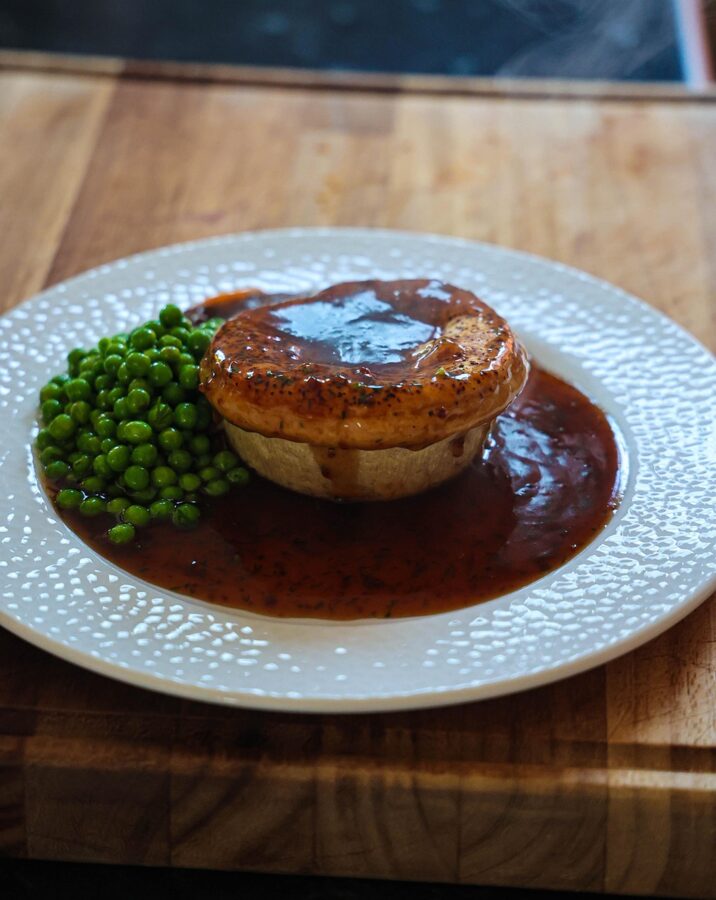
End where the locals end: the Grapes on George Street, a pint of Harvey’s at the bar, ten minutes’ walk from the station and open long after you should have caught your train.