
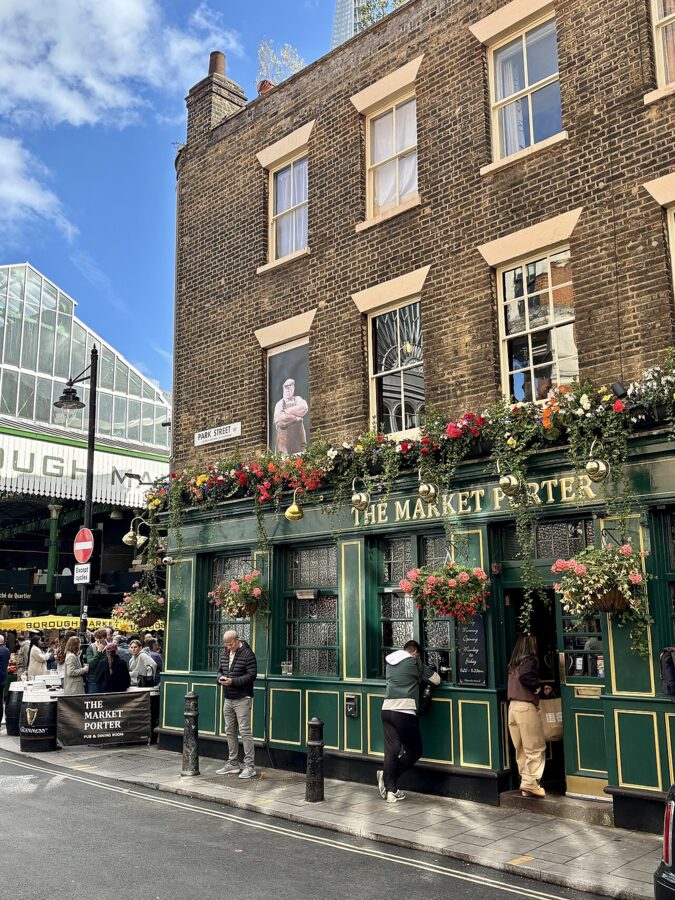
At six o’clock on a weekday morning, while nearly every other pub in London is dark, the Market Porter on Stoney Street is open and pulling pints of Harvey’s. It keeps an old market licence for the traders of Borough Market, pours until nine, shuts for an hour, then opens again at ten as if nothing had happened. Hardly any London pub still uses an early licence like this. It is a useful reminder that the city’s pubs were built around work: the market, the river, the courts, the printing presses, the railway termini.

That is the first thing to know about drinking well here. There is no single best pub in London because there is no single London. A gin palace in Holborn, a riverside inn at Hammersmith and a brewery tap under a railway arch in Bermondsey are doing three different jobs, and a good evening usually means picking the area first and the pub second.

So this goes area by area: the West End and the City, the riverside, Hampstead and Highgate, Hackney and Bermondsey. Every pub named was trading in autumn 2026, but London pubs change hands and hours quickly, so check before you cross town for one.

On this page
- How London drinks
- The City and Fleet Street, briefly
- Soho and Covent Garden
- Holborn and Bloomsbury
- Gin palaces and the National Inventory
- The riverside
- Hampstead and Highgate
- The east: Hackney's brewery taps and old locals
- The south: Borough and the Bermondsey Beer Mile
- The famous names, and what is genuine
- One evening: Holborn to Soho
- Practical notes
How London drinks
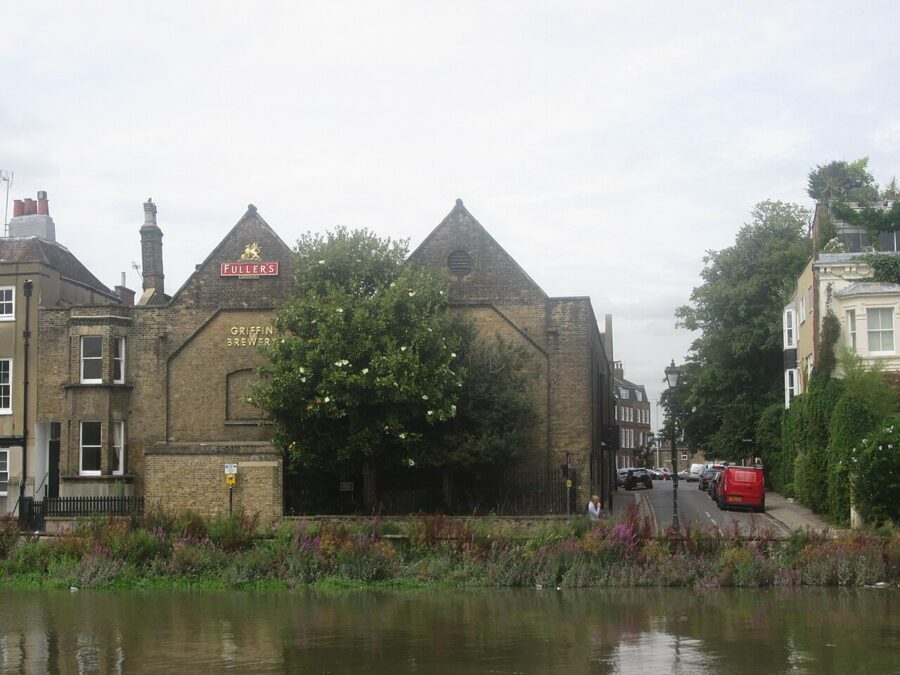
For most of the twentieth century a London pub poured one of two local beers. Fuller’s brewed at the Griffin Brewery in Chiswick and Young’s at the Ram Brewery in Wandsworth, and each had its own estate of pubs across the city. Young’s stopped brewing at Wandsworth in 2006, and Fuller’s sold its brewing business to Asahi in 2019, keeping the pubs. Both names are still over the door of a great many London pubs, and those pubs are often the best-kept buildings on their street.

Two country brewers matter too. Samuel Smith’s of Tadcaster in Yorkshire owns some of the finest Victorian rooms in central London and runs them its own way: one cask beer, Old Brewery Bitter, its own lagers and stouts, a cheaper pint than the pub next door, and house rules against phones and swearing. Harvey’s of Lewes has its own pub here, the Royal Oak in Borough, and its Sussex Best Bitter turns up on handpumps all over town. If you see it, order it.
Then, from 2009, the small brewers. The Kernel started in a railway arch in Bermondsey that year, and Five Points, Howling Hops, Southwark, Anspach & Hobday, Bianca Road and dozens more followed, many of them opening bars in their own breweries. Their beers now appear as guests in the old pubs too, so a Victorian interior and a fresh local pale ale are no longer a choice. If cask beer is new to you, start with real ale: what it is, and why a good pint of it is served cool, not cold.
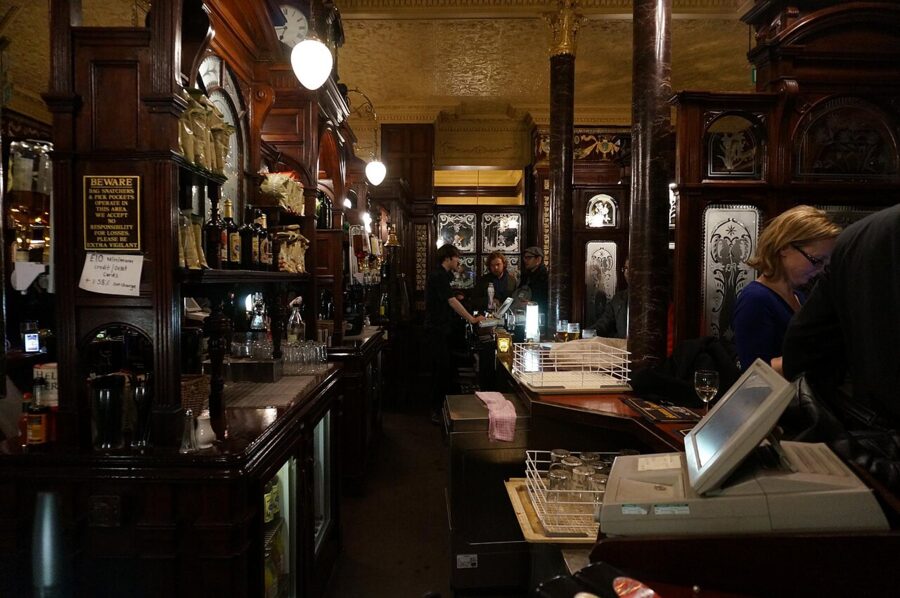
What London does better than anywhere else in Britain is the late Victorian pub interior: mirrors, carved mahogany, etched glass, tiles and screens. Add the river and the brewery taps, and the best crawls mix all three.
For a crawl, the centre is smaller than it looks. Holborn, Covent Garden and Soho sit within twenty minutes’ walk of each other, and that triangle holds more good interiors than most counties. The City is a weekday place: several of its best pubs close on Sunday and some shut early on Saturday. The river pubs come in clusters, and the further-flung ones are best treated as a day out with a walk attached.
The City and Fleet Street, briefly
The Square Mile has the pubs with the longest claims, and they are covered in detail in London’s oldest pubs. In a sentence each: Ye Olde Cheshire Cheese on Fleet Street is a warren of dark rooms rebuilt after the Great Fire, now a Samuel Smith’s house; Ye Olde Mitre hides down an alley off Hatton Garden, dates itself to 1546 and wears panelling from about 1930; and the Seven Stars behind the Royal Courts of Justice is tiny, crooked and run with a resident cat.
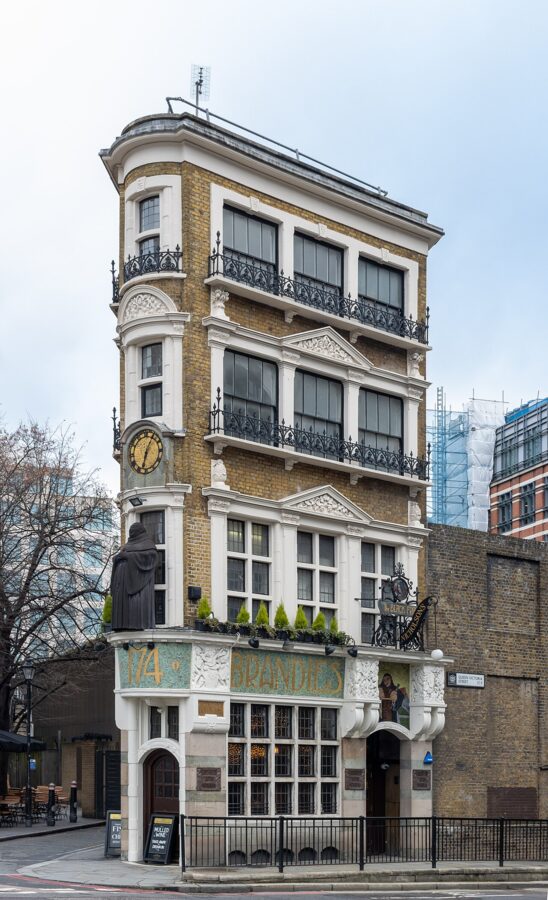

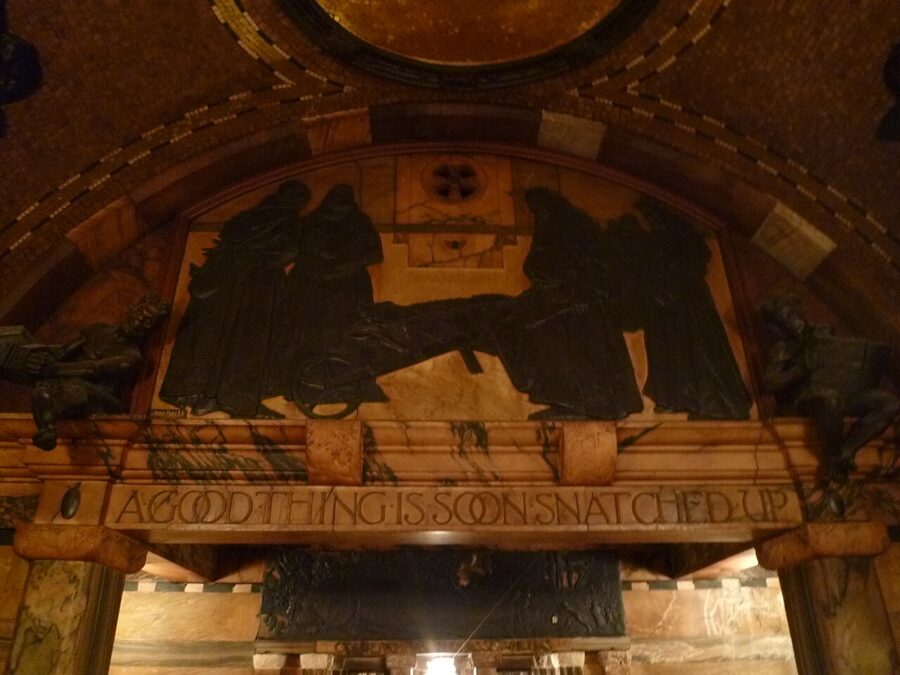
The Black Friar stands on a wedge of land opposite Blackfriars station, on the site of the Dominican friary that named the district. The building is Victorian; the interior is not like anything else in London. From about 1905 the architect H. Fuller Clark and the sculptors Henry Poole and Frederick Callcott turned it into an Arts and Crafts joke about monks, with copper reliefs of friars singing, fishing and drinking, and in 1917–21 they added a vaulted back room, the Grotto, lined in marble and mosaic.
It is a Nicholson’s pub now, with pies, London Pride and St Austell beers, and it is rammed with office workers from about half past five. Go at lunchtime or after eight. It opens on Sundays, which most of its neighbours do not, and children are welcome.
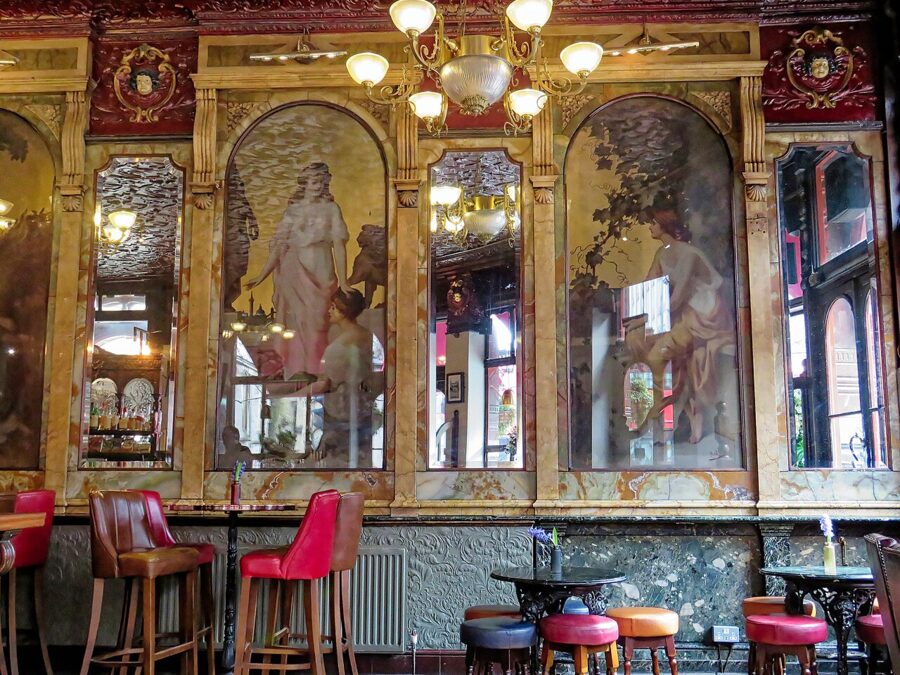

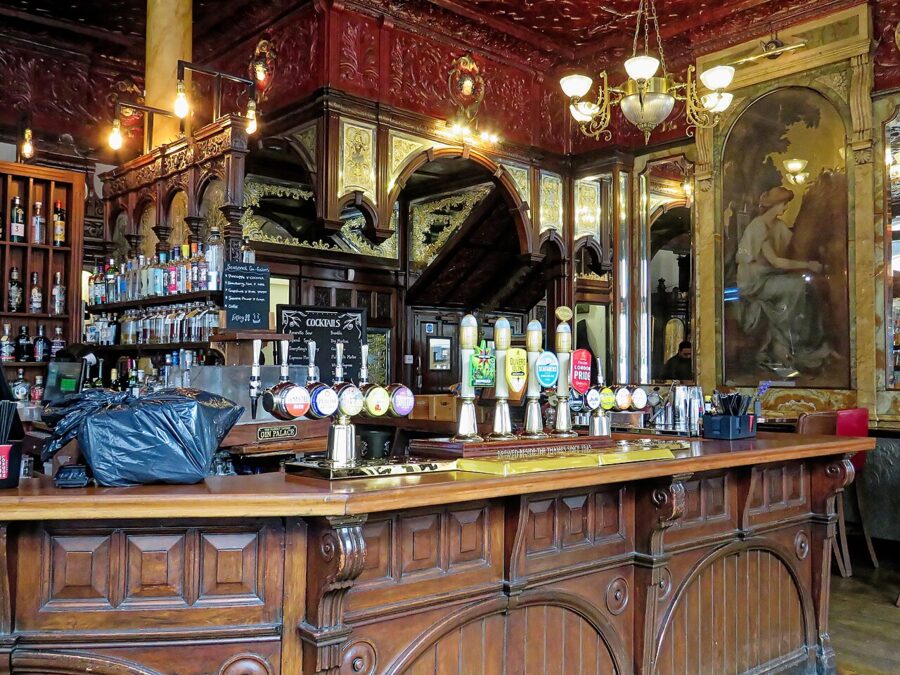
The Viaduct Tavern on Newgate Street, opposite the Old Bailey, is the better place to sit. It was built in 1874–75 and refitted at the end of the century with etched and cut glass, a curving bar, a little glazed office where the manager once kept an eye on things, and those three painted ladies. It is a Fuller’s house with ESB and London Pride, and pies, Scotch eggs and toasties to soak them up.
Mind the hours: the Viaduct shuts at 20:00 on Saturdays and Ye Olde Mitre at 19:00, and neither opens on Sunday. City pubs are for weekdays.
Soho and Covent Garden
Soho
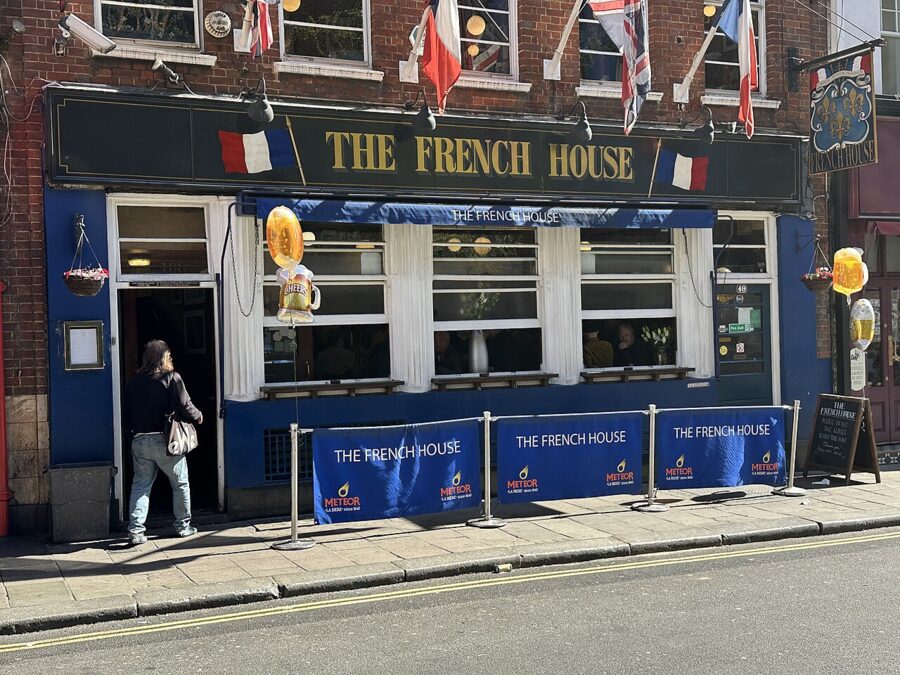
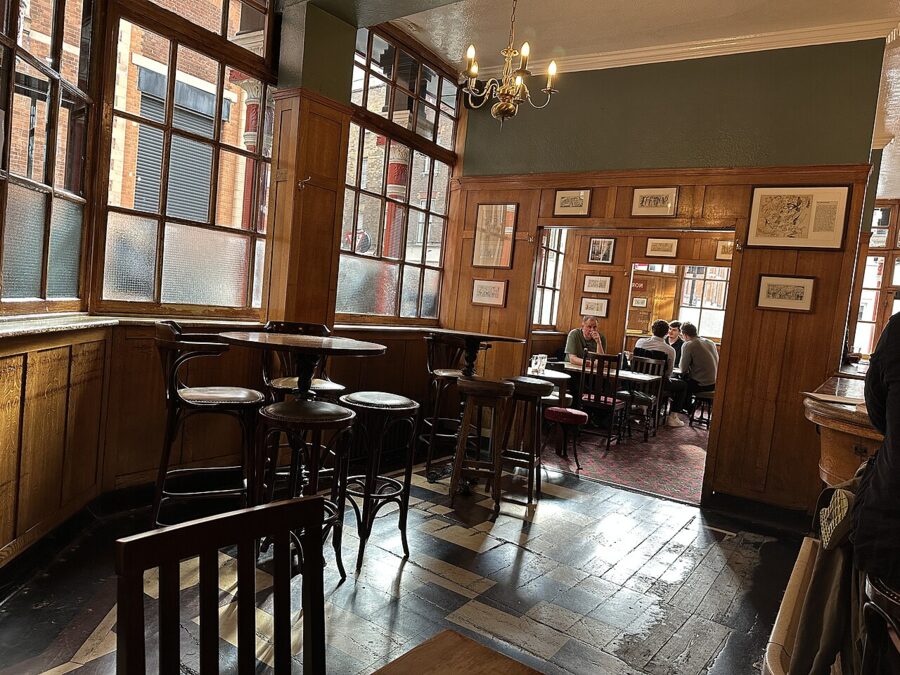
Soho’s pubs are small, loud and mostly standing room, and the good ones have kept their regulars despite the crowds. Start with the French House on Dean Street, which sells beer in halves only, has no music, no machines, no television and no mobile phones, and has been the place for actors, writers and painters to argue for most of a century. It used to be called the York Minster. The small dining room upstairs serves lunch and dinner Monday to Saturday from a menu that changes daily; book it, because walk-ins rarely get in.

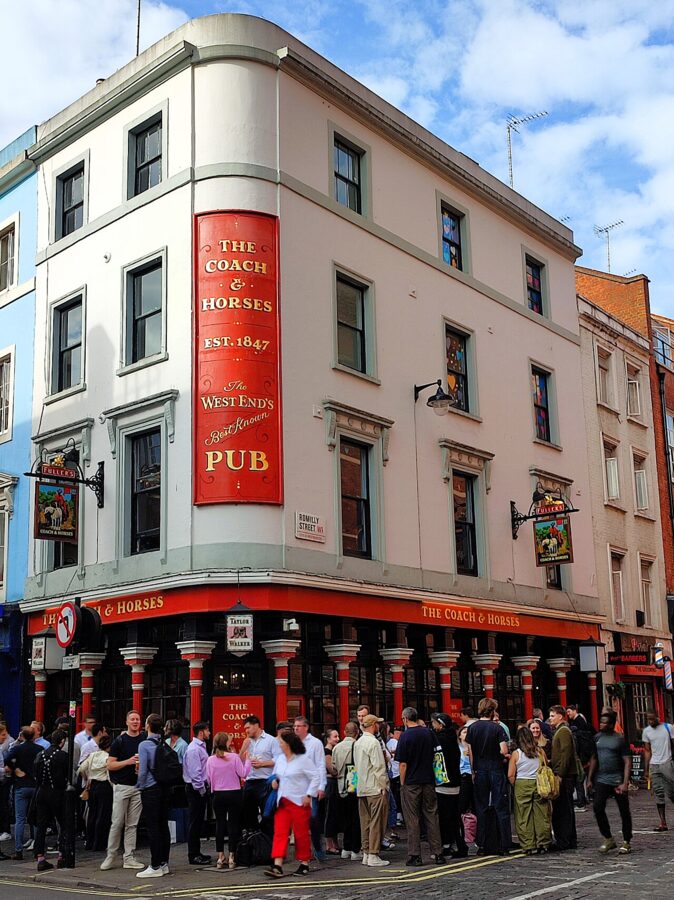
Two minutes away on Greek Street is the Coach and Horses, which Norman Balon ran from 1943 to 2006 and billed as the home of London’s rudest landlord. He died in 2026, aged 99. His regulars included Jeffrey Bernard, whose absences from his magazine column gave Keith Waterhouse the title of his 1989 play, Jeffrey Bernard Is Unwell, and Private Eye held its editorial lunches upstairs until 2014.

It is a Fuller’s pub now, still with “Norman’s” on the sign, and still without a kitchen: dinner is a packet of crisps. The beer is good, with Gales Seafarers and London Pride as regulars and guests from Almasty and Dark Star. On a warm evening the crowd covers the pavement on Romilly Street. It closes at 20:00 on Sundays.
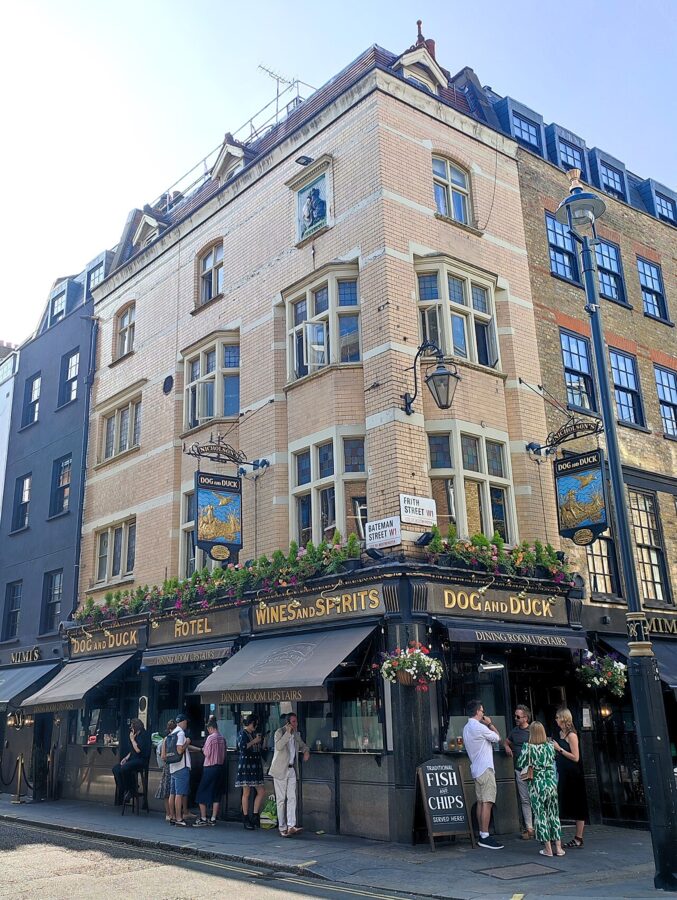

The Dog and Duck on the corner of Bateman Street and Frith Street was licensed in 1734 and rebuilt in 1897 for the Cannon Brewery. The ground floor is tiny and tiled, and CAMRA rates the interior two stars out of three. George Orwell drank here; the upstairs room is named after him and the food runs all day until 22:00. Get there before six or accept that you will be drinking on Frith Street.
The Devonshire on Denman Street, just off Piccadilly Circus, is the newest pub here and already the busiest. It reopened in November 2023 in a building that had been a Jamie’s Italian, run by the publican Oisín Rogers with Charlie Carroll and the chef Ashley Palmer-Watts, and it pours so much Guinness that Diageo has called it the biggest Guinness account in the world. The ground floor is a proper standing pub with bacon sandwiches and Scotch eggs; the grill restaurant upstairs is where the steaks and the bookings are.
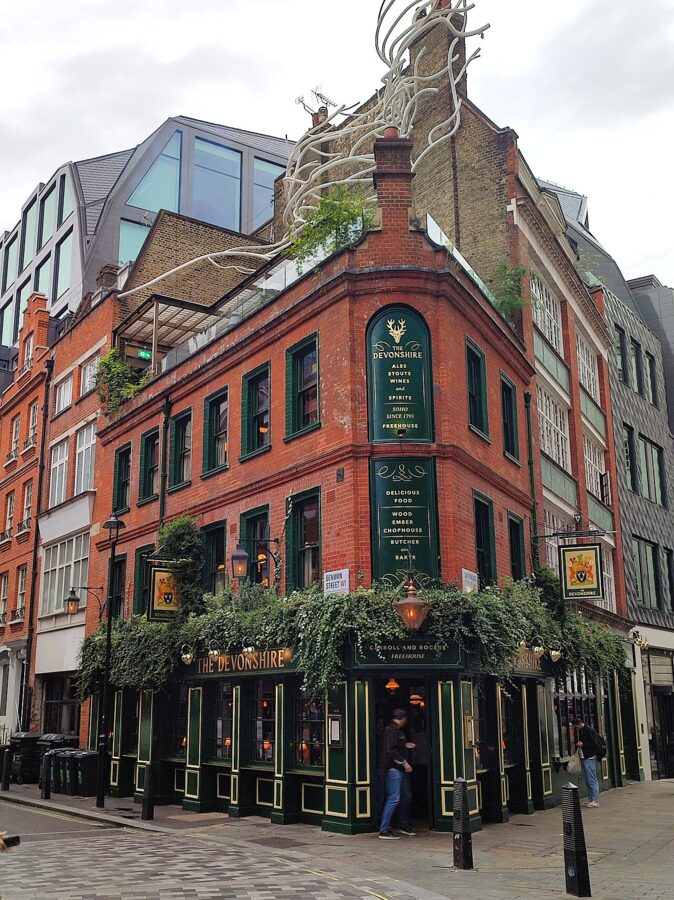

The Guinness is very fresh and poured with ceremony, and there is cask too, from six handpumps. Go mid-afternoon on a weekday and it is a gentler pub.
Covent Garden
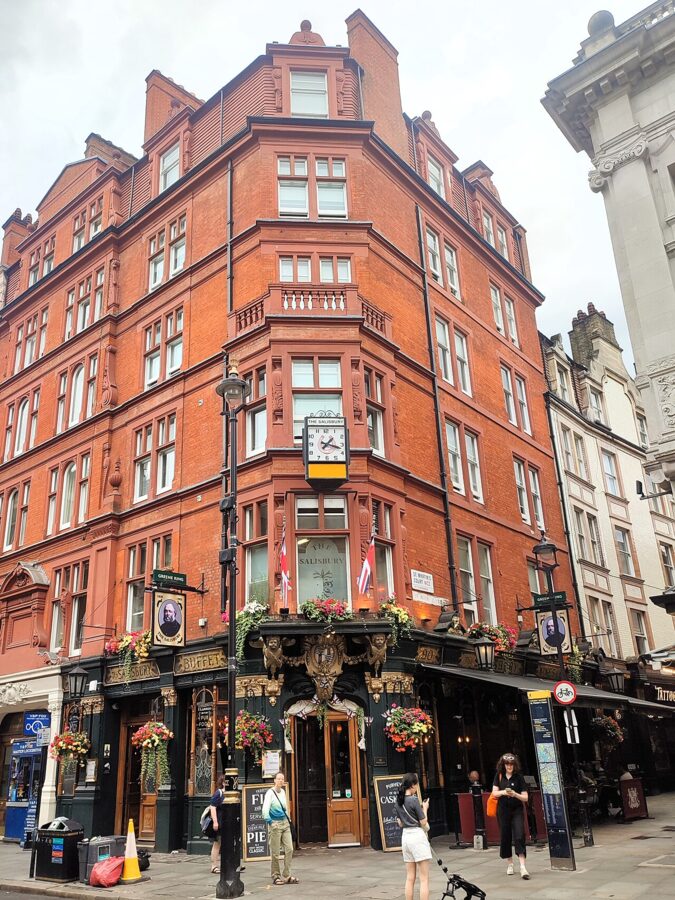
The Salisbury on St Martin’s Lane is the theatre crowd’s gin palace, rebuilt in 1892 and refitted a few years later in a blaze of etched and polished glass, with Art Nouveau candelabra over the main room and a separate snug. CAMRA gives it three stars. It is a Greene King pub, with Landlord on alongside the house beers, food until 22:00 and opening until 00:30 on Fridays and Saturdays, which is late for the West End.

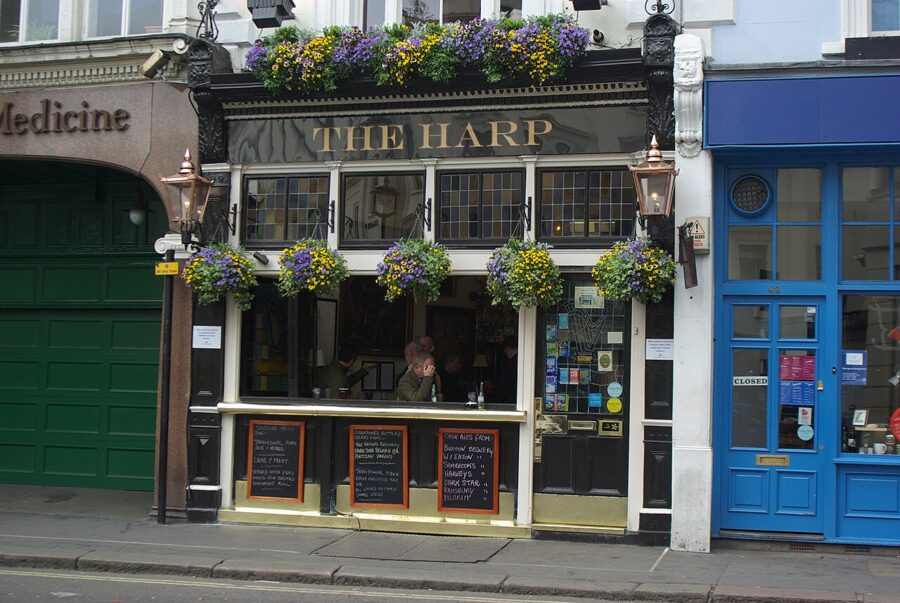
Round the corner on Chandos Place is the Harp, the best beer pub in the West End and a narrow one. As a free house under Binnie Walsh it was CAMRA’s national pub of the year in 2010; Fuller’s bought it in 2014 and, sensibly, left it alone. Harvey’s Sussex Best, Dark Star Hophead and London Pride are regulars, with five changing guests and real cider kept in the fridges, and there is a quieter room up a steep staircase.
2013).jpg)
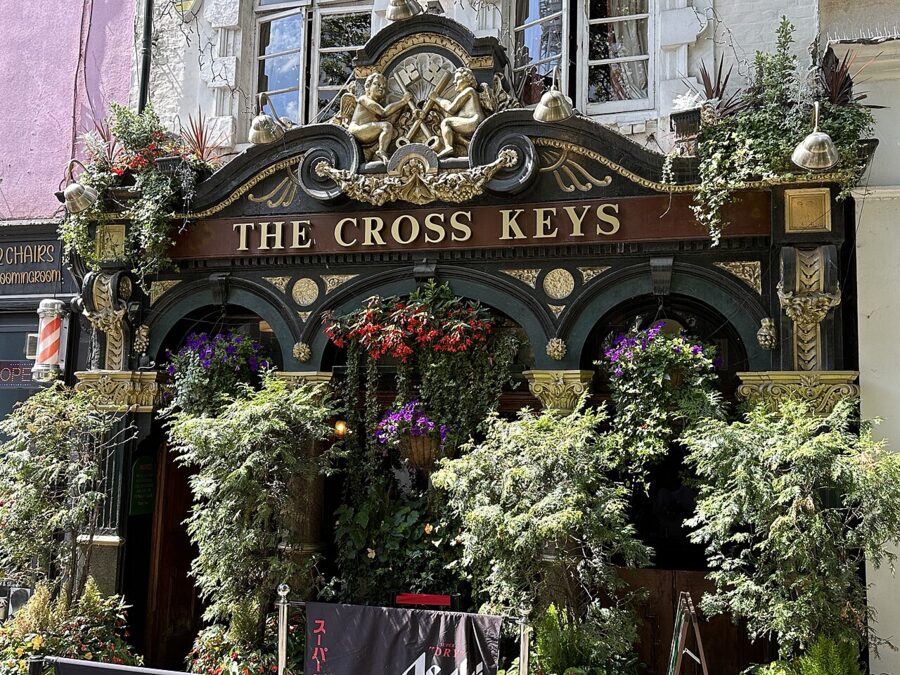
The Harp has no music and no television, welcomes dogs, and shuts at 20:00 on Sundays. Nearby, the Lamb and Flag on Rose Street, with its 1958 front and its tales of bare-knuckle fights, is one of the old pubs; and the Cross Keys on Endell Street is a crammed 1840s pub that looks as if nobody has taken anything off its walls since the 1970s, which is its charm.

Holborn and Bloomsbury
If you only have one evening and you want to see what a Victorian London pub looked like inside, this is the district. Holborn has two of the great Samuel Smith’s rooms within ten minutes of each other, and the quiet Georgian streets of Bloomsbury hold the best of Young’s.
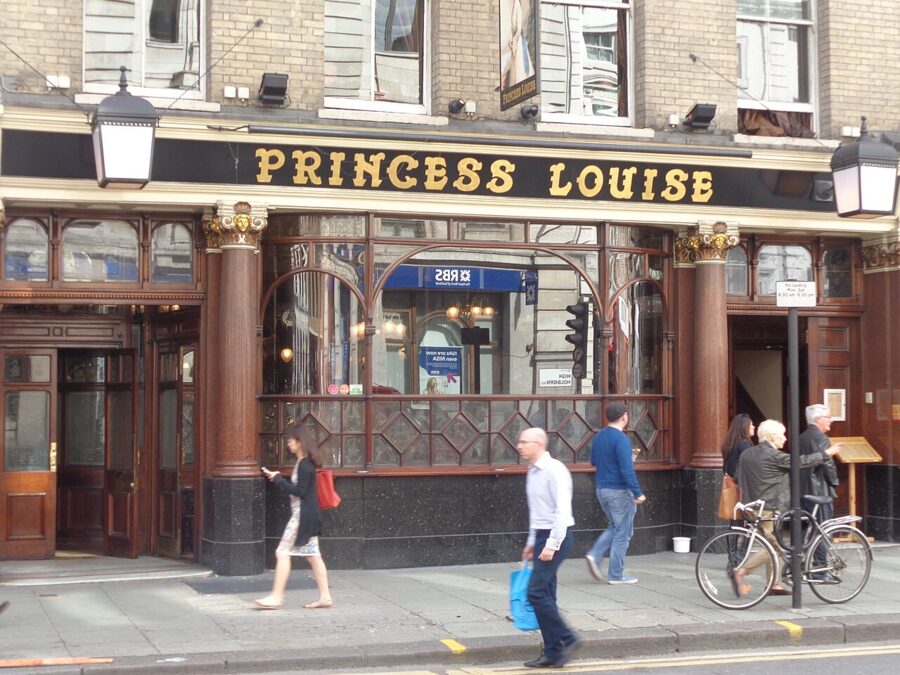

The Princess Louise was built in 1872 and remodelled in 1891, and it is the interior people mean when they talk about London gin palaces: tiles, gilded and etched mirrors, Corinthian columns, a big island bar and stained glass. CAMRA gives it three stars and Historic England lists it at Grade II*. Samuel Smith’s restoration of 2007–08 put back the wooden and glass partitions that had been ripped out, which means you now drink in small compartments, as the Victorians did.
The Old Brewery Bitter is among the cheapest pints in central London. Food is served on weekday lunchtimes and Monday to Thursday evenings, and it closes at 22:00 on Sundays. Phones away, as in every Sam Smith’s house.
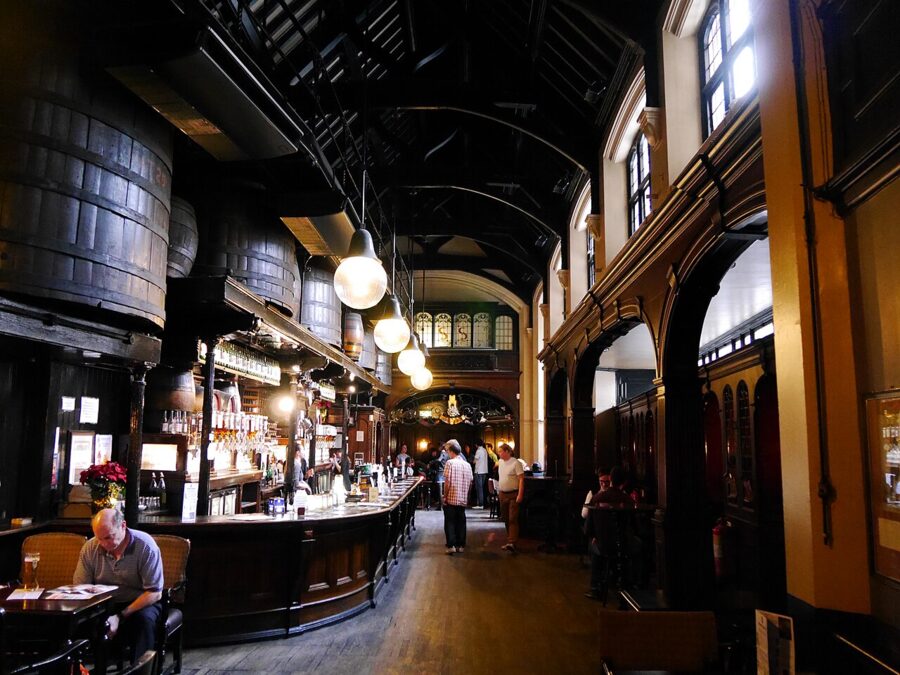

Ten minutes east along High Holborn, by Chancery Lane station, the Cittie of Yorke looks like a Tudor hall and was in fact built in 1923–24 in a mock-medieval style. The fascia claims a pub on the site since 1430. Walk through the narrow front bar to the hall at the back, which has a very long counter, enormous vats on a gallery over it, a triangular stove and a row of little carved compartments along the wall.
It is Samuel Smith’s again, with Old Brewery Bitter and, in winter, the strong Yorkshire Stingo. The cellar bar does food at lunchtime and in the evening, children are welcome until 21:00, and Sunday is either short hours or no hours, so do not plan around it.
Ye Olde Mitre and the Seven Stars are close enough to fold into a Holborn evening. The other essential stop is the Lamb, a few minutes north on Lamb’s Conduit Street.
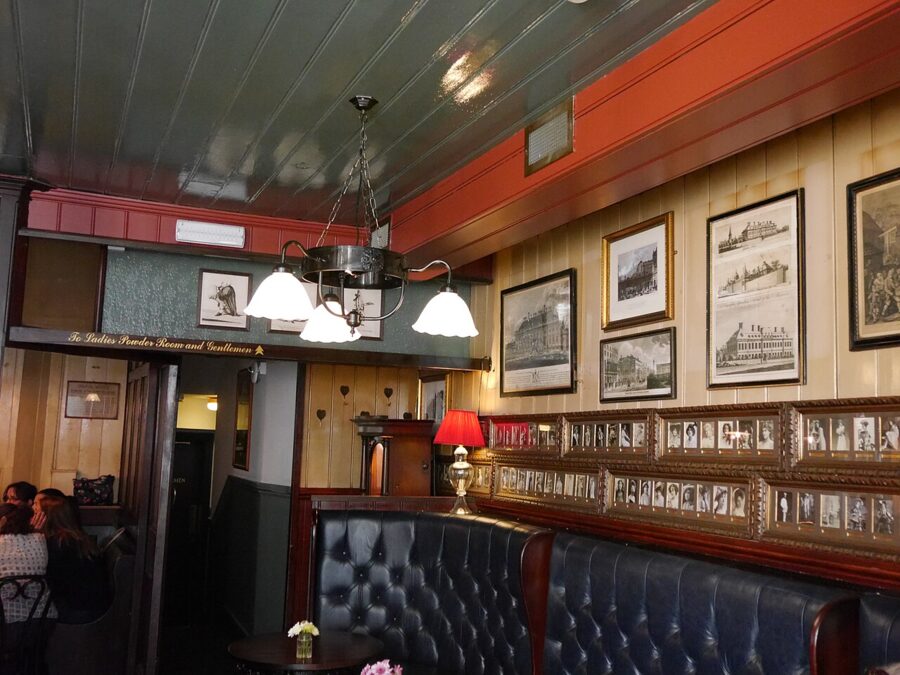

The Lamb is first recorded in 1731 and has a Victorian ground floor behind a Georgian front. Its glory is the snob screens: small swivelling panes of etched glass set at head height round the bar, so that drinkers in the better compartments could order without being seen by the staff, or by anyone else. It is a Young’s pub, with London Original and Special and a guest from Five Points or Redemption, and food every day until 21:00 (20:00 on Sundays).
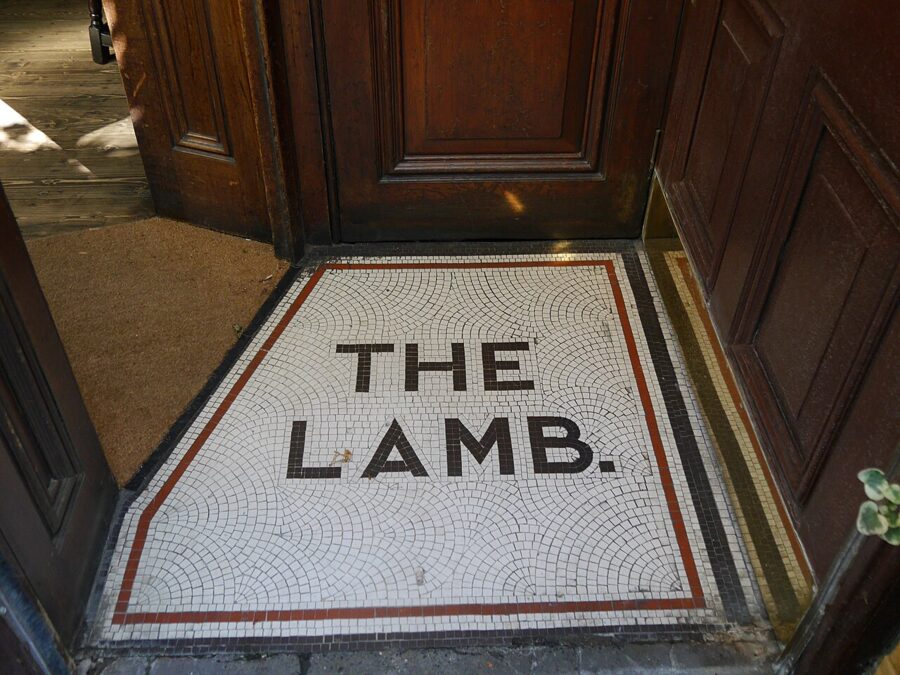

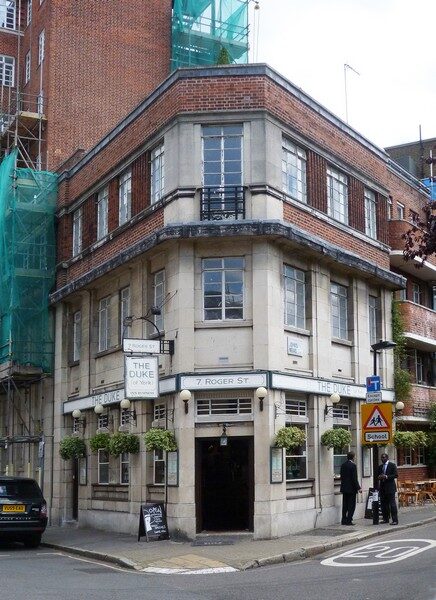
Russell Square station is about five minutes away, and there is a quiz on Monday nights. The Duke, a few streets east in Roger Street, is a small Art Deco pub tucked into a mews, with mahogany booths, and makes a good second stop.

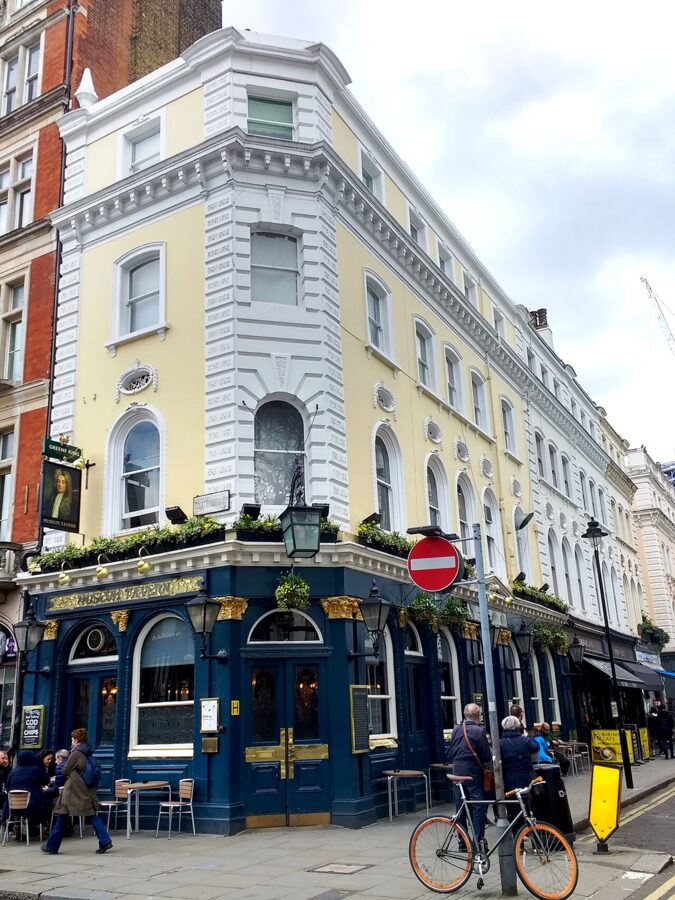

The Museum Tavern opposite the British Museum is the obvious stop after a morning in the galleries, and it is better than its position deserves. It was rebuilt in 1855 and refitted in 1889; the five bars became one in the 1960s, but the ornate bar-back and one original mirror survive. It is a Greene King pub with food all day, opens at 11:00 and stays open until midnight on Fridays and Saturdays.
Gin palaces and the National Inventory
The gin palace arrived in the late 1820s and 1830s, when the gin shops of the poorer streets began to compete with plate glass, gas lamps and polished counters, and Dickens described them in Sketches by Boz, all gilding and light against the slums around them. What survives today mostly comes from the second, bigger boom of the 1880s and 1890s, when brewers and speculators rebuilt hundreds of pubs at enormous cost, split them into separate bars for different classes of drinker and filled them with mirrors, mahogany and etched glass. The boom collapsed in 1899 and the spending never came back.
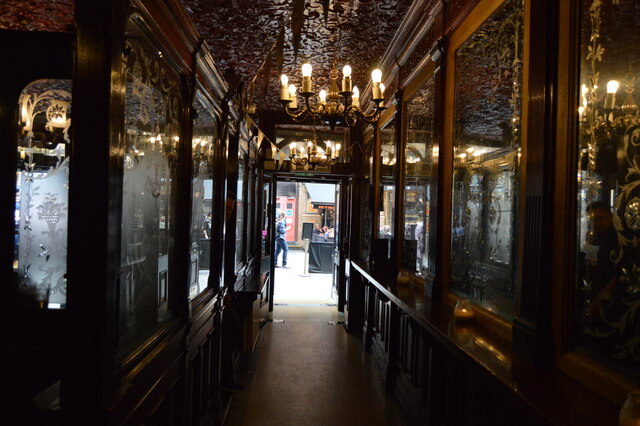

Most of those interiors were gutted in the twentieth century, opened up into one big room for easier serving. The ones that escaped are listed in CAMRA’s National Inventory of Historic Pub Interiors, which grades them with one, two or three stars. Three stars means the layout and fittings are almost wholly intact, and only around three hundred pubs in the whole country have them.
London has a remarkable share, and several are in the West End. The Argyll Arms, fifty metres from the Oxford Circus exit, is the easiest to reach: built in 1868, refitted in about 1895, with three snugs off a mirrored corridor and a big “Bass on Draught” mirror. It is a Nicholson’s pub, open until midnight on Fridays and Saturdays and full of shoppers by mid-afternoon, so take your pint into one of the snugs.
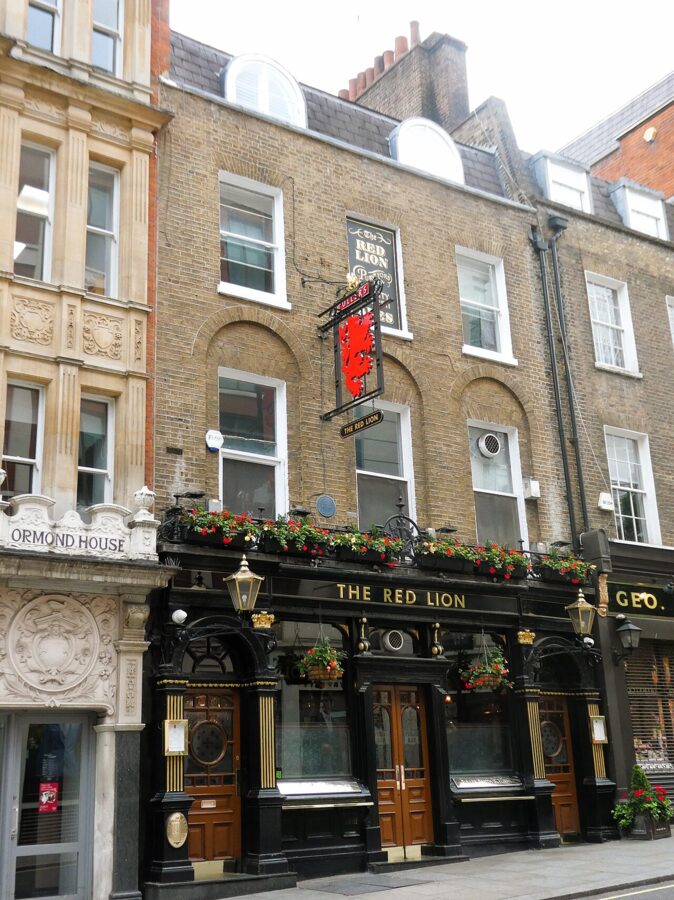

The Red Lion on Duke of York Street, off Jermyn Street, is a single gleaming room of cut and etched mirrors around an island bar, run by Fuller’s. Glass still marked “Public Bar” and “Private Bar” shows where the partitions once were. It is small and fills fast after work, so come at lunchtime for a look at the mirrors.
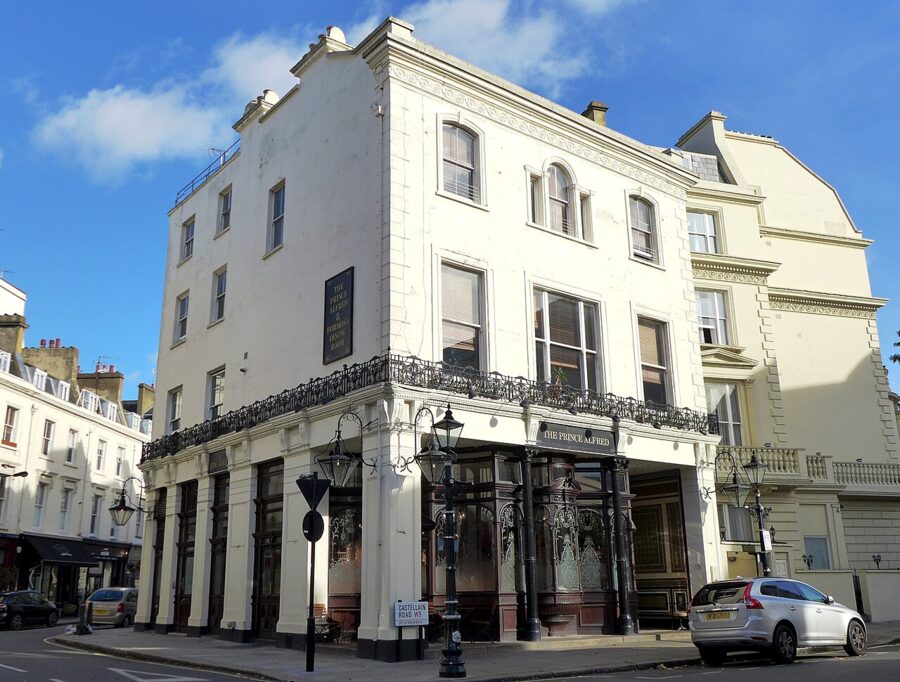
Further out, the Prince Alfred on Formosa Street in Maida Vale is the finest surviving example of the Victorian compartment pub in London. Five separate bars are arranged round a central servery, each with its own door to the street, with tiny service doors for the pot boys to duck through and snob screens in the smallest compartment, which was once the ladies’ bar. It is a Young’s pub, two minutes from Warwick Avenue station, with Sunday roasts and a big dining room at the back; drink at the front, where the history is.

Remember what is genuine. The Princess Louise’s partitions are a reconstruction of 2007–08, the Cittie of Yorke’s great hall is 1920s, and the Mayflower in Rotherhithe got its sixteenth-century look in 1957. None of that makes them worse to drink in, and CAMRA has graded some of these later rooms for their own sake.

The National Inventory also takes in pubs from between the wars. The Coach and Horses in Soho was added in 2019, and the Churchill Arms in Kensington has two stars for a 1930s refit that survives under all the ornaments. The Viaduct Tavern, the Black Friar and the Salisbury, all described above, complete a three-star set you can walk between in an afternoon, with Holborn in the middle.

The riverside
The Thames gave London its working pubs, for dockers, watermen and sailors, and it gives them their best views now. There are three good stretches: Wapping and Rotherhithe in the east, Greenwich further down, and Hammersmith in the west.
Wapping and Rotherhithe
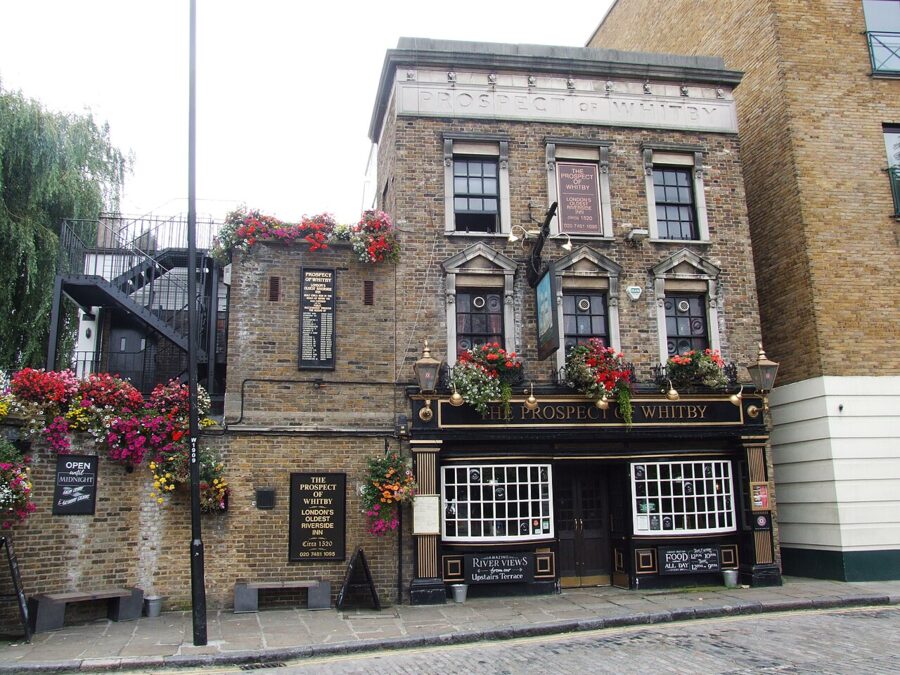
The Prospect of Whitby on Wapping Wall is the big, busy one, named after a collier from the Tyne that used to moor alongside, with a pewter-topped bar on old barrels, a riverside terrace and balcony, and Greene King and guest beers on six pumps. Wapping station is about five minutes’ walk.

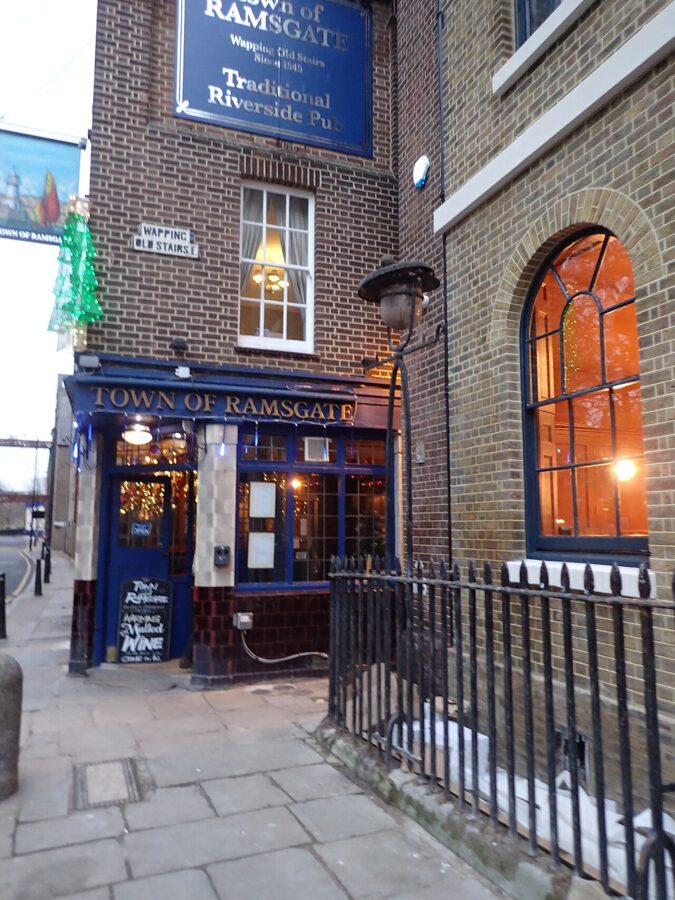
The Town of Ramsgate on Wapping High Street is smaller and older in feel, a long narrow bar with a 1937 refit that has hardly changed and a small garden by the river. It pours Harvey’s and Young’s. Children are welcome until 20:00.

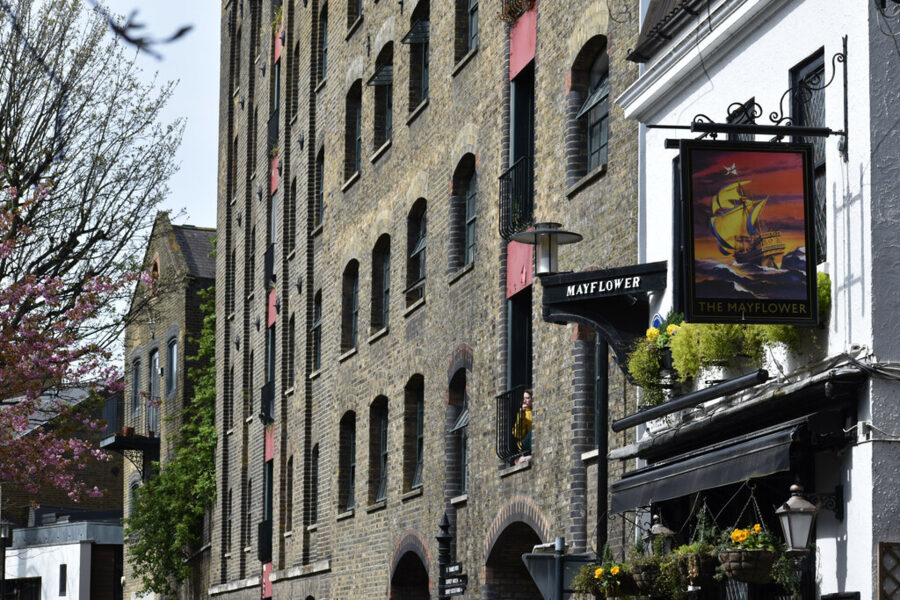

Across the river, the Mayflower on Rotherhithe Street has a small panelled front bar, an upstairs restaurant and a wooden jetty out over the water. It has been the local CAMRA district pub of the year in 2024, 2025 and 2026, with five changing cask beers and a house bitter called Scurvy. Rotherhithe station on the Overground is two minutes away, so this is an easy pub to reach and a hard one to leave.
Greenwich
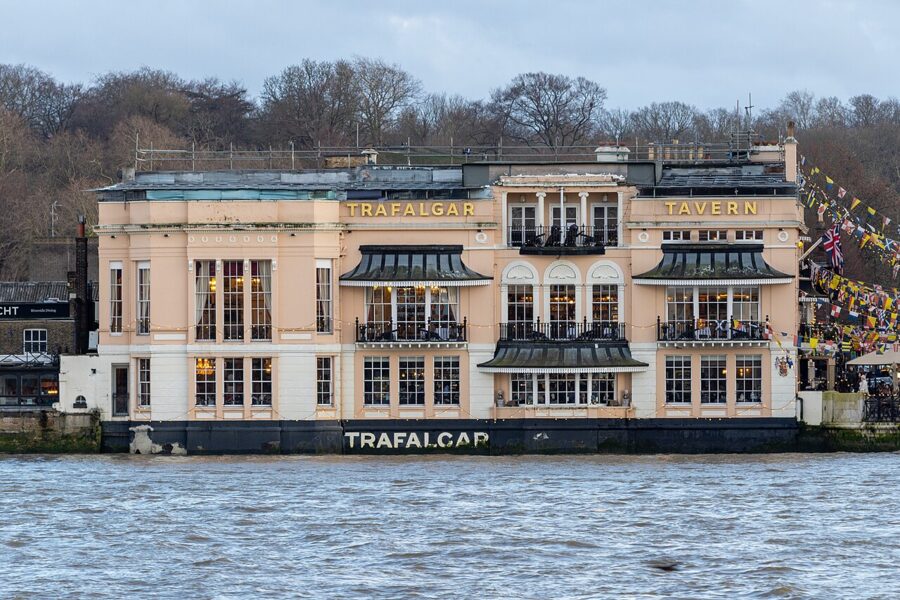

The Trafalgar Tavern on Park Row was built in 1837 beside the Old Royal Naval College, and it is the grandest riverside pub in London: tall windows hung over the Thames, a long bar and dining rooms where Victorian politicians came down by boat for whitebait dinners. It is independent now, with Wantsum and Adnams beers among the regulars, food every day (lunch only on Sunday) and a quiz on Thursdays.
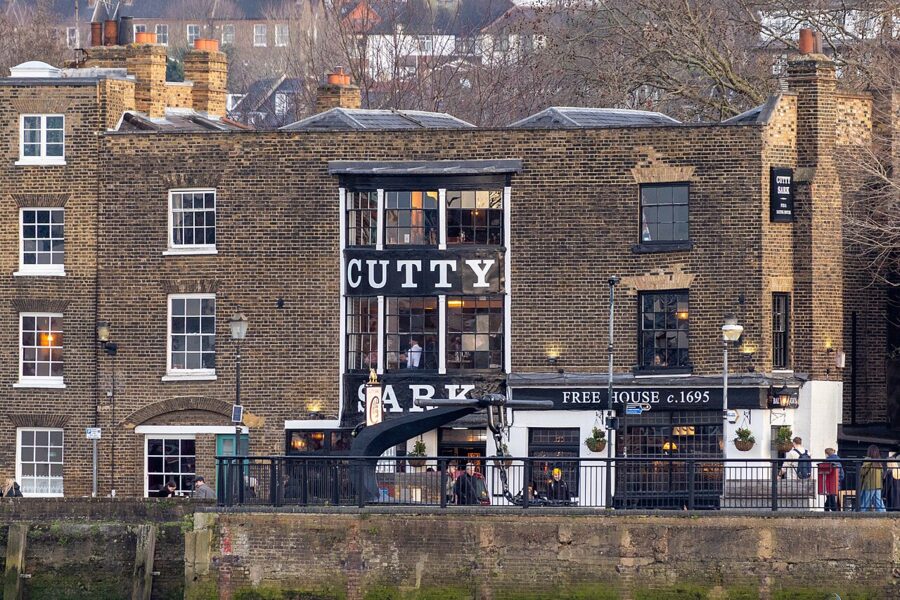
Ten minutes’ walk east along the Thames Path, past the old power station, the Cutty Sark on Ballast Quay is a Georgian pub on three floors with tables on the river wall. It used to be the Union Tavern. Young’s runs it, with London Original, Special and Proper Job, and the outside seating closes at 22:00. Maze Hill station is about seven minutes inland, which makes a neat circular walk with the Trafalgar.

Hammersmith
The best riverside pub in west London is the Dove on Upper Mall, a short walk along the river from Hammersmith Bridge. It was licensed by 1740 as the Doves Coffee House, and the poet James Thomson is said to have written “Rule, Britannia” upstairs. It holds a Guinness World Record for the smallest public bar in Britain, a snug of about thirty-three square feet by the door, although the beer writer Martyn Cornell has pointed out that it was probably only put in after 1911, by a landlord who misread the licensing law.
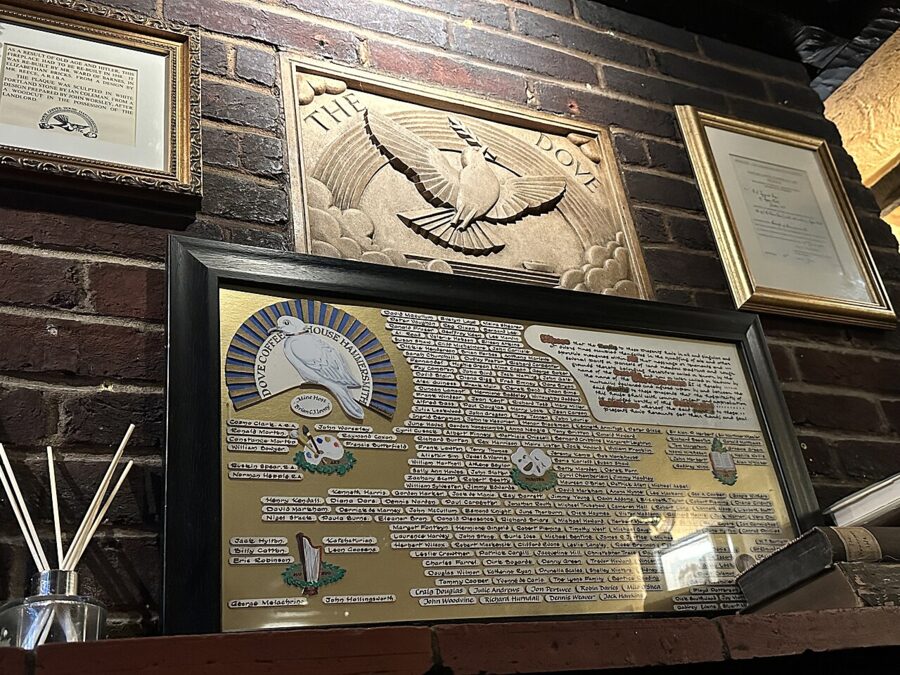

Fuller’s runs it, the kitchen aims at restaurant standard, and it no longer takes cash. The terrace at the back is small and fills quickly on Boat Race day and any warm weekend; on a winter afternoon, with the fire lit and the river grey, it is perfect. Ravenscourt Park station is about seven minutes’ walk.
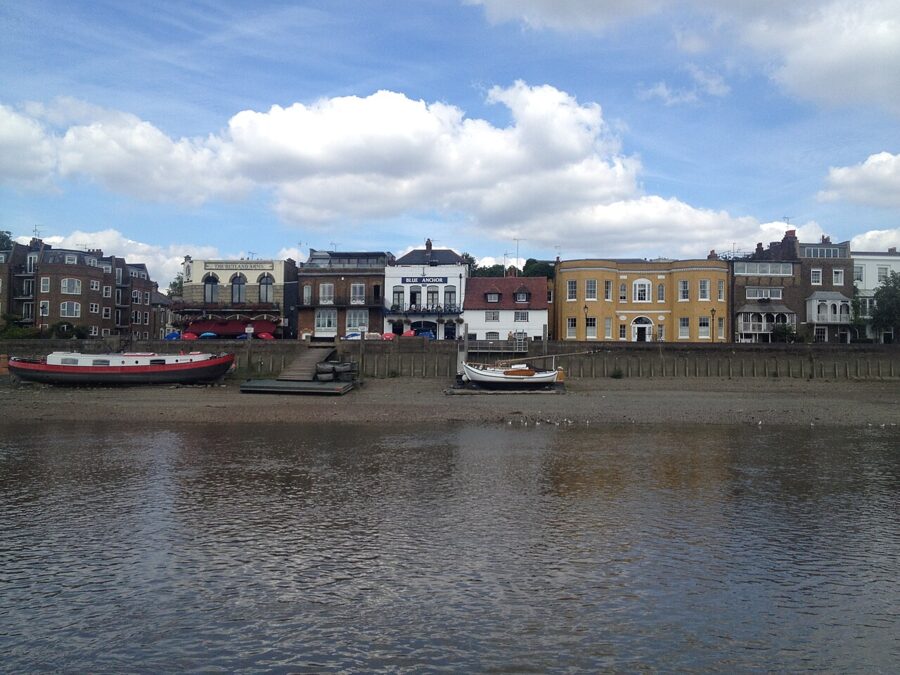
Along Lower Mall on the other side of the bridge, the Blue Anchor is a plainer pub with tables by the water and the rowing clubs for neighbours. It normally has three cask beers, including Timothy Taylor’s, and Gustav Holst is said to have written part of his Hammersmith suite here.

Hampstead and Highgate
North London’s two hill villages sit on either side of Hampstead Heath, and the best way to do their pubs is with a walk across it. Start in Hampstead, cross the Heath to the Spaniards Inn, carry on to Highgate, and drop down to Gospel Oak at the end.
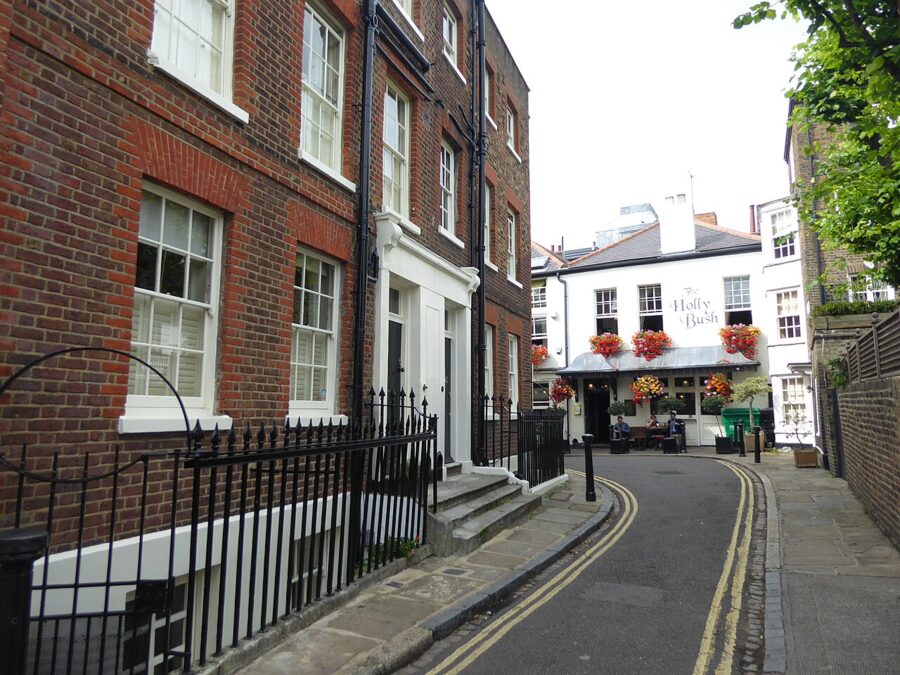

The Holly Bush on Holly Mount is a two-minute climb from Hampstead station and a pub of small rooms, low ceilings and fires. It was built as stables for Romney’s house in about 1797 and became a pub in the nineteenth century; the bar counter and bar-back are original, and CAMRA gives it two stars. Fuller’s runs it, the back rooms are mostly for eating, and dogs are welcome in the bar. Weekday lunch finishes at 15:30.
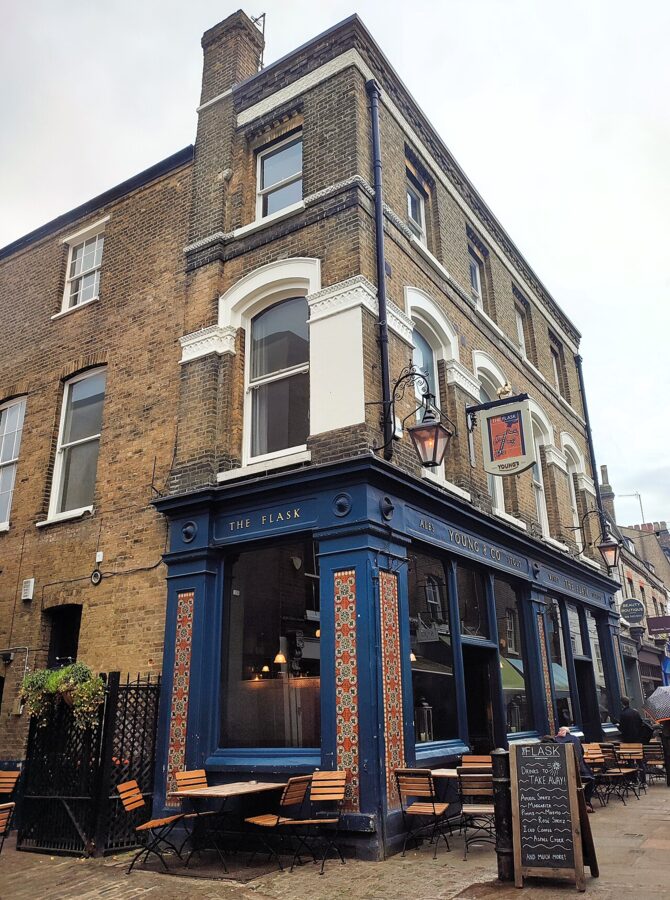

Down the hill on Flask Walk, the Flask is the Hampstead local for people who live there: a Young’s pub rebuilt in 1874, with a good drinkers’ front bar and a dining room at the back. Food runs from noon to 21:30. It is a minute from the High Street and makes a sensible start or end.
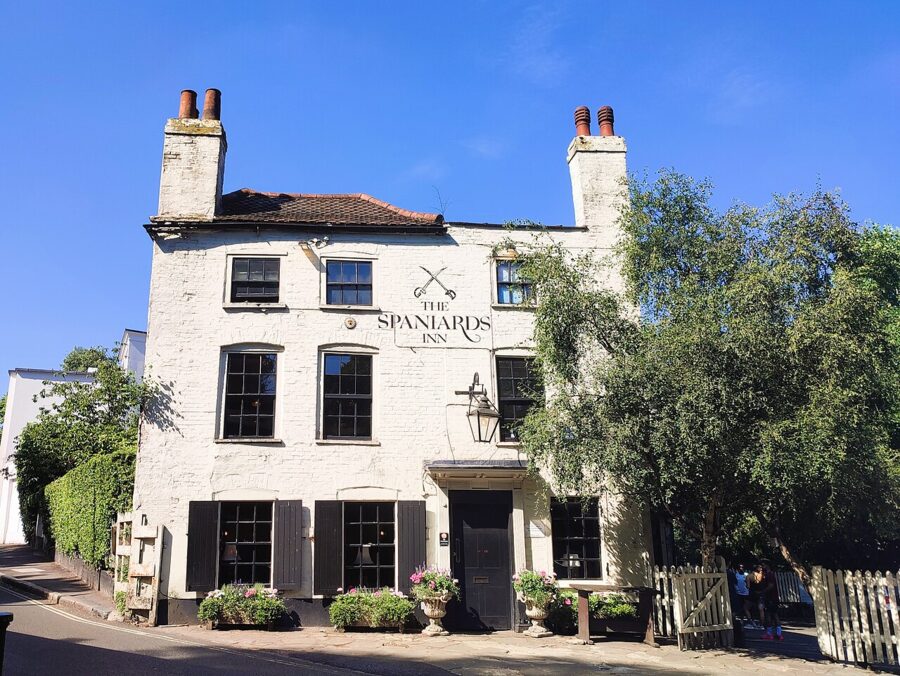

The Spaniards Inn sits on the far edge of the Heath, where Spaniards Road squeezes between the pub and an old tollhouse. It claims 1585 and Dick Turpin; its firmer literary link is Dickens, who put it in The Pickwick Papers, while Keats lived and wrote down the hill. The small panelled rooms and the big garden are what you come for; the beer is a short list from Mitchells & Butlers. The 210 bus passes the door if your legs give out.
From there it is a pleasant walk along Hampstead Lane to Highgate village and the Flask on Highgate West Hill. Its oldest parts may be early eighteenth century, a plaque claims an inn here in 1663, and inside is an old servery with sash windows you order through, which earns it two stars from CAMRA. It is a Fuller’s pub with a big front yard, and on Thursdays, Fridays and Saturdays it opens at 10:00, handy for breakfast before a walk. Highgate station is about fifteen minutes away.
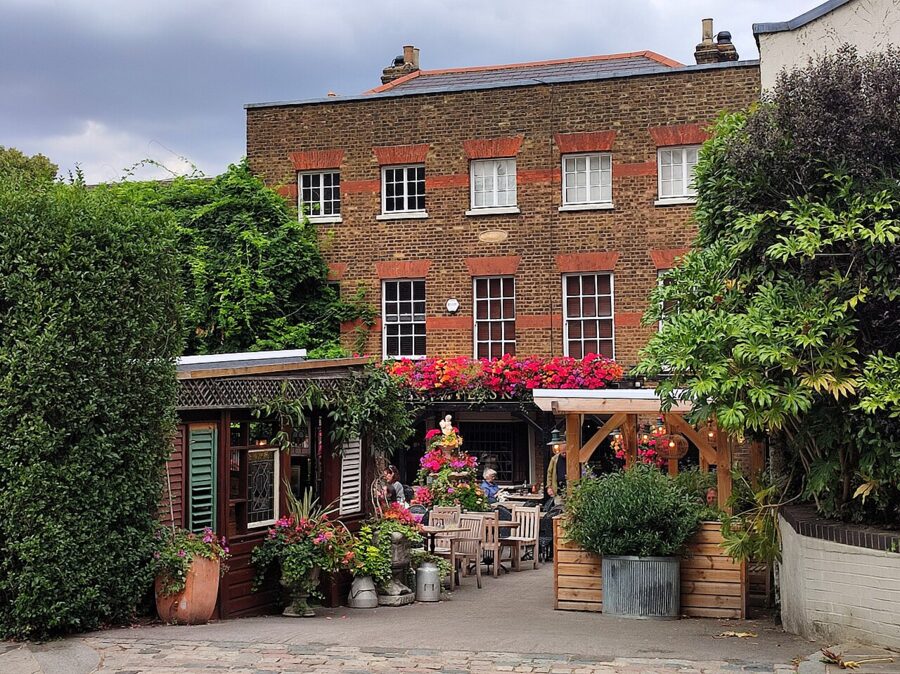

Finish at the foot of the Heath at the Southampton Arms on Highgate Road, between Gospel Oak and Kentish Town. It is a proper ale house: seven changing cask beers, up to six real ciders, roast pork baps from the counter, a record player and a piano that gets played on Sunday evenings and on Tuesday and Wednesday nights. There is no menu and nothing you need to book. Gospel Oak station on the Overground is about five minutes’ walk.
The east: Hackney’s brewery taps and old locals
East London is where the new breweries settled, in arches and industrial units where rents were cheap, and Hackney now has the best run of brewery taps in the city, along with some stubborn old pubs the brewers have taken under their wing.
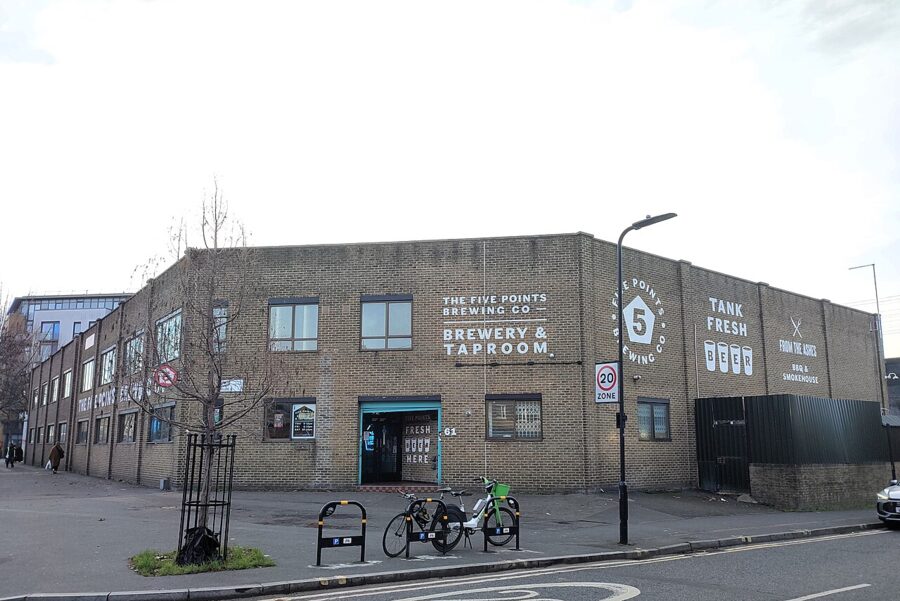

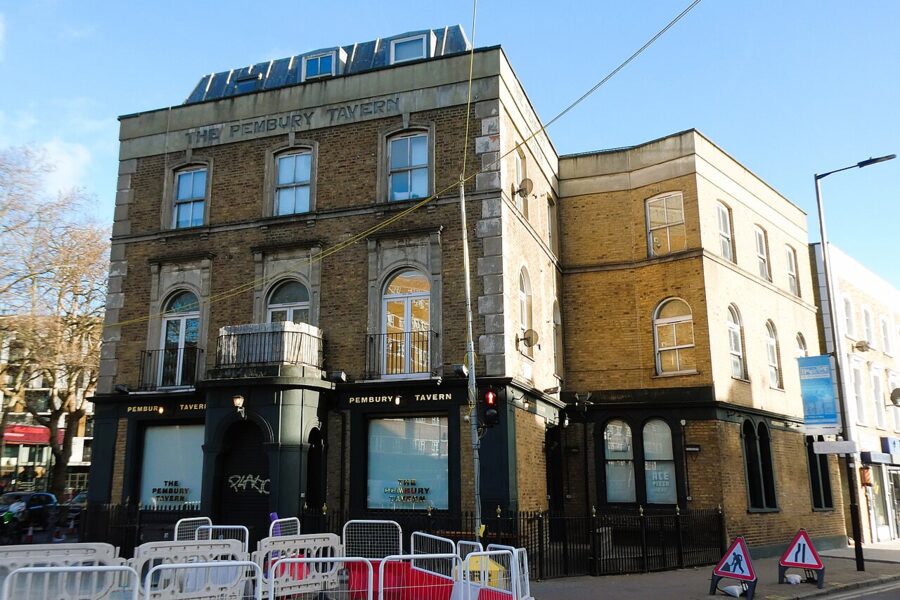
Five Points brews on Mare Street and runs a taproom and courtyard there, with barbecue food and its Best, XPA and Railway Porter as fresh as they get. Its pub is the Pembury Tavern on Amhurst Road, a big Victorian corner house by Hackney Downs station that the brewery restored and reopened in 2018. The Pembury has cask Five Points beers, guest breweries on the other lines, ACE pizza from the kitchen and a quiz on Mondays. It opens at 16:00 Monday to Thursday and at noon from Friday, and serves until midnight on Fridays and Saturdays.

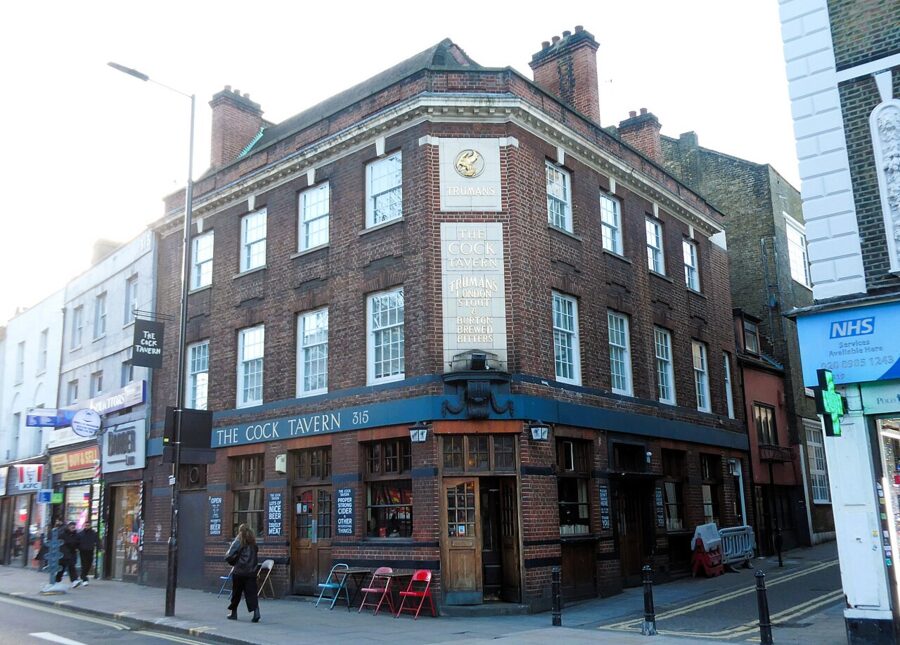
The Cock Tavern on Mare Street is the old-fashioned one. There has been a Cock in central Hackney since the 1650s; this building is a 1930s Truman’s pub, with the brewery’s lettering still on the front, and it was rescued from years of neglect in 2012. Howling Hops began brewing in its cellar, and their beers are still usually on, alongside eight changing casks and eight real ciders. The local CAMRA branch made it pub and cider pub of the year for 2026.

It is card only, there are bar snacks rather than meals, and you are welcome to bring in your own food. Hackney Central station is two minutes away. It stays open until 01:00 on Fridays and Saturdays.
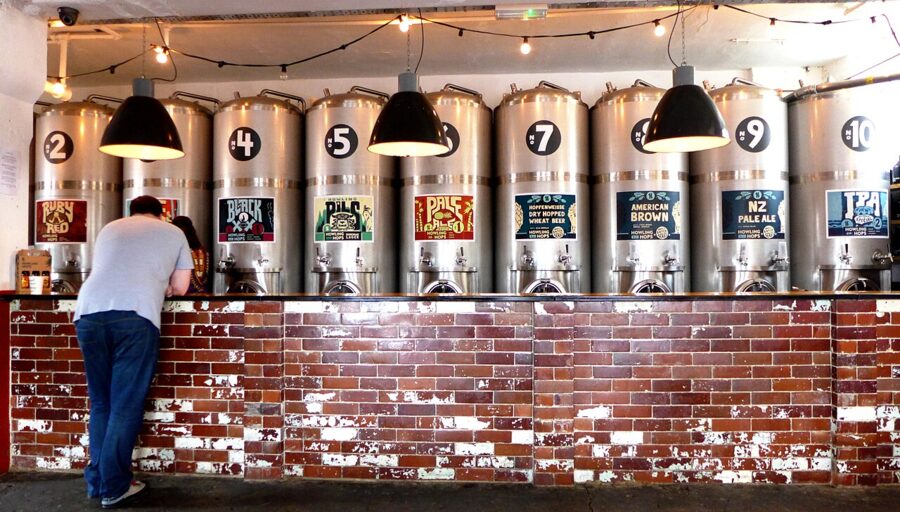
From Hackney Central, a short Overground hop or a half-hour walk takes you to Hackney Wick, where Howling Hops now has its brewery and tank bar in Queens Yard off White Post Lane. Ten beers are poured straight from ten serving tanks behind a long bar, unfiltered and as fresh as beer can be. It opens at noon every day and stays open until 01:30 on Fridays and Saturdays.

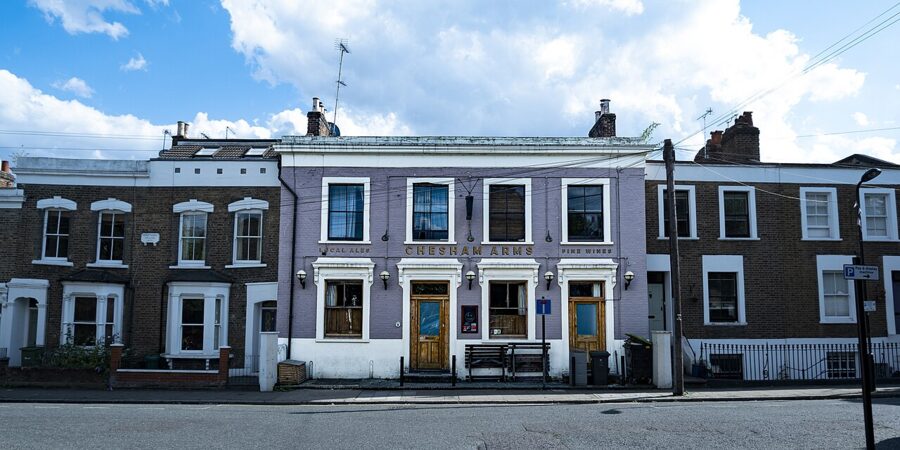
Between the two, the Chesham Arms on Mehetabel Road in Homerton is a back-street Victorian local with five changing casks, ciders and a sunny garden. A developer closed it in 2012 and turned the upstairs into flats; local people fought it and the pub reopened in 2015. Pubs do not usually win those fights, which is reason enough to have a pint there.

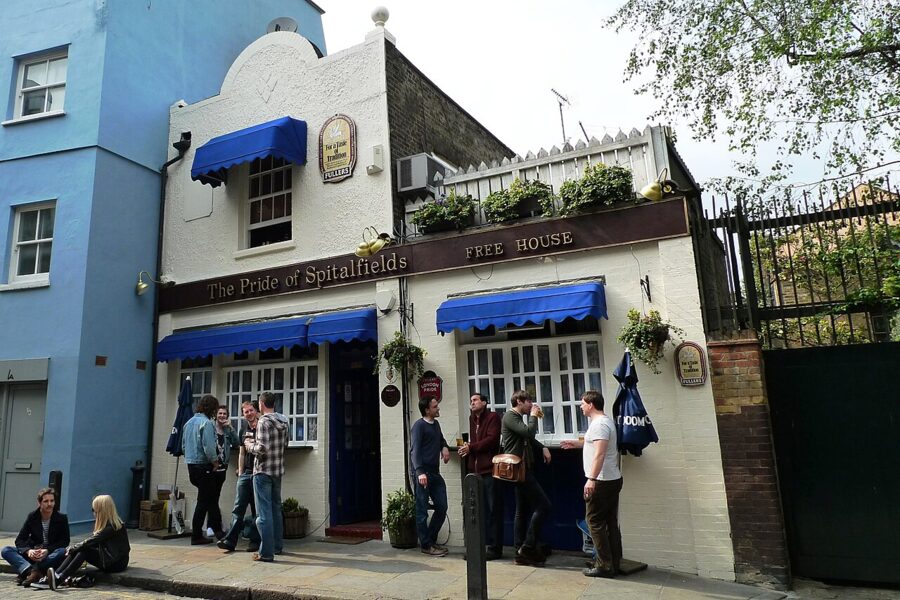
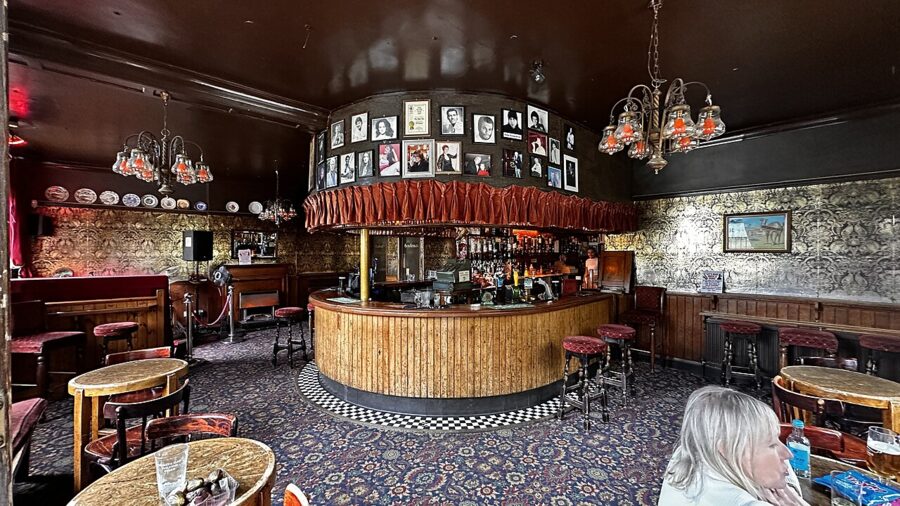
Closer to the City, the Pride of Spitalfields on Heneage Street, just off Brick Lane, is a small free house with a piano, old photographs and Fuller’s and Crouch Vale beers. It is open until midnight or later and is always busy. And on the edge of Mile End Park, the Palm Tree is a pub from another age entirely, cash only, with jazz nights and a 1950s look.


The south: Borough and the Bermondsey Beer Mile
South of London Bridge, the Market Porter is the obvious first stop: a classic market pub with six handpumps, a small seating area at the back and a covered pavement where most of its customers end up. It pours Harvey’s Best and Landlord, plus guests from Brockley, Portobello and Southwark. A minute away on Winchester Walk, the Rake is a single tiny room with four cask beers, a strong keg list, a covered courtyard and walls covered in visitors’ signatures.
The George Inn on Borough High Street, London’s last galleried coaching inn, owned by the National Trust, is five minutes south. Walk on another five to Tabard Street and the Royal Oak, which Harvey’s of Lewes took over in 1997 and restored to look roughly as it did in the 1850s.
The Royal Oak pours the best Sussex Best in London, and probably the best mild. Four handpumps in each of its two bars pour Harvey’s beers and seasonals, Harvey’s bottled beers are in the fridge, and there is a quiz on Wednesday nights. The local CAMRA branch made it pub of the year in 2023 and 2025. Borough station is three minutes away; it closes at 21:00 on Sundays.
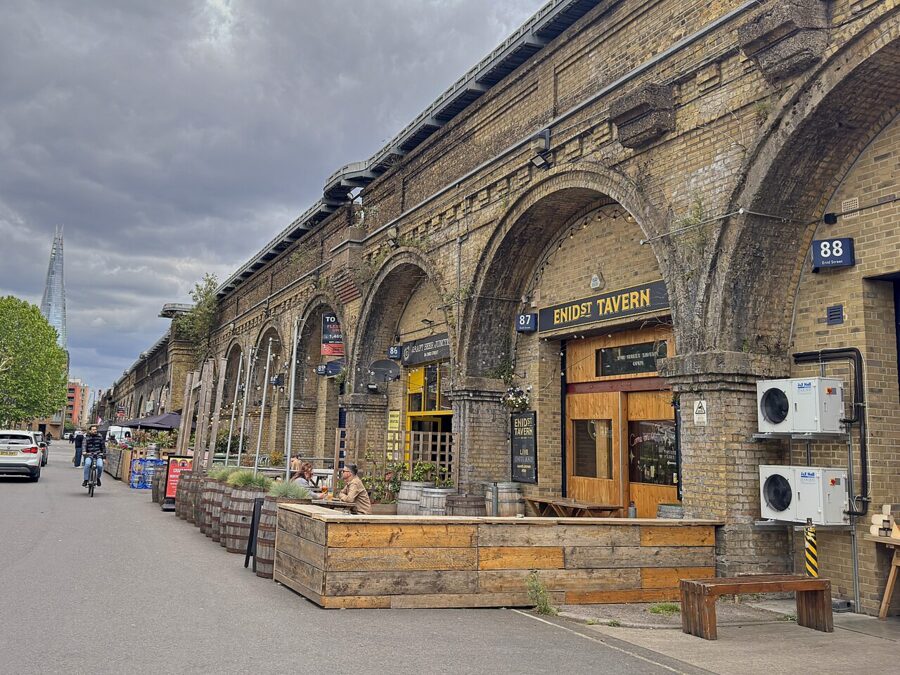
Then the Bermondsey Beer Mile: a mile and a half of railway arches running east from London Bridge along Druid Street and Enid Street to Spa Road, almost every one of them a brewery, taproom or bar. It began, more or less by accident, with the Kernel. Evin O’Riordain started brewing in an arch in 2009, began selling to the public on Saturdays, and his neighbours followed. Fourpure and Brew By Numbers have since gone, but the arches have never been fuller.
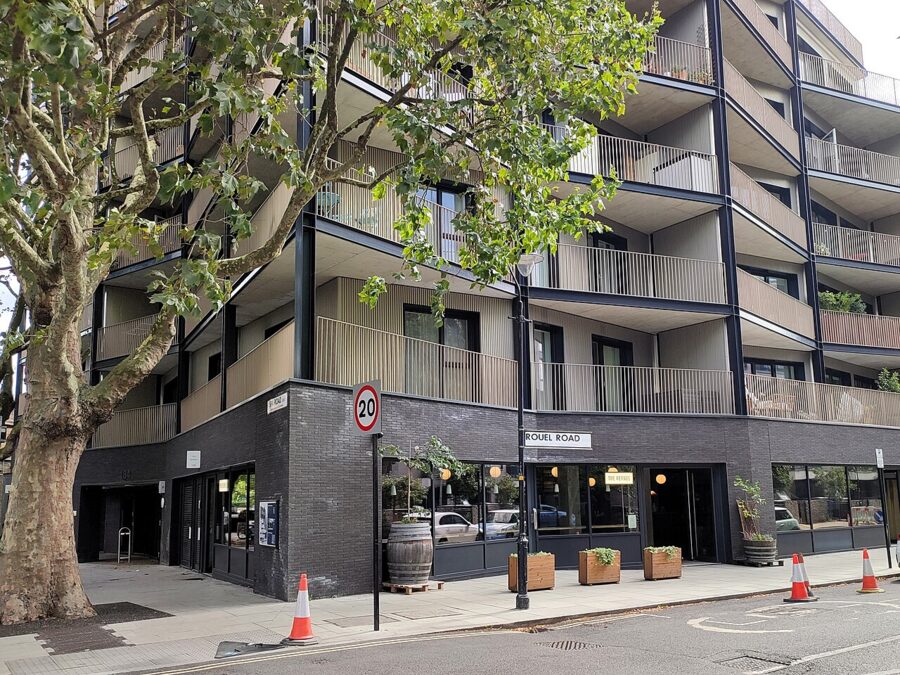

Do it on a Saturday. That is the only day every arch is reliably open, and many do not open on weekdays until the late afternoon. Start at the Bermondsey end, at the Kernel’s taproom on Spa Road, about ten minutes from Bermondsey station on the Jubilee line, and walk west towards London Bridge, which means the bars get busier as you go and the station is waiting at the end.
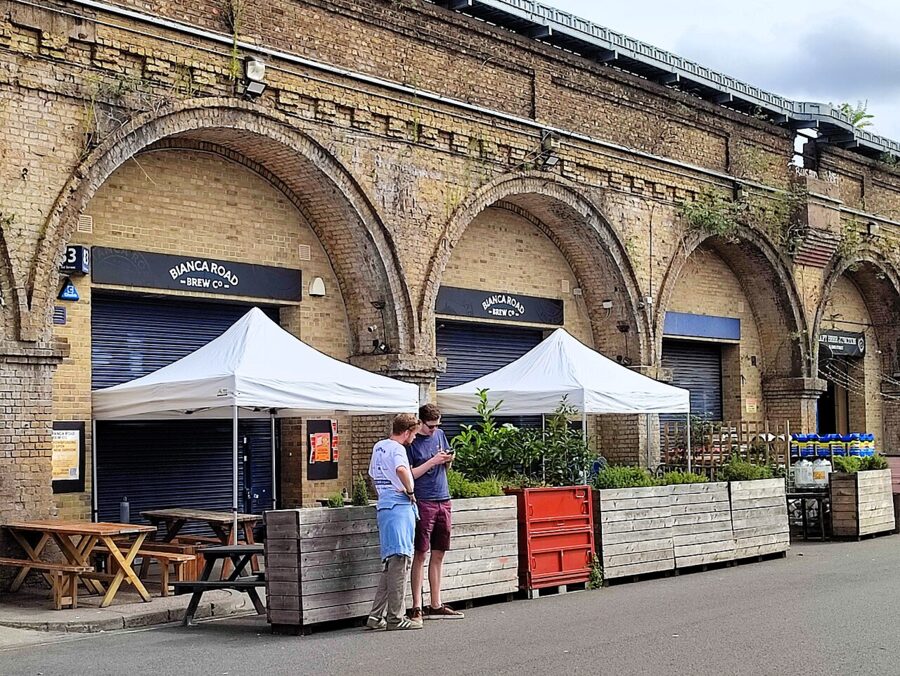
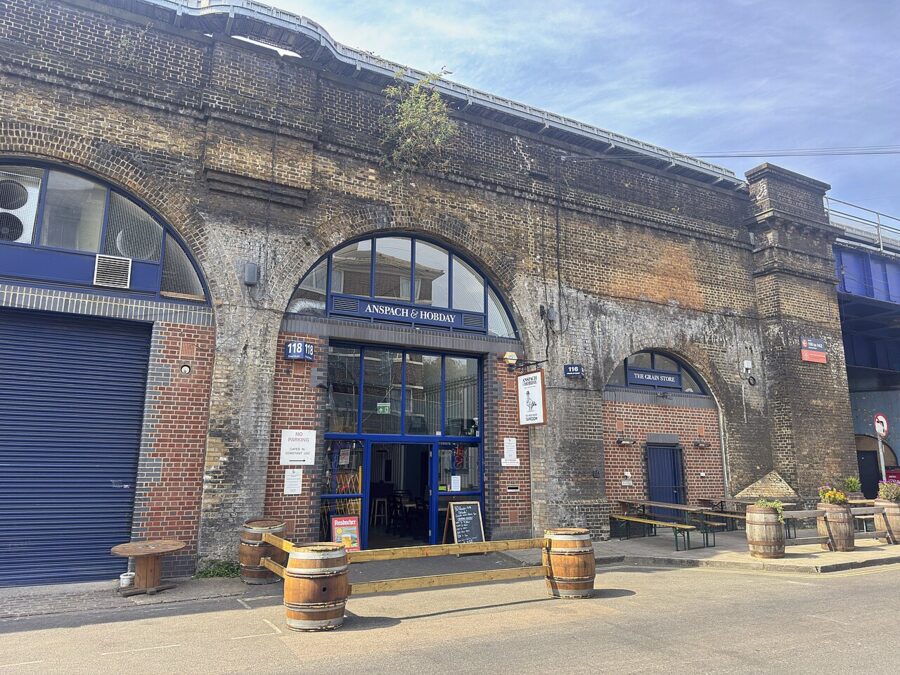
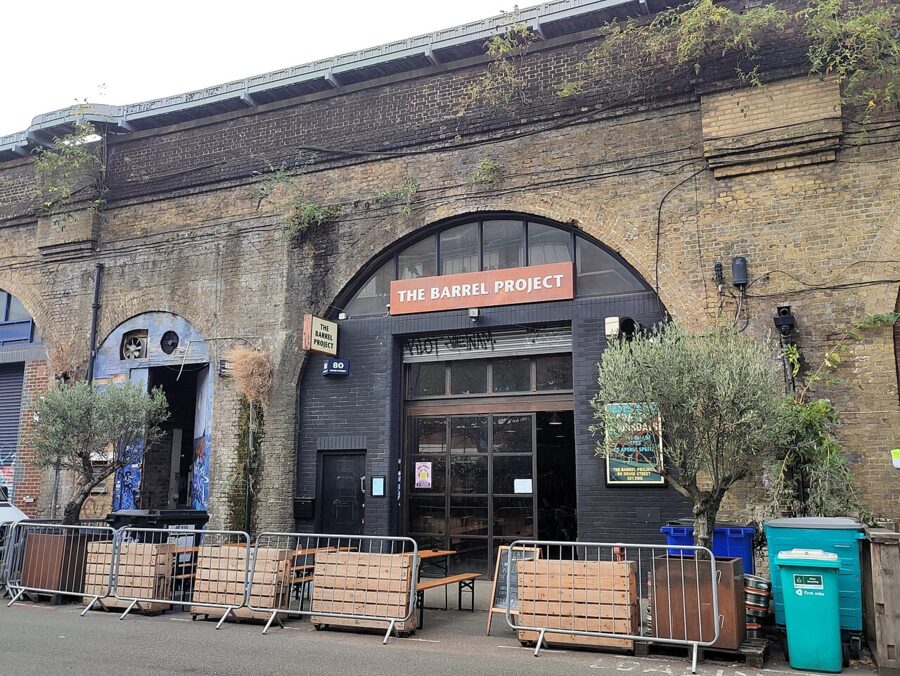
Pick, do not try to do them all. On Enid Street, Bianca Road has a taproom and a second bar, the Enid Street Tavern, with a cask beer and a big outdoor area; Cloudwater, the Manchester brewery, has a bright tap room; and Against the Grain makes its own cider. On Druid Street, Anspach & Hobday’s Arch House has a dozen of its own beers on, including one on cask, the Barrel Project is a long arch lined with oak barrels, and Southwark Brewing has six cask beers on its front bar. Round the corner on Stanworth Street, Hiver brews with honey and keeps a hive in the bar.


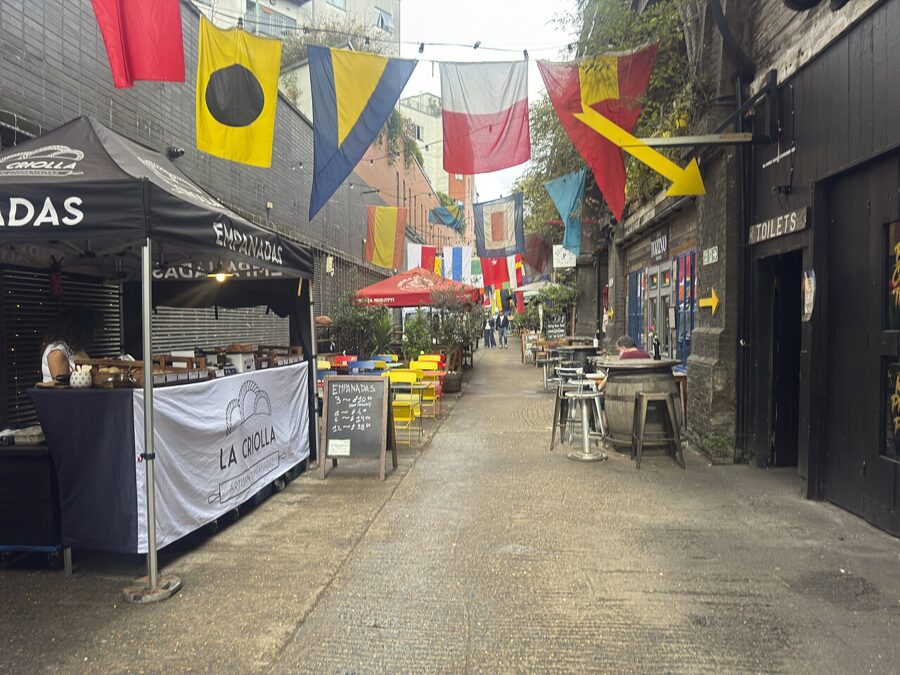
Eat at Maltby Street Market, which sets up in the middle of the route at weekends, and drink halves, not pints. Most of these beers are stronger than a pub bitter, and eight arches of 6% pale ale is a different afternoon from the one you planned.


The famous names, and what is genuine
Some London pubs are famous for reasons that have nothing to do with their beer. Go anyway, but know what you are paying for.
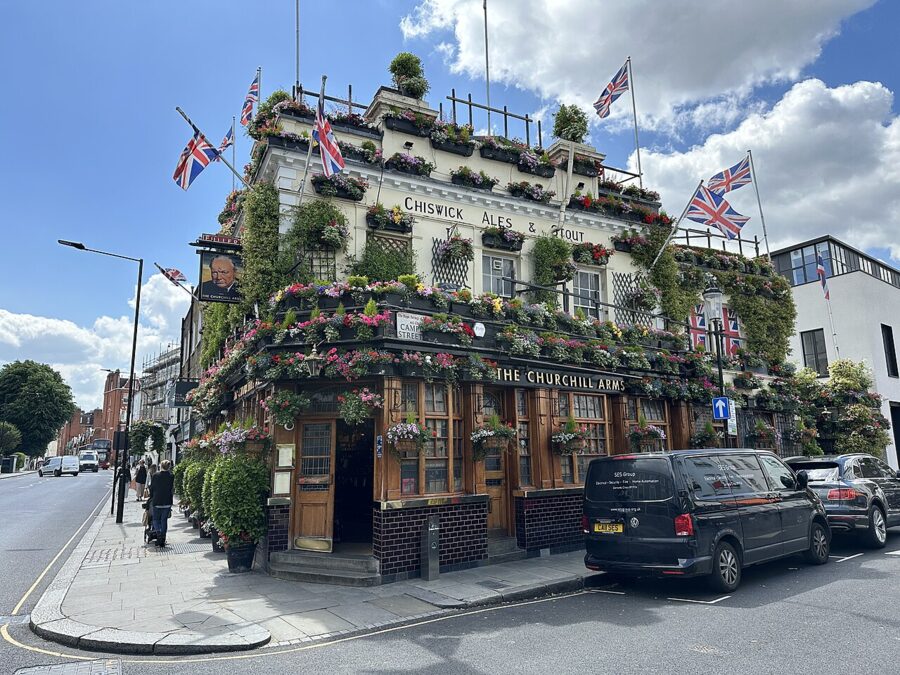

The Churchill Arms on Kensington Church Street is the most photographed pub in London, buried under flowers in summer and Christmas trees in winter. It is better than it needs to be. The building dates from 1824, the interior is a largely intact 1930s refit hung with bric-a-brac, and in 1988 it opened what is said to be the first Thai kitchen in a London pub. It is a Fuller’s pub, five minutes from Notting Hill Gate station; book the Thai restaurant, drink in the front.
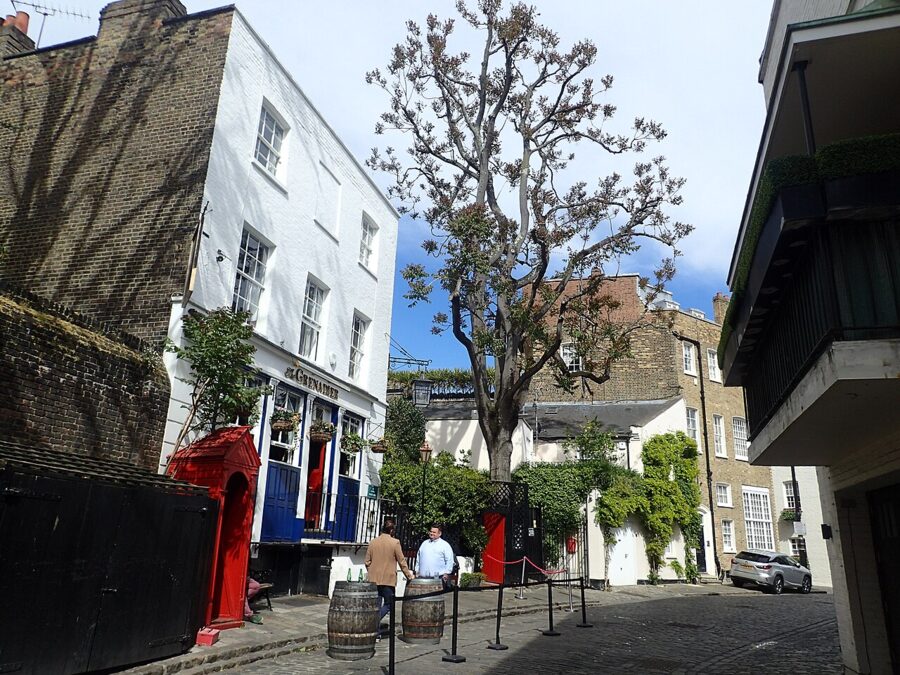
The Grenadier in Wilton Row, a cobbled Belgravia mews, is famous for its ghost, a Guards officer said to have died after being caught cheating at cards, and for its red sentry box outside. Since 2023 it has been run by Ineos, of the Grenadier off-roader, as a dining pub known for its beef Wellington. The pub is small and full in the evenings, so book if you want to eat; for a pint, come at opening time.

The famous stories need sorting. The Spaniards Inn’s Dick Turpin is legend, though its place in The Pickwick Papers is real, and the Prospect of Whitby’s date of about 1520 is a claim for the site, not the building. Ye Olde Cheshire Cheese really was rebuilt after the Great Fire of 1666, but Dr Johnson, whose portrait hangs inside, has no recorded connection with it. The same sorting, done nationally, is in the oldest pubs in England.
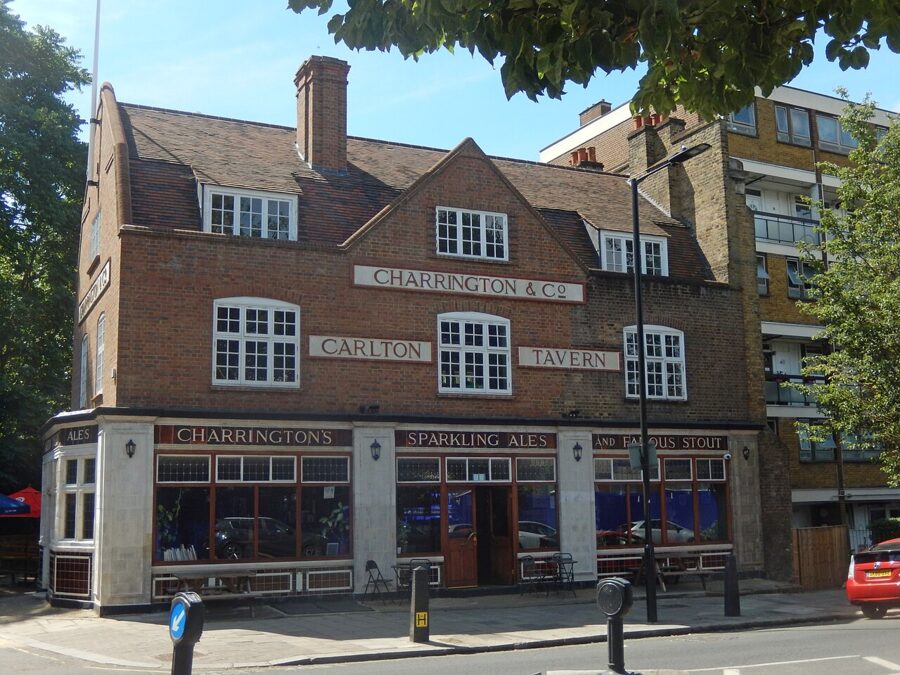
Some famous pubs are newer than they look in a stranger way. The Carlton Tavern in Maida Vale was illegally demolished by a developer in 2015, and the council ordered it rebuilt; it reopened in 2021, brick by brick as it had been, with the reconstructed bar and etched windows. The demolition came a day before Historic England was due to list it. It now pours house beers from Anspach & Hobday.

One evening: Holborn to Soho
This route is for a weekday, from about 17:30 to 23:00, with no walk longer than fifteen minutes. Drink halves and it is a long, sociable evening; drink pints and you will not see the end.
- Cittie of Yorke, High Holborn. Start in the back hall at Chancery Lane station, before the lawyers arrive.
- Princess Louise, High Holborn. About ten minutes west along High Holborn. Find a compartment and look up.
- The Salisbury, St Martin’s Lane. Fifteen minutes south-west through Covent Garden, via Drury Lane and Long Acre.
- The Harp, Chandos Place. Five minutes south. Harvey’s Best, standing room only.
- The Coach and Horses, Greek Street. Twelve minutes north up Charing Cross Road. Crisps for dinner.
- The French House, Dean Street. Three minutes west. A last half, or a glass of wine, before closing at 23:00.
Tottenham Court Road station, with the Elizabeth line, and Leicester Square are both five minutes’ walk from the last stop. On a Sunday the Cittie of Yorke keeps short hours or none, and the Harp and the Coach and Horses close at 20:00, so start at the Princess Louise in the afternoon and do Soho early.

Practical notes
Opening hours. Since the Licensing Act 2003 came into force in November 2005, there are no national closing times; each pub has its own licence. In practice most London pubs close at 23:00 during the week, with later hours at weekends for some: the Salisbury until 00:30, the Pembury until midnight, the Cock Tavern until 01:00 and Howling Hops until 01:30 on Fridays and Saturdays. Sunday evenings are short in the centre.
Match days. Pubs near football grounds are usually given over to home fans on match days and packed from opening. Check the fixtures if you are heading to Holloway, Highbury, Tottenham, Fulham or Stamford Bridge. The Thames pubs at Hammersmith and Putney are just as full on Boat Race day.
Booking. You do not book a pint, but you do book food at the Devonshire, the Grenadier and the Churchill Arms’s Thai restaurant, and the French House dining room takes bookings up to sixty days ahead with a card. For a Sunday roast anywhere, book.
Paying. More and more London pubs are card only, including the Market Porter, the Cock Tavern and the Dove. A few still want cash; the Palm Tree in Mile End is one. Samuel Smith’s pubs have their own house rules, which include phones away and no swearing, and the staff enforce them.
Prices. A survey of more than a hundred London pubs early in 2026 put the average pint at £5.77, ranging from around £4.20 in Newham to £7.75 in Kensington and Chelsea. Expect to pay more in the West End, less in a Sam Smith’s house, and more again for strong craft beer.
Children and dogs. Most London pubs take children while food is being served, often until 20:00 or 21:00, and the Devonshire bars them from 17:00. Dogs are welcome in most bars but not dining rooms. For rounds, ordering at the bar and the unwritten rules, see pub etiquette.
If you do one thing, do the Holborn and Soho walk on a weekday. If you have a second evening, take the Overground to Rotherhithe, have a pint on the Mayflower’s jetty as the tide turns, and get the train back from the station two minutes up the road. And whichever pub you end up in, ask what’s on cask before you look at the lagers.