
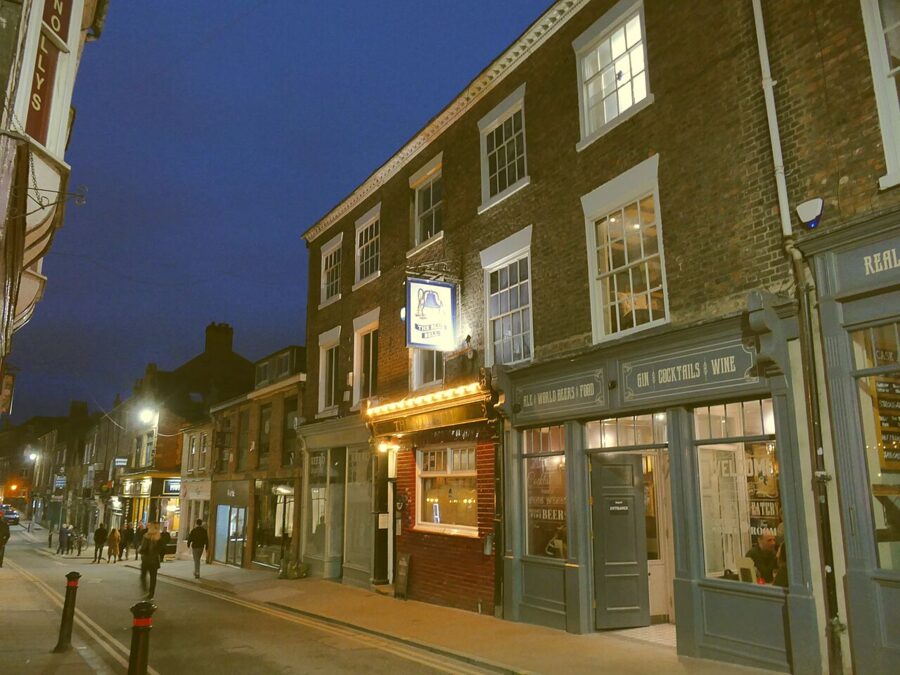
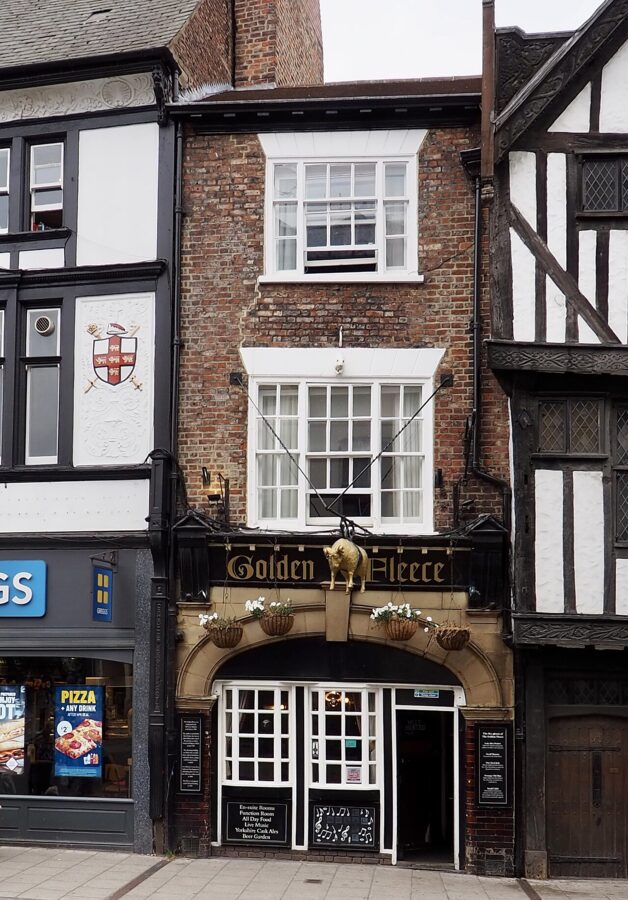
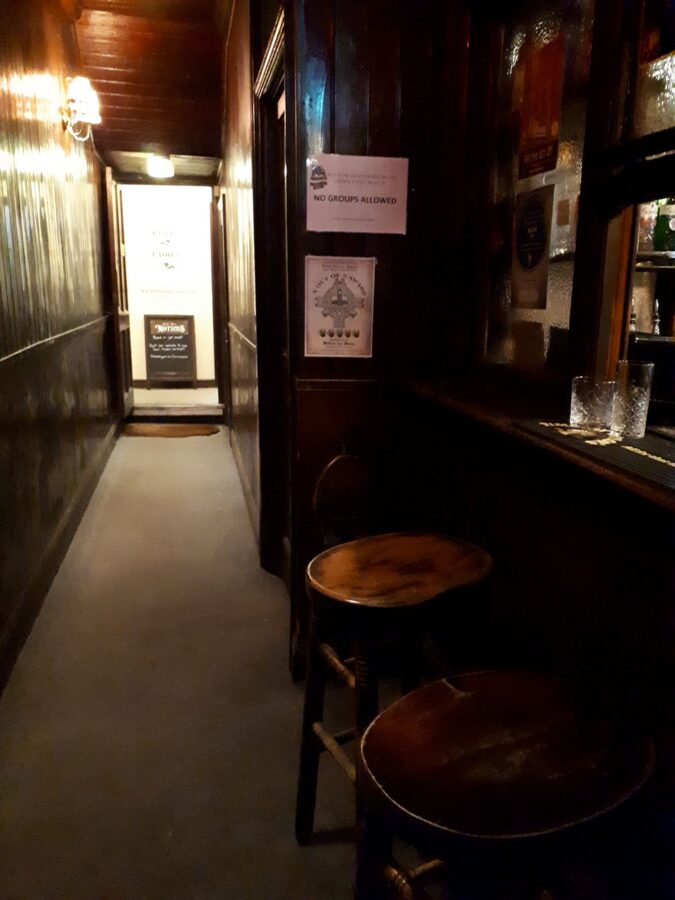
The Blue Bell on Fossgate has two small rooms, a corridor with fold-down seats and a rule that turns groups away at the door. Nothing much has changed inside since 1903, and the people who run it would like to keep it that way. Two minutes’ walk away, the Golden Fleece on Pavement tells you it was in the city records by 1503 and is home to more ghosts than most pubs have regulars. The front you walk through was put up around 1840.

York is good at both kinds of pub: the ones that are genuinely old and the ones that are very good at telling you they are. The trick is knowing which is which, and then deciding you don’t mind. A pint in a 1930s brewer’s idea of Tudor England can be a fine thing, so long as nobody is pretending otherwise.

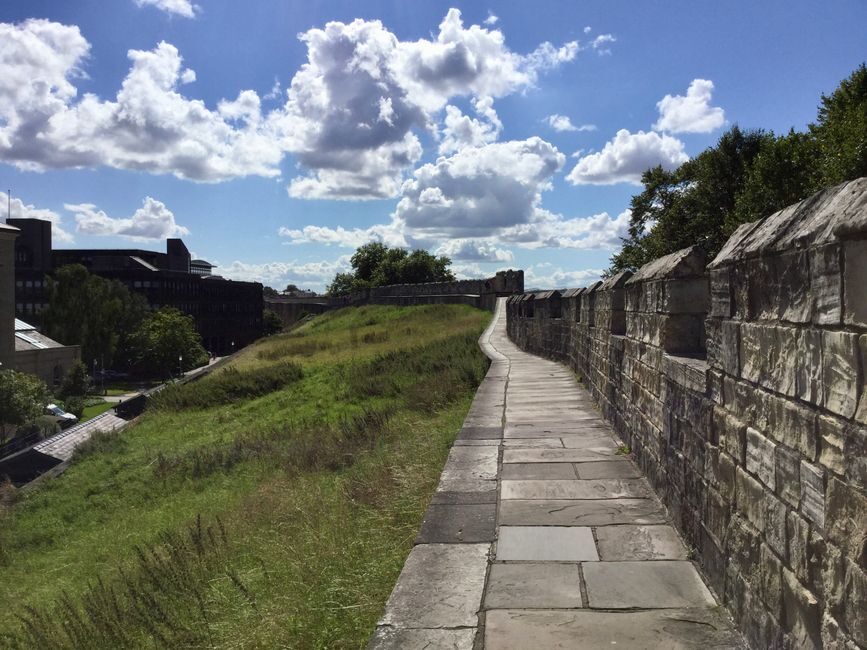
What the city does best is the small, multi-roomed local with cask beer from a brewery an hour up the road, and it has a lot of them packed inside a ring of walls you can cross on foot in twenty minutes.
On this page
How York drinks
You will hear that York has a pub for every day of the year. It is a line for tour guides rather than a census, and the local CAMRA branch, which counts these things for a living, reckons on roughly 450 pubs across its whole patch, from the city out to Selby and Helmsley. Inside the walls the number is smaller and the density is the point. On Stonegate and High Petergate you can stand outside one pub and read the sign of the next.
The beer is Yorkshire first. Timothy Taylor’s Landlord turns up on half the bars in town, and Samuel Smith’s brews in Tadcaster, ten miles south-west, which is why the city has a run of Sam Smith’s houses with their own beers, their own prices and their own rules (no music, no televisions, no phones out at the bar). John Smith’s came from Tadcaster too, and a third Tadcaster firm, the Tower brewery, restored or rebuilt several central York pubs between the wars with an eye for “historic character” that you will learn to spot from across the street.
The breweries behind the bar
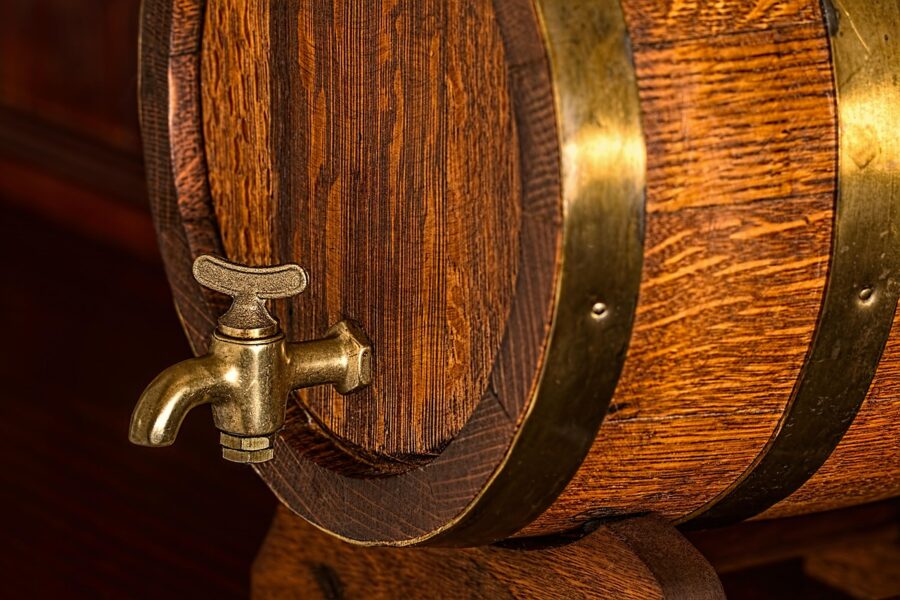
The names on the pump clips are worth learning. Rudgate, from Tockwith, makes Ruby Mild, which won CAMRA’s Champion Beer of Britain in 2009 and is still the easiest way to find out what a mild is. Brass Castle comes from Malton, Half Moon from Ellerton, Yorkshire Heart from Nun Monkton, and Turning Point from Knaresborough, which now runs a pub of its own on Micklegate. If you want the background on why any of this is served by hand pump and at cellar temperature, start with real ale.
The city’s own brewing has had a rough decade. York Brewery opened at Toft Green, just inside the walls, in 1996; its lease ran out in 2019 and its beers moved to the Black Sheep brewery at Masham, which still runs the Three-Legged Mare on High Petergate. The newer name is Brew York, whose taproom off Walmgate sits inside its original brewery.
Bars, gates and snickelways
Two bits of York vocabulary will save you some confusion. A bar is a gate in the city walls: Bootham Bar by the Minster, Micklegate Bar for anyone coming in from the station, Monk Bar at the top of Goodramgate, and Walmgate Bar to the east. A gate, meanwhile, is a street, from the Norse word for one, so Stonegate, Goodramgate and Fossgate are roads and not doorways.
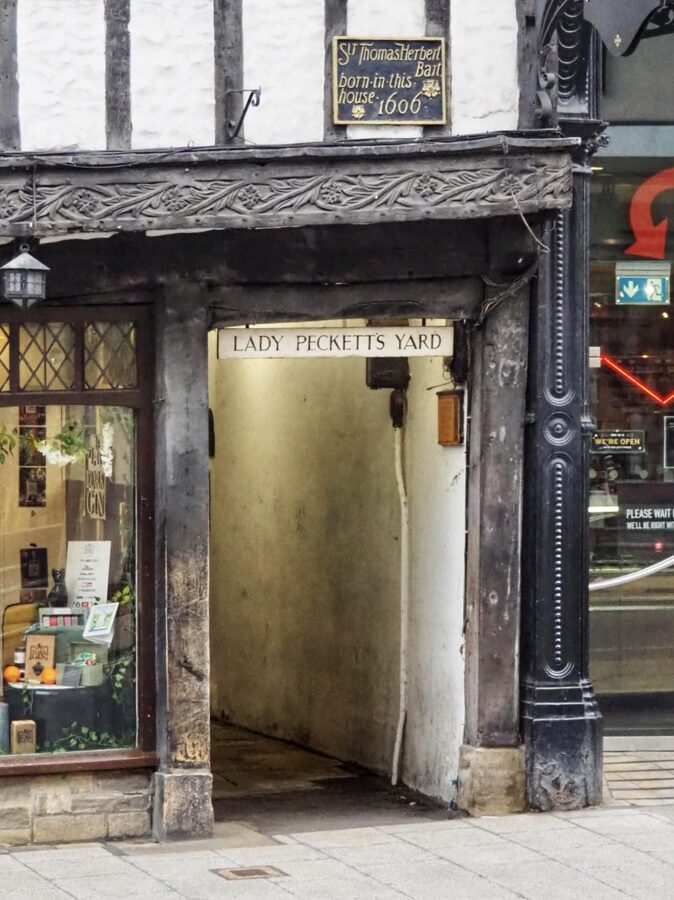
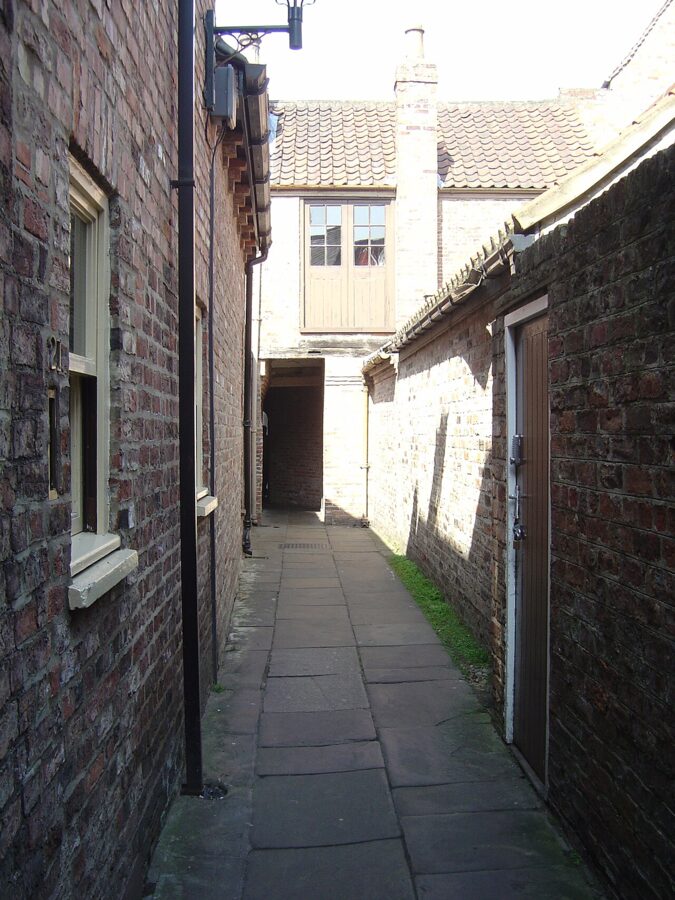
Then there are the snickelways, the narrow passages, yards and alleys that cut between the streets. The word was made up in 1983 by Mark Jones, who put snicket, ginnel and alleyway together for his book of walks, and it stuck. They are the reason a York pub crawl is shorter than it looks on a map: Coffee Yard runs from Stonegate towards Grape Lane, and Lady Peckett’s Yard drops from Pavement down towards Fossgate. Use them, but not after a sixth pint in the dark.
Stonegate and the Minster end
Stonegate is the prettiest street in York and it knows it. It runs from St Helen’s Square to the Minster, and on a summer Saturday you will move along it at the pace of the slowest family. Come in the evening and the shops shut, the crowds thin, and three of the best pubs in the city are within a hundred yards of each other.
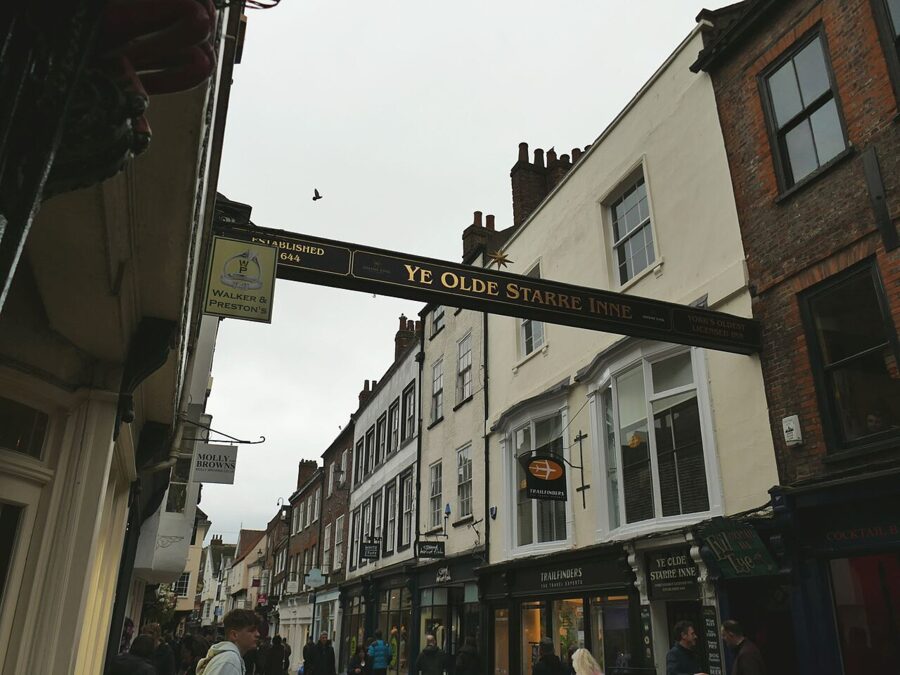

Ye Olde Starre Inne
The Olde Starre is the one everyone finds, because its sign is strung across Stonegate like a banner. The pub sits behind the shopfronts, down a narrow passage, and opens out into a main bar, three side rooms and three separate outdoor terraces. It is a Greene King house, open 11:00–23:00 and until midnight on Fridays and Saturdays, with food until 21:00. Children and dogs are welcome.
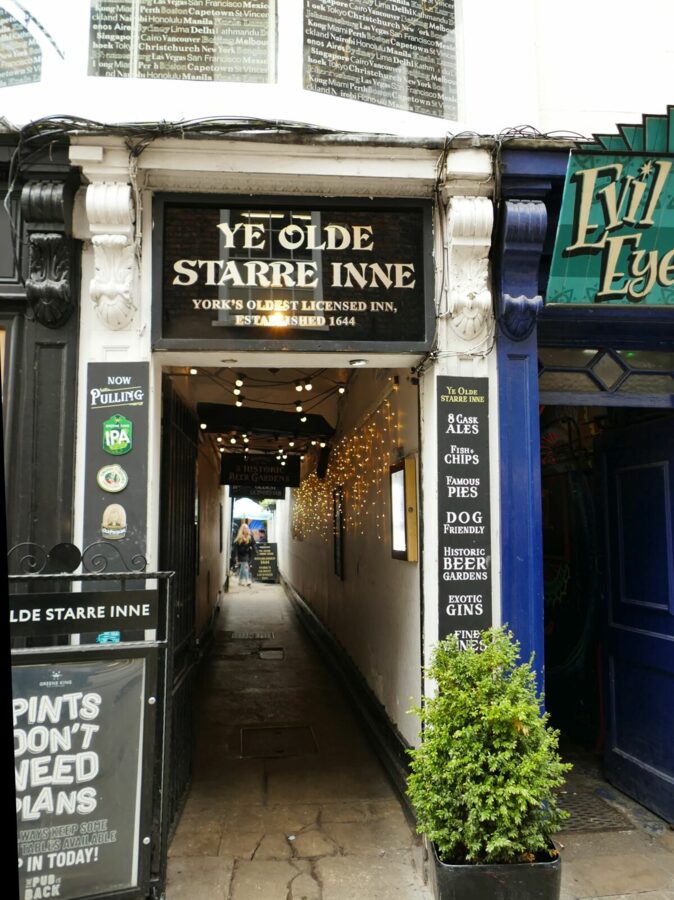

The claim is that this is York’s oldest licensed inn, with a licence from 1644, and that it served as a hospital and mortuary during the Civil War siege that year. The brewery’s own page says the building was “first built in 1644”, but the Historic England listing puts the original house in the sixteenth century, with an early seventeenth-century wing, so the building is older than its legend and the licence is a story still waiting for its paperwork. The oldest pubs in England are a contest with no referee, and this is a typical entry.
What is real is better than the legend. CAMRA rates the interior one star on its National Inventory of Historic Pub Interiors for a leaded-glass bar screen reading “Brett Bros”, after the local brewers who owned the place in the 1890s, made by the York stained-glass firm of J W Knowles. There are seventeenth-century moulded beams, reused panelling under the stairs, a Tudor-arched stone fireplace in the back left room and a pair of Art Nouveau door handles on the servery door. Find the screen first, then the fireplace, then a seat.
The House of the Trembling Madness
Twenty yards up Stonegate is a beer shop. Walk through it and up the stairs and you are in a timber-roofed drinking hall hung with a collection of taxidermy that has been growing for years. The Stonegate original, open 10:00 to midnight, pours four cask and eight keg lines and lets you drink anything from the shop downstairs at the tables upstairs.
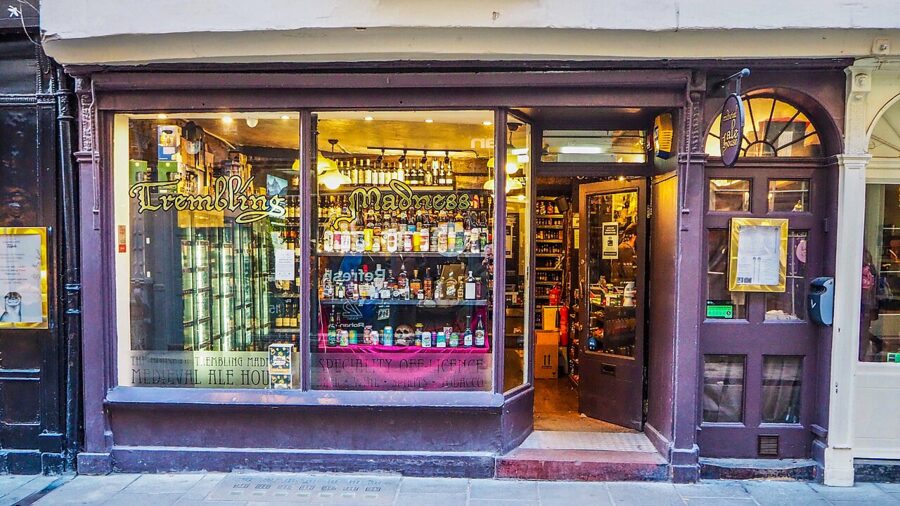

The pub says the back of the building began life as part of a Norman house of about 1180; CAMRA’s note on it settles for parts dating from the early 1600s, and both agree it is Grade II* listed. There is a tiny kitchen and food all day. There are no table bookings, it is not suitable for wheelchairs, and dogs stay at home. Share a pew.
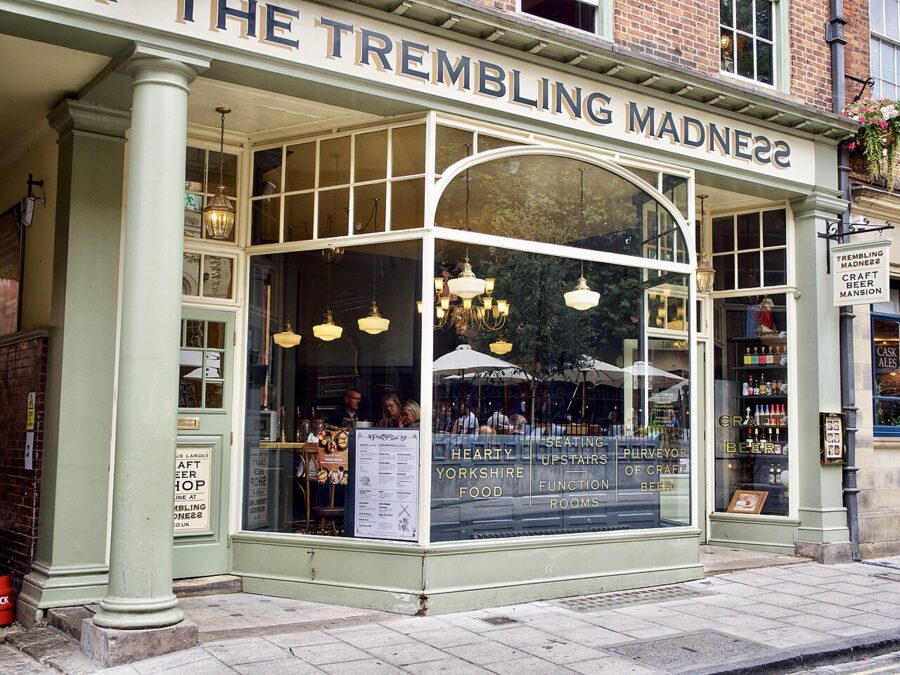
The bigger Trembling Madness on Lendal, in a Georgian townhouse that was a saddler’s for 170 years, is now run separately by new owners. It has nineteen draught lines over several floors and is the obvious first stop if you have walked in over Lendal Bridge from the station.
One newcomer is worth the stairs. The Little Ale House opened in December 2025 on the first floor of the former Little Betty’s tearoom on Stonegate, from the people behind the Little Ale House in Harrogate. The old tea counter downstairs now sells whisky, and upstairs there are six cask ales from small breweries, usually including a dark one, plus church pews and coal fires.
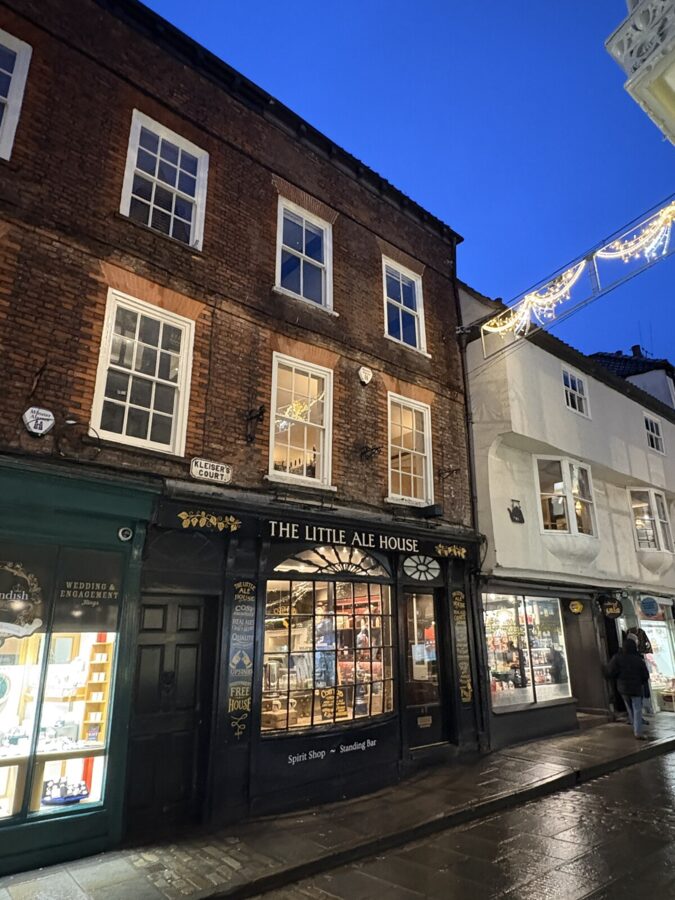

High Petergate
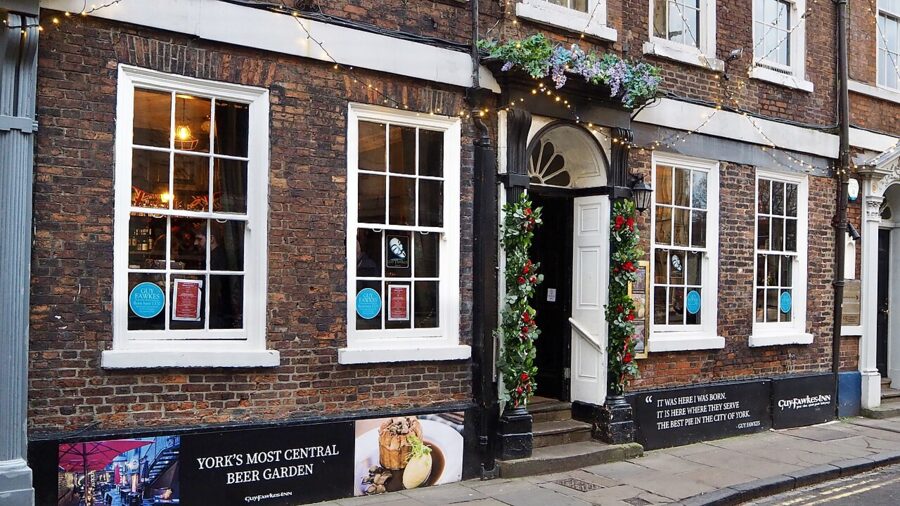
High Petergate runs from the Minster to Bootham Bar and has a pub every few doors. The Guy Fawkes Inn says it stands on the site of the house where Fawkes was born in 1570; he was certainly baptised at St Michael le Belfrey across the road, but the birthplace is tradition rather than record. It is candlelit, gaslit and rather smart, with Black Sheep and Landlord on the bar, dogs allowed, and a firm policy of ignoring Bonfire Night.

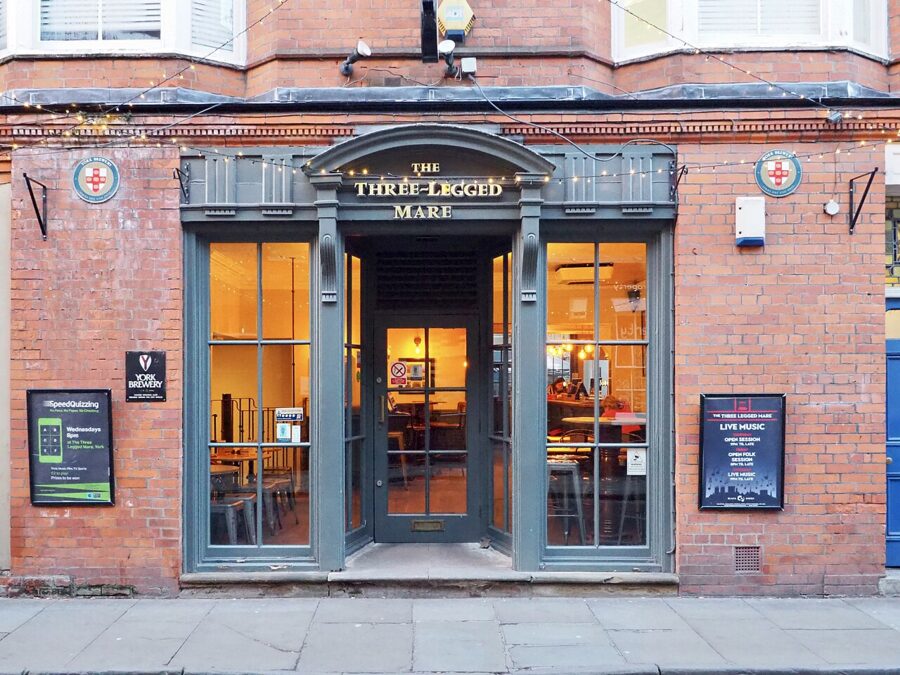
Further up, the Three-Legged Mare is a roomy pub behind a modest front, with Black Sheep beers, a good choice of real cider served from the box, and a spiral staircase down to the toilets. Its name is old slang for the triangular gallows that once stood on the Knavesmire, and it is one of York’s darker pub names. The Eagle & Child, a few doors down, is an early seventeenth-century house with a Leeds Brewery bar and food until 21:00.

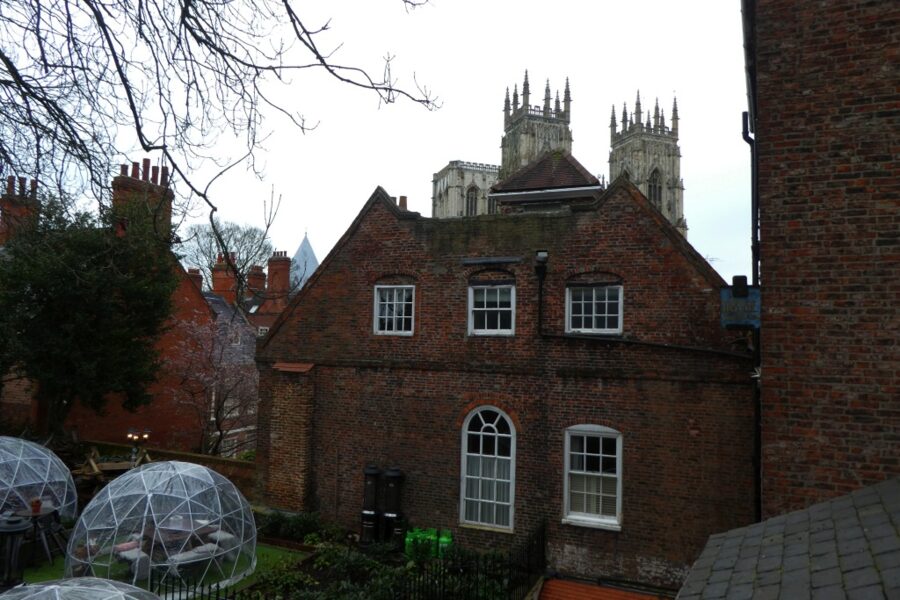
At the top, right under Bootham Bar, the Fat Badger is the pub that used to be the Lamb & Lion. It has small rooms, five real ales and the beer garden everyone wants, laid out against the city walls with the Minster towers over the roofline. Dogs are welcome in the garden. Get there before the sun moves round.

Goodramgate
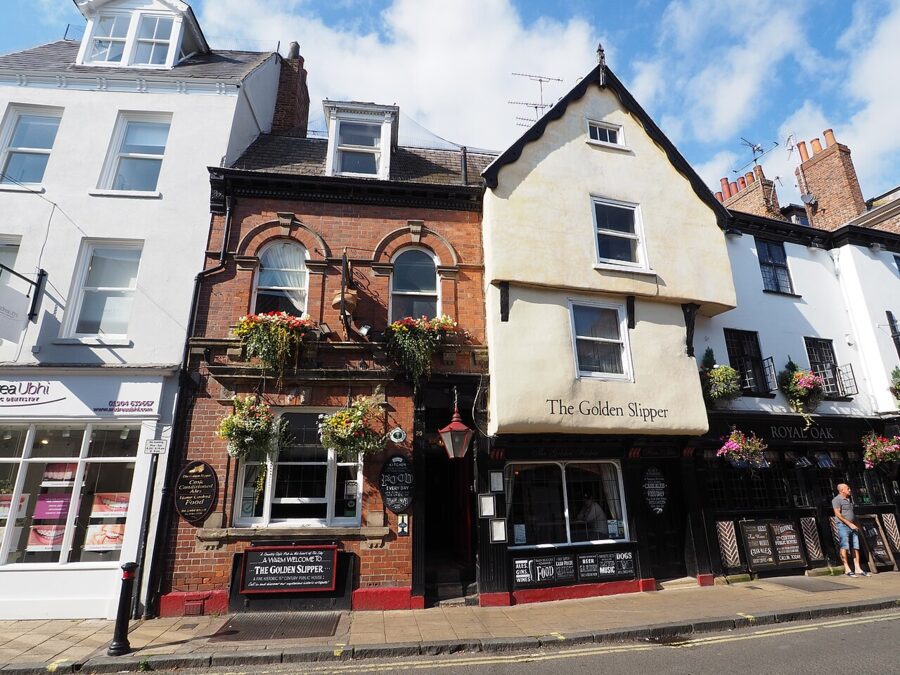
Goodramgate curves from the Minster towards Monk Bar and is the street for half an hour of argument about what counts as old. The Royal Oak has a black-and-white front and a sign promising a seventeenth-century inn. It was never one. The whole thing is a 1934 rebuild by the York brewers John J Hunt, and CAMRA gives it two stars on the National Inventory precisely because that thirties Tudor job survives: three small rooms off a staggered corridor, with a hatch.
When Punch Taverns planned a refurbishment in 2010, CAMRA was consulted and most of the old layout was kept. It is still a Punch pub, with Theakston and Landlord on the bar.
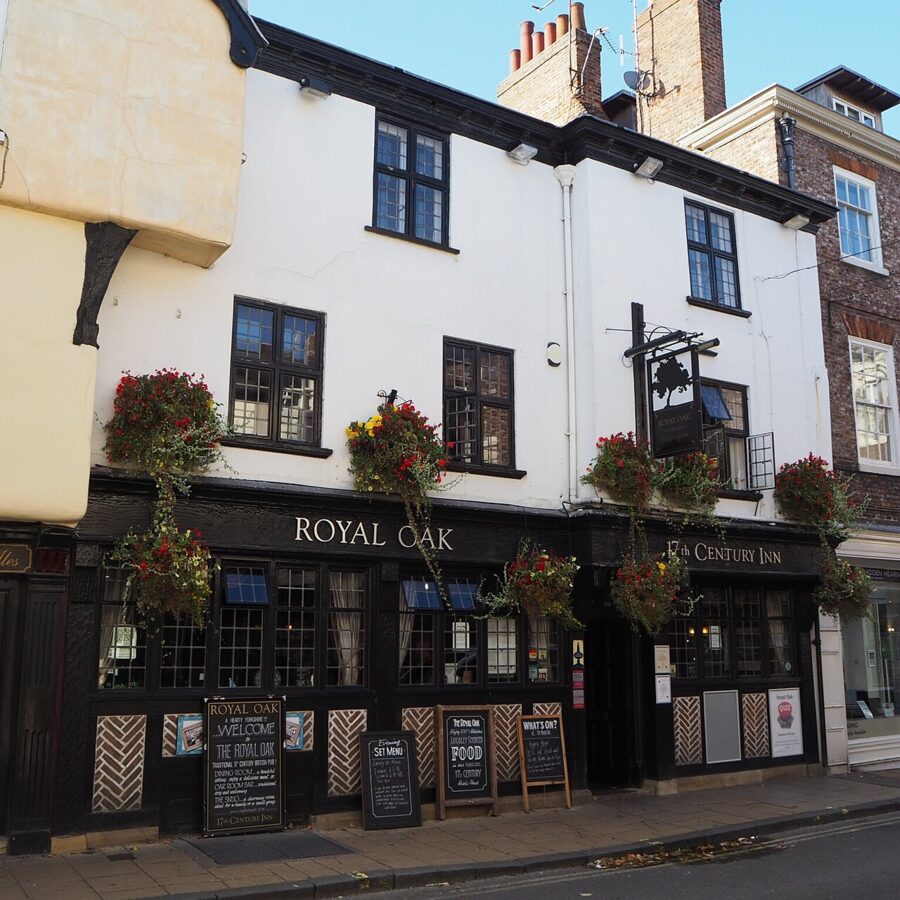

Next door, the Golden Slipper is the genuine article in a Victorian brick coat: a fifteenth or sixteenth-century building with a nineteenth-century front. The name comes from a medieval leather slipper found by workmen in 1984, which is on display, and there is a line for beer from the wood. Across the street, the Snickleway Inn claims to have been the Royalist powder magazine in 1644 and to be the most haunted pub in York, a title the Golden Fleece would like a word about.

The Black Swan
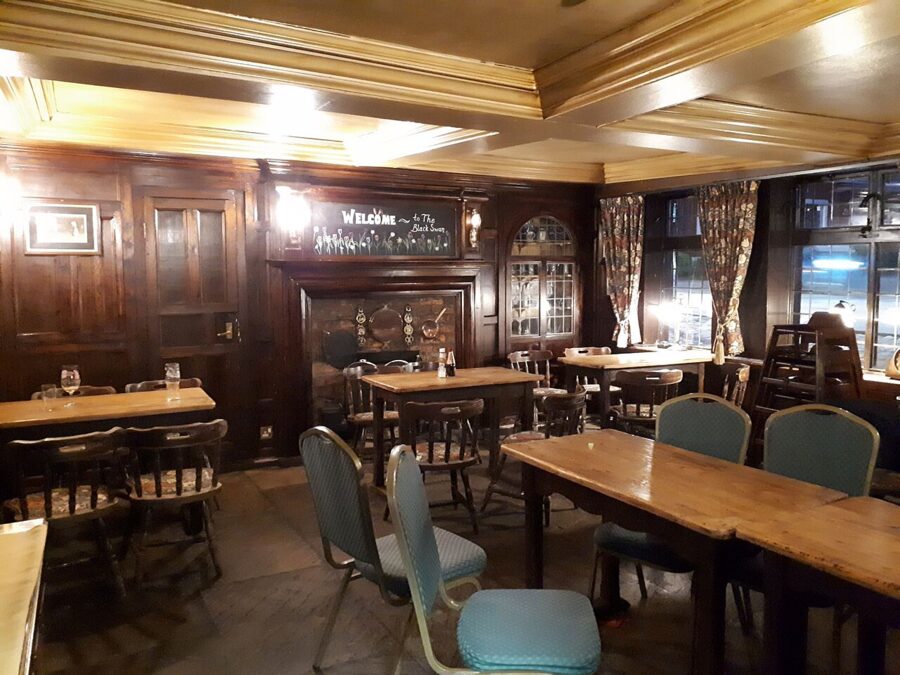
At the bottom of Goodramgate, across Peasholme Green, the Black Swan is the most convincing old building of all of them. It is a timber-framed house with a jettied twin-gabled front; the listing dates it to the late sixteenth century, the pub’s own history says fifteenth, and some accounts give 1417. Inside are a seventeenth-century staircase, panelled rooms with coffered ceilings and a huge fireplace under a timber beam. CAMRA gives it three stars and notes that its 1930s refurbishment by the Tower brewery was done with “historical character” very much in mind, so some of the Tudor is Tudor and some is 1930s good taste.
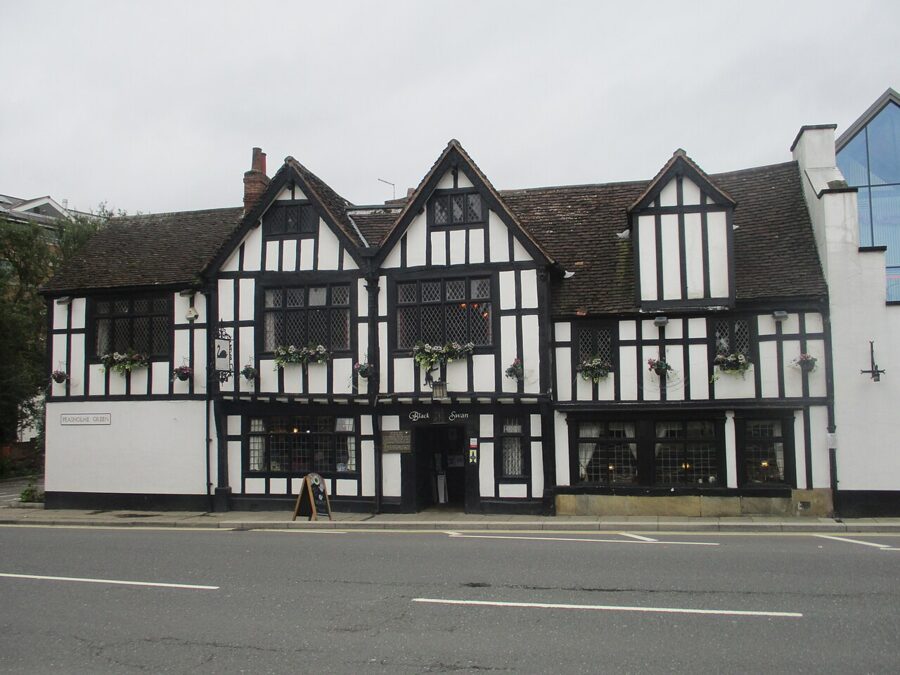

Upstairs, the first-floor front room still has its painted panelling, with figures in trompe l’oeil panels now almost too faded to read. Downstairs the beer is Landlord plus changing Yorkshire guests, food runs at lunchtime and from 17:00 to about 20:00 on weekdays, and there are rooms and free parking, a rarity inside the walls. The Black Swan Folk Club has met here for more than forty years, on Thursdays at 19:45.

The Shambles, Pavement and Fossgate
The Shambles is the street on every postcard and in every queue. The street itself is for looking rather than drinking (the Old Shambles Tavern is a café and gift shop that pours six cask ales from noon), but the market behind it and the lanes either side hold some of the best drinking in the city. Come at opening time or after dark.
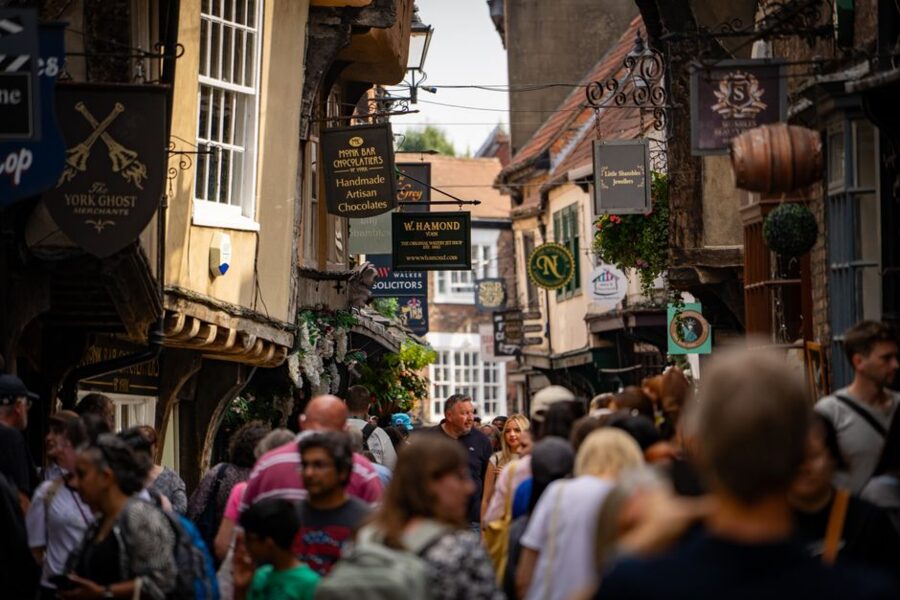
Around the market
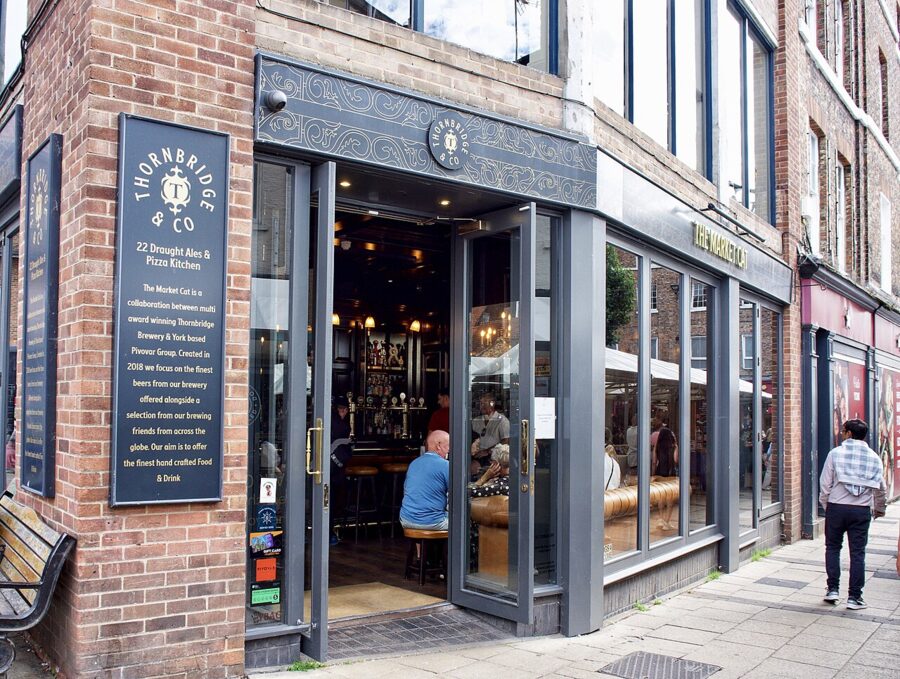
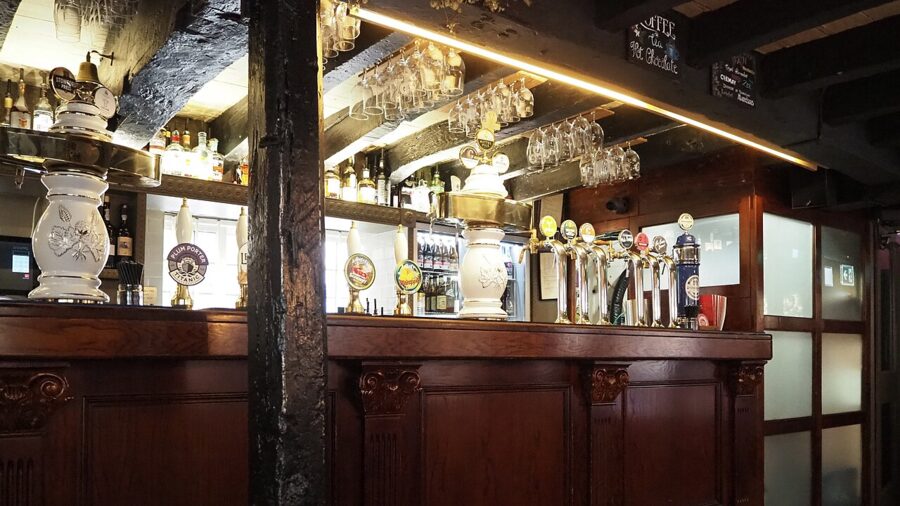
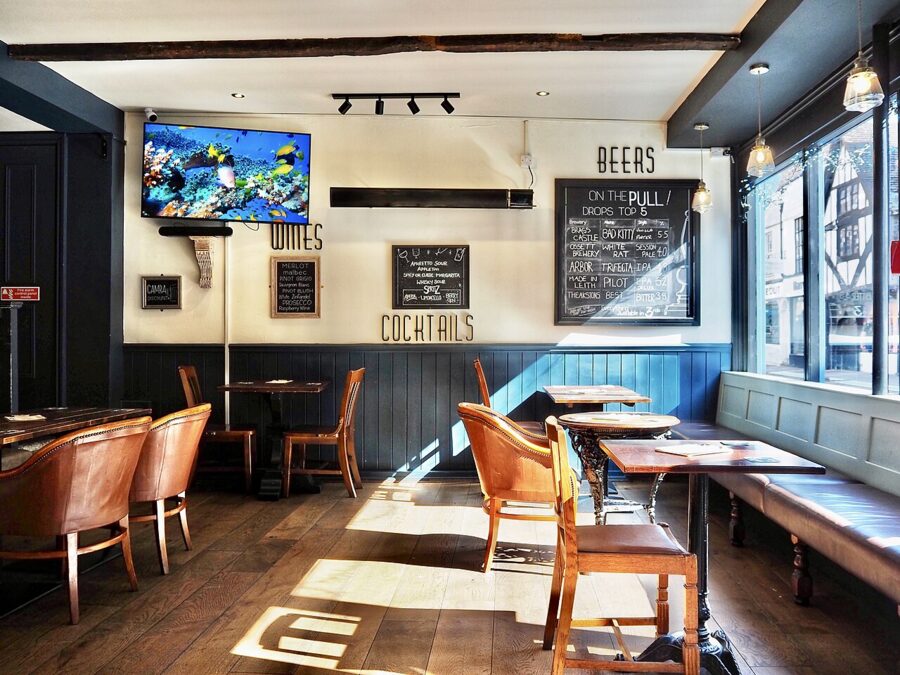
The Market Cat is a three-storey pub on the corner of the Shambles Market, run by Thornbridge with Pivovar, in a building that was a pawnbroker’s. Eight hand pumps, usually five Thornbridge beers with Jaipur among them, and Milanese-style pizza from an oven upstairs. The top floor has window booths with a view over the market roofs to the Minster. Look for the two brass cats on the bar, Jaipurr and Lord Meowples, and forgive them.
Round the corner on Patrick Pool, Pivni is where Pivovar started in 2007: a narrow timber-framed building over three floors, with three rotating casks, seven keg lines, forty-odd bottles and a jukebox. Its age is a muddle. CAMRA’s entry says 1190, the pub’s own site says sixteenth century, and the Historic England listing calls it a warehouse of about 1600, which is the one I’d believe.

Next door, Valhalla is a Viking-themed bar in a former hairdresser’s with two house ales brewed by Half Moon, ciders on hand pump and mead if you insist. It stays open until 01:00 on Fridays and Saturdays. Up in King’s Square, at the top of the Shambles, the Duke of York is a 2013 conversion of an estate agent’s with Leeds Brewery beers and guests.
On Colliergate, the Last Drop Inn is York CAMRA’s City Pub of the Year for 2026, and changed hands in June 2026. It keeps at least two dark beers on, sells thirds, often has a beer from the wood, and runs a quiz on Wednesdays from 20:00.
The Golden Fleece
Here is the pub with the ghosts. The Golden Fleece on Pavement is mentioned in the city’s archives in 1503, and the name is a wool-trade sign, fitting for a pub a few minutes from the Merchant Adventurers’ Hall on Fossgate. The best known of its ghosts, after years of television ghost hunts, is Lady Alice Peckett, wife of a Lord Mayor, who gave her name to the yard a few doors along. Others include One-Eyed Jack in a red coat with a pistol, and a Canadian airman said to have fallen from an upstairs window during the Second World War.
The building, for the record, is a rebuilding of about 1840 with a tiled and stone front from a 1926 refit. The oldest thing you can actually touch is in the passage: a massive carved post and the jettied upper floor of the timber-framed house next door, built into the pub’s side.
The walls are covered in photographs and stories, and there is a beer garden out the back. It is a Stonegate pub now, open 10:00 to midnight daily with food until 21:00, Old Peculier and Landlord on the bar, and four rooms upstairs for anyone who wants to test the stories. Under-18s are welcome until 20:30.
Is it a tourist trap? Partly. The Fleece is fun, and the beer is fine. If you want the real old York pub, you want the next one.
The Blue Bell
Fossgate starts where Pavement ends, and the Blue Bell is a few doors down. It is tiny.
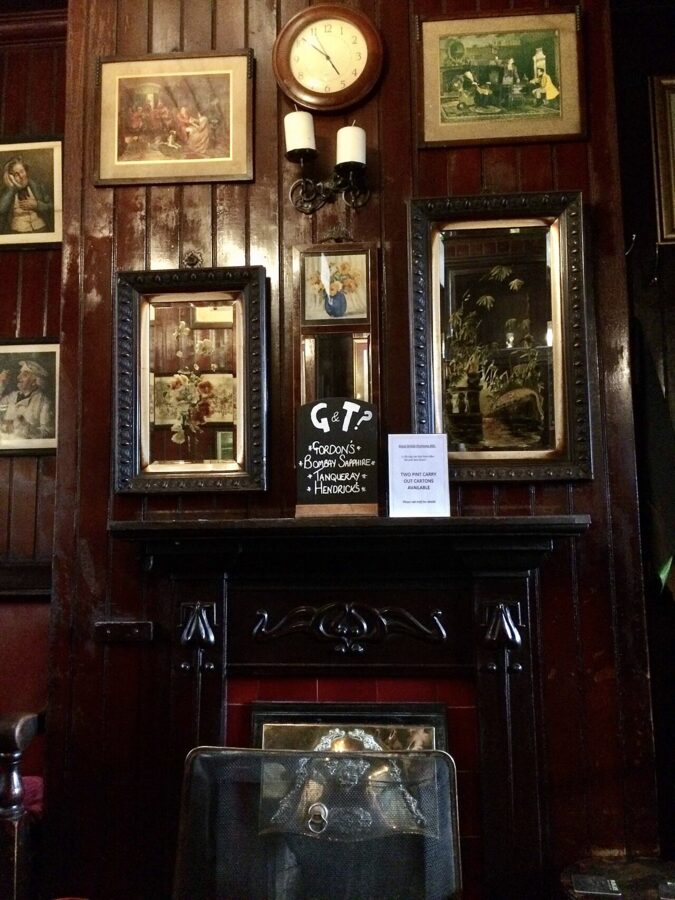
There is a front bar with a red quarry-tiled floor and two tables, a corridor with fold-down seats, and a smoke room at the back with bell pushes above the benches and a hatch to the servery. Every wall and ceiling is varnished matchboarding from the 1903 refit, and the pub is listed Grade II* with three stars from CAMRA. It is open noon to 23:00, every day.

It survived because one family held the tenancy for most of the twentieth century. George Robinson took over in 1902, and meetings he hosted here led to the founding of York City Football Club in 1922; his family’s run ended in 1992 when Edith Pinder retired.
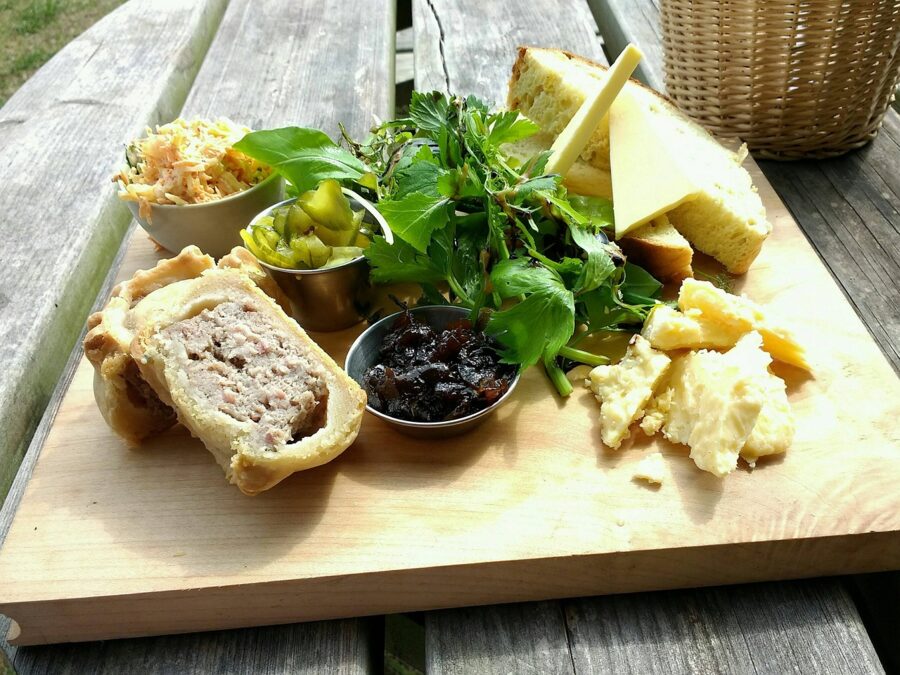
On the bar you will find Rudgate Ruby Mild, Wold Top Bitter, Landlord, Bradfield Farmers Blonde and Brass Castle’s Bluebell IPA, plus a couple of changing guests. Food means pork pies with homemade chutney, and a free cheeseboard from 17:00 on Sundays. The no-groups policy is the price of keeping it like this. Come as two.

The rest of Fossgate and Walmgate
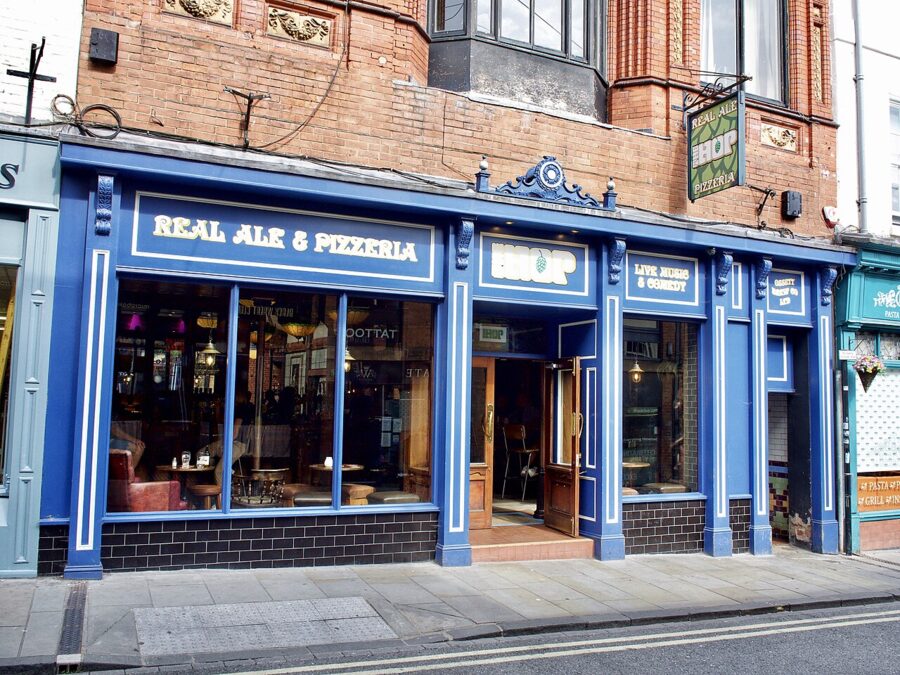
Fossgate has become York’s eating street, and it has two more good pubs. The Hop, owned by Ossett, has a tiled front bar and a long room behind with a stage for unplugged music, Ossett and Rat beers on the pumps and wood-fired pizza until 21:00. Fossgate Tap, in the old Army & Navy store, pours six changing casks from the likes of Brew York, Brass Castle and Rudgate.
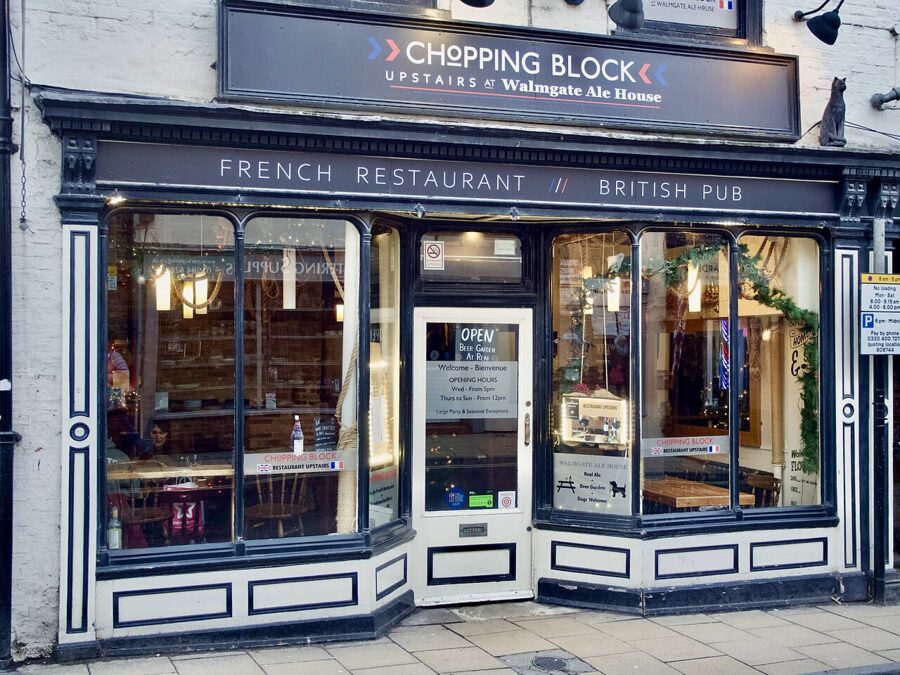
Over Foss Bridge the street becomes Walmgate. The Walmgate Ale House has six hand pulls of mostly local beer in a seventeenth-century building, a bar themed on the rope and saddle makers who were here before, and the Chopping Block, a French restaurant, upstairs. It opens at 17:00 on Wednesdays and at noon Thursday to Sunday; on Mondays and Tuesdays it is shut.
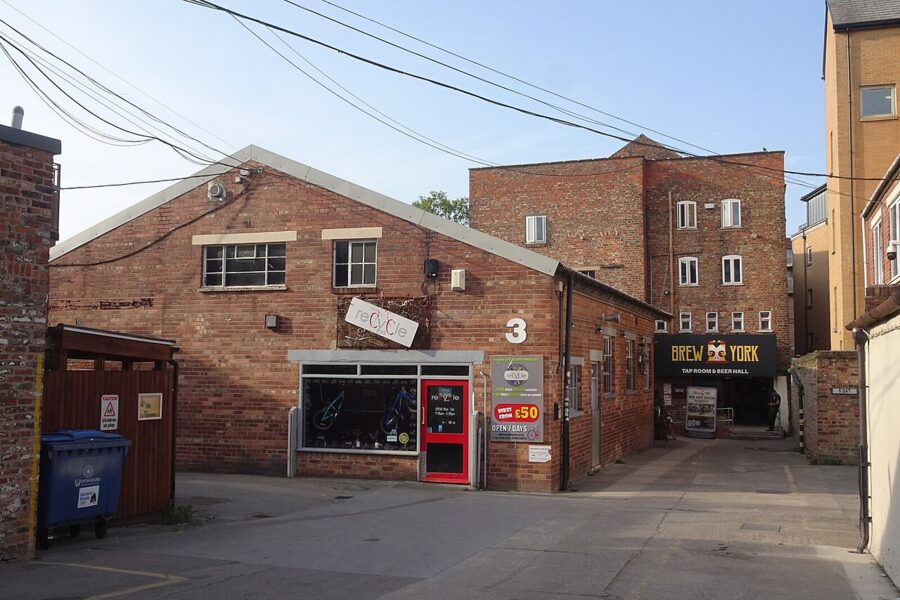
Brew York is a little further along, through an industrial-looking entrance on the left. The Taproom is inside the original brewery with six cask and ten keg beers; the Beer Hall upstairs, in the old maltings, has thirty keg lines and Asian street food. The Taproom opens at 16:00 from Monday to Thursday and at noon from Friday.

The Phoenix
Last on this side of town, and best left for last.
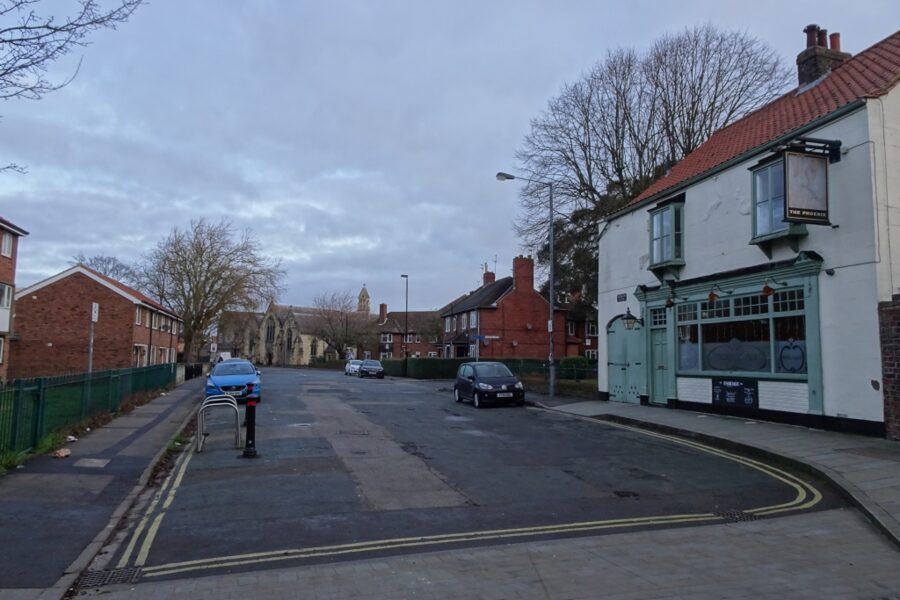
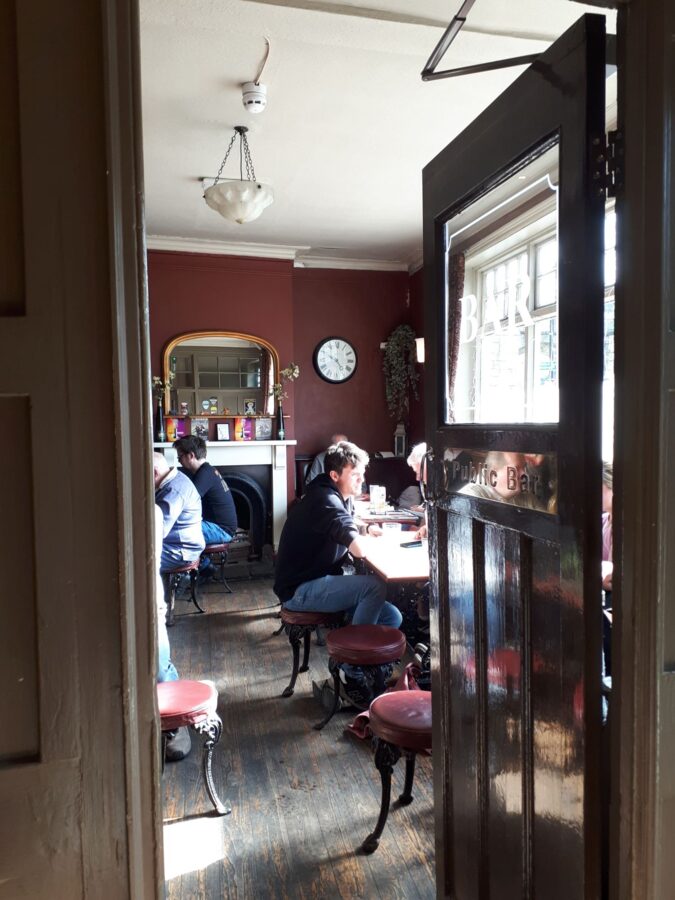
The Phoenix sits just inside the walls by Fishergate Bar, on George Street. It was probably built in the 1830s, but its rooms come from an 1897 refit for John Smith’s: a front public bar, a side corridor with a stand-up drinking lobby and a top-glazed screen. CAMRA gives it two stars. It closed in 2008, stood boarded up for a while and came back, which makes the name either lucky or a joke.

Now it is an independent free house with five local cask ales, Landlord among them, a real fire, bar billiards and jazz several nights a week. Dogs are welcome. It is the pub I’d send someone to for an hour of being left alone with a good pint.

Historic interiors, and what is genuine
York’s best entries on CAMRA’s National Inventory of Historic Pub Interiors are mostly not the ones with “olde” on the sign. The inventory lists interiors, not buildings, so a medieval house gutted in the 1970s will not appear, and a 1936 brewery refit that nobody has touched since will. These are the ones in this guide, all trading.
| Pub | Stars | What is genuine |
|---|---|---|
| Blue Bell, Fossgate | Three | Complete 1903 interior: two rooms, corridor, hatches |
| Black Swan, Peasholme Green | Three | Late 16th-century house, 17th-century staircase and panelling; 1930s brewery restoration |
| Golden Ball, Cromwell Road | Three | John Smith’s 1929 remodelling, four rooms |
| Swan, Bishopgate Street | Three | Tetley’s 1936 refit with drinking lobby |
| Royal Oak, Goodramgate | Two | 1934 mock-Tudor rebuild, not a 17th-century inn |
| Phoenix, George Street | Two | 1897 John Smith’s refit, stand-up lobby |
| Masons Arms, Fishergate | Two | 1935 rebuild with panelling from York Castle’s gatehouse |
| Wellington, Alma Terrace | Two | 1850s back-street local, barely altered |
| Fox, Holgate Road | Two | Multi-room pub restored by Ossett in 2014 |
| Minster Inn, Marygate | One | Purpose-built Edwardian pub of 1903 |
| Ye Olde Starre Inne, Stonegate | One | “Brett Bros” leaded bar screen of the 1890s |
Notice how many of them are twentieth century. The big Yorkshire brewers, John Smith’s, Tetley’s and the Tower brewery, spent the 1920s and 30s improving their York pubs, and what they built has lasted better than what they replaced.

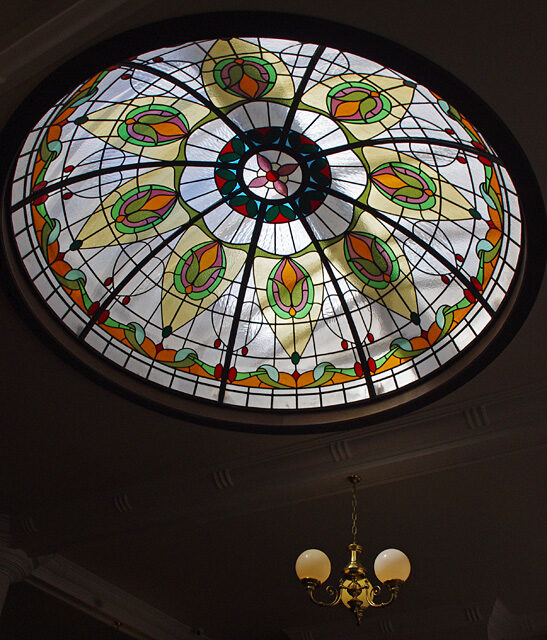
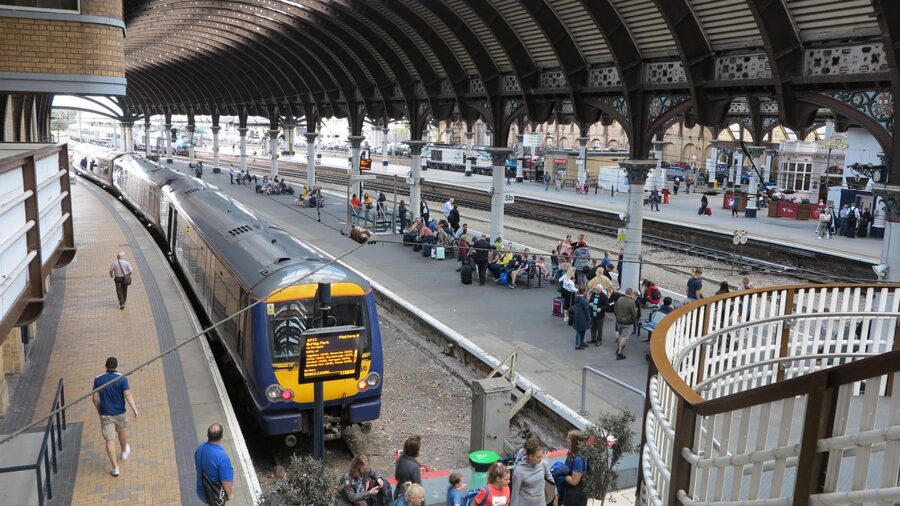
The York Tap belongs on any list of buildings, though not on the inventory. It is the old tea room on York station, opened as a bar in 2011 by Pivovar, with stained-glass ceiling domes, a terrazzo floor and a circular island bar carrying twenty hand pumps. Eighteen pour cask beer and two pour cider, and it opens 10:00–23:00 (from 11:00 on Sundays).

Micklegate and Bishophill
Micklegate runs downhill from Micklegate Bar to Ouse Bridge and is the first street most people walk down from the station. It has a reputation, earned on Saturday nights and race days, as the street for stag and hen parties. Its better pubs are early in the week or round the corner.
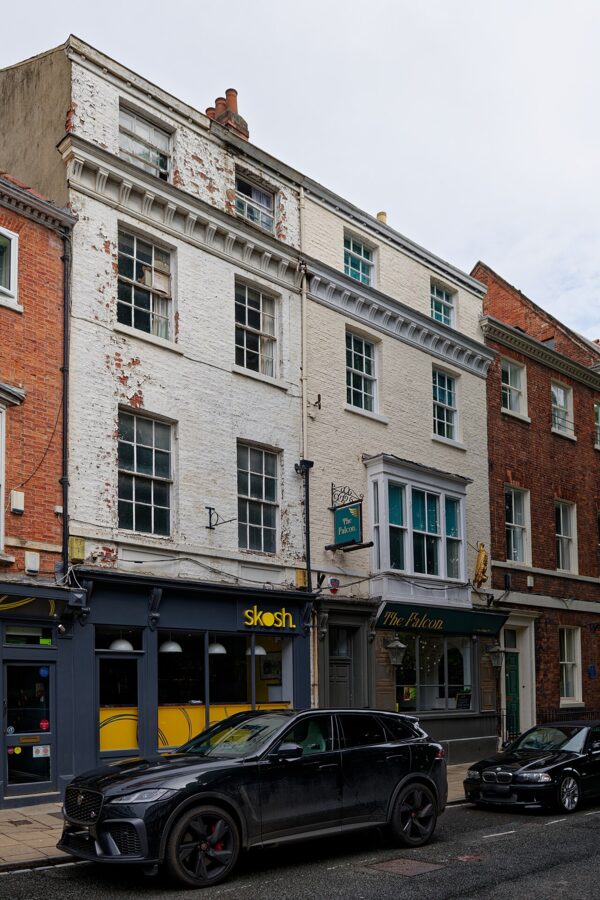

The Falcon is the one on Micklegate itself: three cask and eight keg lines, mostly from Turning Point, with a blackboard at the back listing every beer with its strength and its price for a pint, a half and a third. It opens at 16:00 early in the week and noon from Friday. Down a cobbled lane off the bottom of the street, the Ackhorne is an eighteenth-century local with Rudgate’s Jorvik Blonde and Ruby Mild, Ossett’s White Rat, real cider, a heated beer garden on a raised terrace, bar billiards and dominoes. Book if you want Sunday lunch.

The Golden Ball
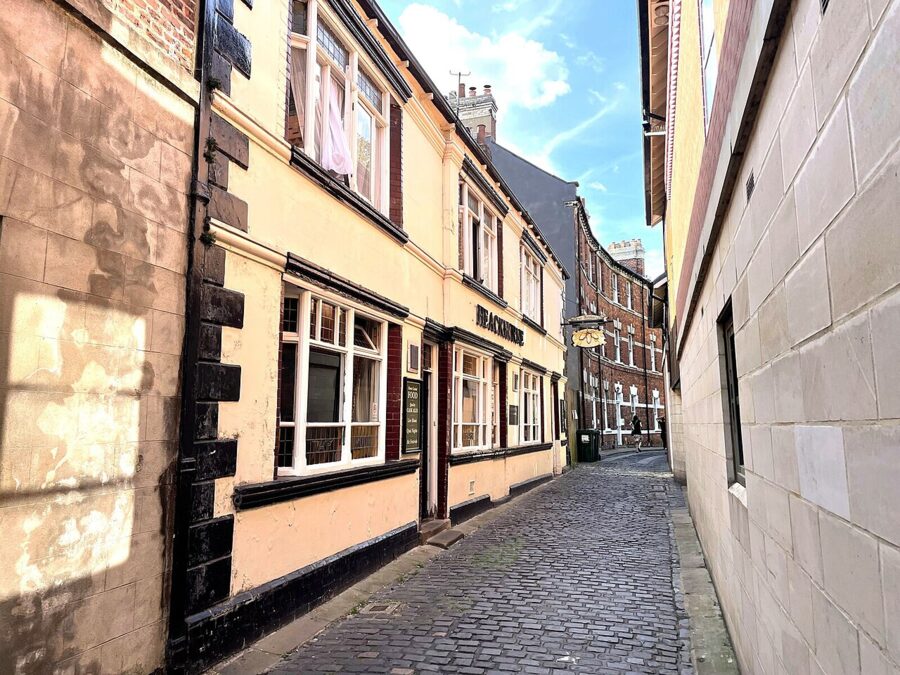
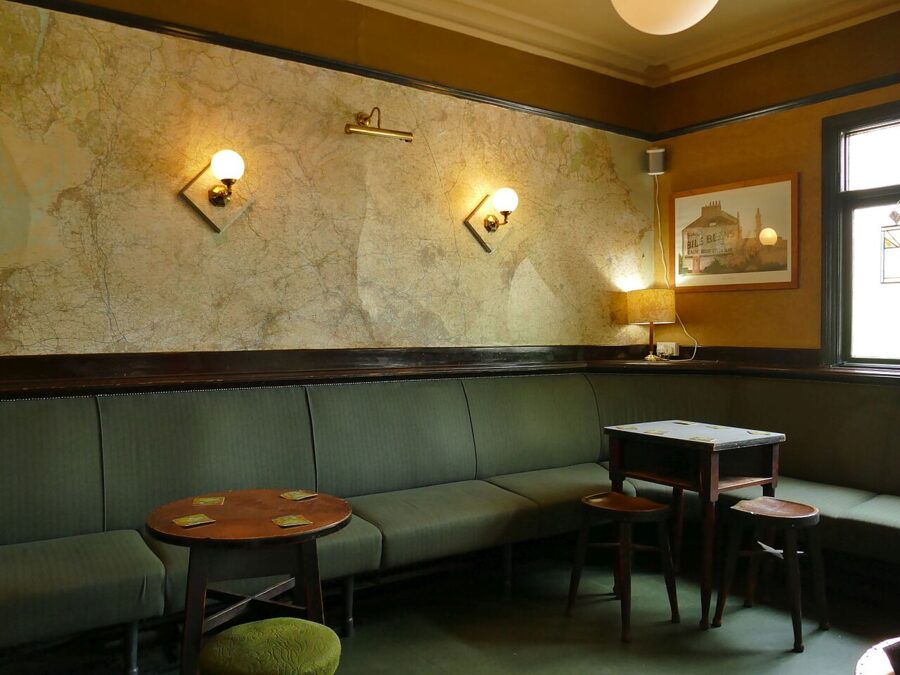
Up the hill behind Micklegate, in the terraces of Bishophill, the Golden Ball is a Victorian street-corner local with a glazed brick front, remodelled by John Smith’s in 1929. CAMRA thinks it is the most complete inter-war scheme that brewery left anywhere, and gives it three stars. There are four rooms: a main bar, a snug, a room with a bar billiards table and a comfortable lounge, with a south-facing beer garden where the toilets are outside.
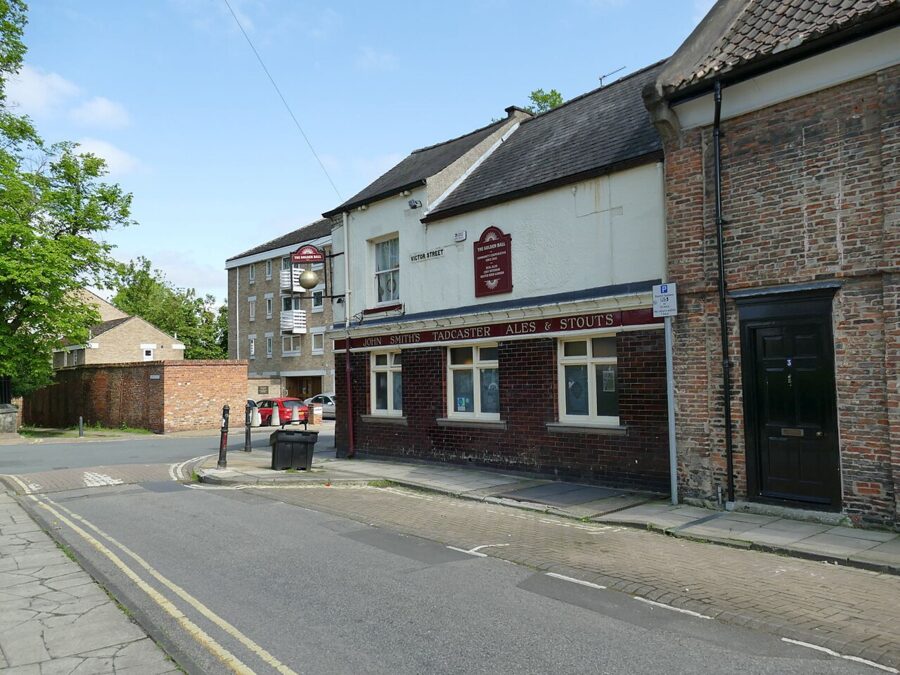

It has been a community co-operative since 2012, the first in York, and it runs like one: two permanent ales plus four guests, pork pies from the Shambles Sausage & Pie Company, live music on Sundays, and quiz and folk nights. It opens at 16:00 from Monday to Thursday and at noon from Friday. In 2023 it tried turning racegoers away during the Dante meeting, which tells you who it is for.

Bishopthorpe Road and the river
Bishopthorpe Road, which everyone calls Bishy Road, runs south from the walls towards the racecourse and is York’s best street of independent shops. Its pubs sit at the city end and along the river close by.
The Swan
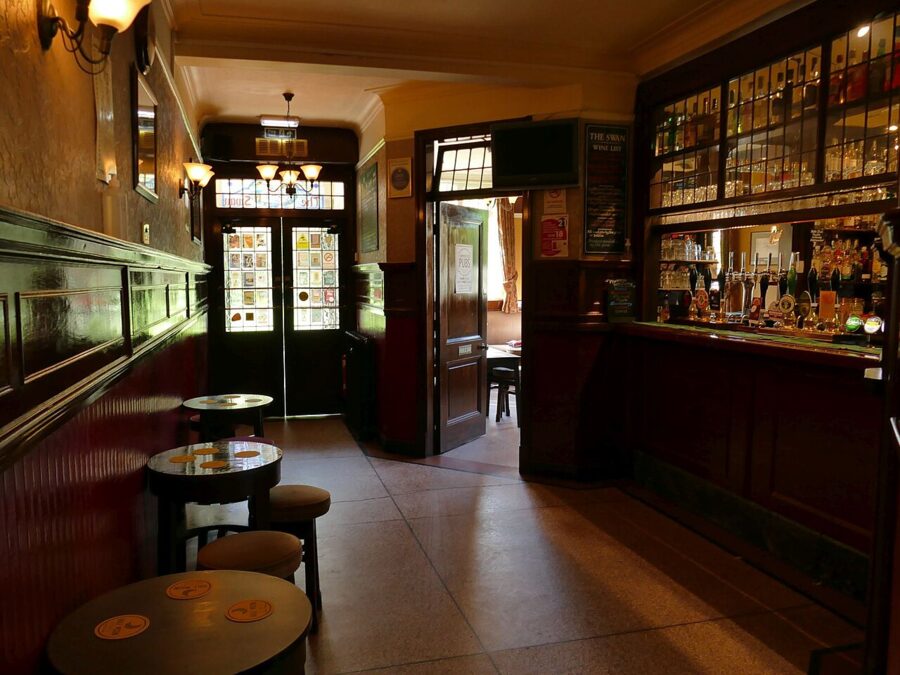
The Swan stands on the corner of Bishopgate Street and Clementhorpe, a minute outside the walls. It is a mid-Victorian pub remodelled in 1936 for Tetley’s by the Leeds architects Kitson, Parish, Ledgard & Pyman, and it was listed in 2010 for an interior that has barely moved since. A corridor runs the length of the building and widens at the servery into a West Riding-style drinking lobby, with a public bar at the front and a smoke room at the back.
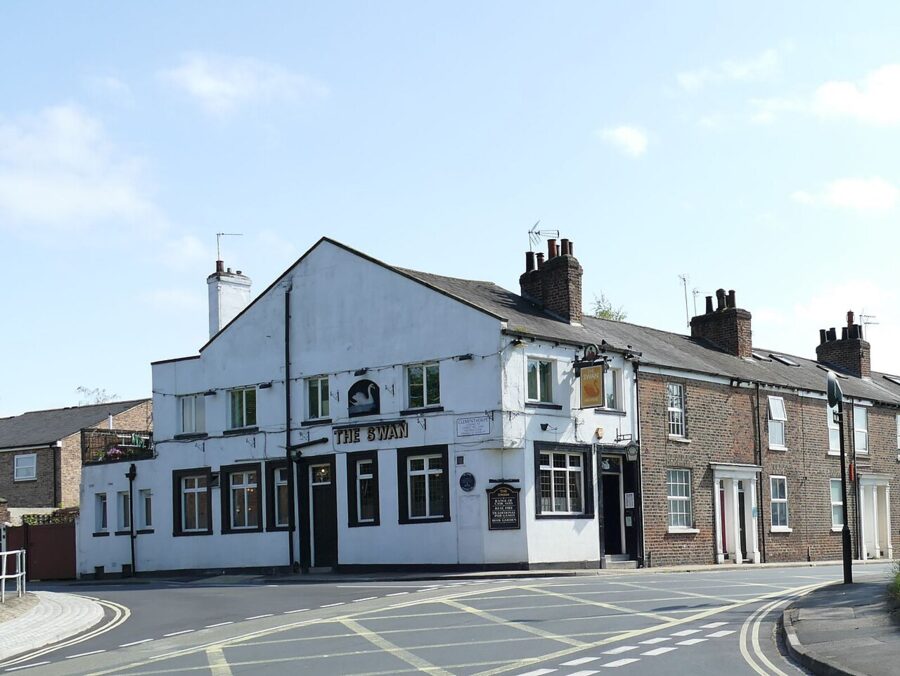

There are eight cask beers, including two dark ones, Tetley Bitter for the heritage and a house blonde from Half Moon. I’d take a seat in the smoke room by the fireplace. Children and dogs are welcome, and the doors open at 14:00 from Monday to Thursday and at noon from Friday.
The Slip Inn and the Winning Post
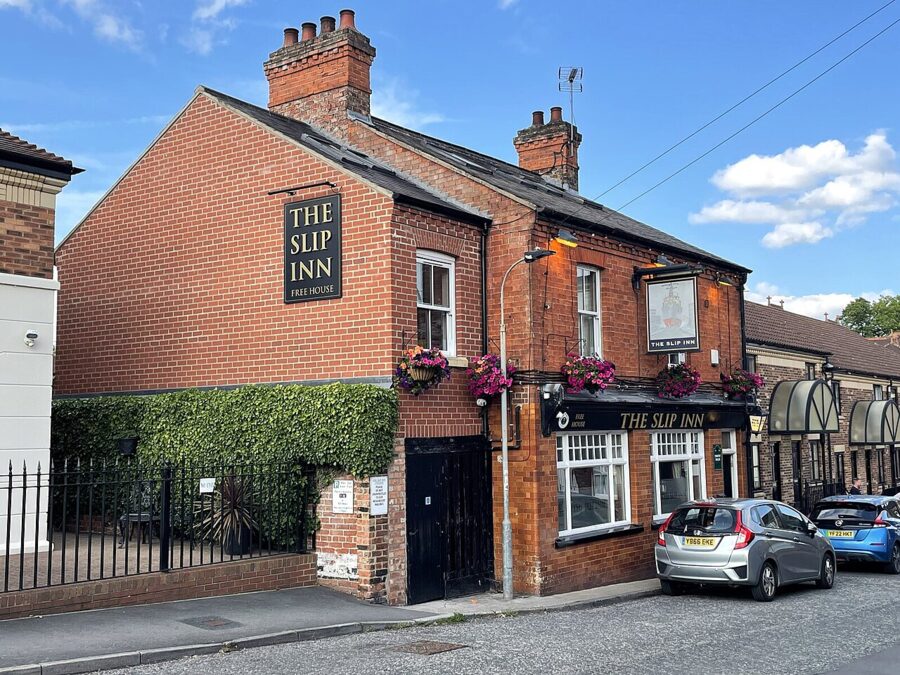
Round the corner on Clementhorpe, the Slip Inn is an independent free house with eight real ales, two bars, a snug and a sheltered courtyard. It was York CAMRA’s Pub of the Year in 2020 and its cider pub of the year for 2025, and it runs its own beer festivals. It opens at 14:00 Monday to Thursday and at noon from Friday; the river is a short walk away.

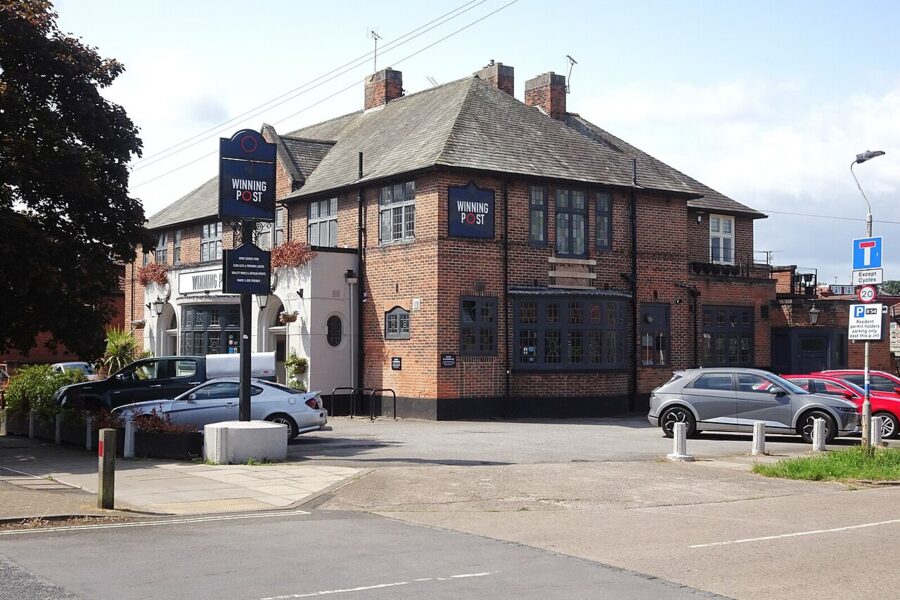
Further out, the Winning Post at 127–129 Bishopthorpe Road is the big family pub of the strip: three rooms, a front garden and a sunken one at the back, homemade food every day and well-behaved dogs welcome. It is the obvious stop on the way to the racecourse.

Across the river: the Wellington and the Masons Arms
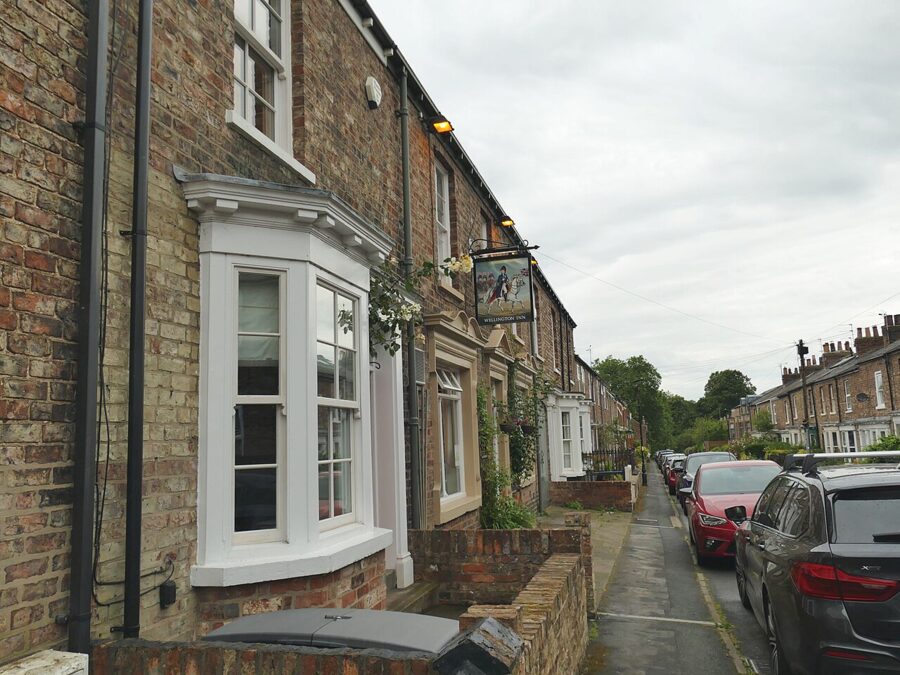
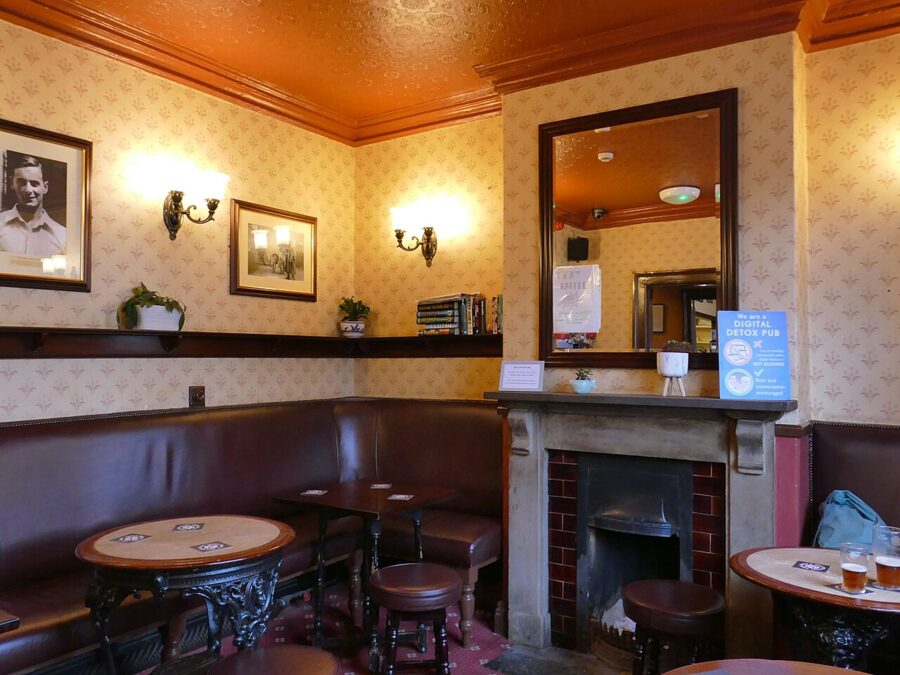
Cross the Millennium Bridge from Rowntree Park and walk up from the river into the terraces off Fulford Road, and on Alma Terrace you reach the Wellington, a Samuel Smith’s house. CAMRA calls it the oldest purpose-built pub in York to survive so unaltered: an 1850s mid-terrace local with a flagstoned corridor that dog-legs round the stairs, a quarry-tiled public bar on the left and two small lounges served across the corridor. The beer is Old Brewery Bitter on cask, and cheap. Sam Smith’s rules apply, so put your phone away.


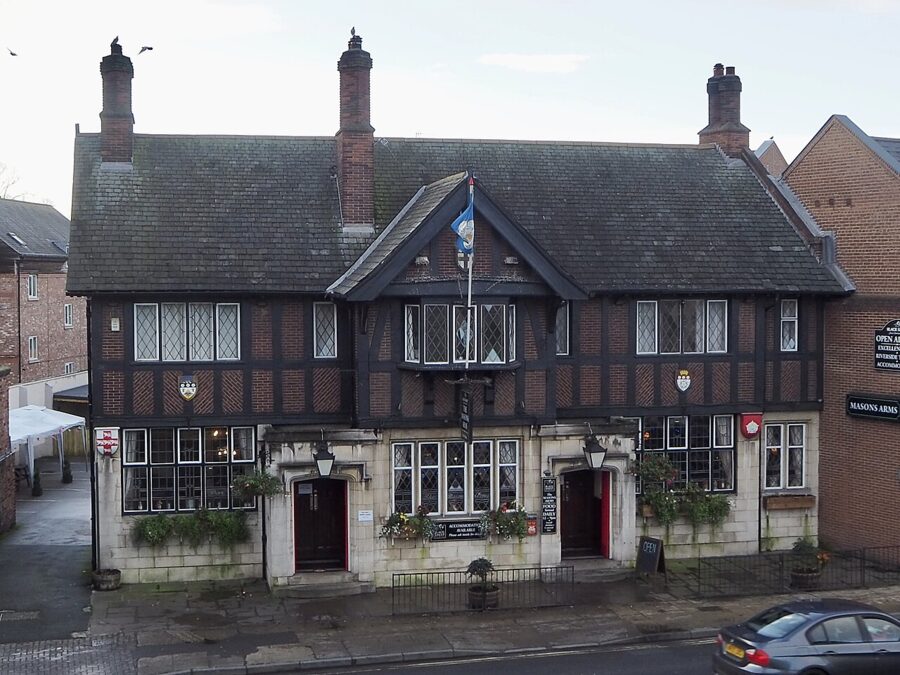
Back towards town on Fishergate, the Masons Arms is a 1935 rebuild for the Tower brewery with genuine Gothic Revival oak panelling and a fireplace salvaged from the gatehouse of York Castle. It flooded badly in the winter of 2015 and reopened in July 2016. The rear terrace looks over the Foss basin and its lock, and the meals are large.

Worth the walk out
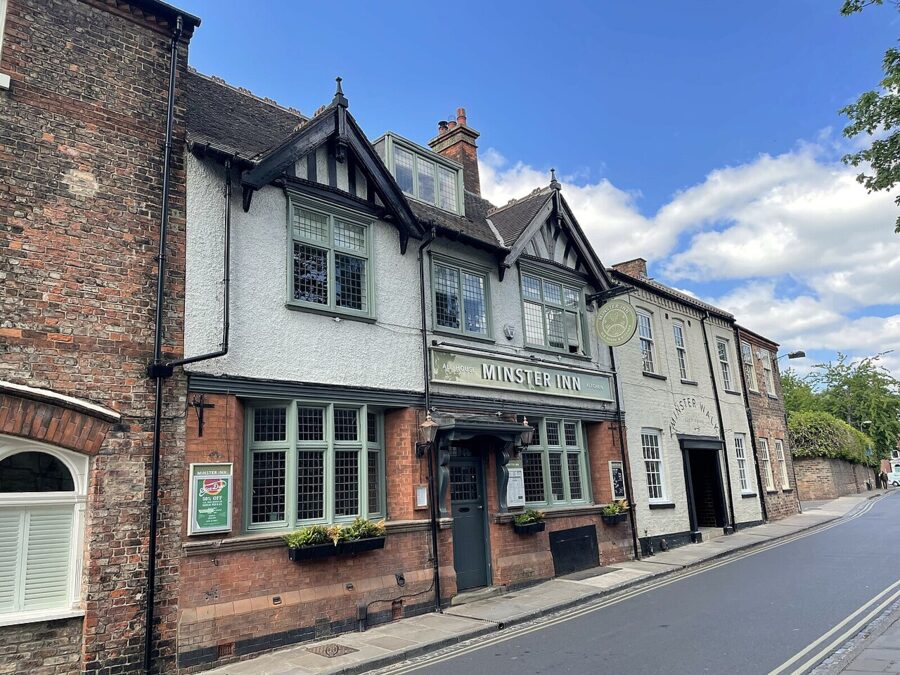
Three short trips outside the walls repay the effort. North of the Minster on Marygate, past the Museum Gardens, the Minster Inn is a small Edwardian pub of 1903 by the York architect Samuel Needham for the Tower brewery. It keeps its original layout of a through hallway with two rooms either side. It opens at 16:00 on Mondays and noon the rest of the week, with food from Tuesday.

West of the station, the Fox on Holgate Road is an Ossett pub with two stars on the inventory, two fires usually lit, the full Ossett range and what it calls the largest beer garden in York, with a serving hatch on busy days. The Volunteer Arms nearby on Watson Street is a proper backstreet free house with five permanent cask beers and a Sunday quiz.
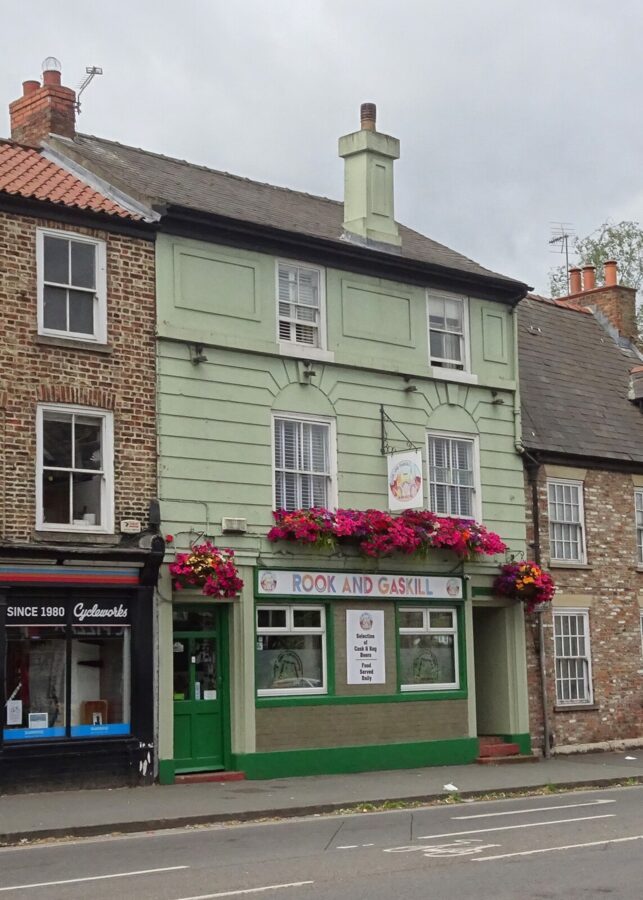
East of Walmgate Bar, Lawrence Street has two very different pubs. The Rook & Gaskill brews two of its own cask beers on a one-barrel kit, the Lazy Goat, which restarted in 2025, alongside twenty keg taps and Castle Rock beers and opens at 16:00 most days. The Waggon & Horses, a Batemans house, is a classic multi-roomed pub with bar billiards, a big garden and a habit of less common stouts and porters on cask. CAMRA’s York Beer & Cider Festival moved to St Lawrence’s Church, a few doors along, for its September 2026 run.


Race days, match days and late nights
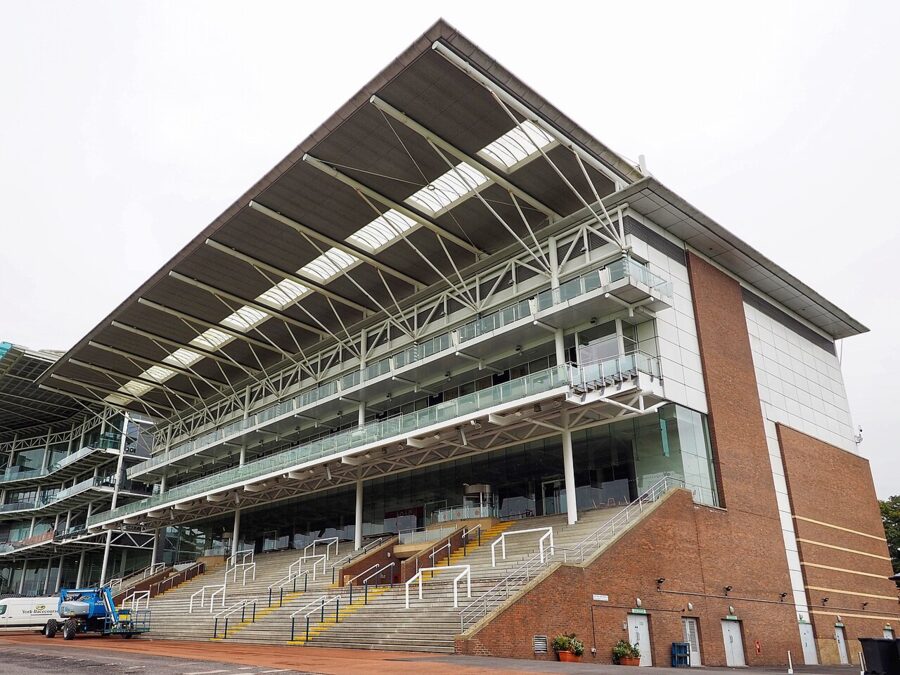
York Racecourse is on the Knavesmire, a mile or so south-west of the walls, where the city gallows stood and where Dick Turpin was hanged in 1739. The big meetings are the Dante in May and the four-day Ebor Festival in August, and on any race day the city fills with tens of thousands of people in their best clothes heading the same way at the same time. Expect door staff and queues in town after the last race, especially on Micklegate and around the station.
If you are not racing, drink the other way: the Blue Bell, the Phoenix and Goodramgate stay closer to normal. If you are, the Winning Post and the Swan are your nearest good pints.
Football is less of a squeeze. York City play at the LNER Community Stadium out at Monks Cross, so match days hardly touch the pubs inside the walls, though the Blue Bell, where the club was founded, is the right place for a pint afterwards.
Late, early and practical
Most traditional pubs here shut at 23:00, with the Golden Fleece, the Olde Starre on weekends and the House of the Trembling Madness on Stonegate open until midnight. Valhalla goes on to 01:00 on Fridays and Saturdays, and the Habit on Goodramgate has a licence until 02:00 on weekend nights. Several of the best pubs do not open until mid-afternoon on weekdays: the Golden Ball, the Swan, the Slip, the Phoenix, the Falcon and Rook & Gaskill among them.
- Groups: the Blue Bell does not take groups, and the Trembling Madness on Stonegate does not take bookings. Big parties do better at the Old White Swan, a three-roomed Nicholson’s on Goodramgate, or at Brew York.
- Cards only: Brew York, Rook & Gaskill and the Little Ale House.
- Children: welcome at the Olde Starre, Market Cat (until 21:00), Pivni, Brew York (until 20:00), the Golden Ball and the Swan.
- Dogs: welcome at the Hop, the Phoenix, Pivni, the Market Cat, the Olde Starre, the Golden Ball, the Swan and in the Fat Badger’s garden. Not at the Trembling Madness on Stonegate.
One evening, start to finish
This is the route I’d give a friend arriving by train at about five. It covers eight pubs over a little under two miles, and nobody needs to drink in all of them.
- Trembling Madness, Lendal. Over Lendal Bridge from the station, ten minutes. One drink to land.
- Ye Olde Starre Inne, Stonegate. Find the Brett Bros screen and sit on a terrace if it is dry.
- House of the Trembling Madness, Stonegate. Up the stairs past the shop; budge up on a pew.
- The Three-Legged Mare or the Fat Badger, High Petergate. The Mare for cider, the Badger’s garden if there is light left.
- The Royal Oak and the Golden Slipper, Goodramgate. One of each, and decide which one you believe.
- The Black Swan, Peasholme Green. The front lounge and the fire. Eat here if you have not eaten.
- The Golden Fleece, Pavement. Via Lady Peckett’s Yard if it is still light. One for the ghosts.
- The Blue Bell, Fossgate. In pairs, and quietly. A half of Ruby Mild in the smoke room.
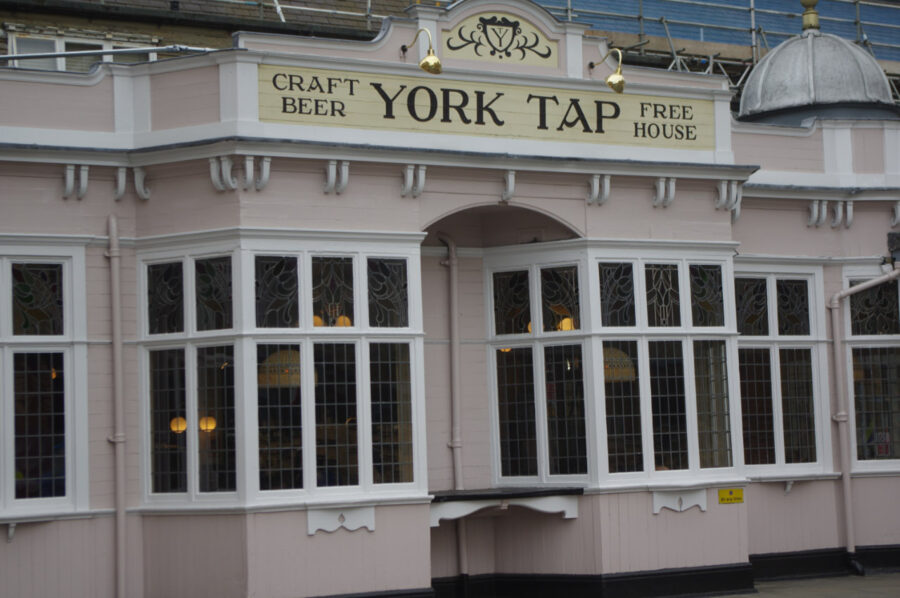

From the Blue Bell it is a twenty-minute walk back to the station: up Pavement, across Ouse Bridge, along Rougier Street to the walls. The York Tap is open until 23:00, so there is time for one more under the stained-glass domes before the last train: a room built for tea, a bar since 2011, and nobody pretending it is anything older.