
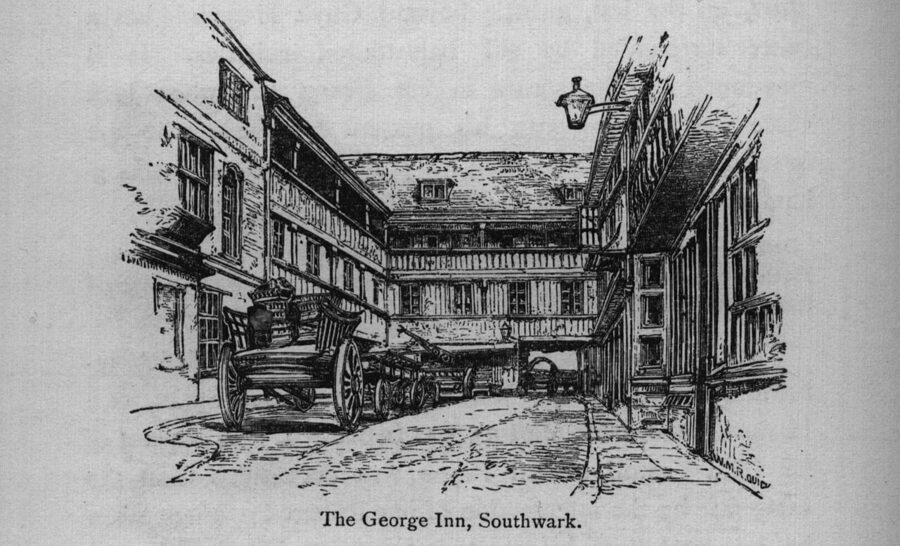
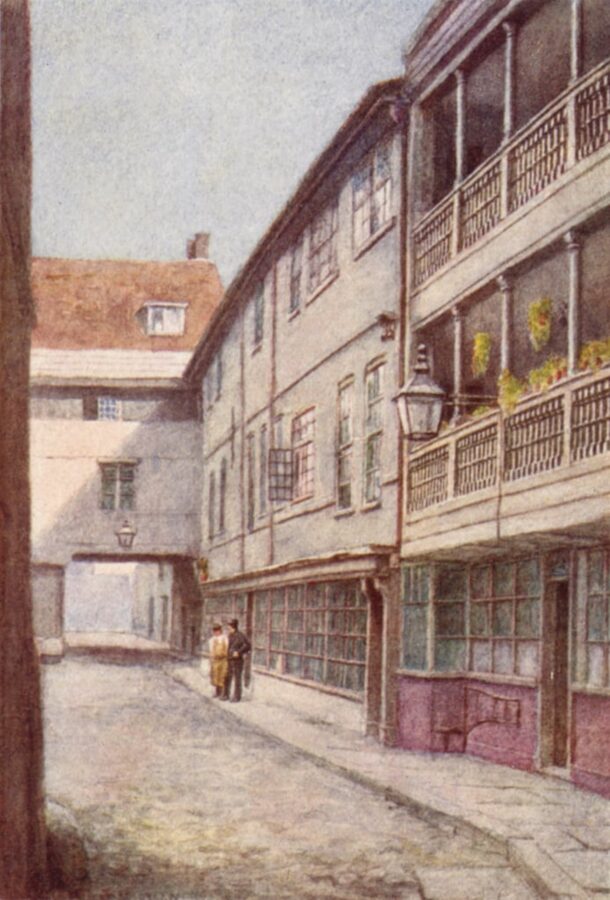
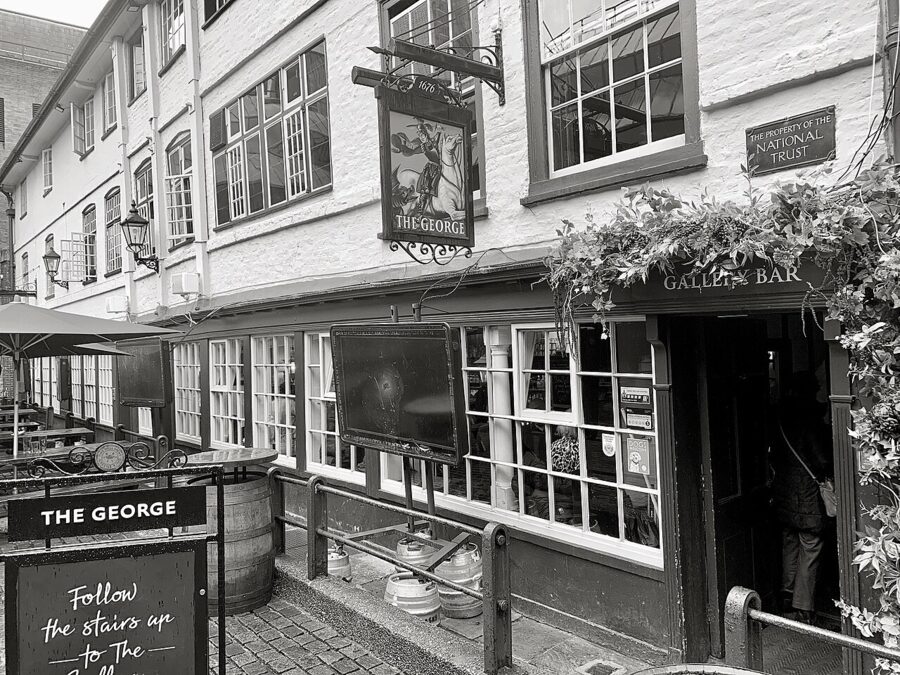
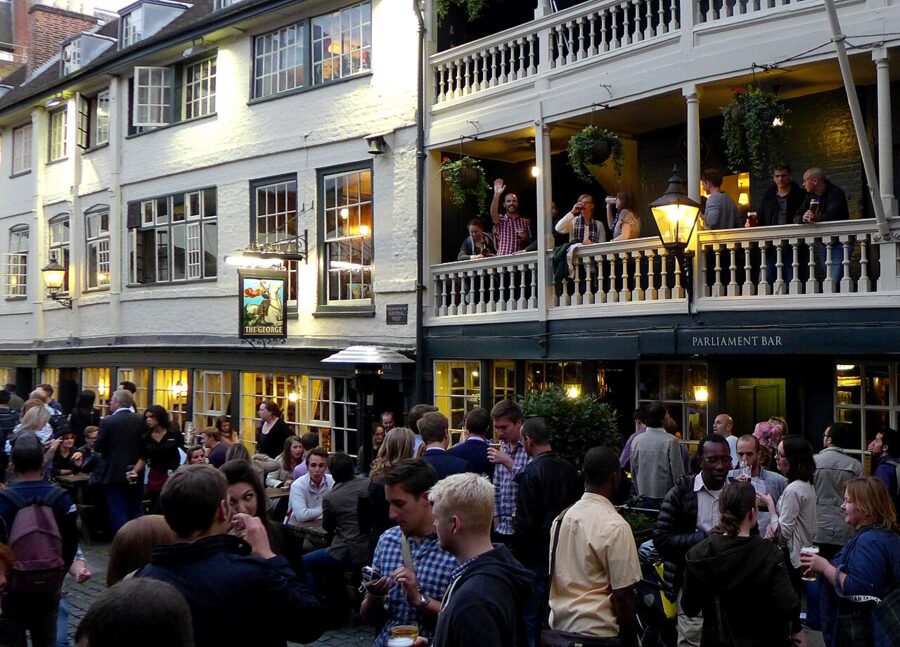
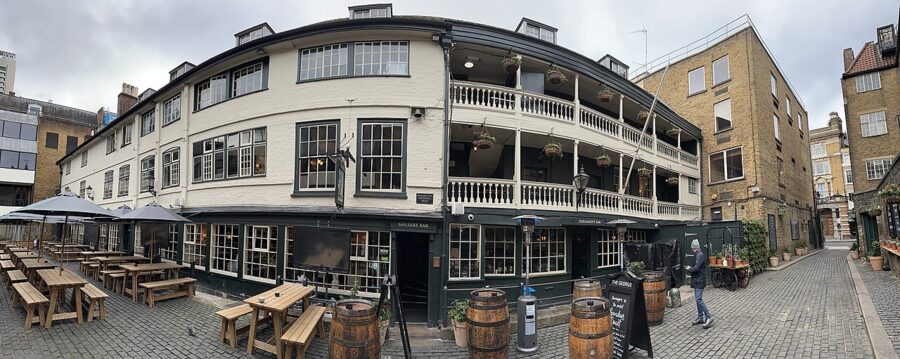
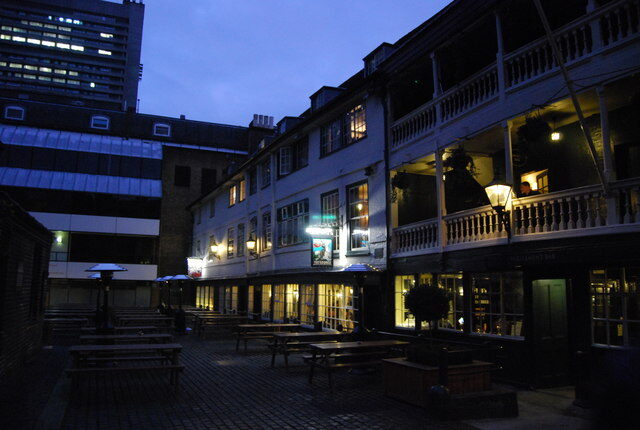
Walk south from London Bridge along Borough High Street and you will pass the George without noticing. All it shows the street is a gateway between two plain buildings, an iron lantern and a painted board. Go through it, and the noise of the buses drops away into a cobbled yard where two tiers of white timber galleries run along one side, exactly where they were put up after the fire of 1676.
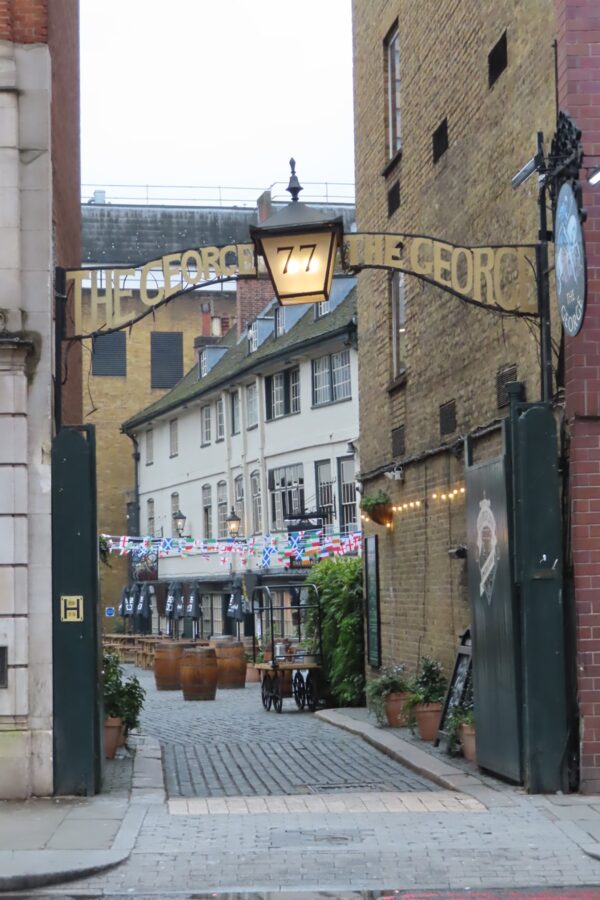

That range of galleries is the whole point. The George is the last galleried coaching inn in London, owned by the National Trust since 1937, listed at Grade I, and still a working pub with a kitchen, a telly for the football and a yard full of office drinkers by half past five. It is also a fragment: the inn once wrapped round its yard, and the railways took most of it.
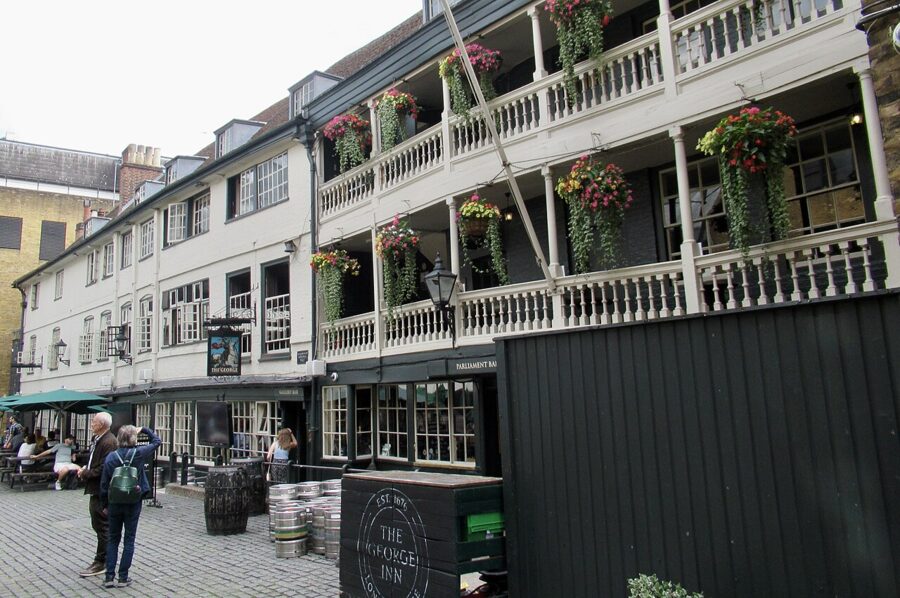
It pays to know what you are standing in when you carry a pint out into that yard. Some of it is seventeenth century, some is Victorian, some is a brewery refit of the last fifty years, and some of the stories told about it are true. The building rewards ten minutes of looking before you sit down.


On this page
Borough High Street, the road of inns
For most of its history London had one bridge. Anyone coming up from Kent, Sussex, Surrey or the Channel ports funnelled into Borough High Street and crossed the river at London Bridge, and until Westminster Bridge opened in 1750 there was no other way in on wheels. The inns that lined the east side of the street lived off that traffic: pilgrims, carriers, coachmen, market folk and the travellers who arrived too late to cross before the bridge gate shut.
Read the old maps and the High Street looks like a row of teeth. Morgan’s map of 1682 marks, going south, the King’s Head, the White Hart, the George, the Talbot (as the Tabard had become) and the Queen’s Head, each a narrow gateway on the street opening into a long yard behind. John Stow, writing his survey of London in 1598, called them “fair inns”, and the George was among them.
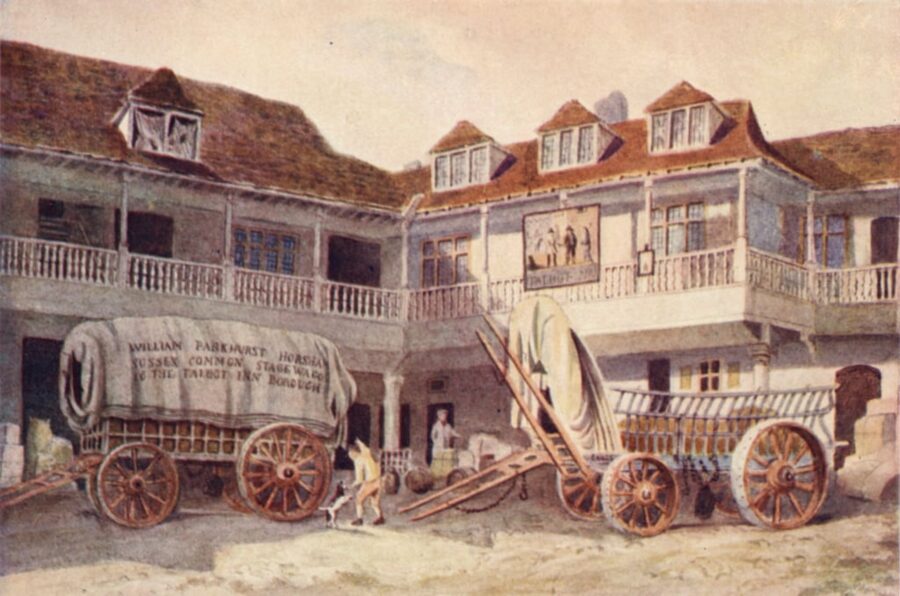
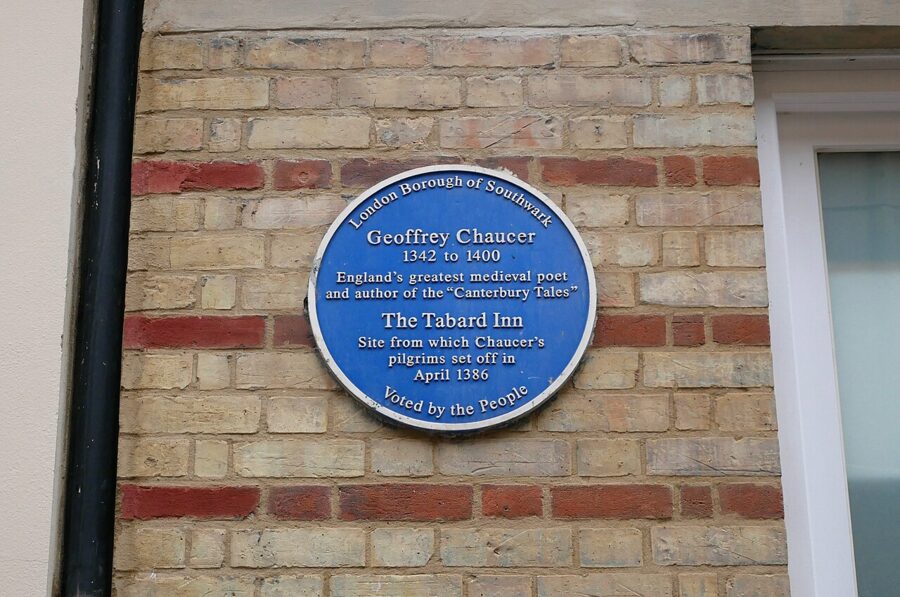
The most famous of them was the Tabard, the inn where Chaucer gathers his pilgrims at the start of The Canterbury Tales. It stood immediately south of the George, on the site of what is now Talbot Yard, and it lasted until 1873. All you will find there today is a blue plaque on a brick wall, which is a fair summary of what happened to the rest of the street.

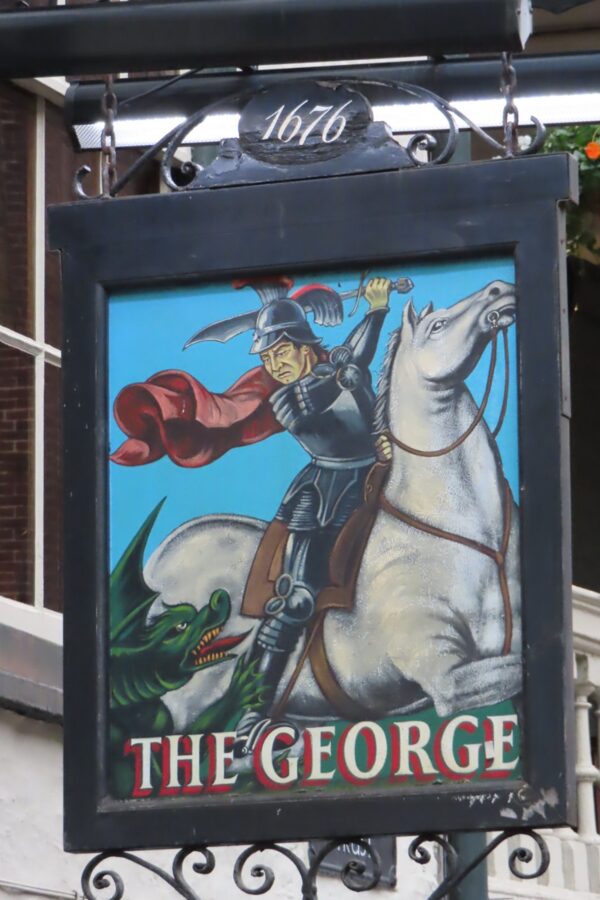
The George itself goes back at least to the middle of the sixteenth century. The Victorian antiquaries found it named as the St George in the 1540s or 1550s (their dates disagree), and the will of Humfrey Colet, a member of Parliament for Southwark, shows him owning it in 1558. Somewhere in those years the saint was quietly dropped, and St George became plain George, the sort of renaming after the Reformation that runs all through English pub names. A few doors north, the Pope’s Head turned into the King’s Head for the same reason.
The records that survive from the next century are mostly about rent and misbehaviour. A return of 1622 says the inn was built of brick and timber. In 1634 the landlord, Nicholas Martin, was presented for letting people drink during divine service, and in 1637 John Taylor, the Thames waterman who wrote verse, listed the George among the inns where carriers from the south lodged.
The fire of 1676 and the inn that went back up
The George had already been burnt once before the big fire. In 1670 it was partly destroyed while Mark and Mary Wayland held it at £150 a year, a large rent, and when Wayland rebuilt it the landlord cut the rent to £80 and a sugar loaf. Then, on 26 May 1676, fire took most of Southwark. One diary of the time has it starting between the George and the Tabard; by the time it was stopped at St Thomas’s Hospital, both inns were gone.
The tenant rebuilt again, on the old plan, round the same yard. The rent fell to £50 a year and a sugar loaf, and the lease was extended, which tells you who was paying for the timber. What you are looking at today is the south range of that rebuilding, put up in 1676 and 1677 by a man who knew exactly what a coaching inn needed: bedrooms reached from open galleries, so that guests could see their luggage and their horses in the yard below.
Southwark’s fire is the forgotten one, ten years after the City’s. The same thing had happened on the other side of the river after 1666, when the City’s taverns went back up on their old plots; Ye Olde Cheshire Cheese on Fleet Street is the best known of those rebuilds. If you want the whole argument about which London pub is oldest, it is in the guide to the oldest pubs in London; the short version is that the George is the only one where the fabric itself is plainly seventeenth century.
Is it the oldest pub in London? It depends what you count.
Plenty of pubs claim an older licence or an older site, and the George’s cellar has reused medieval beams and stonework that may be from the earlier inn. But a claim to be old needs a building as well as a date, and few pubs in the country can match the George for that. The wider argument over which pub in England deserves the title is set out in the oldest pubs in England.
Coaches, waggons and hops
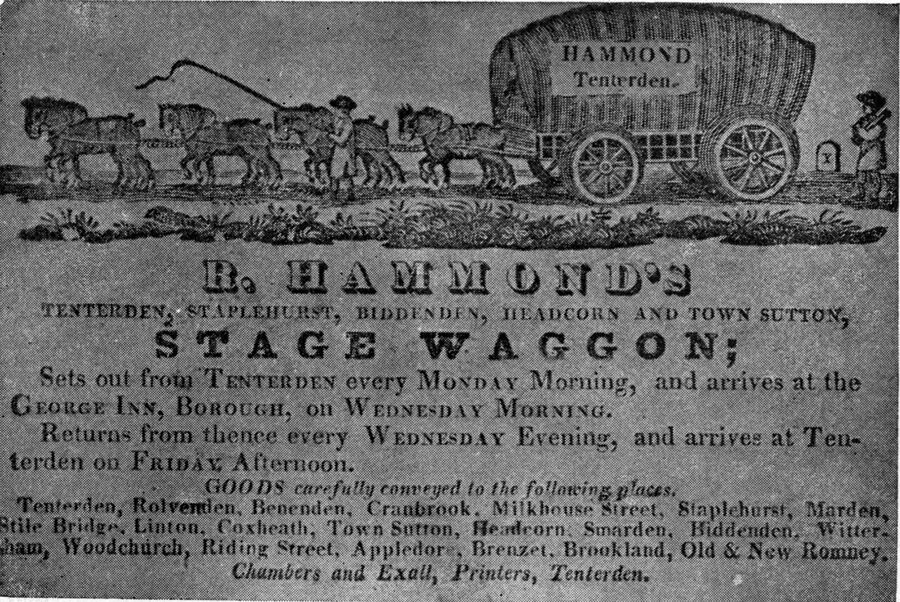
In the eighteenth century the George’s trade was carriers and coaches. Stage waggons, slow covered carts drawn by teams of horses, ran goods and the poorer passengers between the Borough and the market towns of Kent and Sussex. One old trade card advertises R. Hammond’s waggon, setting out from Tenterden every Monday morning and arriving at the George on Wednesday, then making the return trip to be home by Friday.
The coaching years belong to the Scholefields. Thomas Green kept the inn at the start of the nineteenth century, and in 1809 his niece Frances and her husband Westerman Scholefield took it over. Their card advertised coaches to Maidstone, Dover, Brighton and Hastings and waggons to Lewes, Horsham and Dorking. In 1842 a Maidstone paper was still advertising a coach leaving the George at half past nine, ten shillings inside.
Westerman died in 1836 and Frances ran the inn alone until her death in 1859, which means a widow kept the last great coaching house in Southwark through the arrival of the railways. The 1851 census has her at seventy-six with a barmaid, a cook, a housemaid, a kitchen maid, a tap boy and a nephew working as clerk.
The other cargo was hops. Kent grew them, Southwark’s brewers needed them, and the waggons that brought them up the Dover road unloaded in the Borough. Scholefield built a hop showroom at the George, and the trade outlived the coaches by a century: hop factors kept offices all along the High Street well into the twentieth.
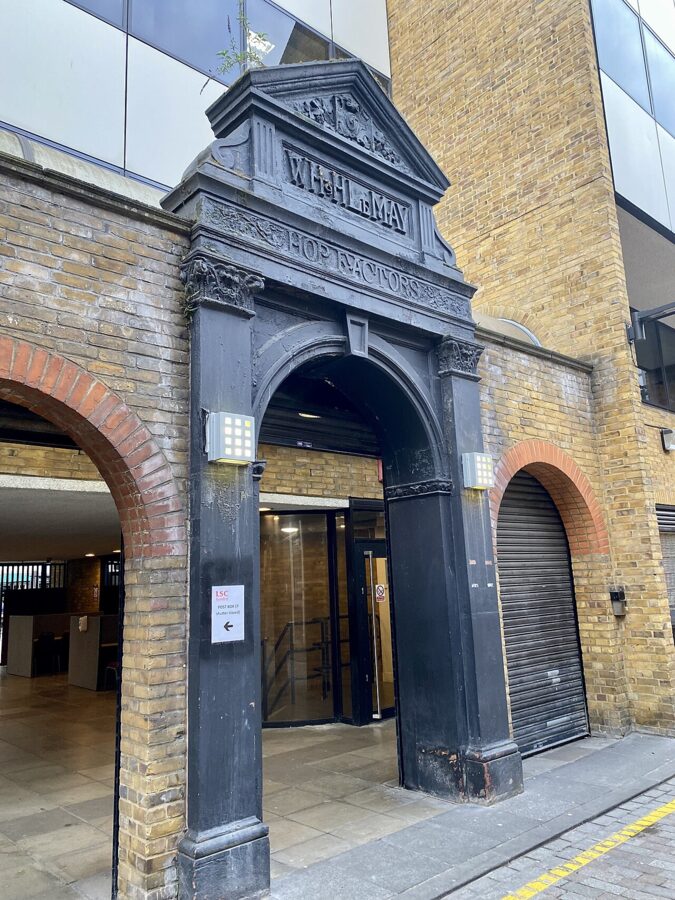

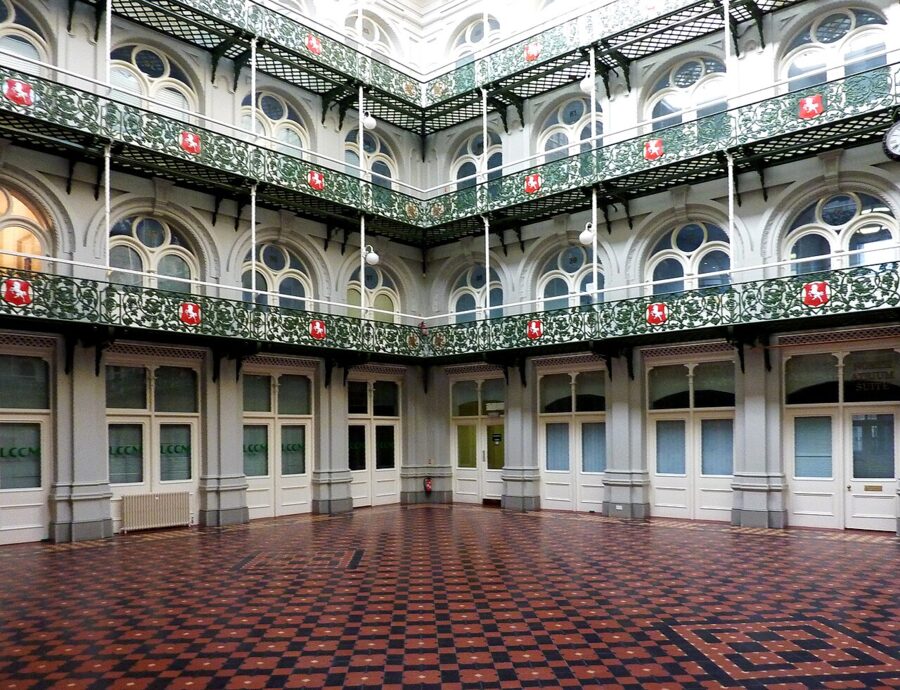
You can see what that trade was worth a few steps away on Southwark Street. The Hop Exchange, opened in 1867, is a great iron-galleried hall built as a market floor for hop dealers, with hops worked into its decoration. It is offices and events now, but the frontage is free to look at, just across the High Street from the George.

Railways, demolition and the National Trust
The railways killed the coaching inns in about twenty years. London Bridge station opened in 1836 a few hundred metres away, the coaches stopped running, and the inns of Borough High Street became carriers’ depots, warehouses and goods offices. The White Hart came down in 1889, the Queen’s Head closed in 1895, and the Tabard had already gone in 1873.
The George survived by being useful. Guy’s Hospital, its neighbour, had bought the freehold, and after Frances Scholefield’s death it leased the inn to George Grinslade. In the 1870s the Great Northern Railway bought the site as a receiving office for goods heading north; one account says about a hundred tons a day were weighed in the yard. Part of the inn went on trading as a hotel and coffee house under a manageress, Amelia Murray, and then her daughter Agnes.
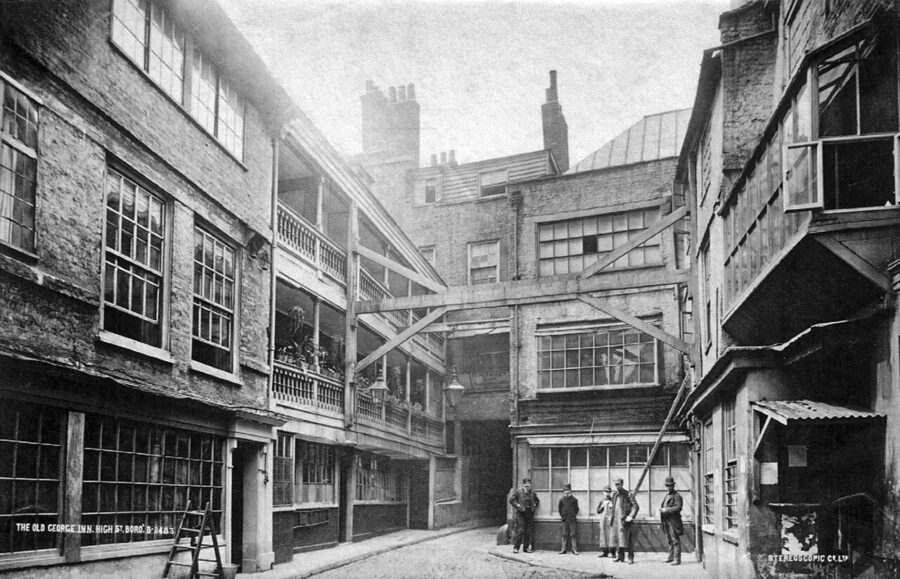
Which year the galleries came down is a muddle worth knowing about. The listing description, following the Buildings of England, says the north range was pulled down in 1874, by the Great Eastern Railway. CAMRA’s inventory and the Victorian antiquaries say 1889, for railway warehousing, and the railway was the Great Northern. I side with 1889 and the Great Northern: there are photographs dated that year showing galleries still standing on more than one side of the yard.
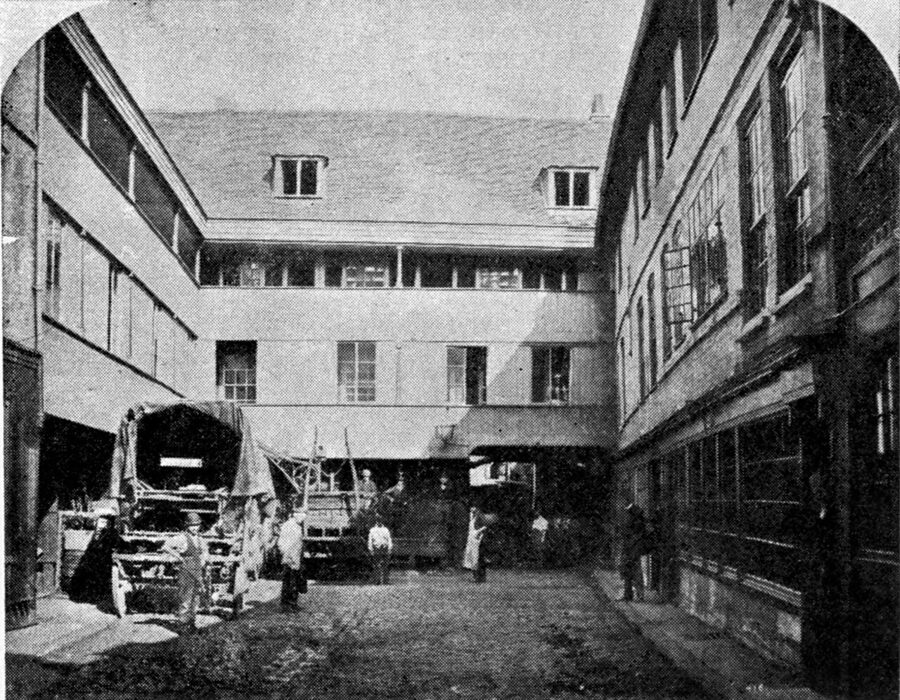
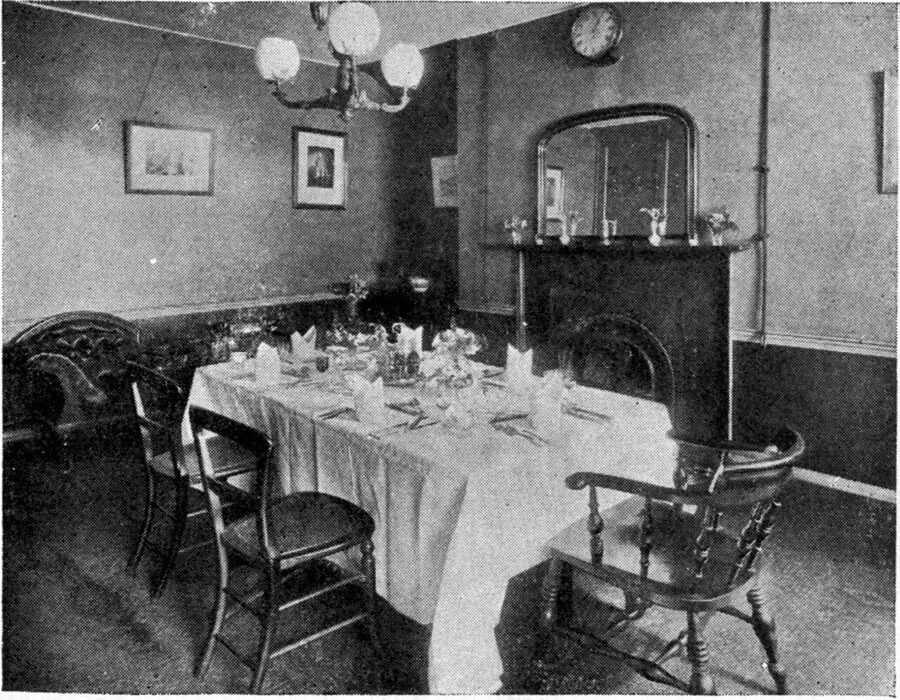
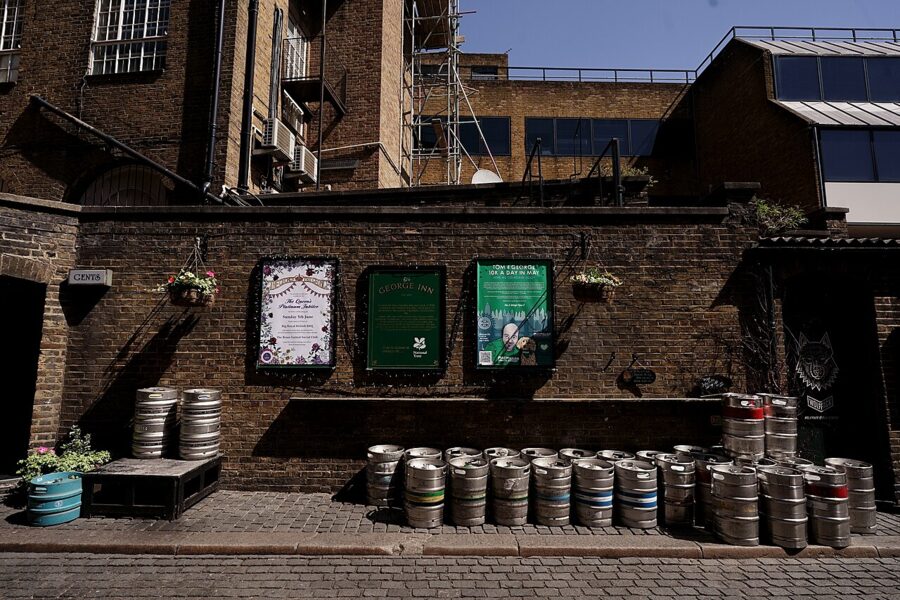
What was left was the south range and its galleries, much as you see it now. The Great Northern became part of the London and North Eastern Railway in 1923, and in 1937 the building passed to the National Trust, which has owned it ever since and leases it to the brewer Greene King. Historic England listed it at Grade I in 1950. It is the only purpose-built pub in London at that grade, and CAMRA’s National Inventory of Historic Pub Interiors gives it three stars, its top rating.

Dickens, Shakespeare and the stories
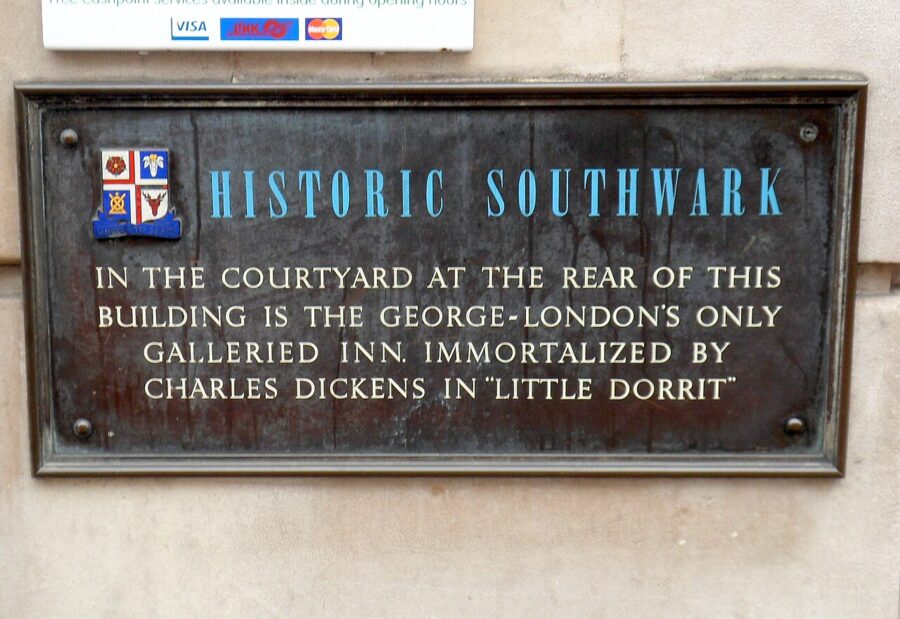
The plaque on the street front says the George was immortalised by Dickens in Little Dorrit. That is generous. The inn turns up once in the novel, in Book I, chapter 22, when Maggy explains how Tip gets hold of money: “If he goes into the ‘George’ and writes a letter”. That is the whole of the immortality.

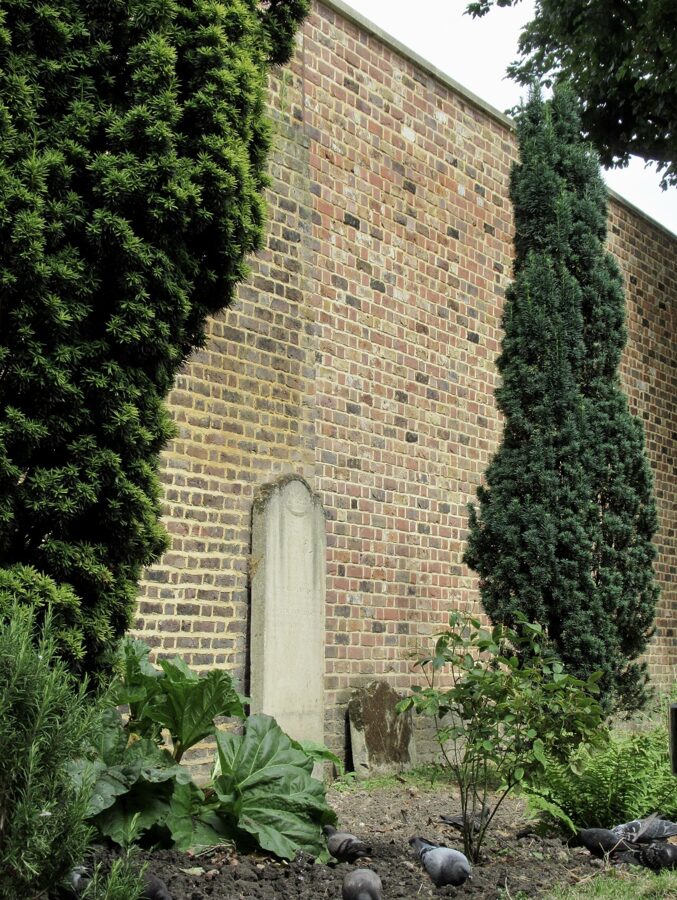
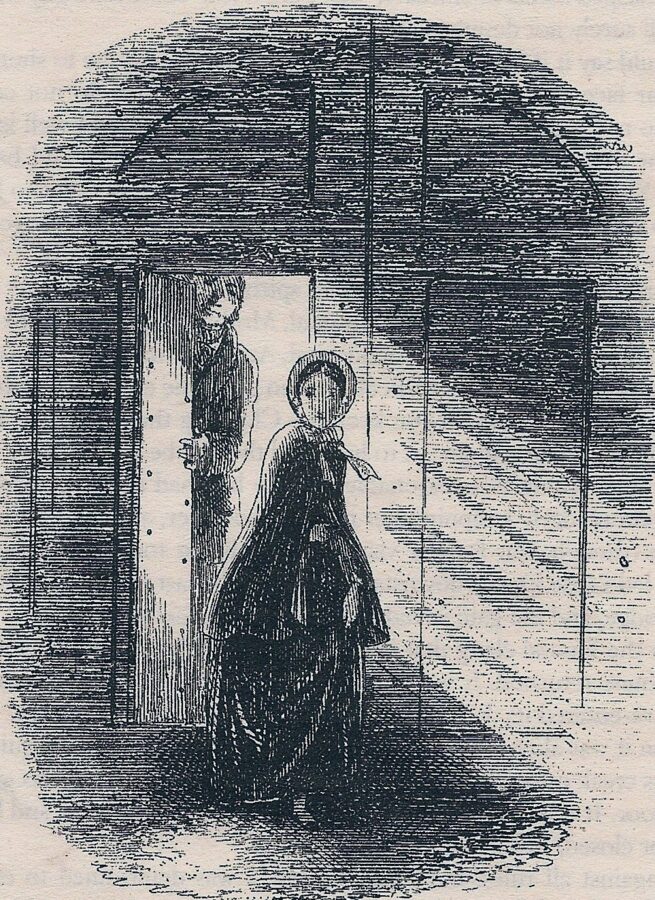
The novel’s real ground is a few hundred metres south. Dickens’s father was locked up for debt in the Marshalsea prison in 1824, when Charles was twelve, and the boy lodged nearby and walked these streets. Little Dorrit is set in the Marshalsea, and one long brick wall of the prison still stands beside St George’s churchyard gardens, off Borough High Street.
Did Dickens drink at the George? Probably, later in life.
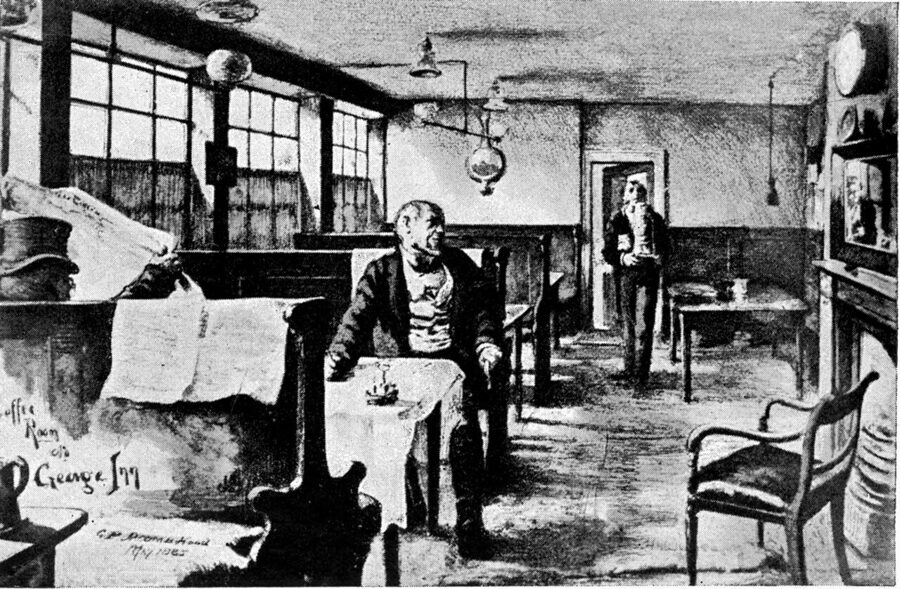
In 1918 the Dickens scholar Bertram Matz wrote up the inn’s history and recorded Agnes Murray’s account that Dickens had used the coffee room; her source was a carrier, a nephew of the Scholefields, who said he had chatted to him there. Matz called it hearsay and thought a visit likely anyway. So do I.
The Pickwick Papers is the other claim. In chapter 10, Dickens describes the old Borough inns as “Great rambling queer old places”, with galleries and passages, and sets Sam Weller cleaning boots at the White Hart. People often say the White Hart in the book is really the George. Matz did not buy it, and nor do I: the White Hart stood two doors away under its own name, and Dickens had no reason to borrow one inn to describe another.
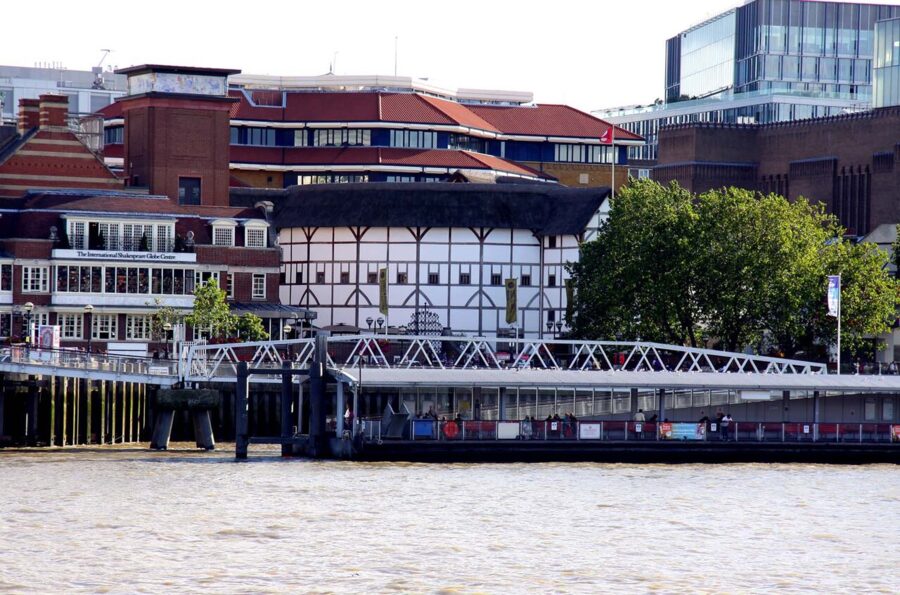
Then there is Shakespeare. You will be told he drank here and that his plays were acted in the yard. The building you are standing in went up sixty years after he died, so at best the claim is about the earlier inn on the site.
Plays were staged in London inn-yards in the 1500s, and the Globe was ten minutes’ walk away on Bankside, so it is not absurd; there is just no record that ties him to this inn. Pete Brown’s 2012 book Shakespeare’s Local is a full-length life of the inn if you want the long version.

Room by room
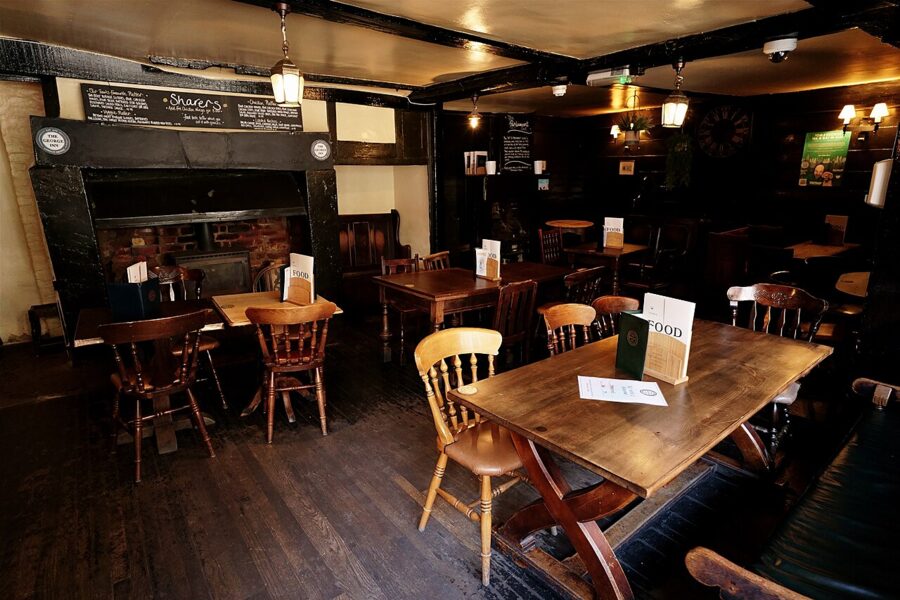
The ground floor is a row of separate rooms along the length of the range, each with its own door from the yard. Most were refitted in the twentieth century, sympathetically, so you get old panelling, low beams and creaking boards with modern bar fittings. Two parts are the real thing: the first room you reach from the gateway, and the galleries and stairs above.
The Parliament Bar
The first door on the right as you come into the yard leads into the Parliament Bar, and this is the room to find. CAMRA’s heritage surveyors rate some of its woodwork among the oldest pub fittings anywhere, possibly from the rebuilding after 1676. Two fireplaces and a blocked doorway show it was once two smaller rooms.
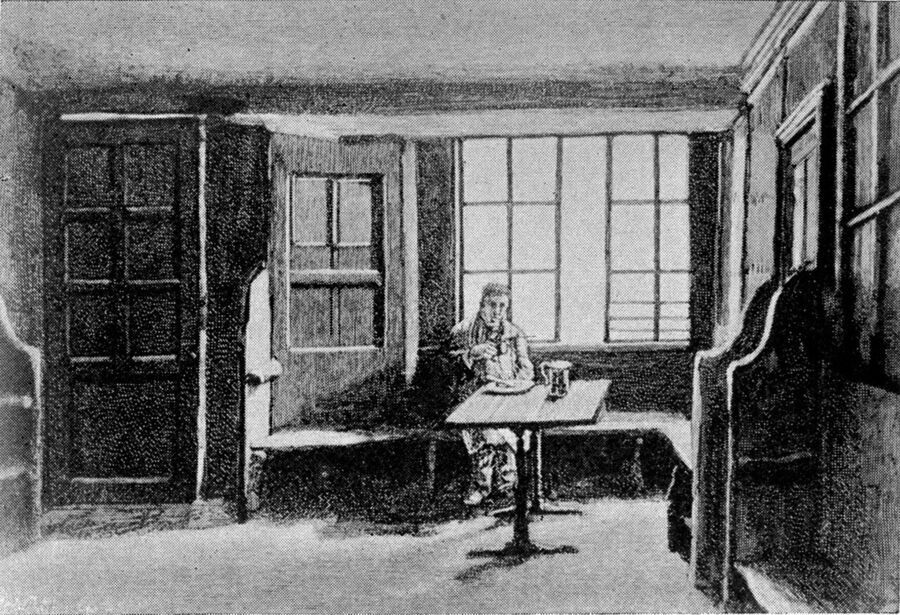
In the part nearest the street there is full-height horizontal boarding, plain fixed benches round the walls and in the window, and an ancient fireplace with a wooden hood. At the far end is a glazed-in servery with vertical sliding sashes, and inside it a disused set of Victorian “cash-register” handpumps, where the handles move in curved slots to draw the beer. They were reportedly still pulling pints in the 1970s.
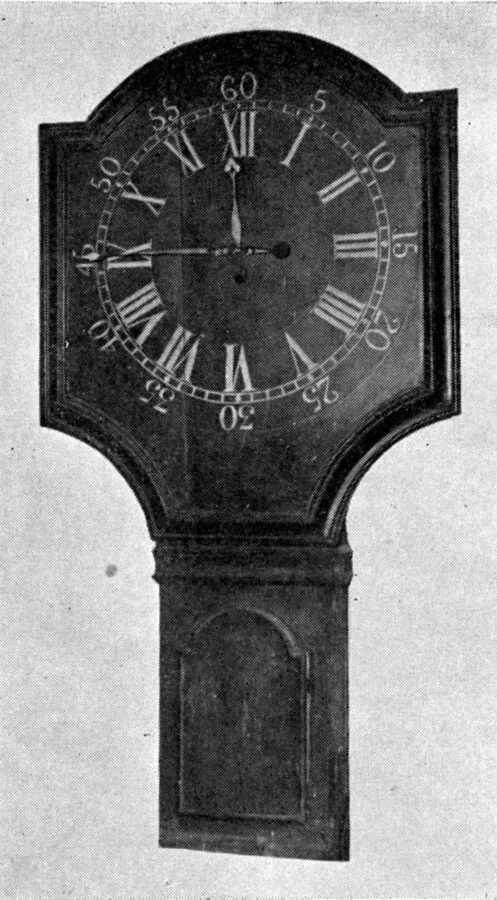
On the wall hangs the clock that gives the room its name. The story goes that when Pitt taxed clocks and watches in 1797, at five shillings a clock, people sold theirs and relied on clocks in public places like this one. The tax was real and lasted a year. The trouble is that big tavern clocks of this kind were made well before 1797, so the name is better than the history.
The other ground-floor rooms
East of the Parliament Bar the rooms run on along the range, darker and more modern, with the main bar where most of the serving happens. These are the rooms that take the food trade and the overflow from the yard. The listing picks out a front room with fielded panelling and a heavy bolection-moulded overmantel over the fireplace, and other rooms with plainer panelling and early nineteenth-century fireplaces.
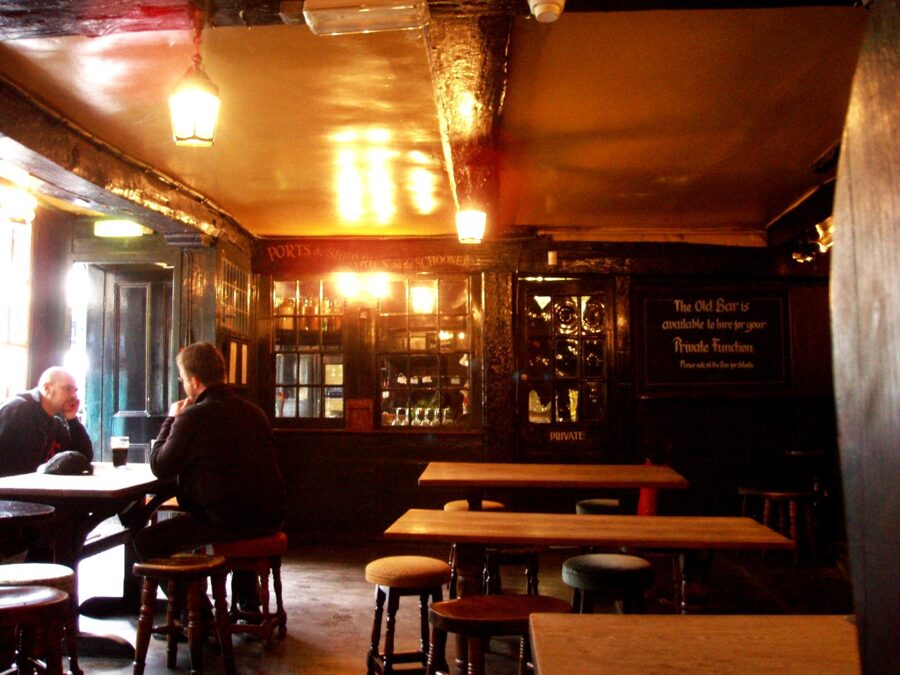

My advice is to walk the whole range before you pick a seat. The Parliament Bar is the one to sit in if it has space; the rooms further along are fine but could be in any decent old pub. On a cold weekday afternoon the small rooms are as quiet as anywhere in central London.

The galleries and the Gallery Bar
Upstairs is where the inn still behaves like an inn. A staircase beside the Parliament Bar climbs to the first-floor gallery, and from the gallery you reach the panelled rooms that were once bedrooms. Sources disagree on its age: CAMRA calls it seventeenth century, while the listing dates it to the early eighteenth century and says it was moved and reset as a dog-leg stair around 1730. Either way it has barley-twist balusters, a heavy newel post and treads that complain.
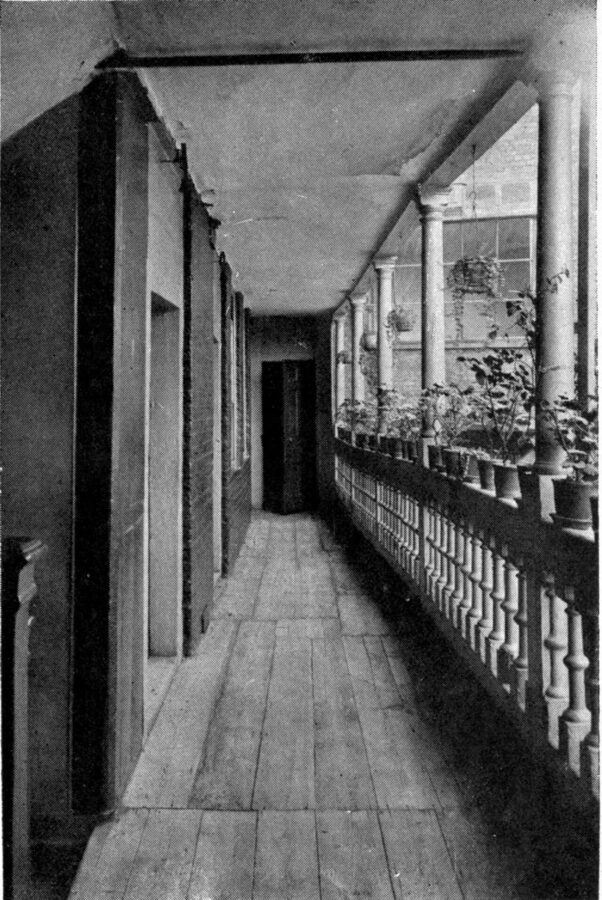
The first-floor rooms are panelled, and one has a big brick fireplace. The Gallery Bar up here is not always open, and the rooms are often booked for private parties, so treat it as a bonus rather than a plan. If the bar is open, go up: the view down into the yard from the gallery rail is the best seat in the place.
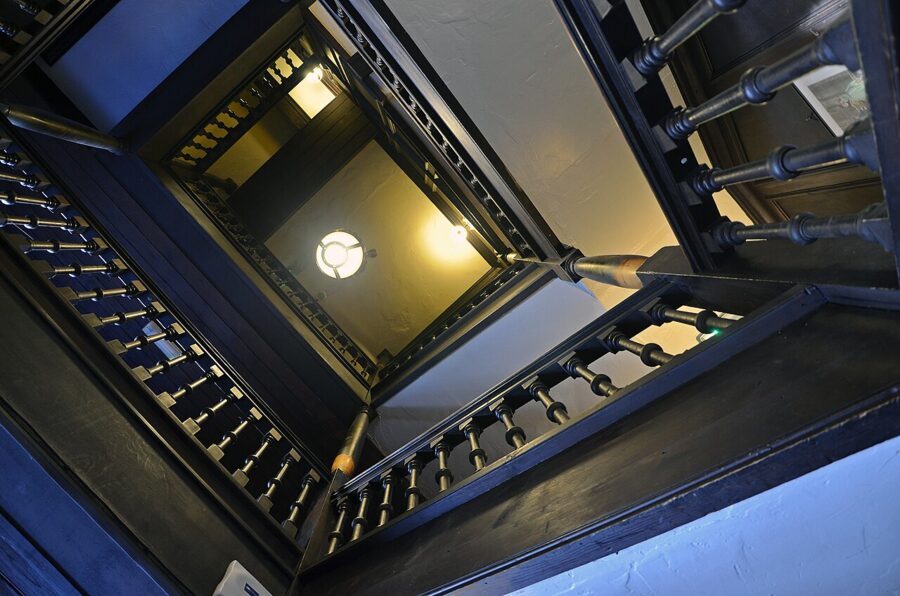

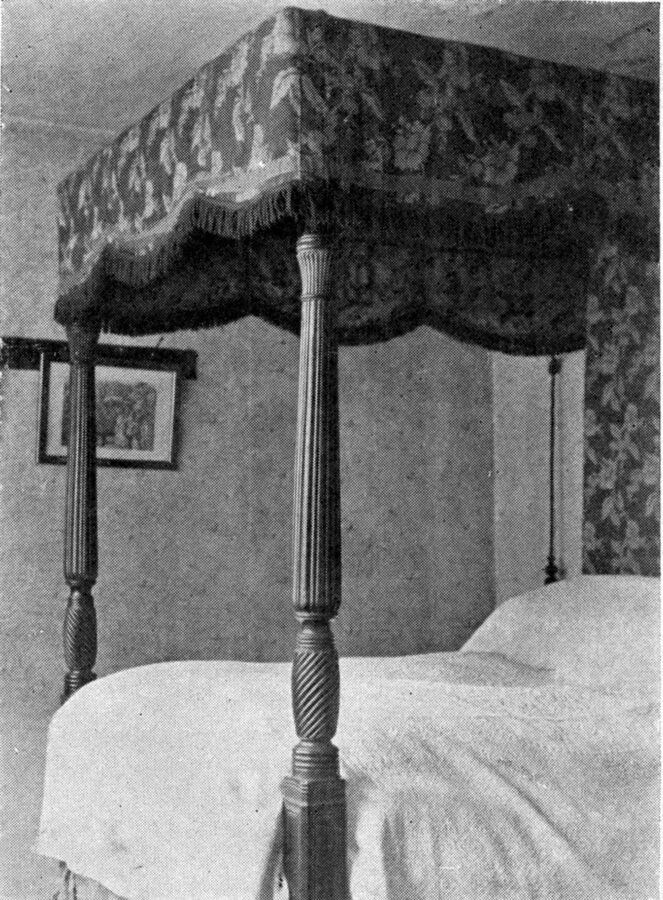
Above that, a later central staircase, probably Victorian, winds up to the second floor, where the Talbot Room seems to have been made out of the attic. The attic roof is eighteenth century. Below everything, the cellar has a seventeenth-century plank door and reused timbers that may come from the inn that burnt.

The yard
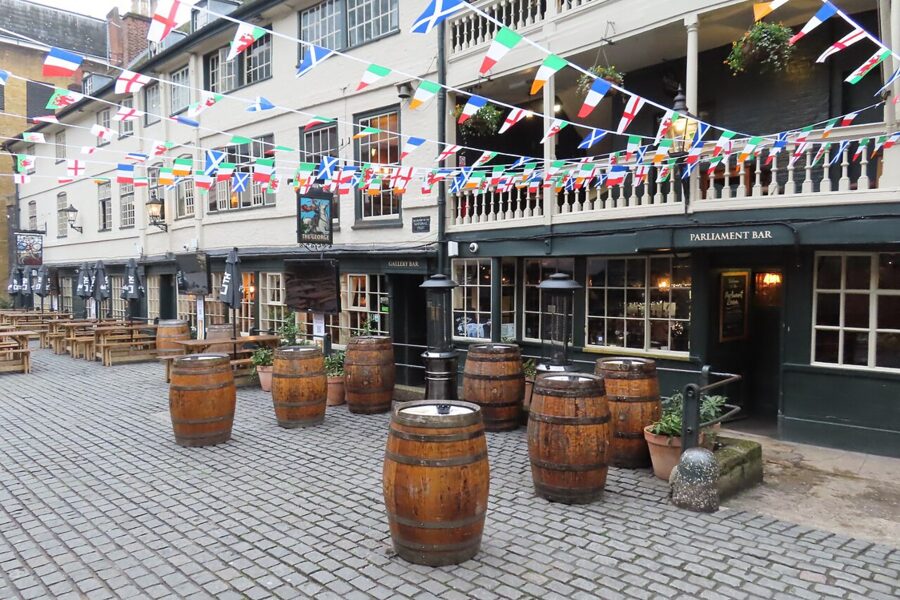
The yard is where most people drink, and on a warm evening it can be the best pub garden in London or a crush, depending on your tolerance. It is shared with the Coach House at the George, a separate Greene King sports bar on the north side that opens onto the same cobbles. There is no booking for the yard tables: it is walk-in only.

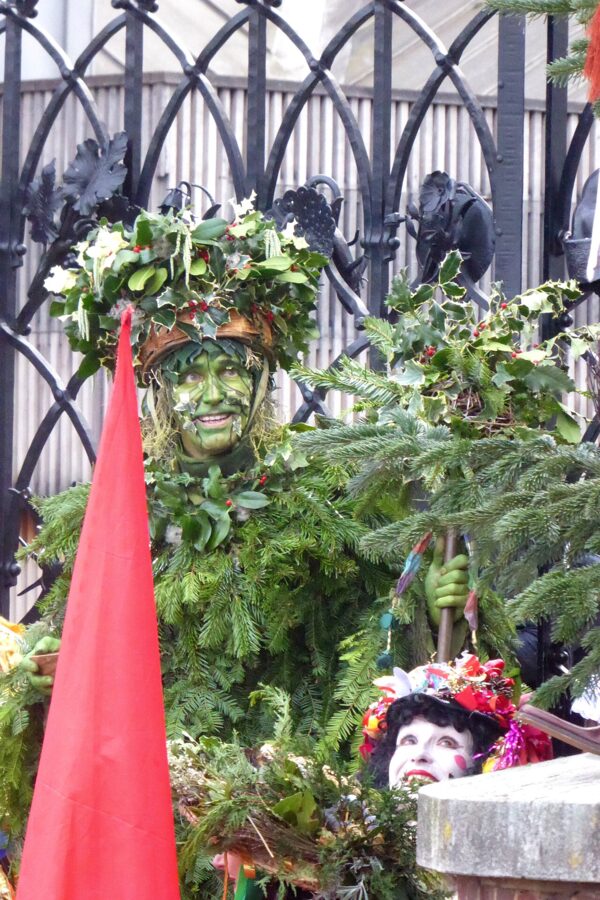
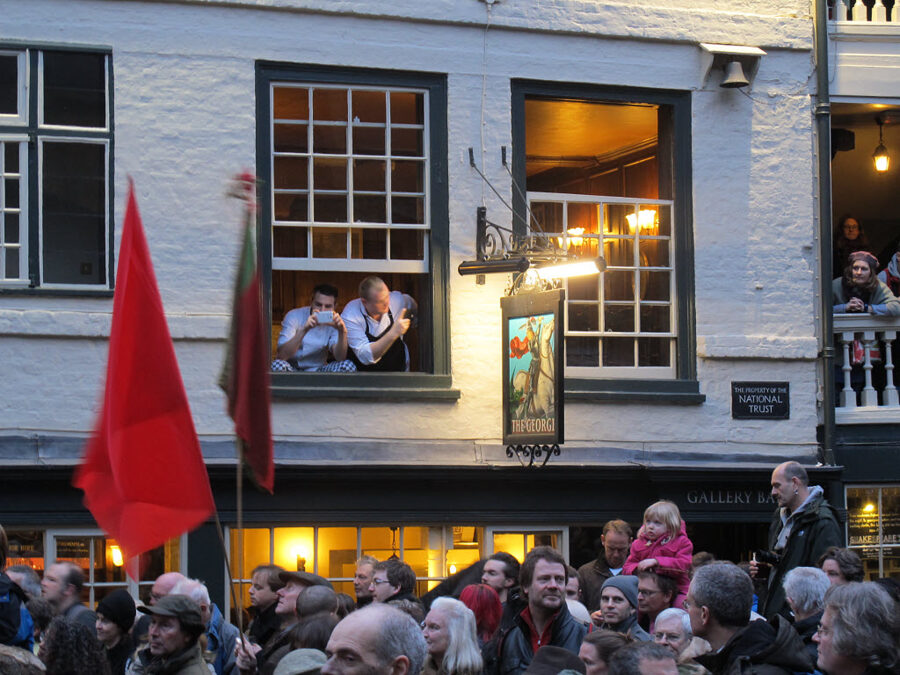
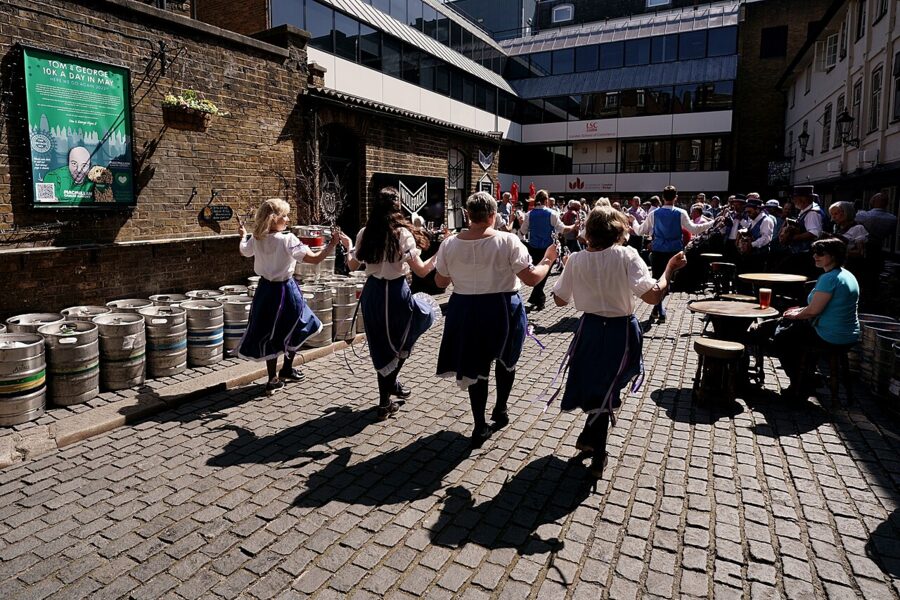
For years the yard was also the end point of the Twelfth Night revels on Bankside, when the Holly Man and his company would lead a crowd from the river to the George for a wassail and a play. The pub stopped hosting it after 2023, and the afternoon moved to Borough Yards. Morris dancers were out on the cobbles in May 2022, and the yard suits them.



The beer and the food
The George is a Greene King house, and the bar reflects it. Greene King IPA is the regular, and there are two house beers brewed for the pub within the Greene King stable, George Inn Ale and Golden George. CAMRA’s listing counts five changing beers alongside, which often include something from Bermondsey’s Southwark Brewing, a Timothy Taylor Landlord, or the odd porter.
I would not cross London for the beer alone. I would cross London for the building, and the beer is a decent pint of real ale in a room that has been serving one since the seventeenth century. Ask what is on cask before you look at the lager taps, and if the house beers do not appeal, there is usually a guest that will.
Food is served every day from 11:00 to 22:00, which makes the George easy at odd hours. The menu is standard Greene King pub cooking: pies, grills and the usual pub classics. On Sundays there is a Sunday roast with beef, turkey or lamb and a cheddar and mushroom tart for vegetarians, and it is worth booking a table inside for that.
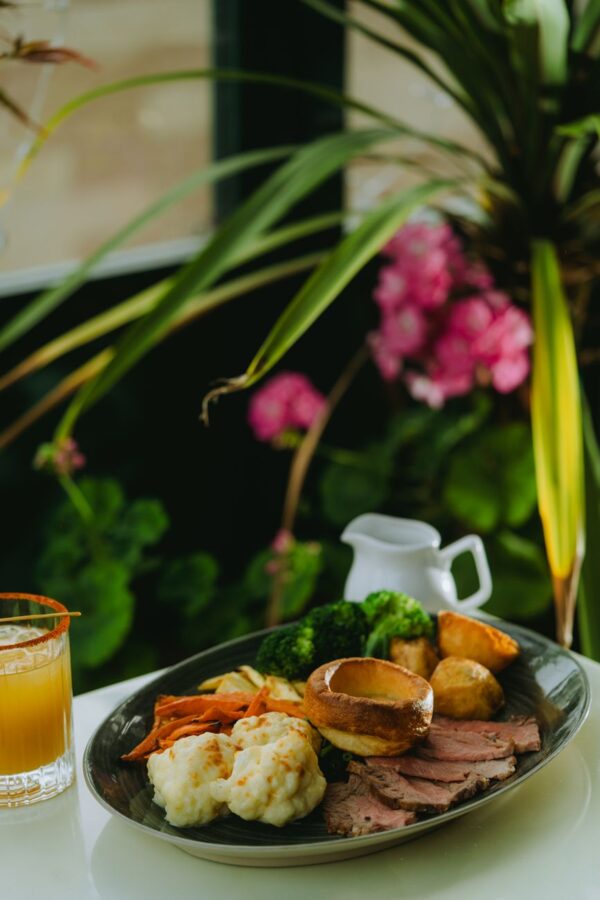
The food is fine. The building is the point, so order something simple and eat it in a room with panelling.
Borough Market and the pubs around the George
The George sits at the southern edge of the busiest square mile for eating and drinking south of the river. Borough Market is two minutes north, Southwark Cathedral just beyond it, and there are more good pubs within five minutes’ walk than you can manage in an evening. It is worth planning a short crawl with the George at one end.
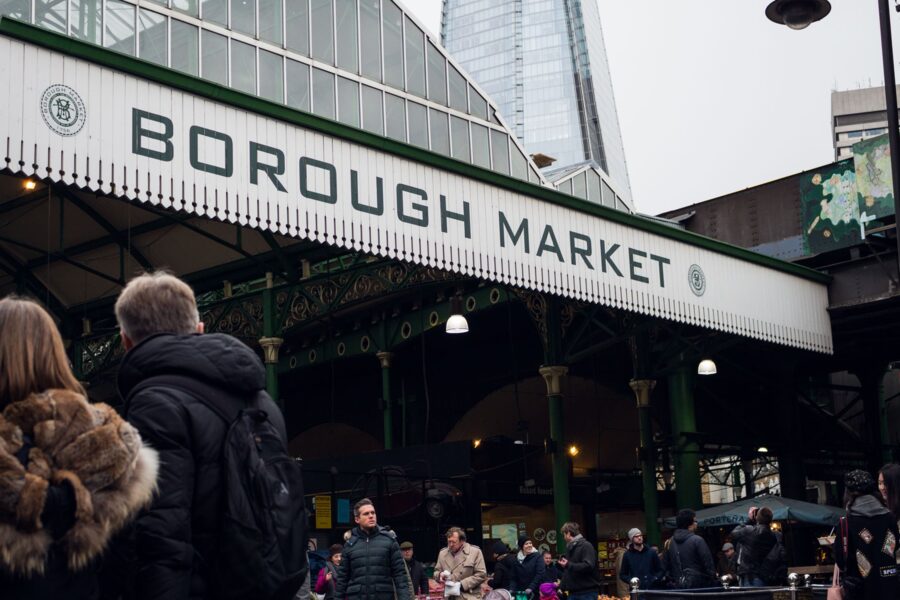
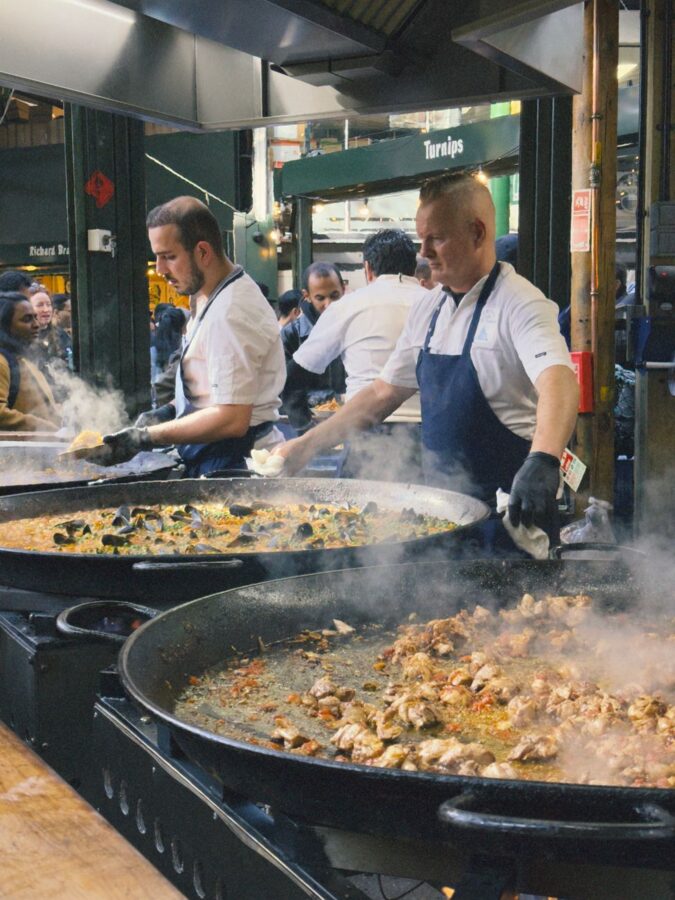
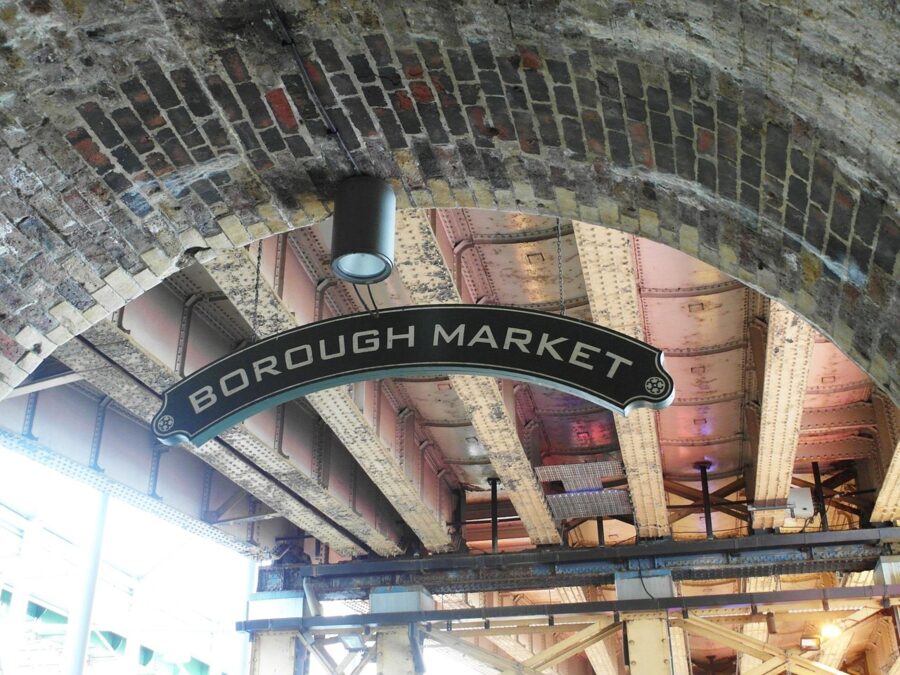
Borough Market itself has traded near the bridge foot for centuries and is now one of the best-known food markets in Britain, with produce stalls, a covered street-food section and restaurants round the edges. Entry is free. Go hungry and graze, then retreat to a pub with a pint.
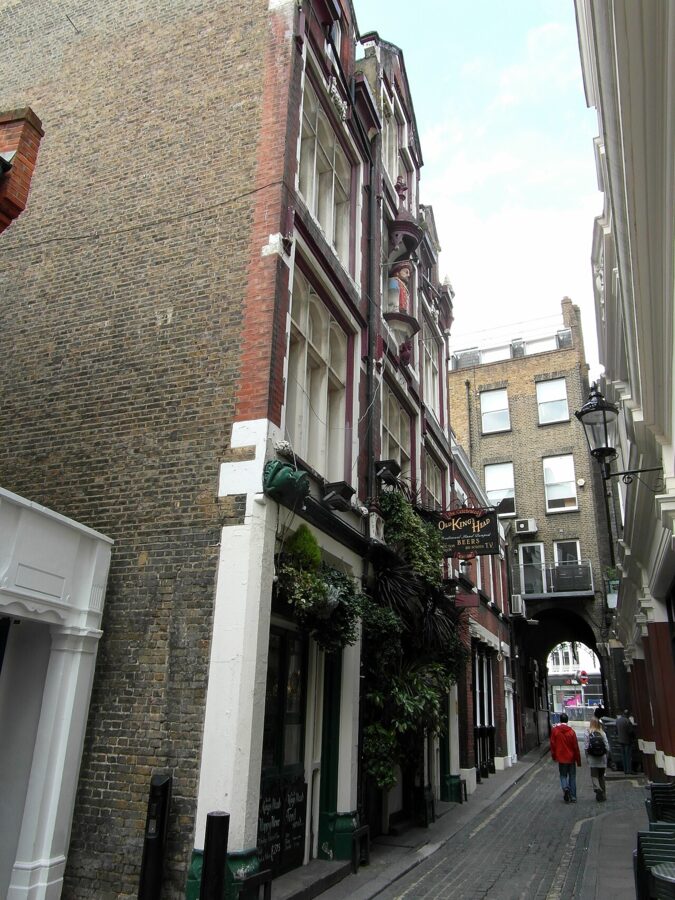
The Old King’s Head
The nearest pub to the George, and the one I would pair it with, is the Old King’s Head in King’s Head Yard, a couple of alleys north. It is another old inn site with a pub of 1881 on it, decorated with a carved bust of Henry VIII said to be late seventeenth century. Inside it is one large bare-boarded room with an L-shaped bar and four handpumps, serving office workers, market-goers and people who have had enough of the crowd at the George.

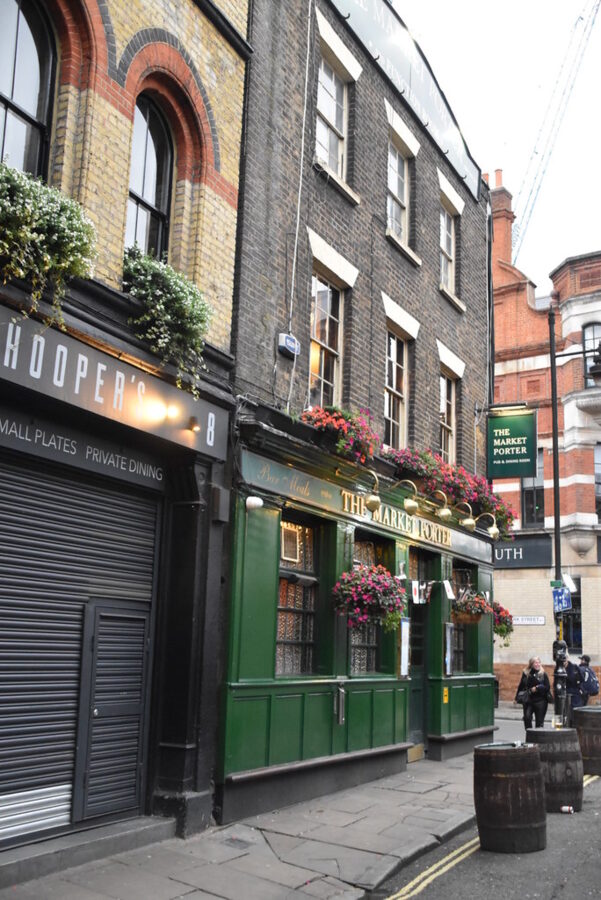
The Market Porter
On the corner of Stoney Street, facing the market, the Market Porter keeps the old market-pub hours: it opens at 06:00 on weekdays for the market workers and anyone else, closes at 09:00, then reopens at 10:00. It has six handpumps with a rotating list, gets packed out onto the street at weekends, and takes cards only. If the scene looks familiar, it was used as a location in Harry Potter and the Prisoner of Azkaban.

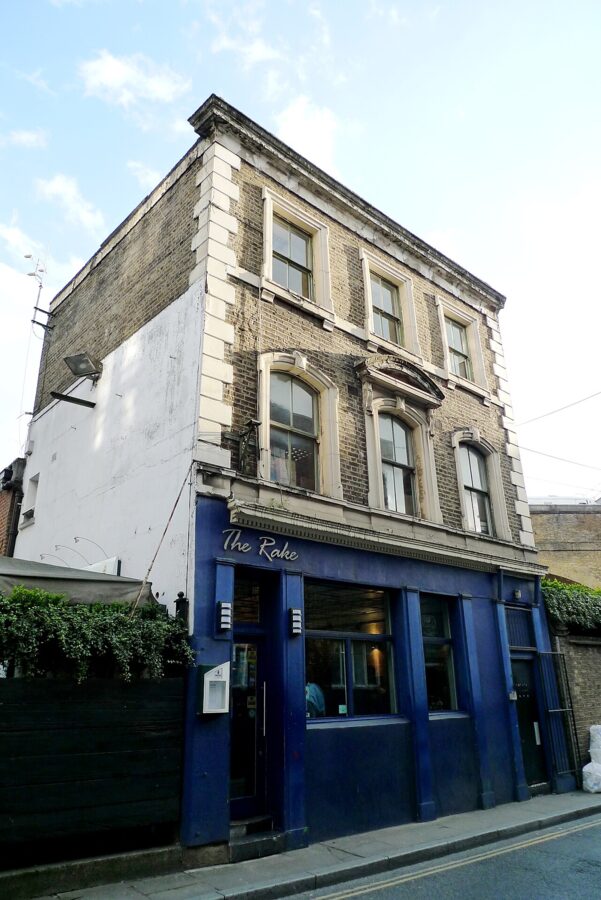
The Rake
Tucked into Winchester Walk on the market’s west side, the Rake is a tiny bar run by the Utobeer people from the market, with a short, carefully chosen list of cask and keg beers. It is about the size of a large living room, so go early or go with one friend.

Southwark Cathedral and St George the Martyr
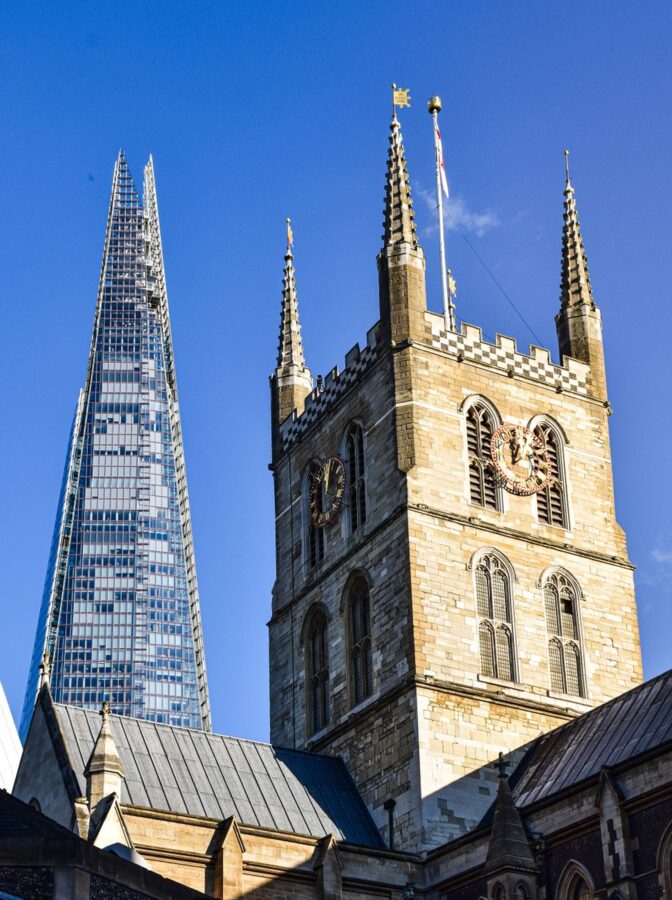
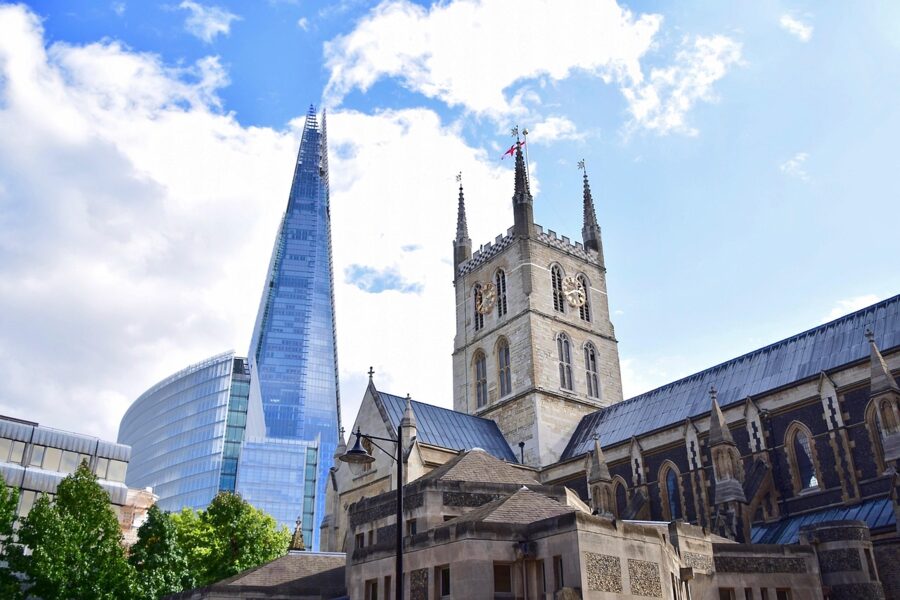
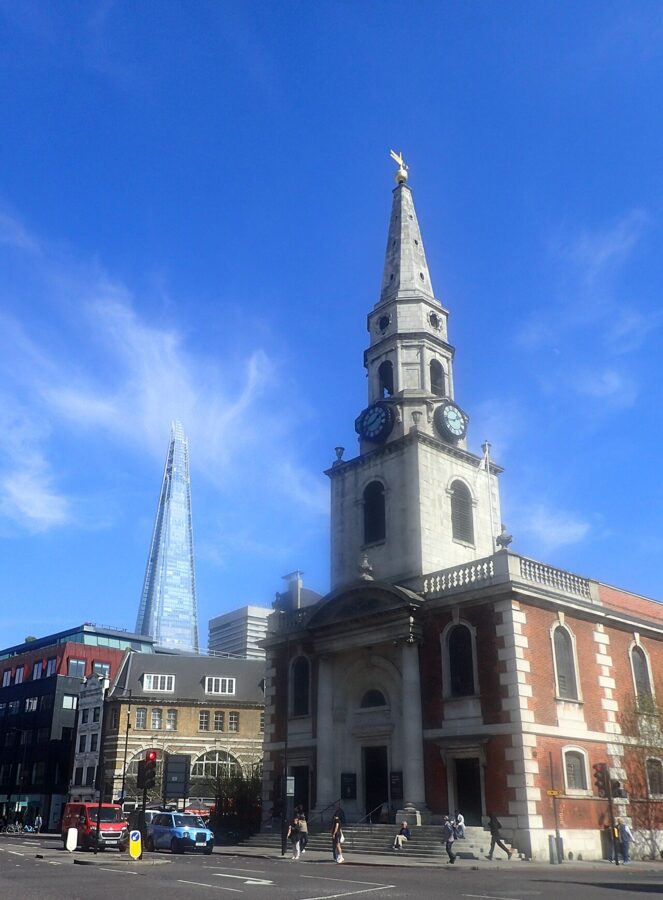
Southwark Cathedral, between the market and the river, is worth half an hour between pints. It usually opens at 08:30, and inside it has a memorial to Shakespeare, whose brother Edmund is buried there. At the other end of the High Street, St George the Martyr is the church where Dickens married off Little Dorrit, and the Marshalsea wall is in its churchyard gardens.

If you are building a longer day, the guide to the best pubs in London has the rest of the city. Southwark alone could keep you busy.
How to visit
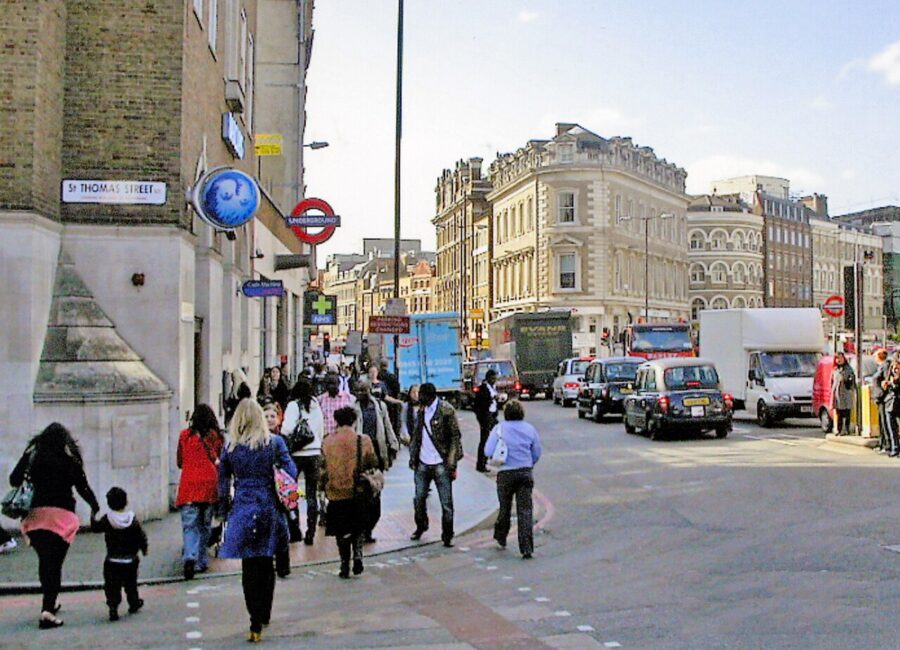
The George is at 75–77 Borough High Street, on the east side, about 300 metres south of London Bridge station. Come out of the station on to Borough High Street, walk south past the junction with Southwark Street, and look for the gateway on your left. From Borough station on the Northern line it is about six minutes’ walk north up the High Street.


Opening hours are 11:00–23:00 Monday to Wednesday and on Sunday, and 11:00 to midnight Thursday to Saturday. Food runs from 11:00 to 22:00 every day. The upstairs Gallery Bar is not always open, and the rooms upstairs can be hired for functions.
Children are welcome, and so are dogs on a lead. There is live football and rugby on the screens, which some will see as a drawback in a Grade I building, and the Coach House across the yard is a sports bar outright. You can book a table inside, but not in the yard.
Timing makes all the difference. A weekday between about 14:00 and 16:30 usually gives you a choice of seats in the Parliament Bar; a sunny Friday evening gives you a yard with standing room only. Saturdays bring Borough Market’s crowds down the High Street, and the George is on most walking tours of Southwark.

Order at the bar, as in any pub; there is a Greene King app if you want it, but nobody minds the old way. If you are new to British pubs, the guide to pub etiquette covers rounds and queuing at a busy bar, both of which come in handy here on a Friday.
Then do it properly. Go in through the gateway off the High Street, take the first door on the right, and ask what is on cask. Carry your glass up the old stairs if they let you, stand at the gallery rail over the yard, and remember that the rooms behind you were built for travellers who had come up the Dover road and were going no further that night.